In Dubai, Exinity and VT Markets secured licenses to offer CFDs in the region.
US-based proprietary trading firm MyFunded Futures plans to obtain a full Introducing Broker license.
Exinity and VT Markets secure licenses in Dubai
eToro opens 24/5 trading on the top 100 US stocks
In this week’s roundup of key industry developments, eToro,
the publicly listed Israeli fintech firm, launched 24/5 trading for 100 of its most popular U.S. stocks, to enable users to buy and sell shares, including
names like Mastercard, Snap, and Alphabet, outside regular market hours, Monday
through Friday.
All order types remain available during extended sessions.
The company also announced plans to introduce tokenized shares and spot-quoted
futures (SQFs) as part of its broader product expansion.
eToro joins a growing list of retail brokers offering extended-hours trading, which allows users to trade 100 U.S. stocks 24 hours a day,
five days a week.
However, limitations remain. The U.S. Securities and
Exchange Commission (SEC) has previously warned that trading outside standard
hours can involve reduced liquidity, wider bid-ask spreads, or even a lack of
price quotes.
Robinhood crypto revenue falls
Robinhood’s crypto revenue fell sharply in Q2 2025, dropping to $160 million from $252 million in the previous quarter—a 36.5% decline. Despite the slowdown, the company pointed out that crypto revenue nearly doubled compared to the same period last year.
This was the second consecutive quarter of declining crypto revenue for Robinhood, after peaking at $358 million in Q4 2024.
The company has attributed the decline to fluctuating trading volumes, and CEO Vlad Tenev has emphasized efforts to reduce reliance on crypto by diversifying the platform’s revenue streams.
XTB’s profit rises amid plans to add physical crypto
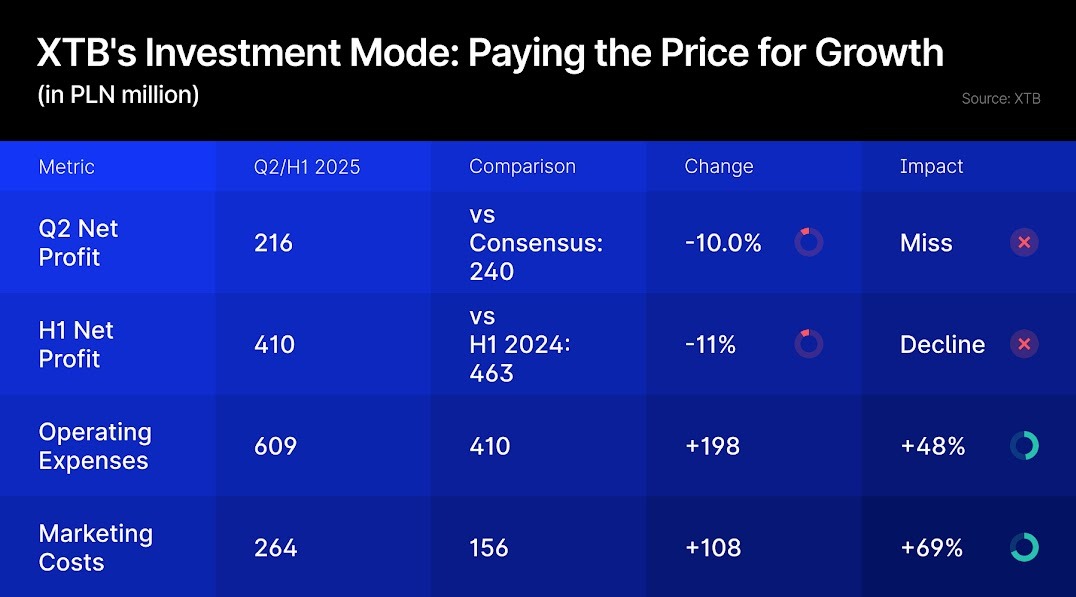
Meanwhile, XTB, the Polish retail broker, reported revenue of PLN 580 million (USD 150.8 million) in Q2 2025, matching its performance from the previous quarter. Despite flat revenue, pre-tax profit rose by 11.2% to PLN 260.7 million (USD 67.8 million), supported by lower costs.
Net profit came in at PLN 216.1 million (USD 56.2 million), according to preliminary results.
Total expenses dropped 7.2% to PLN 292.9 million (USD 76.2 million), with marketing spend falling by about 13% to PLN 123 million (USD 32.0 million), even as the broker maintained campaigns across Europe.
The Polish broker also announced plans to expand its product lineup by introducing physical cryptocurrencies and options. It currently offers crypto trading through contracts for differences (CFDs).
According to the FCA registry, AETOS gave up its
authorisation last month and is no longer permitted to offer regulated products
or services. The broker also filed a "Solvency Statement" with
Companies House, an action typically associated with corporate restructuring or
capital reduction.
The market is measuring future results and earnings. Right now what the market's sniffing out is access to new markets at a reciprocal tariff price somewhere around 15%. That's the assumption. Now, let's take Europe. This is big news. That's a massive market to gain access to.… pic.twitter.com/knVPPmrGYR
— Kevin O'Leary aka Mr. Wonderful (@kevinolearytv) July 29, 2025
This is evident in recent market trends, such as Spain’s
recovery, which reflects a shift in investor mood rather than a sudden
improvement in economic fundamentals.
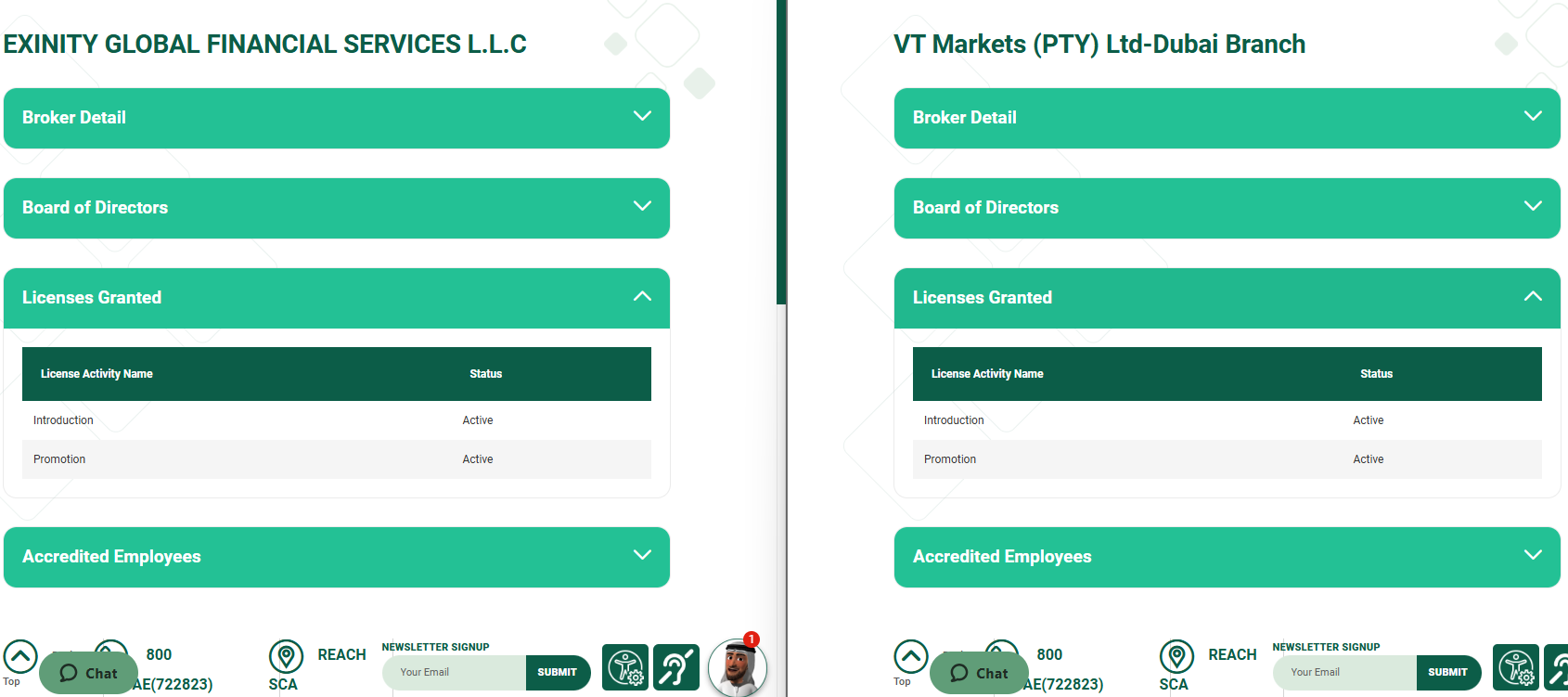
A screenshot of details of Exinity and VT Markets on SCA's website
VT Markets operates under its own name, while Exinity runs
multiple brands, including FXTM. Exinity, owned by Andrey Dashin, no longer
lists the Alpari brand as part of its group, which now holds only a Comoros
licence.
MyFunded Futures' licensing bid
In the prop trading space, US-based prop firm MyFunded Futures is planning to become a fully licensed Introducing Broker regulated by the NFA and CFTC. The move is aimed at leading the company’s brokerage setup and registration process.
Despite these plans, MyFunded Futures is not yet listed in the NFA’s BASIC database under either “MyFunded Futures” or “MyFunded,” indicating that registration is still in progress.
More numbers: CFI Financial, Capital.com's results
CFI Financial reported a record $1.51 trillion in trading volume for the second quarter of 2025, more than half of its total 2024 volume
of $2.79 trillion. The sharp increase highlights rising interest in retail
trading during a period of heightened market activity.
The surge coincided with volatility triggered by
tariff-related announcements from U.S. President Donald Trump, which several
brokers described as some of their busiest trading days. IG Markets also saw
elevated client activity in April and recently reported record annual results.
In the U.S., this strain could worsen under Donald Trump’s
proposed energy policies, which may prioritize fossil fuels and scale back
green energy incentives.
Millions of Americans across the eastern U.S. are seeing their monthly electric bills spike, and many of them have no idea why. But there’s a culprit: data centers that power artificial intelligence.
— The Washington Post (@washingtonpost) July 30, 2025
While air conditioning and household appliances have long
been blamed for high summer energy costs, the rapid growth of AI use is now a
major factor.
eToro opens 24/5 trading on the top 100 US stocks
In this week’s roundup of key industry developments, eToro,
the publicly listed Israeli fintech firm, launched 24/5 trading for 100 of its most popular U.S. stocks, to enable users to buy and sell shares, including
names like Mastercard, Snap, and Alphabet, outside regular market hours, Monday
through Friday.
All order types remain available during extended sessions.
The company also announced plans to introduce tokenized shares and spot-quoted
futures (SQFs) as part of its broader product expansion.
eToro joins a growing list of retail brokers offering extended-hours trading, which allows users to trade 100 U.S. stocks 24 hours a day,
five days a week.
However, limitations remain. The U.S. Securities and
Exchange Commission (SEC) has previously warned that trading outside standard
hours can involve reduced liquidity, wider bid-ask spreads, or even a lack of
price quotes.
Robinhood crypto revenue falls
Robinhood’s crypto revenue fell sharply in Q2 2025, dropping to $160 million from $252 million in the previous quarter—a 36.5% decline. Despite the slowdown, the company pointed out that crypto revenue nearly doubled compared to the same period last year.
This was the second consecutive quarter of declining crypto revenue for Robinhood, after peaking at $358 million in Q4 2024.
The company has attributed the decline to fluctuating trading volumes, and CEO Vlad Tenev has emphasized efforts to reduce reliance on crypto by diversifying the platform’s revenue streams.
XTB’s profit rises amid plans to add physical crypto
Meanwhile, XTB, the Polish retail broker, reported revenue of PLN 580 million (USD 150.8 million) in Q2 2025, matching its performance from the previous quarter. Despite flat revenue, pre-tax profit rose by 11.2% to PLN 260.7 million (USD 67.8 million), supported by lower costs.
Net profit came in at PLN 216.1 million (USD 56.2 million), according to preliminary results.
Total expenses dropped 7.2% to PLN 292.9 million (USD 76.2 million), with marketing spend falling by about 13% to PLN 123 million (USD 32.0 million), even as the broker maintained campaigns across Europe.
The Polish broker also announced plans to expand its product lineup by introducing physical cryptocurrencies and options. It currently offers crypto trading through contracts for differences (CFDs).
According to the FCA registry, AETOS gave up its
authorisation last month and is no longer permitted to offer regulated products
or services. The broker also filed a "Solvency Statement" with
Companies House, an action typically associated with corporate restructuring or
capital reduction.
The market is measuring future results and earnings. Right now what the market's sniffing out is access to new markets at a reciprocal tariff price somewhere around 15%. That's the assumption. Now, let's take Europe. This is big news. That's a massive market to gain access to.… pic.twitter.com/knVPPmrGYR
— Kevin O'Leary aka Mr. Wonderful (@kevinolearytv) July 29, 2025
This is evident in recent market trends, such as Spain’s
recovery, which reflects a shift in investor mood rather than a sudden
improvement in economic fundamentals.
A screenshot of details of Exinity and VT Markets on SCA's website
VT Markets operates under its own name, while Exinity runs
multiple brands, including FXTM. Exinity, owned by Andrey Dashin, no longer
lists the Alpari brand as part of its group, which now holds only a Comoros
licence.
MyFunded Futures' licensing bid
In the prop trading space, US-based prop firm MyFunded Futures is planning to become a fully licensed Introducing Broker regulated by the NFA and CFTC. The move is aimed at leading the company’s brokerage setup and registration process.
Despite these plans, MyFunded Futures is not yet listed in the NFA’s BASIC database under either “MyFunded Futures” or “MyFunded,” indicating that registration is still in progress.
More numbers: CFI Financial, Capital.com's results
CFI Financial reported a record $1.51 trillion in trading volume for the second quarter of 2025, more than half of its total 2024 volume
of $2.79 trillion. The sharp increase highlights rising interest in retail
trading during a period of heightened market activity.
The surge coincided with volatility triggered by
tariff-related announcements from U.S. President Donald Trump, which several
brokers described as some of their busiest trading days. IG Markets also saw
elevated client activity in April and recently reported record annual results.
In the U.S., this strain could worsen under Donald Trump’s
proposed energy policies, which may prioritize fossil fuels and scale back
green energy incentives.
Millions of Americans across the eastern U.S. are seeing their monthly electric bills spike, and many of them have no idea why. But there’s a culprit: data centers that power artificial intelligence.
Jared Kirui is an Editor at Finance Magnates with more than five years of experience in financial journalism. He covers online trading, fintech, payments, and crypto industries with a focus on companies, regulation and compliance, executive moves, trading technology, and market analysis.
His work has been featured in other media outlets, including Benzinga, ZyCrypto, The Distributed, and The Daily Hodl.
Education:
Bachelor of Commerce degree (Finance option), University of Nairobi
Retail Traders Can Now Access Prediction Markets Through Binance Wallet
Featured Videos
FP Markets Winner Spotlight 🏆 | Global Broker of the Year 2025 #Trading #Broker #Innovation #Shorts
FP Markets Winner Spotlight 🏆 | Global Broker of the Year 2025 #Trading #Broker #Innovation #Shorts
FP Markets Winner Spotlight 🏆 | Global Broker of the Year 2025 #Trading #Broker #Innovation #Shorts
FP Markets Winner Spotlight 🏆 | Global Broker of the Year 2025 #Trading #Broker #Innovation #Shorts
FP Markets takes the spotlight as Global Broker of the Year 2025 at the Finance Magnates Awards.
Martin Stoilov, Head of Client Experience, shares that trust, innovation, and people played a key role in the company’s success, supported by a strong foundation of integrity and client-centricity.
Following this milestone, FP Markets continues to focus on growth, technology investment, and its core values of transparency and excellence.
👉 Be part of FM Awards 2026: https://awards.financemagnates.com/#nominate
FP Markets takes the spotlight as Global Broker of the Year 2025 at the Finance Magnates Awards.
Martin Stoilov, Head of Client Experience, shares that trust, innovation, and people played a key role in the company’s success, supported by a strong foundation of integrity and client-centricity.
Following this milestone, FP Markets continues to focus on growth, technology investment, and its core values of transparency and excellence.
👉 Be part of FM Awards 2026: https://awards.financemagnates.com/#nominate
FP Markets takes the spotlight as Global Broker of the Year 2025 at the Finance Magnates Awards.
Martin Stoilov, Head of Client Experience, shares that trust, innovation, and people played a key role in the company’s success, supported by a strong foundation of integrity and client-centricity.
Following this milestone, FP Markets continues to focus on growth, technology investment, and its core values of transparency and excellence.
👉 Be part of FM Awards 2026: https://awards.financemagnates.com/#nominate
FP Markets takes the spotlight as Global Broker of the Year 2025 at the Finance Magnates Awards.
Martin Stoilov, Head of Client Experience, shares that trust, innovation, and people played a key role in the company’s success, supported by a strong foundation of integrity and client-centricity.
Following this milestone, FP Markets continues to focus on growth, technology investment, and its core values of transparency and excellence.
👉 Be part of FM Awards 2026: https://awards.financemagnates.com/#nominate
In this video, we review @HolaPrimeMarketsOfficial, a multi-asset forex and CFDs broker offering different account types, trading platforms, and flexible trading conditions.
We cover the broker’s overall offering, including account options, trading environment, platforms like MT4 and MT5, and additional services such as managed accounts and fast withdrawals.
Watch the full video to see if Hola Prime Markets fits your trading needs.
📣 Stay up to date with the latest in finance and trading. Follow Finance Magnates for industry news, insights, and global event coverage.
Connect with us:
🔗 LinkedIn: /financemagnates
👍 Facebook: /financemagnates
📸 Instagram: https://www.instagram.com/financemagnates
🐦 X: https://x.com/financemagnates
🎥 TikTok: https://www.tiktok.com/tag/financemagnates
▶️ YouTube: /@financemagnates_official
#HolaPrime #ForexBroker #CFDTrading #FinanceMagnates #Trading #Forex #BrokerReview
In this video, we review @HolaPrimeMarketsOfficial, a multi-asset forex and CFDs broker offering different account types, trading platforms, and flexible trading conditions.
We cover the broker’s overall offering, including account options, trading environment, platforms like MT4 and MT5, and additional services such as managed accounts and fast withdrawals.
Watch the full video to see if Hola Prime Markets fits your trading needs.
📣 Stay up to date with the latest in finance and trading. Follow Finance Magnates for industry news, insights, and global event coverage.
Connect with us:
🔗 LinkedIn: /financemagnates
👍 Facebook: /financemagnates
📸 Instagram: https://www.instagram.com/financemagnates
🐦 X: https://x.com/financemagnates
🎥 TikTok: https://www.tiktok.com/tag/financemagnates
▶️ YouTube: /@financemagnates_official
#HolaPrime #ForexBroker #CFDTrading #FinanceMagnates #Trading #Forex #BrokerReview
In this video, we review @HolaPrimeMarketsOfficial, a multi-asset forex and CFDs broker offering different account types, trading platforms, and flexible trading conditions.
We cover the broker’s overall offering, including account options, trading environment, platforms like MT4 and MT5, and additional services such as managed accounts and fast withdrawals.
Watch the full video to see if Hola Prime Markets fits your trading needs.
📣 Stay up to date with the latest in finance and trading. Follow Finance Magnates for industry news, insights, and global event coverage.
Connect with us:
🔗 LinkedIn: /financemagnates
👍 Facebook: /financemagnates
📸 Instagram: https://www.instagram.com/financemagnates
🐦 X: https://x.com/financemagnates
🎥 TikTok: https://www.tiktok.com/tag/financemagnates
▶️ YouTube: /@financemagnates_official
#HolaPrime #ForexBroker #CFDTrading #FinanceMagnates #Trading #Forex #BrokerReview
In this video, we review @HolaPrimeMarketsOfficial, a multi-asset forex and CFDs broker offering different account types, trading platforms, and flexible trading conditions.
We cover the broker’s overall offering, including account options, trading environment, platforms like MT4 and MT5, and additional services such as managed accounts and fast withdrawals.
Watch the full video to see if Hola Prime Markets fits your trading needs.
📣 Stay up to date with the latest in finance and trading. Follow Finance Magnates for industry news, insights, and global event coverage.
Connect with us:
🔗 LinkedIn: /financemagnates
👍 Facebook: /financemagnates
📸 Instagram: https://www.instagram.com/financemagnates
🐦 X: https://x.com/financemagnates
🎥 TikTok: https://www.tiktok.com/tag/financemagnates
▶️ YouTube: /@financemagnates_official
#HolaPrime #ForexBroker #CFDTrading #FinanceMagnates #Trading #Forex #BrokerReview
In this video, we review @HolaPrimeMarketsOfficial, a multi-asset forex and CFDs broker offering different account types, trading platforms, and flexible trading conditions.
We cover the broker’s overall offering, including account options, trading environment, platforms like MT4 and MT5, and additional services such as managed accounts and fast withdrawals.
Watch the full video to see if Hola Prime Markets fits your trading needs.
📣 Stay up to date with the latest in finance and trading. Follow Finance Magnates for industry news, insights, and global event coverage.
Connect with us:
🔗 LinkedIn: /financemagnates
👍 Facebook: /financemagnates
📸 Instagram: https://www.instagram.com/financemagnates
🐦 X: https://x.com/financemagnates
🎥 TikTok: https://www.tiktok.com/tag/financemagnates
▶️ YouTube: /@financemagnates_official
#HolaPrime #ForexBroker #CFDTrading #FinanceMagnates #Trading #Forex #BrokerReview
In this video, we review @HolaPrimeMarketsOfficial, a multi-asset forex and CFDs broker offering different account types, trading platforms, and flexible trading conditions.
We cover the broker’s overall offering, including account options, trading environment, platforms like MT4 and MT5, and additional services such as managed accounts and fast withdrawals.
Watch the full video to see if Hola Prime Markets fits your trading needs.
📣 Stay up to date with the latest in finance and trading. Follow Finance Magnates for industry news, insights, and global event coverage.
Connect with us:
🔗 LinkedIn: /financemagnates
👍 Facebook: /financemagnates
📸 Instagram: https://www.instagram.com/financemagnates
🐦 X: https://x.com/financemagnates
🎥 TikTok: https://www.tiktok.com/tag/financemagnates
▶️ YouTube: /@financemagnates_official
#HolaPrime #ForexBroker #CFDTrading #FinanceMagnates #Trading #Forex #BrokerReview
Hola Prime Review: What You Need to Know | Full Breakdown by Finance Magnates
Hola Prime Review: What You Need to Know | Full Breakdown by Finance Magnates
Hola Prime Review: What You Need to Know | Full Breakdown by Finance Magnates
Hola Prime Review: What You Need to Know | Full Breakdown by Finance Magnates
Hola Prime Review: What You Need to Know | Full Breakdown by Finance Magnates
Hola Prime Review: What You Need to Know | Full Breakdown by Finance Magnates
In this video, we review @HolaPrime_Global, a proprietary trading firm offering evaluation programs and performance-based payouts in simulated market environments.
We cover how the challenge model works, including account types, profit splits (up to 95%), trading rules, and what it takes to reach a funded account. You’ll also learn about available platforms like MT4, MT5, cTrader, and more, along with insights into payouts, support, and trading conditions.
Watch the full video to see if Hola Prime fits your trading style.
📣 Stay up to date with the latest in finance and trading. Follow Finance Magnates for industry news, insights, and global event coverage.
Connect with us:
🔗 LinkedIn: /financemagnates
👍 Facebook: /financemagnates
📸 Instagram: https://www.instagram.com/financemagnates
🐦 X: https://x.com/financemagnates
🎥 TikTok: https://www.tiktok.com/tag/financemagnates
▶️ YouTube: /@financemagnates_official
#HolaPrime #PropFirm #Trading #FinanceMagnates #Forex #FuturesTrading #TradingReview #PropFirmReview
In this video, we review @HolaPrime_Global, a proprietary trading firm offering evaluation programs and performance-based payouts in simulated market environments.
We cover how the challenge model works, including account types, profit splits (up to 95%), trading rules, and what it takes to reach a funded account. You’ll also learn about available platforms like MT4, MT5, cTrader, and more, along with insights into payouts, support, and trading conditions.
Watch the full video to see if Hola Prime fits your trading style.
📣 Stay up to date with the latest in finance and trading. Follow Finance Magnates for industry news, insights, and global event coverage.
Connect with us:
🔗 LinkedIn: /financemagnates
👍 Facebook: /financemagnates
📸 Instagram: https://www.instagram.com/financemagnates
🐦 X: https://x.com/financemagnates
🎥 TikTok: https://www.tiktok.com/tag/financemagnates
▶️ YouTube: /@financemagnates_official
#HolaPrime #PropFirm #Trading #FinanceMagnates #Forex #FuturesTrading #TradingReview #PropFirmReview
In this video, we review @HolaPrime_Global, a proprietary trading firm offering evaluation programs and performance-based payouts in simulated market environments.
We cover how the challenge model works, including account types, profit splits (up to 95%), trading rules, and what it takes to reach a funded account. You’ll also learn about available platforms like MT4, MT5, cTrader, and more, along with insights into payouts, support, and trading conditions.
Watch the full video to see if Hola Prime fits your trading style.
📣 Stay up to date with the latest in finance and trading. Follow Finance Magnates for industry news, insights, and global event coverage.
Connect with us:
🔗 LinkedIn: /financemagnates
👍 Facebook: /financemagnates
📸 Instagram: https://www.instagram.com/financemagnates
🐦 X: https://x.com/financemagnates
🎥 TikTok: https://www.tiktok.com/tag/financemagnates
▶️ YouTube: /@financemagnates_official
#HolaPrime #PropFirm #Trading #FinanceMagnates #Forex #FuturesTrading #TradingReview #PropFirmReview
In this video, we review @HolaPrime_Global, a proprietary trading firm offering evaluation programs and performance-based payouts in simulated market environments.
We cover how the challenge model works, including account types, profit splits (up to 95%), trading rules, and what it takes to reach a funded account. You’ll also learn about available platforms like MT4, MT5, cTrader, and more, along with insights into payouts, support, and trading conditions.
Watch the full video to see if Hola Prime fits your trading style.
📣 Stay up to date with the latest in finance and trading. Follow Finance Magnates for industry news, insights, and global event coverage.
Connect with us:
🔗 LinkedIn: /financemagnates
👍 Facebook: /financemagnates
📸 Instagram: https://www.instagram.com/financemagnates
🐦 X: https://x.com/financemagnates
🎥 TikTok: https://www.tiktok.com/tag/financemagnates
▶️ YouTube: /@financemagnates_official
#HolaPrime #PropFirm #Trading #FinanceMagnates #Forex #FuturesTrading #TradingReview #PropFirmReview
In this video, we review @HolaPrime_Global, a proprietary trading firm offering evaluation programs and performance-based payouts in simulated market environments.
We cover how the challenge model works, including account types, profit splits (up to 95%), trading rules, and what it takes to reach a funded account. You’ll also learn about available platforms like MT4, MT5, cTrader, and more, along with insights into payouts, support, and trading conditions.
Watch the full video to see if Hola Prime fits your trading style.
📣 Stay up to date with the latest in finance and trading. Follow Finance Magnates for industry news, insights, and global event coverage.
Connect with us:
🔗 LinkedIn: /financemagnates
👍 Facebook: /financemagnates
📸 Instagram: https://www.instagram.com/financemagnates
🐦 X: https://x.com/financemagnates
🎥 TikTok: https://www.tiktok.com/tag/financemagnates
▶️ YouTube: /@financemagnates_official
#HolaPrime #PropFirm #Trading #FinanceMagnates #Forex #FuturesTrading #TradingReview #PropFirmReview
In this video, we review @HolaPrime_Global, a proprietary trading firm offering evaluation programs and performance-based payouts in simulated market environments.
We cover how the challenge model works, including account types, profit splits (up to 95%), trading rules, and what it takes to reach a funded account. You’ll also learn about available platforms like MT4, MT5, cTrader, and more, along with insights into payouts, support, and trading conditions.
Watch the full video to see if Hola Prime fits your trading style.
📣 Stay up to date with the latest in finance and trading. Follow Finance Magnates for industry news, insights, and global event coverage.
Connect with us:
🔗 LinkedIn: /financemagnates
👍 Facebook: /financemagnates
📸 Instagram: https://www.instagram.com/financemagnates
🐦 X: https://x.com/financemagnates
🎥 TikTok: https://www.tiktok.com/tag/financemagnates
▶️ YouTube: /@financemagnates_official
#HolaPrime #PropFirm #Trading #FinanceMagnates #Forex #FuturesTrading #TradingReview #PropFirmReview
Axi Winner Spotlight 🏆 | Global Most Innovative Broker 2025 #Innovation #Trading #Fintech #Broker
Axi Winner Spotlight 🏆 | Global Most Innovative Broker 2025 #Innovation #Trading #Fintech #Broker
Axi Winner Spotlight 🏆 | Global Most Innovative Broker 2025 #Innovation #Trading #Fintech #Broker
Axi Winner Spotlight 🏆 | Global Most Innovative Broker 2025 #Innovation #Trading #Fintech #Broker
Axi Winner Spotlight 🏆 | Global Most Innovative Broker 2025 #Innovation #Trading #Fintech #Broker
Axi Winner Spotlight 🏆 | Global Most Innovative Broker 2025 #Innovation #Trading #Fintech #Broker
Axi takes the spotlight at the Finance Magnates Awards, winning Global Most Innovative Broker 2025.
Olivia Xenofontos and Ivanna Openko share how the team will feel: proud, motivated, and ready to keep delivering.
They also describe the night as well-organized, focused, and enjoyable for all.
👉 Be part of FM Awards 2026.
Axi takes the spotlight at the Finance Magnates Awards, winning Global Most Innovative Broker 2025.
Olivia Xenofontos and Ivanna Openko share how the team will feel: proud, motivated, and ready to keep delivering.
They also describe the night as well-organized, focused, and enjoyable for all.
👉 Be part of FM Awards 2026.
Axi takes the spotlight at the Finance Magnates Awards, winning Global Most Innovative Broker 2025.
Olivia Xenofontos and Ivanna Openko share how the team will feel: proud, motivated, and ready to keep delivering.
They also describe the night as well-organized, focused, and enjoyable for all.
👉 Be part of FM Awards 2026.
Axi takes the spotlight at the Finance Magnates Awards, winning Global Most Innovative Broker 2025.
Olivia Xenofontos and Ivanna Openko share how the team will feel: proud, motivated, and ready to keep delivering.
They also describe the night as well-organized, focused, and enjoyable for all.
👉 Be part of FM Awards 2026.
Axi takes the spotlight at the Finance Magnates Awards, winning Global Most Innovative Broker 2025.
Olivia Xenofontos and Ivanna Openko share how the team will feel: proud, motivated, and ready to keep delivering.
They also describe the night as well-organized, focused, and enjoyable for all.
👉 Be part of FM Awards 2026.
Axi takes the spotlight at the Finance Magnates Awards, winning Global Most Innovative Broker 2025.
Olivia Xenofontos and Ivanna Openko share how the team will feel: proud, motivated, and ready to keep delivering.
They also describe the night as well-organized, focused, and enjoyable for all.
👉 Be part of FM Awards 2026.
Recognition that matters.
Built on transparency.
Driven by the industry.
The Finance Magnates Awards 2026.
Nominations are now open.
🔗 https://awards.financemagnates.com/?utm_source=SM&utm_medium=social&utm_campaign=recognition-matters
Recognition that matters.
Built on transparency.
Driven by the industry.
The Finance Magnates Awards 2026.
Nominations are now open.
🔗 https://awards.financemagnates.com/?utm_source=SM&utm_medium=social&utm_campaign=recognition-matters
Recognition that matters.
Built on transparency.
Driven by the industry.
The Finance Magnates Awards 2026.
Nominations are now open.
🔗 https://awards.financemagnates.com/?utm_source=SM&utm_medium=social&utm_campaign=recognition-matters
Recognition that matters.
Built on transparency.
Driven by the industry.
The Finance Magnates Awards 2026.
Nominations are now open.
🔗 https://awards.financemagnates.com/?utm_source=SM&utm_medium=social&utm_campaign=recognition-matters
Recognition that matters.
Built on transparency.
Driven by the industry.
The Finance Magnates Awards 2026.
Nominations are now open.
🔗 https://awards.financemagnates.com/?utm_source=SM&utm_medium=social&utm_campaign=recognition-matters
Recognition that matters.
Built on transparency.
Driven by the industry.
The Finance Magnates Awards 2026.
Nominations are now open.
🔗 https://awards.financemagnates.com/?utm_source=SM&utm_medium=social&utm_campaign=recognition-matters