The hottest trade on Wall Street this year, zero-day options, is gaining traction among quantitative trading firms. Banks like Citi, JPMorgan, and UBS have started incorporating these highly speculative, extremely short-dated options contracts into new systematic trading strategies offered to clients.
Their "quant" desks, which use models and algorithms to make markets and place trades, are pitching everything from volatility hedging to diversification plays using these controversial instruments known as "0DTEs."
The Rise of Zero-Day Options Among Quant Traders
0DTEs refer to "zero-day to expiration" options contracts with zero days left until expiration. They have exploded in popularity recently among traders looking to make short-term directional bets on the markets.
The bank bundles 0DTEs into various volatility products that target premium selling, downside protection, and relative value. With 0DTEs expiring within a day, the risk of overnight gaps is minimized.
"It's not difficult to convince people that the solutions are actually superior in terms of risk management ," Michele Cancelli, the Global Head of Quantitative Investment Strategies Trading and Structuring at Citi, said to Bloomberg.
JPMorgan employs the contracts in intraday momentum strategies alongside index futures. And, UBS captures its elevated implied volatility through short-volatility trades specifically designed around the front month.
The increasing popularity of this type of option was already reflected in last year's results by the Cboe exchange. 0DTEs on the SPX, which is the S&P 500 stock index, reached record values in August 2022.
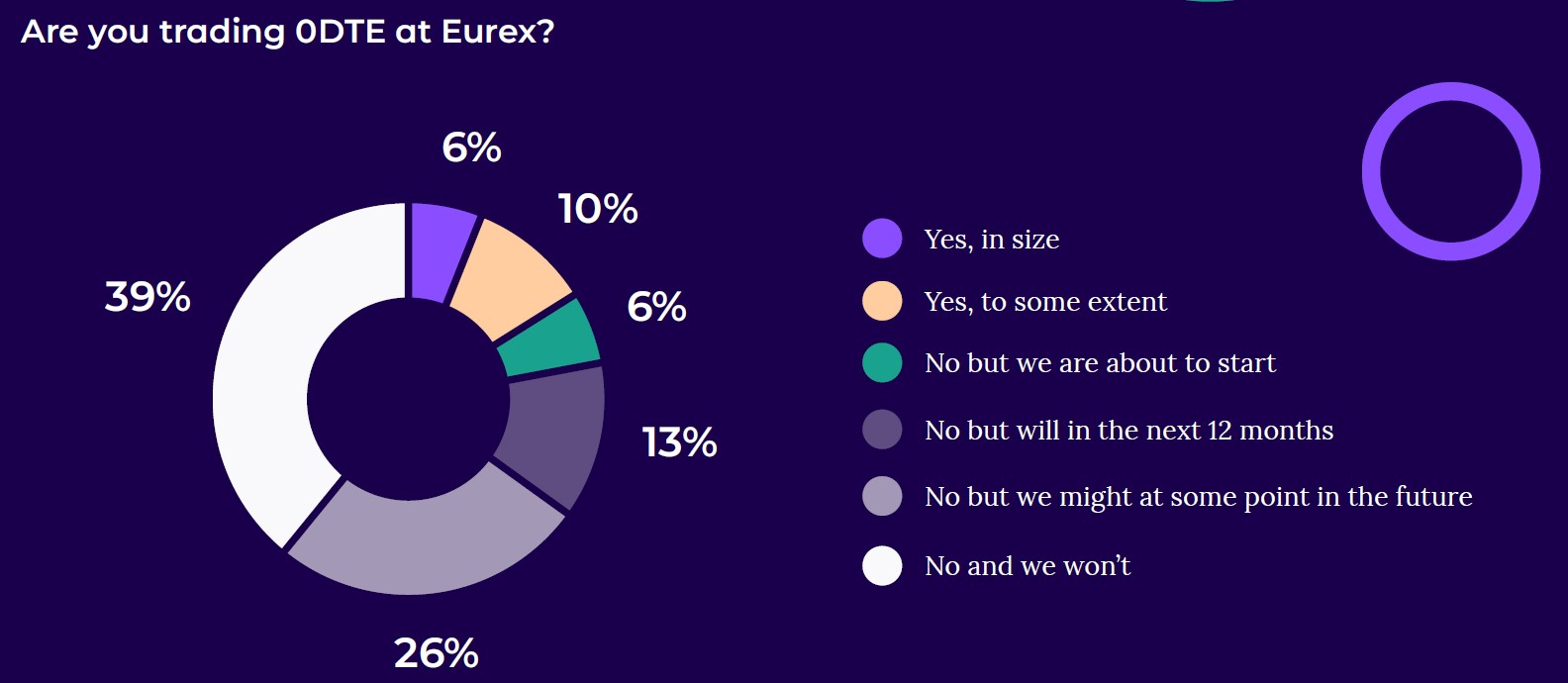
Moreover, according to the Acuity Proprietary Trading Management Insight Report published in November 2023, half of the firms trading equity options contemplate 0DTEs strategies on Eurex. It signals a potential uptick in the product's trade volume come 2024.
Early Stage of Competition
The proliferation suggests growing mainstream acceptance of 0DTEs, which exploded in popularity for their low barriers to entry. At one point this year, they captured over 50% of trading in S&P 500 options.
Their incorporation into systematic strategies also hints at an expanding range of use cases. As flows spread out, risks of distorted markets may lessen. Still, quants say close monitoring is critical with such fast-moving vehicles.
"You may have to buy back the position if the market reverses," Xavier Folleas, the Head of Quantitative Investment Strategies at BNP Paribas, cautioned.
With no signs of the 0DTE frenzy fading, the quant race to build products around them appears just beginning. "We're still in an early stage of competition," Cancelli concluded.