The fragility of brokers’ dependence on third-party technology has been exposed
However, out of adversity comes opportunity
Op-ed
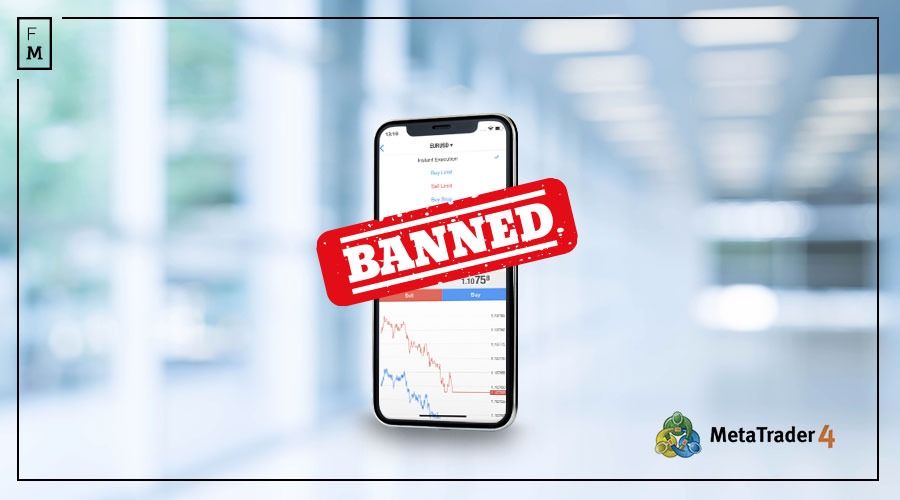
On September 23rd, 2022, Apple removed two popular front-end trading platforms from its App Store. Despite being widely used by traders and the systems themselves forming the backbone of a significant number of retail brokers, the deletion happened without warning, ripping the platforms and their functionalities from the App Store. While the reasons for Apple’s actions are still unclear, the fragility of brokers’ dependence on third-party technology has become obvious.
The platforms in question, MT4 and MT5, are front-end trading platforms that provide access to forex and CFD markets, including stocks, commodities and futures. For a long time, these platforms gave traders an easy gateway into markets and, for brokers, offered convenient bolt-on trading capabilities that became central to their operations; their removal from the mobile app store has therefore come as a shock to the industry. It severed smaller brokers’ access to key markets while larger brokers using MT4/MT5 technology had their functionality and market access cut.
Amanda Harrison
In a world of countless vendor-based solutions ready to plug gaps, disruption is temporary, but questions linger over whether other third-party solutions used to fill the cracks could succumb to the same fate as MT4/MT5. The primary problem is, therefore, not in the inconvenience, but rather the reputational impact on firms reliant on these platforms. This episode has also revealed to traders that many platforms rely on the same technology and that, perhaps, their secret sauce is not so secret after all.
A Necessary Wakeup Call?
Despite being a nasty shock for many, the App Store debacle has a silver lining in that it has triggered a race for solutions and pushed firms to re-think their technology and their offerings, a move that will benefit brokers and their clients in the long-term. Mobile trading is a kingmaker among retail trading platforms as typically the most popular mode of trading, shoring up these platforms is, therefore, essential.
The shock has led to serious discussions across retail broking boardrooms on how to reduce dependence on unreliable third parties and regain control of their platforms, allowing them to differentiate and take control of their innovation. The result has been a surge in requests for Progressive Web Applications (PWA) from small brokers wanting to restore functionality and larger brokers looking to take greater control of their technology stack. Rather than being acquired through the App Store, PWAs exist online using common web technologies including HTML, CSS, JavaScript and WebAssembly.
PWAs directly address the App Store issue as they are not beholden to the whims of online marketplaces and are fully controllable by the broker. PWAs have long been a pillar of most modern web tools. While they are not new, modern PWAs are sophisticated and offer a wide range of advantages, including a less burdensome set of regulatory obligations and greater flexibility for change in response to market demand. The independence and flexibility of PWAs, paired with modern development technology, the ability to plug into broad pools of liquidity and modern interface design means that they are a natural solution.
“Out of Adversity Comes Opportunity”
Benjamin Franklin’s famous adage rings true for firms hit by the MT4/MT5 deletion. They have the opportunity to take a broader look at their mobile operations, review their offering and think about what makes them different. In addition, despite the glitzy exteriors of retail broking apps, if under the bonnet the same technology powers all platforms, then there is little incentive for clients to choose their product as their platform of choice.
The retail trading market is fiercely competitive – clients of course want a reliable platform not prone to outages, but also functionality and accessibility they can’t get elsewhere. PWAs and platforms built in an open way will allow firms to consider and choose which elements of their stack they would like to own themselves to boost resilience but also to differentiate their platform. While building a bespoke tech stack might seem like a big undertaking, modern approaches to accelerated development significantly speed up time-to-market and mitigate delivery risk. These recent events also show the long-term prize is certainly worth the effort.
The MT4/MT5 issue has forced platforms to look in the mirror. The situation has raised fundamental questions beyond the simple replacement of select functionality – but shoring up the foundations on which they are built while taking back control of the speed of innovation and being able to respond faster than the market. Rather than being a thorn in the industry's side, the short-term headache could be the industry’s long-term gain as it shifts its perspective on the technology on which it is built.
Amanda Harrison is a Senior Sales Executive at Adaptive Financial Consulting
On September 23rd, 2022, Apple removed two popular front-end trading platforms from its App Store. Despite being widely used by traders and the systems themselves forming the backbone of a significant number of retail brokers, the deletion happened without warning, ripping the platforms and their functionalities from the App Store. While the reasons for Apple’s actions are still unclear, the fragility of brokers’ dependence on third-party technology has become obvious.
The platforms in question, MT4 and MT5, are front-end trading platforms that provide access to forex and CFD markets, including stocks, commodities and futures. For a long time, these platforms gave traders an easy gateway into markets and, for brokers, offered convenient bolt-on trading capabilities that became central to their operations; their removal from the mobile app store has therefore come as a shock to the industry. It severed smaller brokers’ access to key markets while larger brokers using MT4/MT5 technology had their functionality and market access cut.
Amanda Harrison
In a world of countless vendor-based solutions ready to plug gaps, disruption is temporary, but questions linger over whether other third-party solutions used to fill the cracks could succumb to the same fate as MT4/MT5. The primary problem is, therefore, not in the inconvenience, but rather the reputational impact on firms reliant on these platforms. This episode has also revealed to traders that many platforms rely on the same technology and that, perhaps, their secret sauce is not so secret after all.
A Necessary Wakeup Call?
Despite being a nasty shock for many, the App Store debacle has a silver lining in that it has triggered a race for solutions and pushed firms to re-think their technology and their offerings, a move that will benefit brokers and their clients in the long-term. Mobile trading is a kingmaker among retail trading platforms as typically the most popular mode of trading, shoring up these platforms is, therefore, essential.
The shock has led to serious discussions across retail broking boardrooms on how to reduce dependence on unreliable third parties and regain control of their platforms, allowing them to differentiate and take control of their innovation. The result has been a surge in requests for Progressive Web Applications (PWA) from small brokers wanting to restore functionality and larger brokers looking to take greater control of their technology stack. Rather than being acquired through the App Store, PWAs exist online using common web technologies including HTML, CSS, JavaScript and WebAssembly.
PWAs directly address the App Store issue as they are not beholden to the whims of online marketplaces and are fully controllable by the broker. PWAs have long been a pillar of most modern web tools. While they are not new, modern PWAs are sophisticated and offer a wide range of advantages, including a less burdensome set of regulatory obligations and greater flexibility for change in response to market demand. The independence and flexibility of PWAs, paired with modern development technology, the ability to plug into broad pools of liquidity and modern interface design means that they are a natural solution.
“Out of Adversity Comes Opportunity”
Benjamin Franklin’s famous adage rings true for firms hit by the MT4/MT5 deletion. They have the opportunity to take a broader look at their mobile operations, review their offering and think about what makes them different. In addition, despite the glitzy exteriors of retail broking apps, if under the bonnet the same technology powers all platforms, then there is little incentive for clients to choose their product as their platform of choice.
The retail trading market is fiercely competitive – clients of course want a reliable platform not prone to outages, but also functionality and accessibility they can’t get elsewhere. PWAs and platforms built in an open way will allow firms to consider and choose which elements of their stack they would like to own themselves to boost resilience but also to differentiate their platform. While building a bespoke tech stack might seem like a big undertaking, modern approaches to accelerated development significantly speed up time-to-market and mitigate delivery risk. These recent events also show the long-term prize is certainly worth the effort.
The MT4/MT5 issue has forced platforms to look in the mirror. The situation has raised fundamental questions beyond the simple replacement of select functionality – but shoring up the foundations on which they are built while taking back control of the speed of innovation and being able to respond faster than the market. Rather than being a thorn in the industry's side, the short-term headache could be the industry’s long-term gain as it shifts its perspective on the technology on which it is built.
Amanda Harrison is a Senior Sales Executive at Adaptive Financial Consulting
42% of Swiss Financial Firms Have No Digital Fraud Policy, FINMA Finds
FP Markets Winner Spotlight 🏆 | Global Broker of the Year 2025 #Trading #Broker #Innovation #Shorts
FP Markets Winner Spotlight 🏆 | Global Broker of the Year 2025 #Trading #Broker #Innovation #Shorts
FP Markets takes the spotlight as Global Broker of the Year 2025 at the Finance Magnates Awards.
Martin Stoilov, Head of Client Experience, shares that trust, innovation, and people played a key role in the company’s success, supported by a strong foundation of integrity and client-centricity.
Following this milestone, FP Markets continues to focus on growth, technology investment, and its core values of transparency and excellence.
👉 Be part of FM Awards 2026: https://awards.financemagnates.com/#nominate
FP Markets takes the spotlight as Global Broker of the Year 2025 at the Finance Magnates Awards.
Martin Stoilov, Head of Client Experience, shares that trust, innovation, and people played a key role in the company’s success, supported by a strong foundation of integrity and client-centricity.
Following this milestone, FP Markets continues to focus on growth, technology investment, and its core values of transparency and excellence.
👉 Be part of FM Awards 2026: https://awards.financemagnates.com/#nominate
In this video, we review @HolaPrimeMarketsOfficial, a multi-asset forex and CFDs broker offering different account types, trading platforms, and flexible trading conditions.
We cover the broker’s overall offering, including account options, trading environment, platforms like MT4 and MT5, and additional services such as managed accounts and fast withdrawals.
Watch the full video to see if Hola Prime Markets fits your trading needs.
📣 Stay up to date with the latest in finance and trading. Follow Finance Magnates for industry news, insights, and global event coverage.
Connect with us:
🔗 LinkedIn: /financemagnates
👍 Facebook: /financemagnates
📸 Instagram: https://www.instagram.com/financemagnates
🐦 X: https://x.com/financemagnates
🎥 TikTok: https://www.tiktok.com/tag/financemagnates
▶️ YouTube: /@financemagnates_official
#HolaPrime #ForexBroker #CFDTrading #FinanceMagnates #Trading #Forex #BrokerReview
In this video, we review @HolaPrimeMarketsOfficial, a multi-asset forex and CFDs broker offering different account types, trading platforms, and flexible trading conditions.
We cover the broker’s overall offering, including account options, trading environment, platforms like MT4 and MT5, and additional services such as managed accounts and fast withdrawals.
Watch the full video to see if Hola Prime Markets fits your trading needs.
📣 Stay up to date with the latest in finance and trading. Follow Finance Magnates for industry news, insights, and global event coverage.
Connect with us:
🔗 LinkedIn: /financemagnates
👍 Facebook: /financemagnates
📸 Instagram: https://www.instagram.com/financemagnates
🐦 X: https://x.com/financemagnates
🎥 TikTok: https://www.tiktok.com/tag/financemagnates
▶️ YouTube: /@financemagnates_official
#HolaPrime #ForexBroker #CFDTrading #FinanceMagnates #Trading #Forex #BrokerReview
Hola Prime Review: What You Need to Know | Full Breakdown by Finance Magnates
Hola Prime Review: What You Need to Know | Full Breakdown by Finance Magnates
In this video, we review @HolaPrime_Global, a proprietary trading firm offering evaluation programs and performance-based payouts in simulated market environments.
We cover how the challenge model works, including account types, profit splits (up to 95%), trading rules, and what it takes to reach a funded account. You’ll also learn about available platforms like MT4, MT5, cTrader, and more, along with insights into payouts, support, and trading conditions.
Watch the full video to see if Hola Prime fits your trading style.
📣 Stay up to date with the latest in finance and trading. Follow Finance Magnates for industry news, insights, and global event coverage.
Connect with us:
🔗 LinkedIn: /financemagnates
👍 Facebook: /financemagnates
📸 Instagram: https://www.instagram.com/financemagnates
🐦 X: https://x.com/financemagnates
🎥 TikTok: https://www.tiktok.com/tag/financemagnates
▶️ YouTube: /@financemagnates_official
#HolaPrime #PropFirm #Trading #FinanceMagnates #Forex #FuturesTrading #TradingReview #PropFirmReview
In this video, we review @HolaPrime_Global, a proprietary trading firm offering evaluation programs and performance-based payouts in simulated market environments.
We cover how the challenge model works, including account types, profit splits (up to 95%), trading rules, and what it takes to reach a funded account. You’ll also learn about available platforms like MT4, MT5, cTrader, and more, along with insights into payouts, support, and trading conditions.
Watch the full video to see if Hola Prime fits your trading style.
📣 Stay up to date with the latest in finance and trading. Follow Finance Magnates for industry news, insights, and global event coverage.
Connect with us:
🔗 LinkedIn: /financemagnates
👍 Facebook: /financemagnates
📸 Instagram: https://www.instagram.com/financemagnates
🐦 X: https://x.com/financemagnates
🎥 TikTok: https://www.tiktok.com/tag/financemagnates
▶️ YouTube: /@financemagnates_official
#HolaPrime #PropFirm #Trading #FinanceMagnates #Forex #FuturesTrading #TradingReview #PropFirmReview
Axi Winner Spotlight 🏆 | Global Most Innovative Broker 2025 #Innovation #Trading #Fintech #Broker
Axi Winner Spotlight 🏆 | Global Most Innovative Broker 2025 #Innovation #Trading #Fintech #Broker
Axi takes the spotlight at the Finance Magnates Awards, winning Global Most Innovative Broker 2025.
Olivia Xenofontos and Ivanna Openko share how the team will feel: proud, motivated, and ready to keep delivering.
They also describe the night as well-organized, focused, and enjoyable for all.
👉 Be part of FM Awards 2026.
Axi takes the spotlight at the Finance Magnates Awards, winning Global Most Innovative Broker 2025.
Olivia Xenofontos and Ivanna Openko share how the team will feel: proud, motivated, and ready to keep delivering.
They also describe the night as well-organized, focused, and enjoyable for all.
👉 Be part of FM Awards 2026.
Recognition that matters.
Built on transparency.
Driven by the industry.
The Finance Magnates Awards 2026.
Nominations are now open.
🔗 https://awards.financemagnates.com/?utm_source=SM&utm_medium=social&utm_campaign=recognition-matters
Recognition that matters.
Built on transparency.
Driven by the industry.
The Finance Magnates Awards 2026.
Nominations are now open.
🔗 https://awards.financemagnates.com/?utm_source=SM&utm_medium=social&utm_campaign=recognition-matters