

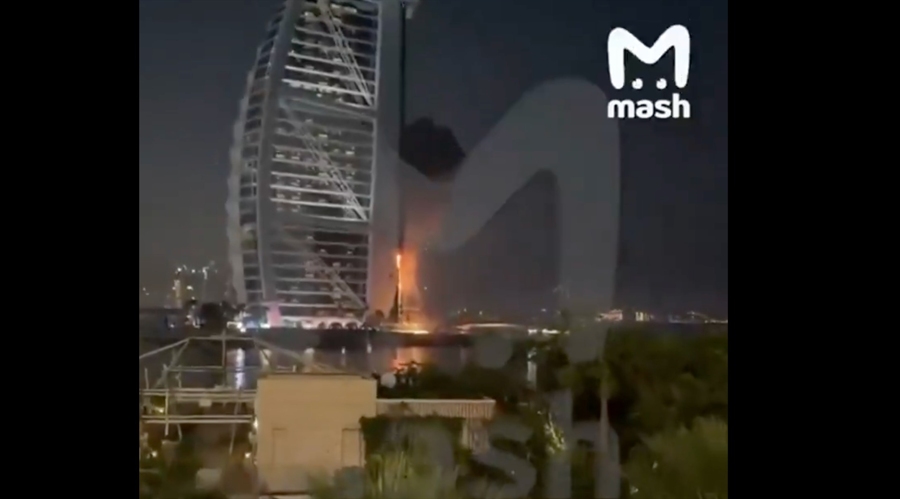
The safety and security of the UAE, especially Dubai, have attracted dozens of contracts for differences (CFD) brokers and other service providers. Clear laws and a tax-friendly status have also helped. However, the Iranian missile strikes over the weekend broke the sense of security around the desert city.
Missiles reportedly struck, and explosions were heard near prime Dubai business centres that house many CFD brokers.
Read more: CFD Brokers, Prop Firms Increase Margins to Protect Themselves against Middle East Turmoil
Brokers Are Concentrated in Downtown Dubai
Brokers register their presence in Dubai through two routes: either as a freezone company or as a mainland company. CFD brokers operate under both structures there.
IG Group, CMC Markets, Pepperstone and Saxo Bank are among the firms operating as Dubai International Financial Centre (DIFC)-regulated freezone entities. Their offices are concentrated in Dubai’s downtown area. Plus500 also maintains two Dubai offices, one in the freezone and the other just a few minutes’ walk away.
Capital.com’s MENA headquarters, which operates as a mainland company, is also in the same vicinity. About a kilometre from there is the office of CFI, one of the region’s largest CFD brokers.
Although Iran at first claimed to be targeting only US military bases in the region, reports later emerged of missile strikes and explosions in non-military public areas in Dubai and Abu Dhabi.
According to Gulf News, the targeted areas in Dubai include Dubai International Airport, Palm Jumeirah and Burj Al Arab. The BBC also reported explosion sounds, smoke and flames at the Fairmont The Palm hotel and in the Dubai Marina and Jumeirah Beach area.
- Dubai Hit by Iranian Retaliation as Gulf Tensions Escalate
- Exclusive: CFD Broker ACCM Eyes MENA, Europe Expansion after Record January Trading Volume
- PU Prime Follows the Trend, Enters the UAE with a Cat 5 Licence
Many unconfirmed reports also claimed that loud explosions were heard in the downtown area.
Notably, the UAE and other Middle Eastern countries closed their airspace. UAE authorities also confirmed that their defence systems intercepted 137 missiles and 209 drones as of press time. Many of the explosion sounds may have been from those interceptions.
Authorities have confirmed that sounds heard in various areas of Dubai are the result of air defence interception operations. Relevant teams continue to monitor the situation and take all necessary measures to ensure public safety. The public is urged to rely solely on official…
— Dubai Media Office (@DXBMediaOffice) March 1, 2026
Dubai is home to many CFD brokers and other service providers in the retail trading industry. Some are headquartered there, while the majority are international companies that have opened regional offices to tap into the local market and talent.
The offices of Equiti and Forex.com are on the other side of the city, in proximity to Palm Jumeirah, but still kilometres away from the confirmed strike area.
Unfortunately, I had to leave Dubai for Europe a week ago — so I’m not only missing the free fireworks from Iran, but also exposing myself to greater risk. Given Europe’s crime rates, Dubai is statistically safer even with missiles flying. Can’t wait to be back.
— Pavel Durov (@durov) March 1, 2026
"The near-term outlook is likely to turn more cautious, but Dubai is unlikely to lose its standing as a leading hub for the CFD industry," said Zak Hashemi, Leverate's Manager, UAE. "While the attack has raised concerns around operational resilience and business continuity, the city’s core strengths, world-class infrastructure, deep talent pools, and strategic regional access, remain firmly intact. For most brokers and service providers, the response will be increased vigilance and stronger contingency planning rather than any meaningful retreat."
Leverate, a technology provider in the trading industry, opened its Dubai office in mid-2024. Several other tech providers also established physical presence in the city to be in close proximity to their clients.
Apart from CFD brokers, Dubai also attracted many crypto exchanges with its clear laws. The city even set up a separate regulator to oversee the crypto companies.
"In my conversations with executives & founders, nobody is discussing relocation from Dubai," said Anton Golub, Dubai-based digital asset markets advisor and founder. "Priority is operational resilience: contingency planning, tighter risk limits, and stricter counterparty exposure."
"Dubai remains the leading crypto hub globally, because licensing is efficient, free-zone setup is fast, and visas, tax treatment, talent density, and regional capital make scaling practical. You can see UAE digital asset ecosystem depth in the numbers: DMCC’s Crypto Centre is past 700 companies, VARA has 42 licensed/in-principle VASPs in Dubai, and ADGM already has 20+ regulated firms active in virtual assets - density you don’t rebuild overnight."
Local Capital Markets Are Closed
Meanwhile, trading on Dubai financial markets has been suspended on Monday and Tuesday. The Abu Dhabi Securities Exchange (ADX) also confirmed closure for the two days after an order by the Capital Market Authority (CMA), the local regulator.
“In implementation of its supervisory and regulatory role over the UAE capital markets, and pursuant to the applicable laws and regulations, the UAE Capital Market Authority announces that the UAE capital markets, including the Abu Dhabi Securities Exchange (ADX) and Dubai Financial Market (DFM), will be closed effective Monday, 2 March 2026, and until further notice,” the CMA stated in a notice.
The regulator also oversees dozens of mainland CFD brokers that have obtained an operational licence in the country for their local operations.


