The long anticipated changes to the Markets in Financial Instruments Directive (MiFID), announced earlier this week, is set to bring a wave of regulatory changes, as a result of the European Parliaments recent agreement.
Rules aimed to help ensure safer and more efficient financial markets for investors were formally agreed upon during a meeting between negotiators for the European Parliament and the Council of Ministers on Tuesday, and were announced in an official press release by the European Parliament updated on Wednesday of this week.
The general agreement, while not officially ratified or written in full, is aimed to revamp the EU Directive on Markets in Financial Instruments (MiFID), and will likely have a significant impact on how EU financial institutions conduct business, as well as certain software and technology service providers, and therefore affecting end-users (fund managers, traders and investors) in the 28 member union. The press release summarized the changes in the following four areas:
Market structure
Investor protection
Commodities
High-frequency algorithmic trading
The changes are designed with the target of curbing speculative commodity trading by establishing position limits (like such limits that exist in the U.S.), the regulation of high- frequency trading (HFT) to lessen systemic risk and price manipulation, and closing of related loopholes in the current legislation included in existing MiFiD I.
Formal Agreement, No Full Text Yet, Technicals Still Need To Be Addressed
Forex Magnates spoke with spokespersons from the EU Parliament who agreed that the agreement was just a political one at the moment and that no official text has been drafted as yet, and how minor technical issues still existing must first be overcome before anyone is affected, or under the scope of the new mandates that have been agreed upon.
EU Banks [source: European Commission, ECB, and European Parliament]
Paraphrasing the comparison made earlier this week, when Forex Magnates reported about this news, after it was compared metaphorically to the Dodd-Frank Act, which had taken many months and years to go into effect after its initial proposal, and even longer to be thoroughly understood, the new changes agreed upon on Tuesday by the EU parliament will be massively significant to market participants, including some 6,000 banks in the area.
The plan for changes to come had been expected to arrive in 2014, and according to the official press release the rules were described as "comprehensive,” and will apply to market operators and services providing post-trade transparency information in the European Union.
These are laid out in two pieces of legislation, one a directive governing authorization and organization of trading venues and investor protection, and the other a directly applicable regulation dealing with transparency and access to trading venues.
Trading Platform Systems to Be Regulated?
According to the official EU press release concerning these changes, it was noted that all systems enabling market players to buy and sell financial instruments would have to operate as Regulated Markets (RMs) like stock exchanges, Multilateral Trading Facilities (MTFs) or Organized Trading Facilities (OTFs) designed to make sure that all trading venues are captured by the [soon-to-be updated] Market in Financial Instruments Directive (MiFID). Members of Forex Magnates' research team expect these changes will affect bilateral platforms, or cross broker B2B providers, more than it will a B2C platform where end clients trade directly with a counterparty. The details however, still remain unannounced by the EU Parliament.
Source: iFXexpo.com
During a panel that discussed best execution in FX, at the last iFX Expo organized by Forex Magnates and Conversion Pros in Macau, industry experts compared the contrasting sides of exchange models with the off-exchange space, including MTFs with ECNs and the sheer size of FX market Liquidity broadly fragmented across its mostly decentralized structure. It was noted how FX was not likely to become an on-exchange business overnight, but rather over a period of several decades -perhaps.
Regulatory Tightening May Drive Consolidation and Shift Flows Outbound
The U.S had seen such an exodus develop in the Spot Retail FX industry after a wave of rules made it increasingly difficult for brokers to operate efficiently and competitively in a region that was once their biggest bread-winner, thus prompting them to diversify in other jurisdictions which then became the beneficiaries of the changes originally aimed to improve domestic competitiveness of the U.S markets and its integrity.
Therefore, any burdensome changes to brokerages even while the long-term benefits could be fruitful - could make for short-term turbulence that may be quite bumpy - depending on a financial institution's flexibility with complying with such changes, as well as the impact to respective trading volumes and revenues that could result.
Considering the stark move by the EU based on this Tuesday’s informal agreement, this would have a significant impact on software providers, and platform developers requiring them to either utilize the regulatory licenses of their licensees or brokerages using their respective platforms, or require them to become directly regulated.
The impact on brokerages would be to shift price discovery towards an exchange model which could help price integrity as best execution would become standardized like listed products.
While the Dodd-Frank related rules took a while to affect the market, in a Parliamentary system like the EU, rule-making can be enacted swiftly versus the Presidential system of the U.S with its many checks and balances.
Algo’s Defined, Must be Approved, Tracked and Circuit Breaker Enabled
EU Parliament also introduced, for the first time at the EU level, rules on algorithmic trading in financial instruments. As defined by these rules, such trading takes place where a computer algorithm automatically determines individual parameters of orders, such as whether to initiate the order, the timing, price or quantity, as per the generalized description. Any investment firm engaging in this would have to have effective monitoring systems and controls in place, such as “circuit breakers” that stop the trading process if price volatility gets too high. This could help prevent a flash crash or volatility from an algo-gone-wild.
To minimize systemic risk, the algorithms used would have to be tested on venues and authorized by regulators. Moreover, records of all placed orders and cancellations of orders would have to be stored and made available to the competent authority upon request. Such a process could expose certain proprietary data to security risks, or at worst have certain program determined unfit for trading at a given venue -yet this screening could also help deter malicious algorithms that could otherwise cause harm.
Last but not least, dark pools - where a lack of transparency purposefully prevails and benefits larger orders from institutional flows - will be banned if it's deemed to create unfair dealings, thus pushing significant flows to venues where the majority of the public trades under existing best execution and available prices printed to the exchange "tape."
Expected Benefits of MiFID II, from the European Parliaments Perspective
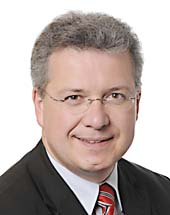
Commenting in an official press release by the EPP group, which is the largest political group in the European Parliament with 274 members from the 27 member states, Markus Ferber a Member of Parliament (MEP) involved in the new legislation said,"The new rules will remedy the weaknesses of the financial markets which had become apparent in the worldwide crisis. The whole financial system will profit from the new and ambitious requirements. All market participants get a higher degree of stability and security, from the retail investor to the multinational investment bank."
Markus Ferber, EU Member of Parliament (MEP), and Committee on Economic and Monetary Affairs
Regarding the new crackdown on HFT, and requirements for automated algorithmic trading, Mr. Ferber added, "We have put the brakes on high-frequency trade which had quarreled markets enormously," and added regarding the new speculative position limits aimed to protect commodity prices from undue volatility, "It is not in the interest of society as a whole when the price of rice or grain goes up simply because there has been speculation on the markets."
Mr. Ferber concluded, "The EU is the first main player worldwide to introduce such developed and modern standards."
While some of such rules have already been in place for some time by self-regulated exchanges in parts of Europe, the new mandates standardizing these processes and requiring their compliance EU-wide could significantly hamper business from an administrative perspective as firms would need the policies and procedures and technology capabilities in place to carry out these new obligations.
From OTC to Listed, A Globally Shifting Paradigm, But is it a Panacea?
According to the new EU-wide changes under the revised MiFID, trading on OTFs would be restricted to non-equities, such as interests in bonds, structured finance products, emission allowances or derivatives.
The trading obligation would ensure that investment firms do their trades in shares on organized trading venues such as RMs or MTFs. Transactions in derivatives subject to this obligation would have to be concluded on RMs, MTFs, or OTFs.
Under the new rules, the duty of firms providing investment services to act in clients’ best interests would also include designing investment products for specified groups of clients according to their needs, withdrawing “toxic” products from trading and ensuring that any marketing information is clearly identifiable as such and not misleading. Clients should also be informed whether the advice offered is independent or not, and about the risks associated with proposed investment products and strategies.
[source: European Commission, ECB, and European Parliament]
ESMA is expected to determine on position size limits for commodity speculators, whether trading on-exchange or in over-the-counter (OTC) markets, while some rules under MiFiD II will only be implemented by 2016, to support orderly pricing and prevent market distorting positions and market abuse to limit the size of a net position which a person may hold in commodity derivatives, given their potential impact on food and energy prices. Under the new rules, positions in commodity derivatives (traded on trading venues and over the counter), would be limited.
Position limits would not apply to positions that are objectively measurable as reducing the risks directly related to the commercial activity, as noted in the press release, and Third countries whose rules are equivalent to the new EU rules would be able to benefit from the “EU passport” when providing services to professionals.
The key word is "if" such third country's rules are equivalent [to new EU Rules], for EU-passported firms. The details of this deal will be now fine-tuned in technical meetings, as noted above, and the plenary vote is expected for the March session of the European Parliament.
A full copy of the press release can be found on the Parliament's website, and a copy of the speech by European Commission (EC) member Michel Barnier who is the commissioner of Internal Markets and Services at the EC, after his remarks following the agreement. The news precluded a senate hearing in France on Bitcoins, as reported by Payments Magnates just yesterday.
Rules aimed to help ensure safer and more efficient financial markets for investors were formally agreed upon during a meeting between negotiators for the European Parliament and the Council of Ministers on Tuesday, and were announced in an official press release by the European Parliament updated on Wednesday of this week.
The general agreement, while not officially ratified or written in full, is aimed to revamp the EU Directive on Markets in Financial Instruments (MiFID), and will likely have a significant impact on how EU financial institutions conduct business, as well as certain software and technology service providers, and therefore affecting end-users (fund managers, traders and investors) in the 28 member union. The press release summarized the changes in the following four areas:
Market structure
Investor protection
Commodities
High-frequency algorithmic trading
The changes are designed with the target of curbing speculative commodity trading by establishing position limits (like such limits that exist in the U.S.), the regulation of high- frequency trading (HFT) to lessen systemic risk and price manipulation, and closing of related loopholes in the current legislation included in existing MiFiD I.
Formal Agreement, No Full Text Yet, Technicals Still Need To Be Addressed
Forex Magnates spoke with spokespersons from the EU Parliament who agreed that the agreement was just a political one at the moment and that no official text has been drafted as yet, and how minor technical issues still existing must first be overcome before anyone is affected, or under the scope of the new mandates that have been agreed upon.
EU Banks [source: European Commission, ECB, and European Parliament]
Paraphrasing the comparison made earlier this week, when Forex Magnates reported about this news, after it was compared metaphorically to the Dodd-Frank Act, which had taken many months and years to go into effect after its initial proposal, and even longer to be thoroughly understood, the new changes agreed upon on Tuesday by the EU parliament will be massively significant to market participants, including some 6,000 banks in the area.
The plan for changes to come had been expected to arrive in 2014, and according to the official press release the rules were described as "comprehensive,” and will apply to market operators and services providing post-trade transparency information in the European Union.
These are laid out in two pieces of legislation, one a directive governing authorization and organization of trading venues and investor protection, and the other a directly applicable regulation dealing with transparency and access to trading venues.
Trading Platform Systems to Be Regulated?
According to the official EU press release concerning these changes, it was noted that all systems enabling market players to buy and sell financial instruments would have to operate as Regulated Markets (RMs) like stock exchanges, Multilateral Trading Facilities (MTFs) or Organized Trading Facilities (OTFs) designed to make sure that all trading venues are captured by the [soon-to-be updated] Market in Financial Instruments Directive (MiFID). Members of Forex Magnates' research team expect these changes will affect bilateral platforms, or cross broker B2B providers, more than it will a B2C platform where end clients trade directly with a counterparty. The details however, still remain unannounced by the EU Parliament.
Source: iFXexpo.com
During a panel that discussed best execution in FX, at the last iFX Expo organized by Forex Magnates and Conversion Pros in Macau, industry experts compared the contrasting sides of exchange models with the off-exchange space, including MTFs with ECNs and the sheer size of FX market Liquidity broadly fragmented across its mostly decentralized structure. It was noted how FX was not likely to become an on-exchange business overnight, but rather over a period of several decades -perhaps.
Regulatory Tightening May Drive Consolidation and Shift Flows Outbound
The U.S had seen such an exodus develop in the Spot Retail FX industry after a wave of rules made it increasingly difficult for brokers to operate efficiently and competitively in a region that was once their biggest bread-winner, thus prompting them to diversify in other jurisdictions which then became the beneficiaries of the changes originally aimed to improve domestic competitiveness of the U.S markets and its integrity.
Therefore, any burdensome changes to brokerages even while the long-term benefits could be fruitful - could make for short-term turbulence that may be quite bumpy - depending on a financial institution's flexibility with complying with such changes, as well as the impact to respective trading volumes and revenues that could result.
Considering the stark move by the EU based on this Tuesday’s informal agreement, this would have a significant impact on software providers, and platform developers requiring them to either utilize the regulatory licenses of their licensees or brokerages using their respective platforms, or require them to become directly regulated.
The impact on brokerages would be to shift price discovery towards an exchange model which could help price integrity as best execution would become standardized like listed products.
While the Dodd-Frank related rules took a while to affect the market, in a Parliamentary system like the EU, rule-making can be enacted swiftly versus the Presidential system of the U.S with its many checks and balances.
Algo’s Defined, Must be Approved, Tracked and Circuit Breaker Enabled
EU Parliament also introduced, for the first time at the EU level, rules on algorithmic trading in financial instruments. As defined by these rules, such trading takes place where a computer algorithm automatically determines individual parameters of orders, such as whether to initiate the order, the timing, price or quantity, as per the generalized description. Any investment firm engaging in this would have to have effective monitoring systems and controls in place, such as “circuit breakers” that stop the trading process if price volatility gets too high. This could help prevent a flash crash or volatility from an algo-gone-wild.
To minimize systemic risk, the algorithms used would have to be tested on venues and authorized by regulators. Moreover, records of all placed orders and cancellations of orders would have to be stored and made available to the competent authority upon request. Such a process could expose certain proprietary data to security risks, or at worst have certain program determined unfit for trading at a given venue -yet this screening could also help deter malicious algorithms that could otherwise cause harm.
Last but not least, dark pools - where a lack of transparency purposefully prevails and benefits larger orders from institutional flows - will be banned if it's deemed to create unfair dealings, thus pushing significant flows to venues where the majority of the public trades under existing best execution and available prices printed to the exchange "tape."
Expected Benefits of MiFID II, from the European Parliaments Perspective
Commenting in an official press release by the EPP group, which is the largest political group in the European Parliament with 274 members from the 27 member states, Markus Ferber a Member of Parliament (MEP) involved in the new legislation said,"The new rules will remedy the weaknesses of the financial markets which had become apparent in the worldwide crisis. The whole financial system will profit from the new and ambitious requirements. All market participants get a higher degree of stability and security, from the retail investor to the multinational investment bank."
Markus Ferber, EU Member of Parliament (MEP), and Committee on Economic and Monetary Affairs
Regarding the new crackdown on HFT, and requirements for automated algorithmic trading, Mr. Ferber added, "We have put the brakes on high-frequency trade which had quarreled markets enormously," and added regarding the new speculative position limits aimed to protect commodity prices from undue volatility, "It is not in the interest of society as a whole when the price of rice or grain goes up simply because there has been speculation on the markets."
Mr. Ferber concluded, "The EU is the first main player worldwide to introduce such developed and modern standards."
While some of such rules have already been in place for some time by self-regulated exchanges in parts of Europe, the new mandates standardizing these processes and requiring their compliance EU-wide could significantly hamper business from an administrative perspective as firms would need the policies and procedures and technology capabilities in place to carry out these new obligations.
From OTC to Listed, A Globally Shifting Paradigm, But is it a Panacea?
According to the new EU-wide changes under the revised MiFID, trading on OTFs would be restricted to non-equities, such as interests in bonds, structured finance products, emission allowances or derivatives.
The trading obligation would ensure that investment firms do their trades in shares on organized trading venues such as RMs or MTFs. Transactions in derivatives subject to this obligation would have to be concluded on RMs, MTFs, or OTFs.
Under the new rules, the duty of firms providing investment services to act in clients’ best interests would also include designing investment products for specified groups of clients according to their needs, withdrawing “toxic” products from trading and ensuring that any marketing information is clearly identifiable as such and not misleading. Clients should also be informed whether the advice offered is independent or not, and about the risks associated with proposed investment products and strategies.
[source: European Commission, ECB, and European Parliament]
ESMA is expected to determine on position size limits for commodity speculators, whether trading on-exchange or in over-the-counter (OTC) markets, while some rules under MiFiD II will only be implemented by 2016, to support orderly pricing and prevent market distorting positions and market abuse to limit the size of a net position which a person may hold in commodity derivatives, given their potential impact on food and energy prices. Under the new rules, positions in commodity derivatives (traded on trading venues and over the counter), would be limited.
Position limits would not apply to positions that are objectively measurable as reducing the risks directly related to the commercial activity, as noted in the press release, and Third countries whose rules are equivalent to the new EU rules would be able to benefit from the “EU passport” when providing services to professionals.
The key word is "if" such third country's rules are equivalent [to new EU Rules], for EU-passported firms. The details of this deal will be now fine-tuned in technical meetings, as noted above, and the plenary vote is expected for the March session of the European Parliament.
A full copy of the press release can be found on the Parliament's website, and a copy of the speech by European Commission (EC) member Michel Barnier who is the commissioner of Internal Markets and Services at the EC, after his remarks following the agreement. The news precluded a senate hearing in France on Bitcoins, as reported by Payments Magnates just yesterday.
Italy’s Consob Tightens Net on AI-Fueled Scams With Fresh Website Bans
FP Markets Winner Spotlight 🏆 | Global Broker of the Year 2025 #Trading #Broker #Innovation #Shorts
FP Markets Winner Spotlight 🏆 | Global Broker of the Year 2025 #Trading #Broker #Innovation #Shorts
FP Markets takes the spotlight as Global Broker of the Year 2025 at the Finance Magnates Awards.
Martin Stoilov, Head of Client Experience, shares that trust, innovation, and people played a key role in the company’s success, supported by a strong foundation of integrity and client-centricity.
Following this milestone, FP Markets continues to focus on growth, technology investment, and its core values of transparency and excellence.
👉 Be part of FM Awards 2026: https://awards.financemagnates.com/#nominate
FP Markets takes the spotlight as Global Broker of the Year 2025 at the Finance Magnates Awards.
Martin Stoilov, Head of Client Experience, shares that trust, innovation, and people played a key role in the company’s success, supported by a strong foundation of integrity and client-centricity.
Following this milestone, FP Markets continues to focus on growth, technology investment, and its core values of transparency and excellence.
👉 Be part of FM Awards 2026: https://awards.financemagnates.com/#nominate
In this video, we review @HolaPrimeMarketsOfficial, a multi-asset forex and CFDs broker offering different account types, trading platforms, and flexible trading conditions.
We cover the broker’s overall offering, including account options, trading environment, platforms like MT4 and MT5, and additional services such as managed accounts and fast withdrawals.
Watch the full video to see if Hola Prime Markets fits your trading needs.
📣 Stay up to date with the latest in finance and trading. Follow Finance Magnates for industry news, insights, and global event coverage.
Connect with us:
🔗 LinkedIn: /financemagnates
👍 Facebook: /financemagnates
📸 Instagram: https://www.instagram.com/financemagnates
🐦 X: https://x.com/financemagnates
🎥 TikTok: https://www.tiktok.com/tag/financemagnates
▶️ YouTube: /@financemagnates_official
#HolaPrime #ForexBroker #CFDTrading #FinanceMagnates #Trading #Forex #BrokerReview
In this video, we review @HolaPrimeMarketsOfficial, a multi-asset forex and CFDs broker offering different account types, trading platforms, and flexible trading conditions.
We cover the broker’s overall offering, including account options, trading environment, platforms like MT4 and MT5, and additional services such as managed accounts and fast withdrawals.
Watch the full video to see if Hola Prime Markets fits your trading needs.
📣 Stay up to date with the latest in finance and trading. Follow Finance Magnates for industry news, insights, and global event coverage.
Connect with us:
🔗 LinkedIn: /financemagnates
👍 Facebook: /financemagnates
📸 Instagram: https://www.instagram.com/financemagnates
🐦 X: https://x.com/financemagnates
🎥 TikTok: https://www.tiktok.com/tag/financemagnates
▶️ YouTube: /@financemagnates_official
#HolaPrime #ForexBroker #CFDTrading #FinanceMagnates #Trading #Forex #BrokerReview
Hola Prime Review: What You Need to Know | Full Breakdown by Finance Magnates
Hola Prime Review: What You Need to Know | Full Breakdown by Finance Magnates
In this video, we review @HolaPrime_Global, a proprietary trading firm offering evaluation programs and performance-based payouts in simulated market environments.
We cover how the challenge model works, including account types, profit splits (up to 95%), trading rules, and what it takes to reach a funded account. You’ll also learn about available platforms like MT4, MT5, cTrader, and more, along with insights into payouts, support, and trading conditions.
Watch the full video to see if Hola Prime fits your trading style.
📣 Stay up to date with the latest in finance and trading. Follow Finance Magnates for industry news, insights, and global event coverage.
Connect with us:
🔗 LinkedIn: /financemagnates
👍 Facebook: /financemagnates
📸 Instagram: https://www.instagram.com/financemagnates
🐦 X: https://x.com/financemagnates
🎥 TikTok: https://www.tiktok.com/tag/financemagnates
▶️ YouTube: /@financemagnates_official
#HolaPrime #PropFirm #Trading #FinanceMagnates #Forex #FuturesTrading #TradingReview #PropFirmReview
In this video, we review @HolaPrime_Global, a proprietary trading firm offering evaluation programs and performance-based payouts in simulated market environments.
We cover how the challenge model works, including account types, profit splits (up to 95%), trading rules, and what it takes to reach a funded account. You’ll also learn about available platforms like MT4, MT5, cTrader, and more, along with insights into payouts, support, and trading conditions.
Watch the full video to see if Hola Prime fits your trading style.
📣 Stay up to date with the latest in finance and trading. Follow Finance Magnates for industry news, insights, and global event coverage.
Connect with us:
🔗 LinkedIn: /financemagnates
👍 Facebook: /financemagnates
📸 Instagram: https://www.instagram.com/financemagnates
🐦 X: https://x.com/financemagnates
🎥 TikTok: https://www.tiktok.com/tag/financemagnates
▶️ YouTube: /@financemagnates_official
#HolaPrime #PropFirm #Trading #FinanceMagnates #Forex #FuturesTrading #TradingReview #PropFirmReview
Axi Winner Spotlight 🏆 | Global Most Innovative Broker 2025 #Innovation #Trading #Fintech #Broker
Axi Winner Spotlight 🏆 | Global Most Innovative Broker 2025 #Innovation #Trading #Fintech #Broker
Axi takes the spotlight at the Finance Magnates Awards, winning Global Most Innovative Broker 2025.
Olivia Xenofontos and Ivanna Openko share how the team will feel: proud, motivated, and ready to keep delivering.
They also describe the night as well-organized, focused, and enjoyable for all.
👉 Be part of FM Awards 2026.
Axi takes the spotlight at the Finance Magnates Awards, winning Global Most Innovative Broker 2025.
Olivia Xenofontos and Ivanna Openko share how the team will feel: proud, motivated, and ready to keep delivering.
They also describe the night as well-organized, focused, and enjoyable for all.
👉 Be part of FM Awards 2026.
Recognition that matters.
Built on transparency.
Driven by the industry.
The Finance Magnates Awards 2026.
Nominations are now open.
🔗 https://awards.financemagnates.com/?utm_source=SM&utm_medium=social&utm_campaign=recognition-matters
Recognition that matters.
Built on transparency.
Driven by the industry.
The Finance Magnates Awards 2026.
Nominations are now open.
🔗 https://awards.financemagnates.com/?utm_source=SM&utm_medium=social&utm_campaign=recognition-matters




![EU Banks [source: European Commission, ECB, and European Parliament]](https://www.financemagnates.com/wp-content/uploads/fxmag/2014/01/EUbanks.jpg)
![[source: European Commission, ECB, and European Parliament]](https://www.financemagnates.com/wp-content/uploads/fxmag/2014/01/EUoversight.jpg)