CME Group hit Tanius Technology with a $150,000 fine after finding the proprietary trading firm entered outsized orders in Treasury futures markets that exceeded its ability to cover the trades if executed immediately.
CME Fines Proprietary Trading Firm Tanius Technology $150,000
The Chicago Board of Trade Business Conduct Committee panel determined Tanius violated exchange rules between January 2020 and December 2022 by stacking multiple maximum-quantity orders at top price levels in 2-Year, 5-Year, and 10-Year Treasury spread order books during roll periods.
The strategy exploited pro-rata matching algorithms to grab a bigger share of fills relative to other passive traders.
- Following Profit Cuts and Trading Limits, Prop Firm FundingTicks Begins Winding Down
- "Gamified Features in the Evaluation Stages": Arizet Launches Trading Platform for Prop Firms
- Some Topstep Users’ Details Exposed
Had all the firm's resting orders executed at once, the required margin payment would have surpassed the net liquidation value in Tanius' accounts at that time.
The panel ruled this conduct violated CBOT rules prohibiting behavior "inconsistent with just and equitable principles of trade" and actions "detrimental to the interest or welfare of the Exchange".
Different Species of Prop Trading
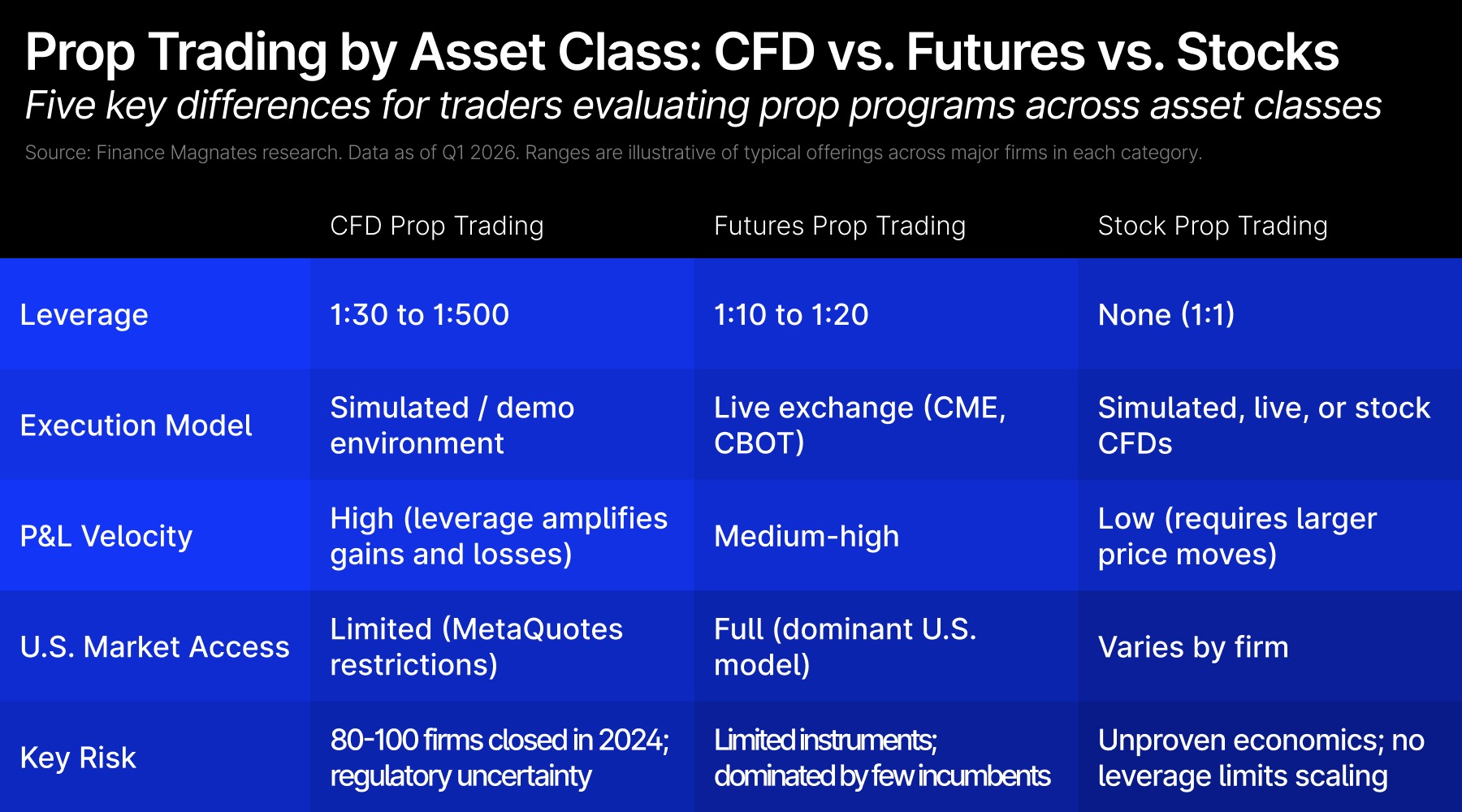
Institutional prop firms like Tanius trade their own capital directly on exchanges and face CME Group's market conduct rules. They shouldn't be confused with retail-focused prop trading platforms such as FTMO or FundedNext, which operate evaluation programs where individual traders compete for access to funded accounts.
FTMO recently adopted institutional-grade Know Your Business protocols, pointing to a broader B2B strategy beyond retail prop trading .
According to the newest research, prop firms targeting retail traders can break even in about one month in South Asia, compared to six months in the US market, with peak return on ad spend touching 12x in some regions .
Moreover, retail prop firms tracked roughly $325 million in payouts to traders in 2025, according to Prop Firm Match's monitoring data, though that figure excluded several major brands.
Second Strike for California Firm
Tanius settled the charges without admitting or denying wrongdoing, but the penalty marks its second run-in with CME Group regulators in less than two years. In May 2025, the firm paid a $95,000 fine for wash trading violations after its automated systems repeatedly matched opposing buy and sell orders in Treasury futures contracts.
That earlier case found Tanius developed anti-wash trade functionality but failed to implement it consistently across trading strategies or communicate it adequately to traders. Between March and October 2023, the firm's algorithms self-matched "on more than an incidental basis" in 10-Year T-Note, Ultra 10-Year, and Treasury Bond futures.
CME has also expanded into new market segments, including a partnership with FanDuel to offer event contracts on sports outcomes alongside traditional financial products . That move arrived amid regulatory questions about whether such contracts constitute gambling.