The Financial Industry Regulatory Authority alerts investors concerning the risks of bitcoin trading including recent volatility as well as the advent of fraudsters trying to use bitcoin-related scams to dupe investors.
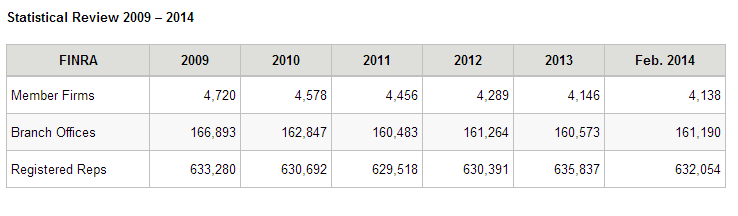
The not-for-profit Financial Industry Regulatory Authority (FINRA), who oversees some 4,135 of its member firms representing over 150,000 registered representatives, and a total of 532,054 brokers, has today announced an investor alert to the public at large within the U.S. and thus cautioning over 300 million Americans of the risk of bitcoin investments.
The independent non-governmental agency today issued a new investor alert called “Bitcoin: More than a Bit Risky” with the “Bit” reference appearing as a pun intended, as the agency emphasized the risks that trading bitcoins poses to investors.
The allure of digital currencies has also lured victims into traps as fraudsters look for the next best thing to exploit using bitcoin as their latest vehicle.
Bitcoin Platforms under the Alert
In the alert, FINRA said that in addition to the speculative risks related to price volatility, there is also the risk of fraud related to firms claiming to offer bitcoin payment platforms and other bitcoin-related products and services.
Despite the risks, as the interest in digital currencies has skyrocketed evident by the widespread media attention on related developments, several foreign exchange online brokerages have launched related products to capture this building wave of cyrpto -currency enthusiasm.
FINRA's Investor Alert was described by the regulator as having been added to a growing chorus of Bitcoin-related warnings from other regulators, and how the threat of Bitcoin-related fraud is a real danger for investors looking to make a quick profit from Bitcoin.
For example, on February 19, 2014, the SEC suspended trading in the securities of Imogo Mobile Technologies Corp, which had announced testing of a new mobile platform for Bitcoin a few weeks earlier, as per the press release.
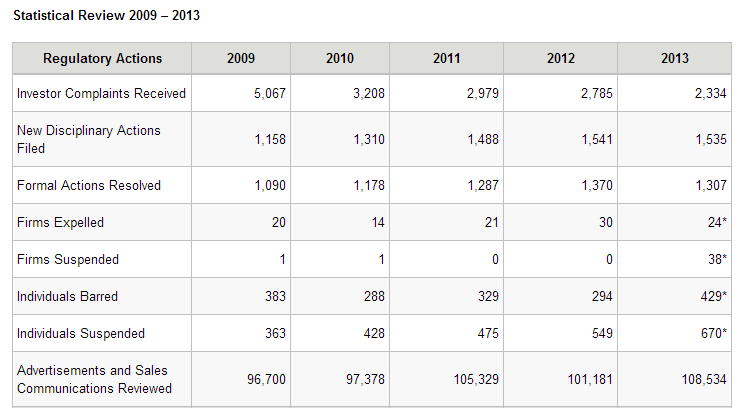
The regulator has seen a decline in the number of its regulated members as fierce competition among participants have caused an exit for some brokers not able to handle the pressure including the costs of doings business in the U.S.
Last year, via its 3,400 employees dedicated to market integrity and investor education, and from 20 offices across the U.S., FINRA referred 660 fraud cases for prosecution, and $74.5M in fines and restitution were levied against fraudulent traders in 2013.
The regulor also launched a data analysis tool, and the agency monitors some 6 billion share trades every day, as per data listed on its website.
In addition, after the wave of regulation that blanketed Wall Street firms following Dodd-Frank, meeting regulatory obligations and capital requirements have been too big a compliance challenge for some regulated broker-dealers. The above chart shows the numbers, including regulatory actions that FINRA took against some of its member for related member violations.
Gerri Walsh, FINRA's Senior Vice President for Investor Education, commented in the official press release, "Speculators drawn to Bitcoin trading should understand that Bitcoin prices have fluctuated widely, and wildly, almost from the currency's inception."
Gerri Walsh, FINRA's Senior Vice President for Investor Education
Ms. Walsh added regarding the advent of fraud, "Investors looking to get in on the ground floor of a Bitcoin-related company should realize that fraudsters may see the latest digital currency trend as a chance to steal their money through old-fashioned fraud."
In addition to a warning, FINRA published a more detailed review of Bitcoin and discussed many of the risks associated with buying and selling Bitcoin.
As recent events make clear, "Platforms that buy and sell bitcoins can be hacked, and some have failed", the press release read, indirectly citing the demise of Mt.Gox, which has recently filed for bankruptcy protection in Japan.
In addition FINRA added how unlike U.S. banks and credit unions that provide certain guarantees of safety to depositors, there are no such safeguards provided to bitcoins residing in so-called "digital wallets."
Bitcoin Risks Highlighted in Detail by FINRA
Some of the risks of Bitcoin included in the udpate from FINRA today, were listed as follows in the official press release:
Digital currency such as Bitcoin is not legal tender. No law requires companies or individuals to accept bitcoins as a form of payment. Instead, Bitcoin use is limited to businesses and individuals that are willing to accept bitcoins. If no one accepts bitcoins, bitcoins will become worthless.
Platforms that buy and sell bitcoins can be hacked, and some have failed. In addition, like the platforms themselves, digital wallets can be hacked. As a result, consumers can—and have—lost money.
Bitcoin transactions can be subject to fraud and theft. For example, a fraudster could pose as a Bitcoin exchange, Bitcoin intermediary or trader in an effort to lure you to send money, which is then stolen.
Unlike US banks and credit unions that provide certain guarantees of safety to depositors, there are no such safeguards provided to digital wallets.
In part because of the anonymity Bitcoin offers, it has been used in illegal activity, including drug dealing, money laundering and other forms of illegal commerce. Abuses could impact consumers and speculators; for instance, law enforcement agencies could shut down or restrict the use of platforms and exchanges, limiting or shutting off the ability to use or trade bitcoins.
There are a number of exam priorities that FINRA said it had in the beginning of the year for 2014, including enhancing suitability determinations that firms make, with guidance provided in regulatory notice 13-31.
In addition, FINRA added that some of its other exam priorities included reviewing Cyber Security to help ensure that firm's policies and procedures and the security of their infrastructure will suffice to protect sensitive customer data against hackers and any resulting cybertheft or unauthorized access.
Other priorities included AML and Best-execution, Algo & HFT and Trading Programs, as well as recidivist brokers who follow a pattern of complaints or sale practices abuses - in order to swiftly investigate against them.
The not-for-profit Financial Industry Regulatory Authority (FINRA), who oversees some 4,135 of its member firms representing over 150,000 registered representatives, and a total of 532,054 brokers, has today announced an investor alert to the public at large within the U.S. and thus cautioning over 300 million Americans of the risk of bitcoin investments.
The independent non-governmental agency today issued a new investor alert called “Bitcoin: More than a Bit Risky” with the “Bit” reference appearing as a pun intended, as the agency emphasized the risks that trading bitcoins poses to investors.
The allure of digital currencies has also lured victims into traps as fraudsters look for the next best thing to exploit using bitcoin as their latest vehicle.
Bitcoin Platforms under the Alert
In the alert, FINRA said that in addition to the speculative risks related to price volatility, there is also the risk of fraud related to firms claiming to offer bitcoin payment platforms and other bitcoin-related products and services.
Despite the risks, as the interest in digital currencies has skyrocketed evident by the widespread media attention on related developments, several foreign exchange online brokerages have launched related products to capture this building wave of cyrpto -currency enthusiasm.
FINRA's Investor Alert was described by the regulator as having been added to a growing chorus of Bitcoin-related warnings from other regulators, and how the threat of Bitcoin-related fraud is a real danger for investors looking to make a quick profit from Bitcoin.
For example, on February 19, 2014, the SEC suspended trading in the securities of Imogo Mobile Technologies Corp, which had announced testing of a new mobile platform for Bitcoin a few weeks earlier, as per the press release.
The regulator has seen a decline in the number of its regulated members as fierce competition among participants have caused an exit for some brokers not able to handle the pressure including the costs of doings business in the U.S.
Last year, via its 3,400 employees dedicated to market integrity and investor education, and from 20 offices across the U.S., FINRA referred 660 fraud cases for prosecution, and $74.5M in fines and restitution were levied against fraudulent traders in 2013.
The regulor also launched a data analysis tool, and the agency monitors some 6 billion share trades every day, as per data listed on its website.
In addition, after the wave of regulation that blanketed Wall Street firms following Dodd-Frank, meeting regulatory obligations and capital requirements have been too big a compliance challenge for some regulated broker-dealers. The above chart shows the numbers, including regulatory actions that FINRA took against some of its member for related member violations.
Gerri Walsh, FINRA's Senior Vice President for Investor Education, commented in the official press release, "Speculators drawn to Bitcoin trading should understand that Bitcoin prices have fluctuated widely, and wildly, almost from the currency's inception."
Gerri Walsh, FINRA's Senior Vice President for Investor Education
Ms. Walsh added regarding the advent of fraud, "Investors looking to get in on the ground floor of a Bitcoin-related company should realize that fraudsters may see the latest digital currency trend as a chance to steal their money through old-fashioned fraud."
In addition to a warning, FINRA published a more detailed review of Bitcoin and discussed many of the risks associated with buying and selling Bitcoin.
As recent events make clear, "Platforms that buy and sell bitcoins can be hacked, and some have failed", the press release read, indirectly citing the demise of Mt.Gox, which has recently filed for bankruptcy protection in Japan.
In addition FINRA added how unlike U.S. banks and credit unions that provide certain guarantees of safety to depositors, there are no such safeguards provided to bitcoins residing in so-called "digital wallets."
Bitcoin Risks Highlighted in Detail by FINRA
Some of the risks of Bitcoin included in the udpate from FINRA today, were listed as follows in the official press release:
Digital currency such as Bitcoin is not legal tender. No law requires companies or individuals to accept bitcoins as a form of payment. Instead, Bitcoin use is limited to businesses and individuals that are willing to accept bitcoins. If no one accepts bitcoins, bitcoins will become worthless.
Platforms that buy and sell bitcoins can be hacked, and some have failed. In addition, like the platforms themselves, digital wallets can be hacked. As a result, consumers can—and have—lost money.
Bitcoin transactions can be subject to fraud and theft. For example, a fraudster could pose as a Bitcoin exchange, Bitcoin intermediary or trader in an effort to lure you to send money, which is then stolen.
Unlike US banks and credit unions that provide certain guarantees of safety to depositors, there are no such safeguards provided to digital wallets.
In part because of the anonymity Bitcoin offers, it has been used in illegal activity, including drug dealing, money laundering and other forms of illegal commerce. Abuses could impact consumers and speculators; for instance, law enforcement agencies could shut down or restrict the use of platforms and exchanges, limiting or shutting off the ability to use or trade bitcoins.
There are a number of exam priorities that FINRA said it had in the beginning of the year for 2014, including enhancing suitability determinations that firms make, with guidance provided in regulatory notice 13-31.
In addition, FINRA added that some of its other exam priorities included reviewing Cyber Security to help ensure that firm's policies and procedures and the security of their infrastructure will suffice to protect sensitive customer data against hackers and any resulting cybertheft or unauthorized access.
Other priorities included AML and Best-execution, Algo & HFT and Trading Programs, as well as recidivist brokers who follow a pattern of complaints or sale practices abuses - in order to swiftly investigate against them.
Italy’s Consob Tightens Net on AI-Fueled Scams With Fresh Website Bans
Featured Videos
FP Markets Winner Spotlight 🏆 | Global Broker of the Year 2025 #Trading #Broker #Innovation #Shorts
FP Markets Winner Spotlight 🏆 | Global Broker of the Year 2025 #Trading #Broker #Innovation #Shorts
FP Markets Winner Spotlight 🏆 | Global Broker of the Year 2025 #Trading #Broker #Innovation #Shorts
FP Markets Winner Spotlight 🏆 | Global Broker of the Year 2025 #Trading #Broker #Innovation #Shorts
FP Markets takes the spotlight as Global Broker of the Year 2025 at the Finance Magnates Awards.
Martin Stoilov, Head of Client Experience, shares that trust, innovation, and people played a key role in the company’s success, supported by a strong foundation of integrity and client-centricity.
Following this milestone, FP Markets continues to focus on growth, technology investment, and its core values of transparency and excellence.
👉 Be part of FM Awards 2026: https://awards.financemagnates.com/#nominate
FP Markets takes the spotlight as Global Broker of the Year 2025 at the Finance Magnates Awards.
Martin Stoilov, Head of Client Experience, shares that trust, innovation, and people played a key role in the company’s success, supported by a strong foundation of integrity and client-centricity.
Following this milestone, FP Markets continues to focus on growth, technology investment, and its core values of transparency and excellence.
👉 Be part of FM Awards 2026: https://awards.financemagnates.com/#nominate
FP Markets takes the spotlight as Global Broker of the Year 2025 at the Finance Magnates Awards.
Martin Stoilov, Head of Client Experience, shares that trust, innovation, and people played a key role in the company’s success, supported by a strong foundation of integrity and client-centricity.
Following this milestone, FP Markets continues to focus on growth, technology investment, and its core values of transparency and excellence.
👉 Be part of FM Awards 2026: https://awards.financemagnates.com/#nominate
FP Markets takes the spotlight as Global Broker of the Year 2025 at the Finance Magnates Awards.
Martin Stoilov, Head of Client Experience, shares that trust, innovation, and people played a key role in the company’s success, supported by a strong foundation of integrity and client-centricity.
Following this milestone, FP Markets continues to focus on growth, technology investment, and its core values of transparency and excellence.
👉 Be part of FM Awards 2026: https://awards.financemagnates.com/#nominate
In this video, we review @HolaPrimeMarketsOfficial, a multi-asset forex and CFDs broker offering different account types, trading platforms, and flexible trading conditions.
We cover the broker’s overall offering, including account options, trading environment, platforms like MT4 and MT5, and additional services such as managed accounts and fast withdrawals.
Watch the full video to see if Hola Prime Markets fits your trading needs.
📣 Stay up to date with the latest in finance and trading. Follow Finance Magnates for industry news, insights, and global event coverage.
Connect with us:
🔗 LinkedIn: /financemagnates
👍 Facebook: /financemagnates
📸 Instagram: https://www.instagram.com/financemagnates
🐦 X: https://x.com/financemagnates
🎥 TikTok: https://www.tiktok.com/tag/financemagnates
▶️ YouTube: /@financemagnates_official
#HolaPrime #ForexBroker #CFDTrading #FinanceMagnates #Trading #Forex #BrokerReview
In this video, we review @HolaPrimeMarketsOfficial, a multi-asset forex and CFDs broker offering different account types, trading platforms, and flexible trading conditions.
We cover the broker’s overall offering, including account options, trading environment, platforms like MT4 and MT5, and additional services such as managed accounts and fast withdrawals.
Watch the full video to see if Hola Prime Markets fits your trading needs.
📣 Stay up to date with the latest in finance and trading. Follow Finance Magnates for industry news, insights, and global event coverage.
Connect with us:
🔗 LinkedIn: /financemagnates
👍 Facebook: /financemagnates
📸 Instagram: https://www.instagram.com/financemagnates
🐦 X: https://x.com/financemagnates
🎥 TikTok: https://www.tiktok.com/tag/financemagnates
▶️ YouTube: /@financemagnates_official
#HolaPrime #ForexBroker #CFDTrading #FinanceMagnates #Trading #Forex #BrokerReview
In this video, we review @HolaPrimeMarketsOfficial, a multi-asset forex and CFDs broker offering different account types, trading platforms, and flexible trading conditions.
We cover the broker’s overall offering, including account options, trading environment, platforms like MT4 and MT5, and additional services such as managed accounts and fast withdrawals.
Watch the full video to see if Hola Prime Markets fits your trading needs.
📣 Stay up to date with the latest in finance and trading. Follow Finance Magnates for industry news, insights, and global event coverage.
Connect with us:
🔗 LinkedIn: /financemagnates
👍 Facebook: /financemagnates
📸 Instagram: https://www.instagram.com/financemagnates
🐦 X: https://x.com/financemagnates
🎥 TikTok: https://www.tiktok.com/tag/financemagnates
▶️ YouTube: /@financemagnates_official
#HolaPrime #ForexBroker #CFDTrading #FinanceMagnates #Trading #Forex #BrokerReview
In this video, we review @HolaPrimeMarketsOfficial, a multi-asset forex and CFDs broker offering different account types, trading platforms, and flexible trading conditions.
We cover the broker’s overall offering, including account options, trading environment, platforms like MT4 and MT5, and additional services such as managed accounts and fast withdrawals.
Watch the full video to see if Hola Prime Markets fits your trading needs.
📣 Stay up to date with the latest in finance and trading. Follow Finance Magnates for industry news, insights, and global event coverage.
Connect with us:
🔗 LinkedIn: /financemagnates
👍 Facebook: /financemagnates
📸 Instagram: https://www.instagram.com/financemagnates
🐦 X: https://x.com/financemagnates
🎥 TikTok: https://www.tiktok.com/tag/financemagnates
▶️ YouTube: /@financemagnates_official
#HolaPrime #ForexBroker #CFDTrading #FinanceMagnates #Trading #Forex #BrokerReview
In this video, we review @HolaPrimeMarketsOfficial, a multi-asset forex and CFDs broker offering different account types, trading platforms, and flexible trading conditions.
We cover the broker’s overall offering, including account options, trading environment, platforms like MT4 and MT5, and additional services such as managed accounts and fast withdrawals.
Watch the full video to see if Hola Prime Markets fits your trading needs.
📣 Stay up to date with the latest in finance and trading. Follow Finance Magnates for industry news, insights, and global event coverage.
Connect with us:
🔗 LinkedIn: /financemagnates
👍 Facebook: /financemagnates
📸 Instagram: https://www.instagram.com/financemagnates
🐦 X: https://x.com/financemagnates
🎥 TikTok: https://www.tiktok.com/tag/financemagnates
▶️ YouTube: /@financemagnates_official
#HolaPrime #ForexBroker #CFDTrading #FinanceMagnates #Trading #Forex #BrokerReview
In this video, we review @HolaPrimeMarketsOfficial, a multi-asset forex and CFDs broker offering different account types, trading platforms, and flexible trading conditions.
We cover the broker’s overall offering, including account options, trading environment, platforms like MT4 and MT5, and additional services such as managed accounts and fast withdrawals.
Watch the full video to see if Hola Prime Markets fits your trading needs.
📣 Stay up to date with the latest in finance and trading. Follow Finance Magnates for industry news, insights, and global event coverage.
Connect with us:
🔗 LinkedIn: /financemagnates
👍 Facebook: /financemagnates
📸 Instagram: https://www.instagram.com/financemagnates
🐦 X: https://x.com/financemagnates
🎥 TikTok: https://www.tiktok.com/tag/financemagnates
▶️ YouTube: /@financemagnates_official
#HolaPrime #ForexBroker #CFDTrading #FinanceMagnates #Trading #Forex #BrokerReview
Hola Prime Review: What You Need to Know | Full Breakdown by Finance Magnates
Hola Prime Review: What You Need to Know | Full Breakdown by Finance Magnates
Hola Prime Review: What You Need to Know | Full Breakdown by Finance Magnates
Hola Prime Review: What You Need to Know | Full Breakdown by Finance Magnates
Hola Prime Review: What You Need to Know | Full Breakdown by Finance Magnates
Hola Prime Review: What You Need to Know | Full Breakdown by Finance Magnates
In this video, we review @HolaPrime_Global, a proprietary trading firm offering evaluation programs and performance-based payouts in simulated market environments.
We cover how the challenge model works, including account types, profit splits (up to 95%), trading rules, and what it takes to reach a funded account. You’ll also learn about available platforms like MT4, MT5, cTrader, and more, along with insights into payouts, support, and trading conditions.
Watch the full video to see if Hola Prime fits your trading style.
📣 Stay up to date with the latest in finance and trading. Follow Finance Magnates for industry news, insights, and global event coverage.
Connect with us:
🔗 LinkedIn: /financemagnates
👍 Facebook: /financemagnates
📸 Instagram: https://www.instagram.com/financemagnates
🐦 X: https://x.com/financemagnates
🎥 TikTok: https://www.tiktok.com/tag/financemagnates
▶️ YouTube: /@financemagnates_official
#HolaPrime #PropFirm #Trading #FinanceMagnates #Forex #FuturesTrading #TradingReview #PropFirmReview
In this video, we review @HolaPrime_Global, a proprietary trading firm offering evaluation programs and performance-based payouts in simulated market environments.
We cover how the challenge model works, including account types, profit splits (up to 95%), trading rules, and what it takes to reach a funded account. You’ll also learn about available platforms like MT4, MT5, cTrader, and more, along with insights into payouts, support, and trading conditions.
Watch the full video to see if Hola Prime fits your trading style.
📣 Stay up to date with the latest in finance and trading. Follow Finance Magnates for industry news, insights, and global event coverage.
Connect with us:
🔗 LinkedIn: /financemagnates
👍 Facebook: /financemagnates
📸 Instagram: https://www.instagram.com/financemagnates
🐦 X: https://x.com/financemagnates
🎥 TikTok: https://www.tiktok.com/tag/financemagnates
▶️ YouTube: /@financemagnates_official
#HolaPrime #PropFirm #Trading #FinanceMagnates #Forex #FuturesTrading #TradingReview #PropFirmReview
In this video, we review @HolaPrime_Global, a proprietary trading firm offering evaluation programs and performance-based payouts in simulated market environments.
We cover how the challenge model works, including account types, profit splits (up to 95%), trading rules, and what it takes to reach a funded account. You’ll also learn about available platforms like MT4, MT5, cTrader, and more, along with insights into payouts, support, and trading conditions.
Watch the full video to see if Hola Prime fits your trading style.
📣 Stay up to date with the latest in finance and trading. Follow Finance Magnates for industry news, insights, and global event coverage.
Connect with us:
🔗 LinkedIn: /financemagnates
👍 Facebook: /financemagnates
📸 Instagram: https://www.instagram.com/financemagnates
🐦 X: https://x.com/financemagnates
🎥 TikTok: https://www.tiktok.com/tag/financemagnates
▶️ YouTube: /@financemagnates_official
#HolaPrime #PropFirm #Trading #FinanceMagnates #Forex #FuturesTrading #TradingReview #PropFirmReview
In this video, we review @HolaPrime_Global, a proprietary trading firm offering evaluation programs and performance-based payouts in simulated market environments.
We cover how the challenge model works, including account types, profit splits (up to 95%), trading rules, and what it takes to reach a funded account. You’ll also learn about available platforms like MT4, MT5, cTrader, and more, along with insights into payouts, support, and trading conditions.
Watch the full video to see if Hola Prime fits your trading style.
📣 Stay up to date with the latest in finance and trading. Follow Finance Magnates for industry news, insights, and global event coverage.
Connect with us:
🔗 LinkedIn: /financemagnates
👍 Facebook: /financemagnates
📸 Instagram: https://www.instagram.com/financemagnates
🐦 X: https://x.com/financemagnates
🎥 TikTok: https://www.tiktok.com/tag/financemagnates
▶️ YouTube: /@financemagnates_official
#HolaPrime #PropFirm #Trading #FinanceMagnates #Forex #FuturesTrading #TradingReview #PropFirmReview
In this video, we review @HolaPrime_Global, a proprietary trading firm offering evaluation programs and performance-based payouts in simulated market environments.
We cover how the challenge model works, including account types, profit splits (up to 95%), trading rules, and what it takes to reach a funded account. You’ll also learn about available platforms like MT4, MT5, cTrader, and more, along with insights into payouts, support, and trading conditions.
Watch the full video to see if Hola Prime fits your trading style.
📣 Stay up to date with the latest in finance and trading. Follow Finance Magnates for industry news, insights, and global event coverage.
Connect with us:
🔗 LinkedIn: /financemagnates
👍 Facebook: /financemagnates
📸 Instagram: https://www.instagram.com/financemagnates
🐦 X: https://x.com/financemagnates
🎥 TikTok: https://www.tiktok.com/tag/financemagnates
▶️ YouTube: /@financemagnates_official
#HolaPrime #PropFirm #Trading #FinanceMagnates #Forex #FuturesTrading #TradingReview #PropFirmReview
In this video, we review @HolaPrime_Global, a proprietary trading firm offering evaluation programs and performance-based payouts in simulated market environments.
We cover how the challenge model works, including account types, profit splits (up to 95%), trading rules, and what it takes to reach a funded account. You’ll also learn about available platforms like MT4, MT5, cTrader, and more, along with insights into payouts, support, and trading conditions.
Watch the full video to see if Hola Prime fits your trading style.
📣 Stay up to date with the latest in finance and trading. Follow Finance Magnates for industry news, insights, and global event coverage.
Connect with us:
🔗 LinkedIn: /financemagnates
👍 Facebook: /financemagnates
📸 Instagram: https://www.instagram.com/financemagnates
🐦 X: https://x.com/financemagnates
🎥 TikTok: https://www.tiktok.com/tag/financemagnates
▶️ YouTube: /@financemagnates_official
#HolaPrime #PropFirm #Trading #FinanceMagnates #Forex #FuturesTrading #TradingReview #PropFirmReview
Axi Winner Spotlight 🏆 | Global Most Innovative Broker 2025 #Innovation #Trading #Fintech #Broker
Axi Winner Spotlight 🏆 | Global Most Innovative Broker 2025 #Innovation #Trading #Fintech #Broker
Axi Winner Spotlight 🏆 | Global Most Innovative Broker 2025 #Innovation #Trading #Fintech #Broker
Axi Winner Spotlight 🏆 | Global Most Innovative Broker 2025 #Innovation #Trading #Fintech #Broker
Axi Winner Spotlight 🏆 | Global Most Innovative Broker 2025 #Innovation #Trading #Fintech #Broker
Axi Winner Spotlight 🏆 | Global Most Innovative Broker 2025 #Innovation #Trading #Fintech #Broker
Axi takes the spotlight at the Finance Magnates Awards, winning Global Most Innovative Broker 2025.
Olivia Xenofontos and Ivanna Openko share how the team will feel: proud, motivated, and ready to keep delivering.
They also describe the night as well-organized, focused, and enjoyable for all.
👉 Be part of FM Awards 2026.
Axi takes the spotlight at the Finance Magnates Awards, winning Global Most Innovative Broker 2025.
Olivia Xenofontos and Ivanna Openko share how the team will feel: proud, motivated, and ready to keep delivering.
They also describe the night as well-organized, focused, and enjoyable for all.
👉 Be part of FM Awards 2026.
Axi takes the spotlight at the Finance Magnates Awards, winning Global Most Innovative Broker 2025.
Olivia Xenofontos and Ivanna Openko share how the team will feel: proud, motivated, and ready to keep delivering.
They also describe the night as well-organized, focused, and enjoyable for all.
👉 Be part of FM Awards 2026.
Axi takes the spotlight at the Finance Magnates Awards, winning Global Most Innovative Broker 2025.
Olivia Xenofontos and Ivanna Openko share how the team will feel: proud, motivated, and ready to keep delivering.
They also describe the night as well-organized, focused, and enjoyable for all.
👉 Be part of FM Awards 2026.
Axi takes the spotlight at the Finance Magnates Awards, winning Global Most Innovative Broker 2025.
Olivia Xenofontos and Ivanna Openko share how the team will feel: proud, motivated, and ready to keep delivering.
They also describe the night as well-organized, focused, and enjoyable for all.
👉 Be part of FM Awards 2026.
Axi takes the spotlight at the Finance Magnates Awards, winning Global Most Innovative Broker 2025.
Olivia Xenofontos and Ivanna Openko share how the team will feel: proud, motivated, and ready to keep delivering.
They also describe the night as well-organized, focused, and enjoyable for all.
👉 Be part of FM Awards 2026.
Recognition that matters.
Built on transparency.
Driven by the industry.
The Finance Magnates Awards 2026.
Nominations are now open.
🔗 https://awards.financemagnates.com/?utm_source=SM&utm_medium=social&utm_campaign=recognition-matters
Recognition that matters.
Built on transparency.
Driven by the industry.
The Finance Magnates Awards 2026.
Nominations are now open.
🔗 https://awards.financemagnates.com/?utm_source=SM&utm_medium=social&utm_campaign=recognition-matters
Recognition that matters.
Built on transparency.
Driven by the industry.
The Finance Magnates Awards 2026.
Nominations are now open.
🔗 https://awards.financemagnates.com/?utm_source=SM&utm_medium=social&utm_campaign=recognition-matters
Recognition that matters.
Built on transparency.
Driven by the industry.
The Finance Magnates Awards 2026.
Nominations are now open.
🔗 https://awards.financemagnates.com/?utm_source=SM&utm_medium=social&utm_campaign=recognition-matters
Recognition that matters.
Built on transparency.
Driven by the industry.
The Finance Magnates Awards 2026.
Nominations are now open.
🔗 https://awards.financemagnates.com/?utm_source=SM&utm_medium=social&utm_campaign=recognition-matters
Recognition that matters.
Built on transparency.
Driven by the industry.
The Finance Magnates Awards 2026.
Nominations are now open.
🔗 https://awards.financemagnates.com/?utm_source=SM&utm_medium=social&utm_campaign=recognition-matters