Financial and Business News

ESMA Tells Firms Perpetual Futures Fall Under EU CFD Rules

Tuesday, 24/02/2026 | 09:56 GMT by Damian Chmiel
  • The regulator warns that perpetual futures are subject to existing EU leverage caps and risk rules, regardless of how firms label their products.
  • It flags mass-marketing of leveraged crypto derivatives to retail clients as a potential breach of MiFID II obligations.
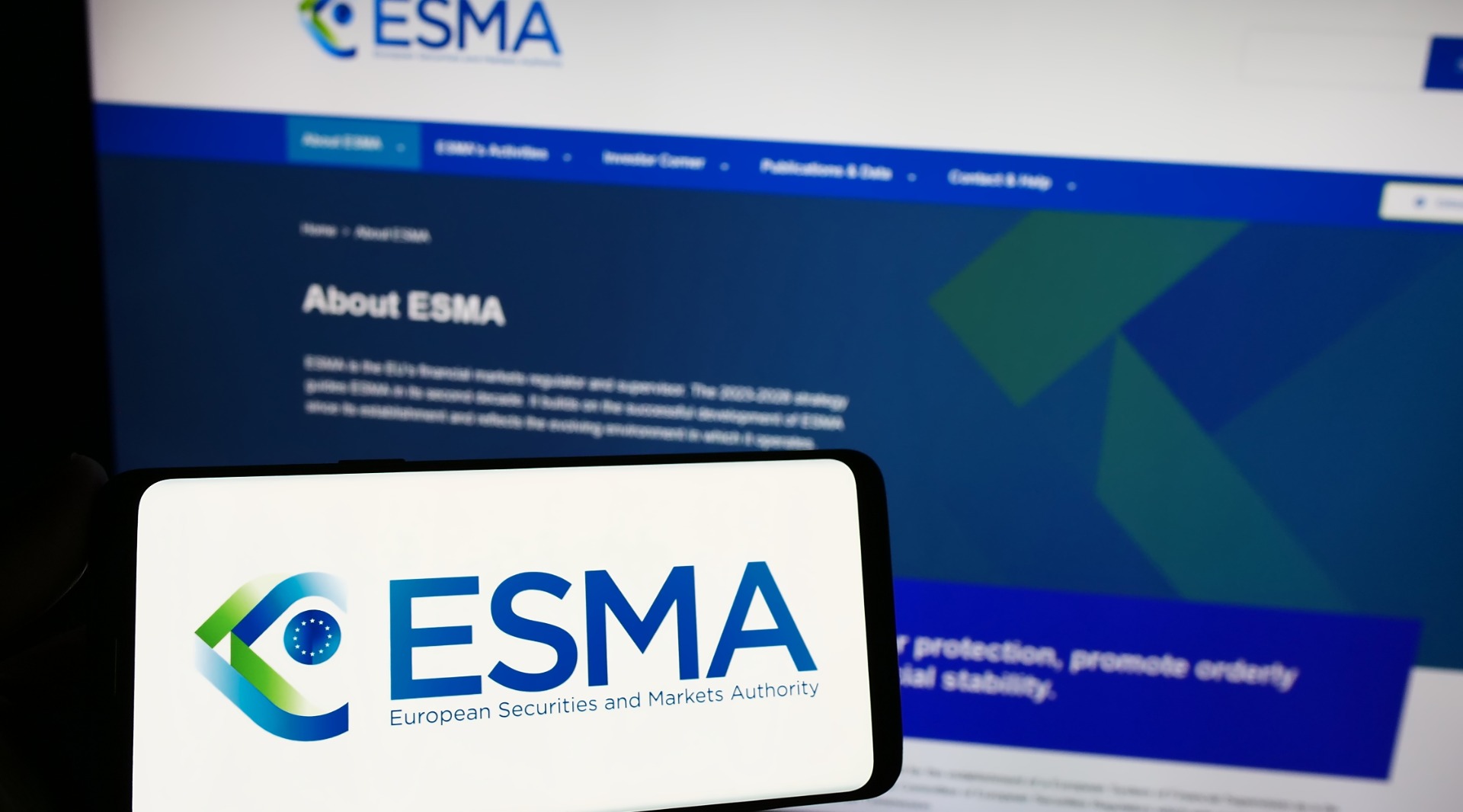
ESMA (shutterstock)

Europe's top securities watchdog put the financial industry on notice today (Tuesday), warning that perpetual futures and perpetual contracts, products that have exploded in popularity among crypto traders, are almost certainly covered by existing EU rules on contracts for differences, regardless of what companies choose to call them.

The European Securities and Markets Authority (ESMA) published a public statement telling investment firms they must carefully assess whether these instruments fall under the bloc's CFD product intervention measures.

If they do, the full set of restrictions applies: leverage caps, mandatory risk warnings, margin close-out rules, negative balance protection, and a ban on monetary and non-monetary incentives.

A Name Change Doesn't Change the Rules

The core message from ESMA is blunt: rebranding a product as a "perpetual future" or "perpetual contract" doesn't put it outside the regulator's reach. What matters is how the instrument actually works, not what it says on the label.

"The commercial name provided by firms, for example, “perpetual futures,” is irrelevant for the categorization under MiFID II," ESMA wrote in the statement. A derivative that gives exposure to an underlying asset and isn't settled exclusively in physical form "would likely fall in scope of the product intervention measures on CFDs," the authority said.

The EU's CFD framework traces back to ESMA 's temporary restrictions introduced in 2018, which were later made permanent by national regulators across member states. The regulator emphasized that firms cannot sidestep these obligations by adding features like funding rate mechanisms or voluntary "insurance funds" - those elements are irrelevant to the legal classification.

Crypto Perpetuals in the Crosshairs

The timing of ESMA's statement is no coincidence. Perpetual futures, instruments with no expiry date that track prices of assets like Bitcoin and Ethereum through a funding rate system, have become one of the most traded products in crypto markets. By the end of 2025, DeFi platforms alone were processing roughly $1.2 trillion in perpetual futures monthly, dwarfing spot crypto volumes.

The growth has caught regulators' attention. Firms have been racing to offer these instruments to European retail clients, including through regulated venues. Amsterdam-based One Trading launched what it described as the EU's first regulated crypto perpetual futures platform under MiFID II rules in April 2025, later expanding retail access in Germany, the Netherlands, and Austria the following month. The Dutch regulator subsequently backed One Trading's push into 24/7 equity perpetuals in January 2026.

Compliance Failures Could Be Costly

Beyond the product classification question, ESMA's statement lays out a checklist of investor protection requirements that firms must follow when selling these products - and signals where it thinks some of them are falling short.

On product governance, ESMA was explicit that these instruments need a "narrow target market" given their complexity and risk, and that distribution strategy must match that assessment. Blanket marketing efforts aimed at the general public are out.

The regulator was specific: "Mass marketing campaigns, initiatives aimed at inexperienced investors, or emails and pop-ups to all clients of a firm that state that such products are now offered and investors should 'get started now' should not be considered to be consistent with a narrow target market."

Firms also need to run appropriateness checks on retail clients before allowing them to trade - a standard requirement for complex financial instruments under MiFID II. And they need to manage conflicts of interest, especially where the perpetual futures are issued by or traded on a platform belonging to the same corporate group. ESMA flagged that setup as a "prominent conflict of interest" that could push firms to steer clients toward their own products.

There's a paperwork requirement too. Under the PRIIPs Regulation , firms distributing perpetual futures to retail clients must prepare a Key Information Document - a standardized disclosure used for packaged retail investment products. ESMA said these instruments qualify as packaged products and therefore trigger that obligation.

Broader Regulatory Pressure on CFD Firms

The statement adds to what has been a busy period for European derivatives regulation. ESMA finalized new derivatives transparency standards in December 2025 that will require significant reporting changes from CFD providers by 2027, while the authority has also flagged concerns over tokenized stocks and their potential to mislead investors.

Meanwhile, duplicate reporting obligations under MiFIR, EMIR, and SFTR have been costing the industry billions each year, a problem ESMA proposed tackling through a unified reporting framework last June.

Monday's statement doesn't introduce new rules. It's a warning to firms that the existing ones apply - and that the regulator is watching. ESMA noted it is prohibited to participate in any activities aimed at circumventing the product intervention measures.


Europe's top securities watchdog put the financial industry on notice today (Tuesday), warning that perpetual futures and perpetual contracts, products that have exploded in popularity among crypto traders, are almost certainly covered by existing EU rules on contracts for differences, regardless of what companies choose to call them.

The European Securities and Markets Authority (ESMA) published a public statement telling investment firms they must carefully assess whether these instruments fall under the bloc's CFD product intervention measures.

If they do, the full set of restrictions applies: leverage caps, mandatory risk warnings, margin close-out rules, negative balance protection, and a ban on monetary and non-monetary incentives.

A Name Change Doesn't Change the Rules

The core message from ESMA is blunt: rebranding a product as a "perpetual future" or "perpetual contract" doesn't put it outside the regulator's reach. What matters is how the instrument actually works, not what it says on the label.

"The commercial name provided by firms, for example, “perpetual futures,” is irrelevant for the categorization under MiFID II," ESMA wrote in the statement. A derivative that gives exposure to an underlying asset and isn't settled exclusively in physical form "would likely fall in scope of the product intervention measures on CFDs," the authority said.

The EU's CFD framework traces back to ESMA 's temporary restrictions introduced in 2018, which were later made permanent by national regulators across member states. The regulator emphasized that firms cannot sidestep these obligations by adding features like funding rate mechanisms or voluntary "insurance funds" - those elements are irrelevant to the legal classification.

Crypto Perpetuals in the Crosshairs

The timing of ESMA's statement is no coincidence. Perpetual futures, instruments with no expiry date that track prices of assets like Bitcoin and Ethereum through a funding rate system, have become one of the most traded products in crypto markets. By the end of 2025, DeFi platforms alone were processing roughly $1.2 trillion in perpetual futures monthly, dwarfing spot crypto volumes.

The growth has caught regulators' attention. Firms have been racing to offer these instruments to European retail clients, including through regulated venues. Amsterdam-based One Trading launched what it described as the EU's first regulated crypto perpetual futures platform under MiFID II rules in April 2025, later expanding retail access in Germany, the Netherlands, and Austria the following month. The Dutch regulator subsequently backed One Trading's push into 24/7 equity perpetuals in January 2026.

Compliance Failures Could Be Costly

Beyond the product classification question, ESMA's statement lays out a checklist of investor protection requirements that firms must follow when selling these products - and signals where it thinks some of them are falling short.

On product governance, ESMA was explicit that these instruments need a "narrow target market" given their complexity and risk, and that distribution strategy must match that assessment. Blanket marketing efforts aimed at the general public are out.

The regulator was specific: "Mass marketing campaigns, initiatives aimed at inexperienced investors, or emails and pop-ups to all clients of a firm that state that such products are now offered and investors should 'get started now' should not be considered to be consistent with a narrow target market."

Firms also need to run appropriateness checks on retail clients before allowing them to trade - a standard requirement for complex financial instruments under MiFID II. And they need to manage conflicts of interest, especially where the perpetual futures are issued by or traded on a platform belonging to the same corporate group. ESMA flagged that setup as a "prominent conflict of interest" that could push firms to steer clients toward their own products.

There's a paperwork requirement too. Under the PRIIPs Regulation , firms distributing perpetual futures to retail clients must prepare a Key Information Document - a standardized disclosure used for packaged retail investment products. ESMA said these instruments qualify as packaged products and therefore trigger that obligation.

Broader Regulatory Pressure on CFD Firms

The statement adds to what has been a busy period for European derivatives regulation. ESMA finalized new derivatives transparency standards in December 2025 that will require significant reporting changes from CFD providers by 2027, while the authority has also flagged concerns over tokenized stocks and their potential to mislead investors.

Meanwhile, duplicate reporting obligations under MiFIR, EMIR, and SFTR have been costing the industry billions each year, a problem ESMA proposed tackling through a unified reporting framework last June.

Monday's statement doesn't introduce new rules. It's a warning to firms that the existing ones apply - and that the regulator is watching. ESMA noted it is prohibited to participate in any activities aimed at circumventing the product intervention measures.
About the Author: Damian Chmiel
Damian Chmiel
  • 3271 Articles
  • 102 Followers
Damian's adventure with financial markets began at the Cracow University of Economics, where he obtained his MA in finance and accounting. Starting from the retail trader perspective, he collaborated with brokerage houses and financial portals in Poland as an independent editor and content manager. His adventure with Finance Magnates began in 2016, where he is working as a business intelligence analyst.

More from the Author

Retail FX