CFTC Issues $400,000 Penalty For FX Fraud and Misappropriation of Funds
Tuesday,29/10/2013|17:53GMTby
Andrew Saks McLeod
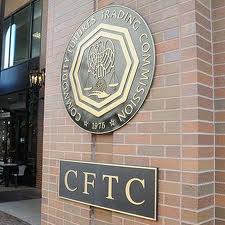
The US Commodity Futures Trading Commission has today announced the citation of three individuals and their associated firms for committing FX fraud and misappropriating customer funds.
The United States government continues to purge the country of perpetrators of fraudulent FX schemes, today having cited three individuals and their associated firms for foreign exchange fraud and misappropriation of customer funds.
The Commodity Futures Trading Commission today confirmed that it has obtained a consent order from the US District Court for the Northern District of Georgia to issue Louis J. Giddens Jr, Anthony W. Dutton and Michael Gomez with a series of penalties amounting to over $400,000.
Within the terms of the order, Mr. Giddens of Fayetteville, Georgia, is required to pay restitution to investors of $29,759.49 and a civil monetary penalty of $100,000, Mr. Dutton, of Peachtree City, Georgia, has been issued with a restitution order for $56,604.35 and a $100,000 civil monetary penalty, and Mr. Gomez of Valrico, Florida has been ordered to pay $68,000 in restitution, in addition to a $75,000 civil monetary penalty.
Excessively Optimistic Projected Returns
In addition to the fiscal penalties, the court’s Order also imposes permanent trading and registration bans against all parties involved, and prohibits them from violating the anti-fraud provisions of the Commodity Exchange Act.
The Order, which was entered on October 2, 2013, by U.S. District Judge William S. Duffey, Jr., stems from a CFTC anti-fraud Complaint filed against the Defendants on June 23, 2011.
In issuing the order, the CFTC found that from a period between January and October 2010, Mr. Giddens and Mr. Dutton operated companies under the name of Currency Management Group, LLC and Pinnacle Capital Partners, LLC, respectively, and solicited and accepted funds to trade off-exchange foreign currency contracts from friends and co-workers.
Mr. Giddens and Mr. Dutton then transferred the solicited funds to another entity which they owned and operated named Pinnacle Trade Group, LLC (Pinnacle Trade) to trade FX, according to the court's order.Funds transferred to Pinnacle Trade were either sent to FX trading accounts or to a bank account controlled by Mr. Gomez to trade investor funds. However, the Order finds that not all of investor money was traded in FX, but rather, some funds were retained by Mr. Gomez and Mr. Dutton.
The Order also finds that the parties concerned made statements on websites guaranteeing monthly returns of either five or ten percent from trading FX and that the websites did not disclose any risks associated with trading FX or that past performance does not guarantee future results.
In addition to promising to pay investors fixed returns, the court's order finds that Mr. Giddens and Mr. Dutton executed promissory notes that promised to repay investors their principal sum, plus monthly interest of either five or ten percent and prepared online account statements that showed the current net balance of the promissory notes. The notes did not disclose any risk associated with Forex trading.
The United States government continues to purge the country of perpetrators of fraudulent FX schemes, today having cited three individuals and their associated firms for foreign exchange fraud and misappropriation of customer funds.
The Commodity Futures Trading Commission today confirmed that it has obtained a consent order from the US District Court for the Northern District of Georgia to issue Louis J. Giddens Jr, Anthony W. Dutton and Michael Gomez with a series of penalties amounting to over $400,000.
Within the terms of the order, Mr. Giddens of Fayetteville, Georgia, is required to pay restitution to investors of $29,759.49 and a civil monetary penalty of $100,000, Mr. Dutton, of Peachtree City, Georgia, has been issued with a restitution order for $56,604.35 and a $100,000 civil monetary penalty, and Mr. Gomez of Valrico, Florida has been ordered to pay $68,000 in restitution, in addition to a $75,000 civil monetary penalty.
Excessively Optimistic Projected Returns
In addition to the fiscal penalties, the court’s Order also imposes permanent trading and registration bans against all parties involved, and prohibits them from violating the anti-fraud provisions of the Commodity Exchange Act.
The Order, which was entered on October 2, 2013, by U.S. District Judge William S. Duffey, Jr., stems from a CFTC anti-fraud Complaint filed against the Defendants on June 23, 2011.
In issuing the order, the CFTC found that from a period between January and October 2010, Mr. Giddens and Mr. Dutton operated companies under the name of Currency Management Group, LLC and Pinnacle Capital Partners, LLC, respectively, and solicited and accepted funds to trade off-exchange foreign currency contracts from friends and co-workers.
Mr. Giddens and Mr. Dutton then transferred the solicited funds to another entity which they owned and operated named Pinnacle Trade Group, LLC (Pinnacle Trade) to trade FX, according to the court's order.Funds transferred to Pinnacle Trade were either sent to FX trading accounts or to a bank account controlled by Mr. Gomez to trade investor funds. However, the Order finds that not all of investor money was traded in FX, but rather, some funds were retained by Mr. Gomez and Mr. Dutton.
The Order also finds that the parties concerned made statements on websites guaranteeing monthly returns of either five or ten percent from trading FX and that the websites did not disclose any risks associated with trading FX or that past performance does not guarantee future results.
In addition to promising to pay investors fixed returns, the court's order finds that Mr. Giddens and Mr. Dutton executed promissory notes that promised to repay investors their principal sum, plus monthly interest of either five or ten percent and prepared online account statements that showed the current net balance of the promissory notes. The notes did not disclose any risk associated with Forex trading.
Italy’s Consob Tightens Net on AI-Fueled Scams With Fresh Website Bans
FP Markets Winner Spotlight 🏆 | Global Broker of the Year 2025 #Trading #Broker #Innovation #Shorts
FP Markets Winner Spotlight 🏆 | Global Broker of the Year 2025 #Trading #Broker #Innovation #Shorts
FP Markets takes the spotlight as Global Broker of the Year 2025 at the Finance Magnates Awards.
Martin Stoilov, Head of Client Experience, shares that trust, innovation, and people played a key role in the company’s success, supported by a strong foundation of integrity and client-centricity.
Following this milestone, FP Markets continues to focus on growth, technology investment, and its core values of transparency and excellence.
👉 Be part of FM Awards 2026: https://awards.financemagnates.com/#nominate
FP Markets takes the spotlight as Global Broker of the Year 2025 at the Finance Magnates Awards.
Martin Stoilov, Head of Client Experience, shares that trust, innovation, and people played a key role in the company’s success, supported by a strong foundation of integrity and client-centricity.
Following this milestone, FP Markets continues to focus on growth, technology investment, and its core values of transparency and excellence.
👉 Be part of FM Awards 2026: https://awards.financemagnates.com/#nominate
In this video, we review @HolaPrimeMarketsOfficial, a multi-asset forex and CFDs broker offering different account types, trading platforms, and flexible trading conditions.
We cover the broker’s overall offering, including account options, trading environment, platforms like MT4 and MT5, and additional services such as managed accounts and fast withdrawals.
Watch the full video to see if Hola Prime Markets fits your trading needs.
📣 Stay up to date with the latest in finance and trading. Follow Finance Magnates for industry news, insights, and global event coverage.
Connect with us:
🔗 LinkedIn: /financemagnates
👍 Facebook: /financemagnates
📸 Instagram: https://www.instagram.com/financemagnates
🐦 X: https://x.com/financemagnates
🎥 TikTok: https://www.tiktok.com/tag/financemagnates
▶️ YouTube: /@financemagnates_official
#HolaPrime #ForexBroker #CFDTrading #FinanceMagnates #Trading #Forex #BrokerReview
In this video, we review @HolaPrimeMarketsOfficial, a multi-asset forex and CFDs broker offering different account types, trading platforms, and flexible trading conditions.
We cover the broker’s overall offering, including account options, trading environment, platforms like MT4 and MT5, and additional services such as managed accounts and fast withdrawals.
Watch the full video to see if Hola Prime Markets fits your trading needs.
📣 Stay up to date with the latest in finance and trading. Follow Finance Magnates for industry news, insights, and global event coverage.
Connect with us:
🔗 LinkedIn: /financemagnates
👍 Facebook: /financemagnates
📸 Instagram: https://www.instagram.com/financemagnates
🐦 X: https://x.com/financemagnates
🎥 TikTok: https://www.tiktok.com/tag/financemagnates
▶️ YouTube: /@financemagnates_official
#HolaPrime #ForexBroker #CFDTrading #FinanceMagnates #Trading #Forex #BrokerReview
Hola Prime Review: What You Need to Know | Full Breakdown by Finance Magnates
Hola Prime Review: What You Need to Know | Full Breakdown by Finance Magnates
In this video, we review @HolaPrime_Global, a proprietary trading firm offering evaluation programs and performance-based payouts in simulated market environments.
We cover how the challenge model works, including account types, profit splits (up to 95%), trading rules, and what it takes to reach a funded account. You’ll also learn about available platforms like MT4, MT5, cTrader, and more, along with insights into payouts, support, and trading conditions.
Watch the full video to see if Hola Prime fits your trading style.
📣 Stay up to date with the latest in finance and trading. Follow Finance Magnates for industry news, insights, and global event coverage.
Connect with us:
🔗 LinkedIn: /financemagnates
👍 Facebook: /financemagnates
📸 Instagram: https://www.instagram.com/financemagnates
🐦 X: https://x.com/financemagnates
🎥 TikTok: https://www.tiktok.com/tag/financemagnates
▶️ YouTube: /@financemagnates_official
#HolaPrime #PropFirm #Trading #FinanceMagnates #Forex #FuturesTrading #TradingReview #PropFirmReview
In this video, we review @HolaPrime_Global, a proprietary trading firm offering evaluation programs and performance-based payouts in simulated market environments.
We cover how the challenge model works, including account types, profit splits (up to 95%), trading rules, and what it takes to reach a funded account. You’ll also learn about available platforms like MT4, MT5, cTrader, and more, along with insights into payouts, support, and trading conditions.
Watch the full video to see if Hola Prime fits your trading style.
📣 Stay up to date with the latest in finance and trading. Follow Finance Magnates for industry news, insights, and global event coverage.
Connect with us:
🔗 LinkedIn: /financemagnates
👍 Facebook: /financemagnates
📸 Instagram: https://www.instagram.com/financemagnates
🐦 X: https://x.com/financemagnates
🎥 TikTok: https://www.tiktok.com/tag/financemagnates
▶️ YouTube: /@financemagnates_official
#HolaPrime #PropFirm #Trading #FinanceMagnates #Forex #FuturesTrading #TradingReview #PropFirmReview
Axi Winner Spotlight 🏆 | Global Most Innovative Broker 2025 #Innovation #Trading #Fintech #Broker
Axi Winner Spotlight 🏆 | Global Most Innovative Broker 2025 #Innovation #Trading #Fintech #Broker
Axi takes the spotlight at the Finance Magnates Awards, winning Global Most Innovative Broker 2025.
Olivia Xenofontos and Ivanna Openko share how the team will feel: proud, motivated, and ready to keep delivering.
They also describe the night as well-organized, focused, and enjoyable for all.
👉 Be part of FM Awards 2026.
Axi takes the spotlight at the Finance Magnates Awards, winning Global Most Innovative Broker 2025.
Olivia Xenofontos and Ivanna Openko share how the team will feel: proud, motivated, and ready to keep delivering.
They also describe the night as well-organized, focused, and enjoyable for all.
👉 Be part of FM Awards 2026.
Recognition that matters.
Built on transparency.
Driven by the industry.
The Finance Magnates Awards 2026.
Nominations are now open.
🔗 https://awards.financemagnates.com/?utm_source=SM&utm_medium=social&utm_campaign=recognition-matters
Recognition that matters.
Built on transparency.
Driven by the industry.
The Finance Magnates Awards 2026.
Nominations are now open.
🔗 https://awards.financemagnates.com/?utm_source=SM&utm_medium=social&utm_campaign=recognition-matters