
ASIC ramps up enforcement as AI-powered fraud schemes exploit billionaire images to target consumers.
The regulator has boosted enforcement activity by 50% and expanded takedown capabilities to include social media ads where many scams originate.
Example of fake celebrity finance endorsements. Source: ASIC
Australia's
securities regulator has taken down more than 330 fake investment websites this
year that use images of prominent billionaires to trick people into bogus
get-rich-quick schemes, marking a 25% jump from the same period last year.
The
Australian Securities and Investments Commission (ASIC) says scammers are
increasingly hijacking photos of well-known figures like mining magnates Andrew
"Twiggy" Forrest and Gina Rinehart, along with packaging billionaire
Anthony Pratt, to lend fake credibility to their fraudulent investment platforms.
Scammers Exploit Social
Proof Psychology
These fake
websites deliberately misuse trusted public figures to exploit what
psychologists call "social proof" - the tendency for people to follow
others they perceive as successful or authoritative. Many of the targeted
celebrities have publicly denied any involvement with these schemes.
Alan Kirkland, Commissioner at ASIC, Source: LinkedIn
"These
scam websites try to trick consumers into thinking they can make big returns
and use unauthorised celebrity images to give credibility," said ASIC
Commissioner Alan Kirkland. "Whenever you see a website, social media post
or message offering an investment that claims to deliver outsized or guaranteed
financial returns, always remember to stop, check and protect."
The
regulator saw particularly heavy activity in July, when scammers apparently
tried to capitalize on increased consumer interest in finances at the start of
the new financial year.
A similar issue was recently highlighted in neighboring New Zealand, which reported a scheme involving fake accounts impersonating local celebrities on Facebook. These accounts directed users to trading groups on WhatsApp, which in most cases turned out to be scams.
AI Enables Rapid Scaling
of Fraud
The rise of
artificial intelligence has allowed scammers to expand their operations at
unprecedented scale. ASIC has observed several troubling trends in recent
months, including fake trading platforms, professionally designed cloned
websites, fabricated news articles promoting fraudulent schemes, and "AI
trading bot" products promising impossible returns.
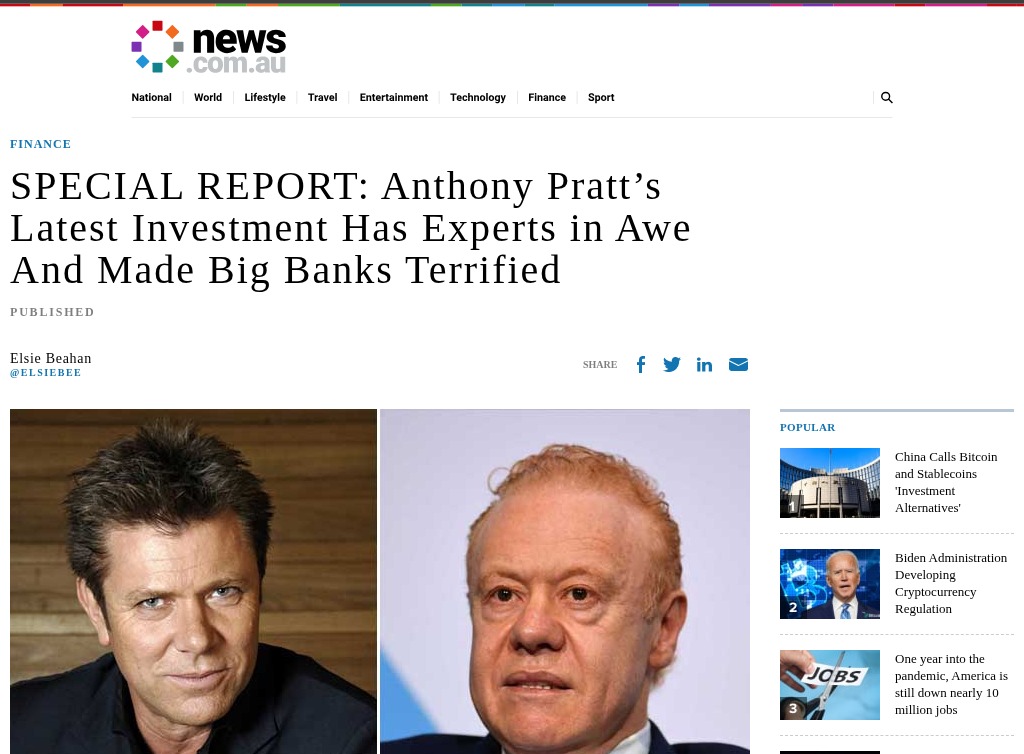
Another example of scam website. Source: ASIC
Investment
scams cost Australians $945 million in 2024, making them the leading cause of
financial fraud losses according to the National Anti-Scam Centre.
The
celebrity scam crackdown comes as ASIC undergoes a significant transformation
under Chair Joe Longo, with new commissioners and leadership driving a more
aggressive enforcement approach. The agency launched 50% more investigations
over the past year and initiated nearly 20% more civil enforcement proceedings
compared to the previous period.
Joe Longo, the Chairman of ASIC
"That
transformation is key to ensuring ASIC can continue to serve the Australian
community," Longo said. "The operating environment for our financial
ecosystem is increasingly complicated and that requires a well-calibrated
response from ASIC."
The
regulator is currently removing an average of 130 malicious websites every
week, with fake investment platforms, phishing sites and crypto scams making up
the bulk of takedowns. Since launching the program two years ago, ASIC has
shuttered more than 14,000 investment scam and phishing websites.
New Rules Target AI
Trading Systems
ASIC is
also moving to modernize its market integrity rules to keep pace with
technological developments, including artificial intelligence in trading
systems. The regulator estimates that algorithmic trading now comprises about
85% of all trading in Australian listed equities markets.
The
proposed changes would extend principles-based rules to cover participants'
development, testing and monitoring of trading algorithms, while requiring
"kill switches" to immediately suspend problematic automated trading
activity.
ASIC has
separately warned consumers about aggressive superannuation switching schemes
that often begin with social media ads for free super "health checks"
or help finding lost retirement funds. These operations typically use
high-pressure sales tactics and promises of unrealistic returns.
The
regulator advises consumers to hang up if they feel pressured and remember that
moving superannuation funds is a major financial decision that shouldn't be
made hastily.
ASIC has
also extended relief for hardship withdrawals from frozen managed investment
schemes for another 18 months while it conducts further consultation on the
rules.
Australia's
securities regulator has taken down more than 330 fake investment websites this
year that use images of prominent billionaires to trick people into bogus
get-rich-quick schemes, marking a 25% jump from the same period last year.
The
Australian Securities and Investments Commission (ASIC) says scammers are
increasingly hijacking photos of well-known figures like mining magnates Andrew
"Twiggy" Forrest and Gina Rinehart, along with packaging billionaire
Anthony Pratt, to lend fake credibility to their fraudulent investment platforms.
Scammers Exploit Social
Proof Psychology
These fake
websites deliberately misuse trusted public figures to exploit what
psychologists call "social proof" - the tendency for people to follow
others they perceive as successful or authoritative. Many of the targeted
celebrities have publicly denied any involvement with these schemes.
Alan Kirkland, Commissioner at ASIC, Source: LinkedIn
"These
scam websites try to trick consumers into thinking they can make big returns
and use unauthorised celebrity images to give credibility," said ASIC
Commissioner Alan Kirkland. "Whenever you see a website, social media post
or message offering an investment that claims to deliver outsized or guaranteed
financial returns, always remember to stop, check and protect."
The
regulator saw particularly heavy activity in July, when scammers apparently
tried to capitalize on increased consumer interest in finances at the start of
the new financial year.
A similar issue was recently highlighted in neighboring New Zealand, which reported a scheme involving fake accounts impersonating local celebrities on Facebook. These accounts directed users to trading groups on WhatsApp, which in most cases turned out to be scams.
AI Enables Rapid Scaling
of Fraud
The rise of
artificial intelligence has allowed scammers to expand their operations at
unprecedented scale. ASIC has observed several troubling trends in recent
months, including fake trading platforms, professionally designed cloned
websites, fabricated news articles promoting fraudulent schemes, and "AI
trading bot" products promising impossible returns.
Another example of scam website. Source: ASIC
Investment
scams cost Australians $945 million in 2024, making them the leading cause of
financial fraud losses according to the National Anti-Scam Centre.
The
celebrity scam crackdown comes as ASIC undergoes a significant transformation
under Chair Joe Longo, with new commissioners and leadership driving a more
aggressive enforcement approach. The agency launched 50% more investigations
over the past year and initiated nearly 20% more civil enforcement proceedings
compared to the previous period.
Joe Longo, the Chairman of ASIC
"That
transformation is key to ensuring ASIC can continue to serve the Australian
community," Longo said. "The operating environment for our financial
ecosystem is increasingly complicated and that requires a well-calibrated
response from ASIC."
The
regulator is currently removing an average of 130 malicious websites every
week, with fake investment platforms, phishing sites and crypto scams making up
the bulk of takedowns. Since launching the program two years ago, ASIC has
shuttered more than 14,000 investment scam and phishing websites.
New Rules Target AI
Trading Systems
ASIC is
also moving to modernize its market integrity rules to keep pace with
technological developments, including artificial intelligence in trading
systems. The regulator estimates that algorithmic trading now comprises about
85% of all trading in Australian listed equities markets.
The
proposed changes would extend principles-based rules to cover participants'
development, testing and monitoring of trading algorithms, while requiring
"kill switches" to immediately suspend problematic automated trading
activity.
ASIC has
separately warned consumers about aggressive superannuation switching schemes
that often begin with social media ads for free super "health checks"
or help finding lost retirement funds. These operations typically use
high-pressure sales tactics and promises of unrealistic returns.
The
regulator advises consumers to hang up if they feel pressured and remember that
moving superannuation funds is a major financial decision that shouldn't be
made hastily.
ASIC has
also extended relief for hardship withdrawals from frozen managed investment
schemes for another 18 months while it conducts further consultation on the
rules.
Damian's adventure with financial markets began at the Cracow University of Economics, where he obtained his MA in finance and accounting. Starting from the retail trader perspective, he collaborated with brokerage houses and financial portals in Poland as an independent editor and content manager. His adventure with Finance Magnates began in 2016, where he is working as a business intelligence analyst.
iFOREX Adds Saudi and South Korean Equity CFDs as IPO Is Delayed
Featured Videos
Executive Interview | Charlotte Bullock | Chief Product Officer, Bank of London | FMLS:25
In this interview, we sat down with Charlotte Bullock, Head of Product at The Bank of London, previously at SAP and now shaping product at one of the sector’s most ambitious new banking players.
Charlotte reflects on the Summit so far and talks about the culture inside fintech banks today. We look at the pressures that come with scaling, and how firms can hold onto the nimble approach that made them stand out early on.
We also cover the state of payments ahead of her appearance on the payments roundtable: the blockages financial firms face, the areas that still need fixing, and what a realistic solution looks like in 2026.
In this interview, we sat down with Charlotte Bullock, Head of Product at The Bank of London, previously at SAP and now shaping product at one of the sector’s most ambitious new banking players.
Charlotte reflects on the Summit so far and talks about the culture inside fintech banks today. We look at the pressures that come with scaling, and how firms can hold onto the nimble approach that made them stand out early on.
We also cover the state of payments ahead of her appearance on the payments roundtable: the blockages financial firms face, the areas that still need fixing, and what a realistic solution looks like in 2026.
In this interview, we sat down with Charlotte Bullock, Head of Product at The Bank of London, previously at SAP and now shaping product at one of the sector’s most ambitious new banking players.
Charlotte reflects on the Summit so far and talks about the culture inside fintech banks today. We look at the pressures that come with scaling, and how firms can hold onto the nimble approach that made them stand out early on.
We also cover the state of payments ahead of her appearance on the payments roundtable: the blockages financial firms face, the areas that still need fixing, and what a realistic solution looks like in 2026.
In this interview, we sat down with Charlotte Bullock, Head of Product at The Bank of London, previously at SAP and now shaping product at one of the sector’s most ambitious new banking players.
Charlotte reflects on the Summit so far and talks about the culture inside fintech banks today. We look at the pressures that come with scaling, and how firms can hold onto the nimble approach that made them stand out early on.
We also cover the state of payments ahead of her appearance on the payments roundtable: the blockages financial firms face, the areas that still need fixing, and what a realistic solution looks like in 2026.
In this conversation, we sit down with Drew Niv, CSO at ATFX Connect and one of the most influential figures in modern FX.
We speak about market structure, the institutional view on liquidity, and the sharp rise of prop trading, a sector Drew has been commenting on in recent months. Drew explains why he once dismissed prop trading, why his view changed, and what he now thinks the model means for brokers, clients and risk managers.
We explore subscription-fee dependency, the high reneging rate, and the long-term challenge: how brokers can build a more stable and honest version of the model. Drew also talks about the traffic advantage standalone prop firms have built and why brokers may still win in the long run if they take the right approach.
In this conversation, we sit down with Drew Niv, CSO at ATFX Connect and one of the most influential figures in modern FX.
We speak about market structure, the institutional view on liquidity, and the sharp rise of prop trading, a sector Drew has been commenting on in recent months. Drew explains why he once dismissed prop trading, why his view changed, and what he now thinks the model means for brokers, clients and risk managers.
We explore subscription-fee dependency, the high reneging rate, and the long-term challenge: how brokers can build a more stable and honest version of the model. Drew also talks about the traffic advantage standalone prop firms have built and why brokers may still win in the long run if they take the right approach.
In this conversation, we sit down with Drew Niv, CSO at ATFX Connect and one of the most influential figures in modern FX.
We speak about market structure, the institutional view on liquidity, and the sharp rise of prop trading, a sector Drew has been commenting on in recent months. Drew explains why he once dismissed prop trading, why his view changed, and what he now thinks the model means for brokers, clients and risk managers.
We explore subscription-fee dependency, the high reneging rate, and the long-term challenge: how brokers can build a more stable and honest version of the model. Drew also talks about the traffic advantage standalone prop firms have built and why brokers may still win in the long run if they take the right approach.
In this conversation, we sit down with Drew Niv, CSO at ATFX Connect and one of the most influential figures in modern FX.
We speak about market structure, the institutional view on liquidity, and the sharp rise of prop trading, a sector Drew has been commenting on in recent months. Drew explains why he once dismissed prop trading, why his view changed, and what he now thinks the model means for brokers, clients and risk managers.
We explore subscription-fee dependency, the high reneging rate, and the long-term challenge: how brokers can build a more stable and honest version of the model. Drew also talks about the traffic advantage standalone prop firms have built and why brokers may still win in the long run if they take the right approach.
In this conversation, we sit down with Drew Niv, CSO at ATFX Connect and one of the most influential figures in modern FX.
We speak about market structure, the institutional view on liquidity, and the sharp rise of prop trading, a sector Drew has been commenting on in recent months. Drew explains why he once dismissed prop trading, why his view changed, and what he now thinks the model means for brokers, clients and risk managers.
We explore subscription-fee dependency, the high reneging rate, and the long-term challenge: how brokers can build a more stable and honest version of the model. Drew also talks about the traffic advantage standalone prop firms have built and why brokers may still win in the long run if they take the right approach.
In this conversation, we sit down with Drew Niv, CSO at ATFX Connect and one of the most influential figures in modern FX.
We speak about market structure, the institutional view on liquidity, and the sharp rise of prop trading, a sector Drew has been commenting on in recent months. Drew explains why he once dismissed prop trading, why his view changed, and what he now thinks the model means for brokers, clients and risk managers.
We explore subscription-fee dependency, the high reneging rate, and the long-term challenge: how brokers can build a more stable and honest version of the model. Drew also talks about the traffic advantage standalone prop firms have built and why brokers may still win in the long run if they take the right approach.
Executive Interview | Remonda Z. Kirketerp Møller| CEO & Founder Muinmos | FMLS:25
In this interview, Remonda Z. Kirketerp Møller, founder of Muinmos, breaks down the state of AI in regtech and what responsible adoption really looks like for brokers. We talk about rising fragmentation, the pressures around compliance accuracy, and why most firms are still in the early stages of AI maturity.
Ramanda also shares insights on regulator sandboxes, shifting expectations around accountability, and the current reality of MiCA licensing and passporting in Europe.
A concise look at where compliance, onboarding, and AI-driven processes are heading next.
In this interview, Remonda Z. Kirketerp Møller, founder of Muinmos, breaks down the state of AI in regtech and what responsible adoption really looks like for brokers. We talk about rising fragmentation, the pressures around compliance accuracy, and why most firms are still in the early stages of AI maturity.
Ramanda also shares insights on regulator sandboxes, shifting expectations around accountability, and the current reality of MiCA licensing and passporting in Europe.
A concise look at where compliance, onboarding, and AI-driven processes are heading next.
In this interview, Remonda Z. Kirketerp Møller, founder of Muinmos, breaks down the state of AI in regtech and what responsible adoption really looks like for brokers. We talk about rising fragmentation, the pressures around compliance accuracy, and why most firms are still in the early stages of AI maturity.
Ramanda also shares insights on regulator sandboxes, shifting expectations around accountability, and the current reality of MiCA licensing and passporting in Europe.
A concise look at where compliance, onboarding, and AI-driven processes are heading next.
In this interview, Remonda Z. Kirketerp Møller, founder of Muinmos, breaks down the state of AI in regtech and what responsible adoption really looks like for brokers. We talk about rising fragmentation, the pressures around compliance accuracy, and why most firms are still in the early stages of AI maturity.
Ramanda also shares insights on regulator sandboxes, shifting expectations around accountability, and the current reality of MiCA licensing and passporting in Europe.
A concise look at where compliance, onboarding, and AI-driven processes are heading next.
In this interview, Remonda Z. Kirketerp Møller, founder of Muinmos, breaks down the state of AI in regtech and what responsible adoption really looks like for brokers. We talk about rising fragmentation, the pressures around compliance accuracy, and why most firms are still in the early stages of AI maturity.
Ramanda also shares insights on regulator sandboxes, shifting expectations around accountability, and the current reality of MiCA licensing and passporting in Europe.
A concise look at where compliance, onboarding, and AI-driven processes are heading next.
In this interview, Remonda Z. Kirketerp Møller, founder of Muinmos, breaks down the state of AI in regtech and what responsible adoption really looks like for brokers. We talk about rising fragmentation, the pressures around compliance accuracy, and why most firms are still in the early stages of AI maturity.
Ramanda also shares insights on regulator sandboxes, shifting expectations around accountability, and the current reality of MiCA licensing and passporting in Europe.
A concise look at where compliance, onboarding, and AI-driven processes are heading next.
In this conversation, we speak with Aydin Bonabi, CEO and co-founder of Surveill, a firm focused on fraud detection and AI-driven compliance tools for financial institutions.
We start with Aydin’s view of the Summit and the challenges brokers face as fraud tactics grow more complex. He explains how firms can stay ahead through real-time signals, data patterns, and early-stage detection.
We also talk about AI training and why compliance teams often struggle to keep models accurate, fair, and aligned with regulatory expectations. Aydin breaks down what “good” AI training looks like inside a financial environment, including the importance of clean data, domain expertise, and human oversight.
He closes with a clear message: fraud is scaling, and so must the tools that stop it.
In this conversation, we speak with Aydin Bonabi, CEO and co-founder of Surveill, a firm focused on fraud detection and AI-driven compliance tools for financial institutions.
We start with Aydin’s view of the Summit and the challenges brokers face as fraud tactics grow more complex. He explains how firms can stay ahead through real-time signals, data patterns, and early-stage detection.
We also talk about AI training and why compliance teams often struggle to keep models accurate, fair, and aligned with regulatory expectations. Aydin breaks down what “good” AI training looks like inside a financial environment, including the importance of clean data, domain expertise, and human oversight.
He closes with a clear message: fraud is scaling, and so must the tools that stop it.
In this conversation, we speak with Aydin Bonabi, CEO and co-founder of Surveill, a firm focused on fraud detection and AI-driven compliance tools for financial institutions.
We start with Aydin’s view of the Summit and the challenges brokers face as fraud tactics grow more complex. He explains how firms can stay ahead through real-time signals, data patterns, and early-stage detection.
We also talk about AI training and why compliance teams often struggle to keep models accurate, fair, and aligned with regulatory expectations. Aydin breaks down what “good” AI training looks like inside a financial environment, including the importance of clean data, domain expertise, and human oversight.
He closes with a clear message: fraud is scaling, and so must the tools that stop it.
In this conversation, we speak with Aydin Bonabi, CEO and co-founder of Surveill, a firm focused on fraud detection and AI-driven compliance tools for financial institutions.
We start with Aydin’s view of the Summit and the challenges brokers face as fraud tactics grow more complex. He explains how firms can stay ahead through real-time signals, data patterns, and early-stage detection.
We also talk about AI training and why compliance teams often struggle to keep models accurate, fair, and aligned with regulatory expectations. Aydin breaks down what “good” AI training looks like inside a financial environment, including the importance of clean data, domain expertise, and human oversight.
He closes with a clear message: fraud is scaling, and so must the tools that stop it.
In this conversation, we speak with Aydin Bonabi, CEO and co-founder of Surveill, a firm focused on fraud detection and AI-driven compliance tools for financial institutions.
We start with Aydin’s view of the Summit and the challenges brokers face as fraud tactics grow more complex. He explains how firms can stay ahead through real-time signals, data patterns, and early-stage detection.
We also talk about AI training and why compliance teams often struggle to keep models accurate, fair, and aligned with regulatory expectations. Aydin breaks down what “good” AI training looks like inside a financial environment, including the importance of clean data, domain expertise, and human oversight.
He closes with a clear message: fraud is scaling, and so must the tools that stop it.
In this conversation, we speak with Aydin Bonabi, CEO and co-founder of Surveill, a firm focused on fraud detection and AI-driven compliance tools for financial institutions.
We start with Aydin’s view of the Summit and the challenges brokers face as fraud tactics grow more complex. He explains how firms can stay ahead through real-time signals, data patterns, and early-stage detection.
We also talk about AI training and why compliance teams often struggle to keep models accurate, fair, and aligned with regulatory expectations. Aydin breaks down what “good” AI training looks like inside a financial environment, including the importance of clean data, domain expertise, and human oversight.
He closes with a clear message: fraud is scaling, and so must the tools that stop it.
Exness expands its presence in Africa: Inside our interview with Paul Margarites in Cape Town
Finance Magnates met with Paul Margarites, Exness regional commercial director for Sub-Saharan Africa, during a visit to the firm’s office opening in Cape Town. In this talk, led by Andrea Badiola Mateos, Co-CEO at Finance Magnates, Paul shares views on the South African trading space, local user behavior, mobile trends, regulation, team growth, and how Exness plans to grow in more markets across the region. @Exness
Read the article at: https://www.financemagnates.com/thought-leadership/exness-expands-its-presence-in-africa-inside-our-interview-with-paul-margarites/
#exness #financemagnates #exnesstrading #CFDtrading #tradeonline #africanews #capetown
Finance Magnates met with Paul Margarites, Exness regional commercial director for Sub-Saharan Africa, during a visit to the firm’s office opening in Cape Town. In this talk, led by Andrea Badiola Mateos, Co-CEO at Finance Magnates, Paul shares views on the South African trading space, local user behavior, mobile trends, regulation, team growth, and how Exness plans to grow in more markets across the region. @Exness
Read the article at: https://www.financemagnates.com/thought-leadership/exness-expands-its-presence-in-africa-inside-our-interview-with-paul-margarites/
#exness #financemagnates #exnesstrading #CFDtrading #tradeonline #africanews #capetown
Finance Magnates met with Paul Margarites, Exness regional commercial director for Sub-Saharan Africa, during a visit to the firm’s office opening in Cape Town. In this talk, led by Andrea Badiola Mateos, Co-CEO at Finance Magnates, Paul shares views on the South African trading space, local user behavior, mobile trends, regulation, team growth, and how Exness plans to grow in more markets across the region. @Exness
Read the article at: https://www.financemagnates.com/thought-leadership/exness-expands-its-presence-in-africa-inside-our-interview-with-paul-margarites/
#exness #financemagnates #exnesstrading #CFDtrading #tradeonline #africanews #capetown
Finance Magnates met with Paul Margarites, Exness regional commercial director for Sub-Saharan Africa, during a visit to the firm’s office opening in Cape Town. In this talk, led by Andrea Badiola Mateos, Co-CEO at Finance Magnates, Paul shares views on the South African trading space, local user behavior, mobile trends, regulation, team growth, and how Exness plans to grow in more markets across the region. @Exness
Read the article at: https://www.financemagnates.com/thought-leadership/exness-expands-its-presence-in-africa-inside-our-interview-with-paul-margarites/
#exness #financemagnates #exnesstrading #CFDtrading #tradeonline #africanews #capetown
Finance Magnates met with Paul Margarites, Exness regional commercial director for Sub-Saharan Africa, during a visit to the firm’s office opening in Cape Town. In this talk, led by Andrea Badiola Mateos, Co-CEO at Finance Magnates, Paul shares views on the South African trading space, local user behavior, mobile trends, regulation, team growth, and how Exness plans to grow in more markets across the region. @Exness
Read the article at: https://www.financemagnates.com/thought-leadership/exness-expands-its-presence-in-africa-inside-our-interview-with-paul-margarites/
#exness #financemagnates #exnesstrading #CFDtrading #tradeonline #africanews #capetown
Finance Magnates met with Paul Margarites, Exness regional commercial director for Sub-Saharan Africa, during a visit to the firm’s office opening in Cape Town. In this talk, led by Andrea Badiola Mateos, Co-CEO at Finance Magnates, Paul shares views on the South African trading space, local user behavior, mobile trends, regulation, team growth, and how Exness plans to grow in more markets across the region. @Exness
Read the article at: https://www.financemagnates.com/thought-leadership/exness-expands-its-presence-in-africa-inside-our-interview-with-paul-margarites/
#exness #financemagnates #exnesstrading #CFDtrading #tradeonline #africanews #capetown