Prop Firms Are Banning Gold as Rising Prices Push Payout Structures to the Limit

Tuesday, 31/03/2026 | 09:50 GMT by Damian Chmiel
  • The Rhodium FX co-founder says rising gold is pushing prop traders into sustained profitability, straining payouts never built for prolonged winning.
  • He adds that instant funding challenges exploit trader psychology, and accelerating rug pulls are drawing unwanted attention from regulators.
philip

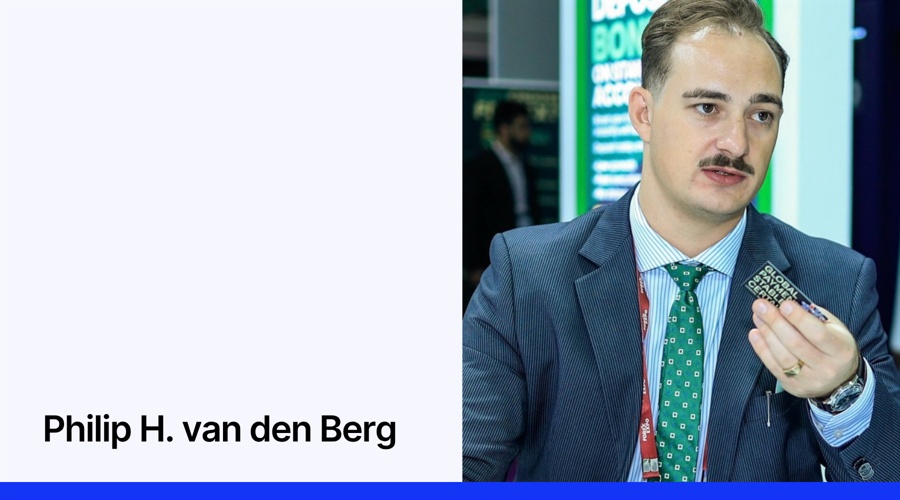
"You have a lot of prop firms... not even allowing gold to be traded anymore,” that is how Philip H. van den Berg, co-founder and CEO of Rhodium FX, described what he says is a growing structural problem quietly spreading across the retail prop trading industry.

Speaking in a Thentick podcast interview, he argued that the gold market's record-breaking run is doing something the industry never prepared for: making ordinary retail traders consistently profitable, and the economics of many prop firms simply cannot absorb it.

The observation cuts to a core tension that has been building for months. As gold prices pushed to successive all-time highs, retail traders who had long struggled to pass evaluation challenges suddenly found themselves on the right side of a single, powerful trend. For prop firms whose business model depends on a majority of traders failing or churning out before reaching payout thresholds, that is a significant problem.

Philip, who spent several years as COO of Dominion Markets before founding Rhodium, said the response from many firms has been blunt: simply removing gold from the list of tradeable instruments. The same volatility that prompted some prop firms to delist the metal also forced liquidity providers to act, with Scope Prime widening spreads following CME margin rule changes.

"We're seeing owners make money real quick and they pull a rug on the whole on the whole system," he said.

You can watch the full interview on YouTube. The article continues below the video:

2-5 New Prop Firms Opening Every Week

The gold issue does not exist in isolation. Philip pointed to a market that has grown faster than its underlying infrastructure can support, with new entrants flooding in at a pace that raises serious questions about long-term viability. "There's about two to five prop firms opening up almost every week," he said. That pace of entry, he argued, has produced a landscape where most firms look identical, compete on price, and lack the operational depth to survive a sustained payout cycle.

The prop firm sector has faced growing scrutiny over its business model sustainability, particularly following a string of high-profile closures and enforcement actions in 2024. Philip's comments suggest the stress has not abated. He described a pattern where firms scale quickly on challenge fee revenue, encounter a wave of funded traders, and then find themselves unable to honor the commitments that follow.

The volume surge has been documented across the industry. easyMarkets reported a 240% jump in gold trading during Q4 as volatility returned to the market, a figure that helps illustrate the scale of the trend Philip says most firms were not positioned to absorb.

Rhodium, he said, is trying to take a different route by designing its rules around long-term trader behavior rather than optimizing for failure rates. "Our rules... push traders to be a bit more consistent and long-term," he said, describing the goal as a "more long-term consistent successful partnership" compared to what he characterized as industry norms.

Instant Funding Models Under Fire

Philip was particularly direct about instant funding challenges, a product format that has gained popularity across the sector in recent years. He described them as a mechanism built around exploiting trader impatience rather than identifying genuine trading talent.

"These instant funding challenges... it's just a quick money-making scheme," he said. "It literally works on people's greed... people want to get instant funded. All they think about is I'm going to have the money right away, but they don't realize that these rules are so strict and so hard to actually get that first payout."

Instant funding models became a major topic of debate within the industry after several firms that heavily promoted the format ran into payout difficulties. Philip argued that the format continues to attract new operators precisely because the revenue is front-loaded and visible, while the liabilities arrive later and quietly.

Rhodium does not offer instant funding. Philip said the firm has seen slower growth as a result, but maintains that a two-step evaluation model with more lenient, consistent rules will produce a more stable client base over time.

Pay-to-Play Reviews and the Trust Problem

One of the more pointed moments in the interview came when Philip addressed how traders research and select prop firms. He said the review ecosystem that most traders rely on is fundamentally compromised, claiming that rankings and ratings on major comparison platforms largely reflect which firms have the biggest marketing budgets rather than which firms actually pay out reliably. According to Philip, it comes down to "who's got the biggest pocket."

This creates a compounding problem for newer or smaller firms trying to compete on quality rather than spending. Philip described the challenge of converting experienced traders who have long relationships with established names, noting that even if a newer firm offers better conditions, the trust gap is difficult to bridge.

The question of trader protection and review transparency has become a recurring concern across industry discussions, particularly as a number of firms that carried strong review scores were later found to have manipulated their ratings or withheld payouts.

Regulation Is Coming, but Not Quickly

Philip spoke at some length about the regulatory horizon for the prop trading sector, offering a more measured view than the alarm that has characterized some industry commentary. He said regulators are watching, but suggested they remain genuinely uncertain about how the business model works.

"I do think we have a bit more time, but a lot of these owners are making a lot of red flags for these regulators," he said, pointing to rug pulls and opaque financial operations as the behaviors most likely to accelerate a regulatory response.

He drew a comparison to how ESMA's leverage cap on European retail brokers played out, noting that the rule, while defensible on trader protection grounds, pushed many clients toward offshore providers offering higher leverage. The lesson he drew was that regulation without a coordinated industry response often reshuffles clients rather than protecting them.

The ESMA leverage rules have had lasting effects on the European retail FX market, redirecting significant volumes to less-regulated jurisdictions.

On the United States specifically, Philip said Rhodium has made a deliberate decision to stay out of the market entirely. "If America hunts you down as a financial institute, they really hunt you down," he said, referencing the compliance risk posed by the Dodd-Frank Act. He warned that firms quietly accepting US clients while building out their operations are creating a legal liability that will surface the moment they try to legitimize or scale.

Background: From BlackBull to Dominion to Rhodium

Philip's path to running a prop firm ran through the brokerage side of the industry. He joined BlackBull Markets in 2018, worked through account management and market analysis roles, and was later recruited by the owner of Dominion Markets to build out the sales structure. He eventually rose to COO, handling operations while the firm's founder, known publicly as Raja, remained the outward face of the business.

Dominion Markets built a substantial following in the retail trading community, in part through its educational content and the high-profile social media presence of its founder. Philip described the firm's pace as intense, reflecting the founder's background as a short-timeframe trader. He said the experience gave him both the operational knowledge to run a financial company and a clearer view of what traders actually need versus what most firms offer.

Rhodium FX, which is based in Dubai, is positioning itself as a longer-term, more institutionally structured alternative to the mainstream retail prop model. Philip said the firm is also exploring connections to liquidity infrastructure that would allow it to benefit directly from successful trader activity, rather than operating on a pure challenge-fee model.

"You have a lot of prop firms... not even allowing gold to be traded anymore,” that is how Philip H. van den Berg, co-founder and CEO of Rhodium FX, described what he says is a growing structural problem quietly spreading across the retail prop trading industry.

Speaking in a Thentick podcast interview, he argued that the gold market's record-breaking run is doing something the industry never prepared for: making ordinary retail traders consistently profitable, and the economics of many prop firms simply cannot absorb it.

The observation cuts to a core tension that has been building for months. As gold prices pushed to successive all-time highs, retail traders who had long struggled to pass evaluation challenges suddenly found themselves on the right side of a single, powerful trend. For prop firms whose business model depends on a majority of traders failing or churning out before reaching payout thresholds, that is a significant problem.

Philip, who spent several years as COO of Dominion Markets before founding Rhodium, said the response from many firms has been blunt: simply removing gold from the list of tradeable instruments. The same volatility that prompted some prop firms to delist the metal also forced liquidity providers to act, with Scope Prime widening spreads following CME margin rule changes.

"We're seeing owners make money real quick and they pull a rug on the whole on the whole system," he said.

You can watch the full interview on YouTube. The article continues below the video:

2-5 New Prop Firms Opening Every Week

The gold issue does not exist in isolation. Philip pointed to a market that has grown faster than its underlying infrastructure can support, with new entrants flooding in at a pace that raises serious questions about long-term viability. "There's about two to five prop firms opening up almost every week," he said. That pace of entry, he argued, has produced a landscape where most firms look identical, compete on price, and lack the operational depth to survive a sustained payout cycle.

The prop firm sector has faced growing scrutiny over its business model sustainability, particularly following a string of high-profile closures and enforcement actions in 2024. Philip's comments suggest the stress has not abated. He described a pattern where firms scale quickly on challenge fee revenue, encounter a wave of funded traders, and then find themselves unable to honor the commitments that follow.

The volume surge has been documented across the industry. easyMarkets reported a 240% jump in gold trading during Q4 as volatility returned to the market, a figure that helps illustrate the scale of the trend Philip says most firms were not positioned to absorb.

Rhodium, he said, is trying to take a different route by designing its rules around long-term trader behavior rather than optimizing for failure rates. "Our rules... push traders to be a bit more consistent and long-term," he said, describing the goal as a "more long-term consistent successful partnership" compared to what he characterized as industry norms.

Instant Funding Models Under Fire

Philip was particularly direct about instant funding challenges, a product format that has gained popularity across the sector in recent years. He described them as a mechanism built around exploiting trader impatience rather than identifying genuine trading talent.

"These instant funding challenges... it's just a quick money-making scheme," he said. "It literally works on people's greed... people want to get instant funded. All they think about is I'm going to have the money right away, but they don't realize that these rules are so strict and so hard to actually get that first payout."

Instant funding models became a major topic of debate within the industry after several firms that heavily promoted the format ran into payout difficulties. Philip argued that the format continues to attract new operators precisely because the revenue is front-loaded and visible, while the liabilities arrive later and quietly.

Rhodium does not offer instant funding. Philip said the firm has seen slower growth as a result, but maintains that a two-step evaluation model with more lenient, consistent rules will produce a more stable client base over time.

Pay-to-Play Reviews and the Trust Problem

One of the more pointed moments in the interview came when Philip addressed how traders research and select prop firms. He said the review ecosystem that most traders rely on is fundamentally compromised, claiming that rankings and ratings on major comparison platforms largely reflect which firms have the biggest marketing budgets rather than which firms actually pay out reliably. According to Philip, it comes down to "who's got the biggest pocket."

This creates a compounding problem for newer or smaller firms trying to compete on quality rather than spending. Philip described the challenge of converting experienced traders who have long relationships with established names, noting that even if a newer firm offers better conditions, the trust gap is difficult to bridge.

The question of trader protection and review transparency has become a recurring concern across industry discussions, particularly as a number of firms that carried strong review scores were later found to have manipulated their ratings or withheld payouts.

Regulation Is Coming, but Not Quickly

Philip spoke at some length about the regulatory horizon for the prop trading sector, offering a more measured view than the alarm that has characterized some industry commentary. He said regulators are watching, but suggested they remain genuinely uncertain about how the business model works.

"I do think we have a bit more time, but a lot of these owners are making a lot of red flags for these regulators," he said, pointing to rug pulls and opaque financial operations as the behaviors most likely to accelerate a regulatory response.

He drew a comparison to how ESMA's leverage cap on European retail brokers played out, noting that the rule, while defensible on trader protection grounds, pushed many clients toward offshore providers offering higher leverage. The lesson he drew was that regulation without a coordinated industry response often reshuffles clients rather than protecting them.

The ESMA leverage rules have had lasting effects on the European retail FX market, redirecting significant volumes to less-regulated jurisdictions.

On the United States specifically, Philip said Rhodium has made a deliberate decision to stay out of the market entirely. "If America hunts you down as a financial institute, they really hunt you down," he said, referencing the compliance risk posed by the Dodd-Frank Act. He warned that firms quietly accepting US clients while building out their operations are creating a legal liability that will surface the moment they try to legitimize or scale.

Background: From BlackBull to Dominion to Rhodium

Philip's path to running a prop firm ran through the brokerage side of the industry. He joined BlackBull Markets in 2018, worked through account management and market analysis roles, and was later recruited by the owner of Dominion Markets to build out the sales structure. He eventually rose to COO, handling operations while the firm's founder, known publicly as Raja, remained the outward face of the business.

Dominion Markets built a substantial following in the retail trading community, in part through its educational content and the high-profile social media presence of its founder. Philip described the firm's pace as intense, reflecting the founder's background as a short-timeframe trader. He said the experience gave him both the operational knowledge to run a financial company and a clearer view of what traders actually need versus what most firms offer.

Rhodium FX, which is based in Dubai, is positioning itself as a longer-term, more institutionally structured alternative to the mainstream retail prop model. Philip said the firm is also exploring connections to liquidity infrastructure that would allow it to benefit directly from successful trader activity, rather than operating on a pure challenge-fee model.

About the Author: Damian Chmiel
Damian Chmiel
  • 3387 Articles
  • 106 Followers
About the Author: Damian Chmiel
Damian Chmiel is a Senior Analyst & Editor at Finance Magnates with more than 15 years of experience in the CFD and online trading industry. Active as both a trader and journalist since 2010, he focuses on broker coverage, fintech innovation, and regulatory developments across Europe, the Middle East, and Asia. His work includes interviews with C-level leaders at major brokerages and fintech platforms, as well as co-authoring Finance Magnates’ quarterly industry benchmarking reports. Damian’s reporting is data-driven, market-aware, and grounded in direct industry engagement. His analysis and commentary have also been cited by external media outlets, including Investing.com, Binance, The Asset, Stockhead, and Dispatch. Education: MA in Finance and Accounting, Cracow University of Economics
  • 3387 Articles
  • 106 Followers

More from the Author

Retail FX

!"#$%&'()*+,-./0123456789:;<=>?@ABCDEFGHIJKLMNOPQRSTUVWXYZ[\]^_`abcdefghijklmnopqrstuvwxyz{|} !"#$%&'()*+,-./0123456789:;<=>?@ABCDEFGHIJKLMNOPQRSTUVWXYZ[\]^_`abcdefghijklmnopqrstuvwxyz{|}