“Older Traders Want Simplicity,” Panelist Says at FMLS:25 as Mobile Trading Reaches Around 80%

Thursday, 11/12/2025 | 15:13 GMT by Tareq Sikder
  • Panel on “Trading Platforms in 2026: What Traders Want, What Brokers Need” highlighted AI demand, but brokers struggle to deliver instant usability.
  • Brokers face cost pressure, driving automation over traditional call-center conversion.

At the Finance Magnates London Summit 2025, industry executives on a panel titled “Trading Platforms in 2026: What Traders Want, What Brokers Need” said that trading platforms will be defined by simplicity, mobile usage, and tighter cost discipline, but they disagreed on how much AI and social features should be added.

The panel, moderated by Ivan Rojas of Nelogica, brought together Ran Strauss, CEO and Co-Founder of Leverate; Manuel Bugatti, Regional Market Education & Analysis Lead at Ultima Markets UK; and Ed Hancock, Director of Operations at Pelican.

Simplicity as a Priority, but for Whom?

Speakers kept coming back to the idea of simplicity, saying platforms are getting more complicated just as younger traders arrive with different expectations.

“Simplicity comes with fairness and transparency,” Strauss said, adding that “70–80% of traders” now access platforms via mobile. The shift, he said, forces providers to rethink legacy interfaces built for large desktop screens.

Bugatti argued that simplicity is often misunderstood. “Normally the simplicity is not for the young people—they are smart,” he said. “It is the old people who want simplicity.” For him, the challenge is avoiding a “nightmare for brokers” in which platforms become overly customised for every user.

Hancock agreed that reducing friction remains essential, particularly as retail traders often arrive “completely blind but excited to make money.” He stressed the importance of education and support inside the platform, not simply more features.
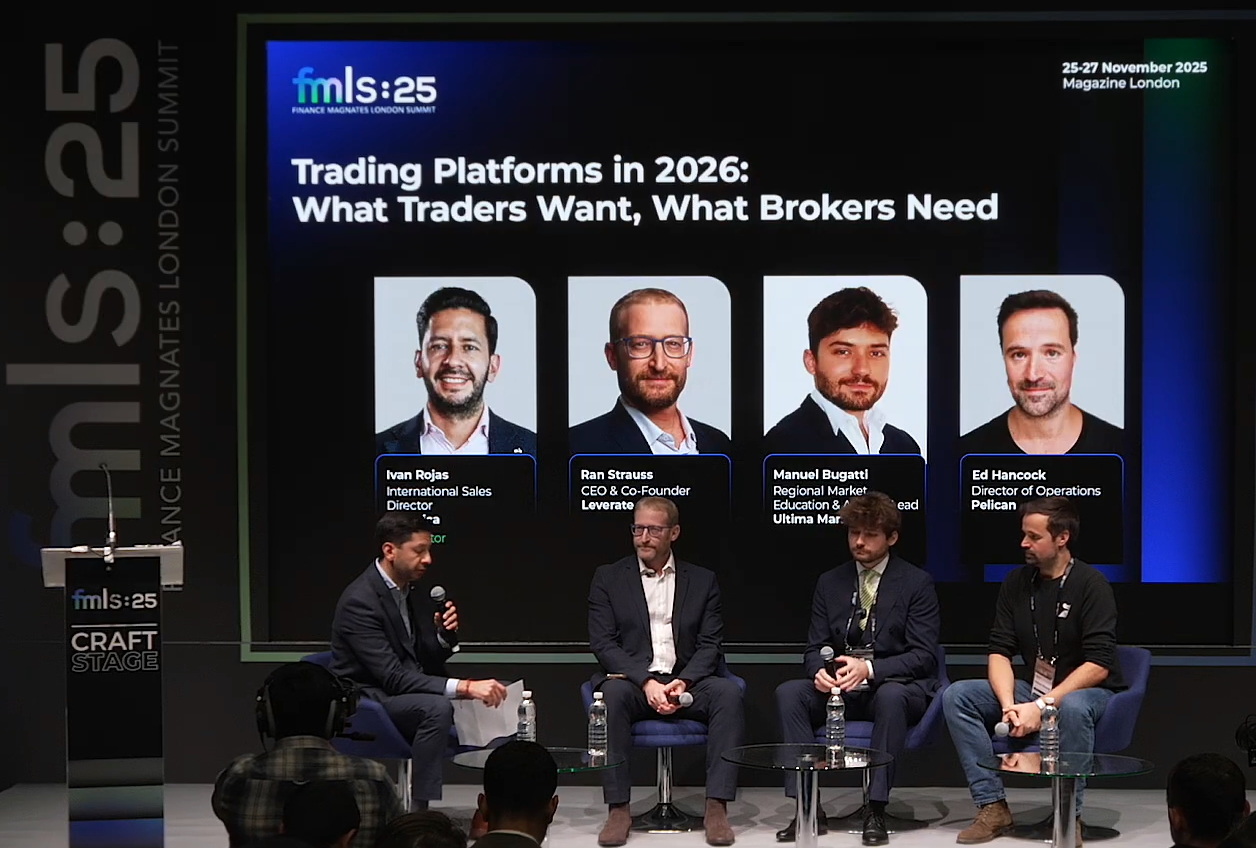
From left: Ivan Rojas, Ran Strauss, Manuel Bugatti, Ed Hancock at FMLS:25

A notable moment came when the panel discussed how to add AI without confusing users. ‘Probably we are not ready to use AI like the customer wants,’ Bugatti warned. ‘They want to open the platform, launch the AI and use directly."

Personalisation Meets Regulation

Personalisation emerged as another dividing line. Hancock noted that Pelican already filters thousands of copy-trading strategies based on risk appetite, an approach rooted in FCA consumer-duty rules. Tailored interfaces, he suggested, must avoid limiting client autonomy or steering users toward unsuitable products.

Strauss shifted the perspective to brokers: “Personalization does not necessarily mean it is for the trader. It can be also for the broker.” Custom branding, pricing by geography and adaptable content have become critical ways for brokers to differentiate in a crowded market.

Brokers Face Mounting Compliance and Cost Pressures

With tech budgets still much smaller than marketing spend, the panel acknowledged that brokers are being forced to prioritise.

Strauss said regulatory and operational costs are accelerating a shift “from relying on call centres towards self-conversion and automated funnels.” Rising media and HR costs, he added, are making automation a necessity rather than a preference.

Bugatti highlighted the staffing burden behind KYC, AML and compliance functions. Technology, he said, can “monitor traders” and simplify partnership oversight, not just trading workflows.

Hancock urged caution: “It shouldn’t just be about what you think might be useful or what one particular IB tells you,” he said. Many firms adopt tools they cannot maintain or do not genuinely need. With limited in-house developers, integrating the wrong technology can be costlier than doing nothing.

Social Trading: Hype vs. Trust

The conversation ended on an increasingly relevant topic: whether brokers should build social-style ecosystems around trading.

Rojas cited the surge of Telegram and Discord trading groups, some hosting thousands of users trading and discussing markets late into the night. But Hancock pushed back on the idea that chat-driven social trading creates value.

Pelican previously tested a chat feature that attempted to mimic messaging apps. “It really didn’t work,” Hancock said. “That wasn’t what built trust.” What matters, he argued, is verified statistics and transparent performance history—not unverified messages claiming overnight success. “It’s all about the data.”

A Market Moving Toward 2026

The speakers kept focusing on three main things: platforms must become easier to use, AI must be introduced carefully, and brokers must reduce costs without compromising compliance.

As Rojas noted, firms that “listen more dynamically to clients” are likely to come out ahead. For an industry balancing regulatory scrutiny, volatile retail behaviour and rapid technological change, that adaptability may define the trading platforms of 2026 more than any single feature.

At the Finance Magnates London Summit 2025, industry executives on a panel titled “Trading Platforms in 2026: What Traders Want, What Brokers Need” said that trading platforms will be defined by simplicity, mobile usage, and tighter cost discipline, but they disagreed on how much AI and social features should be added.

The panel, moderated by Ivan Rojas of Nelogica, brought together Ran Strauss, CEO and Co-Founder of Leverate; Manuel Bugatti, Regional Market Education & Analysis Lead at Ultima Markets UK; and Ed Hancock, Director of Operations at Pelican.

Simplicity as a Priority, but for Whom?

Speakers kept coming back to the idea of simplicity, saying platforms are getting more complicated just as younger traders arrive with different expectations.

“Simplicity comes with fairness and transparency,” Strauss said, adding that “70–80% of traders” now access platforms via mobile. The shift, he said, forces providers to rethink legacy interfaces built for large desktop screens.

Bugatti argued that simplicity is often misunderstood. “Normally the simplicity is not for the young people—they are smart,” he said. “It is the old people who want simplicity.” For him, the challenge is avoiding a “nightmare for brokers” in which platforms become overly customised for every user.

Hancock agreed that reducing friction remains essential, particularly as retail traders often arrive “completely blind but excited to make money.” He stressed the importance of education and support inside the platform, not simply more features.

From left: Ivan Rojas, Ran Strauss, Manuel Bugatti, Ed Hancock at FMLS:25

A notable moment came when the panel discussed how to add AI without confusing users. ‘Probably we are not ready to use AI like the customer wants,’ Bugatti warned. ‘They want to open the platform, launch the AI and use directly."

Personalisation Meets Regulation

Personalisation emerged as another dividing line. Hancock noted that Pelican already filters thousands of copy-trading strategies based on risk appetite, an approach rooted in FCA consumer-duty rules. Tailored interfaces, he suggested, must avoid limiting client autonomy or steering users toward unsuitable products.

Strauss shifted the perspective to brokers: “Personalization does not necessarily mean it is for the trader. It can be also for the broker.” Custom branding, pricing by geography and adaptable content have become critical ways for brokers to differentiate in a crowded market.

Brokers Face Mounting Compliance and Cost Pressures

With tech budgets still much smaller than marketing spend, the panel acknowledged that brokers are being forced to prioritise.

Strauss said regulatory and operational costs are accelerating a shift “from relying on call centres towards self-conversion and automated funnels.” Rising media and HR costs, he added, are making automation a necessity rather than a preference.

Bugatti highlighted the staffing burden behind KYC, AML and compliance functions. Technology, he said, can “monitor traders” and simplify partnership oversight, not just trading workflows.

Hancock urged caution: “It shouldn’t just be about what you think might be useful or what one particular IB tells you,” he said. Many firms adopt tools they cannot maintain or do not genuinely need. With limited in-house developers, integrating the wrong technology can be costlier than doing nothing.

Social Trading: Hype vs. Trust

The conversation ended on an increasingly relevant topic: whether brokers should build social-style ecosystems around trading.

Rojas cited the surge of Telegram and Discord trading groups, some hosting thousands of users trading and discussing markets late into the night. But Hancock pushed back on the idea that chat-driven social trading creates value.

Pelican previously tested a chat feature that attempted to mimic messaging apps. “It really didn’t work,” Hancock said. “That wasn’t what built trust.” What matters, he argued, is verified statistics and transparent performance history—not unverified messages claiming overnight success. “It’s all about the data.”

A Market Moving Toward 2026

The speakers kept focusing on three main things: platforms must become easier to use, AI must be introduced carefully, and brokers must reduce costs without compromising compliance.

As Rojas noted, firms that “listen more dynamically to clients” are likely to come out ahead. For an industry balancing regulatory scrutiny, volatile retail behaviour and rapid technological change, that adaptability may define the trading platforms of 2026 more than any single feature.

About the Author: Tareq Sikder
Tareq Sikder
  • 2001 Articles
  • 34 Followers
About the Author: Tareq Sikder
A Forex technical analyst and writer who has been engaged in financial writing for 12 years.
  • 2001 Articles
  • 34 Followers

More from the Author

Retail FX

!"#$%&'()*+,-./0123456789:;<=>?@ABCDEFGHIJKLMNOPQRSTUVWXYZ[\]^_`abcdefghijklmnopqrstuvwxyz{|} !"#$%&'()*+,-./0123456789:;<=>?@ABCDEFGHIJKLMNOPQRSTUVWXYZ[\]^_`abcdefghijklmnopqrstuvwxyz{|}