In this first part of the Italian Market Series, we look at the country’s CFD scene—where high portfolio values and rising Gen Z interest clash with foreign brokers’ preference to remain offshore.
“I use an international broker for low-cost trading and a domestic one for long-term holdings,” writes Edoardo Catani. “It’s the most efficient combo, but also highlights the challenge for global firms.”
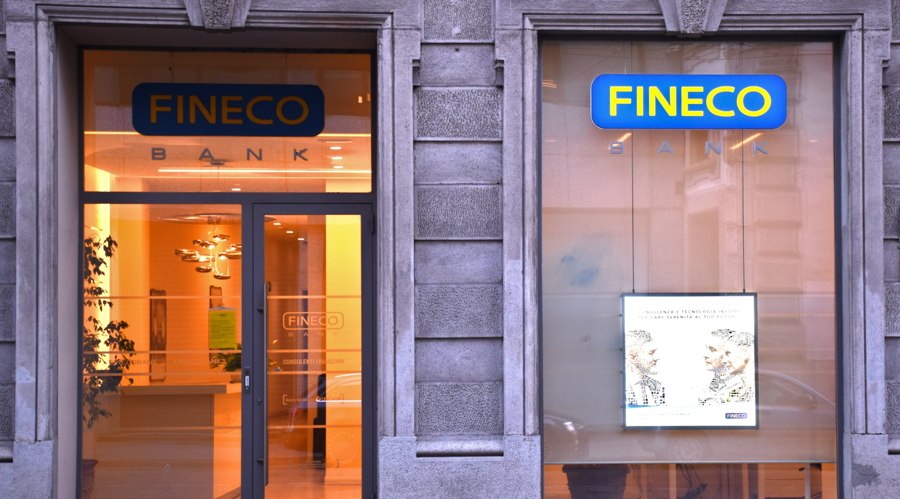
The entrance of Fineco Center in Milan, Italy. Italians have some highest average trade margins
From Roman taxis wrapped in eToro branding to the slogan of the Italian broker Fineco—“Fineco. As easy as flying”—welcoming travelers at Fiumicino Airport, Italy’s financial landscape is buzzing. In a country of roughly 59 million people, long known for its traditionally risk-averse investors, a visible transformation is underway in the trading and investment scene.
The Changing Dynamics of Italian Traders
Among the most prominent global financial markets, Italy does not particularly stand out compared to Asia, North America, or even other European nations. Nevertheless, over the last few years, the habits and trends of the Italian population towards trading and investing have been changing, showing clear signs of strength and growth, which could shape the Italian CFD industry over the coming decades.
Despite having one of the lowest numbers of active CFD traders in Europe, Italian traders hold some of the highest average portfolio values and margins per trade. This, combined with a fast-growing industry, presents an excellent opportunity for brokers looking to expand their operations.
The Italian Way
Compared to other cultures where investing is often a central activity for most households, Italians have historically faced significant barriers that influence their ability to invest. As an Italian trader myself, I can personally confirm many of these challenges.
A recent survey by BlackRock highlighted key obstacles, including a lack of money to invest, fear of losing money, and insufficient knowledge of financial markets. The last of these is particularly prevalent among young adults, with 61% of under-35 non-investors citing it as a reason for not participating in the markets.
Today, Italy represents the fourth-largest financial market in Europe, with around 15 million investors. However, compared to the US, market penetration remains relatively low, with only 29% of the population investing in financial markets, compared to around 62% in the US.
The situation is even more challenging in the CFD market. In Italy, there are only around 32,000 retail traders operating in the FX/CFD sector—a far lower number than Europe’s leader, the United Kingdom, which has more than six times as many CFD traders.
Interestingly, the growth of the Italian CFD industry, along with the rising number of traders under 35 years of age, has allowed the market to expand beyond pre-pandemic levels. It now boasts the highest average portfolio value and margin per transaction in Europe.
Observing this profitable trend and the relatively low number of CFD brokers operating in Italy, many brokers have decided to expand their presence, driving rapid growth in the local CFD sector.
The Italian brokerage market has traditionally been dominated by large national premium brokers, creating an oligopolistic structure. However, with the rise of discount brokers and advancements in technology, the market has become significantly more competitive, offering a wider range of alternatives from global firms.
Fineco ad on a train in Italy. Today, most Italian brokers are international discount brokers
Prior to this increase in the number of brokers, a phenomenon that hadn’t been seen in Italy for over 10 years, the broker market share was dominated by the 5 largest brokers that controlled around 80% of the market: Fineco, IW Bank, WeBank, Sella and Directa. These five players were among the only 22 brokers which had a physical branch in Italy.
According to a study by Il Sole 24 Ore, Italy’s leading financial newspaper, a major shift in the market took place between 2018 and 2019, when the number of brokers increased by over 83%, rising from 132 to 242. This growth reduced the market share of established players.
Before this surge—something not seen in Italy for over a decade—the five largest brokers controlled around 80% of the market: Fineco, IW Bank, WeBank, Sella, and Directa. These firms were among the only 22 brokers that operated physical branches in Italy.
Today, however, most Italian brokerage firms consist of international discount brokers that have expanded into Italy without establishing a local legal presence. Among the most prominent names are eToro, IC Markets, IG Group, CMC Markets, XTB, Capital.com, and FOREX.com.
Although these international brokers face disadvantages compared to national brokers—particularly in terms of ease of use, as Italian brokers offer accounts integrated directly with current accounts and simplified tax reporting procedures—many global firms maintain a competitive edge by providing a wider range of products and lower trading costs.
Personally, both as an investor and a trader, I maintain two active live accounts: one with an international discount broker, which I use mainly for short-term trading due to lower commissions and operating costs, and another with an Italian “premium” broker, through which I manage my long-term holdings. I believe this to be the most efficient strategy for Italian traders and investors, posing a challenge for international brokers looking to gain market share.
Next article: Italy’s investment gap—no money for many, no insight for the rest.
From Roman taxis wrapped in eToro branding to the slogan of the Italian broker Fineco—“Fineco. As easy as flying”—welcoming travelers at Fiumicino Airport, Italy’s financial landscape is buzzing. In a country of roughly 59 million people, long known for its traditionally risk-averse investors, a visible transformation is underway in the trading and investment scene.
The Changing Dynamics of Italian Traders
Among the most prominent global financial markets, Italy does not particularly stand out compared to Asia, North America, or even other European nations. Nevertheless, over the last few years, the habits and trends of the Italian population towards trading and investing have been changing, showing clear signs of strength and growth, which could shape the Italian CFD industry over the coming decades.
Despite having one of the lowest numbers of active CFD traders in Europe, Italian traders hold some of the highest average portfolio values and margins per trade. This, combined with a fast-growing industry, presents an excellent opportunity for brokers looking to expand their operations.
The Italian Way
Compared to other cultures where investing is often a central activity for most households, Italians have historically faced significant barriers that influence their ability to invest. As an Italian trader myself, I can personally confirm many of these challenges.
A recent survey by BlackRock highlighted key obstacles, including a lack of money to invest, fear of losing money, and insufficient knowledge of financial markets. The last of these is particularly prevalent among young adults, with 61% of under-35 non-investors citing it as a reason for not participating in the markets.
Today, Italy represents the fourth-largest financial market in Europe, with around 15 million investors. However, compared to the US, market penetration remains relatively low, with only 29% of the population investing in financial markets, compared to around 62% in the US.
The situation is even more challenging in the CFD market. In Italy, there are only around 32,000 retail traders operating in the FX/CFD sector—a far lower number than Europe’s leader, the United Kingdom, which has more than six times as many CFD traders.
Interestingly, the growth of the Italian CFD industry, along with the rising number of traders under 35 years of age, has allowed the market to expand beyond pre-pandemic levels. It now boasts the highest average portfolio value and margin per transaction in Europe.
Observing this profitable trend and the relatively low number of CFD brokers operating in Italy, many brokers have decided to expand their presence, driving rapid growth in the local CFD sector.
The Italian brokerage market has traditionally been dominated by large national premium brokers, creating an oligopolistic structure. However, with the rise of discount brokers and advancements in technology, the market has become significantly more competitive, offering a wider range of alternatives from global firms.
Fineco ad on a train in Italy. Today, most Italian brokers are international discount brokers
Prior to this increase in the number of brokers, a phenomenon that hadn’t been seen in Italy for over 10 years, the broker market share was dominated by the 5 largest brokers that controlled around 80% of the market: Fineco, IW Bank, WeBank, Sella and Directa. These five players were among the only 22 brokers which had a physical branch in Italy.
According to a study by Il Sole 24 Ore, Italy’s leading financial newspaper, a major shift in the market took place between 2018 and 2019, when the number of brokers increased by over 83%, rising from 132 to 242. This growth reduced the market share of established players.
Before this surge—something not seen in Italy for over a decade—the five largest brokers controlled around 80% of the market: Fineco, IW Bank, WeBank, Sella, and Directa. These firms were among the only 22 brokers that operated physical branches in Italy.
Today, however, most Italian brokerage firms consist of international discount brokers that have expanded into Italy without establishing a local legal presence. Among the most prominent names are eToro, IC Markets, IG Group, CMC Markets, XTB, Capital.com, and FOREX.com.
Although these international brokers face disadvantages compared to national brokers—particularly in terms of ease of use, as Italian brokers offer accounts integrated directly with current accounts and simplified tax reporting procedures—many global firms maintain a competitive edge by providing a wider range of products and lower trading costs.
Personally, both as an investor and a trader, I maintain two active live accounts: one with an international discount broker, which I use mainly for short-term trading due to lower commissions and operating costs, and another with an Italian “premium” broker, through which I manage my long-term holdings. I believe this to be the most efficient strategy for Italian traders and investors, posing a challenge for international brokers looking to gain market share.
Next article: Italy’s investment gap—no money for many, no insight for the rest.
Edoardo Catani is an Italian financial analyst and financial writer specializing in trading and investing. Since 2021, he has produced over 1,000 articles on technical and fundamental analysis for leading financial platforms, including DailyForex, Finance Magnates, and Investing.com. His expertise covers forex, stocks, cryptocurrencies, and market indices.
Passionate about global markets, he focuses on financial research, risk management, and derivative analysis. Edoardo actively manages a well-diversified portfolio of North American and European stocks and ETFs with a long-term approach. He also operates a swing trading account, optimizing value-based investment strategies through fundamental analysis and quantitative modeling.
42% of Swiss Financial Firms Have No Digital Fraud Policy, FINMA Finds
Featured Videos
FP Markets Winner Spotlight 🏆 | Global Broker of the Year 2025 #Trading #Broker #Innovation #Shorts
FP Markets Winner Spotlight 🏆 | Global Broker of the Year 2025 #Trading #Broker #Innovation #Shorts
FP Markets Winner Spotlight 🏆 | Global Broker of the Year 2025 #Trading #Broker #Innovation #Shorts
FP Markets Winner Spotlight 🏆 | Global Broker of the Year 2025 #Trading #Broker #Innovation #Shorts
FP Markets takes the spotlight as Global Broker of the Year 2025 at the Finance Magnates Awards.
Martin Stoilov, Head of Client Experience, shares that trust, innovation, and people played a key role in the company’s success, supported by a strong foundation of integrity and client-centricity.
Following this milestone, FP Markets continues to focus on growth, technology investment, and its core values of transparency and excellence.
👉 Be part of FM Awards 2026: https://awards.financemagnates.com/#nominate
FP Markets takes the spotlight as Global Broker of the Year 2025 at the Finance Magnates Awards.
Martin Stoilov, Head of Client Experience, shares that trust, innovation, and people played a key role in the company’s success, supported by a strong foundation of integrity and client-centricity.
Following this milestone, FP Markets continues to focus on growth, technology investment, and its core values of transparency and excellence.
👉 Be part of FM Awards 2026: https://awards.financemagnates.com/#nominate
FP Markets takes the spotlight as Global Broker of the Year 2025 at the Finance Magnates Awards.
Martin Stoilov, Head of Client Experience, shares that trust, innovation, and people played a key role in the company’s success, supported by a strong foundation of integrity and client-centricity.
Following this milestone, FP Markets continues to focus on growth, technology investment, and its core values of transparency and excellence.
👉 Be part of FM Awards 2026: https://awards.financemagnates.com/#nominate
FP Markets takes the spotlight as Global Broker of the Year 2025 at the Finance Magnates Awards.
Martin Stoilov, Head of Client Experience, shares that trust, innovation, and people played a key role in the company’s success, supported by a strong foundation of integrity and client-centricity.
Following this milestone, FP Markets continues to focus on growth, technology investment, and its core values of transparency and excellence.
👉 Be part of FM Awards 2026: https://awards.financemagnates.com/#nominate
In this video, we review @HolaPrimeMarketsOfficial, a multi-asset forex and CFDs broker offering different account types, trading platforms, and flexible trading conditions.
We cover the broker’s overall offering, including account options, trading environment, platforms like MT4 and MT5, and additional services such as managed accounts and fast withdrawals.
Watch the full video to see if Hola Prime Markets fits your trading needs.
📣 Stay up to date with the latest in finance and trading. Follow Finance Magnates for industry news, insights, and global event coverage.
Connect with us:
🔗 LinkedIn: /financemagnates
👍 Facebook: /financemagnates
📸 Instagram: https://www.instagram.com/financemagnates
🐦 X: https://x.com/financemagnates
🎥 TikTok: https://www.tiktok.com/tag/financemagnates
▶️ YouTube: /@financemagnates_official
#HolaPrime #ForexBroker #CFDTrading #FinanceMagnates #Trading #Forex #BrokerReview
In this video, we review @HolaPrimeMarketsOfficial, a multi-asset forex and CFDs broker offering different account types, trading platforms, and flexible trading conditions.
We cover the broker’s overall offering, including account options, trading environment, platforms like MT4 and MT5, and additional services such as managed accounts and fast withdrawals.
Watch the full video to see if Hola Prime Markets fits your trading needs.
📣 Stay up to date with the latest in finance and trading. Follow Finance Magnates for industry news, insights, and global event coverage.
Connect with us:
🔗 LinkedIn: /financemagnates
👍 Facebook: /financemagnates
📸 Instagram: https://www.instagram.com/financemagnates
🐦 X: https://x.com/financemagnates
🎥 TikTok: https://www.tiktok.com/tag/financemagnates
▶️ YouTube: /@financemagnates_official
#HolaPrime #ForexBroker #CFDTrading #FinanceMagnates #Trading #Forex #BrokerReview
In this video, we review @HolaPrimeMarketsOfficial, a multi-asset forex and CFDs broker offering different account types, trading platforms, and flexible trading conditions.
We cover the broker’s overall offering, including account options, trading environment, platforms like MT4 and MT5, and additional services such as managed accounts and fast withdrawals.
Watch the full video to see if Hola Prime Markets fits your trading needs.
📣 Stay up to date with the latest in finance and trading. Follow Finance Magnates for industry news, insights, and global event coverage.
Connect with us:
🔗 LinkedIn: /financemagnates
👍 Facebook: /financemagnates
📸 Instagram: https://www.instagram.com/financemagnates
🐦 X: https://x.com/financemagnates
🎥 TikTok: https://www.tiktok.com/tag/financemagnates
▶️ YouTube: /@financemagnates_official
#HolaPrime #ForexBroker #CFDTrading #FinanceMagnates #Trading #Forex #BrokerReview
In this video, we review @HolaPrimeMarketsOfficial, a multi-asset forex and CFDs broker offering different account types, trading platforms, and flexible trading conditions.
We cover the broker’s overall offering, including account options, trading environment, platforms like MT4 and MT5, and additional services such as managed accounts and fast withdrawals.
Watch the full video to see if Hola Prime Markets fits your trading needs.
📣 Stay up to date with the latest in finance and trading. Follow Finance Magnates for industry news, insights, and global event coverage.
Connect with us:
🔗 LinkedIn: /financemagnates
👍 Facebook: /financemagnates
📸 Instagram: https://www.instagram.com/financemagnates
🐦 X: https://x.com/financemagnates
🎥 TikTok: https://www.tiktok.com/tag/financemagnates
▶️ YouTube: /@financemagnates_official
#HolaPrime #ForexBroker #CFDTrading #FinanceMagnates #Trading #Forex #BrokerReview
In this video, we review @HolaPrimeMarketsOfficial, a multi-asset forex and CFDs broker offering different account types, trading platforms, and flexible trading conditions.
We cover the broker’s overall offering, including account options, trading environment, platforms like MT4 and MT5, and additional services such as managed accounts and fast withdrawals.
Watch the full video to see if Hola Prime Markets fits your trading needs.
📣 Stay up to date with the latest in finance and trading. Follow Finance Magnates for industry news, insights, and global event coverage.
Connect with us:
🔗 LinkedIn: /financemagnates
👍 Facebook: /financemagnates
📸 Instagram: https://www.instagram.com/financemagnates
🐦 X: https://x.com/financemagnates
🎥 TikTok: https://www.tiktok.com/tag/financemagnates
▶️ YouTube: /@financemagnates_official
#HolaPrime #ForexBroker #CFDTrading #FinanceMagnates #Trading #Forex #BrokerReview
In this video, we review @HolaPrimeMarketsOfficial, a multi-asset forex and CFDs broker offering different account types, trading platforms, and flexible trading conditions.
We cover the broker’s overall offering, including account options, trading environment, platforms like MT4 and MT5, and additional services such as managed accounts and fast withdrawals.
Watch the full video to see if Hola Prime Markets fits your trading needs.
📣 Stay up to date with the latest in finance and trading. Follow Finance Magnates for industry news, insights, and global event coverage.
Connect with us:
🔗 LinkedIn: /financemagnates
👍 Facebook: /financemagnates
📸 Instagram: https://www.instagram.com/financemagnates
🐦 X: https://x.com/financemagnates
🎥 TikTok: https://www.tiktok.com/tag/financemagnates
▶️ YouTube: /@financemagnates_official
#HolaPrime #ForexBroker #CFDTrading #FinanceMagnates #Trading #Forex #BrokerReview
Hola Prime Review: What You Need to Know | Full Breakdown by Finance Magnates
Hola Prime Review: What You Need to Know | Full Breakdown by Finance Magnates
Hola Prime Review: What You Need to Know | Full Breakdown by Finance Magnates
Hola Prime Review: What You Need to Know | Full Breakdown by Finance Magnates
Hola Prime Review: What You Need to Know | Full Breakdown by Finance Magnates
Hola Prime Review: What You Need to Know | Full Breakdown by Finance Magnates
In this video, we review @HolaPrime_Global, a proprietary trading firm offering evaluation programs and performance-based payouts in simulated market environments.
We cover how the challenge model works, including account types, profit splits (up to 95%), trading rules, and what it takes to reach a funded account. You’ll also learn about available platforms like MT4, MT5, cTrader, and more, along with insights into payouts, support, and trading conditions.
Watch the full video to see if Hola Prime fits your trading style.
📣 Stay up to date with the latest in finance and trading. Follow Finance Magnates for industry news, insights, and global event coverage.
Connect with us:
🔗 LinkedIn: /financemagnates
👍 Facebook: /financemagnates
📸 Instagram: https://www.instagram.com/financemagnates
🐦 X: https://x.com/financemagnates
🎥 TikTok: https://www.tiktok.com/tag/financemagnates
▶️ YouTube: /@financemagnates_official
#HolaPrime #PropFirm #Trading #FinanceMagnates #Forex #FuturesTrading #TradingReview #PropFirmReview
In this video, we review @HolaPrime_Global, a proprietary trading firm offering evaluation programs and performance-based payouts in simulated market environments.
We cover how the challenge model works, including account types, profit splits (up to 95%), trading rules, and what it takes to reach a funded account. You’ll also learn about available platforms like MT4, MT5, cTrader, and more, along with insights into payouts, support, and trading conditions.
Watch the full video to see if Hola Prime fits your trading style.
📣 Stay up to date with the latest in finance and trading. Follow Finance Magnates for industry news, insights, and global event coverage.
Connect with us:
🔗 LinkedIn: /financemagnates
👍 Facebook: /financemagnates
📸 Instagram: https://www.instagram.com/financemagnates
🐦 X: https://x.com/financemagnates
🎥 TikTok: https://www.tiktok.com/tag/financemagnates
▶️ YouTube: /@financemagnates_official
#HolaPrime #PropFirm #Trading #FinanceMagnates #Forex #FuturesTrading #TradingReview #PropFirmReview
In this video, we review @HolaPrime_Global, a proprietary trading firm offering evaluation programs and performance-based payouts in simulated market environments.
We cover how the challenge model works, including account types, profit splits (up to 95%), trading rules, and what it takes to reach a funded account. You’ll also learn about available platforms like MT4, MT5, cTrader, and more, along with insights into payouts, support, and trading conditions.
Watch the full video to see if Hola Prime fits your trading style.
📣 Stay up to date with the latest in finance and trading. Follow Finance Magnates for industry news, insights, and global event coverage.
Connect with us:
🔗 LinkedIn: /financemagnates
👍 Facebook: /financemagnates
📸 Instagram: https://www.instagram.com/financemagnates
🐦 X: https://x.com/financemagnates
🎥 TikTok: https://www.tiktok.com/tag/financemagnates
▶️ YouTube: /@financemagnates_official
#HolaPrime #PropFirm #Trading #FinanceMagnates #Forex #FuturesTrading #TradingReview #PropFirmReview
In this video, we review @HolaPrime_Global, a proprietary trading firm offering evaluation programs and performance-based payouts in simulated market environments.
We cover how the challenge model works, including account types, profit splits (up to 95%), trading rules, and what it takes to reach a funded account. You’ll also learn about available platforms like MT4, MT5, cTrader, and more, along with insights into payouts, support, and trading conditions.
Watch the full video to see if Hola Prime fits your trading style.
📣 Stay up to date with the latest in finance and trading. Follow Finance Magnates for industry news, insights, and global event coverage.
Connect with us:
🔗 LinkedIn: /financemagnates
👍 Facebook: /financemagnates
📸 Instagram: https://www.instagram.com/financemagnates
🐦 X: https://x.com/financemagnates
🎥 TikTok: https://www.tiktok.com/tag/financemagnates
▶️ YouTube: /@financemagnates_official
#HolaPrime #PropFirm #Trading #FinanceMagnates #Forex #FuturesTrading #TradingReview #PropFirmReview
In this video, we review @HolaPrime_Global, a proprietary trading firm offering evaluation programs and performance-based payouts in simulated market environments.
We cover how the challenge model works, including account types, profit splits (up to 95%), trading rules, and what it takes to reach a funded account. You’ll also learn about available platforms like MT4, MT5, cTrader, and more, along with insights into payouts, support, and trading conditions.
Watch the full video to see if Hola Prime fits your trading style.
📣 Stay up to date with the latest in finance and trading. Follow Finance Magnates for industry news, insights, and global event coverage.
Connect with us:
🔗 LinkedIn: /financemagnates
👍 Facebook: /financemagnates
📸 Instagram: https://www.instagram.com/financemagnates
🐦 X: https://x.com/financemagnates
🎥 TikTok: https://www.tiktok.com/tag/financemagnates
▶️ YouTube: /@financemagnates_official
#HolaPrime #PropFirm #Trading #FinanceMagnates #Forex #FuturesTrading #TradingReview #PropFirmReview
In this video, we review @HolaPrime_Global, a proprietary trading firm offering evaluation programs and performance-based payouts in simulated market environments.
We cover how the challenge model works, including account types, profit splits (up to 95%), trading rules, and what it takes to reach a funded account. You’ll also learn about available platforms like MT4, MT5, cTrader, and more, along with insights into payouts, support, and trading conditions.
Watch the full video to see if Hola Prime fits your trading style.
📣 Stay up to date with the latest in finance and trading. Follow Finance Magnates for industry news, insights, and global event coverage.
Connect with us:
🔗 LinkedIn: /financemagnates
👍 Facebook: /financemagnates
📸 Instagram: https://www.instagram.com/financemagnates
🐦 X: https://x.com/financemagnates
🎥 TikTok: https://www.tiktok.com/tag/financemagnates
▶️ YouTube: /@financemagnates_official
#HolaPrime #PropFirm #Trading #FinanceMagnates #Forex #FuturesTrading #TradingReview #PropFirmReview
Axi Winner Spotlight 🏆 | Global Most Innovative Broker 2025 #Innovation #Trading #Fintech #Broker
Axi Winner Spotlight 🏆 | Global Most Innovative Broker 2025 #Innovation #Trading #Fintech #Broker
Axi Winner Spotlight 🏆 | Global Most Innovative Broker 2025 #Innovation #Trading #Fintech #Broker
Axi Winner Spotlight 🏆 | Global Most Innovative Broker 2025 #Innovation #Trading #Fintech #Broker
Axi Winner Spotlight 🏆 | Global Most Innovative Broker 2025 #Innovation #Trading #Fintech #Broker
Axi Winner Spotlight 🏆 | Global Most Innovative Broker 2025 #Innovation #Trading #Fintech #Broker
Axi takes the spotlight at the Finance Magnates Awards, winning Global Most Innovative Broker 2025.
Olivia Xenofontos and Ivanna Openko share how the team will feel: proud, motivated, and ready to keep delivering.
They also describe the night as well-organized, focused, and enjoyable for all.
👉 Be part of FM Awards 2026.
Axi takes the spotlight at the Finance Magnates Awards, winning Global Most Innovative Broker 2025.
Olivia Xenofontos and Ivanna Openko share how the team will feel: proud, motivated, and ready to keep delivering.
They also describe the night as well-organized, focused, and enjoyable for all.
👉 Be part of FM Awards 2026.
Axi takes the spotlight at the Finance Magnates Awards, winning Global Most Innovative Broker 2025.
Olivia Xenofontos and Ivanna Openko share how the team will feel: proud, motivated, and ready to keep delivering.
They also describe the night as well-organized, focused, and enjoyable for all.
👉 Be part of FM Awards 2026.
Axi takes the spotlight at the Finance Magnates Awards, winning Global Most Innovative Broker 2025.
Olivia Xenofontos and Ivanna Openko share how the team will feel: proud, motivated, and ready to keep delivering.
They also describe the night as well-organized, focused, and enjoyable for all.
👉 Be part of FM Awards 2026.
Axi takes the spotlight at the Finance Magnates Awards, winning Global Most Innovative Broker 2025.
Olivia Xenofontos and Ivanna Openko share how the team will feel: proud, motivated, and ready to keep delivering.
They also describe the night as well-organized, focused, and enjoyable for all.
👉 Be part of FM Awards 2026.
Axi takes the spotlight at the Finance Magnates Awards, winning Global Most Innovative Broker 2025.
Olivia Xenofontos and Ivanna Openko share how the team will feel: proud, motivated, and ready to keep delivering.
They also describe the night as well-organized, focused, and enjoyable for all.
👉 Be part of FM Awards 2026.
Recognition that matters.
Built on transparency.
Driven by the industry.
The Finance Magnates Awards 2026.
Nominations are now open.
🔗 https://awards.financemagnates.com/?utm_source=SM&utm_medium=social&utm_campaign=recognition-matters
Recognition that matters.
Built on transparency.
Driven by the industry.
The Finance Magnates Awards 2026.
Nominations are now open.
🔗 https://awards.financemagnates.com/?utm_source=SM&utm_medium=social&utm_campaign=recognition-matters
Recognition that matters.
Built on transparency.
Driven by the industry.
The Finance Magnates Awards 2026.
Nominations are now open.
🔗 https://awards.financemagnates.com/?utm_source=SM&utm_medium=social&utm_campaign=recognition-matters
Recognition that matters.
Built on transparency.
Driven by the industry.
The Finance Magnates Awards 2026.
Nominations are now open.
🔗 https://awards.financemagnates.com/?utm_source=SM&utm_medium=social&utm_campaign=recognition-matters
Recognition that matters.
Built on transparency.
Driven by the industry.
The Finance Magnates Awards 2026.
Nominations are now open.
🔗 https://awards.financemagnates.com/?utm_source=SM&utm_medium=social&utm_campaign=recognition-matters
Recognition that matters.
Built on transparency.
Driven by the industry.
The Finance Magnates Awards 2026.
Nominations are now open.
🔗 https://awards.financemagnates.com/?utm_source=SM&utm_medium=social&utm_campaign=recognition-matters