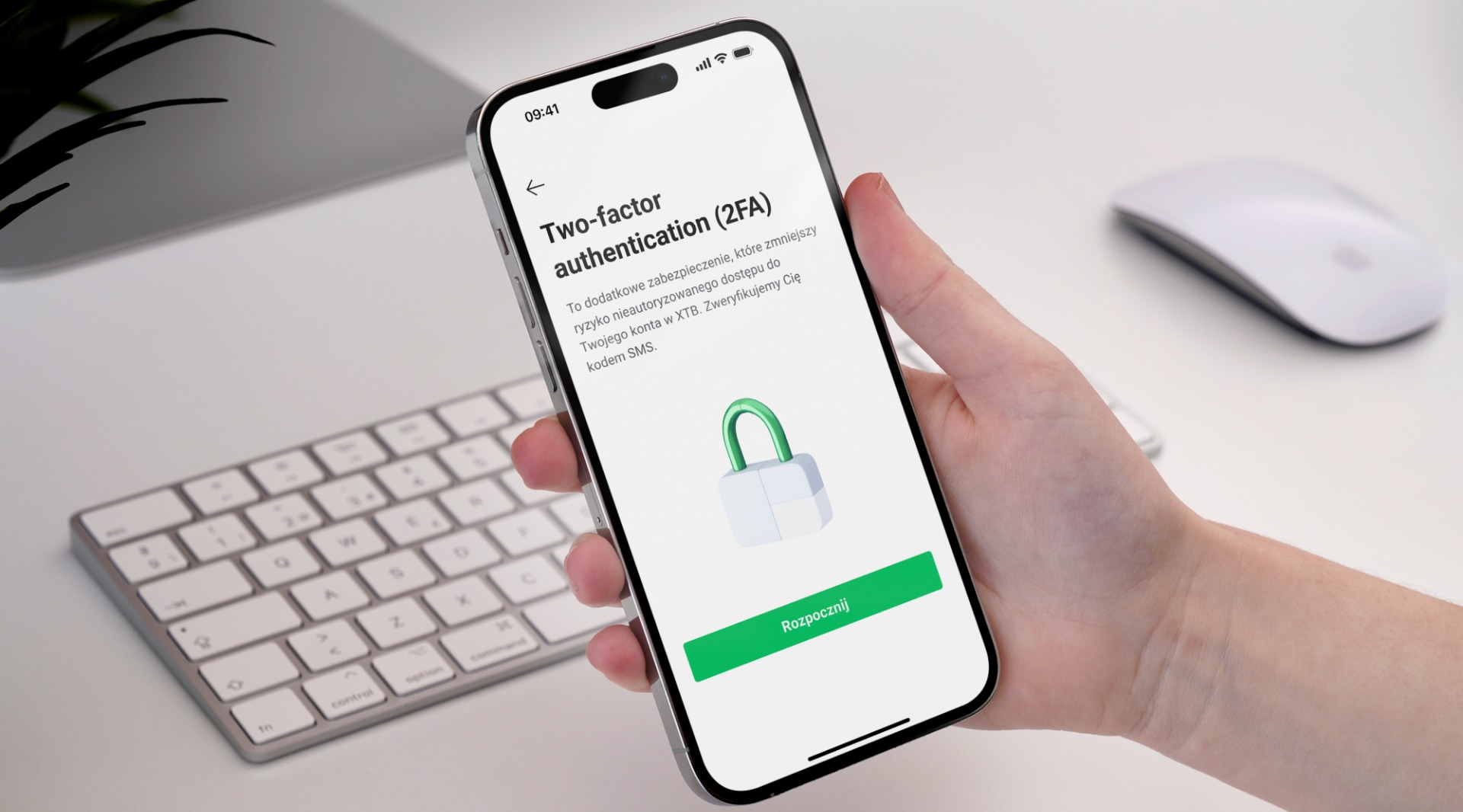
The company admitted that a small percentage of its clients fell victim to attacks, and none of them had 2FA enabled.
It also plans to implement additional security measures in its mobile app in the coming months.
Retail
investment app XTB announced it will reimburse all clients who lost money to
cybercriminals, following an alleged hacking scheme where a Polish client
publicly claimed to have lost approximately 150,000 zlotys ($38,000).
The publicly
listed company (WSE: XTB) also states that the refund will not affect its
financial results and announces plans to implement additional security measures
in the coming months.
Client Losses Affect Small
Fraction of XTB Users
XTB's
internal data shows cybercriminal attacks affected just 0.017% of its client
base. The company said none of the affected clients had activated two-factor
authentication (2FA) at the time of the incidents, highlighting the importance
of additional security measures.
The
Warsaw-based broker expects the total compensation amount won't materially
impact its financial results, though it didn't specify the exact figure
involved. XTB plans to contact affected clients directly in the coming weeks to
arrange payments.
Omar Arnaout, CEO of XTB; Source: LinkedIn
"Our
strategy is to offer the best investment application for managing investments
both passively and actively," CEO Omar Arnaout said. "We want our
clients to be confident that they can safely invest in the XTB app with
long-term goals or additional retirement in mind."
The move
comes after XTB released preliminary financial results for Q2, reporting
the acquisition of 361,000 new clients and a net profit of PLN 2.165
billion, compared to the analysts’ consensus of PLN 230–240 million.
Security Overhaul
Following Media Attention
The
announcement follows mounting pressure after the alleged victim's story gained
traction across local financial forums and media outlets. The client described
how hackers executed
simultaneous buy-sell transactions on low-liquidity securities, with his
account consistently losing money while the attacker's separate account
profited. The case prompted scrutiny of the platform's security measures and
client protection policies.
The
platform claims, however, it has significantly increased its cybersecurity
investments, with the security department budget jumping 48% in 2024 compared
to the previous year. Arnaout said those investments will continue growing in
coming years.
The company
is now completing mandatory 2FA rollout for Polish users and plans to extend
the requirement to clients in the Czech Republic and Spain in the coming weeks.
Other European branches will follow, with automatic activation planned for all
new accounts starting in the fourth quarter.
Currently,
only about 10% of XTB customers use two-factor authentication, according to
company data.
Broader Industry Security
Challenges
The
reimbursement program addresses growing concerns as financial services
companies across Europe face rising cyber threats. A European Central Bank
report highlighted the financial sector as particularly vulnerable to attacks
involving unauthorized account access and data theft.
According
to XTB, additional security features in development include the ability to
instantly log out of all sessions and block accounts directly from the mobile
app, plus enhanced monitoring of user behavior patterns.
"We
understand that the financial industry must stand out with the highest
standards of security and trust," Arnaout said. "After all,
institutions like XTB are where clients' money works."
The company
cited broader cybersecurity challenges facing financial technology firms,
noting that Poland recorded 103,449 unique security incidents in 2024, a 29%
increase from the previous year.
Retail
investment app XTB announced it will reimburse all clients who lost money to
cybercriminals, following an alleged hacking scheme where a Polish client
publicly claimed to have lost approximately 150,000 zlotys ($38,000).
The publicly
listed company (WSE: XTB) also states that the refund will not affect its
financial results and announces plans to implement additional security measures
in the coming months.
Client Losses Affect Small
Fraction of XTB Users
XTB's
internal data shows cybercriminal attacks affected just 0.017% of its client
base. The company said none of the affected clients had activated two-factor
authentication (2FA) at the time of the incidents, highlighting the importance
of additional security measures.
The
Warsaw-based broker expects the total compensation amount won't materially
impact its financial results, though it didn't specify the exact figure
involved. XTB plans to contact affected clients directly in the coming weeks to
arrange payments.
Omar Arnaout, CEO of XTB; Source: LinkedIn
"Our
strategy is to offer the best investment application for managing investments
both passively and actively," CEO Omar Arnaout said. "We want our
clients to be confident that they can safely invest in the XTB app with
long-term goals or additional retirement in mind."
The move
comes after XTB released preliminary financial results for Q2, reporting
the acquisition of 361,000 new clients and a net profit of PLN 2.165
billion, compared to the analysts’ consensus of PLN 230–240 million.
Security Overhaul
Following Media Attention
The
announcement follows mounting pressure after the alleged victim's story gained
traction across local financial forums and media outlets. The client described
how hackers executed
simultaneous buy-sell transactions on low-liquidity securities, with his
account consistently losing money while the attacker's separate account
profited. The case prompted scrutiny of the platform's security measures and
client protection policies.
The
platform claims, however, it has significantly increased its cybersecurity
investments, with the security department budget jumping 48% in 2024 compared
to the previous year. Arnaout said those investments will continue growing in
coming years.
The company
is now completing mandatory 2FA rollout for Polish users and plans to extend
the requirement to clients in the Czech Republic and Spain in the coming weeks.
Other European branches will follow, with automatic activation planned for all
new accounts starting in the fourth quarter.
Currently,
only about 10% of XTB customers use two-factor authentication, according to
company data.
Broader Industry Security
Challenges
The
reimbursement program addresses growing concerns as financial services
companies across Europe face rising cyber threats. A European Central Bank
report highlighted the financial sector as particularly vulnerable to attacks
involving unauthorized account access and data theft.
According
to XTB, additional security features in development include the ability to
instantly log out of all sessions and block accounts directly from the mobile
app, plus enhanced monitoring of user behavior patterns.
"We
understand that the financial industry must stand out with the highest
standards of security and trust," Arnaout said. "After all,
institutions like XTB are where clients' money works."
The company
cited broader cybersecurity challenges facing financial technology firms,
noting that Poland recorded 103,449 unique security incidents in 2024, a 29%
increase from the previous year.
Damian Chmiel is a Senior Analyst & Editor at Finance Magnates with more than 15 years of experience in the CFD and online trading industry. Active as both a trader and journalist since 2010, he focuses on broker coverage, fintech innovation, and regulatory developments across Europe, the Middle East, and Asia.
His work includes interviews with C-level leaders at major brokerages and fintech platforms, as well as co-authoring Finance Magnates’ quarterly industry benchmarking reports. Damian’s reporting is data-driven, market-aware, and grounded in direct industry engagement. His analysis and commentary have also been cited by external media outlets, including Investing.com, Binance, The Asset, Stockhead, and Dispatch.
Education:
MA in Finance and Accounting, Cracow University of Economics
Italy’s Consob Tightens Net on AI-Fueled Scams With Fresh Website Bans
FP Markets Winner Spotlight 🏆 | Global Broker of the Year 2025 #Trading #Broker #Innovation #Shorts
FP Markets Winner Spotlight 🏆 | Global Broker of the Year 2025 #Trading #Broker #Innovation #Shorts
FP Markets takes the spotlight as Global Broker of the Year 2025 at the Finance Magnates Awards.
Martin Stoilov, Head of Client Experience, shares that trust, innovation, and people played a key role in the company’s success, supported by a strong foundation of integrity and client-centricity.
Following this milestone, FP Markets continues to focus on growth, technology investment, and its core values of transparency and excellence.
👉 Be part of FM Awards 2026: https://awards.financemagnates.com/#nominate
FP Markets takes the spotlight as Global Broker of the Year 2025 at the Finance Magnates Awards.
Martin Stoilov, Head of Client Experience, shares that trust, innovation, and people played a key role in the company’s success, supported by a strong foundation of integrity and client-centricity.
Following this milestone, FP Markets continues to focus on growth, technology investment, and its core values of transparency and excellence.
👉 Be part of FM Awards 2026: https://awards.financemagnates.com/#nominate
In this video, we review @HolaPrimeMarketsOfficial, a multi-asset forex and CFDs broker offering different account types, trading platforms, and flexible trading conditions.
We cover the broker’s overall offering, including account options, trading environment, platforms like MT4 and MT5, and additional services such as managed accounts and fast withdrawals.
Watch the full video to see if Hola Prime Markets fits your trading needs.
📣 Stay up to date with the latest in finance and trading. Follow Finance Magnates for industry news, insights, and global event coverage.
Connect with us:
🔗 LinkedIn: /financemagnates
👍 Facebook: /financemagnates
📸 Instagram: https://www.instagram.com/financemagnates
🐦 X: https://x.com/financemagnates
🎥 TikTok: https://www.tiktok.com/tag/financemagnates
▶️ YouTube: /@financemagnates_official
#HolaPrime #ForexBroker #CFDTrading #FinanceMagnates #Trading #Forex #BrokerReview
In this video, we review @HolaPrimeMarketsOfficial, a multi-asset forex and CFDs broker offering different account types, trading platforms, and flexible trading conditions.
We cover the broker’s overall offering, including account options, trading environment, platforms like MT4 and MT5, and additional services such as managed accounts and fast withdrawals.
Watch the full video to see if Hola Prime Markets fits your trading needs.
📣 Stay up to date with the latest in finance and trading. Follow Finance Magnates for industry news, insights, and global event coverage.
Connect with us:
🔗 LinkedIn: /financemagnates
👍 Facebook: /financemagnates
📸 Instagram: https://www.instagram.com/financemagnates
🐦 X: https://x.com/financemagnates
🎥 TikTok: https://www.tiktok.com/tag/financemagnates
▶️ YouTube: /@financemagnates_official
#HolaPrime #ForexBroker #CFDTrading #FinanceMagnates #Trading #Forex #BrokerReview
Hola Prime Review: What You Need to Know | Full Breakdown by Finance Magnates
Hola Prime Review: What You Need to Know | Full Breakdown by Finance Magnates
In this video, we review @HolaPrime_Global, a proprietary trading firm offering evaluation programs and performance-based payouts in simulated market environments.
We cover how the challenge model works, including account types, profit splits (up to 95%), trading rules, and what it takes to reach a funded account. You’ll also learn about available platforms like MT4, MT5, cTrader, and more, along with insights into payouts, support, and trading conditions.
Watch the full video to see if Hola Prime fits your trading style.
📣 Stay up to date with the latest in finance and trading. Follow Finance Magnates for industry news, insights, and global event coverage.
Connect with us:
🔗 LinkedIn: /financemagnates
👍 Facebook: /financemagnates
📸 Instagram: https://www.instagram.com/financemagnates
🐦 X: https://x.com/financemagnates
🎥 TikTok: https://www.tiktok.com/tag/financemagnates
▶️ YouTube: /@financemagnates_official
#HolaPrime #PropFirm #Trading #FinanceMagnates #Forex #FuturesTrading #TradingReview #PropFirmReview
In this video, we review @HolaPrime_Global, a proprietary trading firm offering evaluation programs and performance-based payouts in simulated market environments.
We cover how the challenge model works, including account types, profit splits (up to 95%), trading rules, and what it takes to reach a funded account. You’ll also learn about available platforms like MT4, MT5, cTrader, and more, along with insights into payouts, support, and trading conditions.
Watch the full video to see if Hola Prime fits your trading style.
📣 Stay up to date with the latest in finance and trading. Follow Finance Magnates for industry news, insights, and global event coverage.
Connect with us:
🔗 LinkedIn: /financemagnates
👍 Facebook: /financemagnates
📸 Instagram: https://www.instagram.com/financemagnates
🐦 X: https://x.com/financemagnates
🎥 TikTok: https://www.tiktok.com/tag/financemagnates
▶️ YouTube: /@financemagnates_official
#HolaPrime #PropFirm #Trading #FinanceMagnates #Forex #FuturesTrading #TradingReview #PropFirmReview
Axi Winner Spotlight 🏆 | Global Most Innovative Broker 2025 #Innovation #Trading #Fintech #Broker
Axi Winner Spotlight 🏆 | Global Most Innovative Broker 2025 #Innovation #Trading #Fintech #Broker
Axi takes the spotlight at the Finance Magnates Awards, winning Global Most Innovative Broker 2025.
Olivia Xenofontos and Ivanna Openko share how the team will feel: proud, motivated, and ready to keep delivering.
They also describe the night as well-organized, focused, and enjoyable for all.
👉 Be part of FM Awards 2026.
Axi takes the spotlight at the Finance Magnates Awards, winning Global Most Innovative Broker 2025.
Olivia Xenofontos and Ivanna Openko share how the team will feel: proud, motivated, and ready to keep delivering.
They also describe the night as well-organized, focused, and enjoyable for all.
👉 Be part of FM Awards 2026.
Recognition that matters.
Built on transparency.
Driven by the industry.
The Finance Magnates Awards 2026.
Nominations are now open.
🔗 https://awards.financemagnates.com/?utm_source=SM&utm_medium=social&utm_campaign=recognition-matters
Recognition that matters.
Built on transparency.
Driven by the industry.
The Finance Magnates Awards 2026.
Nominations are now open.
🔗 https://awards.financemagnates.com/?utm_source=SM&utm_medium=social&utm_campaign=recognition-matters