The regulator is urging companies to start preparing for new climate requirements.
Despite the pragmatic approach, it emphasizes that proactive preparation is crucial.
The
Australian Securities and Investments Commission (ASIC) has advised locally operated
and authorized companies to prepare for the impending introduction
of a mandatory climate disclosure regime.
In a
keynote speech at the Deakin Law School International Sustainability Reporting
Forum, Joe Longo, the Chairman of ASIC, emphasized that entities should begin
putting systems, processes and governance practices in place to meet the new
climate reporting requirements.
ASIC Urges Firms to
Prepare for Mandatory Climate Disclosure Regime
Over 6,000
entities, including those holding Australian Financial Services (AFS) licenses,
will be required to report under the new mandatory disclosure framework within
the next few years. The regime will be implemented using a phased approach
starting from the 1 July 2024.
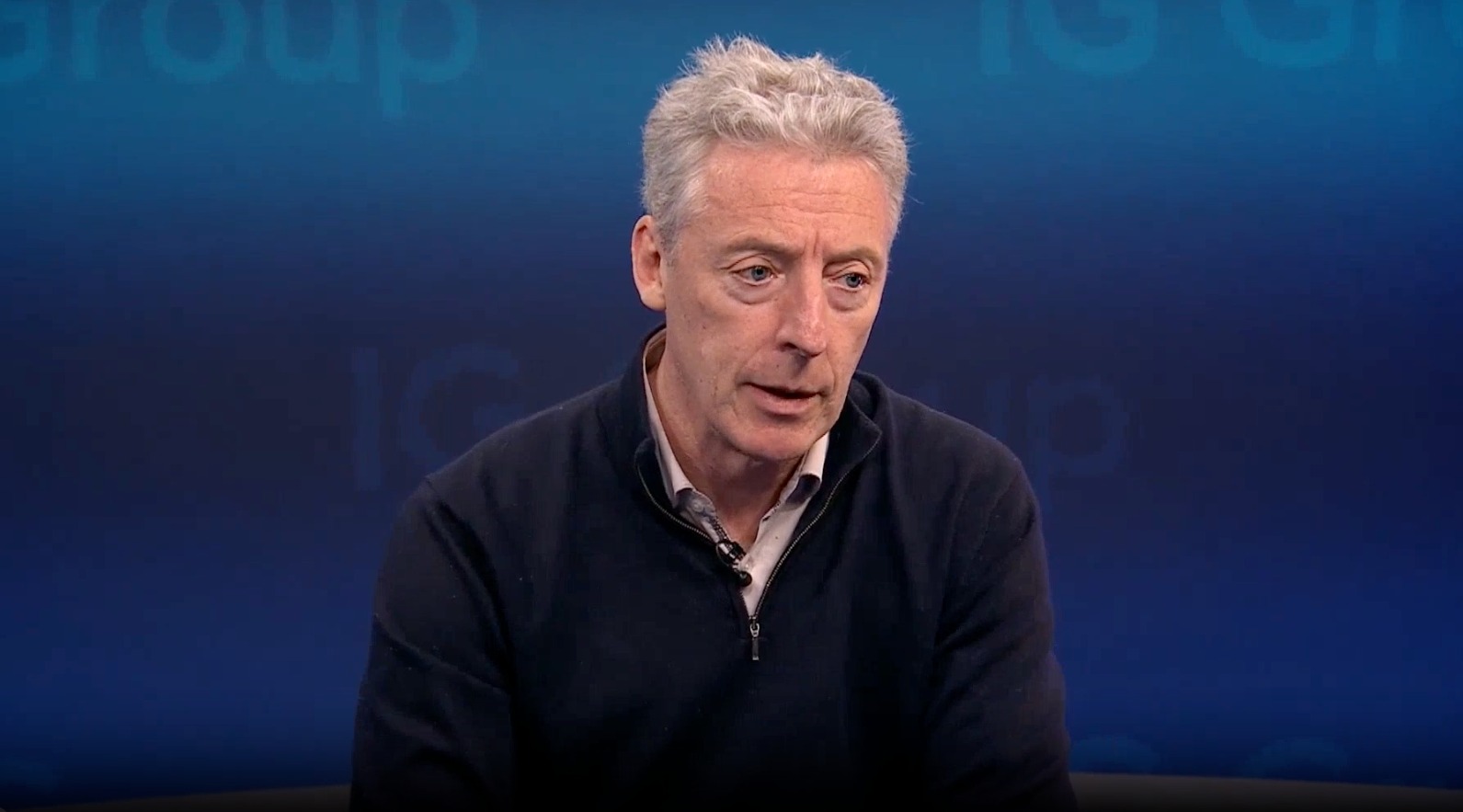
Joe Longo, the Chairman of ASIC
“As I’ve
said before, the growing interest in environmental, social, and governance(ESG) issues is driving the biggest
changes to financial reporting and disclosure standards in a generation,”
commented Longo.
ASIC's
Chairman acknowledged industry concerns about the potential complexity of the
new reporting requirements. He assured that ASIC will take a pragmatic approach to supervision and enforcement as with any new regulatory regime. The
regulator plans to develop and issue guidance to help entities meet their new
obligations.
“This is a
transformational issue for global markets, and we need to be ready to meet that
change at every step of its development. To do that, we must maintain high
standards of governance and disclosure,” Longo added.
ASIC will
also collaborate with the government and other Council of Financial Regulators
agencies on supporting implementation, including initiatives to assist entities
in meeting the new requirements, such as addressing data challenges.
While there
will be costs for entities to report, Longo highlighted that they will also
benefit from greater visibility of physical and transitional climate risks and
opportunities across their value chains and the entire economy. This will
support companies, including AFS licensees, to manage their climate-related
risks and opportunities over the short, medium and long term.
ASIC's Chairman also emphasized the importance of considering both the benefits and
challenges of the reforms. Compliance with the new requirements is a legal obligation and makes good business sense in light of Australia's
commitment to net zero emissions by 2050 and the Paris Agreement goals.
“The
Australian Government has legislated Australia's commitment to be net zero by
2050 and to reduce emissions by 43% below 2005 levels by 2030,” Longo added.
Preparing for the New
Regime
Longo urged
entities not to wait until the legislation passes to start preparing. ASIC
considered that those already reporting voluntarily under the Task Force on
Climate-Related Financial Disclosures (TCFD) framework will be well-placed to
meet the new mandatory requirements based on the TCFD's four pillars.
The
regulator has encouraged licensees to develop the necessary organizational and governance structures to support future reporting requirements. This
includes engaging with the International Sustainability Standards Board's
climate-related disclosure standards to assess capabilities and data
requirements.
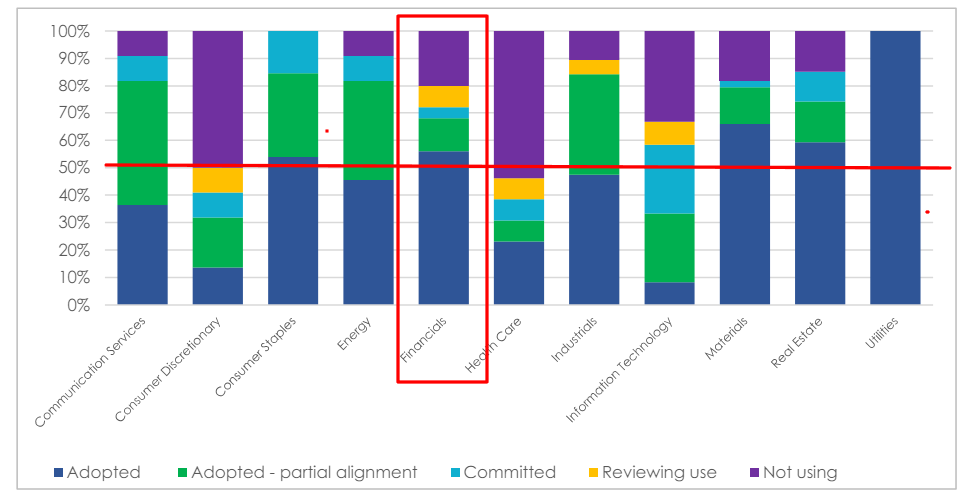
According
to the report by ASIC in August 2023 called “Promises, Pathways &
Performance” regarding climate change disclosure in Australian companies,
the finance sector was already well positioned for the changes in 2022.
Most of the
surveyed companies have implemented or are in the process of implementing the
TCFD framework.
In addition
to climate, ASIC is monitoring developments around other sustainability topics
like nature and biodiversity. The regulator advised entities to ensure any
systems and processes adopted for climate disclosures are sufficiently agile to
incorporate additional sustainability topics in the future.
Source: ASIC
"While it’s
too early to discuss enforcement strategy, that should not be taken to mean it’s too early to prepare,” ASIC's Chairman explained.
Implications for AFS
Licensees
Introducing a mandatory climate disclosure regime has significant
implications for AFS licensees. As ASIC-regulated entities, they will need to comply with the new reporting requirements in accordance with the phased
implementation timeline based on their size and greenhouse gas emissions.
AFS
licensees should heed ASIC's advice to start preparing early by:
assessing
their readiness to report under the TCFD framework,
putting in
place systems, processes and governance practices to meet the new obligations,
engaging
with the climate disclosure standards being developed in Australia and
internationally, and
ensuring
any systems implemented are flexible to accommodate future sustainability
reporting requirements.
Proactive
preparation will enable AFS licensees to meet their compliance obligations,
avoid greenwashing, and realize the benefits of enhanced climate risk
management and opportunity identification. As Longo concluded, entities
"need to start preparing for the future, now."
The
Australian Securities and Investments Commission (ASIC) has advised locally operated
and authorized companies to prepare for the impending introduction
of a mandatory climate disclosure regime.
In a
keynote speech at the Deakin Law School International Sustainability Reporting
Forum, Joe Longo, the Chairman of ASIC, emphasized that entities should begin
putting systems, processes and governance practices in place to meet the new
climate reporting requirements.
ASIC Urges Firms to
Prepare for Mandatory Climate Disclosure Regime
Over 6,000
entities, including those holding Australian Financial Services (AFS) licenses,
will be required to report under the new mandatory disclosure framework within
the next few years. The regime will be implemented using a phased approach
starting from the 1 July 2024.
Joe Longo, the Chairman of ASIC
“As I’ve
said before, the growing interest in environmental, social, and governance(ESG) issues is driving the biggest
changes to financial reporting and disclosure standards in a generation,”
commented Longo.
ASIC's
Chairman acknowledged industry concerns about the potential complexity of the
new reporting requirements. He assured that ASIC will take a pragmatic approach to supervision and enforcement as with any new regulatory regime. The
regulator plans to develop and issue guidance to help entities meet their new
obligations.
“This is a
transformational issue for global markets, and we need to be ready to meet that
change at every step of its development. To do that, we must maintain high
standards of governance and disclosure,” Longo added.
ASIC will
also collaborate with the government and other Council of Financial Regulators
agencies on supporting implementation, including initiatives to assist entities
in meeting the new requirements, such as addressing data challenges.
While there
will be costs for entities to report, Longo highlighted that they will also
benefit from greater visibility of physical and transitional climate risks and
opportunities across their value chains and the entire economy. This will
support companies, including AFS licensees, to manage their climate-related
risks and opportunities over the short, medium and long term.
ASIC's Chairman also emphasized the importance of considering both the benefits and
challenges of the reforms. Compliance with the new requirements is a legal obligation and makes good business sense in light of Australia's
commitment to net zero emissions by 2050 and the Paris Agreement goals.
“The
Australian Government has legislated Australia's commitment to be net zero by
2050 and to reduce emissions by 43% below 2005 levels by 2030,” Longo added.
Preparing for the New
Regime
Longo urged
entities not to wait until the legislation passes to start preparing. ASIC
considered that those already reporting voluntarily under the Task Force on
Climate-Related Financial Disclosures (TCFD) framework will be well-placed to
meet the new mandatory requirements based on the TCFD's four pillars.
The
regulator has encouraged licensees to develop the necessary organizational and governance structures to support future reporting requirements. This
includes engaging with the International Sustainability Standards Board's
climate-related disclosure standards to assess capabilities and data
requirements.
According
to the report by ASIC in August 2023 called “Promises, Pathways &
Performance” regarding climate change disclosure in Australian companies,
the finance sector was already well positioned for the changes in 2022.
Most of the
surveyed companies have implemented or are in the process of implementing the
TCFD framework.
In addition
to climate, ASIC is monitoring developments around other sustainability topics
like nature and biodiversity. The regulator advised entities to ensure any
systems and processes adopted for climate disclosures are sufficiently agile to
incorporate additional sustainability topics in the future.
Source: ASIC
"While it’s
too early to discuss enforcement strategy, that should not be taken to mean it’s too early to prepare,” ASIC's Chairman explained.
Implications for AFS
Licensees
Introducing a mandatory climate disclosure regime has significant
implications for AFS licensees. As ASIC-regulated entities, they will need to comply with the new reporting requirements in accordance with the phased
implementation timeline based on their size and greenhouse gas emissions.
AFS
licensees should heed ASIC's advice to start preparing early by:
assessing
their readiness to report under the TCFD framework,
putting in
place systems, processes and governance practices to meet the new obligations,
engaging
with the climate disclosure standards being developed in Australia and
internationally, and
ensuring
any systems implemented are flexible to accommodate future sustainability
reporting requirements.
Proactive
preparation will enable AFS licensees to meet their compliance obligations,
avoid greenwashing, and realize the benefits of enhanced climate risk
management and opportunity identification. As Longo concluded, entities
"need to start preparing for the future, now."
Damian Chmiel is a Senior Analyst & Editor at Finance Magnates with more than 15 years of experience in the CFD and online trading industry. Active as both a trader and journalist since 2010, he focuses on broker coverage, fintech innovation, and regulatory developments across Europe, the Middle East, and Asia.
His work includes interviews with C-level leaders at major brokerages and fintech platforms, as well as co-authoring Finance Magnates’ quarterly industry benchmarking reports. Damian’s reporting is data-driven, market-aware, and grounded in direct industry engagement. His analysis and commentary have also been cited by external media outlets, including Investing.com, Binance, The Asset, Stockhead, and Dispatch.
Education:
MA in Finance and Accounting, Cracow University of Economics
Retail Traders Can Now Access Prediction Markets Through Binance Wallet
FP Markets Winner Spotlight 🏆 | Global Broker of the Year 2025 #Trading #Broker #Innovation #Shorts
FP Markets Winner Spotlight 🏆 | Global Broker of the Year 2025 #Trading #Broker #Innovation #Shorts
FP Markets takes the spotlight as Global Broker of the Year 2025 at the Finance Magnates Awards.
Martin Stoilov, Head of Client Experience, shares that trust, innovation, and people played a key role in the company’s success, supported by a strong foundation of integrity and client-centricity.
Following this milestone, FP Markets continues to focus on growth, technology investment, and its core values of transparency and excellence.
👉 Be part of FM Awards 2026: https://awards.financemagnates.com/#nominate
FP Markets takes the spotlight as Global Broker of the Year 2025 at the Finance Magnates Awards.
Martin Stoilov, Head of Client Experience, shares that trust, innovation, and people played a key role in the company’s success, supported by a strong foundation of integrity and client-centricity.
Following this milestone, FP Markets continues to focus on growth, technology investment, and its core values of transparency and excellence.
👉 Be part of FM Awards 2026: https://awards.financemagnates.com/#nominate
In this video, we review @HolaPrimeMarketsOfficial, a multi-asset forex and CFDs broker offering different account types, trading platforms, and flexible trading conditions.
We cover the broker’s overall offering, including account options, trading environment, platforms like MT4 and MT5, and additional services such as managed accounts and fast withdrawals.
Watch the full video to see if Hola Prime Markets fits your trading needs.
📣 Stay up to date with the latest in finance and trading. Follow Finance Magnates for industry news, insights, and global event coverage.
Connect with us:
🔗 LinkedIn: /financemagnates
👍 Facebook: /financemagnates
📸 Instagram: https://www.instagram.com/financemagnates
🐦 X: https://x.com/financemagnates
🎥 TikTok: https://www.tiktok.com/tag/financemagnates
▶️ YouTube: /@financemagnates_official
#HolaPrime #ForexBroker #CFDTrading #FinanceMagnates #Trading #Forex #BrokerReview
In this video, we review @HolaPrimeMarketsOfficial, a multi-asset forex and CFDs broker offering different account types, trading platforms, and flexible trading conditions.
We cover the broker’s overall offering, including account options, trading environment, platforms like MT4 and MT5, and additional services such as managed accounts and fast withdrawals.
Watch the full video to see if Hola Prime Markets fits your trading needs.
📣 Stay up to date with the latest in finance and trading. Follow Finance Magnates for industry news, insights, and global event coverage.
Connect with us:
🔗 LinkedIn: /financemagnates
👍 Facebook: /financemagnates
📸 Instagram: https://www.instagram.com/financemagnates
🐦 X: https://x.com/financemagnates
🎥 TikTok: https://www.tiktok.com/tag/financemagnates
▶️ YouTube: /@financemagnates_official
#HolaPrime #ForexBroker #CFDTrading #FinanceMagnates #Trading #Forex #BrokerReview
Hola Prime Review: What You Need to Know | Full Breakdown by Finance Magnates
Hola Prime Review: What You Need to Know | Full Breakdown by Finance Magnates
In this video, we review @HolaPrime_Global, a proprietary trading firm offering evaluation programs and performance-based payouts in simulated market environments.
We cover how the challenge model works, including account types, profit splits (up to 95%), trading rules, and what it takes to reach a funded account. You’ll also learn about available platforms like MT4, MT5, cTrader, and more, along with insights into payouts, support, and trading conditions.
Watch the full video to see if Hola Prime fits your trading style.
📣 Stay up to date with the latest in finance and trading. Follow Finance Magnates for industry news, insights, and global event coverage.
Connect with us:
🔗 LinkedIn: /financemagnates
👍 Facebook: /financemagnates
📸 Instagram: https://www.instagram.com/financemagnates
🐦 X: https://x.com/financemagnates
🎥 TikTok: https://www.tiktok.com/tag/financemagnates
▶️ YouTube: /@financemagnates_official
#HolaPrime #PropFirm #Trading #FinanceMagnates #Forex #FuturesTrading #TradingReview #PropFirmReview
In this video, we review @HolaPrime_Global, a proprietary trading firm offering evaluation programs and performance-based payouts in simulated market environments.
We cover how the challenge model works, including account types, profit splits (up to 95%), trading rules, and what it takes to reach a funded account. You’ll also learn about available platforms like MT4, MT5, cTrader, and more, along with insights into payouts, support, and trading conditions.
Watch the full video to see if Hola Prime fits your trading style.
📣 Stay up to date with the latest in finance and trading. Follow Finance Magnates for industry news, insights, and global event coverage.
Connect with us:
🔗 LinkedIn: /financemagnates
👍 Facebook: /financemagnates
📸 Instagram: https://www.instagram.com/financemagnates
🐦 X: https://x.com/financemagnates
🎥 TikTok: https://www.tiktok.com/tag/financemagnates
▶️ YouTube: /@financemagnates_official
#HolaPrime #PropFirm #Trading #FinanceMagnates #Forex #FuturesTrading #TradingReview #PropFirmReview
Axi Winner Spotlight 🏆 | Global Most Innovative Broker 2025 #Innovation #Trading #Fintech #Broker
Axi Winner Spotlight 🏆 | Global Most Innovative Broker 2025 #Innovation #Trading #Fintech #Broker
Axi takes the spotlight at the Finance Magnates Awards, winning Global Most Innovative Broker 2025.
Olivia Xenofontos and Ivanna Openko share how the team will feel: proud, motivated, and ready to keep delivering.
They also describe the night as well-organized, focused, and enjoyable for all.
👉 Be part of FM Awards 2026.
Axi takes the spotlight at the Finance Magnates Awards, winning Global Most Innovative Broker 2025.
Olivia Xenofontos and Ivanna Openko share how the team will feel: proud, motivated, and ready to keep delivering.
They also describe the night as well-organized, focused, and enjoyable for all.
👉 Be part of FM Awards 2026.
Recognition that matters.
Built on transparency.
Driven by the industry.
The Finance Magnates Awards 2026.
Nominations are now open.
🔗 https://awards.financemagnates.com/?utm_source=SM&utm_medium=social&utm_campaign=recognition-matters
Recognition that matters.
Built on transparency.
Driven by the industry.
The Finance Magnates Awards 2026.
Nominations are now open.
🔗 https://awards.financemagnates.com/?utm_source=SM&utm_medium=social&utm_campaign=recognition-matters