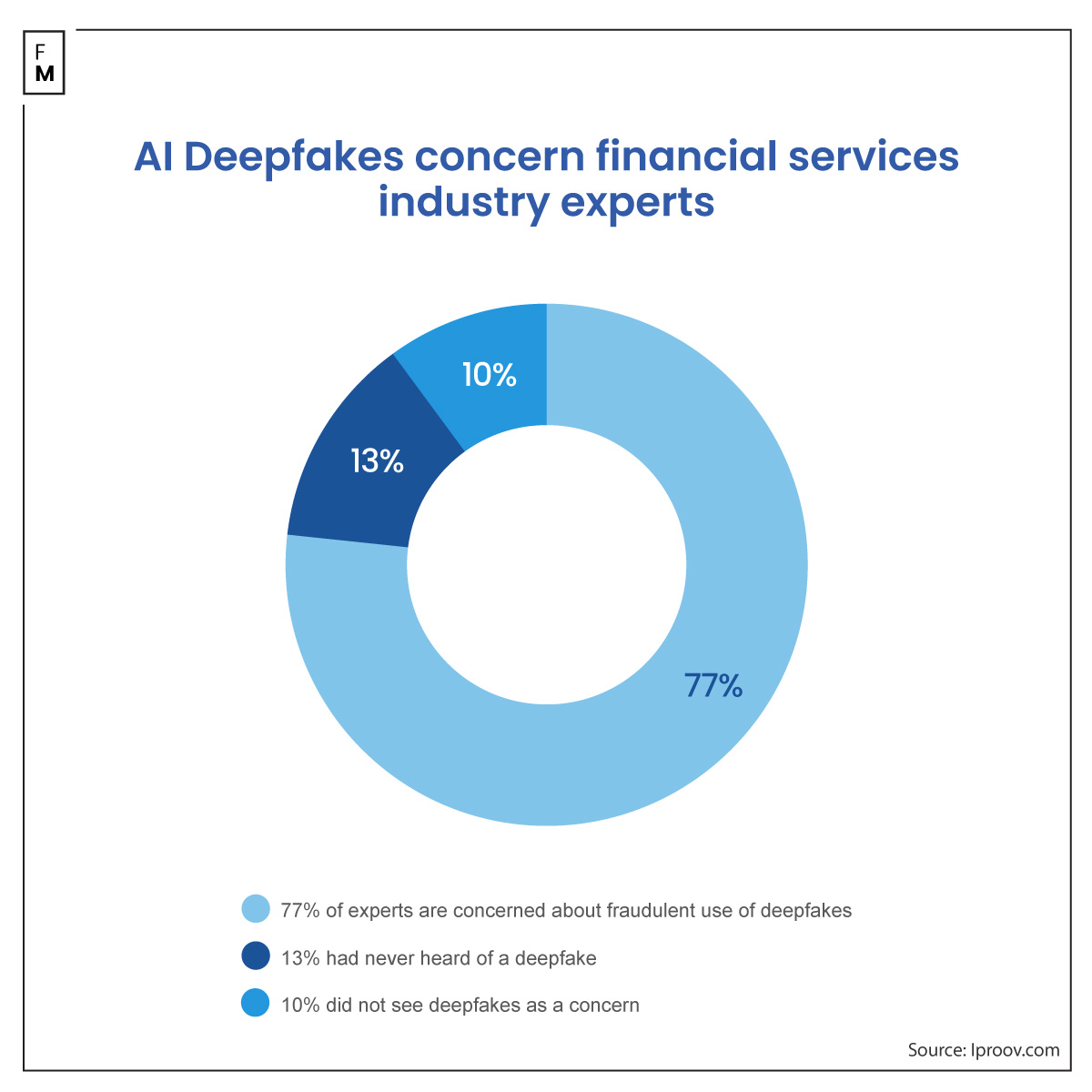
AI advancements present both opportunities and risks, also in financial services.
According to the newest Mastercard report, deepfakes significantly threaten the industry.
Although
artificial intelligence (AI) technology has made a striking entrance into the
finance and trading industry, it also brings a series of potential dangers,
including the increasingly common deepfakes that are difficult-to-identify.
Finance
Magnates discussed
the latest trends in AI and deepfakes with Michael Lashlee, the Chief Security
Officer (CSO) at Mastercard, who commented on the findings of the company's
latest report on this year's technology trends.
AI Trends and Their Impact
on Finance and Trading
In its 2024
issue of Mastercard Signals, Mastercard explores the emerging tech trends
poised to reshape commerce over the next three to five years. The report
highlighted how advances in artificial intelligence, computational power, and
data technology are converging to drive innovation across various sectors,
including finance and retail trading.
One of the
key AI trends discussed in the report is the rise of generative AI assistants,
or "personal copilots.”
These
advanced digital assistants, powered by natural language processing and machine
learning, could revolutionize how financial professionals work. For
traders, AI copilots could provide personalized market insights, risk
assessments, and even automate
certain trading strategies.
“Service
industry trainees could practice customer relations with AI-generated avatars.
In finance, both bank trainees and retail investors could use gen AI-created
environments to practice complex trading functions,” Mastercard commented in
its report.
The 4 stages of Artificial Intelligence:
0. Systemic AI responds to prompts based on probabilities established during training: i.e. current state-of-the-art AI.
1. Sentient AI is quintessentially curious and uses experience to refine beliefs about the world.
These AI assistants could help traders make more informed decisions and optimize their portfolios by leveraging vast amounts of financial data and real-time market information.
Another AI
trend with significant financial implications is using artificial intelligence to enhance
software development. AI-powered tools can assist developers in writing code,
designing software architecture, and testing applications.
This could
lead to the creation of more sophisticated financial software and trading
platforms, enabling traders to access advanced analytics and execute complex
strategies more easily.
In a
conversation in February with Finance Magnates, Dr. George Theocharides, the Head of the Cypriot regulator CySEC, argued
that: "AI remains uncharted" in most of the EU's securities markets.
The Threat of AI-Generated
Deepfakes for Traders
While AI
presents numerous opportunities for the finance industry, it poses certain
risks. One such risk is the rise of AI-generated deepfakes, Deepfakes are
highly realistic media content, such as videos or images, created using AI to
manipulate or deceive viewers.
“46% of
businesses have been targeted by identity fraud using deepfakes,” Mastercard
revealed. “37% of them were targeted by deepfake voice fraud and 29% by
deepfake videos. The deepfake detection market is expected to grow 42% annually
through 2026.”
For retail
traders, deepfakes could be particularly problematic. Malicious actors could
use deepfakes to spread false information about companies or markets, leading
to market manipulation and financial losses for unsuspecting investors.
According
to Michael Lashlee, the Chief Security Officer (CSO) at Mastercard, the
troubling trend presents a significant risk to businesses across all sectors. It will only become more pressing as the technology evolves.
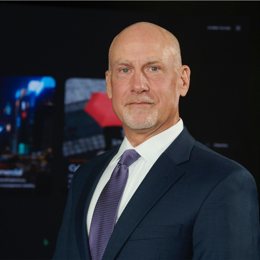
Michael Lashlee, the Chief Security Officer (CSO) at Mastercard
“This
heightened risk, coupled with the lack of broad public awareness on the issue,
will make it easier for bad actors to exploit this technology,” Lashlee
commented for Finance Magnates. “Organizations need to educate their employees
about this risk and train them to question and confirm through trusted channels
any out of the ordinary transactions or funds transfers."
The
Mastercard’s CSO concluded that companies must implement processes and
procedures to protect themselves and their assets from being compromised.
The
Mastercard report additionally highlights the crucial role of computing power and data
technology in enabling these emerging tech trends. Advances in chip technology,
cloud computing, and quantum computing are providing the computational
resources necessary to train and run sophisticated AI models.
The report discusses the growing importance of data tokenization in the realm of data technology. Tokenization allows for the secure and efficient sharing of
sensitive data, such as financial information, across different platforms and
applications.
“The
horizon for tokenization is expanding, with emerging applications across
healthcare, finance and cybersecurity. By enabling different types of data
tokenization, this technology enhances security and opens new avenues for data
use,” Mastercard report added.
This could
enable more seamless and secure data exchange between financial institutions,
traders, and other market participants. Financial firms that can effectively
leverage their data assets while ensuring data privacy and security will be
well-positioned to capitalize on emerging tech trends.
Although
artificial intelligence (AI) technology has made a striking entrance into the
finance and trading industry, it also brings a series of potential dangers,
including the increasingly common deepfakes that are difficult-to-identify.
Finance
Magnates discussed
the latest trends in AI and deepfakes with Michael Lashlee, the Chief Security
Officer (CSO) at Mastercard, who commented on the findings of the company's
latest report on this year's technology trends.
AI Trends and Their Impact
on Finance and Trading
In its 2024
issue of Mastercard Signals, Mastercard explores the emerging tech trends
poised to reshape commerce over the next three to five years. The report
highlighted how advances in artificial intelligence, computational power, and
data technology are converging to drive innovation across various sectors,
including finance and retail trading.
One of the
key AI trends discussed in the report is the rise of generative AI assistants,
or "personal copilots.”
These
advanced digital assistants, powered by natural language processing and machine
learning, could revolutionize how financial professionals work. For
traders, AI copilots could provide personalized market insights, risk
assessments, and even automate
certain trading strategies.
“Service
industry trainees could practice customer relations with AI-generated avatars.
In finance, both bank trainees and retail investors could use gen AI-created
environments to practice complex trading functions,” Mastercard commented in
its report.
The 4 stages of Artificial Intelligence:
0. Systemic AI responds to prompts based on probabilities established during training: i.e. current state-of-the-art AI.
1. Sentient AI is quintessentially curious and uses experience to refine beliefs about the world.
These AI assistants could help traders make more informed decisions and optimize their portfolios by leveraging vast amounts of financial data and real-time market information.
Another AI
trend with significant financial implications is using artificial intelligence to enhance
software development. AI-powered tools can assist developers in writing code,
designing software architecture, and testing applications.
This could
lead to the creation of more sophisticated financial software and trading
platforms, enabling traders to access advanced analytics and execute complex
strategies more easily.
In a
conversation in February with Finance Magnates, Dr. George Theocharides, the Head of the Cypriot regulator CySEC, argued
that: "AI remains uncharted" in most of the EU's securities markets.
The Threat of AI-Generated
Deepfakes for Traders
While AI
presents numerous opportunities for the finance industry, it poses certain
risks. One such risk is the rise of AI-generated deepfakes, Deepfakes are
highly realistic media content, such as videos or images, created using AI to
manipulate or deceive viewers.
“46% of
businesses have been targeted by identity fraud using deepfakes,” Mastercard
revealed. “37% of them were targeted by deepfake voice fraud and 29% by
deepfake videos. The deepfake detection market is expected to grow 42% annually
through 2026.”
For retail
traders, deepfakes could be particularly problematic. Malicious actors could
use deepfakes to spread false information about companies or markets, leading
to market manipulation and financial losses for unsuspecting investors.
According
to Michael Lashlee, the Chief Security Officer (CSO) at Mastercard, the
troubling trend presents a significant risk to businesses across all sectors. It will only become more pressing as the technology evolves.
Michael Lashlee, the Chief Security Officer (CSO) at Mastercard
“This
heightened risk, coupled with the lack of broad public awareness on the issue,
will make it easier for bad actors to exploit this technology,” Lashlee
commented for Finance Magnates. “Organizations need to educate their employees
about this risk and train them to question and confirm through trusted channels
any out of the ordinary transactions or funds transfers."
The
Mastercard’s CSO concluded that companies must implement processes and
procedures to protect themselves and their assets from being compromised.
The
Mastercard report additionally highlights the crucial role of computing power and data
technology in enabling these emerging tech trends. Advances in chip technology,
cloud computing, and quantum computing are providing the computational
resources necessary to train and run sophisticated AI models.
The report discusses the growing importance of data tokenization in the realm of data technology. Tokenization allows for the secure and efficient sharing of
sensitive data, such as financial information, across different platforms and
applications.
“The
horizon for tokenization is expanding, with emerging applications across
healthcare, finance and cybersecurity. By enabling different types of data
tokenization, this technology enhances security and opens new avenues for data
use,” Mastercard report added.
This could
enable more seamless and secure data exchange between financial institutions,
traders, and other market participants. Financial firms that can effectively
leverage their data assets while ensuring data privacy and security will be
well-positioned to capitalize on emerging tech trends.
Damian Chmiel is a Senior Analyst & Editor at Finance Magnates with more than 15 years of experience in the CFD and online trading industry. Active as both a trader and journalist since 2010, he focuses on broker coverage, fintech innovation, and regulatory developments across Europe, the Middle East, and Asia.
His work includes interviews with C-level leaders at major brokerages and fintech platforms, as well as co-authoring Finance Magnates’ quarterly industry benchmarking reports. Damian’s reporting is data-driven, market-aware, and grounded in direct industry engagement. His analysis and commentary have also been cited by external media outlets, including Investing.com, Binance, The Asset, Stockhead, and Dispatch.
Education:
MA in Finance and Accounting, Cracow University of Economics
Italy’s Consob Tightens Net on AI-Fueled Scams With Fresh Website Bans
Featured Videos
FP Markets Winner Spotlight 🏆 | Global Broker of the Year 2025 #Trading #Broker #Innovation #Shorts
FP Markets Winner Spotlight 🏆 | Global Broker of the Year 2025 #Trading #Broker #Innovation #Shorts
FP Markets Winner Spotlight 🏆 | Global Broker of the Year 2025 #Trading #Broker #Innovation #Shorts
FP Markets Winner Spotlight 🏆 | Global Broker of the Year 2025 #Trading #Broker #Innovation #Shorts
FP Markets takes the spotlight as Global Broker of the Year 2025 at the Finance Magnates Awards.
Martin Stoilov, Head of Client Experience, shares that trust, innovation, and people played a key role in the company’s success, supported by a strong foundation of integrity and client-centricity.
Following this milestone, FP Markets continues to focus on growth, technology investment, and its core values of transparency and excellence.
👉 Be part of FM Awards 2026: https://awards.financemagnates.com/#nominate
FP Markets takes the spotlight as Global Broker of the Year 2025 at the Finance Magnates Awards.
Martin Stoilov, Head of Client Experience, shares that trust, innovation, and people played a key role in the company’s success, supported by a strong foundation of integrity and client-centricity.
Following this milestone, FP Markets continues to focus on growth, technology investment, and its core values of transparency and excellence.
👉 Be part of FM Awards 2026: https://awards.financemagnates.com/#nominate
FP Markets takes the spotlight as Global Broker of the Year 2025 at the Finance Magnates Awards.
Martin Stoilov, Head of Client Experience, shares that trust, innovation, and people played a key role in the company’s success, supported by a strong foundation of integrity and client-centricity.
Following this milestone, FP Markets continues to focus on growth, technology investment, and its core values of transparency and excellence.
👉 Be part of FM Awards 2026: https://awards.financemagnates.com/#nominate
FP Markets takes the spotlight as Global Broker of the Year 2025 at the Finance Magnates Awards.
Martin Stoilov, Head of Client Experience, shares that trust, innovation, and people played a key role in the company’s success, supported by a strong foundation of integrity and client-centricity.
Following this milestone, FP Markets continues to focus on growth, technology investment, and its core values of transparency and excellence.
👉 Be part of FM Awards 2026: https://awards.financemagnates.com/#nominate
In this video, we review @HolaPrimeMarketsOfficial, a multi-asset forex and CFDs broker offering different account types, trading platforms, and flexible trading conditions.
We cover the broker’s overall offering, including account options, trading environment, platforms like MT4 and MT5, and additional services such as managed accounts and fast withdrawals.
Watch the full video to see if Hola Prime Markets fits your trading needs.
📣 Stay up to date with the latest in finance and trading. Follow Finance Magnates for industry news, insights, and global event coverage.
Connect with us:
🔗 LinkedIn: /financemagnates
👍 Facebook: /financemagnates
📸 Instagram: https://www.instagram.com/financemagnates
🐦 X: https://x.com/financemagnates
🎥 TikTok: https://www.tiktok.com/tag/financemagnates
▶️ YouTube: /@financemagnates_official
#HolaPrime #ForexBroker #CFDTrading #FinanceMagnates #Trading #Forex #BrokerReview
In this video, we review @HolaPrimeMarketsOfficial, a multi-asset forex and CFDs broker offering different account types, trading platforms, and flexible trading conditions.
We cover the broker’s overall offering, including account options, trading environment, platforms like MT4 and MT5, and additional services such as managed accounts and fast withdrawals.
Watch the full video to see if Hola Prime Markets fits your trading needs.
📣 Stay up to date with the latest in finance and trading. Follow Finance Magnates for industry news, insights, and global event coverage.
Connect with us:
🔗 LinkedIn: /financemagnates
👍 Facebook: /financemagnates
📸 Instagram: https://www.instagram.com/financemagnates
🐦 X: https://x.com/financemagnates
🎥 TikTok: https://www.tiktok.com/tag/financemagnates
▶️ YouTube: /@financemagnates_official
#HolaPrime #ForexBroker #CFDTrading #FinanceMagnates #Trading #Forex #BrokerReview
In this video, we review @HolaPrimeMarketsOfficial, a multi-asset forex and CFDs broker offering different account types, trading platforms, and flexible trading conditions.
We cover the broker’s overall offering, including account options, trading environment, platforms like MT4 and MT5, and additional services such as managed accounts and fast withdrawals.
Watch the full video to see if Hola Prime Markets fits your trading needs.
📣 Stay up to date with the latest in finance and trading. Follow Finance Magnates for industry news, insights, and global event coverage.
Connect with us:
🔗 LinkedIn: /financemagnates
👍 Facebook: /financemagnates
📸 Instagram: https://www.instagram.com/financemagnates
🐦 X: https://x.com/financemagnates
🎥 TikTok: https://www.tiktok.com/tag/financemagnates
▶️ YouTube: /@financemagnates_official
#HolaPrime #ForexBroker #CFDTrading #FinanceMagnates #Trading #Forex #BrokerReview
In this video, we review @HolaPrimeMarketsOfficial, a multi-asset forex and CFDs broker offering different account types, trading platforms, and flexible trading conditions.
We cover the broker’s overall offering, including account options, trading environment, platforms like MT4 and MT5, and additional services such as managed accounts and fast withdrawals.
Watch the full video to see if Hola Prime Markets fits your trading needs.
📣 Stay up to date with the latest in finance and trading. Follow Finance Magnates for industry news, insights, and global event coverage.
Connect with us:
🔗 LinkedIn: /financemagnates
👍 Facebook: /financemagnates
📸 Instagram: https://www.instagram.com/financemagnates
🐦 X: https://x.com/financemagnates
🎥 TikTok: https://www.tiktok.com/tag/financemagnates
▶️ YouTube: /@financemagnates_official
#HolaPrime #ForexBroker #CFDTrading #FinanceMagnates #Trading #Forex #BrokerReview
In this video, we review @HolaPrimeMarketsOfficial, a multi-asset forex and CFDs broker offering different account types, trading platforms, and flexible trading conditions.
We cover the broker’s overall offering, including account options, trading environment, platforms like MT4 and MT5, and additional services such as managed accounts and fast withdrawals.
Watch the full video to see if Hola Prime Markets fits your trading needs.
📣 Stay up to date with the latest in finance and trading. Follow Finance Magnates for industry news, insights, and global event coverage.
Connect with us:
🔗 LinkedIn: /financemagnates
👍 Facebook: /financemagnates
📸 Instagram: https://www.instagram.com/financemagnates
🐦 X: https://x.com/financemagnates
🎥 TikTok: https://www.tiktok.com/tag/financemagnates
▶️ YouTube: /@financemagnates_official
#HolaPrime #ForexBroker #CFDTrading #FinanceMagnates #Trading #Forex #BrokerReview
In this video, we review @HolaPrimeMarketsOfficial, a multi-asset forex and CFDs broker offering different account types, trading platforms, and flexible trading conditions.
We cover the broker’s overall offering, including account options, trading environment, platforms like MT4 and MT5, and additional services such as managed accounts and fast withdrawals.
Watch the full video to see if Hola Prime Markets fits your trading needs.
📣 Stay up to date with the latest in finance and trading. Follow Finance Magnates for industry news, insights, and global event coverage.
Connect with us:
🔗 LinkedIn: /financemagnates
👍 Facebook: /financemagnates
📸 Instagram: https://www.instagram.com/financemagnates
🐦 X: https://x.com/financemagnates
🎥 TikTok: https://www.tiktok.com/tag/financemagnates
▶️ YouTube: /@financemagnates_official
#HolaPrime #ForexBroker #CFDTrading #FinanceMagnates #Trading #Forex #BrokerReview
Hola Prime Review: What You Need to Know | Full Breakdown by Finance Magnates
Hola Prime Review: What You Need to Know | Full Breakdown by Finance Magnates
Hola Prime Review: What You Need to Know | Full Breakdown by Finance Magnates
Hola Prime Review: What You Need to Know | Full Breakdown by Finance Magnates
Hola Prime Review: What You Need to Know | Full Breakdown by Finance Magnates
Hola Prime Review: What You Need to Know | Full Breakdown by Finance Magnates
In this video, we review @HolaPrime_Global, a proprietary trading firm offering evaluation programs and performance-based payouts in simulated market environments.
We cover how the challenge model works, including account types, profit splits (up to 95%), trading rules, and what it takes to reach a funded account. You’ll also learn about available platforms like MT4, MT5, cTrader, and more, along with insights into payouts, support, and trading conditions.
Watch the full video to see if Hola Prime fits your trading style.
📣 Stay up to date with the latest in finance and trading. Follow Finance Magnates for industry news, insights, and global event coverage.
Connect with us:
🔗 LinkedIn: /financemagnates
👍 Facebook: /financemagnates
📸 Instagram: https://www.instagram.com/financemagnates
🐦 X: https://x.com/financemagnates
🎥 TikTok: https://www.tiktok.com/tag/financemagnates
▶️ YouTube: /@financemagnates_official
#HolaPrime #PropFirm #Trading #FinanceMagnates #Forex #FuturesTrading #TradingReview #PropFirmReview
In this video, we review @HolaPrime_Global, a proprietary trading firm offering evaluation programs and performance-based payouts in simulated market environments.
We cover how the challenge model works, including account types, profit splits (up to 95%), trading rules, and what it takes to reach a funded account. You’ll also learn about available platforms like MT4, MT5, cTrader, and more, along with insights into payouts, support, and trading conditions.
Watch the full video to see if Hola Prime fits your trading style.
📣 Stay up to date with the latest in finance and trading. Follow Finance Magnates for industry news, insights, and global event coverage.
Connect with us:
🔗 LinkedIn: /financemagnates
👍 Facebook: /financemagnates
📸 Instagram: https://www.instagram.com/financemagnates
🐦 X: https://x.com/financemagnates
🎥 TikTok: https://www.tiktok.com/tag/financemagnates
▶️ YouTube: /@financemagnates_official
#HolaPrime #PropFirm #Trading #FinanceMagnates #Forex #FuturesTrading #TradingReview #PropFirmReview
In this video, we review @HolaPrime_Global, a proprietary trading firm offering evaluation programs and performance-based payouts in simulated market environments.
We cover how the challenge model works, including account types, profit splits (up to 95%), trading rules, and what it takes to reach a funded account. You’ll also learn about available platforms like MT4, MT5, cTrader, and more, along with insights into payouts, support, and trading conditions.
Watch the full video to see if Hola Prime fits your trading style.
📣 Stay up to date with the latest in finance and trading. Follow Finance Magnates for industry news, insights, and global event coverage.
Connect with us:
🔗 LinkedIn: /financemagnates
👍 Facebook: /financemagnates
📸 Instagram: https://www.instagram.com/financemagnates
🐦 X: https://x.com/financemagnates
🎥 TikTok: https://www.tiktok.com/tag/financemagnates
▶️ YouTube: /@financemagnates_official
#HolaPrime #PropFirm #Trading #FinanceMagnates #Forex #FuturesTrading #TradingReview #PropFirmReview
In this video, we review @HolaPrime_Global, a proprietary trading firm offering evaluation programs and performance-based payouts in simulated market environments.
We cover how the challenge model works, including account types, profit splits (up to 95%), trading rules, and what it takes to reach a funded account. You’ll also learn about available platforms like MT4, MT5, cTrader, and more, along with insights into payouts, support, and trading conditions.
Watch the full video to see if Hola Prime fits your trading style.
📣 Stay up to date with the latest in finance and trading. Follow Finance Magnates for industry news, insights, and global event coverage.
Connect with us:
🔗 LinkedIn: /financemagnates
👍 Facebook: /financemagnates
📸 Instagram: https://www.instagram.com/financemagnates
🐦 X: https://x.com/financemagnates
🎥 TikTok: https://www.tiktok.com/tag/financemagnates
▶️ YouTube: /@financemagnates_official
#HolaPrime #PropFirm #Trading #FinanceMagnates #Forex #FuturesTrading #TradingReview #PropFirmReview
In this video, we review @HolaPrime_Global, a proprietary trading firm offering evaluation programs and performance-based payouts in simulated market environments.
We cover how the challenge model works, including account types, profit splits (up to 95%), trading rules, and what it takes to reach a funded account. You’ll also learn about available platforms like MT4, MT5, cTrader, and more, along with insights into payouts, support, and trading conditions.
Watch the full video to see if Hola Prime fits your trading style.
📣 Stay up to date with the latest in finance and trading. Follow Finance Magnates for industry news, insights, and global event coverage.
Connect with us:
🔗 LinkedIn: /financemagnates
👍 Facebook: /financemagnates
📸 Instagram: https://www.instagram.com/financemagnates
🐦 X: https://x.com/financemagnates
🎥 TikTok: https://www.tiktok.com/tag/financemagnates
▶️ YouTube: /@financemagnates_official
#HolaPrime #PropFirm #Trading #FinanceMagnates #Forex #FuturesTrading #TradingReview #PropFirmReview
In this video, we review @HolaPrime_Global, a proprietary trading firm offering evaluation programs and performance-based payouts in simulated market environments.
We cover how the challenge model works, including account types, profit splits (up to 95%), trading rules, and what it takes to reach a funded account. You’ll also learn about available platforms like MT4, MT5, cTrader, and more, along with insights into payouts, support, and trading conditions.
Watch the full video to see if Hola Prime fits your trading style.
📣 Stay up to date with the latest in finance and trading. Follow Finance Magnates for industry news, insights, and global event coverage.
Connect with us:
🔗 LinkedIn: /financemagnates
👍 Facebook: /financemagnates
📸 Instagram: https://www.instagram.com/financemagnates
🐦 X: https://x.com/financemagnates
🎥 TikTok: https://www.tiktok.com/tag/financemagnates
▶️ YouTube: /@financemagnates_official
#HolaPrime #PropFirm #Trading #FinanceMagnates #Forex #FuturesTrading #TradingReview #PropFirmReview
Axi Winner Spotlight 🏆 | Global Most Innovative Broker 2025 #Innovation #Trading #Fintech #Broker
Axi Winner Spotlight 🏆 | Global Most Innovative Broker 2025 #Innovation #Trading #Fintech #Broker
Axi Winner Spotlight 🏆 | Global Most Innovative Broker 2025 #Innovation #Trading #Fintech #Broker
Axi Winner Spotlight 🏆 | Global Most Innovative Broker 2025 #Innovation #Trading #Fintech #Broker
Axi Winner Spotlight 🏆 | Global Most Innovative Broker 2025 #Innovation #Trading #Fintech #Broker
Axi Winner Spotlight 🏆 | Global Most Innovative Broker 2025 #Innovation #Trading #Fintech #Broker
Axi takes the spotlight at the Finance Magnates Awards, winning Global Most Innovative Broker 2025.
Olivia Xenofontos and Ivanna Openko share how the team will feel: proud, motivated, and ready to keep delivering.
They also describe the night as well-organized, focused, and enjoyable for all.
👉 Be part of FM Awards 2026.
Axi takes the spotlight at the Finance Magnates Awards, winning Global Most Innovative Broker 2025.
Olivia Xenofontos and Ivanna Openko share how the team will feel: proud, motivated, and ready to keep delivering.
They also describe the night as well-organized, focused, and enjoyable for all.
👉 Be part of FM Awards 2026.
Axi takes the spotlight at the Finance Magnates Awards, winning Global Most Innovative Broker 2025.
Olivia Xenofontos and Ivanna Openko share how the team will feel: proud, motivated, and ready to keep delivering.
They also describe the night as well-organized, focused, and enjoyable for all.
👉 Be part of FM Awards 2026.
Axi takes the spotlight at the Finance Magnates Awards, winning Global Most Innovative Broker 2025.
Olivia Xenofontos and Ivanna Openko share how the team will feel: proud, motivated, and ready to keep delivering.
They also describe the night as well-organized, focused, and enjoyable for all.
👉 Be part of FM Awards 2026.
Axi takes the spotlight at the Finance Magnates Awards, winning Global Most Innovative Broker 2025.
Olivia Xenofontos and Ivanna Openko share how the team will feel: proud, motivated, and ready to keep delivering.
They also describe the night as well-organized, focused, and enjoyable for all.
👉 Be part of FM Awards 2026.
Axi takes the spotlight at the Finance Magnates Awards, winning Global Most Innovative Broker 2025.
Olivia Xenofontos and Ivanna Openko share how the team will feel: proud, motivated, and ready to keep delivering.
They also describe the night as well-organized, focused, and enjoyable for all.
👉 Be part of FM Awards 2026.
Recognition that matters.
Built on transparency.
Driven by the industry.
The Finance Magnates Awards 2026.
Nominations are now open.
🔗 https://awards.financemagnates.com/?utm_source=SM&utm_medium=social&utm_campaign=recognition-matters
Recognition that matters.
Built on transparency.
Driven by the industry.
The Finance Magnates Awards 2026.
Nominations are now open.
🔗 https://awards.financemagnates.com/?utm_source=SM&utm_medium=social&utm_campaign=recognition-matters
Recognition that matters.
Built on transparency.
Driven by the industry.
The Finance Magnates Awards 2026.
Nominations are now open.
🔗 https://awards.financemagnates.com/?utm_source=SM&utm_medium=social&utm_campaign=recognition-matters
Recognition that matters.
Built on transparency.
Driven by the industry.
The Finance Magnates Awards 2026.
Nominations are now open.
🔗 https://awards.financemagnates.com/?utm_source=SM&utm_medium=social&utm_campaign=recognition-matters
Recognition that matters.
Built on transparency.
Driven by the industry.
The Finance Magnates Awards 2026.
Nominations are now open.
🔗 https://awards.financemagnates.com/?utm_source=SM&utm_medium=social&utm_campaign=recognition-matters
Recognition that matters.
Built on transparency.
Driven by the industry.
The Finance Magnates Awards 2026.
Nominations are now open.
🔗 https://awards.financemagnates.com/?utm_source=SM&utm_medium=social&utm_campaign=recognition-matters