We are now in the middle of an information and media revolution.
In 2019, the financial services sector contributed £132 billion to the UK economy 6.9% of total economic output.
That is a staggering figure and one that is not just achieved by simply turning up at an office, going through a few motions every day, and then going home.
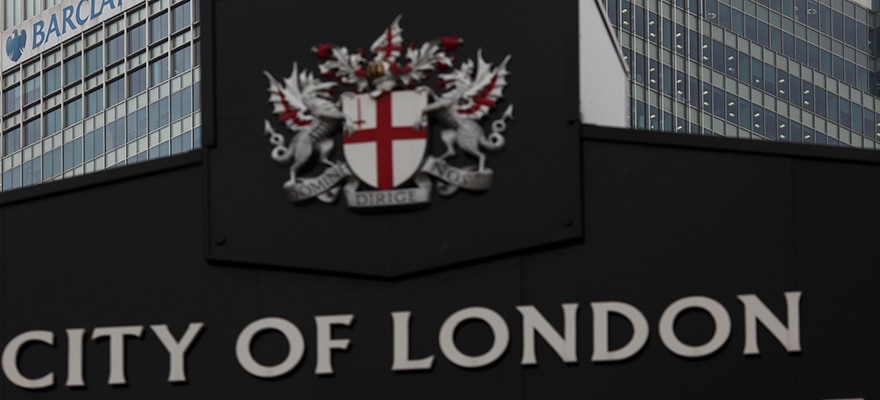
Financial services professionals in the City of London are self-starting leaders. They are innovative, committed, hardworking and determined; all of the essential ingredients for being 'alpha'.
With that, surely a degree of outgoing charisma is part and parcel of the makeup of today's uber-cool City slicker?
It is perhaps surprising, given the lionesque credentials of the achievements of the financial services industry leaders of the world's largest financial centre, that when approached by a moderately overweight, middle-aged man with a camera, me, they run a square mile.
Surely a whole host of commercial and retail customers would love to know what drives the enthusiasm of the world's most astute professionals, but despite their impressive credentials and having a lot of interesting
Andrew Saks Head of Research and Analysis at ETX Capital
aspects to discuss, upon approaching, many ran away as if they were a cat being approached by a menace with a bucket of cold water.
Why the fear? Why not enter into improvised conversation with heads held high. If this was Chicago or New York, groups of co-workers going about their lunch break would happily have a conversation among themselves on camera, with a few incisive questions thrown in by yours truly, and would be happy to propagate it across the media channels.
In London, which even eclipses loud-but-proud New York in terms of financial markets tenacity, you only have to as much as raise a camera, and the hands come up in order to cover the face of people who see themselves as targets.
Perhaps they are concerned that their seniors would disapprove of any employee engaging in ad-lib media which has not been scrutinized by the compliance department or concerned that someone may see them as people who speak out of turn, or that they are afraid of their own opinions.
How did a nation which has mastered the entire global financial services industry become so cowed?
We now live in a time of media influencers and self-styled advocates of all manner of things in all manner of industries.
Entire social platforms exist and thrive purely on the strength of their audiences, and often their audiences are the exact demographic of the electronic financial services industry all the way from stock brokerage to meme and cryptocurrency trends.
The younger demographic, which is the future client base of all electronic financial services firms, will eschew standard-issue products offered from behind the scenes by people who run away when something as innocuous and as opportune as a video camera is pointed at them.
They want Elon Musk-style mastery of the media. There are many right-on California dwellers who think former US President Donald Trump is a relic of yesteryear, but the reality is that his continued use of the social platforms developed by, er, California dwellers is part of why his following among younger people even exists at all.
We have been through the technological revolution and are now in the middle of an information and media revolution.
In order to gain and maintain a large audience who are constantly waiting for the next viral video, influential tweet, or person who is attracting the most followers, there is a need to speak to the camera.
Today's traders and investors want to see who is behind the screen, what makes them tick and to view the human elements of their everyday life.
In Chelsea, the part of Central London in which I live, there are endless lines of relatively young people who can be seen cruising along Cheyne Walk or Kings Road in new Rolls Royces, Bentleys and Aston Martins. Some of them are people who are now finding it harder to prosper, given the year and a half of lockdowns and an economy that is going through its worst recession in 300 years, whilst others are doing very well.
When asking what they do, the inquisitive mind that I have tends to make me do that, some say "YouTube Influencer", which appears to now be a profession, and a lucrative one at that.
Jay Leno managed to make an entire series of videos by talking to students about science and nature, and it was engaging and amusing and got millions of views. The students were literally stars.
Financial services professionals have a lot to be proud of. They drive the future of the world's economy with their hard work and intelligence.
Therefore, next time a middle-aged man with a camera comes to you, talk to him, with a smile, and be proud.... and increase your audience exponentially!
Andrew Saks is Head of Research and Analysis, ETXCapital
In 2019, the financial services sector contributed £132 billion to the UK economy 6.9% of total economic output.
That is a staggering figure and one that is not just achieved by simply turning up at an office, going through a few motions every day, and then going home.
Financial services professionals in the City of London are self-starting leaders. They are innovative, committed, hardworking and determined; all of the essential ingredients for being 'alpha'.
With that, surely a degree of outgoing charisma is part and parcel of the makeup of today's uber-cool City slicker?
It is perhaps surprising, given the lionesque credentials of the achievements of the financial services industry leaders of the world's largest financial centre, that when approached by a moderately overweight, middle-aged man with a camera, me, they run a square mile.
Surely a whole host of commercial and retail customers would love to know what drives the enthusiasm of the world's most astute professionals, but despite their impressive credentials and having a lot of interesting
Andrew Saks Head of Research and Analysis at ETX Capital
aspects to discuss, upon approaching, many ran away as if they were a cat being approached by a menace with a bucket of cold water.
Why the fear? Why not enter into improvised conversation with heads held high. If this was Chicago or New York, groups of co-workers going about their lunch break would happily have a conversation among themselves on camera, with a few incisive questions thrown in by yours truly, and would be happy to propagate it across the media channels.
In London, which even eclipses loud-but-proud New York in terms of financial markets tenacity, you only have to as much as raise a camera, and the hands come up in order to cover the face of people who see themselves as targets.
Perhaps they are concerned that their seniors would disapprove of any employee engaging in ad-lib media which has not been scrutinized by the compliance department or concerned that someone may see them as people who speak out of turn, or that they are afraid of their own opinions.
How did a nation which has mastered the entire global financial services industry become so cowed?
We now live in a time of media influencers and self-styled advocates of all manner of things in all manner of industries.
Entire social platforms exist and thrive purely on the strength of their audiences, and often their audiences are the exact demographic of the electronic financial services industry all the way from stock brokerage to meme and cryptocurrency trends.
The younger demographic, which is the future client base of all electronic financial services firms, will eschew standard-issue products offered from behind the scenes by people who run away when something as innocuous and as opportune as a video camera is pointed at them.
They want Elon Musk-style mastery of the media. There are many right-on California dwellers who think former US President Donald Trump is a relic of yesteryear, but the reality is that his continued use of the social platforms developed by, er, California dwellers is part of why his following among younger people even exists at all.
We have been through the technological revolution and are now in the middle of an information and media revolution.
In order to gain and maintain a large audience who are constantly waiting for the next viral video, influential tweet, or person who is attracting the most followers, there is a need to speak to the camera.
Today's traders and investors want to see who is behind the screen, what makes them tick and to view the human elements of their everyday life.
In Chelsea, the part of Central London in which I live, there are endless lines of relatively young people who can be seen cruising along Cheyne Walk or Kings Road in new Rolls Royces, Bentleys and Aston Martins. Some of them are people who are now finding it harder to prosper, given the year and a half of lockdowns and an economy that is going through its worst recession in 300 years, whilst others are doing very well.
When asking what they do, the inquisitive mind that I have tends to make me do that, some say "YouTube Influencer", which appears to now be a profession, and a lucrative one at that.
Jay Leno managed to make an entire series of videos by talking to students about science and nature, and it was engaging and amusing and got millions of views. The students were literally stars.
Financial services professionals have a lot to be proud of. They drive the future of the world's economy with their hard work and intelligence.
Therefore, next time a middle-aged man with a camera comes to you, talk to him, with a smile, and be proud.... and increase your audience exponentially!
Andrew Saks is Head of Research and Analysis, ETXCapital
Experienced and prominent industry professional with 30 years of experience within the High Technology Sector, with emphasis on financial technology.
Founder of FinanceFeeds, and renowned commentator with a global understanding of the electronic trading industry.
Today’s Friday, the 19th of June 2026, and these are our main stories: Australia’s ASIC scam losses and whitelist push, Singapore adding Bybit to its alert list, and Cyprus broker executives arrested in Moscow.
Today’s Friday, the 19th of June 2026, and these are our main stories: Australia’s ASIC scam losses and whitelist push, Singapore adding Bybit to its alert list, and Cyprus broker executives arrested in Moscow.
Today’s Friday, the 19th of June 2026, and these are our main stories: Australia’s ASIC scam losses and whitelist push, Singapore adding Bybit to its alert list, and Cyprus broker executives arrested in Moscow.
Today’s Friday, the 19th of June 2026, and these are our main stories: Australia’s ASIC scam losses and whitelist push, Singapore adding Bybit to its alert list, and Cyprus broker executives arrested in Moscow.
Today is Thursday, the eighteenth of June 2026, and these are our main stories: CME Group is taking the CFTC to court over crypto perpetual futures, the Polish retail trading market is cooling, and Coinbase doubles down on global asset expansion.
Today is Thursday, the eighteenth of June 2026, and these are our main stories: CME Group is taking the CFTC to court over crypto perpetual futures, the Polish retail trading market is cooling, and Coinbase doubles down on global asset expansion.
Today is Thursday, the eighteenth of June 2026, and these are our main stories: CME Group is taking the CFTC to court over crypto perpetual futures, the Polish retail trading market is cooling, and Coinbase doubles down on global asset expansion.
Today is Thursday, the eighteenth of June 2026, and these are our main stories: CME Group is taking the CFTC to court over crypto perpetual futures, the Polish retail trading market is cooling, and Coinbase doubles down on global asset expansion.
Today is Thursday, the eighteenth of June 2026, and these are our main stories: CME Group is taking the CFTC to court over crypto perpetual futures, the Polish retail trading market is cooling, and Coinbase doubles down on global asset expansion.
Today is Thursday, the eighteenth of June 2026, and these are our main stories: CME Group is taking the CFTC to court over crypto perpetual futures, the Polish retail trading market is cooling, and Coinbase doubles down on global asset expansion.
FM Daily Brief – 17 June 2026
FM Daily Brief – 17 June 2026
FM Daily Brief – 17 June 2026
FM Daily Brief – 17 June 2026
FM Daily Brief – 17 June 2026
FM Daily Brief – 17 June 2026
Today’s Wednesday, the 17th of June 2026 and these are our main stories: Robinhood cuts around two hundred ninety jobs while still hiring, Binance against the clock in Europe, and Australia's whitelist against scam clones.
Today’s Wednesday, the 17th of June 2026 and these are our main stories: Robinhood cuts around two hundred ninety jobs while still hiring, Binance against the clock in Europe, and Australia's whitelist against scam clones.
Today’s Wednesday, the 17th of June 2026 and these are our main stories: Robinhood cuts around two hundred ninety jobs while still hiring, Binance against the clock in Europe, and Australia's whitelist against scam clones.
Today’s Wednesday, the 17th of June 2026 and these are our main stories: Robinhood cuts around two hundred ninety jobs while still hiring, Binance against the clock in Europe, and Australia's whitelist against scam clones.
Today’s Wednesday, the 17th of June 2026 and these are our main stories: Robinhood cuts around two hundred ninety jobs while still hiring, Binance against the clock in Europe, and Australia's whitelist against scam clones.
Today’s Wednesday, the 17th of June 2026 and these are our main stories: Robinhood cuts around two hundred ninety jobs while still hiring, Binance against the clock in Europe, and Australia's whitelist against scam clones.
FM Daily Brief – 16 June 2026
FM Daily Brief – 16 June 2026
FM Daily Brief – 16 June 2026
FM Daily Brief – 16 June 2026
FM Daily Brief – 16 June 2026
FM Daily Brief – 16 June 2026
Today is Tuesday, the 16th of June 2026, and these are our main stories: analysis of retail forex and CFD disputes, prop firms moving from Comoros to Mauritius, and Axi’s Mauritius expansion.
Today is Tuesday, the 16th of June 2026, and these are our main stories: analysis of retail forex and CFD disputes, prop firms moving from Comoros to Mauritius, and Axi’s Mauritius expansion.
Today is Tuesday, the 16th of June 2026, and these are our main stories: analysis of retail forex and CFD disputes, prop firms moving from Comoros to Mauritius, and Axi’s Mauritius expansion.
Today is Tuesday, the 16th of June 2026, and these are our main stories: analysis of retail forex and CFD disputes, prop firms moving from Comoros to Mauritius, and Axi’s Mauritius expansion.
Today is Tuesday, the 16th of June 2026, and these are our main stories: analysis of retail forex and CFD disputes, prop firms moving from Comoros to Mauritius, and Axi’s Mauritius expansion.
Today is Tuesday, the 16th of June 2026, and these are our main stories: analysis of retail forex and CFD disputes, prop firms moving from Comoros to Mauritius, and Axi’s Mauritius expansion.
fmas:26 Highlights
fmas:26 Highlights
fmas:26 Highlights
fmas:26 Highlights
fmas:26 Highlights
fmas:26 Highlights
fmas:26 Highlights | Finance Magnates
Relive the best moments from fmas:26, where industry leaders, innovators, and decision-makers came together for two days of networking, insights, and business opportunities.
From engaging panel discussions and keynote presentations to high-value meetings, networking events, and a dynamic exhibition floor, fmas:26 brought together the professionals shaping the future of financial services, fintech, payments, trading, and digital assets across Africa.
Watch the highlights and experience the energy, connections, and standout moments that defined fmas:26.
👉 Learn more about upcoming Finance Magnates Summits: https://events.financemagnates.com/
#fmas26 #FinanceMagnates #Fintech #Trading #Payments #DigitalAssets #FinancialServices #Africa #FinanceEvents #Networking #HighlightsVideo
fmas:26 Highlights | Finance Magnates
Relive the best moments from fmas:26, where industry leaders, innovators, and decision-makers came together for two days of networking, insights, and business opportunities.
From engaging panel discussions and keynote presentations to high-value meetings, networking events, and a dynamic exhibition floor, fmas:26 brought together the professionals shaping the future of financial services, fintech, payments, trading, and digital assets across Africa.
Watch the highlights and experience the energy, connections, and standout moments that defined fmas:26.
👉 Learn more about upcoming Finance Magnates Summits: https://events.financemagnates.com/
#fmas26 #FinanceMagnates #Fintech #Trading #Payments #DigitalAssets #FinancialServices #Africa #FinanceEvents #Networking #HighlightsVideo
fmas:26 Highlights | Finance Magnates
Relive the best moments from fmas:26, where industry leaders, innovators, and decision-makers came together for two days of networking, insights, and business opportunities.
From engaging panel discussions and keynote presentations to high-value meetings, networking events, and a dynamic exhibition floor, fmas:26 brought together the professionals shaping the future of financial services, fintech, payments, trading, and digital assets across Africa.
Watch the highlights and experience the energy, connections, and standout moments that defined fmas:26.
👉 Learn more about upcoming Finance Magnates Summits: https://events.financemagnates.com/
#fmas26 #FinanceMagnates #Fintech #Trading #Payments #DigitalAssets #FinancialServices #Africa #FinanceEvents #Networking #HighlightsVideo
fmas:26 Highlights | Finance Magnates
Relive the best moments from fmas:26, where industry leaders, innovators, and decision-makers came together for two days of networking, insights, and business opportunities.
From engaging panel discussions and keynote presentations to high-value meetings, networking events, and a dynamic exhibition floor, fmas:26 brought together the professionals shaping the future of financial services, fintech, payments, trading, and digital assets across Africa.
Watch the highlights and experience the energy, connections, and standout moments that defined fmas:26.
👉 Learn more about upcoming Finance Magnates Summits: https://events.financemagnates.com/
#fmas26 #FinanceMagnates #Fintech #Trading #Payments #DigitalAssets #FinancialServices #Africa #FinanceEvents #Networking #HighlightsVideo
fmas:26 Highlights | Finance Magnates
Relive the best moments from fmas:26, where industry leaders, innovators, and decision-makers came together for two days of networking, insights, and business opportunities.
From engaging panel discussions and keynote presentations to high-value meetings, networking events, and a dynamic exhibition floor, fmas:26 brought together the professionals shaping the future of financial services, fintech, payments, trading, and digital assets across Africa.
Watch the highlights and experience the energy, connections, and standout moments that defined fmas:26.
👉 Learn more about upcoming Finance Magnates Summits: https://events.financemagnates.com/
#fmas26 #FinanceMagnates #Fintech #Trading #Payments #DigitalAssets #FinancialServices #Africa #FinanceEvents #Networking #HighlightsVideo
fmas:26 Highlights | Finance Magnates
Relive the best moments from fmas:26, where industry leaders, innovators, and decision-makers came together for two days of networking, insights, and business opportunities.
From engaging panel discussions and keynote presentations to high-value meetings, networking events, and a dynamic exhibition floor, fmas:26 brought together the professionals shaping the future of financial services, fintech, payments, trading, and digital assets across Africa.
Watch the highlights and experience the energy, connections, and standout moments that defined fmas:26.
👉 Learn more about upcoming Finance Magnates Summits: https://events.financemagnates.com/
#fmas26 #FinanceMagnates #Fintech #Trading #Payments #DigitalAssets #FinancialServices #Africa #FinanceEvents #Networking #HighlightsVideo