Over five years, the market has nearly tripled in size, becoming one of the biggest in Europe, catching up with the UK.
The ratio of losing to profitable traders stood at 4 to 1, highlighting that CFDs are a high-stakes, high-risk game.
The number
of active Forex traders in Poland surged by 40% in 2024, reaching nearly
117,000 participants, while total losses simultaneously rose by 18% to a
staggering 1.29 billion zlotys ($325 million), according to new data from
Poland's Financial Supervision Authority (KNF).
Poland's CFD Trader Count
Hits 117,000 Amid 18% Loss Expansion
The
regulator's annual report on the retail Forex (FX) and contracts for difference
(CFDs) market reveals a complex picture of rapidly expanding participation amid
persistent profitability challenges. The number of active Polish traders jumped
from approximately 83,000 in 2023 to 116,903 in 2024, reflecting growing
interest in trading despite the well-documented risks.
When we
take into account not only Polish residents but also foreign ones, this number
increases from 175,000 to nearly 247,000.
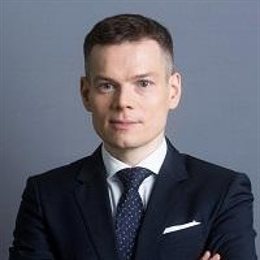
Jacek Jastrzębski, the KNF Chairman
“We're
witnessing an unprecedented expansion in market participation, but the
financial outcomes remain concerning,” the KNF commented in the report
seen by FinanceMagnates.com. “While the percentage of profitable traders
improved slightly, the absolute value of losses continues to climb as more
individuals enter the market.”
The
detailed figures show that Polish residents' losses on CFD transactions
increased from 1.05 billion zlotys in 2023 to 1.29 billion zlotys in 2024,
representing an 18% year-over-year increase. During the same period, total
profits among successful Polish traders grew more modestly, rising from 249.8
million zlotys to 305.7 million zlotys.
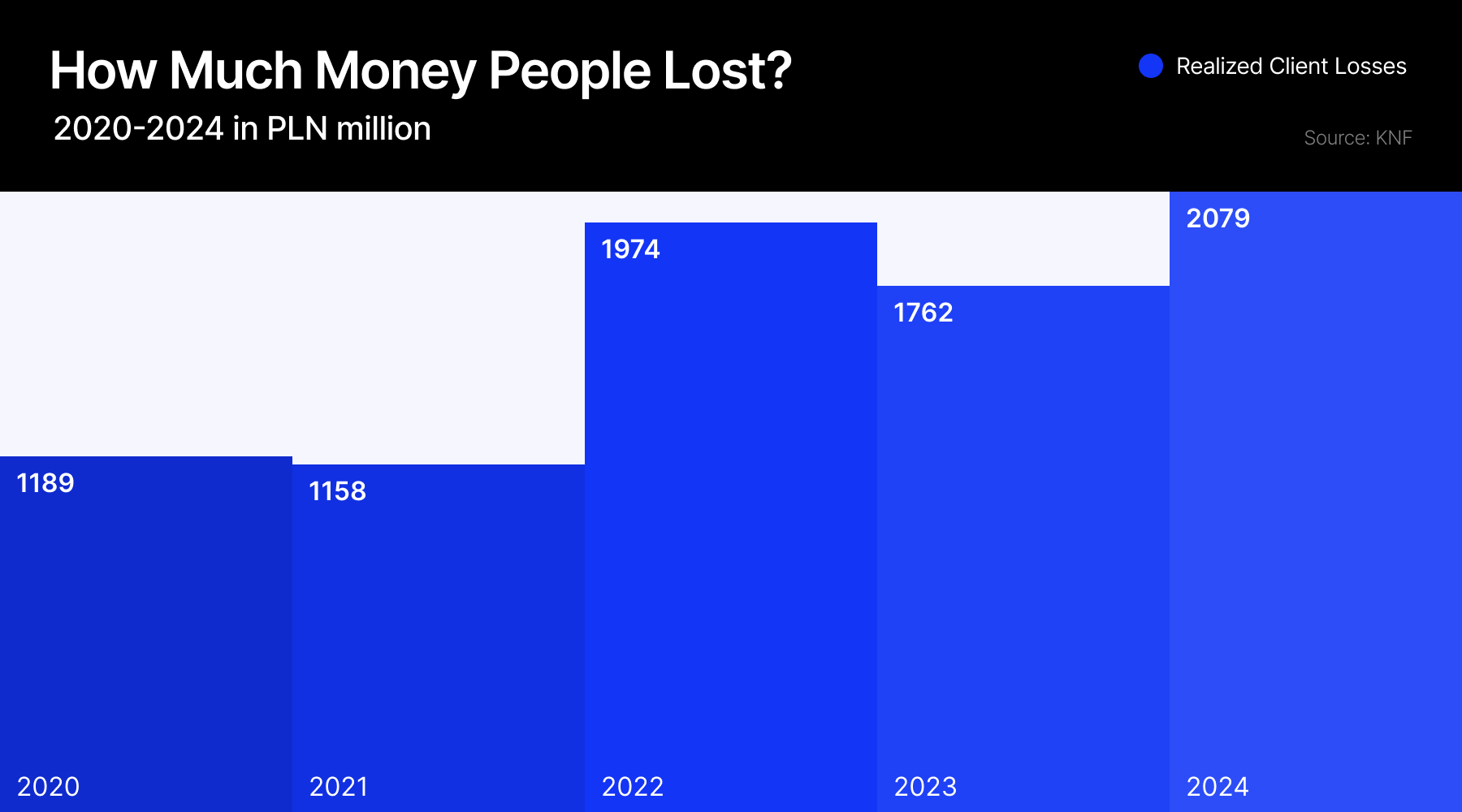
Again, when
including all clients of Polish FX and CFD brokers, also foreign ones, the loss
reached 2.08 billion zlotys.
As the regulator explains, the analysis includes “not only CFD contracts but also other OTC derivatives offered by KNF-supervised brokerage houses and firms through trading platforms.”
What The KNF Report Shows
The KNF
data reveals several noteworthy trends in this rapidly expanding market:
The number
of profitable Polish traders increased by 53% year-over-year, from 22,812 to
34,827
The number
of unprofitable Polish traders grew by 36%, from 60,271 to 82,076
Despite
more traders finding success proportionally, the average profit per successful
trader fell by 20%, dropping from 10,950 zlotys to 8,778 zlotys
Average
losses per unsuccessful trader improved slightly, decreasing from 17,456 zlotys
to 15,749 zlotys

Arkadiusz Jóźwiak
“A record number of active FX and CFD clients from Poland is certainly encouraging; it shows that, as a nation, we want to invest actively,” Arkadiusz Jóźwiak, the Editor-in-Chief of the retail investor media outlet Comparic.pl, commented for FinanceMagnates.com. “The XTB effect likely plays a significant role here—the broker has become a leader in the local market, attracting more and more clients through passive investments, who then also become interested in CFDs.”
The
advantage over other major European markets is clearly visible. According to
the latest Investment Trends report, in Germany—despite its much larger
population than Poland’s—the
FX and CFD market attracted only 63,000 active traders.
Polish FX and CFD Market
Growth Outpaces Profitability
The
five-year data signals that while the percentage of profitable Polish traders
has improved from 22.6% in 2020 to 29.8% in 2024, the total financial impact on
the market has grown substantially. The absolute number of Polish residents
losing money on CFD transactions has nearly tripled since 2020, growing
from 30,365 to 82,076.
Total
losses increased from 661 million zlotys in 2020 to 1.29 billion zlotys in 2024
(96% increase). At least Polish traders are getting smarter about how they lose
money. The average winner's take home shrank dramatically—from 18,383 zlotys to 8,778 zlotys (down 52%).
Moreover,
the total number of active Polish traders nearly tripled from 39,226 in 2020 to
116,903 in 2024. This represents a compound annual growth rate of approximately
31%.
The number
of active Forex traders in Poland surged by 40% in 2024, reaching nearly
117,000 participants, while total losses simultaneously rose by 18% to a
staggering 1.29 billion zlotys ($325 million), according to new data from
Poland's Financial Supervision Authority (KNF).
Poland's CFD Trader Count
Hits 117,000 Amid 18% Loss Expansion
The
regulator's annual report on the retail Forex (FX) and contracts for difference
(CFDs) market reveals a complex picture of rapidly expanding participation amid
persistent profitability challenges. The number of active Polish traders jumped
from approximately 83,000 in 2023 to 116,903 in 2024, reflecting growing
interest in trading despite the well-documented risks.
When we
take into account not only Polish residents but also foreign ones, this number
increases from 175,000 to nearly 247,000.
Jacek Jastrzębski, the KNF Chairman
“We're
witnessing an unprecedented expansion in market participation, but the
financial outcomes remain concerning,” the KNF commented in the report
seen by FinanceMagnates.com. “While the percentage of profitable traders
improved slightly, the absolute value of losses continues to climb as more
individuals enter the market.”
The
detailed figures show that Polish residents' losses on CFD transactions
increased from 1.05 billion zlotys in 2023 to 1.29 billion zlotys in 2024,
representing an 18% year-over-year increase. During the same period, total
profits among successful Polish traders grew more modestly, rising from 249.8
million zlotys to 305.7 million zlotys.
Again, when
including all clients of Polish FX and CFD brokers, also foreign ones, the loss
reached 2.08 billion zlotys.
As the regulator explains, the analysis includes “not only CFD contracts but also other OTC derivatives offered by KNF-supervised brokerage houses and firms through trading platforms.”
What The KNF Report Shows
The KNF
data reveals several noteworthy trends in this rapidly expanding market:
The number
of profitable Polish traders increased by 53% year-over-year, from 22,812 to
34,827
The number
of unprofitable Polish traders grew by 36%, from 60,271 to 82,076
Despite
more traders finding success proportionally, the average profit per successful
trader fell by 20%, dropping from 10,950 zlotys to 8,778 zlotys
Average
losses per unsuccessful trader improved slightly, decreasing from 17,456 zlotys
to 15,749 zlotys
Arkadiusz Jóźwiak
“A record number of active FX and CFD clients from Poland is certainly encouraging; it shows that, as a nation, we want to invest actively,” Arkadiusz Jóźwiak, the Editor-in-Chief of the retail investor media outlet Comparic.pl, commented for FinanceMagnates.com. “The XTB effect likely plays a significant role here—the broker has become a leader in the local market, attracting more and more clients through passive investments, who then also become interested in CFDs.”
The
advantage over other major European markets is clearly visible. According to
the latest Investment Trends report, in Germany—despite its much larger
population than Poland’s—the
FX and CFD market attracted only 63,000 active traders.
Polish FX and CFD Market
Growth Outpaces Profitability
The
five-year data signals that while the percentage of profitable Polish traders
has improved from 22.6% in 2020 to 29.8% in 2024, the total financial impact on
the market has grown substantially. The absolute number of Polish residents
losing money on CFD transactions has nearly tripled since 2020, growing
from 30,365 to 82,076.
Total
losses increased from 661 million zlotys in 2020 to 1.29 billion zlotys in 2024
(96% increase). At least Polish traders are getting smarter about how they lose
money. The average winner's take home shrank dramatically—from 18,383 zlotys to 8,778 zlotys (down 52%).
Moreover,
the total number of active Polish traders nearly tripled from 39,226 in 2020 to
116,903 in 2024. This represents a compound annual growth rate of approximately
31%.
Damian's adventure with financial markets began at the Cracow University of Economics, where he obtained his MA in finance and accounting. Starting from the retail trader perspective, he collaborated with brokerage houses and financial portals in Poland as an independent editor and content manager. His adventure with Finance Magnates began in 2016, where he is working as a business intelligence analyst.
iFOREX Adds Saudi and South Korean Equity CFDs as IPO Is Delayed
Featured Videos
Executive Interview | Charlotte Bullock | Chief Product Officer, Bank of London | FMLS:25
In this interview, we sat down with Charlotte Bullock, Head of Product at The Bank of London, previously at SAP and now shaping product at one of the sector’s most ambitious new banking players.
Charlotte reflects on the Summit so far and talks about the culture inside fintech banks today. We look at the pressures that come with scaling, and how firms can hold onto the nimble approach that made them stand out early on.
We also cover the state of payments ahead of her appearance on the payments roundtable: the blockages financial firms face, the areas that still need fixing, and what a realistic solution looks like in 2026.
In this interview, we sat down with Charlotte Bullock, Head of Product at The Bank of London, previously at SAP and now shaping product at one of the sector’s most ambitious new banking players.
Charlotte reflects on the Summit so far and talks about the culture inside fintech banks today. We look at the pressures that come with scaling, and how firms can hold onto the nimble approach that made them stand out early on.
We also cover the state of payments ahead of her appearance on the payments roundtable: the blockages financial firms face, the areas that still need fixing, and what a realistic solution looks like in 2026.
In this interview, we sat down with Charlotte Bullock, Head of Product at The Bank of London, previously at SAP and now shaping product at one of the sector’s most ambitious new banking players.
Charlotte reflects on the Summit so far and talks about the culture inside fintech banks today. We look at the pressures that come with scaling, and how firms can hold onto the nimble approach that made them stand out early on.
We also cover the state of payments ahead of her appearance on the payments roundtable: the blockages financial firms face, the areas that still need fixing, and what a realistic solution looks like in 2026.
In this interview, we sat down with Charlotte Bullock, Head of Product at The Bank of London, previously at SAP and now shaping product at one of the sector’s most ambitious new banking players.
Charlotte reflects on the Summit so far and talks about the culture inside fintech banks today. We look at the pressures that come with scaling, and how firms can hold onto the nimble approach that made them stand out early on.
We also cover the state of payments ahead of her appearance on the payments roundtable: the blockages financial firms face, the areas that still need fixing, and what a realistic solution looks like in 2026.
In this conversation, we sit down with Drew Niv, CSO at ATFX Connect and one of the most influential figures in modern FX.
We speak about market structure, the institutional view on liquidity, and the sharp rise of prop trading, a sector Drew has been commenting on in recent months. Drew explains why he once dismissed prop trading, why his view changed, and what he now thinks the model means for brokers, clients and risk managers.
We explore subscription-fee dependency, the high reneging rate, and the long-term challenge: how brokers can build a more stable and honest version of the model. Drew also talks about the traffic advantage standalone prop firms have built and why brokers may still win in the long run if they take the right approach.
In this conversation, we sit down with Drew Niv, CSO at ATFX Connect and one of the most influential figures in modern FX.
We speak about market structure, the institutional view on liquidity, and the sharp rise of prop trading, a sector Drew has been commenting on in recent months. Drew explains why he once dismissed prop trading, why his view changed, and what he now thinks the model means for brokers, clients and risk managers.
We explore subscription-fee dependency, the high reneging rate, and the long-term challenge: how brokers can build a more stable and honest version of the model. Drew also talks about the traffic advantage standalone prop firms have built and why brokers may still win in the long run if they take the right approach.
In this conversation, we sit down with Drew Niv, CSO at ATFX Connect and one of the most influential figures in modern FX.
We speak about market structure, the institutional view on liquidity, and the sharp rise of prop trading, a sector Drew has been commenting on in recent months. Drew explains why he once dismissed prop trading, why his view changed, and what he now thinks the model means for brokers, clients and risk managers.
We explore subscription-fee dependency, the high reneging rate, and the long-term challenge: how brokers can build a more stable and honest version of the model. Drew also talks about the traffic advantage standalone prop firms have built and why brokers may still win in the long run if they take the right approach.
In this conversation, we sit down with Drew Niv, CSO at ATFX Connect and one of the most influential figures in modern FX.
We speak about market structure, the institutional view on liquidity, and the sharp rise of prop trading, a sector Drew has been commenting on in recent months. Drew explains why he once dismissed prop trading, why his view changed, and what he now thinks the model means for brokers, clients and risk managers.
We explore subscription-fee dependency, the high reneging rate, and the long-term challenge: how brokers can build a more stable and honest version of the model. Drew also talks about the traffic advantage standalone prop firms have built and why brokers may still win in the long run if they take the right approach.
In this conversation, we sit down with Drew Niv, CSO at ATFX Connect and one of the most influential figures in modern FX.
We speak about market structure, the institutional view on liquidity, and the sharp rise of prop trading, a sector Drew has been commenting on in recent months. Drew explains why he once dismissed prop trading, why his view changed, and what he now thinks the model means for brokers, clients and risk managers.
We explore subscription-fee dependency, the high reneging rate, and the long-term challenge: how brokers can build a more stable and honest version of the model. Drew also talks about the traffic advantage standalone prop firms have built and why brokers may still win in the long run if they take the right approach.
In this conversation, we sit down with Drew Niv, CSO at ATFX Connect and one of the most influential figures in modern FX.
We speak about market structure, the institutional view on liquidity, and the sharp rise of prop trading, a sector Drew has been commenting on in recent months. Drew explains why he once dismissed prop trading, why his view changed, and what he now thinks the model means for brokers, clients and risk managers.
We explore subscription-fee dependency, the high reneging rate, and the long-term challenge: how brokers can build a more stable and honest version of the model. Drew also talks about the traffic advantage standalone prop firms have built and why brokers may still win in the long run if they take the right approach.
Executive Interview | Remonda Z. Kirketerp Møller| CEO & Founder Muinmos | FMLS:25
In this interview, Remonda Z. Kirketerp Møller, founder of Muinmos, breaks down the state of AI in regtech and what responsible adoption really looks like for brokers. We talk about rising fragmentation, the pressures around compliance accuracy, and why most firms are still in the early stages of AI maturity.
Ramanda also shares insights on regulator sandboxes, shifting expectations around accountability, and the current reality of MiCA licensing and passporting in Europe.
A concise look at where compliance, onboarding, and AI-driven processes are heading next.
In this interview, Remonda Z. Kirketerp Møller, founder of Muinmos, breaks down the state of AI in regtech and what responsible adoption really looks like for brokers. We talk about rising fragmentation, the pressures around compliance accuracy, and why most firms are still in the early stages of AI maturity.
Ramanda also shares insights on regulator sandboxes, shifting expectations around accountability, and the current reality of MiCA licensing and passporting in Europe.
A concise look at where compliance, onboarding, and AI-driven processes are heading next.
In this interview, Remonda Z. Kirketerp Møller, founder of Muinmos, breaks down the state of AI in regtech and what responsible adoption really looks like for brokers. We talk about rising fragmentation, the pressures around compliance accuracy, and why most firms are still in the early stages of AI maturity.
Ramanda also shares insights on regulator sandboxes, shifting expectations around accountability, and the current reality of MiCA licensing and passporting in Europe.
A concise look at where compliance, onboarding, and AI-driven processes are heading next.
In this interview, Remonda Z. Kirketerp Møller, founder of Muinmos, breaks down the state of AI in regtech and what responsible adoption really looks like for brokers. We talk about rising fragmentation, the pressures around compliance accuracy, and why most firms are still in the early stages of AI maturity.
Ramanda also shares insights on regulator sandboxes, shifting expectations around accountability, and the current reality of MiCA licensing and passporting in Europe.
A concise look at where compliance, onboarding, and AI-driven processes are heading next.
In this interview, Remonda Z. Kirketerp Møller, founder of Muinmos, breaks down the state of AI in regtech and what responsible adoption really looks like for brokers. We talk about rising fragmentation, the pressures around compliance accuracy, and why most firms are still in the early stages of AI maturity.
Ramanda also shares insights on regulator sandboxes, shifting expectations around accountability, and the current reality of MiCA licensing and passporting in Europe.
A concise look at where compliance, onboarding, and AI-driven processes are heading next.
In this interview, Remonda Z. Kirketerp Møller, founder of Muinmos, breaks down the state of AI in regtech and what responsible adoption really looks like for brokers. We talk about rising fragmentation, the pressures around compliance accuracy, and why most firms are still in the early stages of AI maturity.
Ramanda also shares insights on regulator sandboxes, shifting expectations around accountability, and the current reality of MiCA licensing and passporting in Europe.
A concise look at where compliance, onboarding, and AI-driven processes are heading next.
In this conversation, we speak with Aydin Bonabi, CEO and co-founder of Surveill, a firm focused on fraud detection and AI-driven compliance tools for financial institutions.
We start with Aydin’s view of the Summit and the challenges brokers face as fraud tactics grow more complex. He explains how firms can stay ahead through real-time signals, data patterns, and early-stage detection.
We also talk about AI training and why compliance teams often struggle to keep models accurate, fair, and aligned with regulatory expectations. Aydin breaks down what “good” AI training looks like inside a financial environment, including the importance of clean data, domain expertise, and human oversight.
He closes with a clear message: fraud is scaling, and so must the tools that stop it.
In this conversation, we speak with Aydin Bonabi, CEO and co-founder of Surveill, a firm focused on fraud detection and AI-driven compliance tools for financial institutions.
We start with Aydin’s view of the Summit and the challenges brokers face as fraud tactics grow more complex. He explains how firms can stay ahead through real-time signals, data patterns, and early-stage detection.
We also talk about AI training and why compliance teams often struggle to keep models accurate, fair, and aligned with regulatory expectations. Aydin breaks down what “good” AI training looks like inside a financial environment, including the importance of clean data, domain expertise, and human oversight.
He closes with a clear message: fraud is scaling, and so must the tools that stop it.
In this conversation, we speak with Aydin Bonabi, CEO and co-founder of Surveill, a firm focused on fraud detection and AI-driven compliance tools for financial institutions.
We start with Aydin’s view of the Summit and the challenges brokers face as fraud tactics grow more complex. He explains how firms can stay ahead through real-time signals, data patterns, and early-stage detection.
We also talk about AI training and why compliance teams often struggle to keep models accurate, fair, and aligned with regulatory expectations. Aydin breaks down what “good” AI training looks like inside a financial environment, including the importance of clean data, domain expertise, and human oversight.
He closes with a clear message: fraud is scaling, and so must the tools that stop it.
In this conversation, we speak with Aydin Bonabi, CEO and co-founder of Surveill, a firm focused on fraud detection and AI-driven compliance tools for financial institutions.
We start with Aydin’s view of the Summit and the challenges brokers face as fraud tactics grow more complex. He explains how firms can stay ahead through real-time signals, data patterns, and early-stage detection.
We also talk about AI training and why compliance teams often struggle to keep models accurate, fair, and aligned with regulatory expectations. Aydin breaks down what “good” AI training looks like inside a financial environment, including the importance of clean data, domain expertise, and human oversight.
He closes with a clear message: fraud is scaling, and so must the tools that stop it.
In this conversation, we speak with Aydin Bonabi, CEO and co-founder of Surveill, a firm focused on fraud detection and AI-driven compliance tools for financial institutions.
We start with Aydin’s view of the Summit and the challenges brokers face as fraud tactics grow more complex. He explains how firms can stay ahead through real-time signals, data patterns, and early-stage detection.
We also talk about AI training and why compliance teams often struggle to keep models accurate, fair, and aligned with regulatory expectations. Aydin breaks down what “good” AI training looks like inside a financial environment, including the importance of clean data, domain expertise, and human oversight.
He closes with a clear message: fraud is scaling, and so must the tools that stop it.
In this conversation, we speak with Aydin Bonabi, CEO and co-founder of Surveill, a firm focused on fraud detection and AI-driven compliance tools for financial institutions.
We start with Aydin’s view of the Summit and the challenges brokers face as fraud tactics grow more complex. He explains how firms can stay ahead through real-time signals, data patterns, and early-stage detection.
We also talk about AI training and why compliance teams often struggle to keep models accurate, fair, and aligned with regulatory expectations. Aydin breaks down what “good” AI training looks like inside a financial environment, including the importance of clean data, domain expertise, and human oversight.
He closes with a clear message: fraud is scaling, and so must the tools that stop it.
Exness expands its presence in Africa: Inside our interview with Paul Margarites in Cape Town
Finance Magnates met with Paul Margarites, Exness regional commercial director for Sub-Saharan Africa, during a visit to the firm’s office opening in Cape Town. In this talk, led by Andrea Badiola Mateos, Co-CEO at Finance Magnates, Paul shares views on the South African trading space, local user behavior, mobile trends, regulation, team growth, and how Exness plans to grow in more markets across the region. @Exness
Read the article at: https://www.financemagnates.com/thought-leadership/exness-expands-its-presence-in-africa-inside-our-interview-with-paul-margarites/
#exness #financemagnates #exnesstrading #CFDtrading #tradeonline #africanews #capetown
Finance Magnates met with Paul Margarites, Exness regional commercial director for Sub-Saharan Africa, during a visit to the firm’s office opening in Cape Town. In this talk, led by Andrea Badiola Mateos, Co-CEO at Finance Magnates, Paul shares views on the South African trading space, local user behavior, mobile trends, regulation, team growth, and how Exness plans to grow in more markets across the region. @Exness
Read the article at: https://www.financemagnates.com/thought-leadership/exness-expands-its-presence-in-africa-inside-our-interview-with-paul-margarites/
#exness #financemagnates #exnesstrading #CFDtrading #tradeonline #africanews #capetown
Finance Magnates met with Paul Margarites, Exness regional commercial director for Sub-Saharan Africa, during a visit to the firm’s office opening in Cape Town. In this talk, led by Andrea Badiola Mateos, Co-CEO at Finance Magnates, Paul shares views on the South African trading space, local user behavior, mobile trends, regulation, team growth, and how Exness plans to grow in more markets across the region. @Exness
Read the article at: https://www.financemagnates.com/thought-leadership/exness-expands-its-presence-in-africa-inside-our-interview-with-paul-margarites/
#exness #financemagnates #exnesstrading #CFDtrading #tradeonline #africanews #capetown
Finance Magnates met with Paul Margarites, Exness regional commercial director for Sub-Saharan Africa, during a visit to the firm’s office opening in Cape Town. In this talk, led by Andrea Badiola Mateos, Co-CEO at Finance Magnates, Paul shares views on the South African trading space, local user behavior, mobile trends, regulation, team growth, and how Exness plans to grow in more markets across the region. @Exness
Read the article at: https://www.financemagnates.com/thought-leadership/exness-expands-its-presence-in-africa-inside-our-interview-with-paul-margarites/
#exness #financemagnates #exnesstrading #CFDtrading #tradeonline #africanews #capetown
Finance Magnates met with Paul Margarites, Exness regional commercial director for Sub-Saharan Africa, during a visit to the firm’s office opening in Cape Town. In this talk, led by Andrea Badiola Mateos, Co-CEO at Finance Magnates, Paul shares views on the South African trading space, local user behavior, mobile trends, regulation, team growth, and how Exness plans to grow in more markets across the region. @Exness
Read the article at: https://www.financemagnates.com/thought-leadership/exness-expands-its-presence-in-africa-inside-our-interview-with-paul-margarites/
#exness #financemagnates #exnesstrading #CFDtrading #tradeonline #africanews #capetown
Finance Magnates met with Paul Margarites, Exness regional commercial director for Sub-Saharan Africa, during a visit to the firm’s office opening in Cape Town. In this talk, led by Andrea Badiola Mateos, Co-CEO at Finance Magnates, Paul shares views on the South African trading space, local user behavior, mobile trends, regulation, team growth, and how Exness plans to grow in more markets across the region. @Exness
Read the article at: https://www.financemagnates.com/thought-leadership/exness-expands-its-presence-in-africa-inside-our-interview-with-paul-margarites/
#exness #financemagnates #exnesstrading #CFDtrading #tradeonline #africanews #capetown