Citibank and PKO BP have just joined the growing list. They are allegedly accused of collusion.
Moreover, the Polish fintech giant claims that the local market watchdog "violates the law" and its regulations "destroy" companies.
Polish
currency exchange platform Cinkciarz.pl has announced plans to sue two more
major banks operating in the country. This time, the fintech is seeking at
least 1.5 billion zlotys ($375 million) from Citibank and PKO BP.
Cinkciarz.pl and Conotoxia
Plan to Sue a Total of 10 Polish Banks
According
to the
latest statement from Cinkciarz.pl sp. z o.o. and Conotoxia sp. z o.o.
published today (Tuesday), the online currency exchange and payment institution
intend to take legal action against PKO BP, demanding at least 1 billion zlotys
($250 million).
"The
grounds for the lawsuit are the bank's collusion and refusal to provide the
companies with financing in the form of investment and working capital
loans," the companies wrote in the statement.
Last week,
a similar note was issued regarding Citibank, seeking damages of 500 million
zlotys ($125 million).
This
increases the number of banks that Cinkciarz.pl and Conotoxia want to sue to a
total of 10, with potential damages amounting to 6.5 billion zlotys ($1.65
billion).
The growing list since the beginning of this month includes mBank, BPS
(twice), BOŚ Bank, Credit Agricole, ING Bank Śląski, Bank Millennium, and Getin
Bank.
According
to Cinkciarz.pl, these banks have allegedly engaged in anti-competitive
practices and violated the principle of equal treatment of companies by banks.
"PKO
BP S.A., like many other banks, has imposed a total ban on cooperation with
entities from the Conotoxia group, which is detrimental not only to the
companies' interests but also to the welfare of customers," they commented
on the matter.
Conotoxia Alleges Polish
KNF "Violates the Law"
The news of
Conotoxia's license revocation has put the payment company into a veritable
berserker mode. An all-out war with almost all major Polish banks is not all,
as Finance Magnates reported yesterday (Monday) that the Polish fintech
also has complaints against the regulator.
In its
statement, the company openly admits that
KNF "violates the law," and that the introduced regulations,
instead of helping, "destroy" companies. The actions taken by the
regulator may allegedly disrupt services for 100,000 users and cause billions
in damages.
Conotoxia
wants to fight against the "current banking lobby," which it believes
protects its own interests, placing them above the welfare of users and the
competitive chances of fintech companies.
"The
KNF violated the provision of Article 105(1)(6) of the Payment Services Act.
Given a choice of six supervisory measures against a Company with no previous
administrative penalties, it decided to wind it up straight away, a phenomenon
in supervision that should help entities solve their problems, not destroy
them," the company commented in another of the series of statements made
in recent days.
Conotoxia Sp. z o.o. is
Not the Same Company as Conotoxia Ltd
It's worth
emphasizing that Conotoxia Sp. z o.o., the Polish payment company whose license
was revoked by KNF, is a different entity from Conotoxia Ltd, a CySEC-regulated
retail FX/CFD broker. Although the activities of both are completely
independent, it's easy to confuse them.
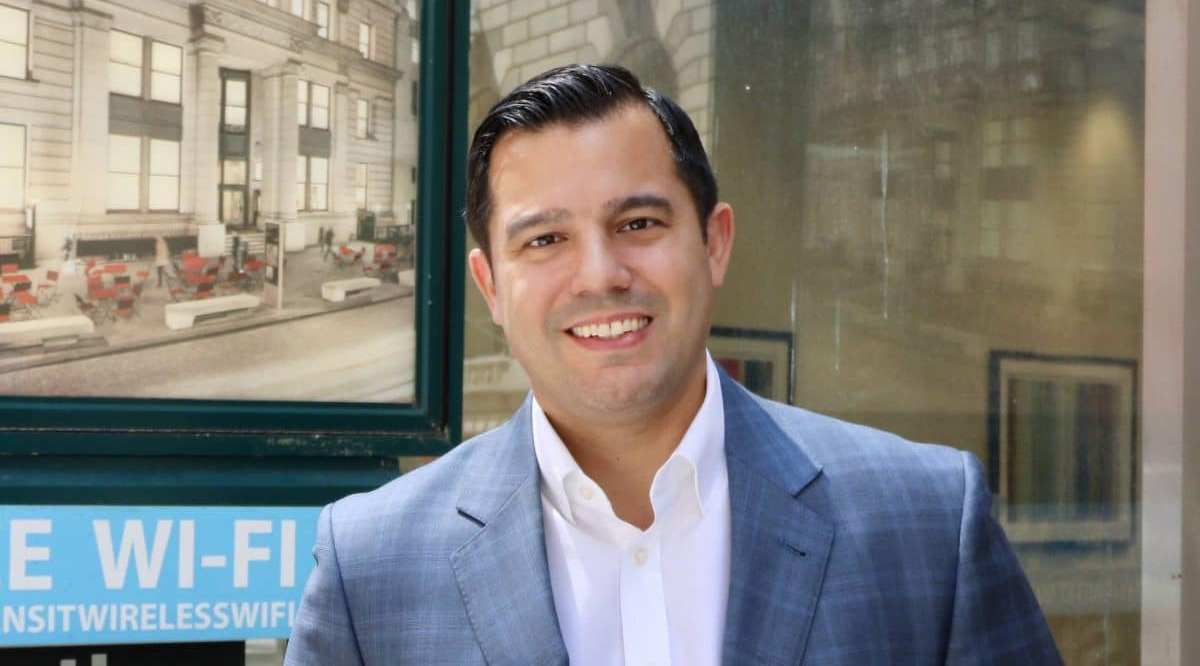
Grzegorz Jaworski, the CEO of Conotoxia Ltd.
Finance
Magnates learned
that due to the similarity in names, the Cypriot regulator has also reportedly
taken interest in the situation. Grzegorz Jaworski, CEO of Conotoxia Ltd, a
broker licensed by CySEC, addressed the matter in a letter sent last week to
"clients, contractors, business partners, and media," emphasizing
that the recent actions by the KNF did not involve the company he represents.
"Our
company Conotoxia Ltd is a separate entity that holds a license to conduct
brokerage activities in Poland, among other places," Jaworski stated.
"Our company does not and has never provided any payment services to
clients and has nothing to do with the Polish Financial Supervision Authority's
decision regarding Conotoxia sp. z o.o."
He added
that the KNF's decision has not affected the operations of the broker Conotoxia
Ltd in any way.
Polish
currency exchange platform Cinkciarz.pl has announced plans to sue two more
major banks operating in the country. This time, the fintech is seeking at
least 1.5 billion zlotys ($375 million) from Citibank and PKO BP.
Cinkciarz.pl and Conotoxia
Plan to Sue a Total of 10 Polish Banks
According
to the
latest statement from Cinkciarz.pl sp. z o.o. and Conotoxia sp. z o.o.
published today (Tuesday), the online currency exchange and payment institution
intend to take legal action against PKO BP, demanding at least 1 billion zlotys
($250 million).
"The
grounds for the lawsuit are the bank's collusion and refusal to provide the
companies with financing in the form of investment and working capital
loans," the companies wrote in the statement.
Last week,
a similar note was issued regarding Citibank, seeking damages of 500 million
zlotys ($125 million).
This
increases the number of banks that Cinkciarz.pl and Conotoxia want to sue to a
total of 10, with potential damages amounting to 6.5 billion zlotys ($1.65
billion).
The growing list since the beginning of this month includes mBank, BPS
(twice), BOŚ Bank, Credit Agricole, ING Bank Śląski, Bank Millennium, and Getin
Bank.
According
to Cinkciarz.pl, these banks have allegedly engaged in anti-competitive
practices and violated the principle of equal treatment of companies by banks.
"PKO
BP S.A., like many other banks, has imposed a total ban on cooperation with
entities from the Conotoxia group, which is detrimental not only to the
companies' interests but also to the welfare of customers," they commented
on the matter.
Conotoxia Alleges Polish
KNF "Violates the Law"
The news of
Conotoxia's license revocation has put the payment company into a veritable
berserker mode. An all-out war with almost all major Polish banks is not all,
as Finance Magnates reported yesterday (Monday) that the Polish fintech
also has complaints against the regulator.
In its
statement, the company openly admits that
KNF "violates the law," and that the introduced regulations,
instead of helping, "destroy" companies. The actions taken by the
regulator may allegedly disrupt services for 100,000 users and cause billions
in damages.
Conotoxia
wants to fight against the "current banking lobby," which it believes
protects its own interests, placing them above the welfare of users and the
competitive chances of fintech companies.
"The
KNF violated the provision of Article 105(1)(6) of the Payment Services Act.
Given a choice of six supervisory measures against a Company with no previous
administrative penalties, it decided to wind it up straight away, a phenomenon
in supervision that should help entities solve their problems, not destroy
them," the company commented in another of the series of statements made
in recent days.
Conotoxia Sp. z o.o. is
Not the Same Company as Conotoxia Ltd
It's worth
emphasizing that Conotoxia Sp. z o.o., the Polish payment company whose license
was revoked by KNF, is a different entity from Conotoxia Ltd, a CySEC-regulated
retail FX/CFD broker. Although the activities of both are completely
independent, it's easy to confuse them.
Grzegorz Jaworski, the CEO of Conotoxia Ltd.
Finance
Magnates learned
that due to the similarity in names, the Cypriot regulator has also reportedly
taken interest in the situation. Grzegorz Jaworski, CEO of Conotoxia Ltd, a
broker licensed by CySEC, addressed the matter in a letter sent last week to
"clients, contractors, business partners, and media," emphasizing
that the recent actions by the KNF did not involve the company he represents.
"Our
company Conotoxia Ltd is a separate entity that holds a license to conduct
brokerage activities in Poland, among other places," Jaworski stated.
"Our company does not and has never provided any payment services to
clients and has nothing to do with the Polish Financial Supervision Authority's
decision regarding Conotoxia sp. z o.o."
He added
that the KNF's decision has not affected the operations of the broker Conotoxia
Ltd in any way.
Damian Chmiel is a Senior Analyst & Editor at Finance Magnates with more than 15 years of experience in the CFD and online trading industry. Active as both a trader and journalist since 2010, he focuses on broker coverage, fintech innovation, and regulatory developments across Europe, the Middle East, and Asia.
His work includes interviews with C-level leaders at major brokerages and fintech platforms, as well as co-authoring Finance Magnates’ quarterly industry benchmarking reports. Damian’s reporting is data-driven, market-aware, and grounded in direct industry engagement. His analysis and commentary have also been cited by external media outlets, including Investing.com, Binance, The Asset, Stockhead, and Dispatch.
Education:
MA in Finance and Accounting, Cracow University of Economics
Retail Investors Shift to Energy, Rare Earths, and AI Amid Tensions, eToro Finds
FP Markets Winner Spotlight 🏆 | Global Broker of the Year 2025 #Trading #Broker #Innovation #Shorts
FP Markets Winner Spotlight 🏆 | Global Broker of the Year 2025 #Trading #Broker #Innovation #Shorts
FP Markets takes the spotlight as Global Broker of the Year 2025 at the Finance Magnates Awards.
Martin Stoilov, Head of Client Experience, shares that trust, innovation, and people played a key role in the company’s success, supported by a strong foundation of integrity and client-centricity.
Following this milestone, FP Markets continues to focus on growth, technology investment, and its core values of transparency and excellence.
👉 Be part of FM Awards 2026: https://awards.financemagnates.com/#nominate
FP Markets takes the spotlight as Global Broker of the Year 2025 at the Finance Magnates Awards.
Martin Stoilov, Head of Client Experience, shares that trust, innovation, and people played a key role in the company’s success, supported by a strong foundation of integrity and client-centricity.
Following this milestone, FP Markets continues to focus on growth, technology investment, and its core values of transparency and excellence.
👉 Be part of FM Awards 2026: https://awards.financemagnates.com/#nominate
In this video, we review @HolaPrimeMarketsOfficial, a multi-asset forex and CFDs broker offering different account types, trading platforms, and flexible trading conditions.
We cover the broker’s overall offering, including account options, trading environment, platforms like MT4 and MT5, and additional services such as managed accounts and fast withdrawals.
Watch the full video to see if Hola Prime Markets fits your trading needs.
📣 Stay up to date with the latest in finance and trading. Follow Finance Magnates for industry news, insights, and global event coverage.
Connect with us:
🔗 LinkedIn: /financemagnates
👍 Facebook: /financemagnates
📸 Instagram: https://www.instagram.com/financemagnates
🐦 X: https://x.com/financemagnates
🎥 TikTok: https://www.tiktok.com/tag/financemagnates
▶️ YouTube: /@financemagnates_official
#HolaPrime #ForexBroker #CFDTrading #FinanceMagnates #Trading #Forex #BrokerReview
In this video, we review @HolaPrimeMarketsOfficial, a multi-asset forex and CFDs broker offering different account types, trading platforms, and flexible trading conditions.
We cover the broker’s overall offering, including account options, trading environment, platforms like MT4 and MT5, and additional services such as managed accounts and fast withdrawals.
Watch the full video to see if Hola Prime Markets fits your trading needs.
📣 Stay up to date with the latest in finance and trading. Follow Finance Magnates for industry news, insights, and global event coverage.
Connect with us:
🔗 LinkedIn: /financemagnates
👍 Facebook: /financemagnates
📸 Instagram: https://www.instagram.com/financemagnates
🐦 X: https://x.com/financemagnates
🎥 TikTok: https://www.tiktok.com/tag/financemagnates
▶️ YouTube: /@financemagnates_official
#HolaPrime #ForexBroker #CFDTrading #FinanceMagnates #Trading #Forex #BrokerReview
Hola Prime Review: What You Need to Know | Full Breakdown by Finance Magnates
Hola Prime Review: What You Need to Know | Full Breakdown by Finance Magnates
In this video, we review @HolaPrime_Global, a proprietary trading firm offering evaluation programs and performance-based payouts in simulated market environments.
We cover how the challenge model works, including account types, profit splits (up to 95%), trading rules, and what it takes to reach a funded account. You’ll also learn about available platforms like MT4, MT5, cTrader, and more, along with insights into payouts, support, and trading conditions.
Watch the full video to see if Hola Prime fits your trading style.
📣 Stay up to date with the latest in finance and trading. Follow Finance Magnates for industry news, insights, and global event coverage.
Connect with us:
🔗 LinkedIn: /financemagnates
👍 Facebook: /financemagnates
📸 Instagram: https://www.instagram.com/financemagnates
🐦 X: https://x.com/financemagnates
🎥 TikTok: https://www.tiktok.com/tag/financemagnates
▶️ YouTube: /@financemagnates_official
#HolaPrime #PropFirm #Trading #FinanceMagnates #Forex #FuturesTrading #TradingReview #PropFirmReview
In this video, we review @HolaPrime_Global, a proprietary trading firm offering evaluation programs and performance-based payouts in simulated market environments.
We cover how the challenge model works, including account types, profit splits (up to 95%), trading rules, and what it takes to reach a funded account. You’ll also learn about available platforms like MT4, MT5, cTrader, and more, along with insights into payouts, support, and trading conditions.
Watch the full video to see if Hola Prime fits your trading style.
📣 Stay up to date with the latest in finance and trading. Follow Finance Magnates for industry news, insights, and global event coverage.
Connect with us:
🔗 LinkedIn: /financemagnates
👍 Facebook: /financemagnates
📸 Instagram: https://www.instagram.com/financemagnates
🐦 X: https://x.com/financemagnates
🎥 TikTok: https://www.tiktok.com/tag/financemagnates
▶️ YouTube: /@financemagnates_official
#HolaPrime #PropFirm #Trading #FinanceMagnates #Forex #FuturesTrading #TradingReview #PropFirmReview
Axi Winner Spotlight 🏆 | Global Most Innovative Broker 2025 #Innovation #Trading #Fintech #Broker
Axi Winner Spotlight 🏆 | Global Most Innovative Broker 2025 #Innovation #Trading #Fintech #Broker
Axi takes the spotlight at the Finance Magnates Awards, winning Global Most Innovative Broker 2025.
Olivia Xenofontos and Ivanna Openko share how the team will feel: proud, motivated, and ready to keep delivering.
They also describe the night as well-organized, focused, and enjoyable for all.
👉 Be part of FM Awards 2026.
Axi takes the spotlight at the Finance Magnates Awards, winning Global Most Innovative Broker 2025.
Olivia Xenofontos and Ivanna Openko share how the team will feel: proud, motivated, and ready to keep delivering.
They also describe the night as well-organized, focused, and enjoyable for all.
👉 Be part of FM Awards 2026.
Recognition that matters.
Built on transparency.
Driven by the industry.
The Finance Magnates Awards 2026.
Nominations are now open.
🔗 https://awards.financemagnates.com/?utm_source=SM&utm_medium=social&utm_campaign=recognition-matters
Recognition that matters.
Built on transparency.
Driven by the industry.
The Finance Magnates Awards 2026.
Nominations are now open.
🔗 https://awards.financemagnates.com/?utm_source=SM&utm_medium=social&utm_campaign=recognition-matters