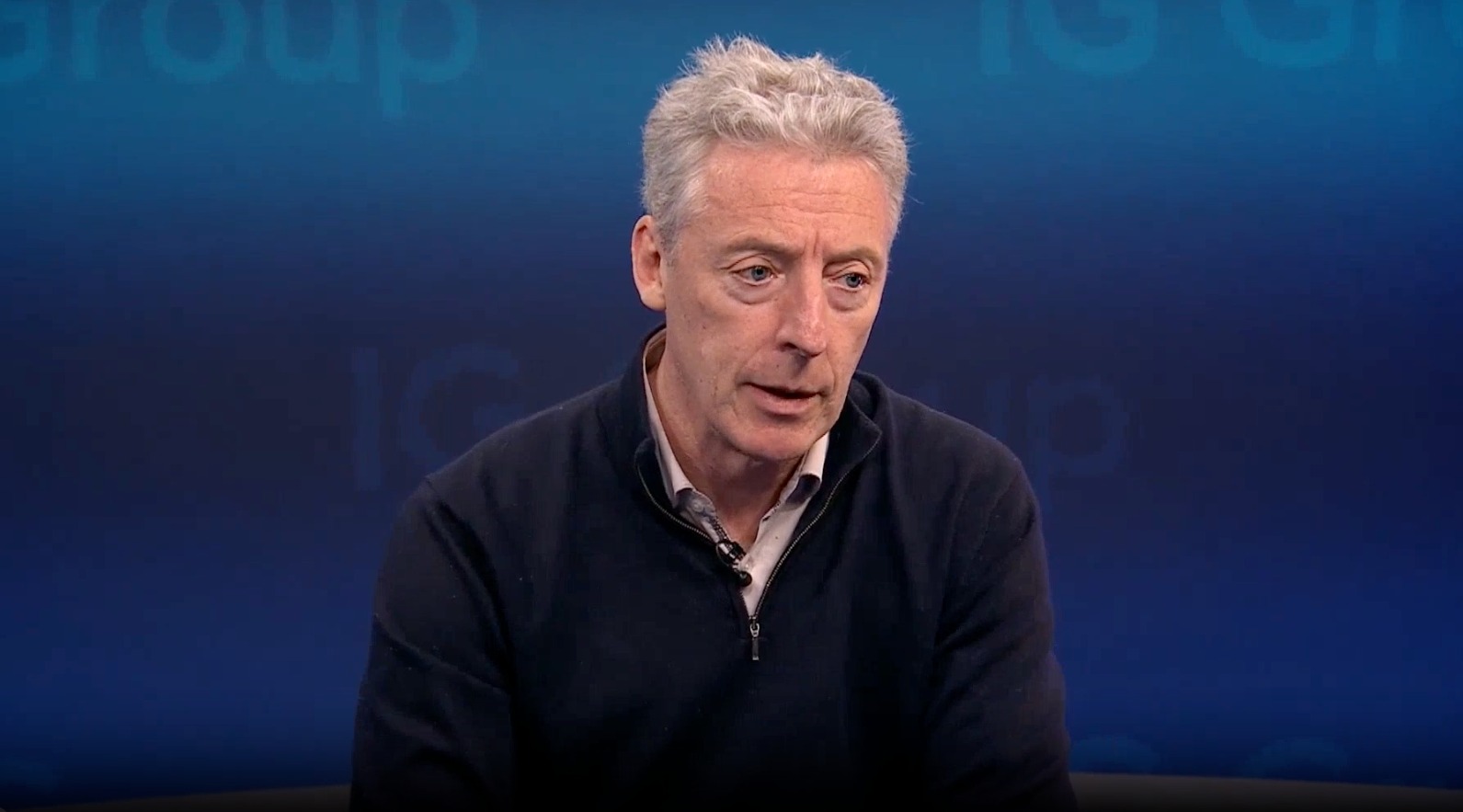
Ashley Alder emphasizes the need for global fintech regulation collaboration.
He stresses the importance of managing Big Tech's power and reaffirms the EU partnership.
The head of
the UK's Financial Conduct Authority (FCA) emphasized the need for global
coordination in regulating financial technology in the dynamically changing
world. The FCA's Chairman, Ashley Alder, said fintech innovation brings both
opportunities and risks that require "smart policy responses" from
regulators around the world.
FCA Chief Calls for
International Cooperation on Regulating Fintech
Speaking at
an event hosted by the UK Mission to the European Union, Alder highlighted
fintech as an area where international cooperation can support firms and
consumers while managing novel risks. He noted that fintech companies now rank
among the top banks in major European economies, driving disruption and
innovation across finance.
According
to Alder, regulators have a "fairly binary" approach to fintech. On
the one hand, they aim to foster environments where new ideas can flourish,
promoting competition, consumer choice and economic growth. He cited regulatory
sandboxes as an example of mechanisms that allow controlled experimentation.
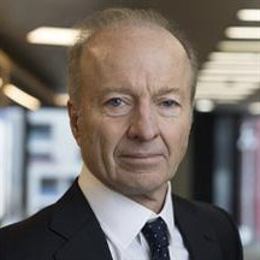
Ashley Alder, the CEO of FCA
However,
regulators must also remain alert to new risks arising from fintech, where
developing common international approaches is essential to protect stability
and competition.
"The
failure of SVB and other problems with banks last year was a prime illustration
of how technology has massively accelerated the speed at which bank runs can
develop," Alder said. "This requires smart policy responses which don't
increase moral hazard."
However, it is important that regulation does not impede the development of an industry that is already on the brink of crisis.
Troubles of the UK's Fintech Sector
In 2023, the fintech sector in the United Kingdom experienced a notable decline in funding, as highlighted by a recent report from Tracxn. This downturn saw local fintech companies raising only $4.2 billion, a stark reduction of 63% from the $11.2 billion recorded in 2022. Despite this setback, the UK maintained its position as the second-largest global hub for fintech funding.
Source: Tracxn
The significant drop in investment to $4.2 billion from the previous year's $11.2 billion is indicative of the broader macroeconomic challenges currently affecting the sector. Factors such as rising interest rates and inflation have been key in diminishing investor confidence. This decline in funding for fintech startups in the UK is part of a larger, unfavorable trend affecting the global fintech industry.
Finance Magnates had reported at the start of 2023 that global fintech funding had already decreased 30% in 2022, totaling $95 billion. This period proved especially challenging for fintech companies, which experienced greater difficulties securing investments than their counterparts in the broader financial and technology sectors. The downturn underscores the importance of regulatory frameworks that support the industry's growth without imposing undue barriers, especially as these companies navigate the verge of a crisis.
Big Tech also in Focus
The FCA
chief's speech focused on the evolving role of Big Tech companies
across finance. He raised concerns about the potential for firms like Amazon
and Google to leverage their digital data and activities when combining it with
financial customer information.
Alder said
this data concentration could allow Big Tech to gain "entrenched market
power" through advanced analytics and AI. While benefits may arise from centralized
customer data in a few tech giants, Alder reiterated that regulators globally
need to coordinate addressing incentives and common approaches.
"For
example, last November the FCA issued a call for input about the way in which
Big Tech firms could gain advantages from their digital activities when they
combine core business data with financial information sourced from different
data sharing mechanisms," he added.
Commitment to EU
Partnership
In conclusion,
Alder said the UK and EU "must lead by example" in their bilateral
relationship and interactions with other regulators. He reaffirmed the FCA's
commitment to seizing opportunities from Brexit while avoiding regulatory
fragmentation.
"We recognize
that in key areas the EU and UK are pursuing similar reforms which, although
not identical, signal common causes," Alder explained. "We are fully
alive to the dangers of regulatory fragmentation, and while I believe that we
should avoid talking about reforms in terms of 'divergence' between the UK and
EU, I can also say that we won't be pursuing change for change's sake."
Alder
welcomed last year's UK-EU cooperation agreement on financial services. He said
deepening information exchange and collaboration with European regulators
remains a priority amidst reform efforts on both sides. He was
officially appointed as the new president of the FCA in January 2023, although the
information about his transfer firstly appeared in mid-2022. Previously, he
worked as the CEO of Hong Kong's Securities and Futures Commission.
The head of
the UK's Financial Conduct Authority (FCA) emphasized the need for global
coordination in regulating financial technology in the dynamically changing
world. The FCA's Chairman, Ashley Alder, said fintech innovation brings both
opportunities and risks that require "smart policy responses" from
regulators around the world.
FCA Chief Calls for
International Cooperation on Regulating Fintech
Speaking at
an event hosted by the UK Mission to the European Union, Alder highlighted
fintech as an area where international cooperation can support firms and
consumers while managing novel risks. He noted that fintech companies now rank
among the top banks in major European economies, driving disruption and
innovation across finance.
According
to Alder, regulators have a "fairly binary" approach to fintech. On
the one hand, they aim to foster environments where new ideas can flourish,
promoting competition, consumer choice and economic growth. He cited regulatory
sandboxes as an example of mechanisms that allow controlled experimentation.
Ashley Alder, the CEO of FCA
However,
regulators must also remain alert to new risks arising from fintech, where
developing common international approaches is essential to protect stability
and competition.
"The
failure of SVB and other problems with banks last year was a prime illustration
of how technology has massively accelerated the speed at which bank runs can
develop," Alder said. "This requires smart policy responses which don't
increase moral hazard."
However, it is important that regulation does not impede the development of an industry that is already on the brink of crisis.
Troubles of the UK's Fintech Sector
In 2023, the fintech sector in the United Kingdom experienced a notable decline in funding, as highlighted by a recent report from Tracxn. This downturn saw local fintech companies raising only $4.2 billion, a stark reduction of 63% from the $11.2 billion recorded in 2022. Despite this setback, the UK maintained its position as the second-largest global hub for fintech funding.
Source: Tracxn
The significant drop in investment to $4.2 billion from the previous year's $11.2 billion is indicative of the broader macroeconomic challenges currently affecting the sector. Factors such as rising interest rates and inflation have been key in diminishing investor confidence. This decline in funding for fintech startups in the UK is part of a larger, unfavorable trend affecting the global fintech industry.
Finance Magnates had reported at the start of 2023 that global fintech funding had already decreased 30% in 2022, totaling $95 billion. This period proved especially challenging for fintech companies, which experienced greater difficulties securing investments than their counterparts in the broader financial and technology sectors. The downturn underscores the importance of regulatory frameworks that support the industry's growth without imposing undue barriers, especially as these companies navigate the verge of a crisis.
Big Tech also in Focus
The FCA
chief's speech focused on the evolving role of Big Tech companies
across finance. He raised concerns about the potential for firms like Amazon
and Google to leverage their digital data and activities when combining it with
financial customer information.
Alder said
this data concentration could allow Big Tech to gain "entrenched market
power" through advanced analytics and AI. While benefits may arise from centralized
customer data in a few tech giants, Alder reiterated that regulators globally
need to coordinate addressing incentives and common approaches.
"For
example, last November the FCA issued a call for input about the way in which
Big Tech firms could gain advantages from their digital activities when they
combine core business data with financial information sourced from different
data sharing mechanisms," he added.
Commitment to EU
Partnership
In conclusion,
Alder said the UK and EU "must lead by example" in their bilateral
relationship and interactions with other regulators. He reaffirmed the FCA's
commitment to seizing opportunities from Brexit while avoiding regulatory
fragmentation.
"We recognize
that in key areas the EU and UK are pursuing similar reforms which, although
not identical, signal common causes," Alder explained. "We are fully
alive to the dangers of regulatory fragmentation, and while I believe that we
should avoid talking about reforms in terms of 'divergence' between the UK and
EU, I can also say that we won't be pursuing change for change's sake."
Alder
welcomed last year's UK-EU cooperation agreement on financial services. He said
deepening information exchange and collaboration with European regulators
remains a priority amidst reform efforts on both sides. He was
officially appointed as the new president of the FCA in January 2023, although the
information about his transfer firstly appeared in mid-2022. Previously, he
worked as the CEO of Hong Kong's Securities and Futures Commission.
Damian Chmiel is a Senior Analyst & Editor at Finance Magnates with more than 15 years of experience in the CFD and online trading industry. Active as both a trader and journalist since 2010, he focuses on broker coverage, fintech innovation, and regulatory developments across Europe, the Middle East, and Asia.
His work includes interviews with C-level leaders at major brokerages and fintech platforms, as well as co-authoring Finance Magnates’ quarterly industry benchmarking reports. Damian’s reporting is data-driven, market-aware, and grounded in direct industry engagement. His analysis and commentary have also been cited by external media outlets, including Investing.com, Binance, The Asset, Stockhead, and Dispatch.
Education:
MA in Finance and Accounting, Cracow University of Economics
Polymarket Replaces Bridged USDC Aiming for a U.S. Relaunch
FP Markets Winner Spotlight 🏆 | Global Broker of the Year 2025 #Trading #Broker #Innovation #Shorts
FP Markets Winner Spotlight 🏆 | Global Broker of the Year 2025 #Trading #Broker #Innovation #Shorts
FP Markets takes the spotlight as Global Broker of the Year 2025 at the Finance Magnates Awards.
Martin Stoilov, Head of Client Experience, shares that trust, innovation, and people played a key role in the company’s success, supported by a strong foundation of integrity and client-centricity.
Following this milestone, FP Markets continues to focus on growth, technology investment, and its core values of transparency and excellence.
👉 Be part of FM Awards 2026: https://awards.financemagnates.com/#nominate
FP Markets takes the spotlight as Global Broker of the Year 2025 at the Finance Magnates Awards.
Martin Stoilov, Head of Client Experience, shares that trust, innovation, and people played a key role in the company’s success, supported by a strong foundation of integrity and client-centricity.
Following this milestone, FP Markets continues to focus on growth, technology investment, and its core values of transparency and excellence.
👉 Be part of FM Awards 2026: https://awards.financemagnates.com/#nominate
In this video, we review @HolaPrimeMarketsOfficial, a multi-asset forex and CFDs broker offering different account types, trading platforms, and flexible trading conditions.
We cover the broker’s overall offering, including account options, trading environment, platforms like MT4 and MT5, and additional services such as managed accounts and fast withdrawals.
Watch the full video to see if Hola Prime Markets fits your trading needs.
📣 Stay up to date with the latest in finance and trading. Follow Finance Magnates for industry news, insights, and global event coverage.
Connect with us:
🔗 LinkedIn: /financemagnates
👍 Facebook: /financemagnates
📸 Instagram: https://www.instagram.com/financemagnates
🐦 X: https://x.com/financemagnates
🎥 TikTok: https://www.tiktok.com/tag/financemagnates
▶️ YouTube: /@financemagnates_official
#HolaPrime #ForexBroker #CFDTrading #FinanceMagnates #Trading #Forex #BrokerReview
In this video, we review @HolaPrimeMarketsOfficial, a multi-asset forex and CFDs broker offering different account types, trading platforms, and flexible trading conditions.
We cover the broker’s overall offering, including account options, trading environment, platforms like MT4 and MT5, and additional services such as managed accounts and fast withdrawals.
Watch the full video to see if Hola Prime Markets fits your trading needs.
📣 Stay up to date with the latest in finance and trading. Follow Finance Magnates for industry news, insights, and global event coverage.
Connect with us:
🔗 LinkedIn: /financemagnates
👍 Facebook: /financemagnates
📸 Instagram: https://www.instagram.com/financemagnates
🐦 X: https://x.com/financemagnates
🎥 TikTok: https://www.tiktok.com/tag/financemagnates
▶️ YouTube: /@financemagnates_official
#HolaPrime #ForexBroker #CFDTrading #FinanceMagnates #Trading #Forex #BrokerReview
Hola Prime Review: What You Need to Know | Full Breakdown by Finance Magnates
Hola Prime Review: What You Need to Know | Full Breakdown by Finance Magnates
In this video, we review @HolaPrime_Global, a proprietary trading firm offering evaluation programs and performance-based payouts in simulated market environments.
We cover how the challenge model works, including account types, profit splits (up to 95%), trading rules, and what it takes to reach a funded account. You’ll also learn about available platforms like MT4, MT5, cTrader, and more, along with insights into payouts, support, and trading conditions.
Watch the full video to see if Hola Prime fits your trading style.
📣 Stay up to date with the latest in finance and trading. Follow Finance Magnates for industry news, insights, and global event coverage.
Connect with us:
🔗 LinkedIn: /financemagnates
👍 Facebook: /financemagnates
📸 Instagram: https://www.instagram.com/financemagnates
🐦 X: https://x.com/financemagnates
🎥 TikTok: https://www.tiktok.com/tag/financemagnates
▶️ YouTube: /@financemagnates_official
#HolaPrime #PropFirm #Trading #FinanceMagnates #Forex #FuturesTrading #TradingReview #PropFirmReview
In this video, we review @HolaPrime_Global, a proprietary trading firm offering evaluation programs and performance-based payouts in simulated market environments.
We cover how the challenge model works, including account types, profit splits (up to 95%), trading rules, and what it takes to reach a funded account. You’ll also learn about available platforms like MT4, MT5, cTrader, and more, along with insights into payouts, support, and trading conditions.
Watch the full video to see if Hola Prime fits your trading style.
📣 Stay up to date with the latest in finance and trading. Follow Finance Magnates for industry news, insights, and global event coverage.
Connect with us:
🔗 LinkedIn: /financemagnates
👍 Facebook: /financemagnates
📸 Instagram: https://www.instagram.com/financemagnates
🐦 X: https://x.com/financemagnates
🎥 TikTok: https://www.tiktok.com/tag/financemagnates
▶️ YouTube: /@financemagnates_official
#HolaPrime #PropFirm #Trading #FinanceMagnates #Forex #FuturesTrading #TradingReview #PropFirmReview
Axi Winner Spotlight 🏆 | Global Most Innovative Broker 2025 #Innovation #Trading #Fintech #Broker
Axi Winner Spotlight 🏆 | Global Most Innovative Broker 2025 #Innovation #Trading #Fintech #Broker
Axi takes the spotlight at the Finance Magnates Awards, winning Global Most Innovative Broker 2025.
Olivia Xenofontos and Ivanna Openko share how the team will feel: proud, motivated, and ready to keep delivering.
They also describe the night as well-organized, focused, and enjoyable for all.
👉 Be part of FM Awards 2026.
Axi takes the spotlight at the Finance Magnates Awards, winning Global Most Innovative Broker 2025.
Olivia Xenofontos and Ivanna Openko share how the team will feel: proud, motivated, and ready to keep delivering.
They also describe the night as well-organized, focused, and enjoyable for all.
👉 Be part of FM Awards 2026.
Recognition that matters.
Built on transparency.
Driven by the industry.
The Finance Magnates Awards 2026.
Nominations are now open.
🔗 https://awards.financemagnates.com/?utm_source=SM&utm_medium=social&utm_campaign=recognition-matters
Recognition that matters.
Built on transparency.
Driven by the industry.
The Finance Magnates Awards 2026.
Nominations are now open.
🔗 https://awards.financemagnates.com/?utm_source=SM&utm_medium=social&utm_campaign=recognition-matters