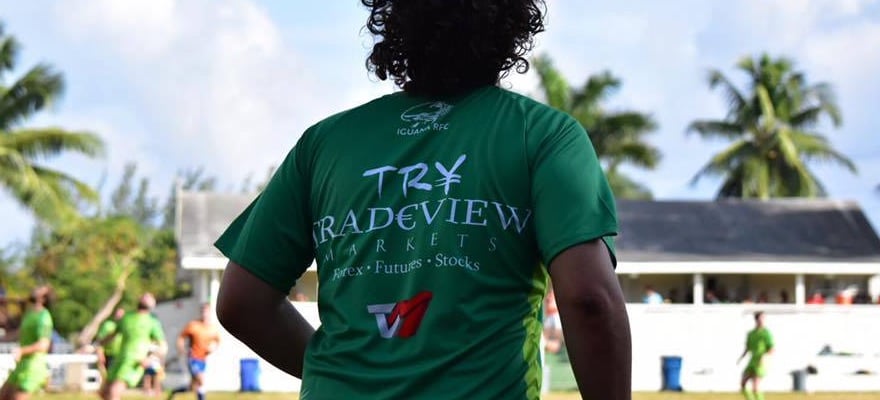
The FX industry has remained one of the more competitive segments of the financial services field with brokers collectively vying for clients globally. With the US largely off limits to most brokers due to stifling regulations, many have looked to the Asia-Pacific (APAC) region for growth.
Finance Magnates spoke with Mr. Turck, who outlined the company’s strategy, his own ascension in the company, as well as the challenges facing Tradeview and other brokers in the industry.
Can you tell us about your new role at Tradeview and your background in the FX industry?
I’ve been at Tradeview Markets for a little over a year now, though I originally started my career at FXDD back in 2007. I had worked there throughout their entire growth stage and left the group recently in 2014-15.
I gained a tremendous amount of knowledge working on the trading desk at FXDD; having worked alongside some of the highly recognized veterans of the industry.
Regarding Tradeview, I met Tim Furey (CEO) a few years ago while still at FXDD. Tradeview always seemed to have a strong foothold in the retail FX. In 2007, Tim successfully launched Tradeview Markets into what it is today.
At Tradeview, we truly strive to empower our employees, clients and partners. Tradeview prides itself on the dual benefit it grants both employees and clients. Tradeviews’ corporate culture is one of fostering talent and growth, as well as rewarding the hard work and success of our employees.
How has the company grown and changed over the past year?
Over the last year, Tim invested heavily in the company and has helped grow the group – this included bringing in 30 new sales guys in 2016. We are looking to add 20-30 more globally this year. We also have expanded our sales team into the Asian region and we have seen a tremendous amount of success in that area.
We have seen a steady increase in all areas of our firm, including volume, number of clients trading, the amount of people viewing our website and finally deposits.
We also recently added two new trading platforms - I was able to help implement cTrader in March of last year as well as Currenex. So we have two new FX trading platforms, alongside MT4, that are available for our clients to use. This allows our clients more flexibility to choose a platform that better suits their trading needs.
Perhaps most importantly is the level of security and safety we aim to provide for our clients. We recently established a banking relationship with Santander. We also use a Funds Administrator, which serves as an independent third party that protects the interests of our client’s funds.
The combination of offering Santander as a deposit option, which is a Tier 1 bank, and the use of a Funds Administrator provides our clients with a high level of safety that many firms are unable to match. We feel that security and safety of funds is priority number one for us here at Tradeview. We want our clients to feel safe and secure about their money before trading live.
Moving forward, what will your role be in executing the company’s growth strategy?
I am currently helping the company embark on an ambitious growth strategy, expanding on our newly added platforms. Like I mentioned before, we offer MetaTrader, obviously the most popular one, and CTrader and Currenex.
We are constantly trying to improve on our product offering and we are one of a select few brokers who three separate trading platforms. Also, we are always looking to offer top level liquidity to our clients.
We are all well versed on the different liquidity out there and want to offer our traders the best trading conditions possible. We are constantly speaking with our current liquidity providers and any potential new ones to make sure we are a step ahead of our competition.
It is my responsibility to also work with our sales team here and abroad to make sure they have the top level knowledge of all of products and services we offer. I would like Tradeview to be recognized as one of the top firms in terms of customer service.
We have recently improved our live chat functionality and we are constantly working on our website to make it as user friendly as possible. We hold weekly sales meetings with our employees to discuss any client concerns and look for ways to improve Tradeview.
We require all of our employees to provide some input into how we can improve the overall trader’s experience. Since we are in the middle of a huge growth stage, we are constantly finding ways to improve the overall experience our client’s face and as a result we are receiving a tremendous of positive feedback from them.
Are there any challenges to the business that you can foresee, and what will the US market hold for FX brokers or Tradeview?
We would love to come back to the US and start offering our services to US clients. We feel that we have some of the best trading conditions in the industry and we would like to share that with US traders as well.
With newly elected President Trump, it looks like that might be a possibility in the near future. It will be a challenging endeavor for us as we would most likely need to hire more staff rather quickly, but it is something that we would love to see happen one day.
I believe there are only 2 or 3 brokers left in the US and it is rather unfortunate for traders. They do not have as many options to pick form when the pool of brokers is so low. So we are crossing our fingers to hopefully one day come back to the US.
Bloomberg
There are many challenges that Tradeview faces, but they mostly involve the day to day operations of running an FX broker which operates 24 hours a day. Since we are in this growth stage, we are trying to keep up with the high amount of clients signing up and still provide our top level of customer service.
It is quite the challenge but we have a solid group of employees here at Tradeview who have done a superb job over the last year and we are looking to continue on the same path for 2017.
In which region do you feel that you can pick up the most business?
We have a huge footprint in South America. We have an administration and technology office in Bogota, Colombia with about 30 employees. We also have satellite office in Peru and Chile. So we are constantly looking to expand in South America and recently added 3 new LATAM bank accounts for our clients to use.
A big focus for us in 2017 is going to be Japan, China and Southeast Asia. In the second quarter of last year we added new employees that concentrate on those areas. We found that cTrader has a huge presence in Asia and we have seen the amount of traders on our cTrader platform double over the last 6 months alone.
It’s a huge benefit for Tradeview to have cTrader as an additional profit center to MT4 and many brokers have been inquiring about how to White Label the cTrader platform from us.
Are there any barriers to entry in China and other regions that you are looking to expand into?
The Chinese government makes it extremely difficult for IB’s and traders to use brokers outside of the country. There are many eager traders though in China that are looking to trade with a Western based FX firm and interested in better options then locally based firms.
However, we are seeing steadfast growth here and success, though this is certainly one of the more difficult regions to enter. We offer several different deposit methods for our Asian clientele including China Unionpay, OK Pay, Neteller and eco Payz, to name a few. So we are just trying to make it as easy and safe as possible for these clients to transfer their funds.
We are also looking at Brazil, which is another difficult area and are contemplating opening up another bank account in that region. We recently opened up three Peruvian and Mexican bank accounts, including Scotiabank, Banorte, and Cibanco. Its helpful for our Latin American (LATAM) client base to send money to accounts in Mexico and Peru instead of the bank accounts outside of the country.
The FX industry has remained one of the more competitive segments of the financial services field with brokers collectively vying for clients globally. With the US largely off limits to most brokers due to stifling regulations, many have looked to the Asia-Pacific (APAC) region for growth.
Finance Magnates spoke with Mr. Turck, who outlined the company’s strategy, his own ascension in the company, as well as the challenges facing Tradeview and other brokers in the industry.
Can you tell us about your new role at Tradeview and your background in the FX industry?
I’ve been at Tradeview Markets for a little over a year now, though I originally started my career at FXDD back in 2007. I had worked there throughout their entire growth stage and left the group recently in 2014-15.
I gained a tremendous amount of knowledge working on the trading desk at FXDD; having worked alongside some of the highly recognized veterans of the industry.
Regarding Tradeview, I met Tim Furey (CEO) a few years ago while still at FXDD. Tradeview always seemed to have a strong foothold in the retail FX. In 2007, Tim successfully launched Tradeview Markets into what it is today.
At Tradeview, we truly strive to empower our employees, clients and partners. Tradeview prides itself on the dual benefit it grants both employees and clients. Tradeviews’ corporate culture is one of fostering talent and growth, as well as rewarding the hard work and success of our employees.
How has the company grown and changed over the past year?
Over the last year, Tim invested heavily in the company and has helped grow the group – this included bringing in 30 new sales guys in 2016. We are looking to add 20-30 more globally this year. We also have expanded our sales team into the Asian region and we have seen a tremendous amount of success in that area.
We have seen a steady increase in all areas of our firm, including volume, number of clients trading, the amount of people viewing our website and finally deposits.
We also recently added two new trading platforms - I was able to help implement cTrader in March of last year as well as Currenex. So we have two new FX trading platforms, alongside MT4, that are available for our clients to use. This allows our clients more flexibility to choose a platform that better suits their trading needs.
Perhaps most importantly is the level of security and safety we aim to provide for our clients. We recently established a banking relationship with Santander. We also use a Funds Administrator, which serves as an independent third party that protects the interests of our client’s funds.
The combination of offering Santander as a deposit option, which is a Tier 1 bank, and the use of a Funds Administrator provides our clients with a high level of safety that many firms are unable to match. We feel that security and safety of funds is priority number one for us here at Tradeview. We want our clients to feel safe and secure about their money before trading live.
Moving forward, what will your role be in executing the company’s growth strategy?
I am currently helping the company embark on an ambitious growth strategy, expanding on our newly added platforms. Like I mentioned before, we offer MetaTrader, obviously the most popular one, and CTrader and Currenex.
We are constantly trying to improve on our product offering and we are one of a select few brokers who three separate trading platforms. Also, we are always looking to offer top level liquidity to our clients.
We are all well versed on the different liquidity out there and want to offer our traders the best trading conditions possible. We are constantly speaking with our current liquidity providers and any potential new ones to make sure we are a step ahead of our competition.
It is my responsibility to also work with our sales team here and abroad to make sure they have the top level knowledge of all of products and services we offer. I would like Tradeview to be recognized as one of the top firms in terms of customer service.
We have recently improved our live chat functionality and we are constantly working on our website to make it as user friendly as possible. We hold weekly sales meetings with our employees to discuss any client concerns and look for ways to improve Tradeview.
We require all of our employees to provide some input into how we can improve the overall trader’s experience. Since we are in the middle of a huge growth stage, we are constantly finding ways to improve the overall experience our client’s face and as a result we are receiving a tremendous of positive feedback from them.
Are there any challenges to the business that you can foresee, and what will the US market hold for FX brokers or Tradeview?
We would love to come back to the US and start offering our services to US clients. We feel that we have some of the best trading conditions in the industry and we would like to share that with US traders as well.
With newly elected President Trump, it looks like that might be a possibility in the near future. It will be a challenging endeavor for us as we would most likely need to hire more staff rather quickly, but it is something that we would love to see happen one day.
I believe there are only 2 or 3 brokers left in the US and it is rather unfortunate for traders. They do not have as many options to pick form when the pool of brokers is so low. So we are crossing our fingers to hopefully one day come back to the US.
Bloomberg
There are many challenges that Tradeview faces, but they mostly involve the day to day operations of running an FX broker which operates 24 hours a day. Since we are in this growth stage, we are trying to keep up with the high amount of clients signing up and still provide our top level of customer service.
It is quite the challenge but we have a solid group of employees here at Tradeview who have done a superb job over the last year and we are looking to continue on the same path for 2017.
In which region do you feel that you can pick up the most business?
We have a huge footprint in South America. We have an administration and technology office in Bogota, Colombia with about 30 employees. We also have satellite office in Peru and Chile. So we are constantly looking to expand in South America and recently added 3 new LATAM bank accounts for our clients to use.
A big focus for us in 2017 is going to be Japan, China and Southeast Asia. In the second quarter of last year we added new employees that concentrate on those areas. We found that cTrader has a huge presence in Asia and we have seen the amount of traders on our cTrader platform double over the last 6 months alone.
It’s a huge benefit for Tradeview to have cTrader as an additional profit center to MT4 and many brokers have been inquiring about how to White Label the cTrader platform from us.
Are there any barriers to entry in China and other regions that you are looking to expand into?
The Chinese government makes it extremely difficult for IB’s and traders to use brokers outside of the country. There are many eager traders though in China that are looking to trade with a Western based FX firm and interested in better options then locally based firms.
However, we are seeing steadfast growth here and success, though this is certainly one of the more difficult regions to enter. We offer several different deposit methods for our Asian clientele including China Unionpay, OK Pay, Neteller and eco Payz, to name a few. So we are just trying to make it as easy and safe as possible for these clients to transfer their funds.
We are also looking at Brazil, which is another difficult area and are contemplating opening up another bank account in that region. We recently opened up three Peruvian and Mexican bank accounts, including Scotiabank, Banorte, and Cibanco. Its helpful for our Latin American (LATAM) client base to send money to accounts in Mexico and Peru instead of the bank accounts outside of the country.
Former Finalto Trading CEO Andrew Biggs Joins IG to Lead Trading Operations
Featured Videos
FP Markets Winner Spotlight 🏆 | Global Broker of the Year 2025 #Trading #Broker #Innovation #Shorts
FP Markets Winner Spotlight 🏆 | Global Broker of the Year 2025 #Trading #Broker #Innovation #Shorts
FP Markets Winner Spotlight 🏆 | Global Broker of the Year 2025 #Trading #Broker #Innovation #Shorts
FP Markets Winner Spotlight 🏆 | Global Broker of the Year 2025 #Trading #Broker #Innovation #Shorts
FP Markets takes the spotlight as Global Broker of the Year 2025 at the Finance Magnates Awards.
Martin Stoilov, Head of Client Experience, shares that trust, innovation, and people played a key role in the company’s success, supported by a strong foundation of integrity and client-centricity.
Following this milestone, FP Markets continues to focus on growth, technology investment, and its core values of transparency and excellence.
👉 Be part of FM Awards 2026: https://awards.financemagnates.com/#nominate
FP Markets takes the spotlight as Global Broker of the Year 2025 at the Finance Magnates Awards.
Martin Stoilov, Head of Client Experience, shares that trust, innovation, and people played a key role in the company’s success, supported by a strong foundation of integrity and client-centricity.
Following this milestone, FP Markets continues to focus on growth, technology investment, and its core values of transparency and excellence.
👉 Be part of FM Awards 2026: https://awards.financemagnates.com/#nominate
FP Markets takes the spotlight as Global Broker of the Year 2025 at the Finance Magnates Awards.
Martin Stoilov, Head of Client Experience, shares that trust, innovation, and people played a key role in the company’s success, supported by a strong foundation of integrity and client-centricity.
Following this milestone, FP Markets continues to focus on growth, technology investment, and its core values of transparency and excellence.
👉 Be part of FM Awards 2026: https://awards.financemagnates.com/#nominate
FP Markets takes the spotlight as Global Broker of the Year 2025 at the Finance Magnates Awards.
Martin Stoilov, Head of Client Experience, shares that trust, innovation, and people played a key role in the company’s success, supported by a strong foundation of integrity and client-centricity.
Following this milestone, FP Markets continues to focus on growth, technology investment, and its core values of transparency and excellence.
👉 Be part of FM Awards 2026: https://awards.financemagnates.com/#nominate
In this video, we review @HolaPrimeMarketsOfficial, a multi-asset forex and CFDs broker offering different account types, trading platforms, and flexible trading conditions.
We cover the broker’s overall offering, including account options, trading environment, platforms like MT4 and MT5, and additional services such as managed accounts and fast withdrawals.
Watch the full video to see if Hola Prime Markets fits your trading needs.
📣 Stay up to date with the latest in finance and trading. Follow Finance Magnates for industry news, insights, and global event coverage.
Connect with us:
🔗 LinkedIn: /financemagnates
👍 Facebook: /financemagnates
📸 Instagram: https://www.instagram.com/financemagnates
🐦 X: https://x.com/financemagnates
🎥 TikTok: https://www.tiktok.com/tag/financemagnates
▶️ YouTube: /@financemagnates_official
#HolaPrime #ForexBroker #CFDTrading #FinanceMagnates #Trading #Forex #BrokerReview
In this video, we review @HolaPrimeMarketsOfficial, a multi-asset forex and CFDs broker offering different account types, trading platforms, and flexible trading conditions.
We cover the broker’s overall offering, including account options, trading environment, platforms like MT4 and MT5, and additional services such as managed accounts and fast withdrawals.
Watch the full video to see if Hola Prime Markets fits your trading needs.
📣 Stay up to date with the latest in finance and trading. Follow Finance Magnates for industry news, insights, and global event coverage.
Connect with us:
🔗 LinkedIn: /financemagnates
👍 Facebook: /financemagnates
📸 Instagram: https://www.instagram.com/financemagnates
🐦 X: https://x.com/financemagnates
🎥 TikTok: https://www.tiktok.com/tag/financemagnates
▶️ YouTube: /@financemagnates_official
#HolaPrime #ForexBroker #CFDTrading #FinanceMagnates #Trading #Forex #BrokerReview
In this video, we review @HolaPrimeMarketsOfficial, a multi-asset forex and CFDs broker offering different account types, trading platforms, and flexible trading conditions.
We cover the broker’s overall offering, including account options, trading environment, platforms like MT4 and MT5, and additional services such as managed accounts and fast withdrawals.
Watch the full video to see if Hola Prime Markets fits your trading needs.
📣 Stay up to date with the latest in finance and trading. Follow Finance Magnates for industry news, insights, and global event coverage.
Connect with us:
🔗 LinkedIn: /financemagnates
👍 Facebook: /financemagnates
📸 Instagram: https://www.instagram.com/financemagnates
🐦 X: https://x.com/financemagnates
🎥 TikTok: https://www.tiktok.com/tag/financemagnates
▶️ YouTube: /@financemagnates_official
#HolaPrime #ForexBroker #CFDTrading #FinanceMagnates #Trading #Forex #BrokerReview
In this video, we review @HolaPrimeMarketsOfficial, a multi-asset forex and CFDs broker offering different account types, trading platforms, and flexible trading conditions.
We cover the broker’s overall offering, including account options, trading environment, platforms like MT4 and MT5, and additional services such as managed accounts and fast withdrawals.
Watch the full video to see if Hola Prime Markets fits your trading needs.
📣 Stay up to date with the latest in finance and trading. Follow Finance Magnates for industry news, insights, and global event coverage.
Connect with us:
🔗 LinkedIn: /financemagnates
👍 Facebook: /financemagnates
📸 Instagram: https://www.instagram.com/financemagnates
🐦 X: https://x.com/financemagnates
🎥 TikTok: https://www.tiktok.com/tag/financemagnates
▶️ YouTube: /@financemagnates_official
#HolaPrime #ForexBroker #CFDTrading #FinanceMagnates #Trading #Forex #BrokerReview
In this video, we review @HolaPrimeMarketsOfficial, a multi-asset forex and CFDs broker offering different account types, trading platforms, and flexible trading conditions.
We cover the broker’s overall offering, including account options, trading environment, platforms like MT4 and MT5, and additional services such as managed accounts and fast withdrawals.
Watch the full video to see if Hola Prime Markets fits your trading needs.
📣 Stay up to date with the latest in finance and trading. Follow Finance Magnates for industry news, insights, and global event coverage.
Connect with us:
🔗 LinkedIn: /financemagnates
👍 Facebook: /financemagnates
📸 Instagram: https://www.instagram.com/financemagnates
🐦 X: https://x.com/financemagnates
🎥 TikTok: https://www.tiktok.com/tag/financemagnates
▶️ YouTube: /@financemagnates_official
#HolaPrime #ForexBroker #CFDTrading #FinanceMagnates #Trading #Forex #BrokerReview
In this video, we review @HolaPrimeMarketsOfficial, a multi-asset forex and CFDs broker offering different account types, trading platforms, and flexible trading conditions.
We cover the broker’s overall offering, including account options, trading environment, platforms like MT4 and MT5, and additional services such as managed accounts and fast withdrawals.
Watch the full video to see if Hola Prime Markets fits your trading needs.
📣 Stay up to date with the latest in finance and trading. Follow Finance Magnates for industry news, insights, and global event coverage.
Connect with us:
🔗 LinkedIn: /financemagnates
👍 Facebook: /financemagnates
📸 Instagram: https://www.instagram.com/financemagnates
🐦 X: https://x.com/financemagnates
🎥 TikTok: https://www.tiktok.com/tag/financemagnates
▶️ YouTube: /@financemagnates_official
#HolaPrime #ForexBroker #CFDTrading #FinanceMagnates #Trading #Forex #BrokerReview
Hola Prime Review: What You Need to Know | Full Breakdown by Finance Magnates
Hola Prime Review: What You Need to Know | Full Breakdown by Finance Magnates
Hola Prime Review: What You Need to Know | Full Breakdown by Finance Magnates
Hola Prime Review: What You Need to Know | Full Breakdown by Finance Magnates
Hola Prime Review: What You Need to Know | Full Breakdown by Finance Magnates
Hola Prime Review: What You Need to Know | Full Breakdown by Finance Magnates
In this video, we review @HolaPrime_Global, a proprietary trading firm offering evaluation programs and performance-based payouts in simulated market environments.
We cover how the challenge model works, including account types, profit splits (up to 95%), trading rules, and what it takes to reach a funded account. You’ll also learn about available platforms like MT4, MT5, cTrader, and more, along with insights into payouts, support, and trading conditions.
Watch the full video to see if Hola Prime fits your trading style.
📣 Stay up to date with the latest in finance and trading. Follow Finance Magnates for industry news, insights, and global event coverage.
Connect with us:
🔗 LinkedIn: /financemagnates
👍 Facebook: /financemagnates
📸 Instagram: https://www.instagram.com/financemagnates
🐦 X: https://x.com/financemagnates
🎥 TikTok: https://www.tiktok.com/tag/financemagnates
▶️ YouTube: /@financemagnates_official
#HolaPrime #PropFirm #Trading #FinanceMagnates #Forex #FuturesTrading #TradingReview #PropFirmReview
In this video, we review @HolaPrime_Global, a proprietary trading firm offering evaluation programs and performance-based payouts in simulated market environments.
We cover how the challenge model works, including account types, profit splits (up to 95%), trading rules, and what it takes to reach a funded account. You’ll also learn about available platforms like MT4, MT5, cTrader, and more, along with insights into payouts, support, and trading conditions.
Watch the full video to see if Hola Prime fits your trading style.
📣 Stay up to date with the latest in finance and trading. Follow Finance Magnates for industry news, insights, and global event coverage.
Connect with us:
🔗 LinkedIn: /financemagnates
👍 Facebook: /financemagnates
📸 Instagram: https://www.instagram.com/financemagnates
🐦 X: https://x.com/financemagnates
🎥 TikTok: https://www.tiktok.com/tag/financemagnates
▶️ YouTube: /@financemagnates_official
#HolaPrime #PropFirm #Trading #FinanceMagnates #Forex #FuturesTrading #TradingReview #PropFirmReview
In this video, we review @HolaPrime_Global, a proprietary trading firm offering evaluation programs and performance-based payouts in simulated market environments.
We cover how the challenge model works, including account types, profit splits (up to 95%), trading rules, and what it takes to reach a funded account. You’ll also learn about available platforms like MT4, MT5, cTrader, and more, along with insights into payouts, support, and trading conditions.
Watch the full video to see if Hola Prime fits your trading style.
📣 Stay up to date with the latest in finance and trading. Follow Finance Magnates for industry news, insights, and global event coverage.
Connect with us:
🔗 LinkedIn: /financemagnates
👍 Facebook: /financemagnates
📸 Instagram: https://www.instagram.com/financemagnates
🐦 X: https://x.com/financemagnates
🎥 TikTok: https://www.tiktok.com/tag/financemagnates
▶️ YouTube: /@financemagnates_official
#HolaPrime #PropFirm #Trading #FinanceMagnates #Forex #FuturesTrading #TradingReview #PropFirmReview
In this video, we review @HolaPrime_Global, a proprietary trading firm offering evaluation programs and performance-based payouts in simulated market environments.
We cover how the challenge model works, including account types, profit splits (up to 95%), trading rules, and what it takes to reach a funded account. You’ll also learn about available platforms like MT4, MT5, cTrader, and more, along with insights into payouts, support, and trading conditions.
Watch the full video to see if Hola Prime fits your trading style.
📣 Stay up to date with the latest in finance and trading. Follow Finance Magnates for industry news, insights, and global event coverage.
Connect with us:
🔗 LinkedIn: /financemagnates
👍 Facebook: /financemagnates
📸 Instagram: https://www.instagram.com/financemagnates
🐦 X: https://x.com/financemagnates
🎥 TikTok: https://www.tiktok.com/tag/financemagnates
▶️ YouTube: /@financemagnates_official
#HolaPrime #PropFirm #Trading #FinanceMagnates #Forex #FuturesTrading #TradingReview #PropFirmReview
In this video, we review @HolaPrime_Global, a proprietary trading firm offering evaluation programs and performance-based payouts in simulated market environments.
We cover how the challenge model works, including account types, profit splits (up to 95%), trading rules, and what it takes to reach a funded account. You’ll also learn about available platforms like MT4, MT5, cTrader, and more, along with insights into payouts, support, and trading conditions.
Watch the full video to see if Hola Prime fits your trading style.
📣 Stay up to date with the latest in finance and trading. Follow Finance Magnates for industry news, insights, and global event coverage.
Connect with us:
🔗 LinkedIn: /financemagnates
👍 Facebook: /financemagnates
📸 Instagram: https://www.instagram.com/financemagnates
🐦 X: https://x.com/financemagnates
🎥 TikTok: https://www.tiktok.com/tag/financemagnates
▶️ YouTube: /@financemagnates_official
#HolaPrime #PropFirm #Trading #FinanceMagnates #Forex #FuturesTrading #TradingReview #PropFirmReview
In this video, we review @HolaPrime_Global, a proprietary trading firm offering evaluation programs and performance-based payouts in simulated market environments.
We cover how the challenge model works, including account types, profit splits (up to 95%), trading rules, and what it takes to reach a funded account. You’ll also learn about available platforms like MT4, MT5, cTrader, and more, along with insights into payouts, support, and trading conditions.
Watch the full video to see if Hola Prime fits your trading style.
📣 Stay up to date with the latest in finance and trading. Follow Finance Magnates for industry news, insights, and global event coverage.
Connect with us:
🔗 LinkedIn: /financemagnates
👍 Facebook: /financemagnates
📸 Instagram: https://www.instagram.com/financemagnates
🐦 X: https://x.com/financemagnates
🎥 TikTok: https://www.tiktok.com/tag/financemagnates
▶️ YouTube: /@financemagnates_official
#HolaPrime #PropFirm #Trading #FinanceMagnates #Forex #FuturesTrading #TradingReview #PropFirmReview
Axi Winner Spotlight 🏆 | Global Most Innovative Broker 2025 #Innovation #Trading #Fintech #Broker
Axi Winner Spotlight 🏆 | Global Most Innovative Broker 2025 #Innovation #Trading #Fintech #Broker
Axi Winner Spotlight 🏆 | Global Most Innovative Broker 2025 #Innovation #Trading #Fintech #Broker
Axi Winner Spotlight 🏆 | Global Most Innovative Broker 2025 #Innovation #Trading #Fintech #Broker
Axi Winner Spotlight 🏆 | Global Most Innovative Broker 2025 #Innovation #Trading #Fintech #Broker
Axi Winner Spotlight 🏆 | Global Most Innovative Broker 2025 #Innovation #Trading #Fintech #Broker
Axi takes the spotlight at the Finance Magnates Awards, winning Global Most Innovative Broker 2025.
Olivia Xenofontos and Ivanna Openko share how the team will feel: proud, motivated, and ready to keep delivering.
They also describe the night as well-organized, focused, and enjoyable for all.
👉 Be part of FM Awards 2026.
Axi takes the spotlight at the Finance Magnates Awards, winning Global Most Innovative Broker 2025.
Olivia Xenofontos and Ivanna Openko share how the team will feel: proud, motivated, and ready to keep delivering.
They also describe the night as well-organized, focused, and enjoyable for all.
👉 Be part of FM Awards 2026.
Axi takes the spotlight at the Finance Magnates Awards, winning Global Most Innovative Broker 2025.
Olivia Xenofontos and Ivanna Openko share how the team will feel: proud, motivated, and ready to keep delivering.
They also describe the night as well-organized, focused, and enjoyable for all.
👉 Be part of FM Awards 2026.
Axi takes the spotlight at the Finance Magnates Awards, winning Global Most Innovative Broker 2025.
Olivia Xenofontos and Ivanna Openko share how the team will feel: proud, motivated, and ready to keep delivering.
They also describe the night as well-organized, focused, and enjoyable for all.
👉 Be part of FM Awards 2026.
Axi takes the spotlight at the Finance Magnates Awards, winning Global Most Innovative Broker 2025.
Olivia Xenofontos and Ivanna Openko share how the team will feel: proud, motivated, and ready to keep delivering.
They also describe the night as well-organized, focused, and enjoyable for all.
👉 Be part of FM Awards 2026.
Axi takes the spotlight at the Finance Magnates Awards, winning Global Most Innovative Broker 2025.
Olivia Xenofontos and Ivanna Openko share how the team will feel: proud, motivated, and ready to keep delivering.
They also describe the night as well-organized, focused, and enjoyable for all.
👉 Be part of FM Awards 2026.
Recognition that matters.
Built on transparency.
Driven by the industry.
The Finance Magnates Awards 2026.
Nominations are now open.
🔗 https://awards.financemagnates.com/?utm_source=SM&utm_medium=social&utm_campaign=recognition-matters
Recognition that matters.
Built on transparency.
Driven by the industry.
The Finance Magnates Awards 2026.
Nominations are now open.
🔗 https://awards.financemagnates.com/?utm_source=SM&utm_medium=social&utm_campaign=recognition-matters
Recognition that matters.
Built on transparency.
Driven by the industry.
The Finance Magnates Awards 2026.
Nominations are now open.
🔗 https://awards.financemagnates.com/?utm_source=SM&utm_medium=social&utm_campaign=recognition-matters
Recognition that matters.
Built on transparency.
Driven by the industry.
The Finance Magnates Awards 2026.
Nominations are now open.
🔗 https://awards.financemagnates.com/?utm_source=SM&utm_medium=social&utm_campaign=recognition-matters
Recognition that matters.
Built on transparency.
Driven by the industry.
The Finance Magnates Awards 2026.
Nominations are now open.
🔗 https://awards.financemagnates.com/?utm_source=SM&utm_medium=social&utm_campaign=recognition-matters
Recognition that matters.
Built on transparency.
Driven by the industry.
The Finance Magnates Awards 2026.
Nominations are now open.
🔗 https://awards.financemagnates.com/?utm_source=SM&utm_medium=social&utm_campaign=recognition-matters