Coinbase Head of Prediction Markets: It's Becoming a Way to “Invest in Information”

Monday, 11/05/2026 | 10:07 GMT by Tanya Chepkova
  • Toni Gemayel told Finance magnates that prediction markets are becoming part of a broader “Everything Exchange” model.
  • He revealed that the exchange plans to expand beyond Kalshi and support contracts from additional prediction market platforms in the coming months.
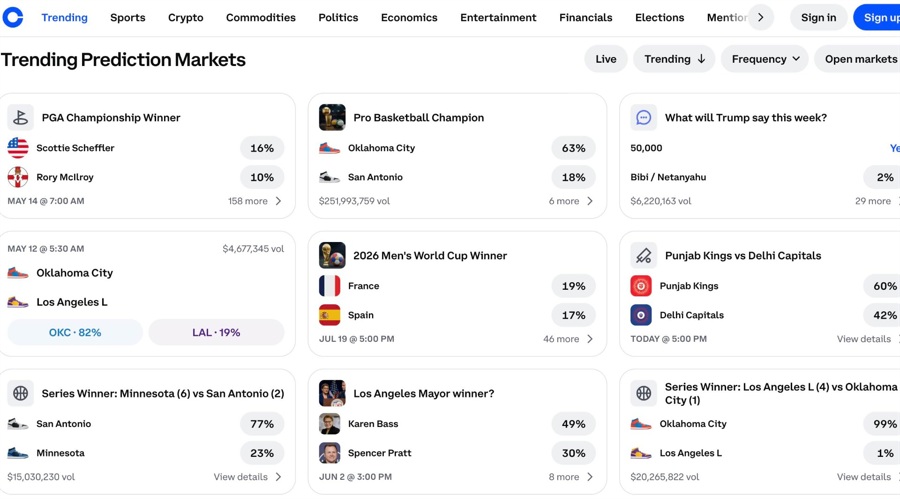
Interface of Coinbase's prediction market platform (Source: Coinbase)

Prediction markets are increasingly being integrated into larger trading ecosystems, but according to Coinbase, most users are not approaching them as a traditional asset class at all.

Singapore Summit: Meet the largest APAC brokers you know (and those you still don't!)

In this interview, Toni Gemayel, Head of Prediction Markets at Coinbase, discusses why the company entered the segment, how prediction markets fit into Coinbase’s broader “Everything Exchange” strategy, why the platform partnered with Kalshi, and why many users engage with these products more like media or entertainment than trading.

Avatar of Toni Gemayel, Head of Prediction Markets

Why Coinbase Entered Prediction Markets

Coinbase has been expanding beyond crypto into a broader multi-asset platform built around an “Everything Exchange” approach, and prediction markets appear to fit naturally into that strategy.

“People want to invest their capital across all asset types, and lately that includes information,” Gemayel explained. “Prediction markets drove tens of billions of dollars in volume in 2025 alone, and they’ve become powerful truth signals, often more reliable than polls or expert opinion.”

Coinbase launched its prediction markets product in partnership with CFTC-regulated platform Kalshi. According to Gemayel, starting with a federally regulated partner provided a strong foundation in terms of trust and compliance, while also allowing users to access a broad range of event contracts from day one.

At the same time, Coinbase is investing in building internal expertise around prediction markets. “We plan to expand beyond Kalshi to support contracts from additional platforms in the coming months,” he said.

Prediction Markets Inside the “Everything Exchange”

Once prediction markets are integrated into a broader ecosystem, they stop functioning as purely standalone products and begin overlapping with other trading instruments.

According to Gemayel, this crossover is intentional. Users can manage prediction market positions alongside crypto, equities, and cash balances within a single interface.

That changes the experience compared to using a standalone prediction markets platform and encourages what Gemayel describes as “portfolio-level thinking,” where users hedge, diversify, and express views across multiple asset classes in one place.

At the same time, Coinbase is seeing a very different pattern of user engagement around prediction markets compared to traditional trading products.

Brian Armstrong, CEO, Coinbase

“As our CEO Brian Armstrong has noted, about 1% of users are trading prediction markets the same way they’d trade any other asset class,” Gemayel said. “But for the other 99%, they’re engaging with it almost as an alternative to traditional media or entertainment.”

As Gemayel explains, many users are less interested in trading itself and more interested in understanding what markets collectively think about elections, policy decisions, or major events. That dynamic, he argues, is bringing entirely new audiences onto the platform, including users who may not think of themselves as traders at all.

What Still Prevents Mainstream Adoption

According to Gemayel, prediction markets are well positioned to become a mainstream part of trading platforms, but regulatory fragmentation and user experience remain two of the biggest obstacles.

“Inconsistent enforcement across states and regional jurisdictions has created undue friction, but prediction markets are national exchanges registered with the CFTC, and we continue to fight for our customers’ rights to access them regardless of where they live in America,” he said.

Gemayel also pointed to user experience as a major obstacle, arguing that prediction markets still require simpler and more intuitive onboarding for mainstream users.

Prediction markets are increasingly being integrated into larger trading ecosystems, but according to Coinbase, most users are not approaching them as a traditional asset class at all.

Singapore Summit: Meet the largest APAC brokers you know (and those you still don't!)

In this interview, Toni Gemayel, Head of Prediction Markets at Coinbase, discusses why the company entered the segment, how prediction markets fit into Coinbase’s broader “Everything Exchange” strategy, why the platform partnered with Kalshi, and why many users engage with these products more like media or entertainment than trading.

Avatar of Toni Gemayel, Head of Prediction Markets

Why Coinbase Entered Prediction Markets

Coinbase has been expanding beyond crypto into a broader multi-asset platform built around an “Everything Exchange” approach, and prediction markets appear to fit naturally into that strategy.

“People want to invest their capital across all asset types, and lately that includes information,” Gemayel explained. “Prediction markets drove tens of billions of dollars in volume in 2025 alone, and they’ve become powerful truth signals, often more reliable than polls or expert opinion.”

Coinbase launched its prediction markets product in partnership with CFTC-regulated platform Kalshi. According to Gemayel, starting with a federally regulated partner provided a strong foundation in terms of trust and compliance, while also allowing users to access a broad range of event contracts from day one.

At the same time, Coinbase is investing in building internal expertise around prediction markets. “We plan to expand beyond Kalshi to support contracts from additional platforms in the coming months,” he said.

Prediction Markets Inside the “Everything Exchange”

Once prediction markets are integrated into a broader ecosystem, they stop functioning as purely standalone products and begin overlapping with other trading instruments.

According to Gemayel, this crossover is intentional. Users can manage prediction market positions alongside crypto, equities, and cash balances within a single interface.

That changes the experience compared to using a standalone prediction markets platform and encourages what Gemayel describes as “portfolio-level thinking,” where users hedge, diversify, and express views across multiple asset classes in one place.

At the same time, Coinbase is seeing a very different pattern of user engagement around prediction markets compared to traditional trading products.

Brian Armstrong, CEO, Coinbase

“As our CEO Brian Armstrong has noted, about 1% of users are trading prediction markets the same way they’d trade any other asset class,” Gemayel said. “But for the other 99%, they’re engaging with it almost as an alternative to traditional media or entertainment.”

As Gemayel explains, many users are less interested in trading itself and more interested in understanding what markets collectively think about elections, policy decisions, or major events. That dynamic, he argues, is bringing entirely new audiences onto the platform, including users who may not think of themselves as traders at all.

What Still Prevents Mainstream Adoption

According to Gemayel, prediction markets are well positioned to become a mainstream part of trading platforms, but regulatory fragmentation and user experience remain two of the biggest obstacles.

“Inconsistent enforcement across states and regional jurisdictions has created undue friction, but prediction markets are national exchanges registered with the CFTC, and we continue to fight for our customers’ rights to access them regardless of where they live in America,” he said.

Gemayel also pointed to user experience as a major obstacle, arguing that prediction markets still require simpler and more intuitive onboarding for mainstream users.

About the Author: Tanya Chepkova
Tanya Chepkova
  • 200 Articles
About the Author: Tanya Chepkova
Tanya Chepkova is a News Editor at Finance Magnates with more than 16 years of experience in financial journalism, covering forex, crypto, and digital asset markets. Her work spans daily industry reporting and data-driven, long-form explainers focused on market structure, trading models, and regulatory shifts. Before joining Finance Magnates, she led the editorial team of a cryptocurrency-focused media outlet for six years. Her reporting combines analytical depth with clear storytelling, with particular attention to how structural changes in trading, stablecoin infrastructure, and emerging products such as prediction markets reshape the broader financial ecosystem. She covers global developments and provides additional insight into CIS markets. Areas of Coverage: Crypto and digital asset markets Prediction markets Stablecoins and cross-border payments Industry analysis and long-form explainers
  • 200 Articles

More from the Author

Executives

!"#$%&'()*+,-./0123456789:;<=>?@ABCDEFGHIJKLMNOPQRSTUVWXYZ[\]^_`abcdefghijklmnopqrstuvwxyz{|} !"#$%&'()*+,-./0123456789:;<=>?@ABCDEFGHIJKLMNOPQRSTUVWXYZ[\]^_`abcdefghijklmnopqrstuvwxyz{|}