The company reported visibly lower earnings and net loss in Q2 2025 while establishing a $150 million digital asset treasury and mining 336 Bitcoin.
Despite operational challenges, the company's stock surged 72% during the quarter as investors embraced its treasury strategy and AI infrastructure expansion plans.
Phoenix
Group, the first UAE-listed Bitcoin (BTC) mining company (ADX: PHX), posted a
43% decline in quarterly revenue compared to last year and reported a $29.2
million net loss, even as it expanded its digital asset holdings and maintained
profitable operations across its global facilities.
Phoenix Group Reports Q2
Revenue Decline and Nearly $30 Million Net Loss
The company
reported $29.1 million in revenue for the three months ended June 30, down from
$51.2 million in the same period last year. The quarterly net loss of $29.2
million contrasted sharply with a $56.1 million profit in Q2 2024, highlighting
the challenges facing cryptocurrency miners amid volatile digital asset
markets.
Phoenix's
six-month net loss reached $182.8 million, compared to a $122.3 million profit
in the first half of 2024. The losses were primarily driven by unrealized
losses on digital asset holdings totaling $166.1 million during the first six
months of the year.
However,
Phoenix managed to increase its Bitcoin mining output and establish what it
calls the first formal digital asset treasury among companies listed on the Abu
Dhabi Securities Exchange.
Phoenix
mined 336 Bitcoin during the second quarter, including revenue-generating
activities that produced $21.1 million compared to $28.5 million in Q2 2024.
The company's self-mining operations generated 214 Bitcoin during the quarter,
contributing to a cumulative 689 Bitcoin mined in the first half of 2025 (437 BTC self-mined).
Digital Asset Treasury
Takes Shape
The
company's most notable development involved formalizing a digital asset
treasury valued at over $150 million, primarily consisting of Bitcoin and
Solana tokens. Phoenix now holds 517 Bitcoin and more than 610,000 Solana
tokens as part of its long-term reserves, making it the first ADX-listed entity
to adopt such a strategy.
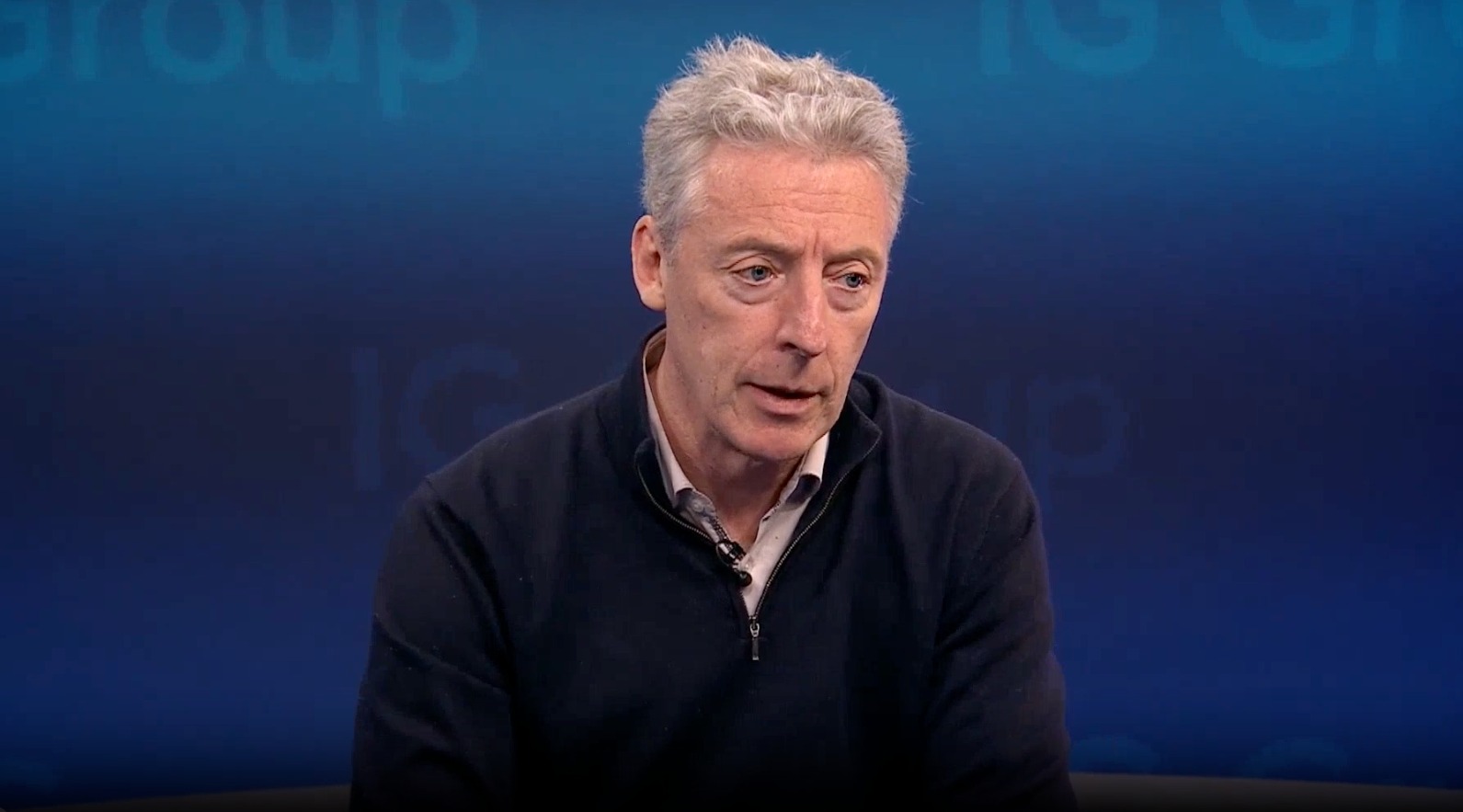
Munaf Ali, the CEO of Phoenix
“Phoenix
has always been more than just a mining company. We're a conviction-led digital
infrastructure group,” said Munaf Ali, CEO and Co-Founder. “Holding
Bitcoin and other strategic digital assets isn't just about exposure. It's
about alignment.”
The
treasury strategy comes as Phoenix maintains relatively low debt levels of
$28.1 million compared to many competitors in the mining sector. This balance
sheet position has enabled the company to pursue expansion opportunities
without the leverage constraints facing other operators.
Quarterly Performance
Mixed
Despite
revenue declines, Phoenix reported improved operational metrics in key areas.
The company achieved a 31% gross margin on self-mining operations and reduced
energy costs by 14% compared to previous periods. However, the quarter included
a $29.2 million loss for the three-month period, largely attributed to digital
asset revaluations and accounting adjustments.
When
compared to the first quarter of 2025, Phoenix showed modest improvement. Q1
revenue totaled $31.3 million, meaning the second quarter represented a 7%
decline quarter-over-quarter. The company's Q1 loss was significantly larger at
$153.6 million, primarily due to digital asset writedowns during that period.
Equipment
sales and hosting services contributed $8.1 million to Q2 revenue, down from
$22.7 million in the prior year quarter. The decline reflects broader industry
challenges as mining equipment demand fluctuated with Bitcoin price movements
throughout 2024 and early 2025.
Key Financial Data Table:
Phoenix Group Q2 2025 Performance
Metric
Q2 2025
Q1 2025
Change
Revenue (USD million)
$29.1
$31.3
-43% vs Q2 2024
Net Loss (USD million)
-$29.2
-$153.6
vs $56.1M profit Q2 2024
Bitcoin Mined (BTC)
336
353
-4.8% QoQ
Self-Mining Revenue
$21.1M
$20.7M
-26% vs Q2 2024
Self-Mining Gross Margin
31%
N/A
Strong operational efficiency
Energy Cost Reduction
14%
N/A
Significant cost optimization
Digital Asset Treasury
$150M+
$300.9M
First ADX-listed treasury
Total Debt
$28.1M
$60.0M
Low leverage vs peers
Stock Performance (Q2)
+72%
N/A
Top 5 ADX performer
EBITDA (Adjusted)
$0.38M
-$1.3M
Operational improvement
Equipment Sales
$8.1M
$6.8M
Market softness
Hosting Revenue
$4.4M
$3.8M
Service diversification
Share Performance and
Market Position
Phoenix's
stock price rose 72% between April and June, making it one of the most actively
traded securities on the Abu Dhabi exchange. The rally extended into July, with
the company reporting a 110% increase since early April.
The recent
gains have coincided with a broader surge in cryptocurrencies and a new
all-time high for Bitcoin above $120,000, highlighting the direct correlation
between Phoenix's valuation, like that of other Bitcoin miners, and momentum in
digital assets.
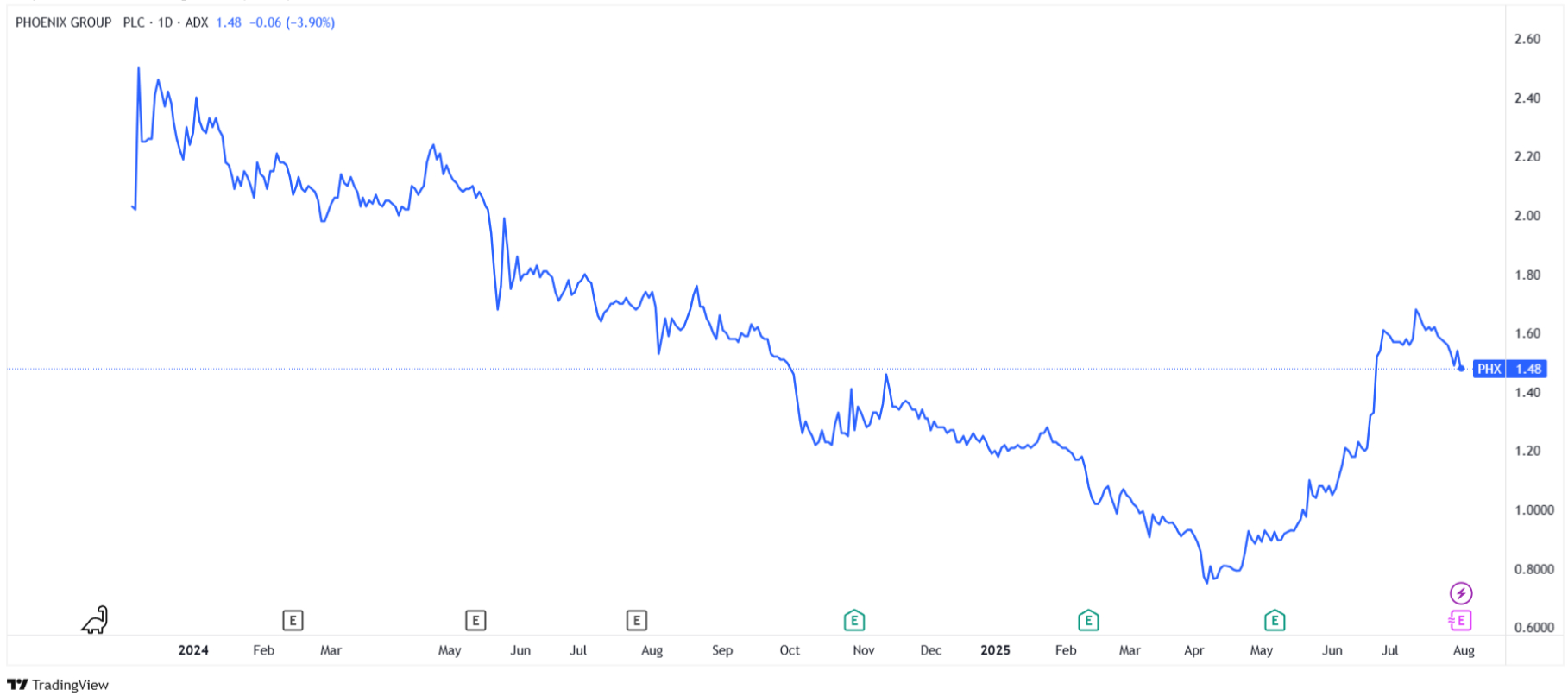
The price
increase helped Phoenix shed its penny-stock status, with shares trading at AED
1.49 on Thursday after a 3.25% drop. Despite the recent appreciation, the stock
remains down more than 40% from its post-IPO peak.
Phoenix Group share price. Source: Tradingview.com
Looking
beyond traditional cryptocurrency mining, Phoenix is conducting feasibility
studies to convert portions of its U.S. infrastructure for artificial
intelligence and high-performance computing applications. The company targets
building 1 gigawatt of hybrid infrastructure by 2027.
“We
see strategic opportunities to consolidate underutilized infrastructure
globally,” Ali explained. “Many smaller operators are stuck with land
and power they can't convert into meaningful compute.”
Phoenix
maintains its position as the largest Bitcoin miner in the Middle East and
North Africa region, though global competition has intensified.
Phoenix
Group, the first UAE-listed Bitcoin (BTC) mining company (ADX: PHX), posted a
43% decline in quarterly revenue compared to last year and reported a $29.2
million net loss, even as it expanded its digital asset holdings and maintained
profitable operations across its global facilities.
Phoenix Group Reports Q2
Revenue Decline and Nearly $30 Million Net Loss
The company
reported $29.1 million in revenue for the three months ended June 30, down from
$51.2 million in the same period last year. The quarterly net loss of $29.2
million contrasted sharply with a $56.1 million profit in Q2 2024, highlighting
the challenges facing cryptocurrency miners amid volatile digital asset
markets.
Phoenix's
six-month net loss reached $182.8 million, compared to a $122.3 million profit
in the first half of 2024. The losses were primarily driven by unrealized
losses on digital asset holdings totaling $166.1 million during the first six
months of the year.
However,
Phoenix managed to increase its Bitcoin mining output and establish what it
calls the first formal digital asset treasury among companies listed on the Abu
Dhabi Securities Exchange.
Phoenix
mined 336 Bitcoin during the second quarter, including revenue-generating
activities that produced $21.1 million compared to $28.5 million in Q2 2024.
The company's self-mining operations generated 214 Bitcoin during the quarter,
contributing to a cumulative 689 Bitcoin mined in the first half of 2025 (437 BTC self-mined).
Digital Asset Treasury
Takes Shape
The
company's most notable development involved formalizing a digital asset
treasury valued at over $150 million, primarily consisting of Bitcoin and
Solana tokens. Phoenix now holds 517 Bitcoin and more than 610,000 Solana
tokens as part of its long-term reserves, making it the first ADX-listed entity
to adopt such a strategy.
Munaf Ali, the CEO of Phoenix
“Phoenix
has always been more than just a mining company. We're a conviction-led digital
infrastructure group,” said Munaf Ali, CEO and Co-Founder. “Holding
Bitcoin and other strategic digital assets isn't just about exposure. It's
about alignment.”
The
treasury strategy comes as Phoenix maintains relatively low debt levels of
$28.1 million compared to many competitors in the mining sector. This balance
sheet position has enabled the company to pursue expansion opportunities
without the leverage constraints facing other operators.
Quarterly Performance
Mixed
Despite
revenue declines, Phoenix reported improved operational metrics in key areas.
The company achieved a 31% gross margin on self-mining operations and reduced
energy costs by 14% compared to previous periods. However, the quarter included
a $29.2 million loss for the three-month period, largely attributed to digital
asset revaluations and accounting adjustments.
When
compared to the first quarter of 2025, Phoenix showed modest improvement. Q1
revenue totaled $31.3 million, meaning the second quarter represented a 7%
decline quarter-over-quarter. The company's Q1 loss was significantly larger at
$153.6 million, primarily due to digital asset writedowns during that period.
Equipment
sales and hosting services contributed $8.1 million to Q2 revenue, down from
$22.7 million in the prior year quarter. The decline reflects broader industry
challenges as mining equipment demand fluctuated with Bitcoin price movements
throughout 2024 and early 2025.
Key Financial Data Table:
Phoenix Group Q2 2025 Performance
Metric
Q2 2025
Q1 2025
Change
Revenue (USD million)
$29.1
$31.3
-43% vs Q2 2024
Net Loss (USD million)
-$29.2
-$153.6
vs $56.1M profit Q2 2024
Bitcoin Mined (BTC)
336
353
-4.8% QoQ
Self-Mining Revenue
$21.1M
$20.7M
-26% vs Q2 2024
Self-Mining Gross Margin
31%
N/A
Strong operational efficiency
Energy Cost Reduction
14%
N/A
Significant cost optimization
Digital Asset Treasury
$150M+
$300.9M
First ADX-listed treasury
Total Debt
$28.1M
$60.0M
Low leverage vs peers
Stock Performance (Q2)
+72%
N/A
Top 5 ADX performer
EBITDA (Adjusted)
$0.38M
-$1.3M
Operational improvement
Equipment Sales
$8.1M
$6.8M
Market softness
Hosting Revenue
$4.4M
$3.8M
Service diversification
Share Performance and
Market Position
Phoenix's
stock price rose 72% between April and June, making it one of the most actively
traded securities on the Abu Dhabi exchange. The rally extended into July, with
the company reporting a 110% increase since early April.
The recent
gains have coincided with a broader surge in cryptocurrencies and a new
all-time high for Bitcoin above $120,000, highlighting the direct correlation
between Phoenix's valuation, like that of other Bitcoin miners, and momentum in
digital assets.
The price
increase helped Phoenix shed its penny-stock status, with shares trading at AED
1.49 on Thursday after a 3.25% drop. Despite the recent appreciation, the stock
remains down more than 40% from its post-IPO peak.
Phoenix Group share price. Source: Tradingview.com
Looking
beyond traditional cryptocurrency mining, Phoenix is conducting feasibility
studies to convert portions of its U.S. infrastructure for artificial
intelligence and high-performance computing applications. The company targets
building 1 gigawatt of hybrid infrastructure by 2027.
“We
see strategic opportunities to consolidate underutilized infrastructure
globally,” Ali explained. “Many smaller operators are stuck with land
and power they can't convert into meaningful compute.”
Phoenix
maintains its position as the largest Bitcoin miner in the Middle East and
North Africa region, though global competition has intensified.
Damian Chmiel is a Senior Analyst & Editor at Finance Magnates with more than 15 years of experience in the CFD and online trading industry. Active as both a trader and journalist since 2010, he focuses on broker coverage, fintech innovation, and regulatory developments across Europe, the Middle East, and Asia.
His work includes interviews with C-level leaders at major brokerages and fintech platforms, as well as co-authoring Finance Magnates’ quarterly industry benchmarking reports. Damian’s reporting is data-driven, market-aware, and grounded in direct industry engagement. His analysis and commentary have also been cited by external media outlets, including Investing.com, Binance, The Asset, Stockhead, and Dispatch.
Education:
MA in Finance and Accounting, Cracow University of Economics
Kraken Steps Up Speed Race with New Equinix Colocation Service for Crypto Traders
FP Markets Winner Spotlight 🏆 | Global Broker of the Year 2025 #Trading #Broker #Innovation #Shorts
FP Markets Winner Spotlight 🏆 | Global Broker of the Year 2025 #Trading #Broker #Innovation #Shorts
FP Markets takes the spotlight as Global Broker of the Year 2025 at the Finance Magnates Awards.
Martin Stoilov, Head of Client Experience, shares that trust, innovation, and people played a key role in the company’s success, supported by a strong foundation of integrity and client-centricity.
Following this milestone, FP Markets continues to focus on growth, technology investment, and its core values of transparency and excellence.
👉 Be part of FM Awards 2026: https://awards.financemagnates.com/#nominate
FP Markets takes the spotlight as Global Broker of the Year 2025 at the Finance Magnates Awards.
Martin Stoilov, Head of Client Experience, shares that trust, innovation, and people played a key role in the company’s success, supported by a strong foundation of integrity and client-centricity.
Following this milestone, FP Markets continues to focus on growth, technology investment, and its core values of transparency and excellence.
👉 Be part of FM Awards 2026: https://awards.financemagnates.com/#nominate
In this video, we review @HolaPrimeMarketsOfficial, a multi-asset forex and CFDs broker offering different account types, trading platforms, and flexible trading conditions.
We cover the broker’s overall offering, including account options, trading environment, platforms like MT4 and MT5, and additional services such as managed accounts and fast withdrawals.
Watch the full video to see if Hola Prime Markets fits your trading needs.
📣 Stay up to date with the latest in finance and trading. Follow Finance Magnates for industry news, insights, and global event coverage.
Connect with us:
🔗 LinkedIn: /financemagnates
👍 Facebook: /financemagnates
📸 Instagram: https://www.instagram.com/financemagnates
🐦 X: https://x.com/financemagnates
🎥 TikTok: https://www.tiktok.com/tag/financemagnates
▶️ YouTube: /@financemagnates_official
#HolaPrime #ForexBroker #CFDTrading #FinanceMagnates #Trading #Forex #BrokerReview
In this video, we review @HolaPrimeMarketsOfficial, a multi-asset forex and CFDs broker offering different account types, trading platforms, and flexible trading conditions.
We cover the broker’s overall offering, including account options, trading environment, platforms like MT4 and MT5, and additional services such as managed accounts and fast withdrawals.
Watch the full video to see if Hola Prime Markets fits your trading needs.
📣 Stay up to date with the latest in finance and trading. Follow Finance Magnates for industry news, insights, and global event coverage.
Connect with us:
🔗 LinkedIn: /financemagnates
👍 Facebook: /financemagnates
📸 Instagram: https://www.instagram.com/financemagnates
🐦 X: https://x.com/financemagnates
🎥 TikTok: https://www.tiktok.com/tag/financemagnates
▶️ YouTube: /@financemagnates_official
#HolaPrime #ForexBroker #CFDTrading #FinanceMagnates #Trading #Forex #BrokerReview
Hola Prime Review: What You Need to Know | Full Breakdown by Finance Magnates
Hola Prime Review: What You Need to Know | Full Breakdown by Finance Magnates
In this video, we review @HolaPrime_Global, a proprietary trading firm offering evaluation programs and performance-based payouts in simulated market environments.
We cover how the challenge model works, including account types, profit splits (up to 95%), trading rules, and what it takes to reach a funded account. You’ll also learn about available platforms like MT4, MT5, cTrader, and more, along with insights into payouts, support, and trading conditions.
Watch the full video to see if Hola Prime fits your trading style.
📣 Stay up to date with the latest in finance and trading. Follow Finance Magnates for industry news, insights, and global event coverage.
Connect with us:
🔗 LinkedIn: /financemagnates
👍 Facebook: /financemagnates
📸 Instagram: https://www.instagram.com/financemagnates
🐦 X: https://x.com/financemagnates
🎥 TikTok: https://www.tiktok.com/tag/financemagnates
▶️ YouTube: /@financemagnates_official
#HolaPrime #PropFirm #Trading #FinanceMagnates #Forex #FuturesTrading #TradingReview #PropFirmReview
In this video, we review @HolaPrime_Global, a proprietary trading firm offering evaluation programs and performance-based payouts in simulated market environments.
We cover how the challenge model works, including account types, profit splits (up to 95%), trading rules, and what it takes to reach a funded account. You’ll also learn about available platforms like MT4, MT5, cTrader, and more, along with insights into payouts, support, and trading conditions.
Watch the full video to see if Hola Prime fits your trading style.
📣 Stay up to date with the latest in finance and trading. Follow Finance Magnates for industry news, insights, and global event coverage.
Connect with us:
🔗 LinkedIn: /financemagnates
👍 Facebook: /financemagnates
📸 Instagram: https://www.instagram.com/financemagnates
🐦 X: https://x.com/financemagnates
🎥 TikTok: https://www.tiktok.com/tag/financemagnates
▶️ YouTube: /@financemagnates_official
#HolaPrime #PropFirm #Trading #FinanceMagnates #Forex #FuturesTrading #TradingReview #PropFirmReview
Axi Winner Spotlight 🏆 | Global Most Innovative Broker 2025 #Innovation #Trading #Fintech #Broker
Axi Winner Spotlight 🏆 | Global Most Innovative Broker 2025 #Innovation #Trading #Fintech #Broker
Axi takes the spotlight at the Finance Magnates Awards, winning Global Most Innovative Broker 2025.
Olivia Xenofontos and Ivanna Openko share how the team will feel: proud, motivated, and ready to keep delivering.
They also describe the night as well-organized, focused, and enjoyable for all.
👉 Be part of FM Awards 2026.
Axi takes the spotlight at the Finance Magnates Awards, winning Global Most Innovative Broker 2025.
Olivia Xenofontos and Ivanna Openko share how the team will feel: proud, motivated, and ready to keep delivering.
They also describe the night as well-organized, focused, and enjoyable for all.
👉 Be part of FM Awards 2026.
Recognition that matters.
Built on transparency.
Driven by the industry.
The Finance Magnates Awards 2026.
Nominations are now open.
🔗 https://awards.financemagnates.com/?utm_source=SM&utm_medium=social&utm_campaign=recognition-matters
Recognition that matters.
Built on transparency.
Driven by the industry.
The Finance Magnates Awards 2026.
Nominations are now open.
🔗 https://awards.financemagnates.com/?utm_source=SM&utm_medium=social&utm_campaign=recognition-matters