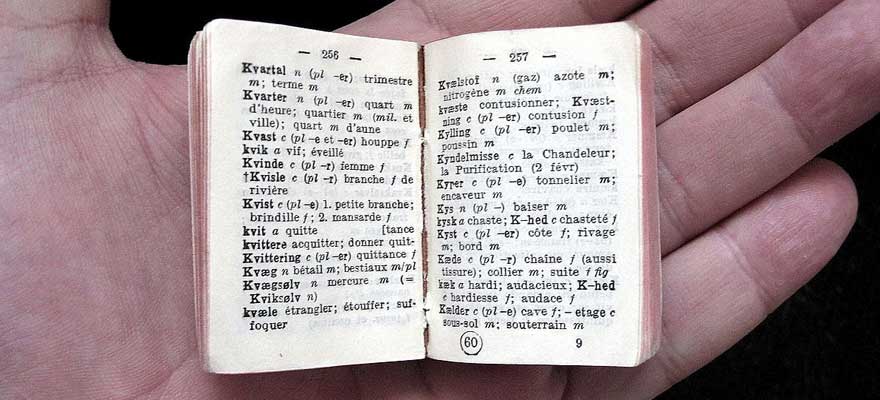
A short dictionary of cryptocurrency jargon, explained in normal human English.
Finance Magnates
Does cryptocurrency confuse you? Don't be ashamed - it confuses me too. Which is why I have prepared an easy guide to a few key phrases, cutting through the technical jargon to make things more understandable to the less-technologically minded.
Address
Just like yourself, a bitcoin needs a roof over its head. Bitcoin addresses are denoted by a string of alphanumeric characters, and just like your home, you need a key to get in.
And let's not mention the poor man who threw away a hard-drive containing 7,500 bitcoins in 2013, back when they were nearly worthless. They're not now.
ATH
Acronym; all time high. How many times have we reported on Bitcoinreaching a newrecordhigh? So many that this is one of the few situations in which an acronym is truly a time-saving necessity.
A blockchain is a public database, open to everyone to read and to alter. It differs from other kinds of networks because it is decentralised: all alterations are broadcast to all servers on the network, which all updated in real time. This means that, in order for a transaction to work, it must be validated by the entire system, and it is thus a matter of public record.
At the same time, parties to transactions are anonymous. The transaction information is stored in blocks, which over time make up a chain. And that is where we get the name from!
Exchanges are trading marketplaces. At a crypto exchange, one can buy and sell cryptocurrency using fiat money and cryptocurrency. The first Bitcoin exchange was called Bitcoin Market, and it began trading in March 2010. Prior to that, Bitcoin users were mainly hobbyists.
The largest exchange in the world currently is Bitfinex. Some other major exchanges are Coinbase, Bittrex, Kraken, cex.io, Bitstamp and Gemini. Bitcoin exchanges have been banned in somecountries.
Fiat
Not the Italian car manufacturer, but the regular money that we all know, love and strive to get our hands on. The word fiat comes from the Latin 'let it be done'. It is defined as a currency which is not tied to any commodity, having no intrinsic value other than that defined by the government that issued it.
Fiat currency has been used since antiquity, but there was a move away from it during the First World War. The Bretton Woods agreement in 1944 fixed the value of the US dollar at 35 to one troy ounce of gold. Richard Nixon finally decoupled the dollar from the gold standard in 1971, as the US could no longer guarantee the sheer volume of dollars which were being used to trade worldwide.
Cryptocurrency was designed to be independent of the traditional banking system - a democratic, consensus-based system free from the corruptions of the establishment and the money that it controls. The Economist argued in an article that perhaps digital money really isn't so different from other financial innovations that have come before. Banks have been looking for ways to "make sure a transaction between two people located far apart is credible to both" since the 18th century, and there have always been those looking to increase and control the supply of money: "There is no evidence that money born on a distributed ledger will be clean of this sin."
FOMO
Ever scrolled through Facebook, depressed because it seems that everyone else is having more fun than you? You're not alone. The pervasiveness of social media has contributed to a phenomenon popularly known as fear of missing out, acronym: FOMO. It was added to the Oxford English Dictionary in 2013.
According to the study "Motivational, emotional, and behavioral correlates of fear of missing out" (Computers in Human Behavior, July 2013), social media is responsible for us being constantly aware of all the activities going on around us, more than any one person could ever hope to participate in due to time constraints. This leads to an anxiety unique to the technological age. The study defines FOMO as "...a pervasive apprehension that others might be having rewarding experiences from which one is absent"
As cryptocurrencies exist with the technological world, this phenomenon now has economic effects too. Bitcoin Magazine attributes Bitcoin's rise in late 2017 to FoMO: "With bitcoin surging over $4,000 once again, then $5,000, $6,000, $7,000, $8,000 and $9,000 on an almost weekly basis, the media piled on for each step, fuelling the momentum even more."
Fork
A fork is a deviation from the chain, which can happen for a number of reasons. Miners may compete to add a hash to a block - the winner's block will be added to the chain, and loser's block will be abandoned. This is one kind of fork. Any discarded block makes a fork.
Hard fork
A hard fork is an upgrade of a blockchain. Once the system is upgraded, nodes must update too in order to be able to add to the new chain - non-upgraded transactions will not be recognised.
As occasionally happens, users may not agree with the upgrade and will continue to operate on the old system. Thus two paths are created. One examples of this is the Ethereum hard fork in July 2016. Some users did not accept the changes, and continued along the old path under the name 'Ethereum Classic'. Through hard forks, Bitcoin has begotten Bitcoin Cash, Bitcoin Diamond, Bitcoin Gold, and more.
A soft fork is an upgrade which is backwards-compatible.
It's weird how many Bitcoin Core supporters don't realize that Segwit is a fork of Bitcoin... ??
The new luddite.The first three letters are capitalised, standing for fear, uncertainty and doubt.
Hodl
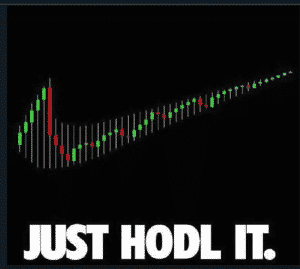
A Bitcoin investor once meant to write 'hold', and in the throes of emotion instead typed: "I AM Hodling". The cryptocurrency community liked the typo and has adopted it as an official term. It can be used as both verb and acronym (hold on for dear life), and it even has its own Twitter hashtag.
Initial coin offering
A wildly popular crowdfunding technique in which tokens are created by a project and sold for fiat or cryptocurrency. The projects are laid out in a document called a whitepaper for potential investors to read. The ICO closes once it reaches its goal or after four weeks - whichever comes first. Finance Magnates has been reporting on the biggest ones, and this year the stream of new projects has been seemingly endless.
Cryptofinancial research firm Smith + Crown reported on the number of ICOs in 2017 alone - 31 projects planned to close in July, 45 in August, 59 in September, and a whopping 169 in October - that’s more than five new ICOs every day for that month.
The amounts of money being raised through ICOs is staggering, often tens of millions of dollars within minutes. Vitalik Buterin, founder of Ethereum, which is the platform of choice for ICO projects, regards the current trend as unsustainable, although at the same time he obviously appreciates the value of them - Ethereum itself was created with an ICO.
The creator of Dogecoin, market cap $200 million + (as of today), said in an interview with Israeli newspaper Calcalist that the ICO industry is a bubble promoted by fraudsters and full of get rich quick schemes. Even those in the market with good intentions, according to Palmer, often lack the wherewithal to make their projects a success.
In October, sixteen blockchain startups created 'Project Transparency', a voluntary initiative to clear the muddy waters of the ICO ocean.
Mining
Mining is the process by which the blockchain is verified and bitcoins are created.
A block in the blockchain is created when a preset amount of information has been processed on the network. The validity of each block must be checked and secured in order that we can know that the system has not been compromised - if it couldn't be trusted, what would be the point?
Blocks are verified mathematically by agents called miners. Once a block is verified, a hash is created. A hash is a sequence of letters and numbers, simpler than the data in the block itself but intrinsically linked to the block. Each block on the chain has a hash stored with it, like the signature of a guarantor.
Each hash is partly a product of past hashes. If someone was to attempt to alter a past block or hash, the validity of the entire chain from that point on would be compromised.
The work of creating these hash signatures is carried out by specialised computer programmes.
Mining is a competitive game, and in order to prevent all 21 million bitcoins being mined too quickly, the protocol deliberately makes mining more difficult and the reward smaller as the chain progresses. In 2009 the reward was 50 bitcoins, in 2014 it was 25, and in 2016 it was cut to 12.5.
Mining rig
The equipment used to mine. While this activity can be carried out on a home computer, this hasn't been a profitable endeavour for a while now. Specialised mining devices called application-specific integrated circuits, or ASICs, were first released in 2013, and as the difficulty level rises/rewards shrink, you are unlikely to make a profit with anything less than the latest model. And even with a late model ASIC, the price of the electricity it requires to be constantly running will eat into your income from mined bitcoins.
They are also noisy, and tend to overheat. In one interesting innovation, a firm invested in a miner which doubles as a heater for your room.
Another option for the home miner is cloud mining, which means that you rent hashrate at a mining company and collect. Mining firms were perhaps an inevitability, as the profitability of crypto mining is so reliant on economy of scale. Enormous mining centres in China have been dominant - one mining company in Bajiaoxi has an electricity bill of $147,000 a month. Worldwide, the amount of electricity used in Bitcoin mining is equal to roughly 10% of the electricity needs of the entire United Kingdom.
Proof of work
Proof of work in simple terms is the computing power demanded by the system to generate a valid hash. It is the process through which hashes are achieved, and it is deliberately set and altered to regulate the 'difficulty' of mining in order to regulate the frequency of block creation.
Adopted by Bitcoin in 2009, it is the basis of most cryptocurrency blockchains.
One drawback of the proof of work system is that it could reach a point where there will be fewer miners than needed to mine the system, as the reward becomes too low. With fewer miners, the system would be susceptible to a 51% attack.
Proof of stake
An alternative to proof of work. Proof of stake means that mining power is defined by the proportion of coins held by the miner. It was developed to prevent monopolisation. A 51% attack in such a system is unlikely, because if someone held 51% of the currency, they would have no incentive to undermine its validity.
Pump and dump
Pump and dump scams are no new thing. The price of a stock is pumped, that is, boosted through false advertising. When it hits a high point it is sold by the scammers, who hold a significant amount of stock and reap a large profit. Pump and dump schemes are illegal under securities laws.
However the crypto world is difficult to police. According to Business Insider: "Cryptocurrency exchanges and markets are unregulated in most parts of the world, and so these activities are not illegal." Telegram groups with names like Pump.im, Crypto4Pumps, We Pump, and AltTheWay draw people in with promises of an investment opportunity, and then sell the coins in a coordinated effort. Those who are in on the scam make a profit.
The SEC recently issued a warning after suspending the trading of a number of companies over concerns with their ICOs. It said: “Fraudsters often try to use the lure of new and emerging technologies to convince potential victims to invest their money in scams. These frauds include ‘pump-and-dump’ and market manipulation schemes involving publicly traded companies that claim to provide exposure to these new technologies.”
Why does it feel like there's a pump-and-dump attempt ongoing with Bitcoin?
An alternative to the blockchain validation protocol, with which all nodes having to be updated with each new block, putting a heavy load on the system and making it slow. Sharding basically means breaking up the blocks, distributing ownership amongst nodes in parts. A lighter system to be sure, but also far more complicated - the details are still being worked out.
Ethereum creator Vitalik Buterin recently unveiled a plan which he claims will solve issues of security and scalability, involving the fragmentation of the blockchain into different kinds of shards - the main Ethereum blockchain, and other, smaller fragments alongside it. His modest proposal (as he called it) will take three to four years to develop.
In the real world, a shill is the accomplice of a huckster. The shill pretends to be a customer, and the team perform an act intended to pull real customers into the scam. In cryptocurrency terms, it refers to those who promote a token or coin to their own nefarious ends. Also known as pumping, social media appears to be full of shilling. The Merkle even has an article on the top 5 ways to shill a currency.
Token
A token is a representation of a good that can be traded. Tokens can represent commodities, loyalty points, shares, and cryptocurrencies. Tokens are created and distributed though initial coin offerings and are bought with money, be it fiat or digital.
Whale
Funds and individuals that hold hundreds of thousands of bitcoins are referred to as whales. The metaphor is not just because of the size, but also because of their ability to significantly affect the price of the coin that they hold.
One example of a whale feeding tactic is the 'rinse and repeat cycle': they drive the price lower by flooding the market with coins, causing a mass-sell panic, at which point they scoop up larger amounts of the now cheaper coin like so much plankton.
Creator Satoshi Nakamoto is Moby Dick. To be found only when whoever he/she/they chooses to be, and allegedly owning 1 million bitcoins.
51% attack
A hypothetical situation in which a mining monopoly disrupts the validity of the blockchain. If one party controls an absolute majority of the computing power necessary to continue the blockchain, it could hypothetically alter the rules of the matrix - denying other miners their hashes, double spending coins, you name it.
This is a concern because the logistical reality of mining means that there will always be a preference for mining pools, tending towards monopoly.
In July 2014, one mining pool (GHash.IO) actually exceeded the 51% threshold. Addressing the concerns, the pool took it upon itself to guarantee that it would limit itself to 39.99% of the Bitcoin hashrate, and proposed a supervisory committee made up of members of the Bitcoin community.
Does cryptocurrency confuse you? Don't be ashamed - it confuses me too. Which is why I have prepared an easy guide to a few key phrases, cutting through the technical jargon to make things more understandable to the less-technologically minded.
Address
Just like yourself, a bitcoin needs a roof over its head. Bitcoin addresses are denoted by a string of alphanumeric characters, and just like your home, you need a key to get in.
And let's not mention the poor man who threw away a hard-drive containing 7,500 bitcoins in 2013, back when they were nearly worthless. They're not now.
ATH
Acronym; all time high. How many times have we reported on Bitcoinreaching a newrecordhigh? So many that this is one of the few situations in which an acronym is truly a time-saving necessity.
A blockchain is a public database, open to everyone to read and to alter. It differs from other kinds of networks because it is decentralised: all alterations are broadcast to all servers on the network, which all updated in real time. This means that, in order for a transaction to work, it must be validated by the entire system, and it is thus a matter of public record.
At the same time, parties to transactions are anonymous. The transaction information is stored in blocks, which over time make up a chain. And that is where we get the name from!
Exchanges are trading marketplaces. At a crypto exchange, one can buy and sell cryptocurrency using fiat money and cryptocurrency. The first Bitcoin exchange was called Bitcoin Market, and it began trading in March 2010. Prior to that, Bitcoin users were mainly hobbyists.
The largest exchange in the world currently is Bitfinex. Some other major exchanges are Coinbase, Bittrex, Kraken, cex.io, Bitstamp and Gemini. Bitcoin exchanges have been banned in somecountries.
Fiat
Not the Italian car manufacturer, but the regular money that we all know, love and strive to get our hands on. The word fiat comes from the Latin 'let it be done'. It is defined as a currency which is not tied to any commodity, having no intrinsic value other than that defined by the government that issued it.
Fiat currency has been used since antiquity, but there was a move away from it during the First World War. The Bretton Woods agreement in 1944 fixed the value of the US dollar at 35 to one troy ounce of gold. Richard Nixon finally decoupled the dollar from the gold standard in 1971, as the US could no longer guarantee the sheer volume of dollars which were being used to trade worldwide.
Cryptocurrency was designed to be independent of the traditional banking system - a democratic, consensus-based system free from the corruptions of the establishment and the money that it controls. The Economist argued in an article that perhaps digital money really isn't so different from other financial innovations that have come before. Banks have been looking for ways to "make sure a transaction between two people located far apart is credible to both" since the 18th century, and there have always been those looking to increase and control the supply of money: "There is no evidence that money born on a distributed ledger will be clean of this sin."
FOMO
Ever scrolled through Facebook, depressed because it seems that everyone else is having more fun than you? You're not alone. The pervasiveness of social media has contributed to a phenomenon popularly known as fear of missing out, acronym: FOMO. It was added to the Oxford English Dictionary in 2013.
According to the study "Motivational, emotional, and behavioral correlates of fear of missing out" (Computers in Human Behavior, July 2013), social media is responsible for us being constantly aware of all the activities going on around us, more than any one person could ever hope to participate in due to time constraints. This leads to an anxiety unique to the technological age. The study defines FOMO as "...a pervasive apprehension that others might be having rewarding experiences from which one is absent"
As cryptocurrencies exist with the technological world, this phenomenon now has economic effects too. Bitcoin Magazine attributes Bitcoin's rise in late 2017 to FoMO: "With bitcoin surging over $4,000 once again, then $5,000, $6,000, $7,000, $8,000 and $9,000 on an almost weekly basis, the media piled on for each step, fuelling the momentum even more."
Fork
A fork is a deviation from the chain, which can happen for a number of reasons. Miners may compete to add a hash to a block - the winner's block will be added to the chain, and loser's block will be abandoned. This is one kind of fork. Any discarded block makes a fork.
Hard fork
A hard fork is an upgrade of a blockchain. Once the system is upgraded, nodes must update too in order to be able to add to the new chain - non-upgraded transactions will not be recognised.
As occasionally happens, users may not agree with the upgrade and will continue to operate on the old system. Thus two paths are created. One examples of this is the Ethereum hard fork in July 2016. Some users did not accept the changes, and continued along the old path under the name 'Ethereum Classic'. Through hard forks, Bitcoin has begotten Bitcoin Cash, Bitcoin Diamond, Bitcoin Gold, and more.
A soft fork is an upgrade which is backwards-compatible.
It's weird how many Bitcoin Core supporters don't realize that Segwit is a fork of Bitcoin... ??
The new luddite.The first three letters are capitalised, standing for fear, uncertainty and doubt.
Hodl
A Bitcoin investor once meant to write 'hold', and in the throes of emotion instead typed: "I AM Hodling". The cryptocurrency community liked the typo and has adopted it as an official term. It can be used as both verb and acronym (hold on for dear life), and it even has its own Twitter hashtag.
Initial coin offering
A wildly popular crowdfunding technique in which tokens are created by a project and sold for fiat or cryptocurrency. The projects are laid out in a document called a whitepaper for potential investors to read. The ICO closes once it reaches its goal or after four weeks - whichever comes first. Finance Magnates has been reporting on the biggest ones, and this year the stream of new projects has been seemingly endless.
Cryptofinancial research firm Smith + Crown reported on the number of ICOs in 2017 alone - 31 projects planned to close in July, 45 in August, 59 in September, and a whopping 169 in October - that’s more than five new ICOs every day for that month.
The amounts of money being raised through ICOs is staggering, often tens of millions of dollars within minutes. Vitalik Buterin, founder of Ethereum, which is the platform of choice for ICO projects, regards the current trend as unsustainable, although at the same time he obviously appreciates the value of them - Ethereum itself was created with an ICO.
The creator of Dogecoin, market cap $200 million + (as of today), said in an interview with Israeli newspaper Calcalist that the ICO industry is a bubble promoted by fraudsters and full of get rich quick schemes. Even those in the market with good intentions, according to Palmer, often lack the wherewithal to make their projects a success.
In October, sixteen blockchain startups created 'Project Transparency', a voluntary initiative to clear the muddy waters of the ICO ocean.
Mining
Mining is the process by which the blockchain is verified and bitcoins are created.
A block in the blockchain is created when a preset amount of information has been processed on the network. The validity of each block must be checked and secured in order that we can know that the system has not been compromised - if it couldn't be trusted, what would be the point?
Blocks are verified mathematically by agents called miners. Once a block is verified, a hash is created. A hash is a sequence of letters and numbers, simpler than the data in the block itself but intrinsically linked to the block. Each block on the chain has a hash stored with it, like the signature of a guarantor.
Each hash is partly a product of past hashes. If someone was to attempt to alter a past block or hash, the validity of the entire chain from that point on would be compromised.
The work of creating these hash signatures is carried out by specialised computer programmes.
Mining is a competitive game, and in order to prevent all 21 million bitcoins being mined too quickly, the protocol deliberately makes mining more difficult and the reward smaller as the chain progresses. In 2009 the reward was 50 bitcoins, in 2014 it was 25, and in 2016 it was cut to 12.5.
Mining rig
The equipment used to mine. While this activity can be carried out on a home computer, this hasn't been a profitable endeavour for a while now. Specialised mining devices called application-specific integrated circuits, or ASICs, were first released in 2013, and as the difficulty level rises/rewards shrink, you are unlikely to make a profit with anything less than the latest model. And even with a late model ASIC, the price of the electricity it requires to be constantly running will eat into your income from mined bitcoins.
They are also noisy, and tend to overheat. In one interesting innovation, a firm invested in a miner which doubles as a heater for your room.
Another option for the home miner is cloud mining, which means that you rent hashrate at a mining company and collect. Mining firms were perhaps an inevitability, as the profitability of crypto mining is so reliant on economy of scale. Enormous mining centres in China have been dominant - one mining company in Bajiaoxi has an electricity bill of $147,000 a month. Worldwide, the amount of electricity used in Bitcoin mining is equal to roughly 10% of the electricity needs of the entire United Kingdom.
Proof of work
Proof of work in simple terms is the computing power demanded by the system to generate a valid hash. It is the process through which hashes are achieved, and it is deliberately set and altered to regulate the 'difficulty' of mining in order to regulate the frequency of block creation.
Adopted by Bitcoin in 2009, it is the basis of most cryptocurrency blockchains.
One drawback of the proof of work system is that it could reach a point where there will be fewer miners than needed to mine the system, as the reward becomes too low. With fewer miners, the system would be susceptible to a 51% attack.
Proof of stake
An alternative to proof of work. Proof of stake means that mining power is defined by the proportion of coins held by the miner. It was developed to prevent monopolisation. A 51% attack in such a system is unlikely, because if someone held 51% of the currency, they would have no incentive to undermine its validity.
Pump and dump
Pump and dump scams are no new thing. The price of a stock is pumped, that is, boosted through false advertising. When it hits a high point it is sold by the scammers, who hold a significant amount of stock and reap a large profit. Pump and dump schemes are illegal under securities laws.
However the crypto world is difficult to police. According to Business Insider: "Cryptocurrency exchanges and markets are unregulated in most parts of the world, and so these activities are not illegal." Telegram groups with names like Pump.im, Crypto4Pumps, We Pump, and AltTheWay draw people in with promises of an investment opportunity, and then sell the coins in a coordinated effort. Those who are in on the scam make a profit.
The SEC recently issued a warning after suspending the trading of a number of companies over concerns with their ICOs. It said: “Fraudsters often try to use the lure of new and emerging technologies to convince potential victims to invest their money in scams. These frauds include ‘pump-and-dump’ and market manipulation schemes involving publicly traded companies that claim to provide exposure to these new technologies.”
Why does it feel like there's a pump-and-dump attempt ongoing with Bitcoin?
An alternative to the blockchain validation protocol, with which all nodes having to be updated with each new block, putting a heavy load on the system and making it slow. Sharding basically means breaking up the blocks, distributing ownership amongst nodes in parts. A lighter system to be sure, but also far more complicated - the details are still being worked out.
Ethereum creator Vitalik Buterin recently unveiled a plan which he claims will solve issues of security and scalability, involving the fragmentation of the blockchain into different kinds of shards - the main Ethereum blockchain, and other, smaller fragments alongside it. His modest proposal (as he called it) will take three to four years to develop.
In the real world, a shill is the accomplice of a huckster. The shill pretends to be a customer, and the team perform an act intended to pull real customers into the scam. In cryptocurrency terms, it refers to those who promote a token or coin to their own nefarious ends. Also known as pumping, social media appears to be full of shilling. The Merkle even has an article on the top 5 ways to shill a currency.
Token
A token is a representation of a good that can be traded. Tokens can represent commodities, loyalty points, shares, and cryptocurrencies. Tokens are created and distributed though initial coin offerings and are bought with money, be it fiat or digital.
Whale
Funds and individuals that hold hundreds of thousands of bitcoins are referred to as whales. The metaphor is not just because of the size, but also because of their ability to significantly affect the price of the coin that they hold.
One example of a whale feeding tactic is the 'rinse and repeat cycle': they drive the price lower by flooding the market with coins, causing a mass-sell panic, at which point they scoop up larger amounts of the now cheaper coin like so much plankton.
Creator Satoshi Nakamoto is Moby Dick. To be found only when whoever he/she/they chooses to be, and allegedly owning 1 million bitcoins.
51% attack
A hypothetical situation in which a mining monopoly disrupts the validity of the blockchain. If one party controls an absolute majority of the computing power necessary to continue the blockchain, it could hypothetically alter the rules of the matrix - denying other miners their hashes, double spending coins, you name it.
This is a concern because the logistical reality of mining means that there will always be a preference for mining pools, tending towards monopoly.
In July 2014, one mining pool (GHash.IO) actually exceeded the 51% threshold. Addressing the concerns, the pool took it upon itself to guarantee that it would limit itself to 39.99% of the Bitcoin hashrate, and proposed a supervisory committee made up of members of the Bitcoin community.
In this video, we review @HolaPrimeMarketsOfficial, a multi-asset forex and CFDs broker offering different account types, trading platforms, and flexible trading conditions.
We cover the broker’s overall offering, including account options, trading environment, platforms like MT4 and MT5, and additional services such as managed accounts and fast withdrawals.
Watch the full video to see if Hola Prime Markets fits your trading needs.
📣 Stay up to date with the latest in finance and trading. Follow Finance Magnates for industry news, insights, and global event coverage.
Connect with us:
🔗 LinkedIn: /financemagnates
👍 Facebook: /financemagnates
📸 Instagram: https://www.instagram.com/financemagnates
🐦 X: https://x.com/financemagnates
🎥 TikTok: https://www.tiktok.com/tag/financemagnates
▶️ YouTube: /@financemagnates_official
#HolaPrime #ForexBroker #CFDTrading #FinanceMagnates #Trading #Forex #BrokerReview
In this video, we review @HolaPrimeMarketsOfficial, a multi-asset forex and CFDs broker offering different account types, trading platforms, and flexible trading conditions.
We cover the broker’s overall offering, including account options, trading environment, platforms like MT4 and MT5, and additional services such as managed accounts and fast withdrawals.
Watch the full video to see if Hola Prime Markets fits your trading needs.
📣 Stay up to date with the latest in finance and trading. Follow Finance Magnates for industry news, insights, and global event coverage.
Connect with us:
🔗 LinkedIn: /financemagnates
👍 Facebook: /financemagnates
📸 Instagram: https://www.instagram.com/financemagnates
🐦 X: https://x.com/financemagnates
🎥 TikTok: https://www.tiktok.com/tag/financemagnates
▶️ YouTube: /@financemagnates_official
#HolaPrime #ForexBroker #CFDTrading #FinanceMagnates #Trading #Forex #BrokerReview
In this video, we review @HolaPrimeMarketsOfficial, a multi-asset forex and CFDs broker offering different account types, trading platforms, and flexible trading conditions.
We cover the broker’s overall offering, including account options, trading environment, platforms like MT4 and MT5, and additional services such as managed accounts and fast withdrawals.
Watch the full video to see if Hola Prime Markets fits your trading needs.
📣 Stay up to date with the latest in finance and trading. Follow Finance Magnates for industry news, insights, and global event coverage.
Connect with us:
🔗 LinkedIn: /financemagnates
👍 Facebook: /financemagnates
📸 Instagram: https://www.instagram.com/financemagnates
🐦 X: https://x.com/financemagnates
🎥 TikTok: https://www.tiktok.com/tag/financemagnates
▶️ YouTube: /@financemagnates_official
#HolaPrime #ForexBroker #CFDTrading #FinanceMagnates #Trading #Forex #BrokerReview
In this video, we review @HolaPrimeMarketsOfficial, a multi-asset forex and CFDs broker offering different account types, trading platforms, and flexible trading conditions.
We cover the broker’s overall offering, including account options, trading environment, platforms like MT4 and MT5, and additional services such as managed accounts and fast withdrawals.
Watch the full video to see if Hola Prime Markets fits your trading needs.
📣 Stay up to date with the latest in finance and trading. Follow Finance Magnates for industry news, insights, and global event coverage.
Connect with us:
🔗 LinkedIn: /financemagnates
👍 Facebook: /financemagnates
📸 Instagram: https://www.instagram.com/financemagnates
🐦 X: https://x.com/financemagnates
🎥 TikTok: https://www.tiktok.com/tag/financemagnates
▶️ YouTube: /@financemagnates_official
#HolaPrime #ForexBroker #CFDTrading #FinanceMagnates #Trading #Forex #BrokerReview
Hola Prime Review: What You Need to Know | Full Breakdown by Finance Magnates
Hola Prime Review: What You Need to Know | Full Breakdown by Finance Magnates
Hola Prime Review: What You Need to Know | Full Breakdown by Finance Magnates
Hola Prime Review: What You Need to Know | Full Breakdown by Finance Magnates
Hola Prime Review: What You Need to Know | Full Breakdown by Finance Magnates
Hola Prime Review: What You Need to Know | Full Breakdown by Finance Magnates
In this video, we review @HolaPrime_Global, a proprietary trading firm offering evaluation programs and performance-based payouts in simulated market environments.
We cover how the challenge model works, including account types, profit splits (up to 95%), trading rules, and what it takes to reach a funded account. You’ll also learn about available platforms like MT4, MT5, cTrader, and more, along with insights into payouts, support, and trading conditions.
Watch the full video to see if Hola Prime fits your trading style.
📣 Stay up to date with the latest in finance and trading. Follow Finance Magnates for industry news, insights, and global event coverage.
Connect with us:
🔗 LinkedIn: /financemagnates
👍 Facebook: /financemagnates
📸 Instagram: https://www.instagram.com/financemagnates
🐦 X: https://x.com/financemagnates
🎥 TikTok: https://www.tiktok.com/tag/financemagnates
▶️ YouTube: /@financemagnates_official
#HolaPrime #PropFirm #Trading #FinanceMagnates #Forex #FuturesTrading #TradingReview #PropFirmReview
In this video, we review @HolaPrime_Global, a proprietary trading firm offering evaluation programs and performance-based payouts in simulated market environments.
We cover how the challenge model works, including account types, profit splits (up to 95%), trading rules, and what it takes to reach a funded account. You’ll also learn about available platforms like MT4, MT5, cTrader, and more, along with insights into payouts, support, and trading conditions.
Watch the full video to see if Hola Prime fits your trading style.
📣 Stay up to date with the latest in finance and trading. Follow Finance Magnates for industry news, insights, and global event coverage.
Connect with us:
🔗 LinkedIn: /financemagnates
👍 Facebook: /financemagnates
📸 Instagram: https://www.instagram.com/financemagnates
🐦 X: https://x.com/financemagnates
🎥 TikTok: https://www.tiktok.com/tag/financemagnates
▶️ YouTube: /@financemagnates_official
#HolaPrime #PropFirm #Trading #FinanceMagnates #Forex #FuturesTrading #TradingReview #PropFirmReview
In this video, we review @HolaPrime_Global, a proprietary trading firm offering evaluation programs and performance-based payouts in simulated market environments.
We cover how the challenge model works, including account types, profit splits (up to 95%), trading rules, and what it takes to reach a funded account. You’ll also learn about available platforms like MT4, MT5, cTrader, and more, along with insights into payouts, support, and trading conditions.
Watch the full video to see if Hola Prime fits your trading style.
📣 Stay up to date with the latest in finance and trading. Follow Finance Magnates for industry news, insights, and global event coverage.
Connect with us:
🔗 LinkedIn: /financemagnates
👍 Facebook: /financemagnates
📸 Instagram: https://www.instagram.com/financemagnates
🐦 X: https://x.com/financemagnates
🎥 TikTok: https://www.tiktok.com/tag/financemagnates
▶️ YouTube: /@financemagnates_official
#HolaPrime #PropFirm #Trading #FinanceMagnates #Forex #FuturesTrading #TradingReview #PropFirmReview
In this video, we review @HolaPrime_Global, a proprietary trading firm offering evaluation programs and performance-based payouts in simulated market environments.
We cover how the challenge model works, including account types, profit splits (up to 95%), trading rules, and what it takes to reach a funded account. You’ll also learn about available platforms like MT4, MT5, cTrader, and more, along with insights into payouts, support, and trading conditions.
Watch the full video to see if Hola Prime fits your trading style.
📣 Stay up to date with the latest in finance and trading. Follow Finance Magnates for industry news, insights, and global event coverage.
Connect with us:
🔗 LinkedIn: /financemagnates
👍 Facebook: /financemagnates
📸 Instagram: https://www.instagram.com/financemagnates
🐦 X: https://x.com/financemagnates
🎥 TikTok: https://www.tiktok.com/tag/financemagnates
▶️ YouTube: /@financemagnates_official
#HolaPrime #PropFirm #Trading #FinanceMagnates #Forex #FuturesTrading #TradingReview #PropFirmReview
In this video, we review @HolaPrime_Global, a proprietary trading firm offering evaluation programs and performance-based payouts in simulated market environments.
We cover how the challenge model works, including account types, profit splits (up to 95%), trading rules, and what it takes to reach a funded account. You’ll also learn about available platforms like MT4, MT5, cTrader, and more, along with insights into payouts, support, and trading conditions.
Watch the full video to see if Hola Prime fits your trading style.
📣 Stay up to date with the latest in finance and trading. Follow Finance Magnates for industry news, insights, and global event coverage.
Connect with us:
🔗 LinkedIn: /financemagnates
👍 Facebook: /financemagnates
📸 Instagram: https://www.instagram.com/financemagnates
🐦 X: https://x.com/financemagnates
🎥 TikTok: https://www.tiktok.com/tag/financemagnates
▶️ YouTube: /@financemagnates_official
#HolaPrime #PropFirm #Trading #FinanceMagnates #Forex #FuturesTrading #TradingReview #PropFirmReview
In this video, we review @HolaPrime_Global, a proprietary trading firm offering evaluation programs and performance-based payouts in simulated market environments.
We cover how the challenge model works, including account types, profit splits (up to 95%), trading rules, and what it takes to reach a funded account. You’ll also learn about available platforms like MT4, MT5, cTrader, and more, along with insights into payouts, support, and trading conditions.
Watch the full video to see if Hola Prime fits your trading style.
📣 Stay up to date with the latest in finance and trading. Follow Finance Magnates for industry news, insights, and global event coverage.
Connect with us:
🔗 LinkedIn: /financemagnates
👍 Facebook: /financemagnates
📸 Instagram: https://www.instagram.com/financemagnates
🐦 X: https://x.com/financemagnates
🎥 TikTok: https://www.tiktok.com/tag/financemagnates
▶️ YouTube: /@financemagnates_official
#HolaPrime #PropFirm #Trading #FinanceMagnates #Forex #FuturesTrading #TradingReview #PropFirmReview
Axi Winner Spotlight 🏆 | Global Most Innovative Broker 2025 #Innovation #Trading #Fintech #Broker
Axi Winner Spotlight 🏆 | Global Most Innovative Broker 2025 #Innovation #Trading #Fintech #Broker
Axi Winner Spotlight 🏆 | Global Most Innovative Broker 2025 #Innovation #Trading #Fintech #Broker
Axi Winner Spotlight 🏆 | Global Most Innovative Broker 2025 #Innovation #Trading #Fintech #Broker
Axi Winner Spotlight 🏆 | Global Most Innovative Broker 2025 #Innovation #Trading #Fintech #Broker
Axi Winner Spotlight 🏆 | Global Most Innovative Broker 2025 #Innovation #Trading #Fintech #Broker
Axi takes the spotlight at the Finance Magnates Awards, winning Global Most Innovative Broker 2025.
Olivia Xenofontos and Ivanna Openko share how the team will feel: proud, motivated, and ready to keep delivering.
They also describe the night as well-organized, focused, and enjoyable for all.
👉 Be part of FM Awards 2026.
Axi takes the spotlight at the Finance Magnates Awards, winning Global Most Innovative Broker 2025.
Olivia Xenofontos and Ivanna Openko share how the team will feel: proud, motivated, and ready to keep delivering.
They also describe the night as well-organized, focused, and enjoyable for all.
👉 Be part of FM Awards 2026.
Axi takes the spotlight at the Finance Magnates Awards, winning Global Most Innovative Broker 2025.
Olivia Xenofontos and Ivanna Openko share how the team will feel: proud, motivated, and ready to keep delivering.
They also describe the night as well-organized, focused, and enjoyable for all.
👉 Be part of FM Awards 2026.
Axi takes the spotlight at the Finance Magnates Awards, winning Global Most Innovative Broker 2025.
Olivia Xenofontos and Ivanna Openko share how the team will feel: proud, motivated, and ready to keep delivering.
They also describe the night as well-organized, focused, and enjoyable for all.
👉 Be part of FM Awards 2026.
Axi takes the spotlight at the Finance Magnates Awards, winning Global Most Innovative Broker 2025.
Olivia Xenofontos and Ivanna Openko share how the team will feel: proud, motivated, and ready to keep delivering.
They also describe the night as well-organized, focused, and enjoyable for all.
👉 Be part of FM Awards 2026.
Axi takes the spotlight at the Finance Magnates Awards, winning Global Most Innovative Broker 2025.
Olivia Xenofontos and Ivanna Openko share how the team will feel: proud, motivated, and ready to keep delivering.
They also describe the night as well-organized, focused, and enjoyable for all.
👉 Be part of FM Awards 2026.
Recognition that matters.
Built on transparency.
Driven by the industry.
The Finance Magnates Awards 2026.
Nominations are now open.
🔗 https://awards.financemagnates.com/?utm_source=SM&utm_medium=social&utm_campaign=recognition-matters
Recognition that matters.
Built on transparency.
Driven by the industry.
The Finance Magnates Awards 2026.
Nominations are now open.
🔗 https://awards.financemagnates.com/?utm_source=SM&utm_medium=social&utm_campaign=recognition-matters
Recognition that matters.
Built on transparency.
Driven by the industry.
The Finance Magnates Awards 2026.
Nominations are now open.
🔗 https://awards.financemagnates.com/?utm_source=SM&utm_medium=social&utm_campaign=recognition-matters
Recognition that matters.
Built on transparency.
Driven by the industry.
The Finance Magnates Awards 2026.
Nominations are now open.
🔗 https://awards.financemagnates.com/?utm_source=SM&utm_medium=social&utm_campaign=recognition-matters
Recognition that matters.
Built on transparency.
Driven by the industry.
The Finance Magnates Awards 2026.
Nominations are now open.
🔗 https://awards.financemagnates.com/?utm_source=SM&utm_medium=social&utm_campaign=recognition-matters
Recognition that matters.
Built on transparency.
Driven by the industry.
The Finance Magnates Awards 2026.
Nominations are now open.
🔗 https://awards.financemagnates.com/?utm_source=SM&utm_medium=social&utm_campaign=recognition-matters
Tickmill Winner Spotlight | Broker of the Year 2025 (LATAM) 🏆 | Finance Magnates Awards #Trading
Tickmill Winner Spotlight | Broker of the Year 2025 (LATAM) 🏆 | Finance Magnates Awards #Trading
Tickmill Winner Spotlight | Broker of the Year 2025 (LATAM) 🏆 | Finance Magnates Awards #Trading
Tickmill Winner Spotlight | Broker of the Year 2025 (LATAM) 🏆 | Finance Magnates Awards #Trading
Tickmill Winner Spotlight | Broker of the Year 2025 (LATAM) 🏆 | Finance Magnates Awards #Trading
Tickmill Winner Spotlight | Broker of the Year 2025 (LATAM) 🏆 | Finance Magnates Awards #Trading
What helped Tickmill stand out this year?
In this Winner Spotlight, Johnny Khalil, Executive Director at Tickmill Europe, shares how listening closely to clients and delivering strong trading conditions made the difference.
A big thank you to the community whose support continues to drive progress every day.
👉 Think your brand has what it takes? Nominate for the 2026 Finance Magnates Awards: https://awards.financemagnates.com/#nominate
What helped Tickmill stand out this year?
In this Winner Spotlight, Johnny Khalil, Executive Director at Tickmill Europe, shares how listening closely to clients and delivering strong trading conditions made the difference.
A big thank you to the community whose support continues to drive progress every day.
👉 Think your brand has what it takes? Nominate for the 2026 Finance Magnates Awards: https://awards.financemagnates.com/#nominate
What helped Tickmill stand out this year?
In this Winner Spotlight, Johnny Khalil, Executive Director at Tickmill Europe, shares how listening closely to clients and delivering strong trading conditions made the difference.
A big thank you to the community whose support continues to drive progress every day.
👉 Think your brand has what it takes? Nominate for the 2026 Finance Magnates Awards: https://awards.financemagnates.com/#nominate
What helped Tickmill stand out this year?
In this Winner Spotlight, Johnny Khalil, Executive Director at Tickmill Europe, shares how listening closely to clients and delivering strong trading conditions made the difference.
A big thank you to the community whose support continues to drive progress every day.
👉 Think your brand has what it takes? Nominate for the 2026 Finance Magnates Awards: https://awards.financemagnates.com/#nominate
What helped Tickmill stand out this year?
In this Winner Spotlight, Johnny Khalil, Executive Director at Tickmill Europe, shares how listening closely to clients and delivering strong trading conditions made the difference.
A big thank you to the community whose support continues to drive progress every day.
👉 Think your brand has what it takes? Nominate for the 2026 Finance Magnates Awards: https://awards.financemagnates.com/#nominate
What helped Tickmill stand out this year?
In this Winner Spotlight, Johnny Khalil, Executive Director at Tickmill Europe, shares how listening closely to clients and delivering strong trading conditions made the difference.
A big thank you to the community whose support continues to drive progress every day.
👉 Think your brand has what it takes? Nominate for the 2026 Finance Magnates Awards: https://awards.financemagnates.com/#nominate