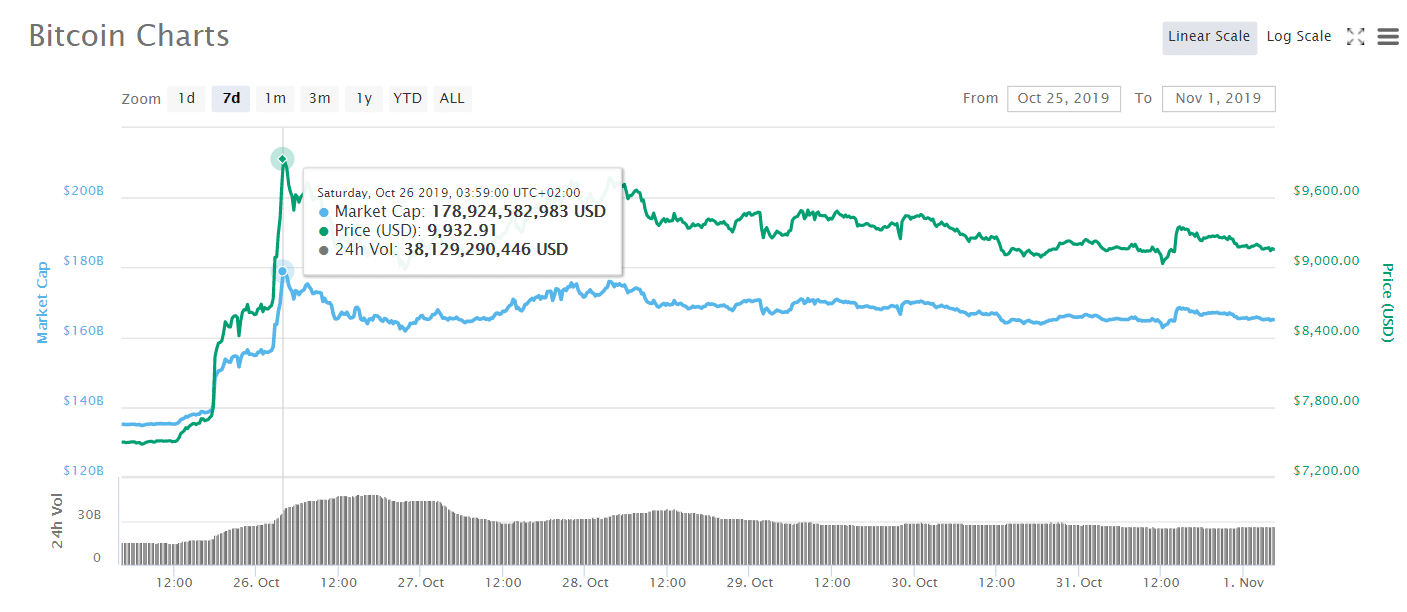
Indeed, "major countries are stepping up their efforts to plan the development of blockchain technology,” he was quoted as saying in state-run news agency Xinhua. “Greater effort should be made to strengthen basic research and boost innovation capacity to help China gain an edge in the theoretical, innovative and industrial aspects of this emerging field.”
According to Xinhua, Jinping specifically mentioned the use of blockchain in “digital finance, Internet of Things, smart manufacturing, supply chain management and digital asset trading.” Xi also said that “efforts should be made to promote the deep integration of blockchain with the real economy, so as to solve problems such as difficulties of financing for small and medium-sized enterprises, risk management in banking and government agency supervision.”
At the same time, stock valuations for a number of Chinese blockchain firms saw a significant increase.
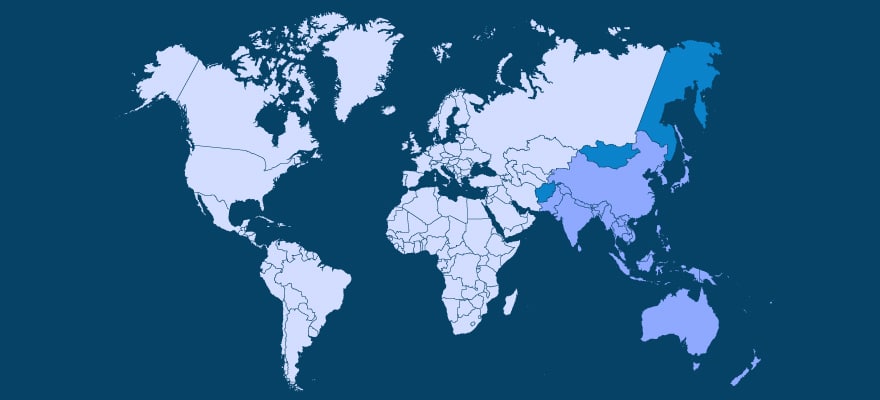
Since China instituted a sweeping set of bans on the cryptocurrency industry in late 2017, the country has largely been regarded as somewhat bearish toward the industry. However, even before Xi’s remarks refocused the world’s attention on BTC and blockchain, the market for blockchain and cryptocurrency in the APAC region, which includes China, was already slated to continue to grow and develop significantly--perhaps even more quickly than in the rest of the world.
Why could countries in the APAC region be so ripe for the adoption of blockchain technology, and--in some cases--cryptocurrency? And have some countries within APAC already charged ahead of the world in terms of adoption?
“South Korea is a great example of cryptocurrency adoption”
“South Korea is a great example of cryptocurrency adoption,” said Marie Tatibouet, CMO of cryptocurrency exchange Gate.io, to Finance Magnates, adding that she believes that South Korea could potentially become “the first country to replace fiat with cryptocurrencies.”
Marie Tatibouet, Chief Marketing Officer at Gate.io.
Indeed, in April of 2018, Kim Yong-jin, South Korea’s Deputy Minister of Strategy and Finance, expressed concern at a financial conference in Seoul that cryptocurrency usage was becoming so popular within the country that “the central bank should consider the emergence of alternative payment methods such as cryptocurrencies as a threat to the existence of the traditional fiat system.”
A survey published in April of this year by a self-regulatory association known as the Korea Finacial Investment Association (KOFIA) revealed that cryptocurrency traders in South Korea had increased their holdings by an average of 64 percent over the 12 months preceding the survey.
Bitcoin trading has been so popular at certain points within the country’s history that it has traded at a higher price than in the rest of the world--a phenomenon that has been nicknamed as the “kimchi premium.”
Cryptocurrency regulations in the APAC region stand as evidence of adoption
But of course, South Korea isn’t the only example of widespread blockchain and cryptocurrency adoption in the APAC region. This is evidenced by the fact that in addition to South Korea, a number of countries in the APAC region have taken steps toward regulating the cryptocurrency and blockchain industries.
For example, regulators across the APAC region have taken steps toward responding to investor concerns around cryptocurrency exchanges. Japan has created a licensing program for cryptocurrency exchanges that meet a certain set of security standards since 2018; Singapore and Thailand require similar licenses for crypto exchanges.
Tatibouet also pointed to the fact that “Thailand recently regulated the offering of digital assets, opening its doors to crypto-related businesses.”
The clarity of the cryptocurrency-related regulations in a number of these countries serves as evidence of adoption, especially when compared to what has been described as a general lack of clarity on cryptocurrency regulations in the United States.
However, it can be argued that earlier and more widespread adoption of cryptocurrency and blockchain in parts of the APAC region--and the growing pains that have accompanied this adoption--have fueled the need for solid regulations.
Jonathan Swerdlow, , Chief Marketing Officer of cryptocurrency trade provider Enigma Securities.
However, Swerdlow believes that “these events have prompted Asian states to further regulate this sector,” pointing to China’s 2017 bans as the strongest example of this.
A growing tech-savvy middle class could fuel blockchain adoption in the APAC region
There is also evidence to suggest that the adoption of blockchain and cryptocurrency will continue to grow throughout the APAC region.
Indeed, citing data from a Global Market Insight report, Talos Digital CEO Amy Gilani told the Asia Blockchain Review in March that “with the region’s blockchain market set to grow by an estimated 87 percent over the next six years, blockchain innovation is surging forward in the region.”
Gilani pointed specifically to the sheer size of the Asia Pacific consumer market as one of the primary reasons for this. Indeed, a report by aircraft company Airbus said that “in 2008,32% or 1.2 billion people in [the] Asia-Pacific [region] could be considered middle-class. By 2018, this had grown to nearly 50% or 2 billion people and by the end of our forecast in 2038, this is projected to grow still further to 72% or 3.3 billion people.”
He also pointed to his own observations that “the region’s enthusiasm for cutting-edge tech can be attributed to its uniquely young, tech-curious population. Sixty percent of the world’s youth is concentrated in Asia-Pacific,” he said.
These sentiments seem to be shared by Marie Tatibouet: “Ii Asian markets, there are a lot of people who are interested in cryptocurrency,” she said in an interview with Finance Magnatesconducted in September of this year. “Asia has a lot of young people, and I think they’re also very technically savvy–more so than in other emerging markets. They’re also having access to funds more and more quickly.”
Tatibouet also cited increased smartphone usage as a driver of blockchain adoption in the APAC region: “blockchain technology is witnessing huge demand from several industries in Asia because of the changing consumer behaviour that has primarily resulted from increasing smartphone adoption,” she told Finance Magnates.
APAC is ripe for blockchain adoption in areas that “previously lacked the right mechanism”
Tatibouet also pointed to the fact that there is an opportunity within several developing industries in the APAC region to create blockchain-based technological infrastructure.
This is also true in the case of unbanked individuals in China who could benefit from having financial services that could be provided through blockchain technology. In 2017, China had the world’s largest unbanked population, with 225 million unbanked adults, according to a report by Global Findex.
Edith Yeung, partner at Proof of Capital, said in an interview with Forkast.News that indeed, “if you’re trying to change behavior by changing a legacy system, it’s quite hard to do.” However, in the APAC region, “ the whole landscape environment is craving for it because we didn’t have anything to start with,” she said.
Before the era of mobile phones, building the necessary infrastructure to create a continent-wide landline network in Africa was extremely inefficient in terms of time and money; it was also extremely impractical to install telephone poles and cables in rural areas that were not easily accessible by road and did not have reliable access to electricity.
However, while the landline industry struggled from start to end, the mobile phone industry flourished across the continent, providing millions of people with myriad opportunities to access new services, connectivity, and information. In other words, Africa skipped right over the era of landlines and into mobile phones; in the same way, certain industries in the APAC region may skip over other kinds of technology to build brand-new platforms based on blockchain.
What’s working for cryptocurrency exchanges in the APAC region?
There may also be cultural differences that contribute to the rate of blockchain-related innovation within the APAC region.
“...I think a lot of the Asian entrepreneurs are not afraid to make mistakes and just launch fast, fail fast, and really iterate again, and again,” Edith Yeung said in her interview with Forkast.News. This kind of rapid-fire, real-time user testing may have had positive effects on the speed at which blockchain and crypto-related projects and platforms have launched and are updated.
Indeed, “crypto exchanges in APAC are constantly innovating to make blockchain technology more secure and approachable,” Tatibouet told Finance Magnates.
“Because of their user-targeted strategies, the region has been seeing huge growth in blockchain and cryptocurrency jobs since 2017,” she said, pointing to cryptocurrency exchange’s decisions to “[go] global but identifying the right markets first,” to expand fiat-to-crypto trading offerings, and to “[partner] with banks and [acquire] services to provide regional fiat gateways” as factors that have brought more users onboard.
Now that Xi Jinping’s recent remarks have brought the spotlight back onto the cryptocurrency industry within the APAC region, it’s possible that cryptocurrency exchanges serving the region will continue to see growth; the renewed attention--and possible wave of new users--could also bring increased competition to the space.
In any case, it seems as though the role of blockchain technology and cryptocurrency in the APAC region--advanced as it may be--is only just beginning to truly take hold.
Indeed, "major countries are stepping up their efforts to plan the development of blockchain technology,” he was quoted as saying in state-run news agency Xinhua. “Greater effort should be made to strengthen basic research and boost innovation capacity to help China gain an edge in the theoretical, innovative and industrial aspects of this emerging field.”
According to Xinhua, Jinping specifically mentioned the use of blockchain in “digital finance, Internet of Things, smart manufacturing, supply chain management and digital asset trading.” Xi also said that “efforts should be made to promote the deep integration of blockchain with the real economy, so as to solve problems such as difficulties of financing for small and medium-sized enterprises, risk management in banking and government agency supervision.”
At the same time, stock valuations for a number of Chinese blockchain firms saw a significant increase.
Since China instituted a sweeping set of bans on the cryptocurrency industry in late 2017, the country has largely been regarded as somewhat bearish toward the industry. However, even before Xi’s remarks refocused the world’s attention on BTC and blockchain, the market for blockchain and cryptocurrency in the APAC region, which includes China, was already slated to continue to grow and develop significantly--perhaps even more quickly than in the rest of the world.
Why could countries in the APAC region be so ripe for the adoption of blockchain technology, and--in some cases--cryptocurrency? And have some countries within APAC already charged ahead of the world in terms of adoption?
“South Korea is a great example of cryptocurrency adoption”
“South Korea is a great example of cryptocurrency adoption,” said Marie Tatibouet, CMO of cryptocurrency exchange Gate.io, to Finance Magnates, adding that she believes that South Korea could potentially become “the first country to replace fiat with cryptocurrencies.”
Marie Tatibouet, Chief Marketing Officer at Gate.io.
Indeed, in April of 2018, Kim Yong-jin, South Korea’s Deputy Minister of Strategy and Finance, expressed concern at a financial conference in Seoul that cryptocurrency usage was becoming so popular within the country that “the central bank should consider the emergence of alternative payment methods such as cryptocurrencies as a threat to the existence of the traditional fiat system.”
A survey published in April of this year by a self-regulatory association known as the Korea Finacial Investment Association (KOFIA) revealed that cryptocurrency traders in South Korea had increased their holdings by an average of 64 percent over the 12 months preceding the survey.
Bitcoin trading has been so popular at certain points within the country’s history that it has traded at a higher price than in the rest of the world--a phenomenon that has been nicknamed as the “kimchi premium.”
Cryptocurrency regulations in the APAC region stand as evidence of adoption
But of course, South Korea isn’t the only example of widespread blockchain and cryptocurrency adoption in the APAC region. This is evidenced by the fact that in addition to South Korea, a number of countries in the APAC region have taken steps toward regulating the cryptocurrency and blockchain industries.
For example, regulators across the APAC region have taken steps toward responding to investor concerns around cryptocurrency exchanges. Japan has created a licensing program for cryptocurrency exchanges that meet a certain set of security standards since 2018; Singapore and Thailand require similar licenses for crypto exchanges.
Tatibouet also pointed to the fact that “Thailand recently regulated the offering of digital assets, opening its doors to crypto-related businesses.”
The clarity of the cryptocurrency-related regulations in a number of these countries serves as evidence of adoption, especially when compared to what has been described as a general lack of clarity on cryptocurrency regulations in the United States.
However, it can be argued that earlier and more widespread adoption of cryptocurrency and blockchain in parts of the APAC region--and the growing pains that have accompanied this adoption--have fueled the need for solid regulations.
Jonathan Swerdlow, , Chief Marketing Officer of cryptocurrency trade provider Enigma Securities.
However, Swerdlow believes that “these events have prompted Asian states to further regulate this sector,” pointing to China’s 2017 bans as the strongest example of this.
A growing tech-savvy middle class could fuel blockchain adoption in the APAC region
There is also evidence to suggest that the adoption of blockchain and cryptocurrency will continue to grow throughout the APAC region.
Indeed, citing data from a Global Market Insight report, Talos Digital CEO Amy Gilani told the Asia Blockchain Review in March that “with the region’s blockchain market set to grow by an estimated 87 percent over the next six years, blockchain innovation is surging forward in the region.”
Gilani pointed specifically to the sheer size of the Asia Pacific consumer market as one of the primary reasons for this. Indeed, a report by aircraft company Airbus said that “in 2008,32% or 1.2 billion people in [the] Asia-Pacific [region] could be considered middle-class. By 2018, this had grown to nearly 50% or 2 billion people and by the end of our forecast in 2038, this is projected to grow still further to 72% or 3.3 billion people.”
He also pointed to his own observations that “the region’s enthusiasm for cutting-edge tech can be attributed to its uniquely young, tech-curious population. Sixty percent of the world’s youth is concentrated in Asia-Pacific,” he said.
These sentiments seem to be shared by Marie Tatibouet: “Ii Asian markets, there are a lot of people who are interested in cryptocurrency,” she said in an interview with Finance Magnatesconducted in September of this year. “Asia has a lot of young people, and I think they’re also very technically savvy–more so than in other emerging markets. They’re also having access to funds more and more quickly.”
Tatibouet also cited increased smartphone usage as a driver of blockchain adoption in the APAC region: “blockchain technology is witnessing huge demand from several industries in Asia because of the changing consumer behaviour that has primarily resulted from increasing smartphone adoption,” she told Finance Magnates.
APAC is ripe for blockchain adoption in areas that “previously lacked the right mechanism”
Tatibouet also pointed to the fact that there is an opportunity within several developing industries in the APAC region to create blockchain-based technological infrastructure.
This is also true in the case of unbanked individuals in China who could benefit from having financial services that could be provided through blockchain technology. In 2017, China had the world’s largest unbanked population, with 225 million unbanked adults, according to a report by Global Findex.
Edith Yeung, partner at Proof of Capital, said in an interview with Forkast.News that indeed, “if you’re trying to change behavior by changing a legacy system, it’s quite hard to do.” However, in the APAC region, “ the whole landscape environment is craving for it because we didn’t have anything to start with,” she said.
Before the era of mobile phones, building the necessary infrastructure to create a continent-wide landline network in Africa was extremely inefficient in terms of time and money; it was also extremely impractical to install telephone poles and cables in rural areas that were not easily accessible by road and did not have reliable access to electricity.
However, while the landline industry struggled from start to end, the mobile phone industry flourished across the continent, providing millions of people with myriad opportunities to access new services, connectivity, and information. In other words, Africa skipped right over the era of landlines and into mobile phones; in the same way, certain industries in the APAC region may skip over other kinds of technology to build brand-new platforms based on blockchain.
What’s working for cryptocurrency exchanges in the APAC region?
There may also be cultural differences that contribute to the rate of blockchain-related innovation within the APAC region.
“...I think a lot of the Asian entrepreneurs are not afraid to make mistakes and just launch fast, fail fast, and really iterate again, and again,” Edith Yeung said in her interview with Forkast.News. This kind of rapid-fire, real-time user testing may have had positive effects on the speed at which blockchain and crypto-related projects and platforms have launched and are updated.
Indeed, “crypto exchanges in APAC are constantly innovating to make blockchain technology more secure and approachable,” Tatibouet told Finance Magnates.
“Because of their user-targeted strategies, the region has been seeing huge growth in blockchain and cryptocurrency jobs since 2017,” she said, pointing to cryptocurrency exchange’s decisions to “[go] global but identifying the right markets first,” to expand fiat-to-crypto trading offerings, and to “[partner] with banks and [acquire] services to provide regional fiat gateways” as factors that have brought more users onboard.
Now that Xi Jinping’s recent remarks have brought the spotlight back onto the cryptocurrency industry within the APAC region, it’s possible that cryptocurrency exchanges serving the region will continue to see growth; the renewed attention--and possible wave of new users--could also bring increased competition to the space.
In any case, it seems as though the role of blockchain technology and cryptocurrency in the APAC region--advanced as it may be--is only just beginning to truly take hold.
Rachel is a self-taught crypto geek and a passionate writer. She believes in the power that the written word has to educate, connect and empower individuals to make positive and powerful financial choices. She is the Podcast Host and a Cryptocurrency Editor at Finance Magnates.
Crypto Built More Rails, but the Next Battle Is Over How Much Work a Dollar Can Do
Featured Videos
FP Markets Winner Spotlight 🏆 | Global Broker of the Year 2025 #Trading #Broker #Innovation #Shorts
FP Markets Winner Spotlight 🏆 | Global Broker of the Year 2025 #Trading #Broker #Innovation #Shorts
FP Markets Winner Spotlight 🏆 | Global Broker of the Year 2025 #Trading #Broker #Innovation #Shorts
FP Markets Winner Spotlight 🏆 | Global Broker of the Year 2025 #Trading #Broker #Innovation #Shorts
FP Markets takes the spotlight as Global Broker of the Year 2025 at the Finance Magnates Awards.
Martin Stoilov, Head of Client Experience, shares that trust, innovation, and people played a key role in the company’s success, supported by a strong foundation of integrity and client-centricity.
Following this milestone, FP Markets continues to focus on growth, technology investment, and its core values of transparency and excellence.
👉 Be part of FM Awards 2026: https://awards.financemagnates.com/#nominate
FP Markets takes the spotlight as Global Broker of the Year 2025 at the Finance Magnates Awards.
Martin Stoilov, Head of Client Experience, shares that trust, innovation, and people played a key role in the company’s success, supported by a strong foundation of integrity and client-centricity.
Following this milestone, FP Markets continues to focus on growth, technology investment, and its core values of transparency and excellence.
👉 Be part of FM Awards 2026: https://awards.financemagnates.com/#nominate
FP Markets takes the spotlight as Global Broker of the Year 2025 at the Finance Magnates Awards.
Martin Stoilov, Head of Client Experience, shares that trust, innovation, and people played a key role in the company’s success, supported by a strong foundation of integrity and client-centricity.
Following this milestone, FP Markets continues to focus on growth, technology investment, and its core values of transparency and excellence.
👉 Be part of FM Awards 2026: https://awards.financemagnates.com/#nominate
FP Markets takes the spotlight as Global Broker of the Year 2025 at the Finance Magnates Awards.
Martin Stoilov, Head of Client Experience, shares that trust, innovation, and people played a key role in the company’s success, supported by a strong foundation of integrity and client-centricity.
Following this milestone, FP Markets continues to focus on growth, technology investment, and its core values of transparency and excellence.
👉 Be part of FM Awards 2026: https://awards.financemagnates.com/#nominate
In this video, we review @HolaPrimeMarketsOfficial, a multi-asset forex and CFDs broker offering different account types, trading platforms, and flexible trading conditions.
We cover the broker’s overall offering, including account options, trading environment, platforms like MT4 and MT5, and additional services such as managed accounts and fast withdrawals.
Watch the full video to see if Hola Prime Markets fits your trading needs.
📣 Stay up to date with the latest in finance and trading. Follow Finance Magnates for industry news, insights, and global event coverage.
Connect with us:
🔗 LinkedIn: /financemagnates
👍 Facebook: /financemagnates
📸 Instagram: https://www.instagram.com/financemagnates
🐦 X: https://x.com/financemagnates
🎥 TikTok: https://www.tiktok.com/tag/financemagnates
▶️ YouTube: /@financemagnates_official
#HolaPrime #ForexBroker #CFDTrading #FinanceMagnates #Trading #Forex #BrokerReview
In this video, we review @HolaPrimeMarketsOfficial, a multi-asset forex and CFDs broker offering different account types, trading platforms, and flexible trading conditions.
We cover the broker’s overall offering, including account options, trading environment, platforms like MT4 and MT5, and additional services such as managed accounts and fast withdrawals.
Watch the full video to see if Hola Prime Markets fits your trading needs.
📣 Stay up to date with the latest in finance and trading. Follow Finance Magnates for industry news, insights, and global event coverage.
Connect with us:
🔗 LinkedIn: /financemagnates
👍 Facebook: /financemagnates
📸 Instagram: https://www.instagram.com/financemagnates
🐦 X: https://x.com/financemagnates
🎥 TikTok: https://www.tiktok.com/tag/financemagnates
▶️ YouTube: /@financemagnates_official
#HolaPrime #ForexBroker #CFDTrading #FinanceMagnates #Trading #Forex #BrokerReview
In this video, we review @HolaPrimeMarketsOfficial, a multi-asset forex and CFDs broker offering different account types, trading platforms, and flexible trading conditions.
We cover the broker’s overall offering, including account options, trading environment, platforms like MT4 and MT5, and additional services such as managed accounts and fast withdrawals.
Watch the full video to see if Hola Prime Markets fits your trading needs.
📣 Stay up to date with the latest in finance and trading. Follow Finance Magnates for industry news, insights, and global event coverage.
Connect with us:
🔗 LinkedIn: /financemagnates
👍 Facebook: /financemagnates
📸 Instagram: https://www.instagram.com/financemagnates
🐦 X: https://x.com/financemagnates
🎥 TikTok: https://www.tiktok.com/tag/financemagnates
▶️ YouTube: /@financemagnates_official
#HolaPrime #ForexBroker #CFDTrading #FinanceMagnates #Trading #Forex #BrokerReview
In this video, we review @HolaPrimeMarketsOfficial, a multi-asset forex and CFDs broker offering different account types, trading platforms, and flexible trading conditions.
We cover the broker’s overall offering, including account options, trading environment, platforms like MT4 and MT5, and additional services such as managed accounts and fast withdrawals.
Watch the full video to see if Hola Prime Markets fits your trading needs.
📣 Stay up to date with the latest in finance and trading. Follow Finance Magnates for industry news, insights, and global event coverage.
Connect with us:
🔗 LinkedIn: /financemagnates
👍 Facebook: /financemagnates
📸 Instagram: https://www.instagram.com/financemagnates
🐦 X: https://x.com/financemagnates
🎥 TikTok: https://www.tiktok.com/tag/financemagnates
▶️ YouTube: /@financemagnates_official
#HolaPrime #ForexBroker #CFDTrading #FinanceMagnates #Trading #Forex #BrokerReview
In this video, we review @HolaPrimeMarketsOfficial, a multi-asset forex and CFDs broker offering different account types, trading platforms, and flexible trading conditions.
We cover the broker’s overall offering, including account options, trading environment, platforms like MT4 and MT5, and additional services such as managed accounts and fast withdrawals.
Watch the full video to see if Hola Prime Markets fits your trading needs.
📣 Stay up to date with the latest in finance and trading. Follow Finance Magnates for industry news, insights, and global event coverage.
Connect with us:
🔗 LinkedIn: /financemagnates
👍 Facebook: /financemagnates
📸 Instagram: https://www.instagram.com/financemagnates
🐦 X: https://x.com/financemagnates
🎥 TikTok: https://www.tiktok.com/tag/financemagnates
▶️ YouTube: /@financemagnates_official
#HolaPrime #ForexBroker #CFDTrading #FinanceMagnates #Trading #Forex #BrokerReview
In this video, we review @HolaPrimeMarketsOfficial, a multi-asset forex and CFDs broker offering different account types, trading platforms, and flexible trading conditions.
We cover the broker’s overall offering, including account options, trading environment, platforms like MT4 and MT5, and additional services such as managed accounts and fast withdrawals.
Watch the full video to see if Hola Prime Markets fits your trading needs.
📣 Stay up to date with the latest in finance and trading. Follow Finance Magnates for industry news, insights, and global event coverage.
Connect with us:
🔗 LinkedIn: /financemagnates
👍 Facebook: /financemagnates
📸 Instagram: https://www.instagram.com/financemagnates
🐦 X: https://x.com/financemagnates
🎥 TikTok: https://www.tiktok.com/tag/financemagnates
▶️ YouTube: /@financemagnates_official
#HolaPrime #ForexBroker #CFDTrading #FinanceMagnates #Trading #Forex #BrokerReview
Hola Prime Review: What You Need to Know | Full Breakdown by Finance Magnates
Hola Prime Review: What You Need to Know | Full Breakdown by Finance Magnates
Hola Prime Review: What You Need to Know | Full Breakdown by Finance Magnates
Hola Prime Review: What You Need to Know | Full Breakdown by Finance Magnates
Hola Prime Review: What You Need to Know | Full Breakdown by Finance Magnates
Hola Prime Review: What You Need to Know | Full Breakdown by Finance Magnates
In this video, we review @HolaPrime_Global, a proprietary trading firm offering evaluation programs and performance-based payouts in simulated market environments.
We cover how the challenge model works, including account types, profit splits (up to 95%), trading rules, and what it takes to reach a funded account. You’ll also learn about available platforms like MT4, MT5, cTrader, and more, along with insights into payouts, support, and trading conditions.
Watch the full video to see if Hola Prime fits your trading style.
📣 Stay up to date with the latest in finance and trading. Follow Finance Magnates for industry news, insights, and global event coverage.
Connect with us:
🔗 LinkedIn: /financemagnates
👍 Facebook: /financemagnates
📸 Instagram: https://www.instagram.com/financemagnates
🐦 X: https://x.com/financemagnates
🎥 TikTok: https://www.tiktok.com/tag/financemagnates
▶️ YouTube: /@financemagnates_official
#HolaPrime #PropFirm #Trading #FinanceMagnates #Forex #FuturesTrading #TradingReview #PropFirmReview
In this video, we review @HolaPrime_Global, a proprietary trading firm offering evaluation programs and performance-based payouts in simulated market environments.
We cover how the challenge model works, including account types, profit splits (up to 95%), trading rules, and what it takes to reach a funded account. You’ll also learn about available platforms like MT4, MT5, cTrader, and more, along with insights into payouts, support, and trading conditions.
Watch the full video to see if Hola Prime fits your trading style.
📣 Stay up to date with the latest in finance and trading. Follow Finance Magnates for industry news, insights, and global event coverage.
Connect with us:
🔗 LinkedIn: /financemagnates
👍 Facebook: /financemagnates
📸 Instagram: https://www.instagram.com/financemagnates
🐦 X: https://x.com/financemagnates
🎥 TikTok: https://www.tiktok.com/tag/financemagnates
▶️ YouTube: /@financemagnates_official
#HolaPrime #PropFirm #Trading #FinanceMagnates #Forex #FuturesTrading #TradingReview #PropFirmReview
In this video, we review @HolaPrime_Global, a proprietary trading firm offering evaluation programs and performance-based payouts in simulated market environments.
We cover how the challenge model works, including account types, profit splits (up to 95%), trading rules, and what it takes to reach a funded account. You’ll also learn about available platforms like MT4, MT5, cTrader, and more, along with insights into payouts, support, and trading conditions.
Watch the full video to see if Hola Prime fits your trading style.
📣 Stay up to date with the latest in finance and trading. Follow Finance Magnates for industry news, insights, and global event coverage.
Connect with us:
🔗 LinkedIn: /financemagnates
👍 Facebook: /financemagnates
📸 Instagram: https://www.instagram.com/financemagnates
🐦 X: https://x.com/financemagnates
🎥 TikTok: https://www.tiktok.com/tag/financemagnates
▶️ YouTube: /@financemagnates_official
#HolaPrime #PropFirm #Trading #FinanceMagnates #Forex #FuturesTrading #TradingReview #PropFirmReview
In this video, we review @HolaPrime_Global, a proprietary trading firm offering evaluation programs and performance-based payouts in simulated market environments.
We cover how the challenge model works, including account types, profit splits (up to 95%), trading rules, and what it takes to reach a funded account. You’ll also learn about available platforms like MT4, MT5, cTrader, and more, along with insights into payouts, support, and trading conditions.
Watch the full video to see if Hola Prime fits your trading style.
📣 Stay up to date with the latest in finance and trading. Follow Finance Magnates for industry news, insights, and global event coverage.
Connect with us:
🔗 LinkedIn: /financemagnates
👍 Facebook: /financemagnates
📸 Instagram: https://www.instagram.com/financemagnates
🐦 X: https://x.com/financemagnates
🎥 TikTok: https://www.tiktok.com/tag/financemagnates
▶️ YouTube: /@financemagnates_official
#HolaPrime #PropFirm #Trading #FinanceMagnates #Forex #FuturesTrading #TradingReview #PropFirmReview
In this video, we review @HolaPrime_Global, a proprietary trading firm offering evaluation programs and performance-based payouts in simulated market environments.
We cover how the challenge model works, including account types, profit splits (up to 95%), trading rules, and what it takes to reach a funded account. You’ll also learn about available platforms like MT4, MT5, cTrader, and more, along with insights into payouts, support, and trading conditions.
Watch the full video to see if Hola Prime fits your trading style.
📣 Stay up to date with the latest in finance and trading. Follow Finance Magnates for industry news, insights, and global event coverage.
Connect with us:
🔗 LinkedIn: /financemagnates
👍 Facebook: /financemagnates
📸 Instagram: https://www.instagram.com/financemagnates
🐦 X: https://x.com/financemagnates
🎥 TikTok: https://www.tiktok.com/tag/financemagnates
▶️ YouTube: /@financemagnates_official
#HolaPrime #PropFirm #Trading #FinanceMagnates #Forex #FuturesTrading #TradingReview #PropFirmReview
In this video, we review @HolaPrime_Global, a proprietary trading firm offering evaluation programs and performance-based payouts in simulated market environments.
We cover how the challenge model works, including account types, profit splits (up to 95%), trading rules, and what it takes to reach a funded account. You’ll also learn about available platforms like MT4, MT5, cTrader, and more, along with insights into payouts, support, and trading conditions.
Watch the full video to see if Hola Prime fits your trading style.
📣 Stay up to date with the latest in finance and trading. Follow Finance Magnates for industry news, insights, and global event coverage.
Connect with us:
🔗 LinkedIn: /financemagnates
👍 Facebook: /financemagnates
📸 Instagram: https://www.instagram.com/financemagnates
🐦 X: https://x.com/financemagnates
🎥 TikTok: https://www.tiktok.com/tag/financemagnates
▶️ YouTube: /@financemagnates_official
#HolaPrime #PropFirm #Trading #FinanceMagnates #Forex #FuturesTrading #TradingReview #PropFirmReview
Axi Winner Spotlight 🏆 | Global Most Innovative Broker 2025 #Innovation #Trading #Fintech #Broker
Axi Winner Spotlight 🏆 | Global Most Innovative Broker 2025 #Innovation #Trading #Fintech #Broker
Axi Winner Spotlight 🏆 | Global Most Innovative Broker 2025 #Innovation #Trading #Fintech #Broker
Axi Winner Spotlight 🏆 | Global Most Innovative Broker 2025 #Innovation #Trading #Fintech #Broker
Axi Winner Spotlight 🏆 | Global Most Innovative Broker 2025 #Innovation #Trading #Fintech #Broker
Axi Winner Spotlight 🏆 | Global Most Innovative Broker 2025 #Innovation #Trading #Fintech #Broker
Axi takes the spotlight at the Finance Magnates Awards, winning Global Most Innovative Broker 2025.
Olivia Xenofontos and Ivanna Openko share how the team will feel: proud, motivated, and ready to keep delivering.
They also describe the night as well-organized, focused, and enjoyable for all.
👉 Be part of FM Awards 2026.
Axi takes the spotlight at the Finance Magnates Awards, winning Global Most Innovative Broker 2025.
Olivia Xenofontos and Ivanna Openko share how the team will feel: proud, motivated, and ready to keep delivering.
They also describe the night as well-organized, focused, and enjoyable for all.
👉 Be part of FM Awards 2026.
Axi takes the spotlight at the Finance Magnates Awards, winning Global Most Innovative Broker 2025.
Olivia Xenofontos and Ivanna Openko share how the team will feel: proud, motivated, and ready to keep delivering.
They also describe the night as well-organized, focused, and enjoyable for all.
👉 Be part of FM Awards 2026.
Axi takes the spotlight at the Finance Magnates Awards, winning Global Most Innovative Broker 2025.
Olivia Xenofontos and Ivanna Openko share how the team will feel: proud, motivated, and ready to keep delivering.
They also describe the night as well-organized, focused, and enjoyable for all.
👉 Be part of FM Awards 2026.
Axi takes the spotlight at the Finance Magnates Awards, winning Global Most Innovative Broker 2025.
Olivia Xenofontos and Ivanna Openko share how the team will feel: proud, motivated, and ready to keep delivering.
They also describe the night as well-organized, focused, and enjoyable for all.
👉 Be part of FM Awards 2026.
Axi takes the spotlight at the Finance Magnates Awards, winning Global Most Innovative Broker 2025.
Olivia Xenofontos and Ivanna Openko share how the team will feel: proud, motivated, and ready to keep delivering.
They also describe the night as well-organized, focused, and enjoyable for all.
👉 Be part of FM Awards 2026.
Recognition that matters.
Built on transparency.
Driven by the industry.
The Finance Magnates Awards 2026.
Nominations are now open.
🔗 https://awards.financemagnates.com/?utm_source=SM&utm_medium=social&utm_campaign=recognition-matters
Recognition that matters.
Built on transparency.
Driven by the industry.
The Finance Magnates Awards 2026.
Nominations are now open.
🔗 https://awards.financemagnates.com/?utm_source=SM&utm_medium=social&utm_campaign=recognition-matters
Recognition that matters.
Built on transparency.
Driven by the industry.
The Finance Magnates Awards 2026.
Nominations are now open.
🔗 https://awards.financemagnates.com/?utm_source=SM&utm_medium=social&utm_campaign=recognition-matters
Recognition that matters.
Built on transparency.
Driven by the industry.
The Finance Magnates Awards 2026.
Nominations are now open.
🔗 https://awards.financemagnates.com/?utm_source=SM&utm_medium=social&utm_campaign=recognition-matters
Recognition that matters.
Built on transparency.
Driven by the industry.
The Finance Magnates Awards 2026.
Nominations are now open.
🔗 https://awards.financemagnates.com/?utm_source=SM&utm_medium=social&utm_campaign=recognition-matters
Recognition that matters.
Built on transparency.
Driven by the industry.
The Finance Magnates Awards 2026.
Nominations are now open.
🔗 https://awards.financemagnates.com/?utm_source=SM&utm_medium=social&utm_campaign=recognition-matters