Gold-backed crypto tokens are gaining popularity. Are there too many products for too few users?
FM
2020 has started off with a bang when it comes to political tensions around the globe. Tensions between Iran and the United States briefly caused rumors of an upcoming war; the United States impeachment trial is in full throttle, Brexit is on the calendar for later this week--the list goes on.
As such, investors of the world seem to have their trigger-fingers on their purse strings, either eager to take their assets out of the fiat currency of their home countries or hoping for an opportunity to profit off of others who may be doing so.
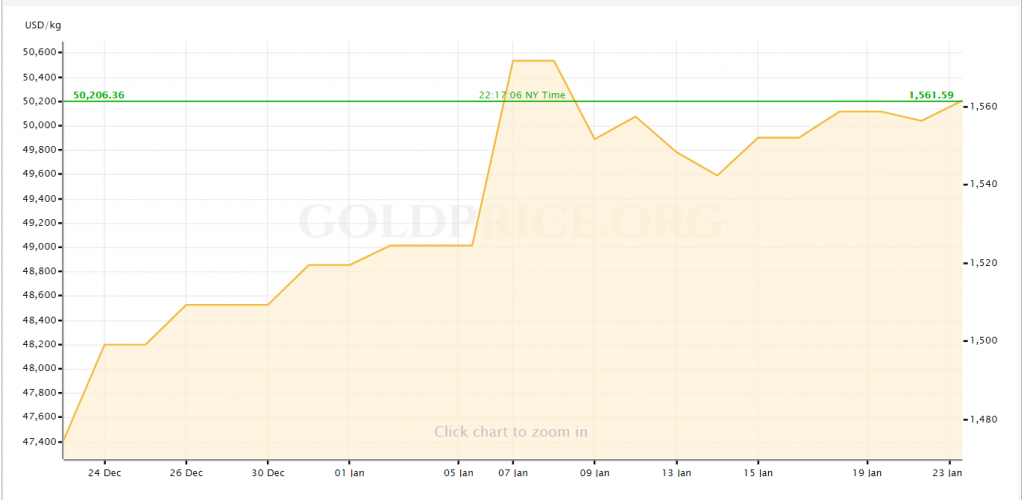
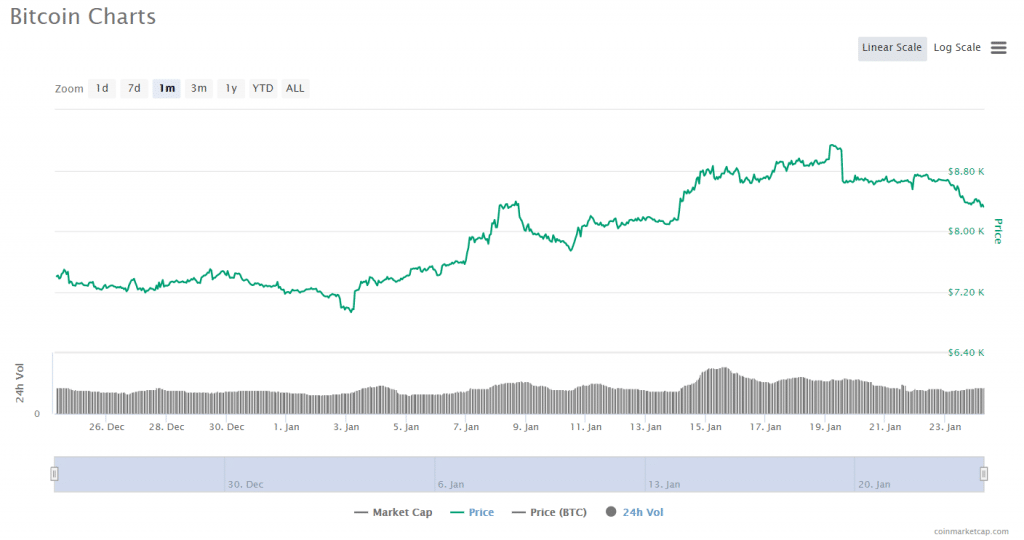
Indeed, during the tensions between Iran and the United States earlier this month, the prices of both gold and BTC surged.
Perhaps the interest in both of these types of assets separately is the driving factor behind what seems to be a growing trend in the investing world: cryptocurrencies that are backed by gold.
Indeed, gold-backed cryptocurrencies seem to be more popular than ever. In fact, a recent report by Bitcoin.com found that there are at least 77 of these gold-backed projects currently on the books in spite of the fact that at least 30 similar projects have failed over the course of the last ten years.
And more are appearing on the books--just last week, stablecoin issuer Tether announced the launch of XAUT, its own gold-backed stablecoin, “in response to the growing demand for a digital asset that provides exposure to the world’s most enduring asset and a geopolitical need for an alternative financial system.”
But with at least 30 failed projects already in the bin, will there be enough interest in gold-backed cryptocurrencies to sustain the projects that are trying to make their ways in the world? Why do some projects survive while others fail? And why could gold be such a good candidate for tokenization in the first place?
Theoretically, “gold-backed stablecoins provide investors with the benefits of both gold and digital assets, without the drawbacks of physically holding the precious metal.”
However, the two assets share some important characteristics, he said, including scarcity, lack of counterparty risk, and a non-inflationary nature. “Add to this that [gold] is fully fungible and globally recognized as a store of value,” which makes the precious metal “an ideal candidate for tokenization,” in Ruf’s opinion.
Andreas Ruf, chief executive officer of InfiniGold, the developers of The Perth Mint’s GoldPass, and issuer of the Perth Mint Gold Token (PMGT).
At the same time, “in the digital asset market, there is a big demand for secure storage of value. Blockchain-based infrastructure is becoming more and more crucial to a new generation of financial services that require stable assets as collateral and transfer of value. Besides fiat-backed stablecoins and multi-asset projects like Dai, gold seems a clear candidate.”
“Lastly, the gold market itself, “he continued. “an estimated USD 20 trillion-dollar market, largely dominated by over-the-counter and interbank trading, is an ideal market to target with a digital asset technology that promises better credit quality, transparency, and cost-efficiency.”
In other words, what’s not to like? Steve Ehrlich, chief executive officer of crypto-asset broker Voyager Digital, explained to Finance Magnates that “gold-backed stablecoins provide investors with the benefits of both gold and digital assets, without the drawbacks of physically holding the precious metal.”
Steve Ehrlich, chief executive officer and co-founder of crypto trading platform Voyager.
Additionally, “stablecoins share many of the benefits of Bitcoin and other cryptocurrencies without the volatility because they’re pegged 1:1 with stable assets like the U.S. Dollar,” or gold, Ehlrich said. “They’re borderless, cost-efficient, and increase transaction speeds, making them appealing to both consumers and institutions.”
Interest could come from both “sides” of the investing world
As such, it’s possible that that the interest in gold-backed stablecoins could be coming from both sides of the investment world: crypto investors interested in adding “traditional” assets to their portfolios, and “traditional” investors who may be looking for a cheaper or more secure route to invest in gold.
Indeed, Rob Odell, vice president of product at SALT Lending, a crypto-backed lending firm that recently partnered with stablecoin issuer Paxos on a gold-backed stable coin project, told Finance Magnates that “gold-backed stablecoins offer an on-ramp to the crypto space for traditional investors and offer an opportunity for crypto holders to diversify their portfolios with an asset that is traditionally more stable than most crypto assets.”
Rob Odell, vice president of product at SALT Lending, a crypto-backed lending firm.
Therefore, Odell sees gold-backed coins continuing to gain popularity, and the tokenization model potentially spreading into other assets as it does: “the trend will continue as organizations look for ways to digitize real-world assets so that holders of these assets will have an easy, transparent way to validate proof of ownership,” he said.
A saturated space?
However, the growing popularity of the gold-backed stablecoins market may eventually have consequences for companies hoping to enter into the market.
Nick Hill, vice president of business development at investment platform Invictus Capital, told Finance Magnates that this stablecoin “gold-rush” may be hindered by the fact that “gold-backed stablecoins is an extremely competitive market, resulting in razor-thin margins for issuers.”
By comparison, Hill said, fiat-backed stablecoins “have an inherent advantage since fiat deposits earn interest for stablecoin issuers which results in a viable business model.”
At the same time, traditional gold “has an inverse economic model where fees must be paid to custodians and purchasers of gold tokens need to be charged fees, usually based on AUM, in order to make the product sustainable for issuers.”
”Very few will survive.”
Ultimately, this means that the gold-backed stablecoin landscape may look quite different from the rest of the crypto world, which is well-populated with projects that may have smaller market caps, at least initially: “it will be difficult for gold-backed tokens to maintain a profitable business model without maintaining a significant market capitalization,” Hill explained.
Indeed, Charles Phan, chief technical officer of cryptocurrency exchange Interdax, told Finance Magnates that like “the market for cryptocurrency in general”, the gold-backed stablecoin space “seems saturated.”
Charles Phan, CTO of cryptocurrency exchange Interdax.
Additionally, Andreas Ruf pointed out that “most of these stablecoins have not yet arrived at the point where they have been issued and traded into the market.”
“It seems that many have been launched as means to collect funding in the overheated ICO market,” he added. “Others have underestimated the complexity of the regulatory side” or “are lacking the background in precious metals trading.”
Therefore, “we are predicting that of the current gold-backed stablecoins, only very few will survive,” Ruf said, although “we are still seeing room for quality products to emerge, especially targeting the institutional sector.”
When platforms compete, consumers win
Therefore, competition is heating up--but, as it goes in crypto (and just about every other industry), the ultimate winner of competitions between platforms and products is the consumer.
And what are consumers looking for, exactly? “Adoption will come down to what else the organizations providing gold-backed stablecoins are able to offer,” said Rob Odell. This could mean expansion into other kinds of assets: “those that offer real estate, art, and other asset-based stablecoins will likely steal the majority of market share,” he said.
However, the most important factor in the competition between issuers of asset-backed coins, according to Odell, is reputation--the company that can produce the most trustworthy product will win out in the end.
“Mainly, it will come down to credibility,” Odell said to Finance Magnates. “In the reputation economy of issuing gold-backed tokens, you’re only as good as what you can prove you have in order to support the continued issuance of these tokens.”
Indeed, Andreas Ruf added that "the gold-backing of these stablecoins will always revert back to a custodian of the actual physical gold. Whether it is a single custodian or a network in an attempt to decentralize the assets: trust in the custodian and the issuer are key.”
Therefore, “buyers should seek answers to the following questions: where is the physical gold stored? What stability and track record do the custodian and issuer bring with them?”
“The main use case of a gold-backed token is to move from volatile, high-risk investments into stable, risk-off assets. If there are serious doubts or questions about the custodian or the issuer, then the asset does not appear risk-off.”
There have already been some instances in which issuers of gold-backed stablecoins have been identified as possible fraudsters: for example, CoinDeskreported in October of last year that “Florida regulators began investigating Karatbars, a German company that’s been promoting a token tied to a Miami ‘crypto bank’ without any banking license in the state.
Before the investigation, Karatbars allegedly issued a cryptocurrency purportedly backed by gold, but CoinDesk was unable to verify the existence of the mine the company says produced the gold.
”Transparency is absolutely key to creating trust in gold-backed tokens.”
Like any most other sectors in the cryptocurrency industry, the international nature of gold-backed stablecoins has the potential to leave investors who may be affected by fraud in the gold-backed stablecoin space without a clear path to legal aid. Therefore, investors in gold-backed stablecoins must be vigilant in vetting the products they purchase.
Gregor Gregersen, chief executive officer of CACHE, a provider of gold-backed tokens.
What, exactly, should investors be on the lookout for?
Gregor Gregersen, chief executive officer of CACHE, a provider of gold-backed tokens, told Finance Magnates that “to be a trusted investment these asset-backed tokens must be redeemable, transparent, compliant, public tokens backed by investment-grade physical gold, identified by serial number and stored in secure vaults that report their gold inventories directly to the public, thereby ensuring decentralized checks and balances.”
Indeed, “transparency is absolutely key to creating trust in gold-backed tokens. Investors need visibility to be completely confident that there is gold stored in secure vaults, and that it is exclusively reserved for backing the tokens, and not otherwise encumbered.”
Liquidity is also an important factor. “Trust in the investment is also boosted when the tokens’ redeemability is practical, efficient and fast,” Gregersen said. “Buyers should look into whether the company issuing the token is actually capable of fulfilling these requirements.”
Finally, it’s important to be aware of the level of decentralization a project has: “token holders should have control,” he continued.
“No centralized third party should be able to freeze customer accounts or take tokens. Deploying, for example, an open, public blockchain token using the Ethereum ERC-20 standard means the control is with the token holders -- unless the smart contract underlying the token has been designed with backdoors,” he said, adding that his own company’s platform “does not.”
What are your thoughts on the gold-backed stablecoins space? Let us know in the comments below.
2020 has started off with a bang when it comes to political tensions around the globe. Tensions between Iran and the United States briefly caused rumors of an upcoming war; the United States impeachment trial is in full throttle, Brexit is on the calendar for later this week--the list goes on.
As such, investors of the world seem to have their trigger-fingers on their purse strings, either eager to take their assets out of the fiat currency of their home countries or hoping for an opportunity to profit off of others who may be doing so.
Indeed, during the tensions between Iran and the United States earlier this month, the prices of both gold and BTC surged.
Perhaps the interest in both of these types of assets separately is the driving factor behind what seems to be a growing trend in the investing world: cryptocurrencies that are backed by gold.
Indeed, gold-backed cryptocurrencies seem to be more popular than ever. In fact, a recent report by Bitcoin.com found that there are at least 77 of these gold-backed projects currently on the books in spite of the fact that at least 30 similar projects have failed over the course of the last ten years.
And more are appearing on the books--just last week, stablecoin issuer Tether announced the launch of XAUT, its own gold-backed stablecoin, “in response to the growing demand for a digital asset that provides exposure to the world’s most enduring asset and a geopolitical need for an alternative financial system.”
But with at least 30 failed projects already in the bin, will there be enough interest in gold-backed cryptocurrencies to sustain the projects that are trying to make their ways in the world? Why do some projects survive while others fail? And why could gold be such a good candidate for tokenization in the first place?
Theoretically, “gold-backed stablecoins provide investors with the benefits of both gold and digital assets, without the drawbacks of physically holding the precious metal.”
However, the two assets share some important characteristics, he said, including scarcity, lack of counterparty risk, and a non-inflationary nature. “Add to this that [gold] is fully fungible and globally recognized as a store of value,” which makes the precious metal “an ideal candidate for tokenization,” in Ruf’s opinion.
Andreas Ruf, chief executive officer of InfiniGold, the developers of The Perth Mint’s GoldPass, and issuer of the Perth Mint Gold Token (PMGT).
At the same time, “in the digital asset market, there is a big demand for secure storage of value. Blockchain-based infrastructure is becoming more and more crucial to a new generation of financial services that require stable assets as collateral and transfer of value. Besides fiat-backed stablecoins and multi-asset projects like Dai, gold seems a clear candidate.”
“Lastly, the gold market itself, “he continued. “an estimated USD 20 trillion-dollar market, largely dominated by over-the-counter and interbank trading, is an ideal market to target with a digital asset technology that promises better credit quality, transparency, and cost-efficiency.”
In other words, what’s not to like? Steve Ehrlich, chief executive officer of crypto-asset broker Voyager Digital, explained to Finance Magnates that “gold-backed stablecoins provide investors with the benefits of both gold and digital assets, without the drawbacks of physically holding the precious metal.”
Steve Ehrlich, chief executive officer and co-founder of crypto trading platform Voyager.
Additionally, “stablecoins share many of the benefits of Bitcoin and other cryptocurrencies without the volatility because they’re pegged 1:1 with stable assets like the U.S. Dollar,” or gold, Ehlrich said. “They’re borderless, cost-efficient, and increase transaction speeds, making them appealing to both consumers and institutions.”
Interest could come from both “sides” of the investing world
As such, it’s possible that that the interest in gold-backed stablecoins could be coming from both sides of the investment world: crypto investors interested in adding “traditional” assets to their portfolios, and “traditional” investors who may be looking for a cheaper or more secure route to invest in gold.
Indeed, Rob Odell, vice president of product at SALT Lending, a crypto-backed lending firm that recently partnered with stablecoin issuer Paxos on a gold-backed stable coin project, told Finance Magnates that “gold-backed stablecoins offer an on-ramp to the crypto space for traditional investors and offer an opportunity for crypto holders to diversify their portfolios with an asset that is traditionally more stable than most crypto assets.”
Rob Odell, vice president of product at SALT Lending, a crypto-backed lending firm.
Therefore, Odell sees gold-backed coins continuing to gain popularity, and the tokenization model potentially spreading into other assets as it does: “the trend will continue as organizations look for ways to digitize real-world assets so that holders of these assets will have an easy, transparent way to validate proof of ownership,” he said.
A saturated space?
However, the growing popularity of the gold-backed stablecoins market may eventually have consequences for companies hoping to enter into the market.
Nick Hill, vice president of business development at investment platform Invictus Capital, told Finance Magnates that this stablecoin “gold-rush” may be hindered by the fact that “gold-backed stablecoins is an extremely competitive market, resulting in razor-thin margins for issuers.”
By comparison, Hill said, fiat-backed stablecoins “have an inherent advantage since fiat deposits earn interest for stablecoin issuers which results in a viable business model.”
At the same time, traditional gold “has an inverse economic model where fees must be paid to custodians and purchasers of gold tokens need to be charged fees, usually based on AUM, in order to make the product sustainable for issuers.”
”Very few will survive.”
Ultimately, this means that the gold-backed stablecoin landscape may look quite different from the rest of the crypto world, which is well-populated with projects that may have smaller market caps, at least initially: “it will be difficult for gold-backed tokens to maintain a profitable business model without maintaining a significant market capitalization,” Hill explained.
Indeed, Charles Phan, chief technical officer of cryptocurrency exchange Interdax, told Finance Magnates that like “the market for cryptocurrency in general”, the gold-backed stablecoin space “seems saturated.”
Charles Phan, CTO of cryptocurrency exchange Interdax.
Additionally, Andreas Ruf pointed out that “most of these stablecoins have not yet arrived at the point where they have been issued and traded into the market.”
“It seems that many have been launched as means to collect funding in the overheated ICO market,” he added. “Others have underestimated the complexity of the regulatory side” or “are lacking the background in precious metals trading.”
Therefore, “we are predicting that of the current gold-backed stablecoins, only very few will survive,” Ruf said, although “we are still seeing room for quality products to emerge, especially targeting the institutional sector.”
When platforms compete, consumers win
Therefore, competition is heating up--but, as it goes in crypto (and just about every other industry), the ultimate winner of competitions between platforms and products is the consumer.
And what are consumers looking for, exactly? “Adoption will come down to what else the organizations providing gold-backed stablecoins are able to offer,” said Rob Odell. This could mean expansion into other kinds of assets: “those that offer real estate, art, and other asset-based stablecoins will likely steal the majority of market share,” he said.
However, the most important factor in the competition between issuers of asset-backed coins, according to Odell, is reputation--the company that can produce the most trustworthy product will win out in the end.
“Mainly, it will come down to credibility,” Odell said to Finance Magnates. “In the reputation economy of issuing gold-backed tokens, you’re only as good as what you can prove you have in order to support the continued issuance of these tokens.”
Indeed, Andreas Ruf added that "the gold-backing of these stablecoins will always revert back to a custodian of the actual physical gold. Whether it is a single custodian or a network in an attempt to decentralize the assets: trust in the custodian and the issuer are key.”
Therefore, “buyers should seek answers to the following questions: where is the physical gold stored? What stability and track record do the custodian and issuer bring with them?”
“The main use case of a gold-backed token is to move from volatile, high-risk investments into stable, risk-off assets. If there are serious doubts or questions about the custodian or the issuer, then the asset does not appear risk-off.”
There have already been some instances in which issuers of gold-backed stablecoins have been identified as possible fraudsters: for example, CoinDeskreported in October of last year that “Florida regulators began investigating Karatbars, a German company that’s been promoting a token tied to a Miami ‘crypto bank’ without any banking license in the state.
Before the investigation, Karatbars allegedly issued a cryptocurrency purportedly backed by gold, but CoinDesk was unable to verify the existence of the mine the company says produced the gold.
”Transparency is absolutely key to creating trust in gold-backed tokens.”
Like any most other sectors in the cryptocurrency industry, the international nature of gold-backed stablecoins has the potential to leave investors who may be affected by fraud in the gold-backed stablecoin space without a clear path to legal aid. Therefore, investors in gold-backed stablecoins must be vigilant in vetting the products they purchase.
Gregor Gregersen, chief executive officer of CACHE, a provider of gold-backed tokens.
What, exactly, should investors be on the lookout for?
Gregor Gregersen, chief executive officer of CACHE, a provider of gold-backed tokens, told Finance Magnates that “to be a trusted investment these asset-backed tokens must be redeemable, transparent, compliant, public tokens backed by investment-grade physical gold, identified by serial number and stored in secure vaults that report their gold inventories directly to the public, thereby ensuring decentralized checks and balances.”
Indeed, “transparency is absolutely key to creating trust in gold-backed tokens. Investors need visibility to be completely confident that there is gold stored in secure vaults, and that it is exclusively reserved for backing the tokens, and not otherwise encumbered.”
Liquidity is also an important factor. “Trust in the investment is also boosted when the tokens’ redeemability is practical, efficient and fast,” Gregersen said. “Buyers should look into whether the company issuing the token is actually capable of fulfilling these requirements.”
Finally, it’s important to be aware of the level of decentralization a project has: “token holders should have control,” he continued.
“No centralized third party should be able to freeze customer accounts or take tokens. Deploying, for example, an open, public blockchain token using the Ethereum ERC-20 standard means the control is with the token holders -- unless the smart contract underlying the token has been designed with backdoors,” he said, adding that his own company’s platform “does not.”
What are your thoughts on the gold-backed stablecoins space? Let us know in the comments below.
Rachel is a self-taught crypto geek and a passionate writer. She believes in the power that the written word has to educate, connect and empower individuals to make positive and powerful financial choices. She is the Podcast Host and a Cryptocurrency Editor at Finance Magnates.
Retail Traders See Goldman Sachs Enter Bitcoin Yield ETF Race with Options-Based Filing
Featured Videos
Opening-Up eWallets’ Future: The Enduring Value of eWallets in the Trading Space ︳FM Talks x Paysafe
Opening-Up eWallets’ Future: The Enduring Value of eWallets in the Trading Space ︳FM Talks x Paysafe
Opening-Up eWallets’ Future: The Enduring Value of eWallets in the Trading Space ︳FM Talks x Paysafe
Opening-Up eWallets’ Future: The Enduring Value of eWallets in the Trading Space ︳FM Talks x Paysafe
eWallets aren’t just moving money anymore, they’re running the show.
In this episode of FM Talks, Adonis Adoni (News Editor at Finance Magnates) sits down with Paysafe 's:
•Bob Legters, Chief Product Officer
•Jeannie Lam, VP of Sales & Account Management for Forex & Financial Trading
to break down how wallets evolved from simple payment tools into core trading infrastructure.
💥 Inside the conversation:
•Why wallets now drive growth, retention, and global scale for brokers
•The hidden power behind deposit success, fraud prevention, and UX
•Stablecoins: hype, reality, and where they actually fit today
•AI in wallets: smarter flows vs rising fraud risks
•The rise of white-label wallets and full ecosystem control
•What the future looks like when wallets become your financial brain
🔗 Learn more about @PaysafeGroup : https://www.paysafe.com/en/optimize-forex-payments-for-growth-in-2026/fm/?utm_source=fm&utm_medium=podcast&utm_campaign=2026-q1-fx-demand-gen&utm_content=podcast
From fiat to crypto, payments to trading, everything is converging and wallets are right at the center of it.
#Fintech #eWallets #Trading #DigitalPayments #Stablecoins #Crypto #AIinFintech #FutureOfFinance #Paysafe #FMtalks
eWallets aren’t just moving money anymore, they’re running the show.
In this episode of FM Talks, Adonis Adoni (News Editor at Finance Magnates) sits down with Paysafe 's:
•Bob Legters, Chief Product Officer
•Jeannie Lam, VP of Sales & Account Management for Forex & Financial Trading
to break down how wallets evolved from simple payment tools into core trading infrastructure.
💥 Inside the conversation:
•Why wallets now drive growth, retention, and global scale for brokers
•The hidden power behind deposit success, fraud prevention, and UX
•Stablecoins: hype, reality, and where they actually fit today
•AI in wallets: smarter flows vs rising fraud risks
•The rise of white-label wallets and full ecosystem control
•What the future looks like when wallets become your financial brain
🔗 Learn more about @PaysafeGroup : https://www.paysafe.com/en/optimize-forex-payments-for-growth-in-2026/fm/?utm_source=fm&utm_medium=podcast&utm_campaign=2026-q1-fx-demand-gen&utm_content=podcast
From fiat to crypto, payments to trading, everything is converging and wallets are right at the center of it.
#Fintech #eWallets #Trading #DigitalPayments #Stablecoins #Crypto #AIinFintech #FutureOfFinance #Paysafe #FMtalks
eWallets aren’t just moving money anymore, they’re running the show.
In this episode of FM Talks, Adonis Adoni (News Editor at Finance Magnates) sits down with Paysafe 's:
•Bob Legters, Chief Product Officer
•Jeannie Lam, VP of Sales & Account Management for Forex & Financial Trading
to break down how wallets evolved from simple payment tools into core trading infrastructure.
💥 Inside the conversation:
•Why wallets now drive growth, retention, and global scale for brokers
•The hidden power behind deposit success, fraud prevention, and UX
•Stablecoins: hype, reality, and where they actually fit today
•AI in wallets: smarter flows vs rising fraud risks
•The rise of white-label wallets and full ecosystem control
•What the future looks like when wallets become your financial brain
🔗 Learn more about @PaysafeGroup : https://www.paysafe.com/en/optimize-forex-payments-for-growth-in-2026/fm/?utm_source=fm&utm_medium=podcast&utm_campaign=2026-q1-fx-demand-gen&utm_content=podcast
From fiat to crypto, payments to trading, everything is converging and wallets are right at the center of it.
#Fintech #eWallets #Trading #DigitalPayments #Stablecoins #Crypto #AIinFintech #FutureOfFinance #Paysafe #FMtalks
eWallets aren’t just moving money anymore, they’re running the show.
In this episode of FM Talks, Adonis Adoni (News Editor at Finance Magnates) sits down with Paysafe 's:
•Bob Legters, Chief Product Officer
•Jeannie Lam, VP of Sales & Account Management for Forex & Financial Trading
to break down how wallets evolved from simple payment tools into core trading infrastructure.
💥 Inside the conversation:
•Why wallets now drive growth, retention, and global scale for brokers
•The hidden power behind deposit success, fraud prevention, and UX
•Stablecoins: hype, reality, and where they actually fit today
•AI in wallets: smarter flows vs rising fraud risks
•The rise of white-label wallets and full ecosystem control
•What the future looks like when wallets become your financial brain
🔗 Learn more about @PaysafeGroup : https://www.paysafe.com/en/optimize-forex-payments-for-growth-in-2026/fm/?utm_source=fm&utm_medium=podcast&utm_campaign=2026-q1-fx-demand-gen&utm_content=podcast
From fiat to crypto, payments to trading, everything is converging and wallets are right at the center of it.
#Fintech #eWallets #Trading #DigitalPayments #Stablecoins #Crypto #AIinFintech #FutureOfFinance #Paysafe #FMtalks
FP Markets Review: Forex & CFD Broker Overview for Asia Traders | Finance Magnates
FP Markets Review: Forex & CFD Broker Overview for Asia Traders | Finance Magnates
FP Markets Review: Forex & CFD Broker Overview for Asia Traders | Finance Magnates
FP Markets Review: Forex & CFD Broker Overview for Asia Traders | Finance Magnates
FP Markets Review: Forex & CFD Broker Overview for Asia Traders | Finance Magnates
FP Markets Review: Forex & CFD Broker Overview for Asia Traders | Finance Magnates
In this video, we review @fpmarkets a multi-asset forex and CFDs broker operating across multiple regulated entities worldwide.
We cover the broker’s overall offering, including its regulatory structure, trading platforms, as well as its account types and product range. We also explore key considerations for traders in Asia, including entity differences, leverage, and market access.
Watch the full video to see if FP Markets fits your trading needs.
📣 Stay up to date with the latest in finance and trading. Follow Finance Magnates for industry news, insights, and global event coverage.
Connect with us:
🔗 LinkedIn: /financemagnates
👍 Facebook: /financemagnates
📸 Instagram: https://www.instagram.com/financemagnates
🐦 X: https://x.com/financemagnates
🎥 TikTok: https://www.tiktok.com/tag/financemagnates
▶️ YouTube: /@financemagnates_official
#FPMarkets #ForexBroker #CFDTrading #FinanceMagnates #Trading #Forex #BrokerReview
In this video, we review @fpmarkets a multi-asset forex and CFDs broker operating across multiple regulated entities worldwide.
We cover the broker’s overall offering, including its regulatory structure, trading platforms, as well as its account types and product range. We also explore key considerations for traders in Asia, including entity differences, leverage, and market access.
Watch the full video to see if FP Markets fits your trading needs.
📣 Stay up to date with the latest in finance and trading. Follow Finance Magnates for industry news, insights, and global event coverage.
Connect with us:
🔗 LinkedIn: /financemagnates
👍 Facebook: /financemagnates
📸 Instagram: https://www.instagram.com/financemagnates
🐦 X: https://x.com/financemagnates
🎥 TikTok: https://www.tiktok.com/tag/financemagnates
▶️ YouTube: /@financemagnates_official
#FPMarkets #ForexBroker #CFDTrading #FinanceMagnates #Trading #Forex #BrokerReview
In this video, we review @fpmarkets a multi-asset forex and CFDs broker operating across multiple regulated entities worldwide.
We cover the broker’s overall offering, including its regulatory structure, trading platforms, as well as its account types and product range. We also explore key considerations for traders in Asia, including entity differences, leverage, and market access.
Watch the full video to see if FP Markets fits your trading needs.
📣 Stay up to date with the latest in finance and trading. Follow Finance Magnates for industry news, insights, and global event coverage.
Connect with us:
🔗 LinkedIn: /financemagnates
👍 Facebook: /financemagnates
📸 Instagram: https://www.instagram.com/financemagnates
🐦 X: https://x.com/financemagnates
🎥 TikTok: https://www.tiktok.com/tag/financemagnates
▶️ YouTube: /@financemagnates_official
#FPMarkets #ForexBroker #CFDTrading #FinanceMagnates #Trading #Forex #BrokerReview
In this video, we review @fpmarkets a multi-asset forex and CFDs broker operating across multiple regulated entities worldwide.
We cover the broker’s overall offering, including its regulatory structure, trading platforms, as well as its account types and product range. We also explore key considerations for traders in Asia, including entity differences, leverage, and market access.
Watch the full video to see if FP Markets fits your trading needs.
📣 Stay up to date with the latest in finance and trading. Follow Finance Magnates for industry news, insights, and global event coverage.
Connect with us:
🔗 LinkedIn: /financemagnates
👍 Facebook: /financemagnates
📸 Instagram: https://www.instagram.com/financemagnates
🐦 X: https://x.com/financemagnates
🎥 TikTok: https://www.tiktok.com/tag/financemagnates
▶️ YouTube: /@financemagnates_official
#FPMarkets #ForexBroker #CFDTrading #FinanceMagnates #Trading #Forex #BrokerReview
In this video, we review @fpmarkets a multi-asset forex and CFDs broker operating across multiple regulated entities worldwide.
We cover the broker’s overall offering, including its regulatory structure, trading platforms, as well as its account types and product range. We also explore key considerations for traders in Asia, including entity differences, leverage, and market access.
Watch the full video to see if FP Markets fits your trading needs.
📣 Stay up to date with the latest in finance and trading. Follow Finance Magnates for industry news, insights, and global event coverage.
Connect with us:
🔗 LinkedIn: /financemagnates
👍 Facebook: /financemagnates
📸 Instagram: https://www.instagram.com/financemagnates
🐦 X: https://x.com/financemagnates
🎥 TikTok: https://www.tiktok.com/tag/financemagnates
▶️ YouTube: /@financemagnates_official
#FPMarkets #ForexBroker #CFDTrading #FinanceMagnates #Trading #Forex #BrokerReview
In this video, we review @fpmarkets a multi-asset forex and CFDs broker operating across multiple regulated entities worldwide.
We cover the broker’s overall offering, including its regulatory structure, trading platforms, as well as its account types and product range. We also explore key considerations for traders in Asia, including entity differences, leverage, and market access.
Watch the full video to see if FP Markets fits your trading needs.
📣 Stay up to date with the latest in finance and trading. Follow Finance Magnates for industry news, insights, and global event coverage.
Connect with us:
🔗 LinkedIn: /financemagnates
👍 Facebook: /financemagnates
📸 Instagram: https://www.instagram.com/financemagnates
🐦 X: https://x.com/financemagnates
🎥 TikTok: https://www.tiktok.com/tag/financemagnates
▶️ YouTube: /@financemagnates_official
#FPMarkets #ForexBroker #CFDTrading #FinanceMagnates #Trading #Forex #BrokerReview
FP Markets Winner Spotlight 🏆 | Global Broker of the Year 2025 #Trading #Broker #Innovation #Shorts
FP Markets Winner Spotlight 🏆 | Global Broker of the Year 2025 #Trading #Broker #Innovation #Shorts
FP Markets Winner Spotlight 🏆 | Global Broker of the Year 2025 #Trading #Broker #Innovation #Shorts
FP Markets Winner Spotlight 🏆 | Global Broker of the Year 2025 #Trading #Broker #Innovation #Shorts
FP Markets Winner Spotlight 🏆 | Global Broker of the Year 2025 #Trading #Broker #Innovation #Shorts
FP Markets Winner Spotlight 🏆 | Global Broker of the Year 2025 #Trading #Broker #Innovation #Shorts
FP Markets takes the spotlight as Global Broker of the Year 2025 at the Finance Magnates Awards.
Martin Stoilov, Head of Client Experience, shares that trust, innovation, and people played a key role in the company’s success, supported by a strong foundation of integrity and client-centricity.
Following this milestone, FP Markets continues to focus on growth, technology investment, and its core values of transparency and excellence.
👉 Be part of FM Awards 2026: https://awards.financemagnates.com/#nominate
FP Markets takes the spotlight as Global Broker of the Year 2025 at the Finance Magnates Awards.
Martin Stoilov, Head of Client Experience, shares that trust, innovation, and people played a key role in the company’s success, supported by a strong foundation of integrity and client-centricity.
Following this milestone, FP Markets continues to focus on growth, technology investment, and its core values of transparency and excellence.
👉 Be part of FM Awards 2026: https://awards.financemagnates.com/#nominate
FP Markets takes the spotlight as Global Broker of the Year 2025 at the Finance Magnates Awards.
Martin Stoilov, Head of Client Experience, shares that trust, innovation, and people played a key role in the company’s success, supported by a strong foundation of integrity and client-centricity.
Following this milestone, FP Markets continues to focus on growth, technology investment, and its core values of transparency and excellence.
👉 Be part of FM Awards 2026: https://awards.financemagnates.com/#nominate
FP Markets takes the spotlight as Global Broker of the Year 2025 at the Finance Magnates Awards.
Martin Stoilov, Head of Client Experience, shares that trust, innovation, and people played a key role in the company’s success, supported by a strong foundation of integrity and client-centricity.
Following this milestone, FP Markets continues to focus on growth, technology investment, and its core values of transparency and excellence.
👉 Be part of FM Awards 2026: https://awards.financemagnates.com/#nominate
FP Markets takes the spotlight as Global Broker of the Year 2025 at the Finance Magnates Awards.
Martin Stoilov, Head of Client Experience, shares that trust, innovation, and people played a key role in the company’s success, supported by a strong foundation of integrity and client-centricity.
Following this milestone, FP Markets continues to focus on growth, technology investment, and its core values of transparency and excellence.
👉 Be part of FM Awards 2026: https://awards.financemagnates.com/#nominate
FP Markets takes the spotlight as Global Broker of the Year 2025 at the Finance Magnates Awards.
Martin Stoilov, Head of Client Experience, shares that trust, innovation, and people played a key role in the company’s success, supported by a strong foundation of integrity and client-centricity.
Following this milestone, FP Markets continues to focus on growth, technology investment, and its core values of transparency and excellence.
👉 Be part of FM Awards 2026: https://awards.financemagnates.com/#nominate
In this video, we review @HolaPrimeMarketsOfficial, a multi-asset forex and CFDs broker offering different account types, trading platforms, and flexible trading conditions.
We cover the broker’s overall offering, including account options, trading environment, platforms like MT4 and MT5, and additional services such as managed accounts and fast withdrawals.
Watch the full video to see if Hola Prime Markets fits your trading needs.
📣 Stay up to date with the latest in finance and trading. Follow Finance Magnates for industry news, insights, and global event coverage.
Connect with us:
🔗 LinkedIn: /financemagnates
👍 Facebook: /financemagnates
📸 Instagram: https://www.instagram.com/financemagnates
🐦 X: https://x.com/financemagnates
🎥 TikTok: https://www.tiktok.com/tag/financemagnates
▶️ YouTube: /@financemagnates_official
#HolaPrime #ForexBroker #CFDTrading #FinanceMagnates #Trading #Forex #BrokerReview
In this video, we review @HolaPrimeMarketsOfficial, a multi-asset forex and CFDs broker offering different account types, trading platforms, and flexible trading conditions.
We cover the broker’s overall offering, including account options, trading environment, platforms like MT4 and MT5, and additional services such as managed accounts and fast withdrawals.
Watch the full video to see if Hola Prime Markets fits your trading needs.
📣 Stay up to date with the latest in finance and trading. Follow Finance Magnates for industry news, insights, and global event coverage.
Connect with us:
🔗 LinkedIn: /financemagnates
👍 Facebook: /financemagnates
📸 Instagram: https://www.instagram.com/financemagnates
🐦 X: https://x.com/financemagnates
🎥 TikTok: https://www.tiktok.com/tag/financemagnates
▶️ YouTube: /@financemagnates_official
#HolaPrime #ForexBroker #CFDTrading #FinanceMagnates #Trading #Forex #BrokerReview
In this video, we review @HolaPrimeMarketsOfficial, a multi-asset forex and CFDs broker offering different account types, trading platforms, and flexible trading conditions.
We cover the broker’s overall offering, including account options, trading environment, platforms like MT4 and MT5, and additional services such as managed accounts and fast withdrawals.
Watch the full video to see if Hola Prime Markets fits your trading needs.
📣 Stay up to date with the latest in finance and trading. Follow Finance Magnates for industry news, insights, and global event coverage.
Connect with us:
🔗 LinkedIn: /financemagnates
👍 Facebook: /financemagnates
📸 Instagram: https://www.instagram.com/financemagnates
🐦 X: https://x.com/financemagnates
🎥 TikTok: https://www.tiktok.com/tag/financemagnates
▶️ YouTube: /@financemagnates_official
#HolaPrime #ForexBroker #CFDTrading #FinanceMagnates #Trading #Forex #BrokerReview
In this video, we review @HolaPrimeMarketsOfficial, a multi-asset forex and CFDs broker offering different account types, trading platforms, and flexible trading conditions.
We cover the broker’s overall offering, including account options, trading environment, platforms like MT4 and MT5, and additional services such as managed accounts and fast withdrawals.
Watch the full video to see if Hola Prime Markets fits your trading needs.
📣 Stay up to date with the latest in finance and trading. Follow Finance Magnates for industry news, insights, and global event coverage.
Connect with us:
🔗 LinkedIn: /financemagnates
👍 Facebook: /financemagnates
📸 Instagram: https://www.instagram.com/financemagnates
🐦 X: https://x.com/financemagnates
🎥 TikTok: https://www.tiktok.com/tag/financemagnates
▶️ YouTube: /@financemagnates_official
#HolaPrime #ForexBroker #CFDTrading #FinanceMagnates #Trading #Forex #BrokerReview
In this video, we review @HolaPrimeMarketsOfficial, a multi-asset forex and CFDs broker offering different account types, trading platforms, and flexible trading conditions.
We cover the broker’s overall offering, including account options, trading environment, platforms like MT4 and MT5, and additional services such as managed accounts and fast withdrawals.
Watch the full video to see if Hola Prime Markets fits your trading needs.
📣 Stay up to date with the latest in finance and trading. Follow Finance Magnates for industry news, insights, and global event coverage.
Connect with us:
🔗 LinkedIn: /financemagnates
👍 Facebook: /financemagnates
📸 Instagram: https://www.instagram.com/financemagnates
🐦 X: https://x.com/financemagnates
🎥 TikTok: https://www.tiktok.com/tag/financemagnates
▶️ YouTube: /@financemagnates_official
#HolaPrime #ForexBroker #CFDTrading #FinanceMagnates #Trading #Forex #BrokerReview
In this video, we review @HolaPrimeMarketsOfficial, a multi-asset forex and CFDs broker offering different account types, trading platforms, and flexible trading conditions.
We cover the broker’s overall offering, including account options, trading environment, platforms like MT4 and MT5, and additional services such as managed accounts and fast withdrawals.
Watch the full video to see if Hola Prime Markets fits your trading needs.
📣 Stay up to date with the latest in finance and trading. Follow Finance Magnates for industry news, insights, and global event coverage.
Connect with us:
🔗 LinkedIn: /financemagnates
👍 Facebook: /financemagnates
📸 Instagram: https://www.instagram.com/financemagnates
🐦 X: https://x.com/financemagnates
🎥 TikTok: https://www.tiktok.com/tag/financemagnates
▶️ YouTube: /@financemagnates_official
#HolaPrime #ForexBroker #CFDTrading #FinanceMagnates #Trading #Forex #BrokerReview
Hola Prime Review: What You Need to Know | Full Breakdown by Finance Magnates
Hola Prime Review: What You Need to Know | Full Breakdown by Finance Magnates
Hola Prime Review: What You Need to Know | Full Breakdown by Finance Magnates
Hola Prime Review: What You Need to Know | Full Breakdown by Finance Magnates
Hola Prime Review: What You Need to Know | Full Breakdown by Finance Magnates
Hola Prime Review: What You Need to Know | Full Breakdown by Finance Magnates
In this video, we review @HolaPrime_Global, a proprietary trading firm offering evaluation programs and performance-based payouts in simulated market environments.
We cover how the challenge model works, including account types, profit splits (up to 95%), trading rules, and what it takes to reach a funded account. You’ll also learn about available platforms like MT4, MT5, cTrader, and more, along with insights into payouts, support, and trading conditions.
Watch the full video to see if Hola Prime fits your trading style.
📣 Stay up to date with the latest in finance and trading. Follow Finance Magnates for industry news, insights, and global event coverage.
Connect with us:
🔗 LinkedIn: /financemagnates
👍 Facebook: /financemagnates
📸 Instagram: https://www.instagram.com/financemagnates
🐦 X: https://x.com/financemagnates
🎥 TikTok: https://www.tiktok.com/tag/financemagnates
▶️ YouTube: /@financemagnates_official
#HolaPrime #PropFirm #Trading #FinanceMagnates #Forex #FuturesTrading #TradingReview #PropFirmReview
In this video, we review @HolaPrime_Global, a proprietary trading firm offering evaluation programs and performance-based payouts in simulated market environments.
We cover how the challenge model works, including account types, profit splits (up to 95%), trading rules, and what it takes to reach a funded account. You’ll also learn about available platforms like MT4, MT5, cTrader, and more, along with insights into payouts, support, and trading conditions.
Watch the full video to see if Hola Prime fits your trading style.
📣 Stay up to date with the latest in finance and trading. Follow Finance Magnates for industry news, insights, and global event coverage.
Connect with us:
🔗 LinkedIn: /financemagnates
👍 Facebook: /financemagnates
📸 Instagram: https://www.instagram.com/financemagnates
🐦 X: https://x.com/financemagnates
🎥 TikTok: https://www.tiktok.com/tag/financemagnates
▶️ YouTube: /@financemagnates_official
#HolaPrime #PropFirm #Trading #FinanceMagnates #Forex #FuturesTrading #TradingReview #PropFirmReview
In this video, we review @HolaPrime_Global, a proprietary trading firm offering evaluation programs and performance-based payouts in simulated market environments.
We cover how the challenge model works, including account types, profit splits (up to 95%), trading rules, and what it takes to reach a funded account. You’ll also learn about available platforms like MT4, MT5, cTrader, and more, along with insights into payouts, support, and trading conditions.
Watch the full video to see if Hola Prime fits your trading style.
📣 Stay up to date with the latest in finance and trading. Follow Finance Magnates for industry news, insights, and global event coverage.
Connect with us:
🔗 LinkedIn: /financemagnates
👍 Facebook: /financemagnates
📸 Instagram: https://www.instagram.com/financemagnates
🐦 X: https://x.com/financemagnates
🎥 TikTok: https://www.tiktok.com/tag/financemagnates
▶️ YouTube: /@financemagnates_official
#HolaPrime #PropFirm #Trading #FinanceMagnates #Forex #FuturesTrading #TradingReview #PropFirmReview
In this video, we review @HolaPrime_Global, a proprietary trading firm offering evaluation programs and performance-based payouts in simulated market environments.
We cover how the challenge model works, including account types, profit splits (up to 95%), trading rules, and what it takes to reach a funded account. You’ll also learn about available platforms like MT4, MT5, cTrader, and more, along with insights into payouts, support, and trading conditions.
Watch the full video to see if Hola Prime fits your trading style.
📣 Stay up to date with the latest in finance and trading. Follow Finance Magnates for industry news, insights, and global event coverage.
Connect with us:
🔗 LinkedIn: /financemagnates
👍 Facebook: /financemagnates
📸 Instagram: https://www.instagram.com/financemagnates
🐦 X: https://x.com/financemagnates
🎥 TikTok: https://www.tiktok.com/tag/financemagnates
▶️ YouTube: /@financemagnates_official
#HolaPrime #PropFirm #Trading #FinanceMagnates #Forex #FuturesTrading #TradingReview #PropFirmReview
In this video, we review @HolaPrime_Global, a proprietary trading firm offering evaluation programs and performance-based payouts in simulated market environments.
We cover how the challenge model works, including account types, profit splits (up to 95%), trading rules, and what it takes to reach a funded account. You’ll also learn about available platforms like MT4, MT5, cTrader, and more, along with insights into payouts, support, and trading conditions.
Watch the full video to see if Hola Prime fits your trading style.
📣 Stay up to date with the latest in finance and trading. Follow Finance Magnates for industry news, insights, and global event coverage.
Connect with us:
🔗 LinkedIn: /financemagnates
👍 Facebook: /financemagnates
📸 Instagram: https://www.instagram.com/financemagnates
🐦 X: https://x.com/financemagnates
🎥 TikTok: https://www.tiktok.com/tag/financemagnates
▶️ YouTube: /@financemagnates_official
#HolaPrime #PropFirm #Trading #FinanceMagnates #Forex #FuturesTrading #TradingReview #PropFirmReview
In this video, we review @HolaPrime_Global, a proprietary trading firm offering evaluation programs and performance-based payouts in simulated market environments.
We cover how the challenge model works, including account types, profit splits (up to 95%), trading rules, and what it takes to reach a funded account. You’ll also learn about available platforms like MT4, MT5, cTrader, and more, along with insights into payouts, support, and trading conditions.
Watch the full video to see if Hola Prime fits your trading style.
📣 Stay up to date with the latest in finance and trading. Follow Finance Magnates for industry news, insights, and global event coverage.
Connect with us:
🔗 LinkedIn: /financemagnates
👍 Facebook: /financemagnates
📸 Instagram: https://www.instagram.com/financemagnates
🐦 X: https://x.com/financemagnates
🎥 TikTok: https://www.tiktok.com/tag/financemagnates
▶️ YouTube: /@financemagnates_official
#HolaPrime #PropFirm #Trading #FinanceMagnates #Forex #FuturesTrading #TradingReview #PropFirmReview