Altcoins have been pushed to the edges of the cryptocurrency narrative throughout 2018. What's next?
Bitcoin's long decline has taken the media's center stage for most of 2018. As the world has watched BTC burn, altcoins--and all of their failures and successes--have fallen to the wayside, minor characters in the tale of a dying legend.
Upon closer examination, however, altcoins are far from dead. The markets continue to develop, to change, and to grow. So now, the question is: what will 2019 bring for altcoins? How will their role in the investing world change, regardless of what happens to Bitcoin?
Rise in Coins and Networks That Support Dapp Development
Some analysts believe that one of the factors that has driven the cryptocurrency markets down is the exodus of speculative traders from the space. When the cryptocurrency markets were approaching their height, they attracted a multitude of short-term investors who sought to cash in on what appeared to be a momentous opportunity.
When the cryptocurrency markets fell during the first big crash of 2018, however, many of those investors split, never to return. Many of those that have remained in the markets have chosen to put their money into projects that have actual uses; that is to say, the projects they are part of are more than just a list of buzzwords like “decentralized payment system” and “trustless peer-to-peer network.”
While there is not one singular definition of what a dapp is, they do have a few important things in common: they are usually open-source, they are decentralized, their users are incentivized, and they run on some sort of a blockchain or other form of distributed ledger technology.
In today's blood bath, we must remember that nothing has ever changed. #blockchain#bitcoin#DAPP is the future and #TRON will decentralize the Internet. Check out #TRON 6 month data, we haven't seen such amazing increase before. Plz check after 2 years! #TRX$TRXpic.twitter.com/pK3S8pJB9e
Some examples of dapps are web browsers that pay their users to surf the web and share data; other dapps allow users to upload stock images they have taken to be purchased by other users, without a third-party collecting a profit. Perhaps the most well-known example of a dapp is the Ethereum-based CryptoKitties, a sort of blockchain-based Neopets that famously clogged the Ethereum blockchain for days.
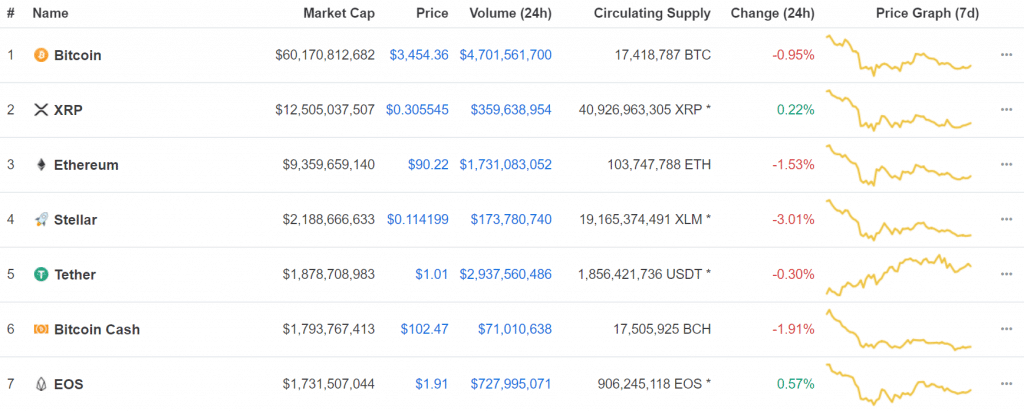
At the time of writing, the most widely-used network for the formation of dapps was Ethereum. Other popular networks that support the development of dapps are Stellar, EOS, TRON, and NEO. ETH, EOS, and Stellar sat in the top-10 cryptocurrencies by market cap.
Ethereum is currently the largest of these networks in terms of market cap. However, Elizabeth White, CEO of the White Company (a blockchain-based financial services technology company), told Finance Magnates that Ethereum isn’t all that it’s cracked up to be: “Ethereum has not generated the revolutionary projects that it promised have not really materialized,” she said.
“The majority of asset-backed tokens are now being built on Stellar because it's simpler, faster and cheaper. Ethereum's strength, which is its Turing complete smart contract language, has simply not been utilized in creative enough ways (CryptoKitties is great but if that's the pinnacle of Ethereum development.....),” she added.
The Identification of Reliable Fundamentals Could Bring More Investors Into Cryptocurrency Markets
Investing in cryptocurrency could also change due to the development of the markets’ fundamentals as value indicators.
Business valuation in traditional investing spheres is conducted based on a number of formulas that have been developed over a long period of time--formulas that take things like price, earnings, and dividend yields into consideration. As the cryptocurrency markets currently exist, none of the traditional formulas that guide investors in their decision-making processes apply directly.
However, as more understanding is gained regarding the factors that influence prices in the cryptocurrency markets, valuation formulas will become more reliable, and the cryptocurrency markets could attract more investors who depend on these kinds of tools. In a cryptocurrency context, these formulas might include hashrate, on-chain transactions, regulatory influence, exchange listings, and fiat on-ramps, in addition to other things.
When these fundamentals are identified and used consistently to determine price valuation, we may be able to expect more high-profile investors to enter the space--and to use their influence to attract others into the space.
Simultaneously, the altcoins with the strongest fundamentals will increasingly be separated from altcoins with less technical substance and business savvy. In other words, an increased sense of what’s actually valuable in the cryptocurrency markets will “weed out” coins that do not have fundamental worth.
Indeed, many analysts agree that this process has already begun. “Altcoins used to be the ultimate speculative play in 2017, as soon as Bitcoin rose, people took profits and moved to altcoins hoping they would follow,” said Elizabeth White. “The market quickly adjusted and in 2018 everything moved together, both up and down. The majority of speculative altcoins (i.e those outside the top 20) will end up thinly traded and die off because most of them have not done anything and have completely failed to realize their promises.”
Decentralized Exchanges Could Breathe Life into Altcoin Markets
A number of analysts also believe that the way that cryptocurrency is traded will change substantially throughout 2019.
2018 was a year of major hacks. Nearly $700 billion were stolen between the hacks of Coincheck and Bitgrail; around $500 billion more were stolen through smaller hacks of various exchanges around the world. Indeed, big money in the cryptocurrency markets combined with shoddy security practices on some cryptocurrency exchanges left ripe opportunities for hackers.
While the second half of the year was relatively hack-free, some analysts have noticed a shift toward decentralized exchanges.
Centralized cryptocurrency exchanges store their users’ cryptocurrencies for them, which is often what leaves the funds vulnerable to theft. Decentralized exchanges, on the other hand, do not ever control their users’ funds; they also generally have lower fees, although some decentralized exchanges can be expensive. Decentralized exchanges also allow their users a greater degree of anonymity, and cannot be hacked.
However, decentralized exchanges still face a number of technical issues that are preventing widespread adoption. The speed at which transactions are processing on a decentralized exchange are often far slower than those on centralized exchanges; a lack of liquidity on decentralized exchanges can slow trading even further. Many decentralized exchanges are also difficult to use.
Still, more and more platforms are either becoming decentralized themselves or are opening decentralized branches. Coinbase purchased decentralized exchange Paradex earlier this year; Binance released a demo of its decentralized exchange in August. Bitfinex announced that it will launch its own decentralized platform, 'EOSFinex.'
As the same companies who have built user-friendly and popular centralized exchanges continue to create user-friendly decentralized exchanges, we can expect more and more cryptocurrency to be traded through decentralized exchanges. Access to more secure, user-friendly, and reliable decentralized exchanges could cause a boost in the cryptocurrency markets.
Additionally, listing processes on many decentralized exchanges are far less expensive and require much less in terms of proving technical substance and fundamental worth. While this can be detrimental in the sense that it may be more possible for scamcoins to be distributed and traded, decentralized exchanges also open up the market to cryptocurrency startups that may have amazing fundamentals, but not a lot of cash to flash--listing on some exchanges can be in the hundreds of thousands (or even millions) of dollars.
A number of analysts also predict that 2019 will be the year of security tokens--cryptocurrency tokens that are collateralized with various assets, and legally represent the ownership of those assets. For example, a cryptocurrency token could represent a piece of real estate, a government bond, or equities.
The benefits to the widespread adoption of security tokens in the asset world are many--a network of security tokens would make asset ownership and trading incredibly simple and secure; trading could be done at any time, from anywhere, and for a negligible cost.
While there seems to be quite a bit of interest in security tokens from investors, there is not yet any single widespread system that has been adopted for their practical use. Additionally, the regulatory status of security tokens is unclear in most legal jurisdictions around the world.
Elizabeth White told Finance Magnates that security tokens represent a degree of tangible value that is unprecedented in the cryptosphere. “Investors are tired of speculative coins that promise ‘hopes and dreams’ and want to know that their investments actually have real world upside,” she said.
There are a growing number of security token platforms being born all the time, including Smart Valor and Neufund. Successful adoption of security tokens would most likely mean that either a single network would need to become the global standard, or that a layer of interoperability would be established.
Elizabeth White believes that this connection will continue, but not for every altcoin. “We will continue to see high beta (correlation) between BTC price and the price of existing ‘speculative’ altcoins,” she told Finance Magnates. “However, we will certainly see a dislocation between BTC and asset-backed coins. In simple terms, if a token is fully backed by gold and is redeemable, it will track the price of gold and have nothing to do with BTC.”
With the massive uncertainty in the future of the price of Bitcoin, this could either be a very good or a very bad thing. One thing is clear, however: 2019 may be the dawn of a more stable, dependable altcoin market.
What do you think that 2019 will bring for altcoins? Leave a comment below--we’d love to hear from you.
Bitcoin's long decline has taken the media's center stage for most of 2018. As the world has watched BTC burn, altcoins--and all of their failures and successes--have fallen to the wayside, minor characters in the tale of a dying legend.
Upon closer examination, however, altcoins are far from dead. The markets continue to develop, to change, and to grow. So now, the question is: what will 2019 bring for altcoins? How will their role in the investing world change, regardless of what happens to Bitcoin?
Rise in Coins and Networks That Support Dapp Development
Some analysts believe that one of the factors that has driven the cryptocurrency markets down is the exodus of speculative traders from the space. When the cryptocurrency markets were approaching their height, they attracted a multitude of short-term investors who sought to cash in on what appeared to be a momentous opportunity.
When the cryptocurrency markets fell during the first big crash of 2018, however, many of those investors split, never to return. Many of those that have remained in the markets have chosen to put their money into projects that have actual uses; that is to say, the projects they are part of are more than just a list of buzzwords like “decentralized payment system” and “trustless peer-to-peer network.”
While there is not one singular definition of what a dapp is, they do have a few important things in common: they are usually open-source, they are decentralized, their users are incentivized, and they run on some sort of a blockchain or other form of distributed ledger technology.
In today's blood bath, we must remember that nothing has ever changed. #blockchain#bitcoin#DAPP is the future and #TRON will decentralize the Internet. Check out #TRON 6 month data, we haven't seen such amazing increase before. Plz check after 2 years! #TRX$TRXpic.twitter.com/pK3S8pJB9e
Some examples of dapps are web browsers that pay their users to surf the web and share data; other dapps allow users to upload stock images they have taken to be purchased by other users, without a third-party collecting a profit. Perhaps the most well-known example of a dapp is the Ethereum-based CryptoKitties, a sort of blockchain-based Neopets that famously clogged the Ethereum blockchain for days.
At the time of writing, the most widely-used network for the formation of dapps was Ethereum. Other popular networks that support the development of dapps are Stellar, EOS, TRON, and NEO. ETH, EOS, and Stellar sat in the top-10 cryptocurrencies by market cap.
Ethereum is currently the largest of these networks in terms of market cap. However, Elizabeth White, CEO of the White Company (a blockchain-based financial services technology company), told Finance Magnates that Ethereum isn’t all that it’s cracked up to be: “Ethereum has not generated the revolutionary projects that it promised have not really materialized,” she said.
“The majority of asset-backed tokens are now being built on Stellar because it's simpler, faster and cheaper. Ethereum's strength, which is its Turing complete smart contract language, has simply not been utilized in creative enough ways (CryptoKitties is great but if that's the pinnacle of Ethereum development.....),” she added.
The Identification of Reliable Fundamentals Could Bring More Investors Into Cryptocurrency Markets
Investing in cryptocurrency could also change due to the development of the markets’ fundamentals as value indicators.
Business valuation in traditional investing spheres is conducted based on a number of formulas that have been developed over a long period of time--formulas that take things like price, earnings, and dividend yields into consideration. As the cryptocurrency markets currently exist, none of the traditional formulas that guide investors in their decision-making processes apply directly.
However, as more understanding is gained regarding the factors that influence prices in the cryptocurrency markets, valuation formulas will become more reliable, and the cryptocurrency markets could attract more investors who depend on these kinds of tools. In a cryptocurrency context, these formulas might include hashrate, on-chain transactions, regulatory influence, exchange listings, and fiat on-ramps, in addition to other things.
When these fundamentals are identified and used consistently to determine price valuation, we may be able to expect more high-profile investors to enter the space--and to use their influence to attract others into the space.
Simultaneously, the altcoins with the strongest fundamentals will increasingly be separated from altcoins with less technical substance and business savvy. In other words, an increased sense of what’s actually valuable in the cryptocurrency markets will “weed out” coins that do not have fundamental worth.
Indeed, many analysts agree that this process has already begun. “Altcoins used to be the ultimate speculative play in 2017, as soon as Bitcoin rose, people took profits and moved to altcoins hoping they would follow,” said Elizabeth White. “The market quickly adjusted and in 2018 everything moved together, both up and down. The majority of speculative altcoins (i.e those outside the top 20) will end up thinly traded and die off because most of them have not done anything and have completely failed to realize their promises.”
Decentralized Exchanges Could Breathe Life into Altcoin Markets
A number of analysts also believe that the way that cryptocurrency is traded will change substantially throughout 2019.
2018 was a year of major hacks. Nearly $700 billion were stolen between the hacks of Coincheck and Bitgrail; around $500 billion more were stolen through smaller hacks of various exchanges around the world. Indeed, big money in the cryptocurrency markets combined with shoddy security practices on some cryptocurrency exchanges left ripe opportunities for hackers.
While the second half of the year was relatively hack-free, some analysts have noticed a shift toward decentralized exchanges.
Centralized cryptocurrency exchanges store their users’ cryptocurrencies for them, which is often what leaves the funds vulnerable to theft. Decentralized exchanges, on the other hand, do not ever control their users’ funds; they also generally have lower fees, although some decentralized exchanges can be expensive. Decentralized exchanges also allow their users a greater degree of anonymity, and cannot be hacked.
However, decentralized exchanges still face a number of technical issues that are preventing widespread adoption. The speed at which transactions are processing on a decentralized exchange are often far slower than those on centralized exchanges; a lack of liquidity on decentralized exchanges can slow trading even further. Many decentralized exchanges are also difficult to use.
Still, more and more platforms are either becoming decentralized themselves or are opening decentralized branches. Coinbase purchased decentralized exchange Paradex earlier this year; Binance released a demo of its decentralized exchange in August. Bitfinex announced that it will launch its own decentralized platform, 'EOSFinex.'
As the same companies who have built user-friendly and popular centralized exchanges continue to create user-friendly decentralized exchanges, we can expect more and more cryptocurrency to be traded through decentralized exchanges. Access to more secure, user-friendly, and reliable decentralized exchanges could cause a boost in the cryptocurrency markets.
Additionally, listing processes on many decentralized exchanges are far less expensive and require much less in terms of proving technical substance and fundamental worth. While this can be detrimental in the sense that it may be more possible for scamcoins to be distributed and traded, decentralized exchanges also open up the market to cryptocurrency startups that may have amazing fundamentals, but not a lot of cash to flash--listing on some exchanges can be in the hundreds of thousands (or even millions) of dollars.
A number of analysts also predict that 2019 will be the year of security tokens--cryptocurrency tokens that are collateralized with various assets, and legally represent the ownership of those assets. For example, a cryptocurrency token could represent a piece of real estate, a government bond, or equities.
The benefits to the widespread adoption of security tokens in the asset world are many--a network of security tokens would make asset ownership and trading incredibly simple and secure; trading could be done at any time, from anywhere, and for a negligible cost.
While there seems to be quite a bit of interest in security tokens from investors, there is not yet any single widespread system that has been adopted for their practical use. Additionally, the regulatory status of security tokens is unclear in most legal jurisdictions around the world.
Elizabeth White told Finance Magnates that security tokens represent a degree of tangible value that is unprecedented in the cryptosphere. “Investors are tired of speculative coins that promise ‘hopes and dreams’ and want to know that their investments actually have real world upside,” she said.
There are a growing number of security token platforms being born all the time, including Smart Valor and Neufund. Successful adoption of security tokens would most likely mean that either a single network would need to become the global standard, or that a layer of interoperability would be established.
Elizabeth White believes that this connection will continue, but not for every altcoin. “We will continue to see high beta (correlation) between BTC price and the price of existing ‘speculative’ altcoins,” she told Finance Magnates. “However, we will certainly see a dislocation between BTC and asset-backed coins. In simple terms, if a token is fully backed by gold and is redeemable, it will track the price of gold and have nothing to do with BTC.”
With the massive uncertainty in the future of the price of Bitcoin, this could either be a very good or a very bad thing. One thing is clear, however: 2019 may be the dawn of a more stable, dependable altcoin market.
What do you think that 2019 will bring for altcoins? Leave a comment below--we’d love to hear from you.
Rachel is a self-taught crypto geek and a passionate writer. She believes in the power that the written word has to educate, connect and empower individuals to make positive and powerful financial choices. She is the Podcast Host and a Cryptocurrency Editor at Finance Magnates.
Crypto Built More Rails, but the Next Battle Is Over How Much Work a Dollar Can Do
Featured Videos
FP Markets Winner Spotlight 🏆 | Global Broker of the Year 2025 #Trading #Broker #Innovation #Shorts
FP Markets Winner Spotlight 🏆 | Global Broker of the Year 2025 #Trading #Broker #Innovation #Shorts
FP Markets Winner Spotlight 🏆 | Global Broker of the Year 2025 #Trading #Broker #Innovation #Shorts
FP Markets Winner Spotlight 🏆 | Global Broker of the Year 2025 #Trading #Broker #Innovation #Shorts
FP Markets takes the spotlight as Global Broker of the Year 2025 at the Finance Magnates Awards.
Martin Stoilov, Head of Client Experience, shares that trust, innovation, and people played a key role in the company’s success, supported by a strong foundation of integrity and client-centricity.
Following this milestone, FP Markets continues to focus on growth, technology investment, and its core values of transparency and excellence.
👉 Be part of FM Awards 2026: https://awards.financemagnates.com/#nominate
FP Markets takes the spotlight as Global Broker of the Year 2025 at the Finance Magnates Awards.
Martin Stoilov, Head of Client Experience, shares that trust, innovation, and people played a key role in the company’s success, supported by a strong foundation of integrity and client-centricity.
Following this milestone, FP Markets continues to focus on growth, technology investment, and its core values of transparency and excellence.
👉 Be part of FM Awards 2026: https://awards.financemagnates.com/#nominate
FP Markets takes the spotlight as Global Broker of the Year 2025 at the Finance Magnates Awards.
Martin Stoilov, Head of Client Experience, shares that trust, innovation, and people played a key role in the company’s success, supported by a strong foundation of integrity and client-centricity.
Following this milestone, FP Markets continues to focus on growth, technology investment, and its core values of transparency and excellence.
👉 Be part of FM Awards 2026: https://awards.financemagnates.com/#nominate
FP Markets takes the spotlight as Global Broker of the Year 2025 at the Finance Magnates Awards.
Martin Stoilov, Head of Client Experience, shares that trust, innovation, and people played a key role in the company’s success, supported by a strong foundation of integrity and client-centricity.
Following this milestone, FP Markets continues to focus on growth, technology investment, and its core values of transparency and excellence.
👉 Be part of FM Awards 2026: https://awards.financemagnates.com/#nominate
In this video, we review @HolaPrimeMarketsOfficial, a multi-asset forex and CFDs broker offering different account types, trading platforms, and flexible trading conditions.
We cover the broker’s overall offering, including account options, trading environment, platforms like MT4 and MT5, and additional services such as managed accounts and fast withdrawals.
Watch the full video to see if Hola Prime Markets fits your trading needs.
📣 Stay up to date with the latest in finance and trading. Follow Finance Magnates for industry news, insights, and global event coverage.
Connect with us:
🔗 LinkedIn: /financemagnates
👍 Facebook: /financemagnates
📸 Instagram: https://www.instagram.com/financemagnates
🐦 X: https://x.com/financemagnates
🎥 TikTok: https://www.tiktok.com/tag/financemagnates
▶️ YouTube: /@financemagnates_official
#HolaPrime #ForexBroker #CFDTrading #FinanceMagnates #Trading #Forex #BrokerReview
In this video, we review @HolaPrimeMarketsOfficial, a multi-asset forex and CFDs broker offering different account types, trading platforms, and flexible trading conditions.
We cover the broker’s overall offering, including account options, trading environment, platforms like MT4 and MT5, and additional services such as managed accounts and fast withdrawals.
Watch the full video to see if Hola Prime Markets fits your trading needs.
📣 Stay up to date with the latest in finance and trading. Follow Finance Magnates for industry news, insights, and global event coverage.
Connect with us:
🔗 LinkedIn: /financemagnates
👍 Facebook: /financemagnates
📸 Instagram: https://www.instagram.com/financemagnates
🐦 X: https://x.com/financemagnates
🎥 TikTok: https://www.tiktok.com/tag/financemagnates
▶️ YouTube: /@financemagnates_official
#HolaPrime #ForexBroker #CFDTrading #FinanceMagnates #Trading #Forex #BrokerReview
In this video, we review @HolaPrimeMarketsOfficial, a multi-asset forex and CFDs broker offering different account types, trading platforms, and flexible trading conditions.
We cover the broker’s overall offering, including account options, trading environment, platforms like MT4 and MT5, and additional services such as managed accounts and fast withdrawals.
Watch the full video to see if Hola Prime Markets fits your trading needs.
📣 Stay up to date with the latest in finance and trading. Follow Finance Magnates for industry news, insights, and global event coverage.
Connect with us:
🔗 LinkedIn: /financemagnates
👍 Facebook: /financemagnates
📸 Instagram: https://www.instagram.com/financemagnates
🐦 X: https://x.com/financemagnates
🎥 TikTok: https://www.tiktok.com/tag/financemagnates
▶️ YouTube: /@financemagnates_official
#HolaPrime #ForexBroker #CFDTrading #FinanceMagnates #Trading #Forex #BrokerReview
In this video, we review @HolaPrimeMarketsOfficial, a multi-asset forex and CFDs broker offering different account types, trading platforms, and flexible trading conditions.
We cover the broker’s overall offering, including account options, trading environment, platforms like MT4 and MT5, and additional services such as managed accounts and fast withdrawals.
Watch the full video to see if Hola Prime Markets fits your trading needs.
📣 Stay up to date with the latest in finance and trading. Follow Finance Magnates for industry news, insights, and global event coverage.
Connect with us:
🔗 LinkedIn: /financemagnates
👍 Facebook: /financemagnates
📸 Instagram: https://www.instagram.com/financemagnates
🐦 X: https://x.com/financemagnates
🎥 TikTok: https://www.tiktok.com/tag/financemagnates
▶️ YouTube: /@financemagnates_official
#HolaPrime #ForexBroker #CFDTrading #FinanceMagnates #Trading #Forex #BrokerReview
In this video, we review @HolaPrimeMarketsOfficial, a multi-asset forex and CFDs broker offering different account types, trading platforms, and flexible trading conditions.
We cover the broker’s overall offering, including account options, trading environment, platforms like MT4 and MT5, and additional services such as managed accounts and fast withdrawals.
Watch the full video to see if Hola Prime Markets fits your trading needs.
📣 Stay up to date with the latest in finance and trading. Follow Finance Magnates for industry news, insights, and global event coverage.
Connect with us:
🔗 LinkedIn: /financemagnates
👍 Facebook: /financemagnates
📸 Instagram: https://www.instagram.com/financemagnates
🐦 X: https://x.com/financemagnates
🎥 TikTok: https://www.tiktok.com/tag/financemagnates
▶️ YouTube: /@financemagnates_official
#HolaPrime #ForexBroker #CFDTrading #FinanceMagnates #Trading #Forex #BrokerReview
In this video, we review @HolaPrimeMarketsOfficial, a multi-asset forex and CFDs broker offering different account types, trading platforms, and flexible trading conditions.
We cover the broker’s overall offering, including account options, trading environment, platforms like MT4 and MT5, and additional services such as managed accounts and fast withdrawals.
Watch the full video to see if Hola Prime Markets fits your trading needs.
📣 Stay up to date with the latest in finance and trading. Follow Finance Magnates for industry news, insights, and global event coverage.
Connect with us:
🔗 LinkedIn: /financemagnates
👍 Facebook: /financemagnates
📸 Instagram: https://www.instagram.com/financemagnates
🐦 X: https://x.com/financemagnates
🎥 TikTok: https://www.tiktok.com/tag/financemagnates
▶️ YouTube: /@financemagnates_official
#HolaPrime #ForexBroker #CFDTrading #FinanceMagnates #Trading #Forex #BrokerReview
Hola Prime Review: What You Need to Know | Full Breakdown by Finance Magnates
Hola Prime Review: What You Need to Know | Full Breakdown by Finance Magnates
Hola Prime Review: What You Need to Know | Full Breakdown by Finance Magnates
Hola Prime Review: What You Need to Know | Full Breakdown by Finance Magnates
Hola Prime Review: What You Need to Know | Full Breakdown by Finance Magnates
Hola Prime Review: What You Need to Know | Full Breakdown by Finance Magnates
In this video, we review @HolaPrime_Global, a proprietary trading firm offering evaluation programs and performance-based payouts in simulated market environments.
We cover how the challenge model works, including account types, profit splits (up to 95%), trading rules, and what it takes to reach a funded account. You’ll also learn about available platforms like MT4, MT5, cTrader, and more, along with insights into payouts, support, and trading conditions.
Watch the full video to see if Hola Prime fits your trading style.
📣 Stay up to date with the latest in finance and trading. Follow Finance Magnates for industry news, insights, and global event coverage.
Connect with us:
🔗 LinkedIn: /financemagnates
👍 Facebook: /financemagnates
📸 Instagram: https://www.instagram.com/financemagnates
🐦 X: https://x.com/financemagnates
🎥 TikTok: https://www.tiktok.com/tag/financemagnates
▶️ YouTube: /@financemagnates_official
#HolaPrime #PropFirm #Trading #FinanceMagnates #Forex #FuturesTrading #TradingReview #PropFirmReview
In this video, we review @HolaPrime_Global, a proprietary trading firm offering evaluation programs and performance-based payouts in simulated market environments.
We cover how the challenge model works, including account types, profit splits (up to 95%), trading rules, and what it takes to reach a funded account. You’ll also learn about available platforms like MT4, MT5, cTrader, and more, along with insights into payouts, support, and trading conditions.
Watch the full video to see if Hola Prime fits your trading style.
📣 Stay up to date with the latest in finance and trading. Follow Finance Magnates for industry news, insights, and global event coverage.
Connect with us:
🔗 LinkedIn: /financemagnates
👍 Facebook: /financemagnates
📸 Instagram: https://www.instagram.com/financemagnates
🐦 X: https://x.com/financemagnates
🎥 TikTok: https://www.tiktok.com/tag/financemagnates
▶️ YouTube: /@financemagnates_official
#HolaPrime #PropFirm #Trading #FinanceMagnates #Forex #FuturesTrading #TradingReview #PropFirmReview
In this video, we review @HolaPrime_Global, a proprietary trading firm offering evaluation programs and performance-based payouts in simulated market environments.
We cover how the challenge model works, including account types, profit splits (up to 95%), trading rules, and what it takes to reach a funded account. You’ll also learn about available platforms like MT4, MT5, cTrader, and more, along with insights into payouts, support, and trading conditions.
Watch the full video to see if Hola Prime fits your trading style.
📣 Stay up to date with the latest in finance and trading. Follow Finance Magnates for industry news, insights, and global event coverage.
Connect with us:
🔗 LinkedIn: /financemagnates
👍 Facebook: /financemagnates
📸 Instagram: https://www.instagram.com/financemagnates
🐦 X: https://x.com/financemagnates
🎥 TikTok: https://www.tiktok.com/tag/financemagnates
▶️ YouTube: /@financemagnates_official
#HolaPrime #PropFirm #Trading #FinanceMagnates #Forex #FuturesTrading #TradingReview #PropFirmReview
In this video, we review @HolaPrime_Global, a proprietary trading firm offering evaluation programs and performance-based payouts in simulated market environments.
We cover how the challenge model works, including account types, profit splits (up to 95%), trading rules, and what it takes to reach a funded account. You’ll also learn about available platforms like MT4, MT5, cTrader, and more, along with insights into payouts, support, and trading conditions.
Watch the full video to see if Hola Prime fits your trading style.
📣 Stay up to date with the latest in finance and trading. Follow Finance Magnates for industry news, insights, and global event coverage.
Connect with us:
🔗 LinkedIn: /financemagnates
👍 Facebook: /financemagnates
📸 Instagram: https://www.instagram.com/financemagnates
🐦 X: https://x.com/financemagnates
🎥 TikTok: https://www.tiktok.com/tag/financemagnates
▶️ YouTube: /@financemagnates_official
#HolaPrime #PropFirm #Trading #FinanceMagnates #Forex #FuturesTrading #TradingReview #PropFirmReview
In this video, we review @HolaPrime_Global, a proprietary trading firm offering evaluation programs and performance-based payouts in simulated market environments.
We cover how the challenge model works, including account types, profit splits (up to 95%), trading rules, and what it takes to reach a funded account. You’ll also learn about available platforms like MT4, MT5, cTrader, and more, along with insights into payouts, support, and trading conditions.
Watch the full video to see if Hola Prime fits your trading style.
📣 Stay up to date with the latest in finance and trading. Follow Finance Magnates for industry news, insights, and global event coverage.
Connect with us:
🔗 LinkedIn: /financemagnates
👍 Facebook: /financemagnates
📸 Instagram: https://www.instagram.com/financemagnates
🐦 X: https://x.com/financemagnates
🎥 TikTok: https://www.tiktok.com/tag/financemagnates
▶️ YouTube: /@financemagnates_official
#HolaPrime #PropFirm #Trading #FinanceMagnates #Forex #FuturesTrading #TradingReview #PropFirmReview
In this video, we review @HolaPrime_Global, a proprietary trading firm offering evaluation programs and performance-based payouts in simulated market environments.
We cover how the challenge model works, including account types, profit splits (up to 95%), trading rules, and what it takes to reach a funded account. You’ll also learn about available platforms like MT4, MT5, cTrader, and more, along with insights into payouts, support, and trading conditions.
Watch the full video to see if Hola Prime fits your trading style.
📣 Stay up to date with the latest in finance and trading. Follow Finance Magnates for industry news, insights, and global event coverage.
Connect with us:
🔗 LinkedIn: /financemagnates
👍 Facebook: /financemagnates
📸 Instagram: https://www.instagram.com/financemagnates
🐦 X: https://x.com/financemagnates
🎥 TikTok: https://www.tiktok.com/tag/financemagnates
▶️ YouTube: /@financemagnates_official
#HolaPrime #PropFirm #Trading #FinanceMagnates #Forex #FuturesTrading #TradingReview #PropFirmReview
Axi Winner Spotlight 🏆 | Global Most Innovative Broker 2025 #Innovation #Trading #Fintech #Broker
Axi Winner Spotlight 🏆 | Global Most Innovative Broker 2025 #Innovation #Trading #Fintech #Broker
Axi Winner Spotlight 🏆 | Global Most Innovative Broker 2025 #Innovation #Trading #Fintech #Broker
Axi Winner Spotlight 🏆 | Global Most Innovative Broker 2025 #Innovation #Trading #Fintech #Broker
Axi Winner Spotlight 🏆 | Global Most Innovative Broker 2025 #Innovation #Trading #Fintech #Broker
Axi Winner Spotlight 🏆 | Global Most Innovative Broker 2025 #Innovation #Trading #Fintech #Broker
Axi takes the spotlight at the Finance Magnates Awards, winning Global Most Innovative Broker 2025.
Olivia Xenofontos and Ivanna Openko share how the team will feel: proud, motivated, and ready to keep delivering.
They also describe the night as well-organized, focused, and enjoyable for all.
👉 Be part of FM Awards 2026.
Axi takes the spotlight at the Finance Magnates Awards, winning Global Most Innovative Broker 2025.
Olivia Xenofontos and Ivanna Openko share how the team will feel: proud, motivated, and ready to keep delivering.
They also describe the night as well-organized, focused, and enjoyable for all.
👉 Be part of FM Awards 2026.
Axi takes the spotlight at the Finance Magnates Awards, winning Global Most Innovative Broker 2025.
Olivia Xenofontos and Ivanna Openko share how the team will feel: proud, motivated, and ready to keep delivering.
They also describe the night as well-organized, focused, and enjoyable for all.
👉 Be part of FM Awards 2026.
Axi takes the spotlight at the Finance Magnates Awards, winning Global Most Innovative Broker 2025.
Olivia Xenofontos and Ivanna Openko share how the team will feel: proud, motivated, and ready to keep delivering.
They also describe the night as well-organized, focused, and enjoyable for all.
👉 Be part of FM Awards 2026.
Axi takes the spotlight at the Finance Magnates Awards, winning Global Most Innovative Broker 2025.
Olivia Xenofontos and Ivanna Openko share how the team will feel: proud, motivated, and ready to keep delivering.
They also describe the night as well-organized, focused, and enjoyable for all.
👉 Be part of FM Awards 2026.
Axi takes the spotlight at the Finance Magnates Awards, winning Global Most Innovative Broker 2025.
Olivia Xenofontos and Ivanna Openko share how the team will feel: proud, motivated, and ready to keep delivering.
They also describe the night as well-organized, focused, and enjoyable for all.
👉 Be part of FM Awards 2026.
Recognition that matters.
Built on transparency.
Driven by the industry.
The Finance Magnates Awards 2026.
Nominations are now open.
🔗 https://awards.financemagnates.com/?utm_source=SM&utm_medium=social&utm_campaign=recognition-matters
Recognition that matters.
Built on transparency.
Driven by the industry.
The Finance Magnates Awards 2026.
Nominations are now open.
🔗 https://awards.financemagnates.com/?utm_source=SM&utm_medium=social&utm_campaign=recognition-matters
Recognition that matters.
Built on transparency.
Driven by the industry.
The Finance Magnates Awards 2026.
Nominations are now open.
🔗 https://awards.financemagnates.com/?utm_source=SM&utm_medium=social&utm_campaign=recognition-matters
Recognition that matters.
Built on transparency.
Driven by the industry.
The Finance Magnates Awards 2026.
Nominations are now open.
🔗 https://awards.financemagnates.com/?utm_source=SM&utm_medium=social&utm_campaign=recognition-matters
Recognition that matters.
Built on transparency.
Driven by the industry.
The Finance Magnates Awards 2026.
Nominations are now open.
🔗 https://awards.financemagnates.com/?utm_source=SM&utm_medium=social&utm_campaign=recognition-matters
Recognition that matters.
Built on transparency.
Driven by the industry.
The Finance Magnates Awards 2026.
Nominations are now open.
🔗 https://awards.financemagnates.com/?utm_source=SM&utm_medium=social&utm_campaign=recognition-matters