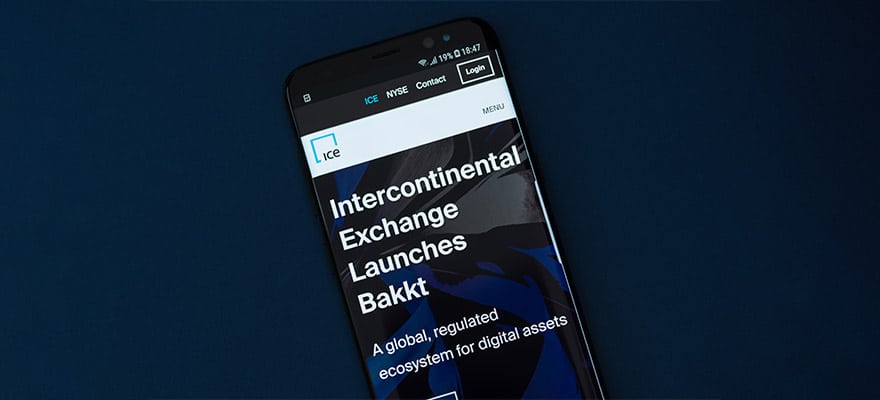
The announcement says that so far, Pantera Capital, Galaxy Digital, and Tagomi have chosen Bakkt Warehouse as their custodian.
“A critical link — perhaps the critical link — in the institutional adoption of bitcoin is custody,” the post explains. “When investors have ready access to regulated custodians whose security and processes they trust, the full potential of this emerging asset class and technology can flourish.”
“[...] How do we know that we can have custody and have a hold of these crypto assets?” he asked during an interview with CNBC. “That’s a key question.”
Bakkt’s launch was not as significant as many thought it would be
The expansion of Bakkt’s custody offerings is a good sign for the futures exchange, which — despite recent upticks in trading volume — has been a bit underwhelming since its September launch.
Indeed, when trading on Bakkt went live, the exchange saw just $5.8 million in trading volume within its first 24 hours. The figure was far lower than a number of industry analysts and participants had predicted it would be.
Indeed, more than half of respondents on a Twitter poll conducted by economist Alex Krüger said that they believed that Bakkt would see a “successful launch” rather than a flop.
Bakkt's first week volume was approximately $5.8 million.
It managed to get traders interested in 5 bitcoin worth of its physically delivered daily futures. Quite the successful launch.
— Alex Krüger (@krugermacro) September 29, 2019
After trading volume failed to meet expectations, however, Krüger tweeted that the low volume surrounding the launch could be the result of “either poor marketing, bad execution, few care (sic), or a combination of these factors. I can only speculate.”
A slow climb
However, it seems that interest in Bakkt trading has been picking up — albeit, not as quickly as many had hoped.
Indeed, on November 9, the exchange announced that it had set a new daily trading volume record of 1,756 Bitcoin Futures contracts traded in a single day.
Today we set a new daily record of 1,756 Bakkt Bitcoin Futures contracts traded
Charles Phan, CTO at cryptocurrency exchange Interdax, said to Finance Magnates that “this represents around $15.5 million in volume.”
However, while $15.5 million in trading volume may be a new record for Bakkt, it is quite paltry when compared to other trading platforms: “$15.5 million is anywhere between 10 times to 100 times smaller than the volume of the dominant cryptocurrency exchanges,” Phan said.
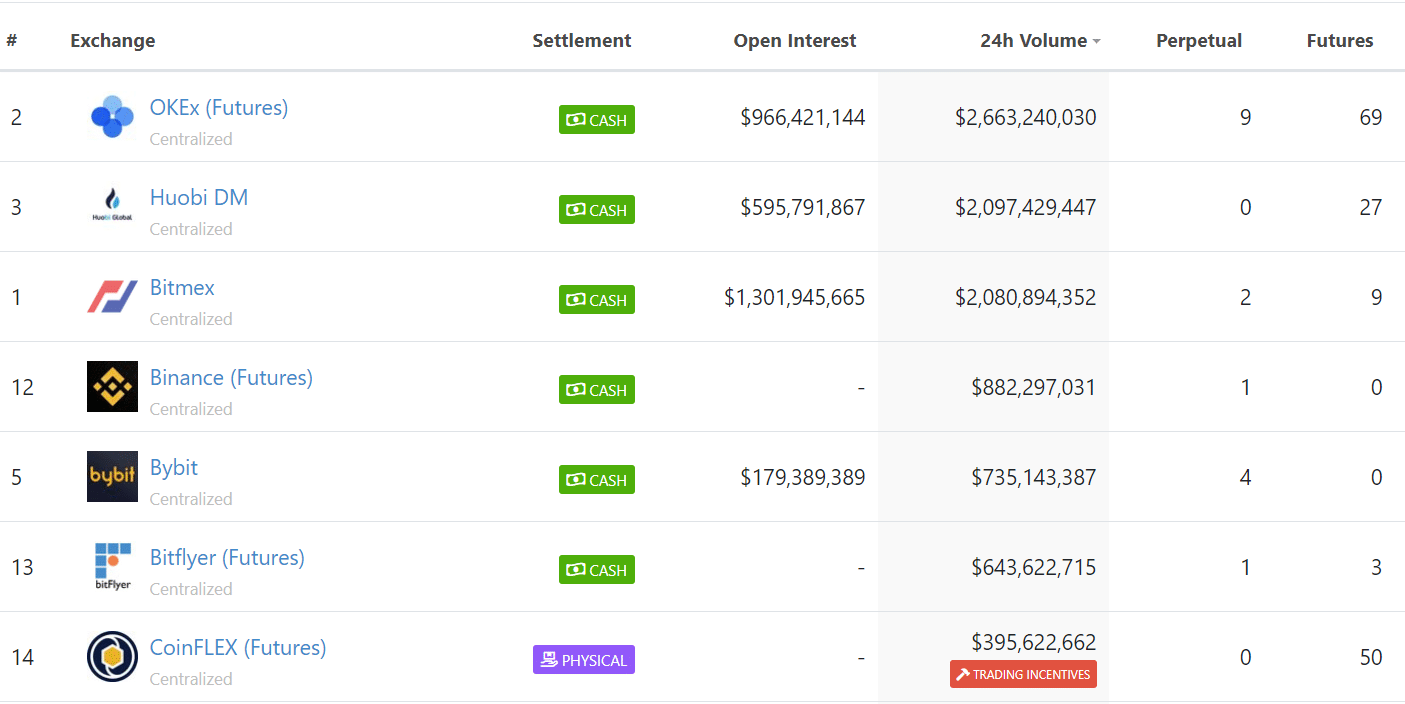
Indeed, at press time, cryptocurrency derivatives exchange volume on OKEx (Futures), Huobi DM, and BitMEX was above $2 billion. Trading volume on CoinFLEX (Futures), another physically-settled cryptocurrency derivatives exchange, was over $395 million.
Data from CoinGecko, accessed 12.11.2019.
At press time, Bakkt’s 24-hour trading volume was just over $12.6 million, or about 1440 BTC.
∙ Today's volume so far: 1438 BTC ($12,618,450)
∙ Last traded price: $8,775
∙ Trading day progress: 83%
∙ Current daily Bakktarget™: 1527 BTC ($13,402,948)
Phan explained to Finance Magnates that the increase in volume could be the result of market makers.
“Market makers arbitrage across exchanges so it’s not surprising to see that Bakkt might be picking up volume from other places,” he said.
“As volume continues to increase in the bitcoin market from the October lows, one consequence is that arbitrageurs might be trading more using Bakkt’s contracts. Any institutional investors in the market will also contribute to Bakkt’s volumes.”
“It’s not demand yet, it’s intense curiosity”
However, the low volume upon the launch of Bakkt (as well as the slow climb in trading volume that has followed) could be signals of a general lack of serious institutional demand in cryptocurrency.
Indeed, the lack of excitement around the launch of Bakkt was preceded by another “flop” — in the weeks running up to the SEC’s decision on its Bitcoin ETF application, Van Eck launched a “BTF,” a sort of pseudo-Bitcoin ETF that was available to Qualified Institutional Buyers (QIBs).
However, three days after its launch, Alex Krüger pointed out that just $41,400 had been invested in the BTF — hardly the “wave” that the industry had been waiting for.
Three days after launch, the VanEck bitcoin trust for institutional investors has reportedly managed to issue a whopping 1 (one) basket. It has 4 bitcoins or $41,400 in assets under management. Massive. pic.twitter.com/TUePbLVqBi
This caused a number of individuals within the industry to begin to question the narrative of the “wave of institutional capital” that was just around the corner for Bitcoin.
And indeed, when Bakkt was launched, Jeff Sprecher, founder and CEO of the Intercontinental Exchange (Bakkt’s parent institution) told Fortune that he wouldn’t go so far as to say that institutional investors are ready to buy into Bakkt’s offerings just yet: “it’s not demand yet, it’s intense curiosity,” he said.
“It’s the sense that money managers want to be at the front of this train and not left out. The day-to-day news covers Bitcoin when the prices go way up or way down, but underneath we see sophisticated people investing in infrastructure and compliance that’s unrelated to the price,” Sprecher continued. “But they won’t use that infrastructure; there won’t be true global acceptance until we can build out the rails in a regulated manner.”
However, Alex Krüger had a different take: “institutional money already trades lots of bitcoin .... just not the type of institutions who are long term holders,” he wrote on Twitter.
Institutional money already trades lots of bitcoin .... just not the type of institutions who are long term holders.
Still, while “Bakkt’s growing liquidity is a positive sign,” Phan said that the platform “still has a way to go before it becomes a venue that dictates bitcoin’s price action or has a significant influence on it.”
The announcement says that so far, Pantera Capital, Galaxy Digital, and Tagomi have chosen Bakkt Warehouse as their custodian.
“A critical link — perhaps the critical link — in the institutional adoption of bitcoin is custody,” the post explains. “When investors have ready access to regulated custodians whose security and processes they trust, the full potential of this emerging asset class and technology can flourish.”
“[...] How do we know that we can have custody and have a hold of these crypto assets?” he asked during an interview with CNBC. “That’s a key question.”
Bakkt’s launch was not as significant as many thought it would be
The expansion of Bakkt’s custody offerings is a good sign for the futures exchange, which — despite recent upticks in trading volume — has been a bit underwhelming since its September launch.
Indeed, when trading on Bakkt went live, the exchange saw just $5.8 million in trading volume within its first 24 hours. The figure was far lower than a number of industry analysts and participants had predicted it would be.
Indeed, more than half of respondents on a Twitter poll conducted by economist Alex Krüger said that they believed that Bakkt would see a “successful launch” rather than a flop.
Bakkt's first week volume was approximately $5.8 million.
It managed to get traders interested in 5 bitcoin worth of its physically delivered daily futures. Quite the successful launch.
— Alex Krüger (@krugermacro) September 29, 2019
After trading volume failed to meet expectations, however, Krüger tweeted that the low volume surrounding the launch could be the result of “either poor marketing, bad execution, few care (sic), or a combination of these factors. I can only speculate.”
A slow climb
However, it seems that interest in Bakkt trading has been picking up — albeit, not as quickly as many had hoped.
Indeed, on November 9, the exchange announced that it had set a new daily trading volume record of 1,756 Bitcoin Futures contracts traded in a single day.
Today we set a new daily record of 1,756 Bakkt Bitcoin Futures contracts traded
Charles Phan, CTO at cryptocurrency exchange Interdax, said to Finance Magnates that “this represents around $15.5 million in volume.”
However, while $15.5 million in trading volume may be a new record for Bakkt, it is quite paltry when compared to other trading platforms: “$15.5 million is anywhere between 10 times to 100 times smaller than the volume of the dominant cryptocurrency exchanges,” Phan said.
Indeed, at press time, cryptocurrency derivatives exchange volume on OKEx (Futures), Huobi DM, and BitMEX was above $2 billion. Trading volume on CoinFLEX (Futures), another physically-settled cryptocurrency derivatives exchange, was over $395 million.
Data from CoinGecko, accessed 12.11.2019.
At press time, Bakkt’s 24-hour trading volume was just over $12.6 million, or about 1440 BTC.
∙ Today's volume so far: 1438 BTC ($12,618,450)
∙ Last traded price: $8,775
∙ Trading day progress: 83%
∙ Current daily Bakktarget™: 1527 BTC ($13,402,948)
Phan explained to Finance Magnates that the increase in volume could be the result of market makers.
“Market makers arbitrage across exchanges so it’s not surprising to see that Bakkt might be picking up volume from other places,” he said.
“As volume continues to increase in the bitcoin market from the October lows, one consequence is that arbitrageurs might be trading more using Bakkt’s contracts. Any institutional investors in the market will also contribute to Bakkt’s volumes.”
“It’s not demand yet, it’s intense curiosity”
However, the low volume upon the launch of Bakkt (as well as the slow climb in trading volume that has followed) could be signals of a general lack of serious institutional demand in cryptocurrency.
Indeed, the lack of excitement around the launch of Bakkt was preceded by another “flop” — in the weeks running up to the SEC’s decision on its Bitcoin ETF application, Van Eck launched a “BTF,” a sort of pseudo-Bitcoin ETF that was available to Qualified Institutional Buyers (QIBs).
However, three days after its launch, Alex Krüger pointed out that just $41,400 had been invested in the BTF — hardly the “wave” that the industry had been waiting for.
Three days after launch, the VanEck bitcoin trust for institutional investors has reportedly managed to issue a whopping 1 (one) basket. It has 4 bitcoins or $41,400 in assets under management. Massive. pic.twitter.com/TUePbLVqBi
This caused a number of individuals within the industry to begin to question the narrative of the “wave of institutional capital” that was just around the corner for Bitcoin.
And indeed, when Bakkt was launched, Jeff Sprecher, founder and CEO of the Intercontinental Exchange (Bakkt’s parent institution) told Fortune that he wouldn’t go so far as to say that institutional investors are ready to buy into Bakkt’s offerings just yet: “it’s not demand yet, it’s intense curiosity,” he said.
“It’s the sense that money managers want to be at the front of this train and not left out. The day-to-day news covers Bitcoin when the prices go way up or way down, but underneath we see sophisticated people investing in infrastructure and compliance that’s unrelated to the price,” Sprecher continued. “But they won’t use that infrastructure; there won’t be true global acceptance until we can build out the rails in a regulated manner.”
However, Alex Krüger had a different take: “institutional money already trades lots of bitcoin .... just not the type of institutions who are long term holders,” he wrote on Twitter.
Institutional money already trades lots of bitcoin .... just not the type of institutions who are long term holders.
Still, while “Bakkt’s growing liquidity is a positive sign,” Phan said that the platform “still has a way to go before it becomes a venue that dictates bitcoin’s price action or has a significant influence on it.”
Rachel is a self-taught crypto geek and a passionate writer. She believes in the power that the written word has to educate, connect and empower individuals to make positive and powerful financial choices. She is the Podcast Host and a Cryptocurrency Editor at Finance Magnates.
Crypto Built More Rails, but the Next Battle Is Over How Much Work a Dollar Can Do
Featured Videos
FP Markets Winner Spotlight 🏆 | Global Broker of the Year 2025 #Trading #Broker #Innovation #Shorts
FP Markets Winner Spotlight 🏆 | Global Broker of the Year 2025 #Trading #Broker #Innovation #Shorts
FP Markets Winner Spotlight 🏆 | Global Broker of the Year 2025 #Trading #Broker #Innovation #Shorts
FP Markets Winner Spotlight 🏆 | Global Broker of the Year 2025 #Trading #Broker #Innovation #Shorts
FP Markets takes the spotlight as Global Broker of the Year 2025 at the Finance Magnates Awards.
Martin Stoilov, Head of Client Experience, shares that trust, innovation, and people played a key role in the company’s success, supported by a strong foundation of integrity and client-centricity.
Following this milestone, FP Markets continues to focus on growth, technology investment, and its core values of transparency and excellence.
👉 Be part of FM Awards 2026: https://awards.financemagnates.com/#nominate
FP Markets takes the spotlight as Global Broker of the Year 2025 at the Finance Magnates Awards.
Martin Stoilov, Head of Client Experience, shares that trust, innovation, and people played a key role in the company’s success, supported by a strong foundation of integrity and client-centricity.
Following this milestone, FP Markets continues to focus on growth, technology investment, and its core values of transparency and excellence.
👉 Be part of FM Awards 2026: https://awards.financemagnates.com/#nominate
FP Markets takes the spotlight as Global Broker of the Year 2025 at the Finance Magnates Awards.
Martin Stoilov, Head of Client Experience, shares that trust, innovation, and people played a key role in the company’s success, supported by a strong foundation of integrity and client-centricity.
Following this milestone, FP Markets continues to focus on growth, technology investment, and its core values of transparency and excellence.
👉 Be part of FM Awards 2026: https://awards.financemagnates.com/#nominate
FP Markets takes the spotlight as Global Broker of the Year 2025 at the Finance Magnates Awards.
Martin Stoilov, Head of Client Experience, shares that trust, innovation, and people played a key role in the company’s success, supported by a strong foundation of integrity and client-centricity.
Following this milestone, FP Markets continues to focus on growth, technology investment, and its core values of transparency and excellence.
👉 Be part of FM Awards 2026: https://awards.financemagnates.com/#nominate
In this video, we review @HolaPrimeMarketsOfficial, a multi-asset forex and CFDs broker offering different account types, trading platforms, and flexible trading conditions.
We cover the broker’s overall offering, including account options, trading environment, platforms like MT4 and MT5, and additional services such as managed accounts and fast withdrawals.
Watch the full video to see if Hola Prime Markets fits your trading needs.
📣 Stay up to date with the latest in finance and trading. Follow Finance Magnates for industry news, insights, and global event coverage.
Connect with us:
🔗 LinkedIn: /financemagnates
👍 Facebook: /financemagnates
📸 Instagram: https://www.instagram.com/financemagnates
🐦 X: https://x.com/financemagnates
🎥 TikTok: https://www.tiktok.com/tag/financemagnates
▶️ YouTube: /@financemagnates_official
#HolaPrime #ForexBroker #CFDTrading #FinanceMagnates #Trading #Forex #BrokerReview
In this video, we review @HolaPrimeMarketsOfficial, a multi-asset forex and CFDs broker offering different account types, trading platforms, and flexible trading conditions.
We cover the broker’s overall offering, including account options, trading environment, platforms like MT4 and MT5, and additional services such as managed accounts and fast withdrawals.
Watch the full video to see if Hola Prime Markets fits your trading needs.
📣 Stay up to date with the latest in finance and trading. Follow Finance Magnates for industry news, insights, and global event coverage.
Connect with us:
🔗 LinkedIn: /financemagnates
👍 Facebook: /financemagnates
📸 Instagram: https://www.instagram.com/financemagnates
🐦 X: https://x.com/financemagnates
🎥 TikTok: https://www.tiktok.com/tag/financemagnates
▶️ YouTube: /@financemagnates_official
#HolaPrime #ForexBroker #CFDTrading #FinanceMagnates #Trading #Forex #BrokerReview
In this video, we review @HolaPrimeMarketsOfficial, a multi-asset forex and CFDs broker offering different account types, trading platforms, and flexible trading conditions.
We cover the broker’s overall offering, including account options, trading environment, platforms like MT4 and MT5, and additional services such as managed accounts and fast withdrawals.
Watch the full video to see if Hola Prime Markets fits your trading needs.
📣 Stay up to date with the latest in finance and trading. Follow Finance Magnates for industry news, insights, and global event coverage.
Connect with us:
🔗 LinkedIn: /financemagnates
👍 Facebook: /financemagnates
📸 Instagram: https://www.instagram.com/financemagnates
🐦 X: https://x.com/financemagnates
🎥 TikTok: https://www.tiktok.com/tag/financemagnates
▶️ YouTube: /@financemagnates_official
#HolaPrime #ForexBroker #CFDTrading #FinanceMagnates #Trading #Forex #BrokerReview
In this video, we review @HolaPrimeMarketsOfficial, a multi-asset forex and CFDs broker offering different account types, trading platforms, and flexible trading conditions.
We cover the broker’s overall offering, including account options, trading environment, platforms like MT4 and MT5, and additional services such as managed accounts and fast withdrawals.
Watch the full video to see if Hola Prime Markets fits your trading needs.
📣 Stay up to date with the latest in finance and trading. Follow Finance Magnates for industry news, insights, and global event coverage.
Connect with us:
🔗 LinkedIn: /financemagnates
👍 Facebook: /financemagnates
📸 Instagram: https://www.instagram.com/financemagnates
🐦 X: https://x.com/financemagnates
🎥 TikTok: https://www.tiktok.com/tag/financemagnates
▶️ YouTube: /@financemagnates_official
#HolaPrime #ForexBroker #CFDTrading #FinanceMagnates #Trading #Forex #BrokerReview
In this video, we review @HolaPrimeMarketsOfficial, a multi-asset forex and CFDs broker offering different account types, trading platforms, and flexible trading conditions.
We cover the broker’s overall offering, including account options, trading environment, platforms like MT4 and MT5, and additional services such as managed accounts and fast withdrawals.
Watch the full video to see if Hola Prime Markets fits your trading needs.
📣 Stay up to date with the latest in finance and trading. Follow Finance Magnates for industry news, insights, and global event coverage.
Connect with us:
🔗 LinkedIn: /financemagnates
👍 Facebook: /financemagnates
📸 Instagram: https://www.instagram.com/financemagnates
🐦 X: https://x.com/financemagnates
🎥 TikTok: https://www.tiktok.com/tag/financemagnates
▶️ YouTube: /@financemagnates_official
#HolaPrime #ForexBroker #CFDTrading #FinanceMagnates #Trading #Forex #BrokerReview
In this video, we review @HolaPrimeMarketsOfficial, a multi-asset forex and CFDs broker offering different account types, trading platforms, and flexible trading conditions.
We cover the broker’s overall offering, including account options, trading environment, platforms like MT4 and MT5, and additional services such as managed accounts and fast withdrawals.
Watch the full video to see if Hola Prime Markets fits your trading needs.
📣 Stay up to date with the latest in finance and trading. Follow Finance Magnates for industry news, insights, and global event coverage.
Connect with us:
🔗 LinkedIn: /financemagnates
👍 Facebook: /financemagnates
📸 Instagram: https://www.instagram.com/financemagnates
🐦 X: https://x.com/financemagnates
🎥 TikTok: https://www.tiktok.com/tag/financemagnates
▶️ YouTube: /@financemagnates_official
#HolaPrime #ForexBroker #CFDTrading #FinanceMagnates #Trading #Forex #BrokerReview
Hola Prime Review: What You Need to Know | Full Breakdown by Finance Magnates
Hola Prime Review: What You Need to Know | Full Breakdown by Finance Magnates
Hola Prime Review: What You Need to Know | Full Breakdown by Finance Magnates
Hola Prime Review: What You Need to Know | Full Breakdown by Finance Magnates
Hola Prime Review: What You Need to Know | Full Breakdown by Finance Magnates
Hola Prime Review: What You Need to Know | Full Breakdown by Finance Magnates
In this video, we review @HolaPrime_Global, a proprietary trading firm offering evaluation programs and performance-based payouts in simulated market environments.
We cover how the challenge model works, including account types, profit splits (up to 95%), trading rules, and what it takes to reach a funded account. You’ll also learn about available platforms like MT4, MT5, cTrader, and more, along with insights into payouts, support, and trading conditions.
Watch the full video to see if Hola Prime fits your trading style.
📣 Stay up to date with the latest in finance and trading. Follow Finance Magnates for industry news, insights, and global event coverage.
Connect with us:
🔗 LinkedIn: /financemagnates
👍 Facebook: /financemagnates
📸 Instagram: https://www.instagram.com/financemagnates
🐦 X: https://x.com/financemagnates
🎥 TikTok: https://www.tiktok.com/tag/financemagnates
▶️ YouTube: /@financemagnates_official
#HolaPrime #PropFirm #Trading #FinanceMagnates #Forex #FuturesTrading #TradingReview #PropFirmReview
In this video, we review @HolaPrime_Global, a proprietary trading firm offering evaluation programs and performance-based payouts in simulated market environments.
We cover how the challenge model works, including account types, profit splits (up to 95%), trading rules, and what it takes to reach a funded account. You’ll also learn about available platforms like MT4, MT5, cTrader, and more, along with insights into payouts, support, and trading conditions.
Watch the full video to see if Hola Prime fits your trading style.
📣 Stay up to date with the latest in finance and trading. Follow Finance Magnates for industry news, insights, and global event coverage.
Connect with us:
🔗 LinkedIn: /financemagnates
👍 Facebook: /financemagnates
📸 Instagram: https://www.instagram.com/financemagnates
🐦 X: https://x.com/financemagnates
🎥 TikTok: https://www.tiktok.com/tag/financemagnates
▶️ YouTube: /@financemagnates_official
#HolaPrime #PropFirm #Trading #FinanceMagnates #Forex #FuturesTrading #TradingReview #PropFirmReview
In this video, we review @HolaPrime_Global, a proprietary trading firm offering evaluation programs and performance-based payouts in simulated market environments.
We cover how the challenge model works, including account types, profit splits (up to 95%), trading rules, and what it takes to reach a funded account. You’ll also learn about available platforms like MT4, MT5, cTrader, and more, along with insights into payouts, support, and trading conditions.
Watch the full video to see if Hola Prime fits your trading style.
📣 Stay up to date with the latest in finance and trading. Follow Finance Magnates for industry news, insights, and global event coverage.
Connect with us:
🔗 LinkedIn: /financemagnates
👍 Facebook: /financemagnates
📸 Instagram: https://www.instagram.com/financemagnates
🐦 X: https://x.com/financemagnates
🎥 TikTok: https://www.tiktok.com/tag/financemagnates
▶️ YouTube: /@financemagnates_official
#HolaPrime #PropFirm #Trading #FinanceMagnates #Forex #FuturesTrading #TradingReview #PropFirmReview
In this video, we review @HolaPrime_Global, a proprietary trading firm offering evaluation programs and performance-based payouts in simulated market environments.
We cover how the challenge model works, including account types, profit splits (up to 95%), trading rules, and what it takes to reach a funded account. You’ll also learn about available platforms like MT4, MT5, cTrader, and more, along with insights into payouts, support, and trading conditions.
Watch the full video to see if Hola Prime fits your trading style.
📣 Stay up to date with the latest in finance and trading. Follow Finance Magnates for industry news, insights, and global event coverage.
Connect with us:
🔗 LinkedIn: /financemagnates
👍 Facebook: /financemagnates
📸 Instagram: https://www.instagram.com/financemagnates
🐦 X: https://x.com/financemagnates
🎥 TikTok: https://www.tiktok.com/tag/financemagnates
▶️ YouTube: /@financemagnates_official
#HolaPrime #PropFirm #Trading #FinanceMagnates #Forex #FuturesTrading #TradingReview #PropFirmReview
In this video, we review @HolaPrime_Global, a proprietary trading firm offering evaluation programs and performance-based payouts in simulated market environments.
We cover how the challenge model works, including account types, profit splits (up to 95%), trading rules, and what it takes to reach a funded account. You’ll also learn about available platforms like MT4, MT5, cTrader, and more, along with insights into payouts, support, and trading conditions.
Watch the full video to see if Hola Prime fits your trading style.
📣 Stay up to date with the latest in finance and trading. Follow Finance Magnates for industry news, insights, and global event coverage.
Connect with us:
🔗 LinkedIn: /financemagnates
👍 Facebook: /financemagnates
📸 Instagram: https://www.instagram.com/financemagnates
🐦 X: https://x.com/financemagnates
🎥 TikTok: https://www.tiktok.com/tag/financemagnates
▶️ YouTube: /@financemagnates_official
#HolaPrime #PropFirm #Trading #FinanceMagnates #Forex #FuturesTrading #TradingReview #PropFirmReview
In this video, we review @HolaPrime_Global, a proprietary trading firm offering evaluation programs and performance-based payouts in simulated market environments.
We cover how the challenge model works, including account types, profit splits (up to 95%), trading rules, and what it takes to reach a funded account. You’ll also learn about available platforms like MT4, MT5, cTrader, and more, along with insights into payouts, support, and trading conditions.
Watch the full video to see if Hola Prime fits your trading style.
📣 Stay up to date with the latest in finance and trading. Follow Finance Magnates for industry news, insights, and global event coverage.
Connect with us:
🔗 LinkedIn: /financemagnates
👍 Facebook: /financemagnates
📸 Instagram: https://www.instagram.com/financemagnates
🐦 X: https://x.com/financemagnates
🎥 TikTok: https://www.tiktok.com/tag/financemagnates
▶️ YouTube: /@financemagnates_official
#HolaPrime #PropFirm #Trading #FinanceMagnates #Forex #FuturesTrading #TradingReview #PropFirmReview
Axi Winner Spotlight 🏆 | Global Most Innovative Broker 2025 #Innovation #Trading #Fintech #Broker
Axi Winner Spotlight 🏆 | Global Most Innovative Broker 2025 #Innovation #Trading #Fintech #Broker
Axi Winner Spotlight 🏆 | Global Most Innovative Broker 2025 #Innovation #Trading #Fintech #Broker
Axi Winner Spotlight 🏆 | Global Most Innovative Broker 2025 #Innovation #Trading #Fintech #Broker
Axi Winner Spotlight 🏆 | Global Most Innovative Broker 2025 #Innovation #Trading #Fintech #Broker
Axi Winner Spotlight 🏆 | Global Most Innovative Broker 2025 #Innovation #Trading #Fintech #Broker
Axi takes the spotlight at the Finance Magnates Awards, winning Global Most Innovative Broker 2025.
Olivia Xenofontos and Ivanna Openko share how the team will feel: proud, motivated, and ready to keep delivering.
They also describe the night as well-organized, focused, and enjoyable for all.
👉 Be part of FM Awards 2026.
Axi takes the spotlight at the Finance Magnates Awards, winning Global Most Innovative Broker 2025.
Olivia Xenofontos and Ivanna Openko share how the team will feel: proud, motivated, and ready to keep delivering.
They also describe the night as well-organized, focused, and enjoyable for all.
👉 Be part of FM Awards 2026.
Axi takes the spotlight at the Finance Magnates Awards, winning Global Most Innovative Broker 2025.
Olivia Xenofontos and Ivanna Openko share how the team will feel: proud, motivated, and ready to keep delivering.
They also describe the night as well-organized, focused, and enjoyable for all.
👉 Be part of FM Awards 2026.
Axi takes the spotlight at the Finance Magnates Awards, winning Global Most Innovative Broker 2025.
Olivia Xenofontos and Ivanna Openko share how the team will feel: proud, motivated, and ready to keep delivering.
They also describe the night as well-organized, focused, and enjoyable for all.
👉 Be part of FM Awards 2026.
Axi takes the spotlight at the Finance Magnates Awards, winning Global Most Innovative Broker 2025.
Olivia Xenofontos and Ivanna Openko share how the team will feel: proud, motivated, and ready to keep delivering.
They also describe the night as well-organized, focused, and enjoyable for all.
👉 Be part of FM Awards 2026.
Axi takes the spotlight at the Finance Magnates Awards, winning Global Most Innovative Broker 2025.
Olivia Xenofontos and Ivanna Openko share how the team will feel: proud, motivated, and ready to keep delivering.
They also describe the night as well-organized, focused, and enjoyable for all.
👉 Be part of FM Awards 2026.
Recognition that matters.
Built on transparency.
Driven by the industry.
The Finance Magnates Awards 2026.
Nominations are now open.
🔗 https://awards.financemagnates.com/?utm_source=SM&utm_medium=social&utm_campaign=recognition-matters
Recognition that matters.
Built on transparency.
Driven by the industry.
The Finance Magnates Awards 2026.
Nominations are now open.
🔗 https://awards.financemagnates.com/?utm_source=SM&utm_medium=social&utm_campaign=recognition-matters
Recognition that matters.
Built on transparency.
Driven by the industry.
The Finance Magnates Awards 2026.
Nominations are now open.
🔗 https://awards.financemagnates.com/?utm_source=SM&utm_medium=social&utm_campaign=recognition-matters
Recognition that matters.
Built on transparency.
Driven by the industry.
The Finance Magnates Awards 2026.
Nominations are now open.
🔗 https://awards.financemagnates.com/?utm_source=SM&utm_medium=social&utm_campaign=recognition-matters
Recognition that matters.
Built on transparency.
Driven by the industry.
The Finance Magnates Awards 2026.
Nominations are now open.
🔗 https://awards.financemagnates.com/?utm_source=SM&utm_medium=social&utm_campaign=recognition-matters
Recognition that matters.
Built on transparency.
Driven by the industry.
The Finance Magnates Awards 2026.
Nominations are now open.
🔗 https://awards.financemagnates.com/?utm_source=SM&utm_medium=social&utm_campaign=recognition-matters