While some analysts see the beginning of a bigger bull run for Bitcoin, others believe a pullback is overdue.
FM
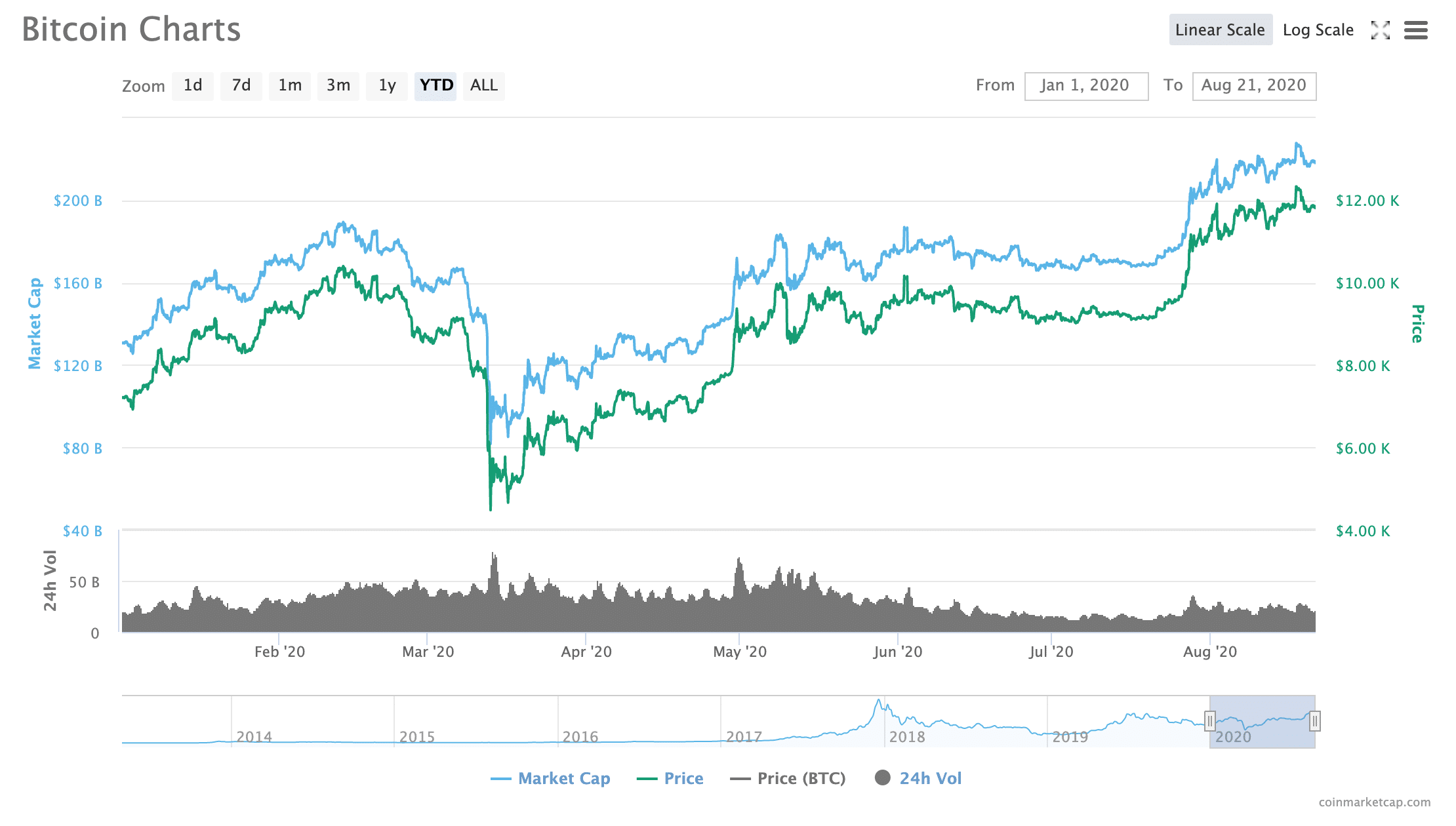
Now that Bitcoin has been dancing between roughly $11,000 and $12,000 for the better part of a month, investors are wondering what is going to come next.
2020 has been a crazy year in the financial world: the outbreak of COVID-19 has led to unprecedented economic chaos, major changes in monetary policy, and a drastic public reconsideration of what 'value' really means.
Therefore, it seems that Bitcoin, which has been described as inherently non-inflationary, could be gaining a foothold as a so-called 'safe-haven asset', similar to gold. Therefore, this dance between $11k and $12k could be the beginning of a larger trajectory to much higher prices.
However, others believe that Bitcoin is overbought, and imminently due for a market correction. What’s in the cards for BTC?
A Bigger Bull Run?
For some, the fact that Bitcoin has managed to hold a level of over $11,000 for several weeks is a sign of a larger bull run to come: some analysts have targeted $25k, $50k, or even $100k within the next two years.
Investment firm Grayscale recently issued a report saying that Bitcoin’s ability to sustain higher price levels is demonstrative of an increasing number of long-term holders in the space.
In other words, Grayscale believes that there is a higher ratio of people who are buying and holding Bitcoin to day-traders and short-term speculators.
In addition, the report noted a historically low level of BTC on exchange wallets, which could indicate that fewer people are making moves to trade or sell their Bitcoins. However, the report also identified that daily active addresses are at their highest level since 2017’s all-time highs, signaling higher-than-usage of Bitcoin
Grayscale believes that this kind of market structure is a positive thing for Bitcoin’s future. In fact, the report drew a parallel between Bitcoin’s current market makeup and the Bitcoin market of early 2016, just “before [Bitcoin] began its historic bull run.”
Therefore, Grayscale has made a prediction that the demand for Bitcoin will continue to grow significantly.
'Loose Monetary Policy' Could Be a Driving Force behind Bitcoin’s Upward Trajectory
According to Grayscale, one of the largest forces at play is the influence of 'loose monetary policy' that has influenced markets over 'the last half century', as well as the ongoing influence of stimulus efforts from the United States Federal Reserve and other financial institutions from around the globe.
“Loose monetary policies resulted in money being funneled into financial assets instead of the general economy or main street as intended, increasing the disconnect between the equity market and the economy,” the report said. As a result, the United States’ ratio of debt to GDP has nearly doubled since 2008.
Therefore, Grayscale along with many others in the crypto space seem to believe that Bitcoin is increasingly seen as a sort of 'antidote' to inflation: “Because of Bitcoin’s unique qualities – such as its verifiable scarcity and a supply that can’t be controlled by a central authority – we believe it can be leveraged as a store of value and as a way to escape this great monetary inflation,” the report says.
After all, there can only ever be a maximum of 21 million Bitcoins in circulation at any time, many of which have been permanently lost, and many of which have yet to be mined.
Bitcoin May Not Be the 'Safe-Haven' Some Seem to Think It Is
Not everyone believes that Bitcoin is such a strong hedge against inflation.
For example, during a presentation in May, finance giant Goldman Sachs said in a presentation that “Bitcoin does not show evidence of hedging against inflation."
Moreover, Goldman Sachs argued that Bitcoin is “a security whose appreciation is primarily dependent on whether someone else is willing to pay a higher price for it”, and therefore, Bitcoin “is not a suitable investment.”
Additionally, the firm said that because the infrastructure of cryptocurrency is still relatively young, it may be susceptible to hacking or other technical issues that result in financial loss.
Is a Market Correction Overdue?
While Bitcoin’s performance has been so positive over the last several months, there are some within the space who believe that a price pullback is imminent.
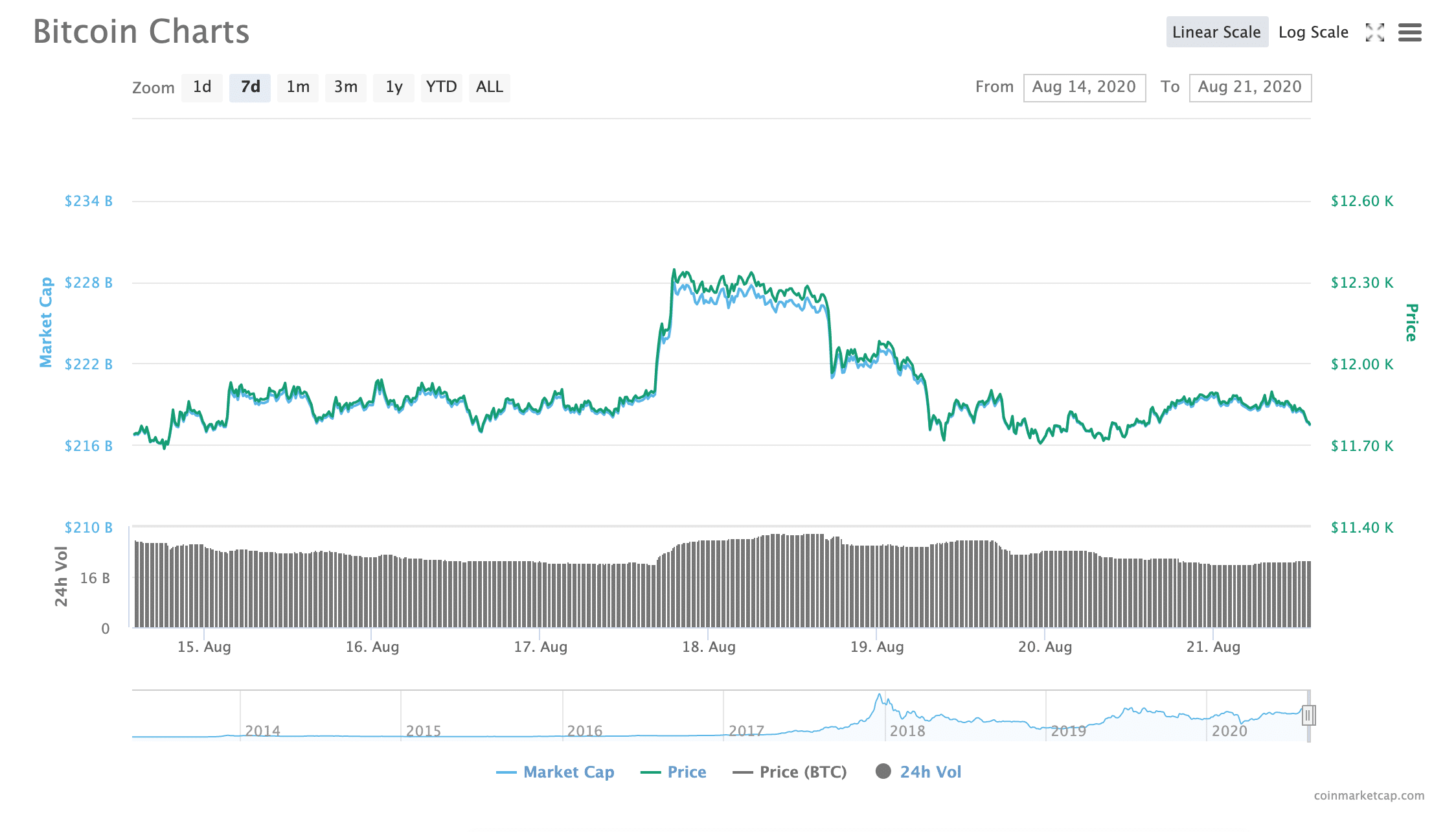
For example, CoinDesk reported this week that a short-lived jump to $12,400 on Monday of this week represented a 'failed breakout' that could be a sign of 'bullish exhaustion'. In other words, the failure to maintain levels above $12,000 could represent a combination of slowing price gains and weakened buying pressure.
Singapore-based digital economy trading firm, QCP Capital also told its Telegram subscribers this week that “Monday’s breakout of $12,000 was almost entirely short-squeeze driven.”
A short squeeze is what happens when the price of an asset suddenly jumps higher, thereby forcing traders who 'shorted' the asset, or bet that its price would fall, to buy it in order to prevent greater losses. This kind of activity can artificially prop up the price of an asset for a short time.
Therefore, QCP believes that Bitcoin’s “resultant failure [to breakout] just ahead of larger offers [sell orders] at $12,500 has solidified the price range of $12,000-$12,500 as a key resistance area for an extended period.”
BTC’s Future Hinges on the Dollar’s Performance in 2020
QCP also noted that while certain other market indicators could appear bullish at first, it is possible that the market may be overbought at the moment.
For example, open interest in bitcoin futures on major exchanges rose to record highs of roughly $6 billion on Monday, an increase of 200% from the March low of $1.93 billion, according to data source Skew. Additionally, Skew reported on Tuesday that Bitcoin options’ “total open interest [were] sitting at $2bln, up 6x since the start of the year.”
CoinDesk reported that it’s precisely this kind of 'bloated bullish positioning' that can lead to 'deeper price pullbacks', particularly in cases where it’s “accompanied by overbought readings on technical indicators,” as it seems to be now.
However, QCP Capital also said that much depends on the continued movements of the dollar, which hit its lowest point in two years earlier this year.
“No doubt the US has a capital leakage problem, evident from all the USD selling we see everyday during US hours,” QCP said. “We therefore look again to the late EU/early US sessions especially into August month-end for clues to the next big move, and whether or not a short squeeze is nigh.”
Furthermore, QCP noted that there could be quite a bit more movement in the USD throughout the rest of the year due to upcoming political events in the United States: “the prospective catalysts are there for a large squeeze,” QCP said, including “[possible] disappointment over failed fiscal stimulus, democratic/republican conventions,” and more.
Keeping an Eye on the $11.6k-$11.7k Range
Therefore, in the short- and medium-term the $12,500 resistance level may not be a realistic goal.
Instead, QCP says that “we see this $11.6-11.7k level as the new key short-term pivot to watch,” and that it is possible to see a 'retest' of the $11,000 level.
“Only a break and close under $10.5k will make us change our medium-term bullish bias,” the firm said. $10,500 was the highest amount that Bitcoin reached earlier this year before the COVID-19 economic crisis caused crypto markets to crash in March.
However, while a retest of the $10,500 level is certainly possible, and may even be necessary to fortify Bitcoin’s price floor in the future, it seems as though BTC may be able to hold steady over $10,000 for the foreseeable future.
It may be too soon to speak, after all, CryptoSlate pointed out that so far, this position past $10k is only the 4th-longest time that BTC has managed to stay above the $10,000 mark.
Still, though, researchers at Bloomberg said earlier this week that Bitcoin will only lose its value-building momentum if “something unexpected” stops it.
“Something unexpected needs to happen for Bitcoin's price to stop doing what it's been doing for most of the past decade: appreciating,” wrote senior strategist Mike Mcglone on Twitter. “Demand and adoption metrics remain favorable vs. the crypto asset's unique attribute of fixed supply.”
Bloomberg Intelligence Commodity Primer - Something unexpected needs to happen for #Bitcoin's price to stop doing what it's been doing for most of the past decade: appreciating. Demand and adoption metrics remain favorable vs. the #crypto asset's unique attribute of fixed supply. pic.twitter.com/E0wxubOlHF
Now that Bitcoin has been dancing between roughly $11,000 and $12,000 for the better part of a month, investors are wondering what is going to come next.
2020 has been a crazy year in the financial world: the outbreak of COVID-19 has led to unprecedented economic chaos, major changes in monetary policy, and a drastic public reconsideration of what 'value' really means.
Therefore, it seems that Bitcoin, which has been described as inherently non-inflationary, could be gaining a foothold as a so-called 'safe-haven asset', similar to gold. Therefore, this dance between $11k and $12k could be the beginning of a larger trajectory to much higher prices.
However, others believe that Bitcoin is overbought, and imminently due for a market correction. What’s in the cards for BTC?
A Bigger Bull Run?
For some, the fact that Bitcoin has managed to hold a level of over $11,000 for several weeks is a sign of a larger bull run to come: some analysts have targeted $25k, $50k, or even $100k within the next two years.
Investment firm Grayscale recently issued a report saying that Bitcoin’s ability to sustain higher price levels is demonstrative of an increasing number of long-term holders in the space.
In other words, Grayscale believes that there is a higher ratio of people who are buying and holding Bitcoin to day-traders and short-term speculators.
In addition, the report noted a historically low level of BTC on exchange wallets, which could indicate that fewer people are making moves to trade or sell their Bitcoins. However, the report also identified that daily active addresses are at their highest level since 2017’s all-time highs, signaling higher-than-usage of Bitcoin
Grayscale believes that this kind of market structure is a positive thing for Bitcoin’s future. In fact, the report drew a parallel between Bitcoin’s current market makeup and the Bitcoin market of early 2016, just “before [Bitcoin] began its historic bull run.”
Therefore, Grayscale has made a prediction that the demand for Bitcoin will continue to grow significantly.
'Loose Monetary Policy' Could Be a Driving Force behind Bitcoin’s Upward Trajectory
According to Grayscale, one of the largest forces at play is the influence of 'loose monetary policy' that has influenced markets over 'the last half century', as well as the ongoing influence of stimulus efforts from the United States Federal Reserve and other financial institutions from around the globe.
“Loose monetary policies resulted in money being funneled into financial assets instead of the general economy or main street as intended, increasing the disconnect between the equity market and the economy,” the report said. As a result, the United States’ ratio of debt to GDP has nearly doubled since 2008.
Therefore, Grayscale along with many others in the crypto space seem to believe that Bitcoin is increasingly seen as a sort of 'antidote' to inflation: “Because of Bitcoin’s unique qualities – such as its verifiable scarcity and a supply that can’t be controlled by a central authority – we believe it can be leveraged as a store of value and as a way to escape this great monetary inflation,” the report says.
After all, there can only ever be a maximum of 21 million Bitcoins in circulation at any time, many of which have been permanently lost, and many of which have yet to be mined.
Bitcoin May Not Be the 'Safe-Haven' Some Seem to Think It Is
Not everyone believes that Bitcoin is such a strong hedge against inflation.
For example, during a presentation in May, finance giant Goldman Sachs said in a presentation that “Bitcoin does not show evidence of hedging against inflation."
Moreover, Goldman Sachs argued that Bitcoin is “a security whose appreciation is primarily dependent on whether someone else is willing to pay a higher price for it”, and therefore, Bitcoin “is not a suitable investment.”
Additionally, the firm said that because the infrastructure of cryptocurrency is still relatively young, it may be susceptible to hacking or other technical issues that result in financial loss.
Is a Market Correction Overdue?
While Bitcoin’s performance has been so positive over the last several months, there are some within the space who believe that a price pullback is imminent.
For example, CoinDesk reported this week that a short-lived jump to $12,400 on Monday of this week represented a 'failed breakout' that could be a sign of 'bullish exhaustion'. In other words, the failure to maintain levels above $12,000 could represent a combination of slowing price gains and weakened buying pressure.
Singapore-based digital economy trading firm, QCP Capital also told its Telegram subscribers this week that “Monday’s breakout of $12,000 was almost entirely short-squeeze driven.”
A short squeeze is what happens when the price of an asset suddenly jumps higher, thereby forcing traders who 'shorted' the asset, or bet that its price would fall, to buy it in order to prevent greater losses. This kind of activity can artificially prop up the price of an asset for a short time.
Therefore, QCP believes that Bitcoin’s “resultant failure [to breakout] just ahead of larger offers [sell orders] at $12,500 has solidified the price range of $12,000-$12,500 as a key resistance area for an extended period.”
BTC’s Future Hinges on the Dollar’s Performance in 2020
QCP also noted that while certain other market indicators could appear bullish at first, it is possible that the market may be overbought at the moment.
For example, open interest in bitcoin futures on major exchanges rose to record highs of roughly $6 billion on Monday, an increase of 200% from the March low of $1.93 billion, according to data source Skew. Additionally, Skew reported on Tuesday that Bitcoin options’ “total open interest [were] sitting at $2bln, up 6x since the start of the year.”
CoinDesk reported that it’s precisely this kind of 'bloated bullish positioning' that can lead to 'deeper price pullbacks', particularly in cases where it’s “accompanied by overbought readings on technical indicators,” as it seems to be now.
However, QCP Capital also said that much depends on the continued movements of the dollar, which hit its lowest point in two years earlier this year.
“No doubt the US has a capital leakage problem, evident from all the USD selling we see everyday during US hours,” QCP said. “We therefore look again to the late EU/early US sessions especially into August month-end for clues to the next big move, and whether or not a short squeeze is nigh.”
Furthermore, QCP noted that there could be quite a bit more movement in the USD throughout the rest of the year due to upcoming political events in the United States: “the prospective catalysts are there for a large squeeze,” QCP said, including “[possible] disappointment over failed fiscal stimulus, democratic/republican conventions,” and more.
Keeping an Eye on the $11.6k-$11.7k Range
Therefore, in the short- and medium-term the $12,500 resistance level may not be a realistic goal.
Instead, QCP says that “we see this $11.6-11.7k level as the new key short-term pivot to watch,” and that it is possible to see a 'retest' of the $11,000 level.
“Only a break and close under $10.5k will make us change our medium-term bullish bias,” the firm said. $10,500 was the highest amount that Bitcoin reached earlier this year before the COVID-19 economic crisis caused crypto markets to crash in March.
However, while a retest of the $10,500 level is certainly possible, and may even be necessary to fortify Bitcoin’s price floor in the future, it seems as though BTC may be able to hold steady over $10,000 for the foreseeable future.
It may be too soon to speak, after all, CryptoSlate pointed out that so far, this position past $10k is only the 4th-longest time that BTC has managed to stay above the $10,000 mark.
Still, though, researchers at Bloomberg said earlier this week that Bitcoin will only lose its value-building momentum if “something unexpected” stops it.
“Something unexpected needs to happen for Bitcoin's price to stop doing what it's been doing for most of the past decade: appreciating,” wrote senior strategist Mike Mcglone on Twitter. “Demand and adoption metrics remain favorable vs. the crypto asset's unique attribute of fixed supply.”
Bloomberg Intelligence Commodity Primer - Something unexpected needs to happen for #Bitcoin's price to stop doing what it's been doing for most of the past decade: appreciating. Demand and adoption metrics remain favorable vs. the #crypto asset's unique attribute of fixed supply. pic.twitter.com/E0wxubOlHF
Rachel is a self-taught crypto geek and a passionate writer. She believes in the power that the written word has to educate, connect and empower individuals to make positive and powerful financial choices. She is the Podcast Host and a Cryptocurrency Editor at Finance Magnates.
Binance Claims Fastest $1 Billion Sprint in bStocks With $6 Billion in Share Conversions
Featured Videos
FMIQ: Get Verified Market Intelligence in Seconds | FM Intelligence
FMIQ: Get Verified Market Intelligence in Seconds | FM Intelligence
FMIQ: Get Verified Market Intelligence in Seconds | FM Intelligence
FMIQ: Get Verified Market Intelligence in Seconds | FM Intelligence
Meet FMIQ (FM Intelligence Quantitative), now available inside the FM Intelligence Portal.
Ask the market a question in plain language and get a sourced, verified answer in seconds. FMIQ gives you the figures, time periods, and sources you need to make informed decisions, without the need to work through dashboards, filters, or spreadsheet exports.
What makes FMIQ different?
✓ Ask questions in plain language, with no SQL or dashboard setup required.
✓ Get verified answers checked through an independent quality assurance step.
✓ Access sourced figures you can cite with confidence.
✓ Ask follow-up questions and build on the same conversation.
✓ Query seven datasets in one place, covering trading volumes, traffic, platforms, market movements, regulations, fines, and licences.
Built for professionals across the financial markets
- Editorial teams: Find reliable figures and support your reporting with clear sources.
- Commercial teams: Access the market data you need to prepare for client meetings and sales discussions.
- Research and analyst teams: Explore market trends and get answers to specific questions.
- Compliance teams: Access intelligence on regulations, fines, and licences.
Every query is run live, and answers go through an independent quality check. FMIQ is read-only, stays focused on your question, and does not alter the underlying data.
Built on Finance Magnates market intelligence, FMIQ helps professionals get the answers they need, when they need them.
Access FMIQ today: https://datalab.financemagnates.com/market?utm_source=youtube&utm_medium=video&utm_campaign=fmiq_phase1_mvp_launch
#FMIntelligence #FMIQ #MarketIntelligence #FinanceMagnates #FinancialMarkets #MarketResearch
Meet FMIQ (FM Intelligence Quantitative), now available inside the FM Intelligence Portal.
Ask the market a question in plain language and get a sourced, verified answer in seconds. FMIQ gives you the figures, time periods, and sources you need to make informed decisions, without the need to work through dashboards, filters, or spreadsheet exports.
What makes FMIQ different?
✓ Ask questions in plain language, with no SQL or dashboard setup required.
✓ Get verified answers checked through an independent quality assurance step.
✓ Access sourced figures you can cite with confidence.
✓ Ask follow-up questions and build on the same conversation.
✓ Query seven datasets in one place, covering trading volumes, traffic, platforms, market movements, regulations, fines, and licences.
Built for professionals across the financial markets
- Editorial teams: Find reliable figures and support your reporting with clear sources.
- Commercial teams: Access the market data you need to prepare for client meetings and sales discussions.
- Research and analyst teams: Explore market trends and get answers to specific questions.
- Compliance teams: Access intelligence on regulations, fines, and licences.
Every query is run live, and answers go through an independent quality check. FMIQ is read-only, stays focused on your question, and does not alter the underlying data.
Built on Finance Magnates market intelligence, FMIQ helps professionals get the answers they need, when they need them.
Access FMIQ today: https://datalab.financemagnates.com/market?utm_source=youtube&utm_medium=video&utm_campaign=fmiq_phase1_mvp_launch
#FMIntelligence #FMIQ #MarketIntelligence #FinanceMagnates #FinancialMarkets #MarketResearch
Meet FMIQ (FM Intelligence Quantitative), now available inside the FM Intelligence Portal.
Ask the market a question in plain language and get a sourced, verified answer in seconds. FMIQ gives you the figures, time periods, and sources you need to make informed decisions, without the need to work through dashboards, filters, or spreadsheet exports.
What makes FMIQ different?
✓ Ask questions in plain language, with no SQL or dashboard setup required.
✓ Get verified answers checked through an independent quality assurance step.
✓ Access sourced figures you can cite with confidence.
✓ Ask follow-up questions and build on the same conversation.
✓ Query seven datasets in one place, covering trading volumes, traffic, platforms, market movements, regulations, fines, and licences.
Built for professionals across the financial markets
- Editorial teams: Find reliable figures and support your reporting with clear sources.
- Commercial teams: Access the market data you need to prepare for client meetings and sales discussions.
- Research and analyst teams: Explore market trends and get answers to specific questions.
- Compliance teams: Access intelligence on regulations, fines, and licences.
Every query is run live, and answers go through an independent quality check. FMIQ is read-only, stays focused on your question, and does not alter the underlying data.
Built on Finance Magnates market intelligence, FMIQ helps professionals get the answers they need, when they need them.
Access FMIQ today: https://datalab.financemagnates.com/market?utm_source=youtube&utm_medium=video&utm_campaign=fmiq_phase1_mvp_launch
#FMIntelligence #FMIQ #MarketIntelligence #FinanceMagnates #FinancialMarkets #MarketResearch
Meet FMIQ (FM Intelligence Quantitative), now available inside the FM Intelligence Portal.
Ask the market a question in plain language and get a sourced, verified answer in seconds. FMIQ gives you the figures, time periods, and sources you need to make informed decisions, without the need to work through dashboards, filters, or spreadsheet exports.
What makes FMIQ different?
✓ Ask questions in plain language, with no SQL or dashboard setup required.
✓ Get verified answers checked through an independent quality assurance step.
✓ Access sourced figures you can cite with confidence.
✓ Ask follow-up questions and build on the same conversation.
✓ Query seven datasets in one place, covering trading volumes, traffic, platforms, market movements, regulations, fines, and licences.
Built for professionals across the financial markets
- Editorial teams: Find reliable figures and support your reporting with clear sources.
- Commercial teams: Access the market data you need to prepare for client meetings and sales discussions.
- Research and analyst teams: Explore market trends and get answers to specific questions.
- Compliance teams: Access intelligence on regulations, fines, and licences.
Every query is run live, and answers go through an independent quality check. FMIQ is read-only, stays focused on your question, and does not alter the underlying data.
Built on Finance Magnates market intelligence, FMIQ helps professionals get the answers they need, when they need them.
Access FMIQ today: https://datalab.financemagnates.com/market?utm_source=youtube&utm_medium=video&utm_campaign=fmiq_phase1_mvp_launch
#FMIntelligence #FMIQ #MarketIntelligence #FinanceMagnates #FinancialMarkets #MarketResearch
MyForexFunds Details No Conflict Model; UK Eyes iPhone Wallets
MyForexFunds Details No Conflict Model; UK Eyes iPhone Wallets
MyForexFunds Details No Conflict Model; UK Eyes iPhone Wallets
MyForexFunds Details No Conflict Model; UK Eyes iPhone Wallets
MyForexFunds Details No Conflict Model; UK Eyes iPhone Wallets
MyForexFunds Details No Conflict Model; UK Eyes iPhone Wallets
Today’s financial news recap covers MyForexFunds outlines its Evolution relaunch, UK brokers could get their own iPhone wallets, Goat Funded Trader reports $26 million in payouts, and Kalshi explains its pitch to brokers.
Finance Magnates Daily Recap brings you the latest news from forex and CFD brokers, fintech, payments, cryptocurrency, digital assets, trading platforms, financial regulation and global markets.
Get the key company news, executive moves, deals, regulatory updates and market developments of the day, in just a few minutes. New episodes published every weekday.
Read more: https://www.financemagnates.com
#FinanceMagnates #ForexNews #FintechNews
Today’s financial news recap covers MyForexFunds outlines its Evolution relaunch, UK brokers could get their own iPhone wallets, Goat Funded Trader reports $26 million in payouts, and Kalshi explains its pitch to brokers.
Finance Magnates Daily Recap brings you the latest news from forex and CFD brokers, fintech, payments, cryptocurrency, digital assets, trading platforms, financial regulation and global markets.
Get the key company news, executive moves, deals, regulatory updates and market developments of the day, in just a few minutes. New episodes published every weekday.
Read more: https://www.financemagnates.com
#FinanceMagnates #ForexNews #FintechNews
Today’s financial news recap covers MyForexFunds outlines its Evolution relaunch, UK brokers could get their own iPhone wallets, Goat Funded Trader reports $26 million in payouts, and Kalshi explains its pitch to brokers.
Finance Magnates Daily Recap brings you the latest news from forex and CFD brokers, fintech, payments, cryptocurrency, digital assets, trading platforms, financial regulation and global markets.
Get the key company news, executive moves, deals, regulatory updates and market developments of the day, in just a few minutes. New episodes published every weekday.
Read more: https://www.financemagnates.com
#FinanceMagnates #ForexNews #FintechNews
Today’s financial news recap covers MyForexFunds outlines its Evolution relaunch, UK brokers could get their own iPhone wallets, Goat Funded Trader reports $26 million in payouts, and Kalshi explains its pitch to brokers.
Finance Magnates Daily Recap brings you the latest news from forex and CFD brokers, fintech, payments, cryptocurrency, digital assets, trading platforms, financial regulation and global markets.
Get the key company news, executive moves, deals, regulatory updates and market developments of the day, in just a few minutes. New episodes published every weekday.
Read more: https://www.financemagnates.com
#FinanceMagnates #ForexNews #FintechNews
Today’s financial news recap covers MyForexFunds outlines its Evolution relaunch, UK brokers could get their own iPhone wallets, Goat Funded Trader reports $26 million in payouts, and Kalshi explains its pitch to brokers.
Finance Magnates Daily Recap brings you the latest news from forex and CFD brokers, fintech, payments, cryptocurrency, digital assets, trading platforms, financial regulation and global markets.
Get the key company news, executive moves, deals, regulatory updates and market developments of the day, in just a few minutes. New episodes published every weekday.
Read more: https://www.financemagnates.com
#FinanceMagnates #ForexNews #FintechNews
Today’s financial news recap covers MyForexFunds outlines its Evolution relaunch, UK brokers could get their own iPhone wallets, Goat Funded Trader reports $26 million in payouts, and Kalshi explains its pitch to brokers.
Finance Magnates Daily Recap brings you the latest news from forex and CFD brokers, fintech, payments, cryptocurrency, digital assets, trading platforms, financial regulation and global markets.
Get the key company news, executive moves, deals, regulatory updates and market developments of the day, in just a few minutes. New episodes published every weekday.
Read more: https://www.financemagnates.com
#FinanceMagnates #ForexNews #FintechNews
How Much Are CFD Industry Executives Making; Plus500 Buys Brazilian Broker
How Much Are CFD Industry Executives Making; Plus500 Buys Brazilian Broker
How Much Are CFD Industry Executives Making; Plus500 Buys Brazilian Broker
How Much Are CFD Industry Executives Making; Plus500 Buys Brazilian Broker
How Much Are CFD Industry Executives Making; Plus500 Buys Brazilian Broker
How Much Are CFD Industry Executives Making; Plus500 Buys Brazilian Broker
Today’s financial news recap covers FinTop Consulting shared its 2026 salary surveys for Dubai, London and Cyprus with Finance Magnates, Plus500 buys a Brazilian broker, and Google opens the door to CFD ads in Denmark and Chile.
Finance Magnates Daily Recap brings you the latest news from forex and CFD brokers, fintech, payments, cryptocurrency, digital assets, trading platforms, financial regulation and global markets.
Get the key company news, executive moves, deals, regulatory updates and market developments of the day, in just a few minutes. New episodes published every weekday.
Read more: https://www.financemagnates.com
#FinanceMagnates #ForexNews #FintechNews
Today’s financial news recap covers FinTop Consulting shared its 2026 salary surveys for Dubai, London and Cyprus with Finance Magnates, Plus500 buys a Brazilian broker, and Google opens the door to CFD ads in Denmark and Chile.
Finance Magnates Daily Recap brings you the latest news from forex and CFD brokers, fintech, payments, cryptocurrency, digital assets, trading platforms, financial regulation and global markets.
Get the key company news, executive moves, deals, regulatory updates and market developments of the day, in just a few minutes. New episodes published every weekday.
Read more: https://www.financemagnates.com
#FinanceMagnates #ForexNews #FintechNews
Today’s financial news recap covers FinTop Consulting shared its 2026 salary surveys for Dubai, London and Cyprus with Finance Magnates, Plus500 buys a Brazilian broker, and Google opens the door to CFD ads in Denmark and Chile.
Finance Magnates Daily Recap brings you the latest news from forex and CFD brokers, fintech, payments, cryptocurrency, digital assets, trading platforms, financial regulation and global markets.
Get the key company news, executive moves, deals, regulatory updates and market developments of the day, in just a few minutes. New episodes published every weekday.
Read more: https://www.financemagnates.com
#FinanceMagnates #ForexNews #FintechNews
Today’s financial news recap covers FinTop Consulting shared its 2026 salary surveys for Dubai, London and Cyprus with Finance Magnates, Plus500 buys a Brazilian broker, and Google opens the door to CFD ads in Denmark and Chile.
Finance Magnates Daily Recap brings you the latest news from forex and CFD brokers, fintech, payments, cryptocurrency, digital assets, trading platforms, financial regulation and global markets.
Get the key company news, executive moves, deals, regulatory updates and market developments of the day, in just a few minutes. New episodes published every weekday.
Read more: https://www.financemagnates.com
#FinanceMagnates #ForexNews #FintechNews
Today’s financial news recap covers FinTop Consulting shared its 2026 salary surveys for Dubai, London and Cyprus with Finance Magnates, Plus500 buys a Brazilian broker, and Google opens the door to CFD ads in Denmark and Chile.
Finance Magnates Daily Recap brings you the latest news from forex and CFD brokers, fintech, payments, cryptocurrency, digital assets, trading platforms, financial regulation and global markets.
Get the key company news, executive moves, deals, regulatory updates and market developments of the day, in just a few minutes. New episodes published every weekday.
Read more: https://www.financemagnates.com
#FinanceMagnates #ForexNews #FintechNews
Today’s financial news recap covers FinTop Consulting shared its 2026 salary surveys for Dubai, London and Cyprus with Finance Magnates, Plus500 buys a Brazilian broker, and Google opens the door to CFD ads in Denmark and Chile.
Finance Magnates Daily Recap brings you the latest news from forex and CFD brokers, fintech, payments, cryptocurrency, digital assets, trading platforms, financial regulation and global markets.
Get the key company news, executive moves, deals, regulatory updates and market developments of the day, in just a few minutes. New episodes published every weekday.
Read more: https://www.financemagnates.com
#FinanceMagnates #ForexNews #FintechNews
Capital.com UAE Clients Trade $1T in H1; Saxo Signs Nine Athletes
Capital.com UAE Clients Trade $1T in H1; Saxo Signs Nine Athletes
Capital.com UAE Clients Trade $1T in H1; Saxo Signs Nine Athletes
Capital.com UAE Clients Trade $1T in H1; Saxo Signs Nine Athletes
Capital.com UAE Clients Trade $1T in H1; Saxo Signs Nine Athletes
Capital.com UAE Clients Trade $1T in H1; Saxo Signs Nine Athletes
Today’s financial news recap covers Capital.com’s trading data, Saxo Bank’s athlete campaign, Revolut’s Gibraltar crypto licence, and eToro’s new desktop terminal.
Finance Magnates Daily Recap brings you the latest news from forex and CFD brokers, fintech, payments, cryptocurrency, digital assets, trading platforms, financial regulation and global markets.
Get the key company news, executive moves, deals, regulatory updates and market developments of the day, in just a few minutes. New episodes published every weekday.
Read more: https://www.financemagnates.com
#FinanceMagnates #ForexNews #FintechNews
Today’s financial news recap covers Capital.com’s trading data, Saxo Bank’s athlete campaign, Revolut’s Gibraltar crypto licence, and eToro’s new desktop terminal.
Finance Magnates Daily Recap brings you the latest news from forex and CFD brokers, fintech, payments, cryptocurrency, digital assets, trading platforms, financial regulation and global markets.
Get the key company news, executive moves, deals, regulatory updates and market developments of the day, in just a few minutes. New episodes published every weekday.
Read more: https://www.financemagnates.com
#FinanceMagnates #ForexNews #FintechNews
Today’s financial news recap covers Capital.com’s trading data, Saxo Bank’s athlete campaign, Revolut’s Gibraltar crypto licence, and eToro’s new desktop terminal.
Finance Magnates Daily Recap brings you the latest news from forex and CFD brokers, fintech, payments, cryptocurrency, digital assets, trading platforms, financial regulation and global markets.
Get the key company news, executive moves, deals, regulatory updates and market developments of the day, in just a few minutes. New episodes published every weekday.
Read more: https://www.financemagnates.com
#FinanceMagnates #ForexNews #FintechNews
Today’s financial news recap covers Capital.com’s trading data, Saxo Bank’s athlete campaign, Revolut’s Gibraltar crypto licence, and eToro’s new desktop terminal.
Finance Magnates Daily Recap brings you the latest news from forex and CFD brokers, fintech, payments, cryptocurrency, digital assets, trading platforms, financial regulation and global markets.
Get the key company news, executive moves, deals, regulatory updates and market developments of the day, in just a few minutes. New episodes published every weekday.
Read more: https://www.financemagnates.com
#FinanceMagnates #ForexNews #FintechNews
Today’s financial news recap covers Capital.com’s trading data, Saxo Bank’s athlete campaign, Revolut’s Gibraltar crypto licence, and eToro’s new desktop terminal.
Finance Magnates Daily Recap brings you the latest news from forex and CFD brokers, fintech, payments, cryptocurrency, digital assets, trading platforms, financial regulation and global markets.
Get the key company news, executive moves, deals, regulatory updates and market developments of the day, in just a few minutes. New episodes published every weekday.
Read more: https://www.financemagnates.com
#FinanceMagnates #ForexNews #FintechNews
Today’s financial news recap covers Capital.com’s trading data, Saxo Bank’s athlete campaign, Revolut’s Gibraltar crypto licence, and eToro’s new desktop terminal.
Finance Magnates Daily Recap brings you the latest news from forex and CFD brokers, fintech, payments, cryptocurrency, digital assets, trading platforms, financial regulation and global markets.
Get the key company news, executive moves, deals, regulatory updates and market developments of the day, in just a few minutes. New episodes published every weekday.
Read more: https://www.financemagnates.com
#FinanceMagnates #ForexNews #FintechNews
CXM Group to Buy TD Markets; Interactive Brokers Raises Dividend
CXM Group to Buy TD Markets; Interactive Brokers Raises Dividend
CXM Group to Buy TD Markets; Interactive Brokers Raises Dividend
CXM Group to Buy TD Markets; Interactive Brokers Raises Dividend
CXM Group to Buy TD Markets; Interactive Brokers Raises Dividend
CXM Group to Buy TD Markets; Interactive Brokers Raises Dividend
Today’s financial news recap covers CXM Group agrees to acquire TD Markets, Interactive Brokers raises its dividend, Your Bourse and 4XPORTAL formalise a technology partnership, and IC completes its rebranding from IC Markets.
Finance Magnates Daily Recap brings you the latest news from forex and CFD brokers, fintech, payments, cryptocurrency, digital assets, trading platforms, financial regulation and global markets.
Get the key company news, executive moves, deals, regulatory updates and market developments of the day, in just a few minutes. New episodes published every weekday.
Read more: https://www.financemagnates.com
#FinanceMagnates #ForexNews #FintechNews
Today’s financial news recap covers CXM Group agrees to acquire TD Markets, Interactive Brokers raises its dividend, Your Bourse and 4XPORTAL formalise a technology partnership, and IC completes its rebranding from IC Markets.
Finance Magnates Daily Recap brings you the latest news from forex and CFD brokers, fintech, payments, cryptocurrency, digital assets, trading platforms, financial regulation and global markets.
Get the key company news, executive moves, deals, regulatory updates and market developments of the day, in just a few minutes. New episodes published every weekday.
Read more: https://www.financemagnates.com
#FinanceMagnates #ForexNews #FintechNews
Today’s financial news recap covers CXM Group agrees to acquire TD Markets, Interactive Brokers raises its dividend, Your Bourse and 4XPORTAL formalise a technology partnership, and IC completes its rebranding from IC Markets.
Finance Magnates Daily Recap brings you the latest news from forex and CFD brokers, fintech, payments, cryptocurrency, digital assets, trading platforms, financial regulation and global markets.
Get the key company news, executive moves, deals, regulatory updates and market developments of the day, in just a few minutes. New episodes published every weekday.
Read more: https://www.financemagnates.com
#FinanceMagnates #ForexNews #FintechNews
Today’s financial news recap covers CXM Group agrees to acquire TD Markets, Interactive Brokers raises its dividend, Your Bourse and 4XPORTAL formalise a technology partnership, and IC completes its rebranding from IC Markets.
Finance Magnates Daily Recap brings you the latest news from forex and CFD brokers, fintech, payments, cryptocurrency, digital assets, trading platforms, financial regulation and global markets.
Get the key company news, executive moves, deals, regulatory updates and market developments of the day, in just a few minutes. New episodes published every weekday.
Read more: https://www.financemagnates.com
#FinanceMagnates #ForexNews #FintechNews
Today’s financial news recap covers CXM Group agrees to acquire TD Markets, Interactive Brokers raises its dividend, Your Bourse and 4XPORTAL formalise a technology partnership, and IC completes its rebranding from IC Markets.
Finance Magnates Daily Recap brings you the latest news from forex and CFD brokers, fintech, payments, cryptocurrency, digital assets, trading platforms, financial regulation and global markets.
Get the key company news, executive moves, deals, regulatory updates and market developments of the day, in just a few minutes. New episodes published every weekday.
Read more: https://www.financemagnates.com
#FinanceMagnates #ForexNews #FintechNews
Today’s financial news recap covers CXM Group agrees to acquire TD Markets, Interactive Brokers raises its dividend, Your Bourse and 4XPORTAL formalise a technology partnership, and IC completes its rebranding from IC Markets.
Finance Magnates Daily Recap brings you the latest news from forex and CFD brokers, fintech, payments, cryptocurrency, digital assets, trading platforms, financial regulation and global markets.
Get the key company news, executive moves, deals, regulatory updates and market developments of the day, in just a few minutes. New episodes published every weekday.
Read more: https://www.financemagnates.com
#FinanceMagnates #ForexNews #FintechNews