

Gemini's president is calling prediction markets the platform's biggest near-term growth driver. However the claim has yet to be reflected in the segment's revenue contribution.
Gemini Space Station reported a $107.7 million net loss for the second quarter, its fourth consecutive quarterly loss since going public in September 2025, according to results published on 13 August.
Revenue rose 37% year-on-year to $45.5 million, ahead of analyst estimates, while assets on the platform fell 54% to $8.4 billion amid lower crypto valuations and institutional custody outflows.
Gemini has cut roughly a third of its staff and lost several senior executives over the past year, and in May the Winklevoss brothers invested $100 million of their own money into the company.
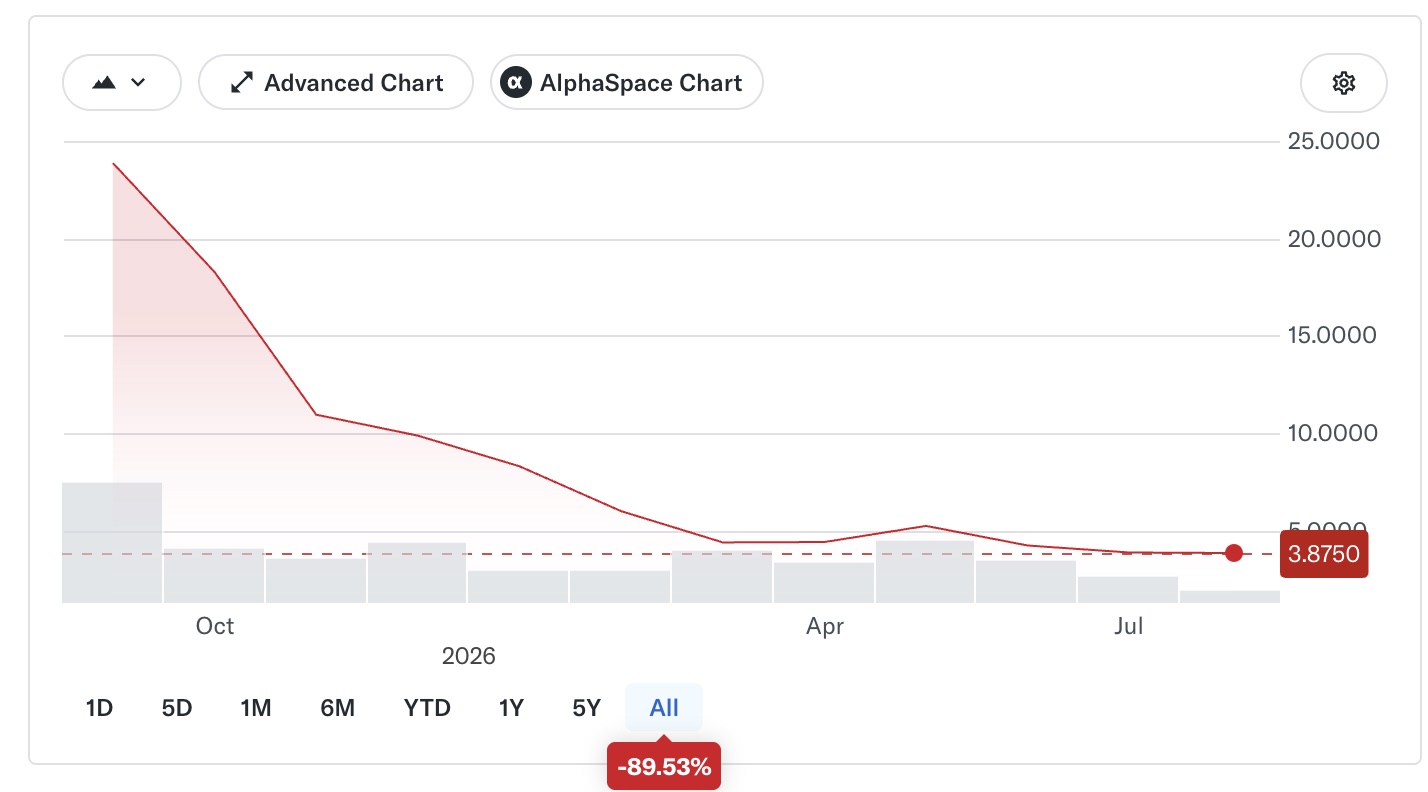
Shares fell about 6% in after-hours trading following the report, after closing up 3% earlier in the session. The stock has now fallen from an intraday high of $45.89 on its Nasdaq debut in September 2025 to around $4.06 — a decline of more than 90% in under a year.
The Predictions Bet, so far
Cameron Winklevoss, Gemini's president, said prediction markets remain "the largest near-term growth opportunity on the platform," citing the sports season ahead in the second half of the year.
The segment generated about $500,000 in Q2 revenue, which is roughly 1% of Gemini's total.
The volume numbers show the same gap. Event contracts traded on the platform surpassed 225 million cumulatively since the product's December 2025 launch, up 93% quarter-on-quarter, though Gemini has not disclosed the dollar volume behind them.
Third-party estimates put cumulative turnover at roughly $24 million as of July — a fraction of Kalshi's reported $100 billion-plus of notional volume, and smaller than the volumes Kalshi and Polymarket registered around the 2026 World Cup alone.
- The Winklevoss Twins Just Launched Gemini Predictions in the US
- Gemini Breaks Into Prediction Markets After 5-Year Wait, Challenging Kalshi and Polymarket
- Gemini Eyes Entry Into Prediction Markets With Planned Derivatives Exchange
A Five-Year Wait for a Licence
Gemini spent five years pursuing the regulatory approvals behind this push. It secured a Designated Contract Market licence from the CFTC in December 2025, allowing its Gemini Titan subsidiary to offer event contracts to US customers.
In April 2026 it added a Derivatives Clearing Organization licence to self-clear its own contracts.
Winklevoss had said in 2025 that prediction markets have the potential to be "as big or bigger than traditional capital markets" - a claim the company is only now starting to test against rivals with a multi-year head start.
The push into predictions, credit cards and other non-crypto products comes as Gemini's core exchange revenue remains under pressure alongside the rest of the industry. eToro, Robinhood and Coinbase all reported falling crypto revenue for the second quarter.
Gemini itself has described its business as crypto-centric, and management said on an earlier earnings call it was working to transition toward a "super app for the markets economy."
Management has framed the past nine months as a period of product rebuilding rather than a return to profitability. The next quarterly report will show whether prediction markets and other new products can grow into a meaningful share of revenue rather than a small addition.


