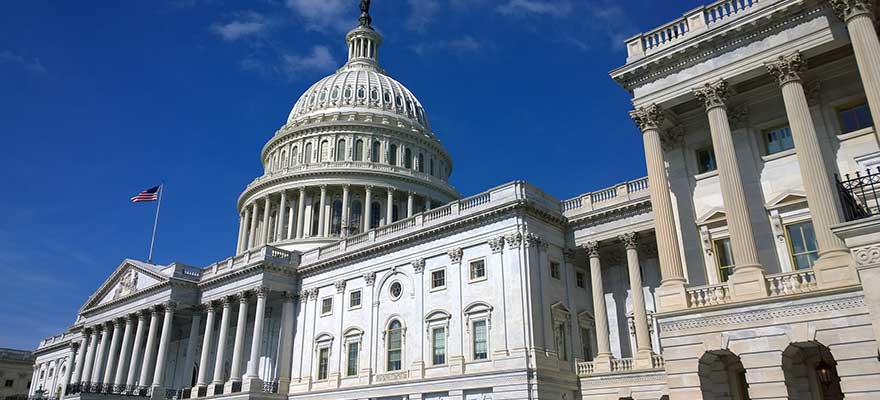
Four witnesses spoke to the US Congress' Financial Services Committee yesterday. Here's what happened.
FM
Yesterday, during a remote session held at 12:00 PM EST, the United States Congress Financial Services Committee heard testimony from four "witnesses" on the creation of a digital dollar.
These included Mehrsa Baradaran, a Professor of Law at the University of California Irvine School of Law; Jodie Kelley, the CEO of the Electronic Transactions Association; Morgan Ricks, Professor of Law, Vanderbilt University Law School; and finally, the Honorable Chris Giancarlo, the former Chairman of the U.S. Commodity Futures Trading Commission (CFTC).
Giancarlo, aka 'CryptoDad', is also the director of the Digital Dollar Foundation, an organization that has been working to advocate for the exploration of a digital dollar since earlier this year.
However, the process of sending and receiving these payments highlighted some significant pain points in the United States financial system: for individuals without bank accounts, receiving a direct deposit was impossible; receiving a check was cumbersome.
Additionally, some Americans are still waiting on their payments--direct deposits went to incorrect accounts, checks got sent to wrong addresses, and in some cases, EID cards were mistakenly thrown away.
Therefore, the United States government is more aware now than ever of the need for improvements to the financial systems that Americans rely on every day--and, perhaps for the first time, a digital dollar could be a realistic part of that system.
What led up to this moment in time? And how could a digital dollar improve the United States financial system?
What is the 'Digital Dollar' foundation?
Christopher Giancarlo, former chairman of the United States Commodity Futures Trading Commission and Senior Counsel at
Willkie Farr & Gallagher LLP, explained in an email to Finance Magnates that the concept of a digital dollar had been increasingly discussed in the public sphere prior to the inclusion of the concept in early drafts of the CARES Act--in large part, perhaps, due to the work of the Digital Dollar Foundation.
In fact, while the concept of a United States central bank digital currency (CBDC) had been discussed previously, Giancarlo said that the term “digital dollar” and “the idea of a digital dollar was outlined in the launch of the Digital Dollar Project and Digital Dollar Foundation in January.”
Christopher Giancarlo, former chairman of the United States Commodity Futures Trading Commission and Senior Counsel at Willkie Farr & Gallagher LLP.
However, when the ‘digital dollar’ appeared in the CARES Act, the concept wasn’t the same as the Digital Dollar Foundation’s: “the same term, ‘digital dollar’ is defined differently in other policy proposals,” Giancarlo said.
“For example, a digital dollar proposal included in an early version of the CARES Act was used in reference to ways to use the existing account-based US financial infrastructure.”
“At the Digital Dollar Project, we view a digital dollar as a tokenized form of Central Bank Digital Currency (CBDC), a new third form of money. In the hearing, I [discussed] why a tokenized form of money should be explored among the many approaches that we hope will be tested."
CBDCs "are being explored by the largest central banks across the globe."
“Central Bank Digital Currencies are being explored by the largest central banks across the globe,” he explained. “In the U.S. in particular, central bank money has seen little innovation since the introduction of paper currencies and cashless transfers in the nineteenth century.”
“[...] We see the world-wide engagement from Central Banks on CBDC and their progress to modernize financial infrastructure as key and critical. Our ability to share learning and insights, establish standards, and develop interoperable systems is essential,” he continued.
Therefore, “we anticipate CBDC could be implemented as a focused instrument with respect to the ability to apply ‘business logic’ to the tokens, i.e. ‘programmable money’.”
“This is a powerful aspect of the technology, but our view is that CBDC should only use it to meet the needs of a fiat currency and the application of foundational regulatory requirements. The ability to peg a ‘stablecoin’ to a CBDC is an important innovation frontier where creative solutions can apply business logic within the stablecoins to automatically trigger events, business flows, and customer interactions.”
Financial inclusion is an important part of the argument for the creation of a digital dollar
However, Mr. Treat emphasized that while CBDCs may be an increasingly important part of the global economy and the ways that countries and corporations engage with one another, a digital dollar could provide a much more urgent and timely function.
“As the world has become more digital, the dollar has remained analogue, and has continued its longstanding status as the world’s reserve currency while millions of Americans remain unbanked or underbanked,” he said.
“With the digital dollar, we hope to expand financial access and inclusion to those populations by enabling simplified, lower cost, easier access, and high-value digital solutions through technology innovation.”
David Treat, Senior Managing Director and Global Blockchain Lead at Accenture and director of the Digital Dollar Project.
Christopher Giancarlo explained to Finance Magnates that this is why “the purpose of the hearing, ‘Inclusive Banking During a Pandemic: Using FedAccounts and Digital Tools to Improve Delivery of Stimulus Payments,’ [wasn’t] only to discuss the digital dollar but to spark a conversation around better digital solutions for financial inclusion.
“A tokenized CBDC is one of these solutions that we’re advocating that the Fed explore further.”
”Shouting into the void of academic research...about how our banking system leaves out some of our most vulnerable communities.”
Financial inclusion was also a strong part of the opening remarks of Mehrsa Baradaran, a Professor of Law at the University of California Irvine School of Law.
Specifically, Professor Baradaran explained how the pandemic has highlighted the need for better financial services to financially underserved individuals.
“I've been shouting into the void of academic research for a decade about how our banking system leaves out some of our most vulnerable communities,” she said, offering examples of individuals who were forced to risk their health in lines at the bank at the height of the pandemic.
“Black communities, brown communities, low-income communities, rural communities--believe it or not, the problem has gotten even worse since I began researching these issues over the last 10 years as banks have become bigger and more profitable,” she added.
Mehrsa Baradaran, a Professor of Law at the University of California Irvine School of Law
“[...] Those of us with enough of a financial cushion---who put our bills on auto-pay and easily switch between FinTech apps and credit cards--might need some financial education to understand the difficulties faced by our fellow Americans,” Professor Baradaran continued.
“The simple problem is this: the US payment system is only available to banks and their customer. If you're outside of it, you pay a toll. I urge Congress to open up these tracks on which our nation's commerce run to everybody.”
An imminent "wave of innovation" will lay "enormous strain on our aged financial systems.”
Former Chairmain Giancarlo’s opening remarks during the hearing focused more on the topic of American innovation: “I'd like to begin with three observations from my time in public service,” he began. “First, much of America's physical infrastructure--its bridges, tunnels, or airports (that were once state-of-the-art in the last century)...have been allowed to age, deteriorate, and become obsolete in this century.”
“Well, the same is true about some of our financial infrastructure,” he continued.
“Methods of payment, and settlement, shareholder and proxy voting, and investor access and disclosure--[which] were once state-of-the-art in the 20th century--are showing age and limitations in this new 21st century.”
However, “nothing reveals the limits of our accounts-based financial system more starkly than the current COVID-19 pandemic, when tens of millions of Americans are waiting a month or more to receive these payments by paper check.”
“My second observation is that we are certainly entering a new era when things of value--like money, aand ag mineral commodities; contracts, stock certificates and land records; and cultural assets--like art and music and votes; and even personal identities will be stored, managed, and moved around in a secure way from person to person without central validators.
Instead, “it will be done by collective cartography and a decentralized network of computational algorithms,” he explained.
“My third observation, after the first two, is that unless we act, this coming wave of innovation will put an enormous strain on our aged financial systems.”
“..It will be an enormous undertaking,” Giancarlo continued. Therefore, “it must be done carefully, thoughtfully and deliberately; something that is worthy of the dollar’s global importance can't be rushed. It will take time to get right, but now is the time to get started.”
"Implementation is going to take time."
David Treat also emphasized to Finance Magnates the need for time, deliberation, and experimentation when it comes to creating a digital dollar system.
“Implementation is going to take time, but our progress from little to no discussion or engagement in the US a year ago to our current state of advance and informed dialogue is material and important,” he said.
“As the key next step in this journey, there needs to be deep policy discussions that are informed and guided by ‘what’ the technology can enable juxtaposed against the country’s needs and priorities.This will be followed by pilots and testing.”
Additionally, “at this stage of the CBDC innovation cycle, the advanced economic, legal, business, and technical experts are working through the learning curve of what the technology can do, what implications it has, what value it creates, and what the journey will look like to implement it. The process to engage and explain this innovation to the wider public is just starting now.”
When could a digital dollar be implemented?
Tne other witnesses present in the hearing--including Jodie Kelley, the CEO of the Electronic Transactions Association, and Morgan Ricks, Professor of Law, Vanderbilt University Law School--offered remarks on the role of financial technology in American financial systems, as well as the ways that a digital dollar could be used to recreate the financial system in a way that is beneficial to consumers and protective against future financial crises.
The rest of the hearing continued in a respectful and inquisitive manner; representatives from across the country chimed in with questions about data protection, financial literacy, financial inclusion, and the role of financial technology in financial crises--if you haven’t had a chance to listen to the whole thing, you can check it out here.
However, now that the hearing is over--is this United States any closer to considering the launch of a Digital Dollar than it was a few months ago--or even a year ago?
Hong Fang, the chief executive of SF-based cryptocurrency exchange OKCoin, told Finance Magnates that at the very least, "it’s very positive that the task force [that spoke at yesterday’s hearing] is having these advanced conversations. They are building awareness of the need to promote financial inclusion through technology innovation and the awareness of crypto beyond our existing circles.”
However, “[...] I don’t think the implementation of a digital currency is a close reality yet,” Fang continued, adding that “no public blockchain can handle the TPS requirement that our current payment infrastructure allows.
Beyond the technological implications of building a digital dollar system, Fang doesn’t think that any CBDC is capable of solving “some of the fundamental issues in the current system that we are hoping crypto can help solve.”
Specifically, “the separation of money and state that can provide a truthful and anti-meddling medium of exchange and store of value accessible to all.”
”Starting the exploration is a big step.”
Still, “[...] starting the exploration is a big step,” Fang said.
Additionally, “we should all encourage the US government to be more proactive. That includes taking exploratory steps on creating digital currency, encouraging private sector/ public sector partnerships, and also allowing innovation in gray areas through creating a more flexible compliance and regulatory environment."
Therefore, while the road ahead may not be 100 percent clear, the fact that the United States Congress was ever open to the idea of a digital dollar in the first place is a major mark of progress; as the Buddha said, “if you are facing in the right direction, all you need to do is keep on walking.”
Perhaps this is why Christopher Giancarlo told Finance Magnates that “we are thrilled that everyone, public and private, share a common desire to look more deeply into new digital solutions for faster delivery of payments.”
“The best-case scenario for us that we are heard and a series of pilot programs of a tokenized CBDC can be explored next.”
Yesterday, during a remote session held at 12:00 PM EST, the United States Congress Financial Services Committee heard testimony from four "witnesses" on the creation of a digital dollar.
These included Mehrsa Baradaran, a Professor of Law at the University of California Irvine School of Law; Jodie Kelley, the CEO of the Electronic Transactions Association; Morgan Ricks, Professor of Law, Vanderbilt University Law School; and finally, the Honorable Chris Giancarlo, the former Chairman of the U.S. Commodity Futures Trading Commission (CFTC).
Giancarlo, aka 'CryptoDad', is also the director of the Digital Dollar Foundation, an organization that has been working to advocate for the exploration of a digital dollar since earlier this year.
However, the process of sending and receiving these payments highlighted some significant pain points in the United States financial system: for individuals without bank accounts, receiving a direct deposit was impossible; receiving a check was cumbersome.
Additionally, some Americans are still waiting on their payments--direct deposits went to incorrect accounts, checks got sent to wrong addresses, and in some cases, EID cards were mistakenly thrown away.
Therefore, the United States government is more aware now than ever of the need for improvements to the financial systems that Americans rely on every day--and, perhaps for the first time, a digital dollar could be a realistic part of that system.
What led up to this moment in time? And how could a digital dollar improve the United States financial system?
What is the 'Digital Dollar' foundation?
Christopher Giancarlo, former chairman of the United States Commodity Futures Trading Commission and Senior Counsel at
Willkie Farr & Gallagher LLP, explained in an email to Finance Magnates that the concept of a digital dollar had been increasingly discussed in the public sphere prior to the inclusion of the concept in early drafts of the CARES Act--in large part, perhaps, due to the work of the Digital Dollar Foundation.
In fact, while the concept of a United States central bank digital currency (CBDC) had been discussed previously, Giancarlo said that the term “digital dollar” and “the idea of a digital dollar was outlined in the launch of the Digital Dollar Project and Digital Dollar Foundation in January.”
Christopher Giancarlo, former chairman of the United States Commodity Futures Trading Commission and Senior Counsel at Willkie Farr & Gallagher LLP.
However, when the ‘digital dollar’ appeared in the CARES Act, the concept wasn’t the same as the Digital Dollar Foundation’s: “the same term, ‘digital dollar’ is defined differently in other policy proposals,” Giancarlo said.
“For example, a digital dollar proposal included in an early version of the CARES Act was used in reference to ways to use the existing account-based US financial infrastructure.”
“At the Digital Dollar Project, we view a digital dollar as a tokenized form of Central Bank Digital Currency (CBDC), a new third form of money. In the hearing, I [discussed] why a tokenized form of money should be explored among the many approaches that we hope will be tested."
CBDCs "are being explored by the largest central banks across the globe."
“Central Bank Digital Currencies are being explored by the largest central banks across the globe,” he explained. “In the U.S. in particular, central bank money has seen little innovation since the introduction of paper currencies and cashless transfers in the nineteenth century.”
“[...] We see the world-wide engagement from Central Banks on CBDC and their progress to modernize financial infrastructure as key and critical. Our ability to share learning and insights, establish standards, and develop interoperable systems is essential,” he continued.
Therefore, “we anticipate CBDC could be implemented as a focused instrument with respect to the ability to apply ‘business logic’ to the tokens, i.e. ‘programmable money’.”
“This is a powerful aspect of the technology, but our view is that CBDC should only use it to meet the needs of a fiat currency and the application of foundational regulatory requirements. The ability to peg a ‘stablecoin’ to a CBDC is an important innovation frontier where creative solutions can apply business logic within the stablecoins to automatically trigger events, business flows, and customer interactions.”
Financial inclusion is an important part of the argument for the creation of a digital dollar
However, Mr. Treat emphasized that while CBDCs may be an increasingly important part of the global economy and the ways that countries and corporations engage with one another, a digital dollar could provide a much more urgent and timely function.
“As the world has become more digital, the dollar has remained analogue, and has continued its longstanding status as the world’s reserve currency while millions of Americans remain unbanked or underbanked,” he said.
“With the digital dollar, we hope to expand financial access and inclusion to those populations by enabling simplified, lower cost, easier access, and high-value digital solutions through technology innovation.”
David Treat, Senior Managing Director and Global Blockchain Lead at Accenture and director of the Digital Dollar Project.
Christopher Giancarlo explained to Finance Magnates that this is why “the purpose of the hearing, ‘Inclusive Banking During a Pandemic: Using FedAccounts and Digital Tools to Improve Delivery of Stimulus Payments,’ [wasn’t] only to discuss the digital dollar but to spark a conversation around better digital solutions for financial inclusion.
“A tokenized CBDC is one of these solutions that we’re advocating that the Fed explore further.”
”Shouting into the void of academic research...about how our banking system leaves out some of our most vulnerable communities.”
Financial inclusion was also a strong part of the opening remarks of Mehrsa Baradaran, a Professor of Law at the University of California Irvine School of Law.
Specifically, Professor Baradaran explained how the pandemic has highlighted the need for better financial services to financially underserved individuals.
“I've been shouting into the void of academic research for a decade about how our banking system leaves out some of our most vulnerable communities,” she said, offering examples of individuals who were forced to risk their health in lines at the bank at the height of the pandemic.
“Black communities, brown communities, low-income communities, rural communities--believe it or not, the problem has gotten even worse since I began researching these issues over the last 10 years as banks have become bigger and more profitable,” she added.
Mehrsa Baradaran, a Professor of Law at the University of California Irvine School of Law
“[...] Those of us with enough of a financial cushion---who put our bills on auto-pay and easily switch between FinTech apps and credit cards--might need some financial education to understand the difficulties faced by our fellow Americans,” Professor Baradaran continued.
“The simple problem is this: the US payment system is only available to banks and their customer. If you're outside of it, you pay a toll. I urge Congress to open up these tracks on which our nation's commerce run to everybody.”
An imminent "wave of innovation" will lay "enormous strain on our aged financial systems.”
Former Chairmain Giancarlo’s opening remarks during the hearing focused more on the topic of American innovation: “I'd like to begin with three observations from my time in public service,” he began. “First, much of America's physical infrastructure--its bridges, tunnels, or airports (that were once state-of-the-art in the last century)...have been allowed to age, deteriorate, and become obsolete in this century.”
“Well, the same is true about some of our financial infrastructure,” he continued.
“Methods of payment, and settlement, shareholder and proxy voting, and investor access and disclosure--[which] were once state-of-the-art in the 20th century--are showing age and limitations in this new 21st century.”
However, “nothing reveals the limits of our accounts-based financial system more starkly than the current COVID-19 pandemic, when tens of millions of Americans are waiting a month or more to receive these payments by paper check.”
“My second observation is that we are certainly entering a new era when things of value--like money, aand ag mineral commodities; contracts, stock certificates and land records; and cultural assets--like art and music and votes; and even personal identities will be stored, managed, and moved around in a secure way from person to person without central validators.
Instead, “it will be done by collective cartography and a decentralized network of computational algorithms,” he explained.
“My third observation, after the first two, is that unless we act, this coming wave of innovation will put an enormous strain on our aged financial systems.”
“..It will be an enormous undertaking,” Giancarlo continued. Therefore, “it must be done carefully, thoughtfully and deliberately; something that is worthy of the dollar’s global importance can't be rushed. It will take time to get right, but now is the time to get started.”
"Implementation is going to take time."
David Treat also emphasized to Finance Magnates the need for time, deliberation, and experimentation when it comes to creating a digital dollar system.
“Implementation is going to take time, but our progress from little to no discussion or engagement in the US a year ago to our current state of advance and informed dialogue is material and important,” he said.
“As the key next step in this journey, there needs to be deep policy discussions that are informed and guided by ‘what’ the technology can enable juxtaposed against the country’s needs and priorities.This will be followed by pilots and testing.”
Additionally, “at this stage of the CBDC innovation cycle, the advanced economic, legal, business, and technical experts are working through the learning curve of what the technology can do, what implications it has, what value it creates, and what the journey will look like to implement it. The process to engage and explain this innovation to the wider public is just starting now.”
When could a digital dollar be implemented?
Tne other witnesses present in the hearing--including Jodie Kelley, the CEO of the Electronic Transactions Association, and Morgan Ricks, Professor of Law, Vanderbilt University Law School--offered remarks on the role of financial technology in American financial systems, as well as the ways that a digital dollar could be used to recreate the financial system in a way that is beneficial to consumers and protective against future financial crises.
The rest of the hearing continued in a respectful and inquisitive manner; representatives from across the country chimed in with questions about data protection, financial literacy, financial inclusion, and the role of financial technology in financial crises--if you haven’t had a chance to listen to the whole thing, you can check it out here.
However, now that the hearing is over--is this United States any closer to considering the launch of a Digital Dollar than it was a few months ago--or even a year ago?
Hong Fang, the chief executive of SF-based cryptocurrency exchange OKCoin, told Finance Magnates that at the very least, "it’s very positive that the task force [that spoke at yesterday’s hearing] is having these advanced conversations. They are building awareness of the need to promote financial inclusion through technology innovation and the awareness of crypto beyond our existing circles.”
However, “[...] I don’t think the implementation of a digital currency is a close reality yet,” Fang continued, adding that “no public blockchain can handle the TPS requirement that our current payment infrastructure allows.
Beyond the technological implications of building a digital dollar system, Fang doesn’t think that any CBDC is capable of solving “some of the fundamental issues in the current system that we are hoping crypto can help solve.”
Specifically, “the separation of money and state that can provide a truthful and anti-meddling medium of exchange and store of value accessible to all.”
”Starting the exploration is a big step.”
Still, “[...] starting the exploration is a big step,” Fang said.
Additionally, “we should all encourage the US government to be more proactive. That includes taking exploratory steps on creating digital currency, encouraging private sector/ public sector partnerships, and also allowing innovation in gray areas through creating a more flexible compliance and regulatory environment."
Therefore, while the road ahead may not be 100 percent clear, the fact that the United States Congress was ever open to the idea of a digital dollar in the first place is a major mark of progress; as the Buddha said, “if you are facing in the right direction, all you need to do is keep on walking.”
Perhaps this is why Christopher Giancarlo told Finance Magnates that “we are thrilled that everyone, public and private, share a common desire to look more deeply into new digital solutions for faster delivery of payments.”
“The best-case scenario for us that we are heard and a series of pilot programs of a tokenized CBDC can be explored next.”
Rachel is a self-taught crypto geek and a passionate writer. She believes in the power that the written word has to educate, connect and empower individuals to make positive and powerful financial choices. She is the Podcast Host and a Cryptocurrency Editor at Finance Magnates.
Binance Launches Retail AI Assistant, Repackages Existing Trading Tools
Featured Videos
AvaTrade to Acquire Most of FXCM; NAGA Raises $8M
AvaTrade to Acquire Most of FXCM; NAGA Raises $8M
AvaTrade to Acquire Most of FXCM; NAGA Raises $8M
AvaTrade to Acquire Most of FXCM; NAGA Raises $8M
Today’s financial news recap covers AvaTrade agrees to acquire most of FXCM, NAGA secures eight million dollars in new financing, and Wise seeks a tax settlement in the UK.
Finance Magnates Daily Recap brings you the latest news from forex and CFD brokers, fintech, payments, cryptocurrency, digital assets, trading platforms, financial regulation and global markets.
Get the key company news, executive moves, deals, regulatory updates and market developments of the day, in just a few minutes. New episodes published every weekday.
Read more: https://www.financemagnates.com
#FinanceMagnates #ForexNews #FintechNews
Today’s financial news recap covers AvaTrade agrees to acquire most of FXCM, NAGA secures eight million dollars in new financing, and Wise seeks a tax settlement in the UK.
Finance Magnates Daily Recap brings you the latest news from forex and CFD brokers, fintech, payments, cryptocurrency, digital assets, trading platforms, financial regulation and global markets.
Get the key company news, executive moves, deals, regulatory updates and market developments of the day, in just a few minutes. New episodes published every weekday.
Read more: https://www.financemagnates.com
#FinanceMagnates #ForexNews #FintechNews
Today’s financial news recap covers AvaTrade agrees to acquire most of FXCM, NAGA secures eight million dollars in new financing, and Wise seeks a tax settlement in the UK.
Finance Magnates Daily Recap brings you the latest news from forex and CFD brokers, fintech, payments, cryptocurrency, digital assets, trading platforms, financial regulation and global markets.
Get the key company news, executive moves, deals, regulatory updates and market developments of the day, in just a few minutes. New episodes published every weekday.
Read more: https://www.financemagnates.com
#FinanceMagnates #ForexNews #FintechNews
Today’s financial news recap covers AvaTrade agrees to acquire most of FXCM, NAGA secures eight million dollars in new financing, and Wise seeks a tax settlement in the UK.
Finance Magnates Daily Recap brings you the latest news from forex and CFD brokers, fintech, payments, cryptocurrency, digital assets, trading platforms, financial regulation and global markets.
Get the key company news, executive moves, deals, regulatory updates and market developments of the day, in just a few minutes. New episodes published every weekday.
Read more: https://www.financemagnates.com
#FinanceMagnates #ForexNews #FintechNews
XTB Adds Overnight US Stock Trading; Nasdaq Ventures Invests in One Trading
XTB Adds Overnight US Stock Trading; Nasdaq Ventures Invests in One Trading
XTB Adds Overnight US Stock Trading; Nasdaq Ventures Invests in One Trading
XTB Adds Overnight US Stock Trading; Nasdaq Ventures Invests in One Trading
XTB Adds Overnight US Stock Trading; Nasdaq Ventures Invests in One Trading
XTB Adds Overnight US Stock Trading; Nasdaq Ventures Invests in One Trading
Today’s financial news recap covers XTB expands overnight US stock trading, Fortrade reports higher revenue, Nasdaq backs One Trading, and Vest Labs raises 13 million dollars.
Finance Magnates Daily Recap brings you the latest news from forex and CFD brokers, fintech, payments, cryptocurrency, digital assets, trading platforms, financial regulation and global markets.
Get the key company news, executive moves, deals, regulatory updates and market developments of the day, in just a few minutes. New episodes published every weekday.
Read more: https://www.financemagnates.com
#FinanceMagnates #ForexNews #FintechNews
Today’s financial news recap covers XTB expands overnight US stock trading, Fortrade reports higher revenue, Nasdaq backs One Trading, and Vest Labs raises 13 million dollars.
Finance Magnates Daily Recap brings you the latest news from forex and CFD brokers, fintech, payments, cryptocurrency, digital assets, trading platforms, financial regulation and global markets.
Get the key company news, executive moves, deals, regulatory updates and market developments of the day, in just a few minutes. New episodes published every weekday.
Read more: https://www.financemagnates.com
#FinanceMagnates #ForexNews #FintechNews
Today’s financial news recap covers XTB expands overnight US stock trading, Fortrade reports higher revenue, Nasdaq backs One Trading, and Vest Labs raises 13 million dollars.
Finance Magnates Daily Recap brings you the latest news from forex and CFD brokers, fintech, payments, cryptocurrency, digital assets, trading platforms, financial regulation and global markets.
Get the key company news, executive moves, deals, regulatory updates and market developments of the day, in just a few minutes. New episodes published every weekday.
Read more: https://www.financemagnates.com
#FinanceMagnates #ForexNews #FintechNews
Today’s financial news recap covers XTB expands overnight US stock trading, Fortrade reports higher revenue, Nasdaq backs One Trading, and Vest Labs raises 13 million dollars.
Finance Magnates Daily Recap brings you the latest news from forex and CFD brokers, fintech, payments, cryptocurrency, digital assets, trading platforms, financial regulation and global markets.
Get the key company news, executive moves, deals, regulatory updates and market developments of the day, in just a few minutes. New episodes published every weekday.
Read more: https://www.financemagnates.com
#FinanceMagnates #ForexNews #FintechNews
Today’s financial news recap covers XTB expands overnight US stock trading, Fortrade reports higher revenue, Nasdaq backs One Trading, and Vest Labs raises 13 million dollars.
Finance Magnates Daily Recap brings you the latest news from forex and CFD brokers, fintech, payments, cryptocurrency, digital assets, trading platforms, financial regulation and global markets.
Get the key company news, executive moves, deals, regulatory updates and market developments of the day, in just a few minutes. New episodes published every weekday.
Read more: https://www.financemagnates.com
#FinanceMagnates #ForexNews #FintechNews
Today’s financial news recap covers XTB expands overnight US stock trading, Fortrade reports higher revenue, Nasdaq backs One Trading, and Vest Labs raises 13 million dollars.
Finance Magnates Daily Recap brings you the latest news from forex and CFD brokers, fintech, payments, cryptocurrency, digital assets, trading platforms, financial regulation and global markets.
Get the key company news, executive moves, deals, regulatory updates and market developments of the day, in just a few minutes. New episodes published every weekday.
Read more: https://www.financemagnates.com
#FinanceMagnates #ForexNews #FintechNews
CMC Founder Downplays Volatility Hit; Devexperts Names CEO
CMC Founder Downplays Volatility Hit; Devexperts Names CEO
CMC Founder Downplays Volatility Hit; Devexperts Names CEO
CMC Founder Downplays Volatility Hit; Devexperts Names CEO
CMC Founder Downplays Volatility Hit; Devexperts Names CEO
CMC Founder Downplays Volatility Hit; Devexperts Names CEO
Today’s financial news recap covers low volatility pressures brokers, Devexperts names a new CEO, Saxo cuts onboarding time, and OKX reaches a 25 billion dollar valuation.
Finance Magnates Daily Recap brings you the latest news from forex and CFD brokers, fintech, payments, cryptocurrency, digital assets, trading platforms, financial regulation and global markets.
Get the key company news, executive moves, deals, regulatory updates and market developments of the day, in just a few minutes. New episodes published every weekday.
Read more: https://www.financemagnates.com
#FinanceMagnates #ForexNews #FintechNews
Today’s financial news recap covers low volatility pressures brokers, Devexperts names a new CEO, Saxo cuts onboarding time, and OKX reaches a 25 billion dollar valuation.
Finance Magnates Daily Recap brings you the latest news from forex and CFD brokers, fintech, payments, cryptocurrency, digital assets, trading platforms, financial regulation and global markets.
Get the key company news, executive moves, deals, regulatory updates and market developments of the day, in just a few minutes. New episodes published every weekday.
Read more: https://www.financemagnates.com
#FinanceMagnates #ForexNews #FintechNews
Today’s financial news recap covers low volatility pressures brokers, Devexperts names a new CEO, Saxo cuts onboarding time, and OKX reaches a 25 billion dollar valuation.
Finance Magnates Daily Recap brings you the latest news from forex and CFD brokers, fintech, payments, cryptocurrency, digital assets, trading platforms, financial regulation and global markets.
Get the key company news, executive moves, deals, regulatory updates and market developments of the day, in just a few minutes. New episodes published every weekday.
Read more: https://www.financemagnates.com
#FinanceMagnates #ForexNews #FintechNews
Today’s financial news recap covers low volatility pressures brokers, Devexperts names a new CEO, Saxo cuts onboarding time, and OKX reaches a 25 billion dollar valuation.
Finance Magnates Daily Recap brings you the latest news from forex and CFD brokers, fintech, payments, cryptocurrency, digital assets, trading platforms, financial regulation and global markets.
Get the key company news, executive moves, deals, regulatory updates and market developments of the day, in just a few minutes. New episodes published every weekday.
Read more: https://www.financemagnates.com
#FinanceMagnates #ForexNews #FintechNews
Today’s financial news recap covers low volatility pressures brokers, Devexperts names a new CEO, Saxo cuts onboarding time, and OKX reaches a 25 billion dollar valuation.
Finance Magnates Daily Recap brings you the latest news from forex and CFD brokers, fintech, payments, cryptocurrency, digital assets, trading platforms, financial regulation and global markets.
Get the key company news, executive moves, deals, regulatory updates and market developments of the day, in just a few minutes. New episodes published every weekday.
Read more: https://www.financemagnates.com
#FinanceMagnates #ForexNews #FintechNews
Today’s financial news recap covers low volatility pressures brokers, Devexperts names a new CEO, Saxo cuts onboarding time, and OKX reaches a 25 billion dollar valuation.
Finance Magnates Daily Recap brings you the latest news from forex and CFD brokers, fintech, payments, cryptocurrency, digital assets, trading platforms, financial regulation and global markets.
Get the key company news, executive moves, deals, regulatory updates and market developments of the day, in just a few minutes. New episodes published every weekday.
Read more: https://www.financemagnates.com
#FinanceMagnates #ForexNews #FintechNews
Today’s financial news recap covers Trade Nation buys FXCM's UK client book, Trading 212 reports higher revenue, the CFTC's move to allow perpetual index futures.
Finance Magnates Daily Recap brings you the latest news from forex and CFD brokers, fintech, payments, cryptocurrency, digital assets, trading platforms, financial regulation and global markets.
Get the key company news, executive moves, deals, regulatory updates and market developments of the day, in just a few minutes. New episodes published every weekday.
Read more: https://www.financemagnates.com
#FinanceMagnates #ForexNews #FintechNews
Today’s financial news recap covers Trade Nation buys FXCM's UK client book, Trading 212 reports higher revenue, the CFTC's move to allow perpetual index futures.
Finance Magnates Daily Recap brings you the latest news from forex and CFD brokers, fintech, payments, cryptocurrency, digital assets, trading platforms, financial regulation and global markets.
Get the key company news, executive moves, deals, regulatory updates and market developments of the day, in just a few minutes. New episodes published every weekday.
Read more: https://www.financemagnates.com
#FinanceMagnates #ForexNews #FintechNews
Today’s financial news recap covers Trade Nation buys FXCM's UK client book, Trading 212 reports higher revenue, the CFTC's move to allow perpetual index futures.
Finance Magnates Daily Recap brings you the latest news from forex and CFD brokers, fintech, payments, cryptocurrency, digital assets, trading platforms, financial regulation and global markets.
Get the key company news, executive moves, deals, regulatory updates and market developments of the day, in just a few minutes. New episodes published every weekday.
Read more: https://www.financemagnates.com
#FinanceMagnates #ForexNews #FintechNews
Today’s financial news recap covers Trade Nation buys FXCM's UK client book, Trading 212 reports higher revenue, the CFTC's move to allow perpetual index futures.
Finance Magnates Daily Recap brings you the latest news from forex and CFD brokers, fintech, payments, cryptocurrency, digital assets, trading platforms, financial regulation and global markets.
Get the key company news, executive moves, deals, regulatory updates and market developments of the day, in just a few minutes. New episodes published every weekday.
Read more: https://www.financemagnates.com
#FinanceMagnates #ForexNews #FintechNews
Today’s financial news recap covers Trade Nation buys FXCM's UK client book, Trading 212 reports higher revenue, the CFTC's move to allow perpetual index futures.
Finance Magnates Daily Recap brings you the latest news from forex and CFD brokers, fintech, payments, cryptocurrency, digital assets, trading platforms, financial regulation and global markets.
Get the key company news, executive moves, deals, regulatory updates and market developments of the day, in just a few minutes. New episodes published every weekday.
Read more: https://www.financemagnates.com
#FinanceMagnates #ForexNews #FintechNews
Today’s financial news recap covers Trade Nation buys FXCM's UK client book, Trading 212 reports higher revenue, the CFTC's move to allow perpetual index futures.
Finance Magnates Daily Recap brings you the latest news from forex and CFD brokers, fintech, payments, cryptocurrency, digital assets, trading platforms, financial regulation and global markets.
Get the key company news, executive moves, deals, regulatory updates and market developments of the day, in just a few minutes. New episodes published every weekday.
Read more: https://www.financemagnates.com
#FinanceMagnates #ForexNews #FintechNews
Your career isn’t a linear path.
Your career isn’t a linear path.
Your career isn’t a linear path.
Your career isn’t a linear path.
Your career isn’t a linear path.
Your career isn’t a linear path.
Roles change. Career goals change. Sometimes you want a completely new challenge.
But the skills and knowledge you build along the way can stay with you and give you something to build on.
For Jeff Patterson, that continued growth is key to long-term career development.
You bring the skills. FM Academy helps you build the knowledge.
#FMAcademy #FinanceMagnates #FinanceCareers #ProfessionalDevelopment #Fintech
Roles change. Career goals change. Sometimes you want a completely new challenge.
But the skills and knowledge you build along the way can stay with you and give you something to build on.
For Jeff Patterson, that continued growth is key to long-term career development.
You bring the skills. FM Academy helps you build the knowledge.
#FMAcademy #FinanceMagnates #FinanceCareers #ProfessionalDevelopment #Fintech
Roles change. Career goals change. Sometimes you want a completely new challenge.
But the skills and knowledge you build along the way can stay with you and give you something to build on.
For Jeff Patterson, that continued growth is key to long-term career development.
You bring the skills. FM Academy helps you build the knowledge.
#FMAcademy #FinanceMagnates #FinanceCareers #ProfessionalDevelopment #Fintech
Roles change. Career goals change. Sometimes you want a completely new challenge.
But the skills and knowledge you build along the way can stay with you and give you something to build on.
For Jeff Patterson, that continued growth is key to long-term career development.
You bring the skills. FM Academy helps you build the knowledge.
#FMAcademy #FinanceMagnates #FinanceCareers #ProfessionalDevelopment #Fintech
Roles change. Career goals change. Sometimes you want a completely new challenge.
But the skills and knowledge you build along the way can stay with you and give you something to build on.
For Jeff Patterson, that continued growth is key to long-term career development.
You bring the skills. FM Academy helps you build the knowledge.
#FMAcademy #FinanceMagnates #FinanceCareers #ProfessionalDevelopment #Fintech
Roles change. Career goals change. Sometimes you want a completely new challenge.
But the skills and knowledge you build along the way can stay with you and give you something to build on.
For Jeff Patterson, that continued growth is key to long-term career development.
You bring the skills. FM Academy helps you build the knowledge.
#FMAcademy #FinanceMagnates #FinanceCareers #ProfessionalDevelopment #Fintech