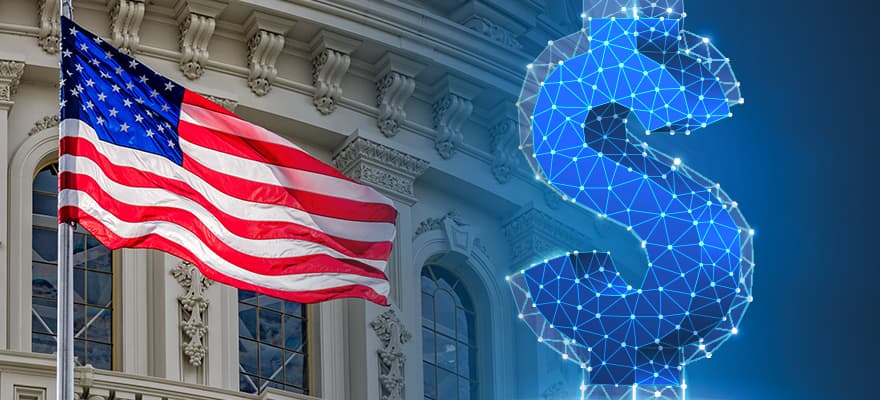
A leaked draft of the US's economic stimulus bill mentioned the creation of a 'Digital Dollar'. Is now the right time?
FM
The coronavirus has had widespread effects across the globe. In most of the world, everything from travel to shopping for food to attending business meetings is radically different today than it was a month ago--and many of these changes, while they were made with haste, are expected to stay in place.
This could also be true on a policy level. Pundits around the world have warned that, for example, surveillance measures that have been put into effect in an effort to contain the spread of the virus in certain parts of the world.
The sudden need to distribute economic aid directly to such a large swathe of the United States population, however, does not come without its own set of logistical challenges: while a similar bill that would have been passed twenty (or even ten) years ago probably would have involved reams of checks being sent via the postal service.
Today, however, the distribution of economic stimulus relies much more heavily on financial technology--and while lawmakers eventually decided that the majority of the money would be distributed via direct deposit, mention of possible distribution through the formation of a “Digital Dollar”--an electronic USD that would be deposited into Digital Dollar wallets--briefly appeared in a leaked draft of the economic stimulus bill that was eventually passed into law.
So it looks like Speaker Pelosi’s recent draft COVID-19 stimulus bill includes a digital dollar section. pic.twitter.com/tN8P61WzY5
Though the Digital Dollar concept failed to gain traction as a practical solution for distributing the corona stimulus, the simple fact that it was brought into consideration in the first place has ignited quite a bit excitement in the cryptocurrency and fintech worlds; some argue that this is the first time that a digitized version of the USD has been seriously considered by lawmakers and that therefore, this consideration marks an important milestone on the road to what may be an inevitable future of central bank digital currencies (CBDCs).
What kinds of effects will the introduction of a Digital USD concept into legal policies have on the future of the US economy? Is there still a possibility that the coronavirus could cause the permanent creation of a Digital Dollar? Or is now simply not the right time?
”Now is not the time for amateur hour.”
Dr. Marc Fleury, an open-source pioneer and founder of crypto and fintech firm Two Prime, told Finance Magnates that with or without the Digital Dolar, the bottom line is that economic relief is crucial at this particular moment in time.
“At a time where people cannot work, for those that live from paycheck to paycheck, savings are quickly evaporating,” he said. “Getting some financial relief as soon as possible is paramount to maintain civil order.” Fleury called the crisis “a matter of national security,” adding that “this is the reason the national guard is deployed in the US.”
Dr. Mark Fleury, open-source pioneer and founder of Two Prime.
“ You can create the money at the federal level, but how do you get it in the hands of people?” Fleury asked.
Fleury said that this is possible through the traditional financial system, “but is cumbersome.”
Additionally, many of “the people who need [the stimulus] the most may not have a bank account to start with.”
Therefore, the Digital Dollar may have initially seemed like a brilliant solution to a complicated problem. Reuben Yap, the project steward of the Zcoin cryptocurrency network, said that “the allure is simple: to have direct access to citizens with minimum red tape and the ability to directly provide dollars to the people, including the unbanked,” Yap said. “I see it as a way to airdrop money to average citizens.”
As such, Dr. Fleury said that “crypto and digital wallet [technology] could have [presented solutions.”
However, “now is not the time for amateur hour.”
While the Digital Dollar may have theoretically seemed like a good solution, the reality is a lot more complicated
In other words, while blockchain technology could theoretically be employed at a time like this to distribute stimulus, the US government would be required to either employ a third-party blockchain system to distribute the money, or to create the entire blockchain (and the corresponding wallets) from scratch--neither of which seems to be a particularly palatable course of action for the Fed.
Reuben Yap, project steward of the Zcoin cryptocurrency network.
Therefore, Fleury believes that the Digital Dollar “was probably taken out of the bill [because] it is actually a difficult technological solution,” he said.
Indeed, there are not many existing solutions that could “withstand the volume needed for payment technology,” and the average crypto firm is “too small and private to really be handed the keys to the kingdom in times of crisis.”
Fleury’s sentiments are shared by J. Christopher Giancarlo, former Chair of the United States Commodity Futures Trading Commission (CFTC) and co-founder of the Digital Dollar Foundation, which advocates for the eventual creation of a blockchain-based USD.
“The United States has to proceed thoughtfully, intelligently, deliberately,” Giancarlo told CoinTelegraph in an interview over the weekend. “We advocate pilot programs as a way to explore the utilization of the digital dollar and how it can be used, including how it can be used in a crisis.”
“But I think one needs to be very cautious about trying to launch something as big as this amidst a crisis,” he said.
A Digital Dollar could have important implications beyond Coronavirus-related economic relief
Indeed, Reuben Yap also said that the initial inclusion of the Digital Dollar in the stimulus bill was likely a “knee-jerk response.” However, even beyond the technical challenges associated with launching the project, there are a number of other considerations that must be taken into account: “this is not something we can rush through,” Yap said.
“For example, we need to consider the implications with privacy, as all of these wallets will be tied to an identity.”
Yap pointed in particular to a line in the bill that would have made the wallets subject to the Privacy Act of 1974--however, he said, “We still need to weigh this against the need for individual privacy. This Digital Dollar could also become a gateway to the removal of physical cash, which is still currently the most private way to perform financial transactions.”
Therefore, the creation of a Digital Dollar is something that’s better implemented over time, with careful thought and rigorous testing.
Yap pointed out that this is in spite of the fact that “earlier in the year,” Federal Reserve Chairman Jerome Powell “had said the Fed was not considering issuing its own CBDC yet, despite constantly evaluating its pros and cons.”
However, if the Fed has indeed changed its position on this issue, Yap said that “we need clear details on its implementation, and its longer-term impact on society needs to be weighed, rather than hastily rushing out a ‘Digital Dollar’ solution in response to coronavirus. If implemented, this is something that would live on [beyond] coronavirus.”
Even though the coronavirus may not result in the creation of a Digital Dollar, many experts agree that a digital USD is in the cards
Indeed, CBDCs have been a major topic of discussion over the past year in the United States and beyond, particularly following the launch of Facebook’s Libra project.
The project proposed the formation of an international financial network powered by “Libra Tokens,” which were slated to be stablecoins pegged to a “basket” of fiat currencies from nations around the globe.
While the project has hit some delays, the mere possibility that a private corporation could have the power to create its own global financial system was perceived as a major threat to national economies around the globe. Most lawmakers and regulators struck back with restrictive policies and reactionary legislation; however, a few took another approach--they decided that they would produce their own national digital currency as a way to combat the threat of Libra.
China’s decision to push its CBDC project ahead caused some concerns that the country could leverage the use of the digital currency as a way to bring capital out of currencies like the USD and EUR and into its own economy. Facebook chief executive Mark Zuckerberg made this point when he testified before Congress in October of 2019.
“China is moving quickly to launch a similar idea in the coming months,” Zuckerberg said in his opening remarks. “Libra is going to be backed mostly by dollars, and I believe that it will extend America’s financial leadership around the world, as well as our democratic values and an oversight. But if America doesn’t innovate, our financial leadership is not guaranteed.”
With or without coronavirus, the international race to create and implement CBDCs is still underway
Dave Jevans, chief executive officer of cybersecurity firm CipherTrace, told Finance Magnates that he sees the end of the largely cash-based system in the United States coming to an inevitable end: ”the days of handing paper dollar bills and metal coins to your grocer or coffee store barista are coming to a close,” he remarked.
However, Jevans said that the coronavirus crisis could be the catalyst that the US government needs to begin production of the Digital Dollar: “if the need to ease economic impacts from the coronavirus crisis inspires the development of a digital dollar, the US government will be that much more equipped to compete with People’s Bank of China in the Central Bank Digital Currency (CBDC) race.”
Dave Jevans, chief executive officer of cybersecurity firm CipherTrace.
“That said, China is already miles ahead of the rest of the world in terms of developing its digital yuan,” Jevans continued. “Just last week, five patents for China’s CBDC were recently publicized that covered, among other aspects, transaction recording, anonymous trading support, and assistance in supervising and dealing with illegal accounts.”
This could have a number of consequences beyond the economic realm: “China is no stranger to surveilling its own citizens, but if the digital yuan is issued via China’s extensive, sixty-country Belt and Road initiative, the digital yuan could become a global currency to rival the US dollar overnight,” Jevans said, which could mean that China’s surveillance powers could expand beyond its borders with the introduction of a digital yuan.
On the other hand, the United States may also miss out on an opportunity to set global security standards for the usage of CBDCs.
“The inevitable digitization of global financial systems, unfortunately, means that criminals are finding new ways of laundering money outside of cash,” Jevans said. “It is, therefore paramount for any country implementing a digital currency to prioritize AML compliance and security while maintaining privacy for its users.”
The coronavirus has had widespread effects across the globe. In most of the world, everything from travel to shopping for food to attending business meetings is radically different today than it was a month ago--and many of these changes, while they were made with haste, are expected to stay in place.
This could also be true on a policy level. Pundits around the world have warned that, for example, surveillance measures that have been put into effect in an effort to contain the spread of the virus in certain parts of the world.
The sudden need to distribute economic aid directly to such a large swathe of the United States population, however, does not come without its own set of logistical challenges: while a similar bill that would have been passed twenty (or even ten) years ago probably would have involved reams of checks being sent via the postal service.
Today, however, the distribution of economic stimulus relies much more heavily on financial technology--and while lawmakers eventually decided that the majority of the money would be distributed via direct deposit, mention of possible distribution through the formation of a “Digital Dollar”--an electronic USD that would be deposited into Digital Dollar wallets--briefly appeared in a leaked draft of the economic stimulus bill that was eventually passed into law.
So it looks like Speaker Pelosi’s recent draft COVID-19 stimulus bill includes a digital dollar section. pic.twitter.com/tN8P61WzY5
Though the Digital Dollar concept failed to gain traction as a practical solution for distributing the corona stimulus, the simple fact that it was brought into consideration in the first place has ignited quite a bit excitement in the cryptocurrency and fintech worlds; some argue that this is the first time that a digitized version of the USD has been seriously considered by lawmakers and that therefore, this consideration marks an important milestone on the road to what may be an inevitable future of central bank digital currencies (CBDCs).
What kinds of effects will the introduction of a Digital USD concept into legal policies have on the future of the US economy? Is there still a possibility that the coronavirus could cause the permanent creation of a Digital Dollar? Or is now simply not the right time?
”Now is not the time for amateur hour.”
Dr. Marc Fleury, an open-source pioneer and founder of crypto and fintech firm Two Prime, told Finance Magnates that with or without the Digital Dolar, the bottom line is that economic relief is crucial at this particular moment in time.
“At a time where people cannot work, for those that live from paycheck to paycheck, savings are quickly evaporating,” he said. “Getting some financial relief as soon as possible is paramount to maintain civil order.” Fleury called the crisis “a matter of national security,” adding that “this is the reason the national guard is deployed in the US.”
Dr. Mark Fleury, open-source pioneer and founder of Two Prime.
“ You can create the money at the federal level, but how do you get it in the hands of people?” Fleury asked.
Fleury said that this is possible through the traditional financial system, “but is cumbersome.”
Additionally, many of “the people who need [the stimulus] the most may not have a bank account to start with.”
Therefore, the Digital Dollar may have initially seemed like a brilliant solution to a complicated problem. Reuben Yap, the project steward of the Zcoin cryptocurrency network, said that “the allure is simple: to have direct access to citizens with minimum red tape and the ability to directly provide dollars to the people, including the unbanked,” Yap said. “I see it as a way to airdrop money to average citizens.”
As such, Dr. Fleury said that “crypto and digital wallet [technology] could have [presented solutions.”
However, “now is not the time for amateur hour.”
While the Digital Dollar may have theoretically seemed like a good solution, the reality is a lot more complicated
In other words, while blockchain technology could theoretically be employed at a time like this to distribute stimulus, the US government would be required to either employ a third-party blockchain system to distribute the money, or to create the entire blockchain (and the corresponding wallets) from scratch--neither of which seems to be a particularly palatable course of action for the Fed.
Reuben Yap, project steward of the Zcoin cryptocurrency network.
Therefore, Fleury believes that the Digital Dollar “was probably taken out of the bill [because] it is actually a difficult technological solution,” he said.
Indeed, there are not many existing solutions that could “withstand the volume needed for payment technology,” and the average crypto firm is “too small and private to really be handed the keys to the kingdom in times of crisis.”
Fleury’s sentiments are shared by J. Christopher Giancarlo, former Chair of the United States Commodity Futures Trading Commission (CFTC) and co-founder of the Digital Dollar Foundation, which advocates for the eventual creation of a blockchain-based USD.
“The United States has to proceed thoughtfully, intelligently, deliberately,” Giancarlo told CoinTelegraph in an interview over the weekend. “We advocate pilot programs as a way to explore the utilization of the digital dollar and how it can be used, including how it can be used in a crisis.”
“But I think one needs to be very cautious about trying to launch something as big as this amidst a crisis,” he said.
A Digital Dollar could have important implications beyond Coronavirus-related economic relief
Indeed, Reuben Yap also said that the initial inclusion of the Digital Dollar in the stimulus bill was likely a “knee-jerk response.” However, even beyond the technical challenges associated with launching the project, there are a number of other considerations that must be taken into account: “this is not something we can rush through,” Yap said.
“For example, we need to consider the implications with privacy, as all of these wallets will be tied to an identity.”
Yap pointed in particular to a line in the bill that would have made the wallets subject to the Privacy Act of 1974--however, he said, “We still need to weigh this against the need for individual privacy. This Digital Dollar could also become a gateway to the removal of physical cash, which is still currently the most private way to perform financial transactions.”
Therefore, the creation of a Digital Dollar is something that’s better implemented over time, with careful thought and rigorous testing.
Yap pointed out that this is in spite of the fact that “earlier in the year,” Federal Reserve Chairman Jerome Powell “had said the Fed was not considering issuing its own CBDC yet, despite constantly evaluating its pros and cons.”
However, if the Fed has indeed changed its position on this issue, Yap said that “we need clear details on its implementation, and its longer-term impact on society needs to be weighed, rather than hastily rushing out a ‘Digital Dollar’ solution in response to coronavirus. If implemented, this is something that would live on [beyond] coronavirus.”
Even though the coronavirus may not result in the creation of a Digital Dollar, many experts agree that a digital USD is in the cards
Indeed, CBDCs have been a major topic of discussion over the past year in the United States and beyond, particularly following the launch of Facebook’s Libra project.
The project proposed the formation of an international financial network powered by “Libra Tokens,” which were slated to be stablecoins pegged to a “basket” of fiat currencies from nations around the globe.
While the project has hit some delays, the mere possibility that a private corporation could have the power to create its own global financial system was perceived as a major threat to national economies around the globe. Most lawmakers and regulators struck back with restrictive policies and reactionary legislation; however, a few took another approach--they decided that they would produce their own national digital currency as a way to combat the threat of Libra.
China’s decision to push its CBDC project ahead caused some concerns that the country could leverage the use of the digital currency as a way to bring capital out of currencies like the USD and EUR and into its own economy. Facebook chief executive Mark Zuckerberg made this point when he testified before Congress in October of 2019.
“China is moving quickly to launch a similar idea in the coming months,” Zuckerberg said in his opening remarks. “Libra is going to be backed mostly by dollars, and I believe that it will extend America’s financial leadership around the world, as well as our democratic values and an oversight. But if America doesn’t innovate, our financial leadership is not guaranteed.”
With or without coronavirus, the international race to create and implement CBDCs is still underway
Dave Jevans, chief executive officer of cybersecurity firm CipherTrace, told Finance Magnates that he sees the end of the largely cash-based system in the United States coming to an inevitable end: ”the days of handing paper dollar bills and metal coins to your grocer or coffee store barista are coming to a close,” he remarked.
However, Jevans said that the coronavirus crisis could be the catalyst that the US government needs to begin production of the Digital Dollar: “if the need to ease economic impacts from the coronavirus crisis inspires the development of a digital dollar, the US government will be that much more equipped to compete with People’s Bank of China in the Central Bank Digital Currency (CBDC) race.”
Dave Jevans, chief executive officer of cybersecurity firm CipherTrace.
“That said, China is already miles ahead of the rest of the world in terms of developing its digital yuan,” Jevans continued. “Just last week, five patents for China’s CBDC were recently publicized that covered, among other aspects, transaction recording, anonymous trading support, and assistance in supervising and dealing with illegal accounts.”
This could have a number of consequences beyond the economic realm: “China is no stranger to surveilling its own citizens, but if the digital yuan is issued via China’s extensive, sixty-country Belt and Road initiative, the digital yuan could become a global currency to rival the US dollar overnight,” Jevans said, which could mean that China’s surveillance powers could expand beyond its borders with the introduction of a digital yuan.
On the other hand, the United States may also miss out on an opportunity to set global security standards for the usage of CBDCs.
“The inevitable digitization of global financial systems, unfortunately, means that criminals are finding new ways of laundering money outside of cash,” Jevans said. “It is, therefore paramount for any country implementing a digital currency to prioritize AML compliance and security while maintaining privacy for its users.”
Rachel is a self-taught crypto geek and a passionate writer. She believes in the power that the written word has to educate, connect and empower individuals to make positive and powerful financial choices. She is the Podcast Host and a Cryptocurrency Editor at Finance Magnates.
Binance Launches Retail AI Assistant, Repackages Existing Trading Tools
Featured Videos
AvaTrade to Acquire Most of FXCM; NAGA Raises $8M
AvaTrade to Acquire Most of FXCM; NAGA Raises $8M
AvaTrade to Acquire Most of FXCM; NAGA Raises $8M
AvaTrade to Acquire Most of FXCM; NAGA Raises $8M
Today’s financial news recap covers AvaTrade agrees to acquire most of FXCM, NAGA secures eight million dollars in new financing, and Wise seeks a tax settlement in the UK.
Finance Magnates Daily Recap brings you the latest news from forex and CFD brokers, fintech, payments, cryptocurrency, digital assets, trading platforms, financial regulation and global markets.
Get the key company news, executive moves, deals, regulatory updates and market developments of the day, in just a few minutes. New episodes published every weekday.
Read more: https://www.financemagnates.com
#FinanceMagnates #ForexNews #FintechNews
Today’s financial news recap covers AvaTrade agrees to acquire most of FXCM, NAGA secures eight million dollars in new financing, and Wise seeks a tax settlement in the UK.
Finance Magnates Daily Recap brings you the latest news from forex and CFD brokers, fintech, payments, cryptocurrency, digital assets, trading platforms, financial regulation and global markets.
Get the key company news, executive moves, deals, regulatory updates and market developments of the day, in just a few minutes. New episodes published every weekday.
Read more: https://www.financemagnates.com
#FinanceMagnates #ForexNews #FintechNews
Today’s financial news recap covers AvaTrade agrees to acquire most of FXCM, NAGA secures eight million dollars in new financing, and Wise seeks a tax settlement in the UK.
Finance Magnates Daily Recap brings you the latest news from forex and CFD brokers, fintech, payments, cryptocurrency, digital assets, trading platforms, financial regulation and global markets.
Get the key company news, executive moves, deals, regulatory updates and market developments of the day, in just a few minutes. New episodes published every weekday.
Read more: https://www.financemagnates.com
#FinanceMagnates #ForexNews #FintechNews
Today’s financial news recap covers AvaTrade agrees to acquire most of FXCM, NAGA secures eight million dollars in new financing, and Wise seeks a tax settlement in the UK.
Finance Magnates Daily Recap brings you the latest news from forex and CFD brokers, fintech, payments, cryptocurrency, digital assets, trading platforms, financial regulation and global markets.
Get the key company news, executive moves, deals, regulatory updates and market developments of the day, in just a few minutes. New episodes published every weekday.
Read more: https://www.financemagnates.com
#FinanceMagnates #ForexNews #FintechNews
XTB Adds Overnight US Stock Trading; Nasdaq Ventures Invests in One Trading
XTB Adds Overnight US Stock Trading; Nasdaq Ventures Invests in One Trading
XTB Adds Overnight US Stock Trading; Nasdaq Ventures Invests in One Trading
XTB Adds Overnight US Stock Trading; Nasdaq Ventures Invests in One Trading
XTB Adds Overnight US Stock Trading; Nasdaq Ventures Invests in One Trading
XTB Adds Overnight US Stock Trading; Nasdaq Ventures Invests in One Trading
Today’s financial news recap covers XTB expands overnight US stock trading, Fortrade reports higher revenue, Nasdaq backs One Trading, and Vest Labs raises 13 million dollars.
Finance Magnates Daily Recap brings you the latest news from forex and CFD brokers, fintech, payments, cryptocurrency, digital assets, trading platforms, financial regulation and global markets.
Get the key company news, executive moves, deals, regulatory updates and market developments of the day, in just a few minutes. New episodes published every weekday.
Read more: https://www.financemagnates.com
#FinanceMagnates #ForexNews #FintechNews
Today’s financial news recap covers XTB expands overnight US stock trading, Fortrade reports higher revenue, Nasdaq backs One Trading, and Vest Labs raises 13 million dollars.
Finance Magnates Daily Recap brings you the latest news from forex and CFD brokers, fintech, payments, cryptocurrency, digital assets, trading platforms, financial regulation and global markets.
Get the key company news, executive moves, deals, regulatory updates and market developments of the day, in just a few minutes. New episodes published every weekday.
Read more: https://www.financemagnates.com
#FinanceMagnates #ForexNews #FintechNews
Today’s financial news recap covers XTB expands overnight US stock trading, Fortrade reports higher revenue, Nasdaq backs One Trading, and Vest Labs raises 13 million dollars.
Finance Magnates Daily Recap brings you the latest news from forex and CFD brokers, fintech, payments, cryptocurrency, digital assets, trading platforms, financial regulation and global markets.
Get the key company news, executive moves, deals, regulatory updates and market developments of the day, in just a few minutes. New episodes published every weekday.
Read more: https://www.financemagnates.com
#FinanceMagnates #ForexNews #FintechNews
Today’s financial news recap covers XTB expands overnight US stock trading, Fortrade reports higher revenue, Nasdaq backs One Trading, and Vest Labs raises 13 million dollars.
Finance Magnates Daily Recap brings you the latest news from forex and CFD brokers, fintech, payments, cryptocurrency, digital assets, trading platforms, financial regulation and global markets.
Get the key company news, executive moves, deals, regulatory updates and market developments of the day, in just a few minutes. New episodes published every weekday.
Read more: https://www.financemagnates.com
#FinanceMagnates #ForexNews #FintechNews
Today’s financial news recap covers XTB expands overnight US stock trading, Fortrade reports higher revenue, Nasdaq backs One Trading, and Vest Labs raises 13 million dollars.
Finance Magnates Daily Recap brings you the latest news from forex and CFD brokers, fintech, payments, cryptocurrency, digital assets, trading platforms, financial regulation and global markets.
Get the key company news, executive moves, deals, regulatory updates and market developments of the day, in just a few minutes. New episodes published every weekday.
Read more: https://www.financemagnates.com
#FinanceMagnates #ForexNews #FintechNews
Today’s financial news recap covers XTB expands overnight US stock trading, Fortrade reports higher revenue, Nasdaq backs One Trading, and Vest Labs raises 13 million dollars.
Finance Magnates Daily Recap brings you the latest news from forex and CFD brokers, fintech, payments, cryptocurrency, digital assets, trading platforms, financial regulation and global markets.
Get the key company news, executive moves, deals, regulatory updates and market developments of the day, in just a few minutes. New episodes published every weekday.
Read more: https://www.financemagnates.com
#FinanceMagnates #ForexNews #FintechNews
CMC Founder Downplays Volatility Hit; Devexperts Names CEO
CMC Founder Downplays Volatility Hit; Devexperts Names CEO
CMC Founder Downplays Volatility Hit; Devexperts Names CEO
CMC Founder Downplays Volatility Hit; Devexperts Names CEO
CMC Founder Downplays Volatility Hit; Devexperts Names CEO
CMC Founder Downplays Volatility Hit; Devexperts Names CEO
Today’s financial news recap covers low volatility pressures brokers, Devexperts names a new CEO, Saxo cuts onboarding time, and OKX reaches a 25 billion dollar valuation.
Finance Magnates Daily Recap brings you the latest news from forex and CFD brokers, fintech, payments, cryptocurrency, digital assets, trading platforms, financial regulation and global markets.
Get the key company news, executive moves, deals, regulatory updates and market developments of the day, in just a few minutes. New episodes published every weekday.
Read more: https://www.financemagnates.com
#FinanceMagnates #ForexNews #FintechNews
Today’s financial news recap covers low volatility pressures brokers, Devexperts names a new CEO, Saxo cuts onboarding time, and OKX reaches a 25 billion dollar valuation.
Finance Magnates Daily Recap brings you the latest news from forex and CFD brokers, fintech, payments, cryptocurrency, digital assets, trading platforms, financial regulation and global markets.
Get the key company news, executive moves, deals, regulatory updates and market developments of the day, in just a few minutes. New episodes published every weekday.
Read more: https://www.financemagnates.com
#FinanceMagnates #ForexNews #FintechNews
Today’s financial news recap covers low volatility pressures brokers, Devexperts names a new CEO, Saxo cuts onboarding time, and OKX reaches a 25 billion dollar valuation.
Finance Magnates Daily Recap brings you the latest news from forex and CFD brokers, fintech, payments, cryptocurrency, digital assets, trading platforms, financial regulation and global markets.
Get the key company news, executive moves, deals, regulatory updates and market developments of the day, in just a few minutes. New episodes published every weekday.
Read more: https://www.financemagnates.com
#FinanceMagnates #ForexNews #FintechNews
Today’s financial news recap covers low volatility pressures brokers, Devexperts names a new CEO, Saxo cuts onboarding time, and OKX reaches a 25 billion dollar valuation.
Finance Magnates Daily Recap brings you the latest news from forex and CFD brokers, fintech, payments, cryptocurrency, digital assets, trading platforms, financial regulation and global markets.
Get the key company news, executive moves, deals, regulatory updates and market developments of the day, in just a few minutes. New episodes published every weekday.
Read more: https://www.financemagnates.com
#FinanceMagnates #ForexNews #FintechNews
Today’s financial news recap covers low volatility pressures brokers, Devexperts names a new CEO, Saxo cuts onboarding time, and OKX reaches a 25 billion dollar valuation.
Finance Magnates Daily Recap brings you the latest news from forex and CFD brokers, fintech, payments, cryptocurrency, digital assets, trading platforms, financial regulation and global markets.
Get the key company news, executive moves, deals, regulatory updates and market developments of the day, in just a few minutes. New episodes published every weekday.
Read more: https://www.financemagnates.com
#FinanceMagnates #ForexNews #FintechNews
Today’s financial news recap covers low volatility pressures brokers, Devexperts names a new CEO, Saxo cuts onboarding time, and OKX reaches a 25 billion dollar valuation.
Finance Magnates Daily Recap brings you the latest news from forex and CFD brokers, fintech, payments, cryptocurrency, digital assets, trading platforms, financial regulation and global markets.
Get the key company news, executive moves, deals, regulatory updates and market developments of the day, in just a few minutes. New episodes published every weekday.
Read more: https://www.financemagnates.com
#FinanceMagnates #ForexNews #FintechNews
Today’s financial news recap covers Trade Nation buys FXCM's UK client book, Trading 212 reports higher revenue, the CFTC's move to allow perpetual index futures.
Finance Magnates Daily Recap brings you the latest news from forex and CFD brokers, fintech, payments, cryptocurrency, digital assets, trading platforms, financial regulation and global markets.
Get the key company news, executive moves, deals, regulatory updates and market developments of the day, in just a few minutes. New episodes published every weekday.
Read more: https://www.financemagnates.com
#FinanceMagnates #ForexNews #FintechNews
Today’s financial news recap covers Trade Nation buys FXCM's UK client book, Trading 212 reports higher revenue, the CFTC's move to allow perpetual index futures.
Finance Magnates Daily Recap brings you the latest news from forex and CFD brokers, fintech, payments, cryptocurrency, digital assets, trading platforms, financial regulation and global markets.
Get the key company news, executive moves, deals, regulatory updates and market developments of the day, in just a few minutes. New episodes published every weekday.
Read more: https://www.financemagnates.com
#FinanceMagnates #ForexNews #FintechNews
Today’s financial news recap covers Trade Nation buys FXCM's UK client book, Trading 212 reports higher revenue, the CFTC's move to allow perpetual index futures.
Finance Magnates Daily Recap brings you the latest news from forex and CFD brokers, fintech, payments, cryptocurrency, digital assets, trading platforms, financial regulation and global markets.
Get the key company news, executive moves, deals, regulatory updates and market developments of the day, in just a few minutes. New episodes published every weekday.
Read more: https://www.financemagnates.com
#FinanceMagnates #ForexNews #FintechNews
Today’s financial news recap covers Trade Nation buys FXCM's UK client book, Trading 212 reports higher revenue, the CFTC's move to allow perpetual index futures.
Finance Magnates Daily Recap brings you the latest news from forex and CFD brokers, fintech, payments, cryptocurrency, digital assets, trading platforms, financial regulation and global markets.
Get the key company news, executive moves, deals, regulatory updates and market developments of the day, in just a few minutes. New episodes published every weekday.
Read more: https://www.financemagnates.com
#FinanceMagnates #ForexNews #FintechNews
Today’s financial news recap covers Trade Nation buys FXCM's UK client book, Trading 212 reports higher revenue, the CFTC's move to allow perpetual index futures.
Finance Magnates Daily Recap brings you the latest news from forex and CFD brokers, fintech, payments, cryptocurrency, digital assets, trading platforms, financial regulation and global markets.
Get the key company news, executive moves, deals, regulatory updates and market developments of the day, in just a few minutes. New episodes published every weekday.
Read more: https://www.financemagnates.com
#FinanceMagnates #ForexNews #FintechNews
Today’s financial news recap covers Trade Nation buys FXCM's UK client book, Trading 212 reports higher revenue, the CFTC's move to allow perpetual index futures.
Finance Magnates Daily Recap brings you the latest news from forex and CFD brokers, fintech, payments, cryptocurrency, digital assets, trading platforms, financial regulation and global markets.
Get the key company news, executive moves, deals, regulatory updates and market developments of the day, in just a few minutes. New episodes published every weekday.
Read more: https://www.financemagnates.com
#FinanceMagnates #ForexNews #FintechNews
Your career isn’t a linear path.
Your career isn’t a linear path.
Your career isn’t a linear path.
Your career isn’t a linear path.
Your career isn’t a linear path.
Your career isn’t a linear path.
Roles change. Career goals change. Sometimes you want a completely new challenge.
But the skills and knowledge you build along the way can stay with you and give you something to build on.
For Jeff Patterson, that continued growth is key to long-term career development.
You bring the skills. FM Academy helps you build the knowledge.
#FMAcademy #FinanceMagnates #FinanceCareers #ProfessionalDevelopment #Fintech
Roles change. Career goals change. Sometimes you want a completely new challenge.
But the skills and knowledge you build along the way can stay with you and give you something to build on.
For Jeff Patterson, that continued growth is key to long-term career development.
You bring the skills. FM Academy helps you build the knowledge.
#FMAcademy #FinanceMagnates #FinanceCareers #ProfessionalDevelopment #Fintech
Roles change. Career goals change. Sometimes you want a completely new challenge.
But the skills and knowledge you build along the way can stay with you and give you something to build on.
For Jeff Patterson, that continued growth is key to long-term career development.
You bring the skills. FM Academy helps you build the knowledge.
#FMAcademy #FinanceMagnates #FinanceCareers #ProfessionalDevelopment #Fintech
Roles change. Career goals change. Sometimes you want a completely new challenge.
But the skills and knowledge you build along the way can stay with you and give you something to build on.
For Jeff Patterson, that continued growth is key to long-term career development.
You bring the skills. FM Academy helps you build the knowledge.
#FMAcademy #FinanceMagnates #FinanceCareers #ProfessionalDevelopment #Fintech
Roles change. Career goals change. Sometimes you want a completely new challenge.
But the skills and knowledge you build along the way can stay with you and give you something to build on.
For Jeff Patterson, that continued growth is key to long-term career development.
You bring the skills. FM Academy helps you build the knowledge.
#FMAcademy #FinanceMagnates #FinanceCareers #ProfessionalDevelopment #Fintech
Roles change. Career goals change. Sometimes you want a completely new challenge.
But the skills and knowledge you build along the way can stay with you and give you something to build on.
For Jeff Patterson, that continued growth is key to long-term career development.
You bring the skills. FM Academy helps you build the knowledge.
#FMAcademy #FinanceMagnates #FinanceCareers #ProfessionalDevelopment #Fintech