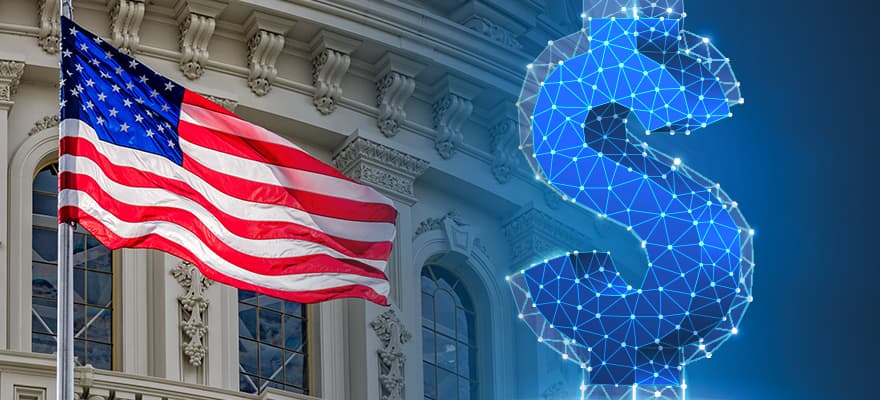
Why could the United States need to implement a Digital Dollar? Tune into the hearing today at 12:00 EST.
FM
Just a year or two ago, the concept of central bank digital currencies (CBDCs)--particularly in the United States--was novel. It was interesting, certainly--however, most of the world regarded CBDCs as esoteric technology that certainly could have use cases.
Sure, there were studies (and even implementations, in some cases). However, to the average person--and the average lawmaker-- it just wasn’t abundantly clear what those use cases were, or why a CBDC would be any different than the ‘digital’ money that the world spends with credit and debit cards every day.
Flash forward two years: China has ramped up its efforts to launch a digital currency of its own; Facebook has attempted to launch a global digital currency network that was seen as a serious threat of the economic status quo.
(Also, a pandemic has developed out of the spread of a disease called the ‘coronavirus’, causing massive economic fallout and launching much of the world into a recession.)
While scrambling to launch economic stimulus programs that included quantitative easing and the sending of millions of personal checks, several early drafts of stimulus bills by the United States Congress included something novel, interesting, and totally unprecedented: the mention of a ‘digital dollar’.
Now, several months later, the US Congress is revisiting the concept of a ‘digital dollar’ with a hearing devoted entirely to the subject. The hearing will take place today, Today, June 11th, at 12:00 PM eastern time; you can tune in here.
Here’s what you need to know.
Does the United States really need a Digital Dollar?
During the hearing, the US Congress will hear testimony from four “witnesses”.
These include Mehrsa Baradaran, a Professor of Law at the University of California Irvine School of Law; Jodie Kelley, the CEO of the Electronic Transactions Association; Morgan Ricks, Professor of Law, Vanderbilt University Law School; and finally, the Honorable Chris Giancarlo, the former Chairman of the U.S. Commodity Futures Trading Commission (CFTC).
After ending his tenure at the CFTC last year, Giancarlo teamed up with Daniel Gorfine, the former director of LabCFTC, to found the DDF, which has been working to advocate for the creation and explore the framework of a digital dollar ever since.
So, why does the United States need a digital dollar?
Daniel Gorfine, former director of LabCFTC.
Last month, Accenture’s Danielle Martell, who works closely with the DDF, explained in an interview with Finance Magnates that a CBDC digital dollar is not the same thing as the dollars that we use to pay for things online.
“[A digital dollar is] not a representation of the dollar, it actually is the dollar,” Danielle explained, “just in a new format. It would have the same legal status as the physical cash that’s in your wallet today.
“We see benefits for this across resale and wholesale applications of this both domestically and internationally."
Martell also told Finance Magnates that perhaps primarily, a digital dollar could be used to secure and expand existing financial services.
“We see benefits for this across resale and wholesale applications of this both domestically and internationally,” she told Finance Magnates.
For example, “today, online transactions cannot be conducted in central bank money–you can’t use physical cash to make a purchase online. For those of us with a credit card, this may not seem like a big deal, and we may even want to use a credit card on certain purchases to take advantage of the protections that they offer.”
“But what about what this means to those who are unbanked, or underbanked? It means that they may be limited–or even excluded–from e-commerce,” Danielle said.
“In reality, more of this population has access to a mobile phone than they do to a bank account. So, in this example, a tokenized digital dollar that’s held in a mobile wallet would increase access to transact online for this underserved population.”
Coronavirus made the Digital Dollar top-of-mind for Congress, but the crisis wasn't "the right time"
Certainly, this financially ‘underserved’ part of the population was in mind when mention of a digital dollar appeared in early drafts of the economic stimulus bill; after all doing direct deposits is impossible for individuals who don’t have bank accounts.
While lawmakers eventually decided that the majority of the money would be distributed via direct deposit, paper checks, and EID cards, the mention of possible distribution through the formation of a “Digital Dollar” and accompanying digital ‘wallets’ that would also be created and digitally distributed.
So it looks like Speaker Pelosi’s recent draft COVID-19 stimulus bill includes a digital dollar section. pic.twitter.com/tN8P61WzY5
However, when the digital dollar concept was briefly introduced as part of the stimulus bill that Congress eventually passed as part of its plan for coronavirus-related economic relief,the Digital Dollar Foundation said that it did not believe that a crisis was the right time to attempt to build and implement a new kind of financial network on a national scale.
“Something as complex and worthy of the US. Dollar’s global importance should not be cobbled together in a crisis,” former CFTC Chairman Giancarlo wrote in a piece for CoinDesk. “Getting it right will take time.”
“Nevertheless, now is the right time to get started.”
Former LacCFTC Daniel Gorfine said something similar in an interview with Finance Magnates conducted last month: “at the end of the day, I think the takeaway is that it’s the right time to start exploring these issues,” rather than building something in haste, he said. “We need to do so in a thoughtful and deliberate way.”
The proposal to create consumer digital dollar fed accounts is about removing banks as intermediary dollar dispensaries.
Meaning the Fed can QE directly into consumer accts rather than needing to coordinate through multiple banks and banking cores.
Previously, Gorfine told CoinTelegraph that while “this crisis has demonstrated that some of our processes don’t seem to match a 21st-century leading economy in terms of capabilities,” and “it’s not surprising that there’s now focus on whether there are better, more efficient ways to go about moving funds," it is “important that pursuing something like this doesn’t become a distraction from getting necessary funds out in a really expedient fashion.”
International competition could also play an important role in the Digital Dollar's future
While the coronavirus may have brought the digital dollar concept to the surface of Congress’ consciousness, other factors may have played an important role in leading Congress to hold today’s hearing.
Therefore, the United States may be moving toward playing a game of catch-up with China: “It is likely that the first first-world government to have its digital currency truly ingrained in international markets would receive a significant first-mover advantage,” Wagster explained.
In another hearing before Congress near the end of 2019, Mark Zuckerberg made a similar point regarding China’s plans to launch its own national digital currency--although Zuckerberg seemed to make a case that Libra could act as a USD proxy in the CBDC battle.
Libra may have incidentally catalyzed the possible creation of a digital dollar and other CBDCs
"China is moving quickly to launch a similar idea in the coming months,” Zuckerberg told the United States Congress. “We can't sit here and assume that because America is today the leader that it will always get to be the leader if we don't innovate.”
“Libra will be backed mostly by dollars and I believe it will extend America’s financial leadership as well as our democratic values and oversight around the world. If America doesn’t innovate, our financial leadership is not guaranteed.”
What Zuckerberg failed to acknowledge, however, is the fact that at the time of the hearing, the United States government saw Libra as just as much--if not more--of an immediate threat to its economic stronghold than the digital yuan.
John Wagster, Blockchain & Digital Currency industry team Co-Chair at Cincinnati-based law firm Frost Brown Todd.
Indeed, Frost Brown Todd’s John Wagster explained to Finance Magnates that in addition to China’s work on its own CBDC, “ Facebook’s proposal to create a global currency, Libra, “caused concern in that “it might become large enough to compete with government-backed fiat currencies.”
Bottom line: the concept of a Digital Dollar is "no longer considered frivolous"
However, none of these reasons alone--neither the pandemic, nor Libra, nor China, nor the need to provide financial services to the unbanked--can be cited as the singular reason that the United States government may be closer than ever to issuing a CBDC of its own.
For any of these reasons--or for some combination of them all--”the U.S. is closer to implementing a digital dollar because the idea is no longer considered frivolous,” John Wagster explained to Finance Magnates.
Just a year or two ago, the concept of central bank digital currencies (CBDCs)--particularly in the United States--was novel. It was interesting, certainly--however, most of the world regarded CBDCs as esoteric technology that certainly could have use cases.
Sure, there were studies (and even implementations, in some cases). However, to the average person--and the average lawmaker-- it just wasn’t abundantly clear what those use cases were, or why a CBDC would be any different than the ‘digital’ money that the world spends with credit and debit cards every day.
Flash forward two years: China has ramped up its efforts to launch a digital currency of its own; Facebook has attempted to launch a global digital currency network that was seen as a serious threat of the economic status quo.
(Also, a pandemic has developed out of the spread of a disease called the ‘coronavirus’, causing massive economic fallout and launching much of the world into a recession.)
While scrambling to launch economic stimulus programs that included quantitative easing and the sending of millions of personal checks, several early drafts of stimulus bills by the United States Congress included something novel, interesting, and totally unprecedented: the mention of a ‘digital dollar’.
Now, several months later, the US Congress is revisiting the concept of a ‘digital dollar’ with a hearing devoted entirely to the subject. The hearing will take place today, Today, June 11th, at 12:00 PM eastern time; you can tune in here.
Here’s what you need to know.
Does the United States really need a Digital Dollar?
During the hearing, the US Congress will hear testimony from four “witnesses”.
These include Mehrsa Baradaran, a Professor of Law at the University of California Irvine School of Law; Jodie Kelley, the CEO of the Electronic Transactions Association; Morgan Ricks, Professor of Law, Vanderbilt University Law School; and finally, the Honorable Chris Giancarlo, the former Chairman of the U.S. Commodity Futures Trading Commission (CFTC).
After ending his tenure at the CFTC last year, Giancarlo teamed up with Daniel Gorfine, the former director of LabCFTC, to found the DDF, which has been working to advocate for the creation and explore the framework of a digital dollar ever since.
So, why does the United States need a digital dollar?
Daniel Gorfine, former director of LabCFTC.
Last month, Accenture’s Danielle Martell, who works closely with the DDF, explained in an interview with Finance Magnates that a CBDC digital dollar is not the same thing as the dollars that we use to pay for things online.
“[A digital dollar is] not a representation of the dollar, it actually is the dollar,” Danielle explained, “just in a new format. It would have the same legal status as the physical cash that’s in your wallet today.
“We see benefits for this across resale and wholesale applications of this both domestically and internationally."
Martell also told Finance Magnates that perhaps primarily, a digital dollar could be used to secure and expand existing financial services.
“We see benefits for this across resale and wholesale applications of this both domestically and internationally,” she told Finance Magnates.
For example, “today, online transactions cannot be conducted in central bank money–you can’t use physical cash to make a purchase online. For those of us with a credit card, this may not seem like a big deal, and we may even want to use a credit card on certain purchases to take advantage of the protections that they offer.”
“But what about what this means to those who are unbanked, or underbanked? It means that they may be limited–or even excluded–from e-commerce,” Danielle said.
“In reality, more of this population has access to a mobile phone than they do to a bank account. So, in this example, a tokenized digital dollar that’s held in a mobile wallet would increase access to transact online for this underserved population.”
Coronavirus made the Digital Dollar top-of-mind for Congress, but the crisis wasn't "the right time"
Certainly, this financially ‘underserved’ part of the population was in mind when mention of a digital dollar appeared in early drafts of the economic stimulus bill; after all doing direct deposits is impossible for individuals who don’t have bank accounts.
While lawmakers eventually decided that the majority of the money would be distributed via direct deposit, paper checks, and EID cards, the mention of possible distribution through the formation of a “Digital Dollar” and accompanying digital ‘wallets’ that would also be created and digitally distributed.
So it looks like Speaker Pelosi’s recent draft COVID-19 stimulus bill includes a digital dollar section. pic.twitter.com/tN8P61WzY5
However, when the digital dollar concept was briefly introduced as part of the stimulus bill that Congress eventually passed as part of its plan for coronavirus-related economic relief,the Digital Dollar Foundation said that it did not believe that a crisis was the right time to attempt to build and implement a new kind of financial network on a national scale.
“Something as complex and worthy of the US. Dollar’s global importance should not be cobbled together in a crisis,” former CFTC Chairman Giancarlo wrote in a piece for CoinDesk. “Getting it right will take time.”
“Nevertheless, now is the right time to get started.”
Former LacCFTC Daniel Gorfine said something similar in an interview with Finance Magnates conducted last month: “at the end of the day, I think the takeaway is that it’s the right time to start exploring these issues,” rather than building something in haste, he said. “We need to do so in a thoughtful and deliberate way.”
The proposal to create consumer digital dollar fed accounts is about removing banks as intermediary dollar dispensaries.
Meaning the Fed can QE directly into consumer accts rather than needing to coordinate through multiple banks and banking cores.
Previously, Gorfine told CoinTelegraph that while “this crisis has demonstrated that some of our processes don’t seem to match a 21st-century leading economy in terms of capabilities,” and “it’s not surprising that there’s now focus on whether there are better, more efficient ways to go about moving funds," it is “important that pursuing something like this doesn’t become a distraction from getting necessary funds out in a really expedient fashion.”
International competition could also play an important role in the Digital Dollar's future
While the coronavirus may have brought the digital dollar concept to the surface of Congress’ consciousness, other factors may have played an important role in leading Congress to hold today’s hearing.
Therefore, the United States may be moving toward playing a game of catch-up with China: “It is likely that the first first-world government to have its digital currency truly ingrained in international markets would receive a significant first-mover advantage,” Wagster explained.
In another hearing before Congress near the end of 2019, Mark Zuckerberg made a similar point regarding China’s plans to launch its own national digital currency--although Zuckerberg seemed to make a case that Libra could act as a USD proxy in the CBDC battle.
Libra may have incidentally catalyzed the possible creation of a digital dollar and other CBDCs
"China is moving quickly to launch a similar idea in the coming months,” Zuckerberg told the United States Congress. “We can't sit here and assume that because America is today the leader that it will always get to be the leader if we don't innovate.”
“Libra will be backed mostly by dollars and I believe it will extend America’s financial leadership as well as our democratic values and oversight around the world. If America doesn’t innovate, our financial leadership is not guaranteed.”
What Zuckerberg failed to acknowledge, however, is the fact that at the time of the hearing, the United States government saw Libra as just as much--if not more--of an immediate threat to its economic stronghold than the digital yuan.
John Wagster, Blockchain & Digital Currency industry team Co-Chair at Cincinnati-based law firm Frost Brown Todd.
Indeed, Frost Brown Todd’s John Wagster explained to Finance Magnates that in addition to China’s work on its own CBDC, “ Facebook’s proposal to create a global currency, Libra, “caused concern in that “it might become large enough to compete with government-backed fiat currencies.”
Bottom line: the concept of a Digital Dollar is "no longer considered frivolous"
However, none of these reasons alone--neither the pandemic, nor Libra, nor China, nor the need to provide financial services to the unbanked--can be cited as the singular reason that the United States government may be closer than ever to issuing a CBDC of its own.
For any of these reasons--or for some combination of them all--”the U.S. is closer to implementing a digital dollar because the idea is no longer considered frivolous,” John Wagster explained to Finance Magnates.
Rachel is a self-taught crypto geek and a passionate writer. She believes in the power that the written word has to educate, connect and empower individuals to make positive and powerful financial choices. She is the Podcast Host and a Cryptocurrency Editor at Finance Magnates.
Moomoo Adds Crossover’s Crypto Execution Network for US Retail Traders
Featured Videos
AvaTrade to Acquire Most of FXCM; NAGA Raises $8M
AvaTrade to Acquire Most of FXCM; NAGA Raises $8M
AvaTrade to Acquire Most of FXCM; NAGA Raises $8M
AvaTrade to Acquire Most of FXCM; NAGA Raises $8M
Today’s financial news recap covers AvaTrade agrees to acquire most of FXCM, NAGA secures eight million dollars in new financing, and Wise seeks a tax settlement in the UK.
Finance Magnates Daily Recap brings you the latest news from forex and CFD brokers, fintech, payments, cryptocurrency, digital assets, trading platforms, financial regulation and global markets.
Get the key company news, executive moves, deals, regulatory updates and market developments of the day, in just a few minutes. New episodes published every weekday.
Read more: https://www.financemagnates.com
#FinanceMagnates #ForexNews #FintechNews
Today’s financial news recap covers AvaTrade agrees to acquire most of FXCM, NAGA secures eight million dollars in new financing, and Wise seeks a tax settlement in the UK.
Finance Magnates Daily Recap brings you the latest news from forex and CFD brokers, fintech, payments, cryptocurrency, digital assets, trading platforms, financial regulation and global markets.
Get the key company news, executive moves, deals, regulatory updates and market developments of the day, in just a few minutes. New episodes published every weekday.
Read more: https://www.financemagnates.com
#FinanceMagnates #ForexNews #FintechNews
Today’s financial news recap covers AvaTrade agrees to acquire most of FXCM, NAGA secures eight million dollars in new financing, and Wise seeks a tax settlement in the UK.
Finance Magnates Daily Recap brings you the latest news from forex and CFD brokers, fintech, payments, cryptocurrency, digital assets, trading platforms, financial regulation and global markets.
Get the key company news, executive moves, deals, regulatory updates and market developments of the day, in just a few minutes. New episodes published every weekday.
Read more: https://www.financemagnates.com
#FinanceMagnates #ForexNews #FintechNews
Today’s financial news recap covers AvaTrade agrees to acquire most of FXCM, NAGA secures eight million dollars in new financing, and Wise seeks a tax settlement in the UK.
Finance Magnates Daily Recap brings you the latest news from forex and CFD brokers, fintech, payments, cryptocurrency, digital assets, trading platforms, financial regulation and global markets.
Get the key company news, executive moves, deals, regulatory updates and market developments of the day, in just a few minutes. New episodes published every weekday.
Read more: https://www.financemagnates.com
#FinanceMagnates #ForexNews #FintechNews
XTB Adds Overnight US Stock Trading; Nasdaq Ventures Invests in One Trading
XTB Adds Overnight US Stock Trading; Nasdaq Ventures Invests in One Trading
XTB Adds Overnight US Stock Trading; Nasdaq Ventures Invests in One Trading
XTB Adds Overnight US Stock Trading; Nasdaq Ventures Invests in One Trading
XTB Adds Overnight US Stock Trading; Nasdaq Ventures Invests in One Trading
XTB Adds Overnight US Stock Trading; Nasdaq Ventures Invests in One Trading
Today’s financial news recap covers XTB expands overnight US stock trading, Fortrade reports higher revenue, Nasdaq backs One Trading, and Vest Labs raises 13 million dollars.
Finance Magnates Daily Recap brings you the latest news from forex and CFD brokers, fintech, payments, cryptocurrency, digital assets, trading platforms, financial regulation and global markets.
Get the key company news, executive moves, deals, regulatory updates and market developments of the day, in just a few minutes. New episodes published every weekday.
Read more: https://www.financemagnates.com
#FinanceMagnates #ForexNews #FintechNews
Today’s financial news recap covers XTB expands overnight US stock trading, Fortrade reports higher revenue, Nasdaq backs One Trading, and Vest Labs raises 13 million dollars.
Finance Magnates Daily Recap brings you the latest news from forex and CFD brokers, fintech, payments, cryptocurrency, digital assets, trading platforms, financial regulation and global markets.
Get the key company news, executive moves, deals, regulatory updates and market developments of the day, in just a few minutes. New episodes published every weekday.
Read more: https://www.financemagnates.com
#FinanceMagnates #ForexNews #FintechNews
Today’s financial news recap covers XTB expands overnight US stock trading, Fortrade reports higher revenue, Nasdaq backs One Trading, and Vest Labs raises 13 million dollars.
Finance Magnates Daily Recap brings you the latest news from forex and CFD brokers, fintech, payments, cryptocurrency, digital assets, trading platforms, financial regulation and global markets.
Get the key company news, executive moves, deals, regulatory updates and market developments of the day, in just a few minutes. New episodes published every weekday.
Read more: https://www.financemagnates.com
#FinanceMagnates #ForexNews #FintechNews
Today’s financial news recap covers XTB expands overnight US stock trading, Fortrade reports higher revenue, Nasdaq backs One Trading, and Vest Labs raises 13 million dollars.
Finance Magnates Daily Recap brings you the latest news from forex and CFD brokers, fintech, payments, cryptocurrency, digital assets, trading platforms, financial regulation and global markets.
Get the key company news, executive moves, deals, regulatory updates and market developments of the day, in just a few minutes. New episodes published every weekday.
Read more: https://www.financemagnates.com
#FinanceMagnates #ForexNews #FintechNews
Today’s financial news recap covers XTB expands overnight US stock trading, Fortrade reports higher revenue, Nasdaq backs One Trading, and Vest Labs raises 13 million dollars.
Finance Magnates Daily Recap brings you the latest news from forex and CFD brokers, fintech, payments, cryptocurrency, digital assets, trading platforms, financial regulation and global markets.
Get the key company news, executive moves, deals, regulatory updates and market developments of the day, in just a few minutes. New episodes published every weekday.
Read more: https://www.financemagnates.com
#FinanceMagnates #ForexNews #FintechNews
Today’s financial news recap covers XTB expands overnight US stock trading, Fortrade reports higher revenue, Nasdaq backs One Trading, and Vest Labs raises 13 million dollars.
Finance Magnates Daily Recap brings you the latest news from forex and CFD brokers, fintech, payments, cryptocurrency, digital assets, trading platforms, financial regulation and global markets.
Get the key company news, executive moves, deals, regulatory updates and market developments of the day, in just a few minutes. New episodes published every weekday.
Read more: https://www.financemagnates.com
#FinanceMagnates #ForexNews #FintechNews
CMC Founder Downplays Volatility Hit; Devexperts Names CEO
CMC Founder Downplays Volatility Hit; Devexperts Names CEO
CMC Founder Downplays Volatility Hit; Devexperts Names CEO
CMC Founder Downplays Volatility Hit; Devexperts Names CEO
CMC Founder Downplays Volatility Hit; Devexperts Names CEO
CMC Founder Downplays Volatility Hit; Devexperts Names CEO
Today’s financial news recap covers low volatility pressures brokers, Devexperts names a new CEO, Saxo cuts onboarding time, and OKX reaches a 25 billion dollar valuation.
Finance Magnates Daily Recap brings you the latest news from forex and CFD brokers, fintech, payments, cryptocurrency, digital assets, trading platforms, financial regulation and global markets.
Get the key company news, executive moves, deals, regulatory updates and market developments of the day, in just a few minutes. New episodes published every weekday.
Read more: https://www.financemagnates.com
#FinanceMagnates #ForexNews #FintechNews
Today’s financial news recap covers low volatility pressures brokers, Devexperts names a new CEO, Saxo cuts onboarding time, and OKX reaches a 25 billion dollar valuation.
Finance Magnates Daily Recap brings you the latest news from forex and CFD brokers, fintech, payments, cryptocurrency, digital assets, trading platforms, financial regulation and global markets.
Get the key company news, executive moves, deals, regulatory updates and market developments of the day, in just a few minutes. New episodes published every weekday.
Read more: https://www.financemagnates.com
#FinanceMagnates #ForexNews #FintechNews
Today’s financial news recap covers low volatility pressures brokers, Devexperts names a new CEO, Saxo cuts onboarding time, and OKX reaches a 25 billion dollar valuation.
Finance Magnates Daily Recap brings you the latest news from forex and CFD brokers, fintech, payments, cryptocurrency, digital assets, trading platforms, financial regulation and global markets.
Get the key company news, executive moves, deals, regulatory updates and market developments of the day, in just a few minutes. New episodes published every weekday.
Read more: https://www.financemagnates.com
#FinanceMagnates #ForexNews #FintechNews
Today’s financial news recap covers low volatility pressures brokers, Devexperts names a new CEO, Saxo cuts onboarding time, and OKX reaches a 25 billion dollar valuation.
Finance Magnates Daily Recap brings you the latest news from forex and CFD brokers, fintech, payments, cryptocurrency, digital assets, trading platforms, financial regulation and global markets.
Get the key company news, executive moves, deals, regulatory updates and market developments of the day, in just a few minutes. New episodes published every weekday.
Read more: https://www.financemagnates.com
#FinanceMagnates #ForexNews #FintechNews
Today’s financial news recap covers low volatility pressures brokers, Devexperts names a new CEO, Saxo cuts onboarding time, and OKX reaches a 25 billion dollar valuation.
Finance Magnates Daily Recap brings you the latest news from forex and CFD brokers, fintech, payments, cryptocurrency, digital assets, trading platforms, financial regulation and global markets.
Get the key company news, executive moves, deals, regulatory updates and market developments of the day, in just a few minutes. New episodes published every weekday.
Read more: https://www.financemagnates.com
#FinanceMagnates #ForexNews #FintechNews
Today’s financial news recap covers low volatility pressures brokers, Devexperts names a new CEO, Saxo cuts onboarding time, and OKX reaches a 25 billion dollar valuation.
Finance Magnates Daily Recap brings you the latest news from forex and CFD brokers, fintech, payments, cryptocurrency, digital assets, trading platforms, financial regulation and global markets.
Get the key company news, executive moves, deals, regulatory updates and market developments of the day, in just a few minutes. New episodes published every weekday.
Read more: https://www.financemagnates.com
#FinanceMagnates #ForexNews #FintechNews
Today’s financial news recap covers Trade Nation buys FXCM's UK client book, Trading 212 reports higher revenue, the CFTC's move to allow perpetual index futures.
Finance Magnates Daily Recap brings you the latest news from forex and CFD brokers, fintech, payments, cryptocurrency, digital assets, trading platforms, financial regulation and global markets.
Get the key company news, executive moves, deals, regulatory updates and market developments of the day, in just a few minutes. New episodes published every weekday.
Read more: https://www.financemagnates.com
#FinanceMagnates #ForexNews #FintechNews
Today’s financial news recap covers Trade Nation buys FXCM's UK client book, Trading 212 reports higher revenue, the CFTC's move to allow perpetual index futures.
Finance Magnates Daily Recap brings you the latest news from forex and CFD brokers, fintech, payments, cryptocurrency, digital assets, trading platforms, financial regulation and global markets.
Get the key company news, executive moves, deals, regulatory updates and market developments of the day, in just a few minutes. New episodes published every weekday.
Read more: https://www.financemagnates.com
#FinanceMagnates #ForexNews #FintechNews
Today’s financial news recap covers Trade Nation buys FXCM's UK client book, Trading 212 reports higher revenue, the CFTC's move to allow perpetual index futures.
Finance Magnates Daily Recap brings you the latest news from forex and CFD brokers, fintech, payments, cryptocurrency, digital assets, trading platforms, financial regulation and global markets.
Get the key company news, executive moves, deals, regulatory updates and market developments of the day, in just a few minutes. New episodes published every weekday.
Read more: https://www.financemagnates.com
#FinanceMagnates #ForexNews #FintechNews
Today’s financial news recap covers Trade Nation buys FXCM's UK client book, Trading 212 reports higher revenue, the CFTC's move to allow perpetual index futures.
Finance Magnates Daily Recap brings you the latest news from forex and CFD brokers, fintech, payments, cryptocurrency, digital assets, trading platforms, financial regulation and global markets.
Get the key company news, executive moves, deals, regulatory updates and market developments of the day, in just a few minutes. New episodes published every weekday.
Read more: https://www.financemagnates.com
#FinanceMagnates #ForexNews #FintechNews
Today’s financial news recap covers Trade Nation buys FXCM's UK client book, Trading 212 reports higher revenue, the CFTC's move to allow perpetual index futures.
Finance Magnates Daily Recap brings you the latest news from forex and CFD brokers, fintech, payments, cryptocurrency, digital assets, trading platforms, financial regulation and global markets.
Get the key company news, executive moves, deals, regulatory updates and market developments of the day, in just a few minutes. New episodes published every weekday.
Read more: https://www.financemagnates.com
#FinanceMagnates #ForexNews #FintechNews
Today’s financial news recap covers Trade Nation buys FXCM's UK client book, Trading 212 reports higher revenue, the CFTC's move to allow perpetual index futures.
Finance Magnates Daily Recap brings you the latest news from forex and CFD brokers, fintech, payments, cryptocurrency, digital assets, trading platforms, financial regulation and global markets.
Get the key company news, executive moves, deals, regulatory updates and market developments of the day, in just a few minutes. New episodes published every weekday.
Read more: https://www.financemagnates.com
#FinanceMagnates #ForexNews #FintechNews
Your career isn’t a linear path.
Your career isn’t a linear path.
Your career isn’t a linear path.
Your career isn’t a linear path.
Your career isn’t a linear path.
Your career isn’t a linear path.
Roles change. Career goals change. Sometimes you want a completely new challenge.
But the skills and knowledge you build along the way can stay with you and give you something to build on.
For Jeff Patterson, that continued growth is key to long-term career development.
You bring the skills. FM Academy helps you build the knowledge.
#FMAcademy #FinanceMagnates #FinanceCareers #ProfessionalDevelopment #Fintech
Roles change. Career goals change. Sometimes you want a completely new challenge.
But the skills and knowledge you build along the way can stay with you and give you something to build on.
For Jeff Patterson, that continued growth is key to long-term career development.
You bring the skills. FM Academy helps you build the knowledge.
#FMAcademy #FinanceMagnates #FinanceCareers #ProfessionalDevelopment #Fintech
Roles change. Career goals change. Sometimes you want a completely new challenge.
But the skills and knowledge you build along the way can stay with you and give you something to build on.
For Jeff Patterson, that continued growth is key to long-term career development.
You bring the skills. FM Academy helps you build the knowledge.
#FMAcademy #FinanceMagnates #FinanceCareers #ProfessionalDevelopment #Fintech
Roles change. Career goals change. Sometimes you want a completely new challenge.
But the skills and knowledge you build along the way can stay with you and give you something to build on.
For Jeff Patterson, that continued growth is key to long-term career development.
You bring the skills. FM Academy helps you build the knowledge.
#FMAcademy #FinanceMagnates #FinanceCareers #ProfessionalDevelopment #Fintech
Roles change. Career goals change. Sometimes you want a completely new challenge.
But the skills and knowledge you build along the way can stay with you and give you something to build on.
For Jeff Patterson, that continued growth is key to long-term career development.
You bring the skills. FM Academy helps you build the knowledge.
#FMAcademy #FinanceMagnates #FinanceCareers #ProfessionalDevelopment #Fintech
Roles change. Career goals change. Sometimes you want a completely new challenge.
But the skills and knowledge you build along the way can stay with you and give you something to build on.
For Jeff Patterson, that continued growth is key to long-term career development.
You bring the skills. FM Academy helps you build the knowledge.
#FMAcademy #FinanceMagnates #FinanceCareers #ProfessionalDevelopment #Fintech