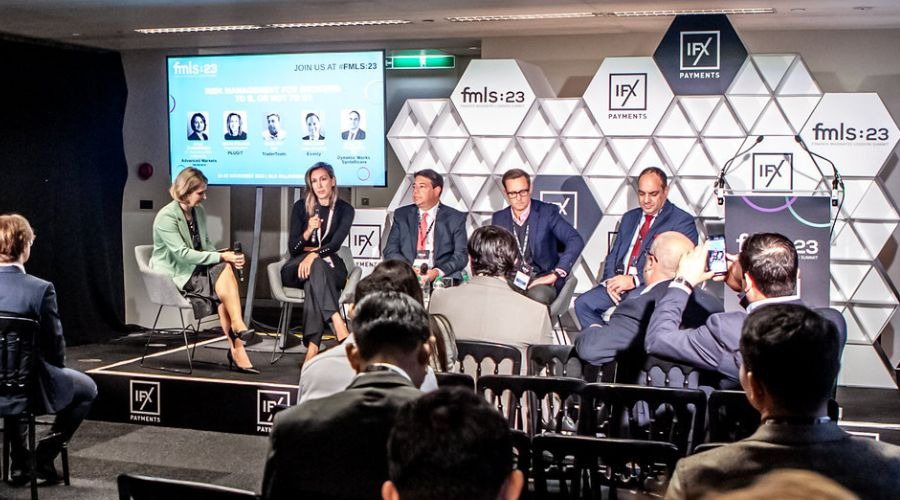
FMLS:23 panel discusses A-book and B-book strategies and the rising hybrid models.
The hybrid models allow brokers to tailor risk management to different client types and instruments.
FMLS:23 panel on "Risk Management for Brokers: To B, or Not To B?"
The strategies to manage risks have changed drastically for brokers. A-book and B-book models are still at the core of risk management, but many are focusing on hybrid models. In a Finance Magnates London Summit (FMLS:23) panel discussion moderated by Anya Aratovskaya, the VP of Institutional Sales & Marketing at Advanced Markets, industry experts offered valuable insights for company executives navigating the complex world of risk management in the retail forex market.
Hybrid Risk Management Takes Center Stage
The traditional A-book and B-book models where brokers either take the opposite side of client trades or act as intermediaries, face increasing competition from hybrid approaches. As Maria Pittashi, the General Manager at PLUGIT, pointed out: "One of the things that people are finding out is that you know everybody knows the full sort of shortcomings of both [A-book and B-book models], and what we pitch sort of is a hybrid model to do sort of in the middle." These hybrid models allow brokers to tailor their risk management to different client types and instruments, offering greater flexibility and potentially mitigating risk.

Maria Pittashi, General Manager at PLUGIT
Accurate pricing and data analysis are crucial for effective risk management in today's dynamic market. Nick Serff, the Senior VP of Trading at Exinity Connect, emphasized: "There is not really one answer for every broker, and every broker sort of has to customize for every kind of client for every currency instrument right kind of their own." Brokers can significantly improve their risk management strategies by leveraging data to understand client behavior, optimize pricing, and make informed decisions about client placement and hedging.
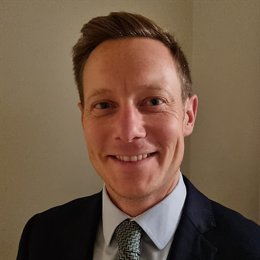
Nick Serff, the Senior VP of Trading at Exinity Connect stressed that while AI can be a valuable tool for analyzing vast amounts of data and identifying patterns.
As Drew Niv, the CEO at TraderTools, highlighted: "The super narrow price is good for small clients this is not good for large clients right so we how people do their pricing, and then obviously the third component how do you hedge it," adding that human expertise remains essential for interpreting data and making strategic decisions.
Hybrid Model Is the Future
Drew Niv, CEO of TraderTools
Brokers running internalization models managing client orders internally without going to the broader market must be particularly aware of concentration risk. This risk arises when many clients are positioned in the same direction on a particular instrument. Additionally, the cost of offering swap-free accounts, which eliminate rollover charges for holding positions overnight, has changed significantly in recent months. To avoid compromising profitability, brokers must factor this into their pricing and risk management strategies.
Niv concluded: "I think the hybrid solutions of risk management is something that a lot of brokers are definitely looking into. It is a must to keep up with the times, and as we say, risk management itself is also evolving."
Angelos Gregoriou, CEO and co-founder at Dynamic Works Syntellicore
Tools like dynamic margin engines and AI-powered analytics empower brokers to manage risks proactively. Angelos Gregoriou, the CEO and Co-Founder at Dynamic Works Syntellicore, emphasized the broader risk landscape: "There are many other risks obviously in a company in a brokerage other than the dealing related risks. We've seen and experienced risks from the inside of the company from the staff." Technology helps address these internal and external risks.
Effective risk management is no longer an option for retail forex brokers but a critical necessity for survival and growth in the competitive market. By adopting the strategies and insights discussed by the experts in this panel, company executives can equip their brokers with the tools and knowledge needed to navigate the ever-changing landscape, optimize their operations, and build sustainable businesses in the years to come.
The strategies to manage risks have changed drastically for brokers. A-book and B-book models are still at the core of risk management, but many are focusing on hybrid models. In a Finance Magnates London Summit (FMLS:23) panel discussion moderated by Anya Aratovskaya, the VP of Institutional Sales & Marketing at Advanced Markets, industry experts offered valuable insights for company executives navigating the complex world of risk management in the retail forex market.
Hybrid Risk Management Takes Center Stage
The traditional A-book and B-book models where brokers either take the opposite side of client trades or act as intermediaries, face increasing competition from hybrid approaches. As Maria Pittashi, the General Manager at PLUGIT, pointed out: "One of the things that people are finding out is that you know everybody knows the full sort of shortcomings of both [A-book and B-book models], and what we pitch sort of is a hybrid model to do sort of in the middle." These hybrid models allow brokers to tailor their risk management to different client types and instruments, offering greater flexibility and potentially mitigating risk.
Maria Pittashi, General Manager at PLUGIT
Accurate pricing and data analysis are crucial for effective risk management in today's dynamic market. Nick Serff, the Senior VP of Trading at Exinity Connect, emphasized: "There is not really one answer for every broker, and every broker sort of has to customize for every kind of client for every currency instrument right kind of their own." Brokers can significantly improve their risk management strategies by leveraging data to understand client behavior, optimize pricing, and make informed decisions about client placement and hedging.
Nick Serff, the Senior VP of Trading at Exinity Connect stressed that while AI can be a valuable tool for analyzing vast amounts of data and identifying patterns.
As Drew Niv, the CEO at TraderTools, highlighted: "The super narrow price is good for small clients this is not good for large clients right so we how people do their pricing, and then obviously the third component how do you hedge it," adding that human expertise remains essential for interpreting data and making strategic decisions.
Hybrid Model Is the Future
Drew Niv, CEO of TraderTools
Brokers running internalization models managing client orders internally without going to the broader market must be particularly aware of concentration risk. This risk arises when many clients are positioned in the same direction on a particular instrument. Additionally, the cost of offering swap-free accounts, which eliminate rollover charges for holding positions overnight, has changed significantly in recent months. To avoid compromising profitability, brokers must factor this into their pricing and risk management strategies.
Niv concluded: "I think the hybrid solutions of risk management is something that a lot of brokers are definitely looking into. It is a must to keep up with the times, and as we say, risk management itself is also evolving."
Angelos Gregoriou, CEO and co-founder at Dynamic Works Syntellicore
Tools like dynamic margin engines and AI-powered analytics empower brokers to manage risks proactively. Angelos Gregoriou, the CEO and Co-Founder at Dynamic Works Syntellicore, emphasized the broader risk landscape: "There are many other risks obviously in a company in a brokerage other than the dealing related risks. We've seen and experienced risks from the inside of the company from the staff." Technology helps address these internal and external risks.
Effective risk management is no longer an option for retail forex brokers but a critical necessity for survival and growth in the competitive market. By adopting the strategies and insights discussed by the experts in this panel, company executives can equip their brokers with the tools and knowledge needed to navigate the ever-changing landscape, optimize their operations, and build sustainable businesses in the years to come.
Arnab Shome is an electronics engineer-turned-financial editor. He holds a Bachelor of Technology from the National Institute of Technology, Agartala. He entered the retail trading industry about a decade ago, covering the cryptocurrency market for Finance Magnates, and later expanded his coverage to include forex and CFDs as well.
His work at Finance Magnates includes C-level interviews, data-driven analysis, opinion pieces, and scoops of industry exclusives. He also contributes to Finance Magnates’ quarterly industry report.
Area of coverage:
1. CFD broker-related news
2. Industry-related Regulatory updates and developments
3. New retail trading trends
4. Prop trading industry updates
5. Executive interviews
Education:
Bachelor of Technology - National Institute of Technology, Agartala (India)
Claude Powers Nine of Ten Broker AI Agents That Now Trade Live Accounts
Featured Videos
FM Daily Brief – 9 June 2026
Today’s Tuesday, the 9th of June 2026, and these are our main stories: eToro’s customer assets climbed back above $20 billion, Prop trading model in prediction markets, and Leverate launched a new AI assistant for brokers and traders.
War Stories: Lessons from 20 Years in Markets (the pain, the pitfalls and the profits)
The trades that taught me the most aren't the ones that worked. They're the ones that didn't — or the ones I almost caught and didn't have the nerve to ride. In this session, I'll tell you about the Brexit miss, the SNB shocker that nearly handed me a 5400% return, the BoJ surprise that punched me in the gut, and a few wins along the way. Each story carries a lesson, but the lessons aren't the point. Everyone who trades long enough collects a portfolio of moments like these; what separates the people who stay in the game is what they do with them.
The Engine and the Fuel: How AI & Data Drives African Future
If AI is the engine, data is the fuel. Without quality, accessible data, AI cannot work well; and without the right mindset, data remains just numbers instead of insight. In this session, leading experts will explore how AI and data are democratizing opportunities for businesses and personal growth. Discover practical ways to make AI accessible today, anticipate its transformative impact on African markets, and learn actionable steps to prepare for what's next. Let's talk about:
-How AI and data drive business efficiency and innovation in trading and fintech
-AI tools to elevate trading or business strategies
-How to access and maximise the power of data and AI
-Emerging AI and data trends in Africa and their economic ripple effects
If AI is the engine, data is the fuel. Without quality, accessible data, AI cannot work well; and without the right mindset, data remains just numbers instead of insight. In this session, leading experts will explore how AI and data are democratizing opportunities for businesses and personal growth. Discover practical ways to make AI accessible today, anticipate its transformative impact on African markets, and learn actionable steps to prepare for what's next. Let's talk about:
-How AI and data drive business efficiency and innovation in trading and fintech
-AI tools to elevate trading or business strategies
-How to access and maximise the power of data and AI
-Emerging AI and data trends in Africa and their economic ripple effects
If AI is the engine, data is the fuel. Without quality, accessible data, AI cannot work well; and without the right mindset, data remains just numbers instead of insight. In this session, leading experts will explore how AI and data are democratizing opportunities for businesses and personal growth. Discover practical ways to make AI accessible today, anticipate its transformative impact on African markets, and learn actionable steps to prepare for what's next. Let's talk about:
-How AI and data drive business efficiency and innovation in trading and fintech
-AI tools to elevate trading or business strategies
-How to access and maximise the power of data and AI
-Emerging AI and data trends in Africa and their economic ripple effects
If AI is the engine, data is the fuel. Without quality, accessible data, AI cannot work well; and without the right mindset, data remains just numbers instead of insight. In this session, leading experts will explore how AI and data are democratizing opportunities for businesses and personal growth. Discover practical ways to make AI accessible today, anticipate its transformative impact on African markets, and learn actionable steps to prepare for what's next. Let's talk about:
-How AI and data drive business efficiency and innovation in trading and fintech
-AI tools to elevate trading or business strategies
-How to access and maximise the power of data and AI
-Emerging AI and data trends in Africa and their economic ripple effects
If AI is the engine, data is the fuel. Without quality, accessible data, AI cannot work well; and without the right mindset, data remains just numbers instead of insight. In this session, leading experts will explore how AI and data are democratizing opportunities for businesses and personal growth. Discover practical ways to make AI accessible today, anticipate its transformative impact on African markets, and learn actionable steps to prepare for what's next. Let's talk about:
-How AI and data drive business efficiency and innovation in trading and fintech
-AI tools to elevate trading or business strategies
-How to access and maximise the power of data and AI
-Emerging AI and data trends in Africa and their economic ripple effects
If AI is the engine, data is the fuel. Without quality, accessible data, AI cannot work well; and without the right mindset, data remains just numbers instead of insight. In this session, leading experts will explore how AI and data are democratizing opportunities for businesses and personal growth. Discover practical ways to make AI accessible today, anticipate its transformative impact on African markets, and learn actionable steps to prepare for what's next. Let's talk about:
-How AI and data drive business efficiency and innovation in trading and fintech
-AI tools to elevate trading or business strategies
-How to access and maximise the power of data and AI
-Emerging AI and data trends in Africa and their economic ripple effects
Inside My Best Trade with Jimmy Moyaha
Most market post-mortems describe what happened to prices. Few describe what happened in the trading room while the position was open: the entry conviction, the moments that tested it, and the exit decision that closed the book.
This session brings one seasoned trader to the stage for an unfiltered account of the position that still defines how they think about markets.
Attendees will walk away with:
-A first-hand account of how a conviction trade is built, from thesis and entry through position management and exit
-Understanding of what turns a market observation into a live position, and what holds it when conditions shift
-Insight into how timing, execution quality, and market structure shaped the final result
-Perspective on what the trade revealed about edge, risk tolerance, and when to hold through a position moving against you
-Clarity on what separates a well-built trade from a well-timed one
Most market post-mortems describe what happened to prices. Few describe what happened in the trading room while the position was open: the entry conviction, the moments that tested it, and the exit decision that closed the book.
This session brings one seasoned trader to the stage for an unfiltered account of the position that still defines how they think about markets.
Attendees will walk away with:
-A first-hand account of how a conviction trade is built, from thesis and entry through position management and exit
-Understanding of what turns a market observation into a live position, and what holds it when conditions shift
-Insight into how timing, execution quality, and market structure shaped the final result
-Perspective on what the trade revealed about edge, risk tolerance, and when to hold through a position moving against you
-Clarity on what separates a well-built trade from a well-timed one
Most market post-mortems describe what happened to prices. Few describe what happened in the trading room while the position was open: the entry conviction, the moments that tested it, and the exit decision that closed the book.
This session brings one seasoned trader to the stage for an unfiltered account of the position that still defines how they think about markets.
Attendees will walk away with:
-A first-hand account of how a conviction trade is built, from thesis and entry through position management and exit
-Understanding of what turns a market observation into a live position, and what holds it when conditions shift
-Insight into how timing, execution quality, and market structure shaped the final result
-Perspective on what the trade revealed about edge, risk tolerance, and when to hold through a position moving against you
-Clarity on what separates a well-built trade from a well-timed one
Most market post-mortems describe what happened to prices. Few describe what happened in the trading room while the position was open: the entry conviction, the moments that tested it, and the exit decision that closed the book.
This session brings one seasoned trader to the stage for an unfiltered account of the position that still defines how they think about markets.
Attendees will walk away with:
-A first-hand account of how a conviction trade is built, from thesis and entry through position management and exit
-Understanding of what turns a market observation into a live position, and what holds it when conditions shift
-Insight into how timing, execution quality, and market structure shaped the final result
-Perspective on what the trade revealed about edge, risk tolerance, and when to hold through a position moving against you
-Clarity on what separates a well-built trade from a well-timed one
Most market post-mortems describe what happened to prices. Few describe what happened in the trading room while the position was open: the entry conviction, the moments that tested it, and the exit decision that closed the book.
This session brings one seasoned trader to the stage for an unfiltered account of the position that still defines how they think about markets.
Attendees will walk away with:
-A first-hand account of how a conviction trade is built, from thesis and entry through position management and exit
-Understanding of what turns a market observation into a live position, and what holds it when conditions shift
-Insight into how timing, execution quality, and market structure shaped the final result
-Perspective on what the trade revealed about edge, risk tolerance, and when to hold through a position moving against you
-Clarity on what separates a well-built trade from a well-timed one
Most market post-mortems describe what happened to prices. Few describe what happened in the trading room while the position was open: the entry conviction, the moments that tested it, and the exit decision that closed the book.
This session brings one seasoned trader to the stage for an unfiltered account of the position that still defines how they think about markets.
Attendees will walk away with:
-A first-hand account of how a conviction trade is built, from thesis and entry through position management and exit
-Understanding of what turns a market observation into a live position, and what holds it when conditions shift
-Insight into how timing, execution quality, and market structure shaped the final result
-Perspective on what the trade revealed about edge, risk tolerance, and when to hold through a position moving against you
-Clarity on what separates a well-built trade from a well-timed one
Agentic Inequality: Democratizing Financial Access Through AI & Blockchain
As crypto and CFD trading continue to expand across Africa, access to advanced tools and market insights remains uneven. This session explores how AI and blockchain can bridge that gap by empowering informal traders and underserved communities to participate more effectively in digital financial markets. The discussion will focus on practical applications of technology to improve accessibility, education, and investment outcomes in both formal and informal sectors.
In this discussion, we will explore:
-The role of AI in democratizing access to trading tools, insights, and strategy development
-How crypto and blockchain can enable broader participation beyond traditional financial systems
-Addressing access barriers: infrastructure, education, and affordability in underserved communities
-Opportunities for brokers and platforms to tap into the informal trading economy
As crypto and CFD trading continue to expand across Africa, access to advanced tools and market insights remains uneven. This session explores how AI and blockchain can bridge that gap by empowering informal traders and underserved communities to participate more effectively in digital financial markets. The discussion will focus on practical applications of technology to improve accessibility, education, and investment outcomes in both formal and informal sectors.
In this discussion, we will explore:
-The role of AI in democratizing access to trading tools, insights, and strategy development
-How crypto and blockchain can enable broader participation beyond traditional financial systems
-Addressing access barriers: infrastructure, education, and affordability in underserved communities
-Opportunities for brokers and platforms to tap into the informal trading economy
As crypto and CFD trading continue to expand across Africa, access to advanced tools and market insights remains uneven. This session explores how AI and blockchain can bridge that gap by empowering informal traders and underserved communities to participate more effectively in digital financial markets. The discussion will focus on practical applications of technology to improve accessibility, education, and investment outcomes in both formal and informal sectors.
In this discussion, we will explore:
-The role of AI in democratizing access to trading tools, insights, and strategy development
-How crypto and blockchain can enable broader participation beyond traditional financial systems
-Addressing access barriers: infrastructure, education, and affordability in underserved communities
-Opportunities for brokers and platforms to tap into the informal trading economy
As crypto and CFD trading continue to expand across Africa, access to advanced tools and market insights remains uneven. This session explores how AI and blockchain can bridge that gap by empowering informal traders and underserved communities to participate more effectively in digital financial markets. The discussion will focus on practical applications of technology to improve accessibility, education, and investment outcomes in both formal and informal sectors.
In this discussion, we will explore:
-The role of AI in democratizing access to trading tools, insights, and strategy development
-How crypto and blockchain can enable broader participation beyond traditional financial systems
-Addressing access barriers: infrastructure, education, and affordability in underserved communities
-Opportunities for brokers and platforms to tap into the informal trading economy
As crypto and CFD trading continue to expand across Africa, access to advanced tools and market insights remains uneven. This session explores how AI and blockchain can bridge that gap by empowering informal traders and underserved communities to participate more effectively in digital financial markets. The discussion will focus on practical applications of technology to improve accessibility, education, and investment outcomes in both formal and informal sectors.
In this discussion, we will explore:
-The role of AI in democratizing access to trading tools, insights, and strategy development
-How crypto and blockchain can enable broader participation beyond traditional financial systems
-Addressing access barriers: infrastructure, education, and affordability in underserved communities
-Opportunities for brokers and platforms to tap into the informal trading economy
As crypto and CFD trading continue to expand across Africa, access to advanced tools and market insights remains uneven. This session explores how AI and blockchain can bridge that gap by empowering informal traders and underserved communities to participate more effectively in digital financial markets. The discussion will focus on practical applications of technology to improve accessibility, education, and investment outcomes in both formal and informal sectors.
In this discussion, we will explore:
-The role of AI in democratizing access to trading tools, insights, and strategy development
-How crypto and blockchain can enable broader participation beyond traditional financial systems
-Addressing access barriers: infrastructure, education, and affordability in underserved communities
-Opportunities for brokers and platforms to tap into the informal trading economy