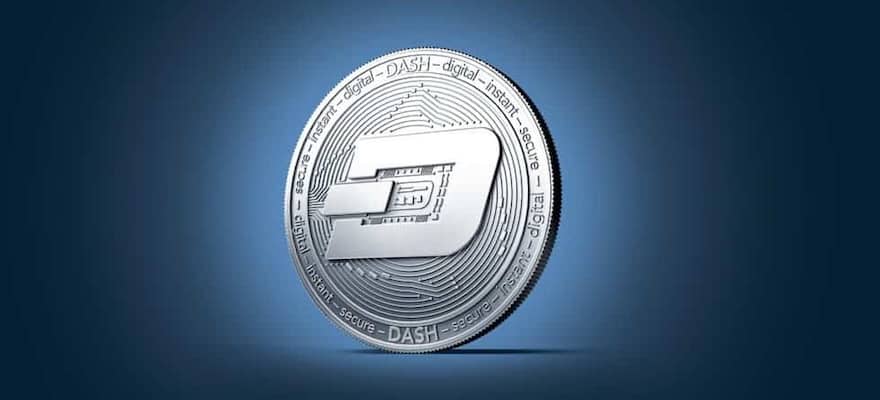
Ryan Taylor speaks about the future of Dash as well as its growing presence in Venezuela.
iStock
Much of the conversation in the cryptocurrency space these days is dedicated to institutional investors. The push-me-pull-you saga of Bitcoin ETF approval has driven the price of BTC up and down for months; investors and institutions seeking a regulatory-sound way of entering the cryptocurrency markets.
Meanwhile, altcoin networks are pressing forward, seeking to enter previously undiscovered and underserved financial markets.
Recently, Finance Magnates interviewed Ryan Taylor about the future of the Dash network. Ryan is the CEO of Dash Core Group, a group of developers that is funded by the Dash network. Before Dash, Ryan worked as a hedge fund analyst and was an Associate Partner in McKinsey & Company’s Business Technology Office in New York. As such, he was one of a growing number of Wall Streeters to make his way into the crypto space.
“I was led away from Wall Street for two primary reasons,” he explained. “The first is the tremendous opportunity I believe is inherent in the space. The second is that this technology has the potential to change the world for the better by empowering some of the most disaffected people in the world with a greater degree of financial freedom.”
Ryan Taylor, CEO of Dash Core.
Dash’s Path Towards Accessibility is On Course, But Exact Timelines are Unsure
Dash has gained a reputation in the crypto world for its efforts to try and build a network that is accessible to users who lack the technical know-how that is required to operate on most cryptocurrency networks. Ryan spoke of the DashPay wallet, one of Dash’s most recent initiatives to make its network more user-friendly. “The DashPay wallet will make the experience of using Dash similar to using apps like Venmo.”
Additionally, “Dash’s solution will be username-based so that users no longer need to deal with the complexity of cryptographic addresses. In addition, users will be able to log in from multiple devices and maintain an account-like experience - with a consistent contacts list and transaction history from any of their devices.”
However, it’s still unclear when these changes to the Dash network will be ready. “Enabling all these changes requires extensive modification to the way the network functions,” Ryan explained. As such, things will take time--“next year’s focus will be on building the community of developers working on additional applications for the Dash network, expanding our merchant and user base, and adding more advanced functionality to our DashPay product.”
Dash’s ‘Evolution’ is Planned For Testnet Release By Year’s End
There is one major release on Dash’s timeline, however--”our next major release is due by the end of this year, called Evolution,” said Ryan. “It represents a landmark change from the Bitcoin code upon which Dash was originally based. Along with new features, we plan to continue working on scalability and efficiency.”
He added that “Dash already has about eight times the transaction capacity of Bitcoin and with the research we’ve conducted in cooperation with Arizona State University, we believe we have a path to much larger capabilities in the near future.” With a growing number of highly scalable crypto networks, this could be crucial to Dash’s future success.
Regulatory Uncertainty is Hindering Adoption
One factor contributing to the uncertainty of the Dash timeline is the general murkiness in the regulatory space around cryptocurrency.
Regulators are also being challenged to adapt to a market that is still in the very early stages of its growth. “Last year was really the first time the market began taking projects other than Bitcoin seriously, and that precipitated a chaotic frenzy for speculators to catch the next big thing. Obviously, the market overextended, and became wildly disconnected from fundamental adoption,” he said.
“However, I think that the dust is beginning to settle, and I think that sets the stage for good projects building real-world value to start to separate from the rest of the market. The market is still dealing with fraudulent projects, projects that broke securities laws, and ill-conceived business models, but the market is rapidly maturing.”
Over Half of Dash Merchants are Based in Venezuela
Despite regulatory uncertainty and a changing market climate, Dash is pressing on. According to Ryan, the Dash network has been working to position itself as the go-to network for online merchants who are seeking a way to accept cryptocurrency for payment.
It seems that the effort has been fairly successful. ”We recently announced that over 3,000 businesses and merchants around the world now accept Dash for payment,” he said. “Merchant acceptance has been growing at 1,400% annualized rate since February, when we had less than 700 merchants.”
Congratulations @Dashpay Community! ???@DiscoverDash now lists 3514 #Dash accepting merchants around the world. 1843 of them are in #Venezuela ?? $Dash is king of digital cash! Decentralized P2P instant payments with fees under a penny! Dash is moving on up! ??? pic.twitter.com/3VsZ7TH1MD
“In the past few years, more and more merchants, such as grocery stores, restaurants, and utility outlets [in Venezuela] are accepting Dash as a payment option, providing the everyday person access to basic necessities,” Ryan said. “Today, there are more than 1,500 Dash-accepting merchants in the country and a rapidly growing user base in the tens of thousands.” He also told of several educational organizations that have emerged from the Dash community in Venezuela.
Venezuela isn’t the only market that Dash is actively working to establish itself it. Dash also recently announced the launch of D-A-CH, also known as the Dash Embassy. “The embassy’s goals are to provide local market educational resources to the German-speaking community, while also working with merchants to drive local adoption of Dash as a payment method.”
Interestingly, D-A-CH and a growing number of other Dash’s initiatives are “funded through the Dash proposal system. Through our unique governance structure, anyone in the Dash community can submit a proposal to the Dash network. Every month, these proposals are voted on by the masternode operators that form the backbone of the network, and if the proposal receives enough ‘Yes’ votes, it is funded as part of a monthly budget.”
Ryan explained that these governance structures have been put in place because “the network is designed to incentivize the creation of value...anyone with good ideas and ambition can contribute to its growth.”
In a way, this allows Dash’s future to be decided from the bottom up. “As time goes on, the network will discover the markets in which it can do well - like Venezuela - and make the necessary investments to capture those markets.”
“That’s incredibly powerful,” he said, adding that he thinks “it gives Dash an incredible advantage.”
Much of the conversation in the cryptocurrency space these days is dedicated to institutional investors. The push-me-pull-you saga of Bitcoin ETF approval has driven the price of BTC up and down for months; investors and institutions seeking a regulatory-sound way of entering the cryptocurrency markets.
Meanwhile, altcoin networks are pressing forward, seeking to enter previously undiscovered and underserved financial markets.
Recently, Finance Magnates interviewed Ryan Taylor about the future of the Dash network. Ryan is the CEO of Dash Core Group, a group of developers that is funded by the Dash network. Before Dash, Ryan worked as a hedge fund analyst and was an Associate Partner in McKinsey & Company’s Business Technology Office in New York. As such, he was one of a growing number of Wall Streeters to make his way into the crypto space.
“I was led away from Wall Street for two primary reasons,” he explained. “The first is the tremendous opportunity I believe is inherent in the space. The second is that this technology has the potential to change the world for the better by empowering some of the most disaffected people in the world with a greater degree of financial freedom.”
Ryan Taylor, CEO of Dash Core.
Dash’s Path Towards Accessibility is On Course, But Exact Timelines are Unsure
Dash has gained a reputation in the crypto world for its efforts to try and build a network that is accessible to users who lack the technical know-how that is required to operate on most cryptocurrency networks. Ryan spoke of the DashPay wallet, one of Dash’s most recent initiatives to make its network more user-friendly. “The DashPay wallet will make the experience of using Dash similar to using apps like Venmo.”
Additionally, “Dash’s solution will be username-based so that users no longer need to deal with the complexity of cryptographic addresses. In addition, users will be able to log in from multiple devices and maintain an account-like experience - with a consistent contacts list and transaction history from any of their devices.”
However, it’s still unclear when these changes to the Dash network will be ready. “Enabling all these changes requires extensive modification to the way the network functions,” Ryan explained. As such, things will take time--“next year’s focus will be on building the community of developers working on additional applications for the Dash network, expanding our merchant and user base, and adding more advanced functionality to our DashPay product.”
Dash’s ‘Evolution’ is Planned For Testnet Release By Year’s End
There is one major release on Dash’s timeline, however--”our next major release is due by the end of this year, called Evolution,” said Ryan. “It represents a landmark change from the Bitcoin code upon which Dash was originally based. Along with new features, we plan to continue working on scalability and efficiency.”
He added that “Dash already has about eight times the transaction capacity of Bitcoin and with the research we’ve conducted in cooperation with Arizona State University, we believe we have a path to much larger capabilities in the near future.” With a growing number of highly scalable crypto networks, this could be crucial to Dash’s future success.
Regulatory Uncertainty is Hindering Adoption
One factor contributing to the uncertainty of the Dash timeline is the general murkiness in the regulatory space around cryptocurrency.
Regulators are also being challenged to adapt to a market that is still in the very early stages of its growth. “Last year was really the first time the market began taking projects other than Bitcoin seriously, and that precipitated a chaotic frenzy for speculators to catch the next big thing. Obviously, the market overextended, and became wildly disconnected from fundamental adoption,” he said.
“However, I think that the dust is beginning to settle, and I think that sets the stage for good projects building real-world value to start to separate from the rest of the market. The market is still dealing with fraudulent projects, projects that broke securities laws, and ill-conceived business models, but the market is rapidly maturing.”
Over Half of Dash Merchants are Based in Venezuela
Despite regulatory uncertainty and a changing market climate, Dash is pressing on. According to Ryan, the Dash network has been working to position itself as the go-to network for online merchants who are seeking a way to accept cryptocurrency for payment.
It seems that the effort has been fairly successful. ”We recently announced that over 3,000 businesses and merchants around the world now accept Dash for payment,” he said. “Merchant acceptance has been growing at 1,400% annualized rate since February, when we had less than 700 merchants.”
Congratulations @Dashpay Community! ???@DiscoverDash now lists 3514 #Dash accepting merchants around the world. 1843 of them are in #Venezuela ?? $Dash is king of digital cash! Decentralized P2P instant payments with fees under a penny! Dash is moving on up! ??? pic.twitter.com/3VsZ7TH1MD
“In the past few years, more and more merchants, such as grocery stores, restaurants, and utility outlets [in Venezuela] are accepting Dash as a payment option, providing the everyday person access to basic necessities,” Ryan said. “Today, there are more than 1,500 Dash-accepting merchants in the country and a rapidly growing user base in the tens of thousands.” He also told of several educational organizations that have emerged from the Dash community in Venezuela.
Venezuela isn’t the only market that Dash is actively working to establish itself it. Dash also recently announced the launch of D-A-CH, also known as the Dash Embassy. “The embassy’s goals are to provide local market educational resources to the German-speaking community, while also working with merchants to drive local adoption of Dash as a payment method.”
Interestingly, D-A-CH and a growing number of other Dash’s initiatives are “funded through the Dash proposal system. Through our unique governance structure, anyone in the Dash community can submit a proposal to the Dash network. Every month, these proposals are voted on by the masternode operators that form the backbone of the network, and if the proposal receives enough ‘Yes’ votes, it is funded as part of a monthly budget.”
Ryan explained that these governance structures have been put in place because “the network is designed to incentivize the creation of value...anyone with good ideas and ambition can contribute to its growth.”
In a way, this allows Dash’s future to be decided from the bottom up. “As time goes on, the network will discover the markets in which it can do well - like Venezuela - and make the necessary investments to capture those markets.”
“That’s incredibly powerful,” he said, adding that he thinks “it gives Dash an incredible advantage.”
Rachel is a self-taught crypto geek and a passionate writer. She believes in the power that the written word has to educate, connect and empower individuals to make positive and powerful financial choices. She is the Podcast Host and a Cryptocurrency Editor at Finance Magnates.
Crypto Built More Rails, but the Next Battle Is Over How Much Work a Dollar Can Do
Featured Videos
FP Markets Winner Spotlight 🏆 | Global Broker of the Year 2025 #Trading #Broker #Innovation #Shorts
FP Markets Winner Spotlight 🏆 | Global Broker of the Year 2025 #Trading #Broker #Innovation #Shorts
FP Markets Winner Spotlight 🏆 | Global Broker of the Year 2025 #Trading #Broker #Innovation #Shorts
FP Markets Winner Spotlight 🏆 | Global Broker of the Year 2025 #Trading #Broker #Innovation #Shorts
FP Markets takes the spotlight as Global Broker of the Year 2025 at the Finance Magnates Awards.
Martin Stoilov, Head of Client Experience, shares that trust, innovation, and people played a key role in the company’s success, supported by a strong foundation of integrity and client-centricity.
Following this milestone, FP Markets continues to focus on growth, technology investment, and its core values of transparency and excellence.
👉 Be part of FM Awards 2026: https://awards.financemagnates.com/#nominate
FP Markets takes the spotlight as Global Broker of the Year 2025 at the Finance Magnates Awards.
Martin Stoilov, Head of Client Experience, shares that trust, innovation, and people played a key role in the company’s success, supported by a strong foundation of integrity and client-centricity.
Following this milestone, FP Markets continues to focus on growth, technology investment, and its core values of transparency and excellence.
👉 Be part of FM Awards 2026: https://awards.financemagnates.com/#nominate
FP Markets takes the spotlight as Global Broker of the Year 2025 at the Finance Magnates Awards.
Martin Stoilov, Head of Client Experience, shares that trust, innovation, and people played a key role in the company’s success, supported by a strong foundation of integrity and client-centricity.
Following this milestone, FP Markets continues to focus on growth, technology investment, and its core values of transparency and excellence.
👉 Be part of FM Awards 2026: https://awards.financemagnates.com/#nominate
FP Markets takes the spotlight as Global Broker of the Year 2025 at the Finance Magnates Awards.
Martin Stoilov, Head of Client Experience, shares that trust, innovation, and people played a key role in the company’s success, supported by a strong foundation of integrity and client-centricity.
Following this milestone, FP Markets continues to focus on growth, technology investment, and its core values of transparency and excellence.
👉 Be part of FM Awards 2026: https://awards.financemagnates.com/#nominate
In this video, we review @HolaPrimeMarketsOfficial, a multi-asset forex and CFDs broker offering different account types, trading platforms, and flexible trading conditions.
We cover the broker’s overall offering, including account options, trading environment, platforms like MT4 and MT5, and additional services such as managed accounts and fast withdrawals.
Watch the full video to see if Hola Prime Markets fits your trading needs.
📣 Stay up to date with the latest in finance and trading. Follow Finance Magnates for industry news, insights, and global event coverage.
Connect with us:
🔗 LinkedIn: /financemagnates
👍 Facebook: /financemagnates
📸 Instagram: https://www.instagram.com/financemagnates
🐦 X: https://x.com/financemagnates
🎥 TikTok: https://www.tiktok.com/tag/financemagnates
▶️ YouTube: /@financemagnates_official
#HolaPrime #ForexBroker #CFDTrading #FinanceMagnates #Trading #Forex #BrokerReview
In this video, we review @HolaPrimeMarketsOfficial, a multi-asset forex and CFDs broker offering different account types, trading platforms, and flexible trading conditions.
We cover the broker’s overall offering, including account options, trading environment, platforms like MT4 and MT5, and additional services such as managed accounts and fast withdrawals.
Watch the full video to see if Hola Prime Markets fits your trading needs.
📣 Stay up to date with the latest in finance and trading. Follow Finance Magnates for industry news, insights, and global event coverage.
Connect with us:
🔗 LinkedIn: /financemagnates
👍 Facebook: /financemagnates
📸 Instagram: https://www.instagram.com/financemagnates
🐦 X: https://x.com/financemagnates
🎥 TikTok: https://www.tiktok.com/tag/financemagnates
▶️ YouTube: /@financemagnates_official
#HolaPrime #ForexBroker #CFDTrading #FinanceMagnates #Trading #Forex #BrokerReview
In this video, we review @HolaPrimeMarketsOfficial, a multi-asset forex and CFDs broker offering different account types, trading platforms, and flexible trading conditions.
We cover the broker’s overall offering, including account options, trading environment, platforms like MT4 and MT5, and additional services such as managed accounts and fast withdrawals.
Watch the full video to see if Hola Prime Markets fits your trading needs.
📣 Stay up to date with the latest in finance and trading. Follow Finance Magnates for industry news, insights, and global event coverage.
Connect with us:
🔗 LinkedIn: /financemagnates
👍 Facebook: /financemagnates
📸 Instagram: https://www.instagram.com/financemagnates
🐦 X: https://x.com/financemagnates
🎥 TikTok: https://www.tiktok.com/tag/financemagnates
▶️ YouTube: /@financemagnates_official
#HolaPrime #ForexBroker #CFDTrading #FinanceMagnates #Trading #Forex #BrokerReview
In this video, we review @HolaPrimeMarketsOfficial, a multi-asset forex and CFDs broker offering different account types, trading platforms, and flexible trading conditions.
We cover the broker’s overall offering, including account options, trading environment, platforms like MT4 and MT5, and additional services such as managed accounts and fast withdrawals.
Watch the full video to see if Hola Prime Markets fits your trading needs.
📣 Stay up to date with the latest in finance and trading. Follow Finance Magnates for industry news, insights, and global event coverage.
Connect with us:
🔗 LinkedIn: /financemagnates
👍 Facebook: /financemagnates
📸 Instagram: https://www.instagram.com/financemagnates
🐦 X: https://x.com/financemagnates
🎥 TikTok: https://www.tiktok.com/tag/financemagnates
▶️ YouTube: /@financemagnates_official
#HolaPrime #ForexBroker #CFDTrading #FinanceMagnates #Trading #Forex #BrokerReview
In this video, we review @HolaPrimeMarketsOfficial, a multi-asset forex and CFDs broker offering different account types, trading platforms, and flexible trading conditions.
We cover the broker’s overall offering, including account options, trading environment, platforms like MT4 and MT5, and additional services such as managed accounts and fast withdrawals.
Watch the full video to see if Hola Prime Markets fits your trading needs.
📣 Stay up to date with the latest in finance and trading. Follow Finance Magnates for industry news, insights, and global event coverage.
Connect with us:
🔗 LinkedIn: /financemagnates
👍 Facebook: /financemagnates
📸 Instagram: https://www.instagram.com/financemagnates
🐦 X: https://x.com/financemagnates
🎥 TikTok: https://www.tiktok.com/tag/financemagnates
▶️ YouTube: /@financemagnates_official
#HolaPrime #ForexBroker #CFDTrading #FinanceMagnates #Trading #Forex #BrokerReview
In this video, we review @HolaPrimeMarketsOfficial, a multi-asset forex and CFDs broker offering different account types, trading platforms, and flexible trading conditions.
We cover the broker’s overall offering, including account options, trading environment, platforms like MT4 and MT5, and additional services such as managed accounts and fast withdrawals.
Watch the full video to see if Hola Prime Markets fits your trading needs.
📣 Stay up to date with the latest in finance and trading. Follow Finance Magnates for industry news, insights, and global event coverage.
Connect with us:
🔗 LinkedIn: /financemagnates
👍 Facebook: /financemagnates
📸 Instagram: https://www.instagram.com/financemagnates
🐦 X: https://x.com/financemagnates
🎥 TikTok: https://www.tiktok.com/tag/financemagnates
▶️ YouTube: /@financemagnates_official
#HolaPrime #ForexBroker #CFDTrading #FinanceMagnates #Trading #Forex #BrokerReview
Hola Prime Review: What You Need to Know | Full Breakdown by Finance Magnates
Hola Prime Review: What You Need to Know | Full Breakdown by Finance Magnates
Hola Prime Review: What You Need to Know | Full Breakdown by Finance Magnates
Hola Prime Review: What You Need to Know | Full Breakdown by Finance Magnates
Hola Prime Review: What You Need to Know | Full Breakdown by Finance Magnates
Hola Prime Review: What You Need to Know | Full Breakdown by Finance Magnates
In this video, we review @HolaPrime_Global, a proprietary trading firm offering evaluation programs and performance-based payouts in simulated market environments.
We cover how the challenge model works, including account types, profit splits (up to 95%), trading rules, and what it takes to reach a funded account. You’ll also learn about available platforms like MT4, MT5, cTrader, and more, along with insights into payouts, support, and trading conditions.
Watch the full video to see if Hola Prime fits your trading style.
📣 Stay up to date with the latest in finance and trading. Follow Finance Magnates for industry news, insights, and global event coverage.
Connect with us:
🔗 LinkedIn: /financemagnates
👍 Facebook: /financemagnates
📸 Instagram: https://www.instagram.com/financemagnates
🐦 X: https://x.com/financemagnates
🎥 TikTok: https://www.tiktok.com/tag/financemagnates
▶️ YouTube: /@financemagnates_official
#HolaPrime #PropFirm #Trading #FinanceMagnates #Forex #FuturesTrading #TradingReview #PropFirmReview
In this video, we review @HolaPrime_Global, a proprietary trading firm offering evaluation programs and performance-based payouts in simulated market environments.
We cover how the challenge model works, including account types, profit splits (up to 95%), trading rules, and what it takes to reach a funded account. You’ll also learn about available platforms like MT4, MT5, cTrader, and more, along with insights into payouts, support, and trading conditions.
Watch the full video to see if Hola Prime fits your trading style.
📣 Stay up to date with the latest in finance and trading. Follow Finance Magnates for industry news, insights, and global event coverage.
Connect with us:
🔗 LinkedIn: /financemagnates
👍 Facebook: /financemagnates
📸 Instagram: https://www.instagram.com/financemagnates
🐦 X: https://x.com/financemagnates
🎥 TikTok: https://www.tiktok.com/tag/financemagnates
▶️ YouTube: /@financemagnates_official
#HolaPrime #PropFirm #Trading #FinanceMagnates #Forex #FuturesTrading #TradingReview #PropFirmReview
In this video, we review @HolaPrime_Global, a proprietary trading firm offering evaluation programs and performance-based payouts in simulated market environments.
We cover how the challenge model works, including account types, profit splits (up to 95%), trading rules, and what it takes to reach a funded account. You’ll also learn about available platforms like MT4, MT5, cTrader, and more, along with insights into payouts, support, and trading conditions.
Watch the full video to see if Hola Prime fits your trading style.
📣 Stay up to date with the latest in finance and trading. Follow Finance Magnates for industry news, insights, and global event coverage.
Connect with us:
🔗 LinkedIn: /financemagnates
👍 Facebook: /financemagnates
📸 Instagram: https://www.instagram.com/financemagnates
🐦 X: https://x.com/financemagnates
🎥 TikTok: https://www.tiktok.com/tag/financemagnates
▶️ YouTube: /@financemagnates_official
#HolaPrime #PropFirm #Trading #FinanceMagnates #Forex #FuturesTrading #TradingReview #PropFirmReview
In this video, we review @HolaPrime_Global, a proprietary trading firm offering evaluation programs and performance-based payouts in simulated market environments.
We cover how the challenge model works, including account types, profit splits (up to 95%), trading rules, and what it takes to reach a funded account. You’ll also learn about available platforms like MT4, MT5, cTrader, and more, along with insights into payouts, support, and trading conditions.
Watch the full video to see if Hola Prime fits your trading style.
📣 Stay up to date with the latest in finance and trading. Follow Finance Magnates for industry news, insights, and global event coverage.
Connect with us:
🔗 LinkedIn: /financemagnates
👍 Facebook: /financemagnates
📸 Instagram: https://www.instagram.com/financemagnates
🐦 X: https://x.com/financemagnates
🎥 TikTok: https://www.tiktok.com/tag/financemagnates
▶️ YouTube: /@financemagnates_official
#HolaPrime #PropFirm #Trading #FinanceMagnates #Forex #FuturesTrading #TradingReview #PropFirmReview
In this video, we review @HolaPrime_Global, a proprietary trading firm offering evaluation programs and performance-based payouts in simulated market environments.
We cover how the challenge model works, including account types, profit splits (up to 95%), trading rules, and what it takes to reach a funded account. You’ll also learn about available platforms like MT4, MT5, cTrader, and more, along with insights into payouts, support, and trading conditions.
Watch the full video to see if Hola Prime fits your trading style.
📣 Stay up to date with the latest in finance and trading. Follow Finance Magnates for industry news, insights, and global event coverage.
Connect with us:
🔗 LinkedIn: /financemagnates
👍 Facebook: /financemagnates
📸 Instagram: https://www.instagram.com/financemagnates
🐦 X: https://x.com/financemagnates
🎥 TikTok: https://www.tiktok.com/tag/financemagnates
▶️ YouTube: /@financemagnates_official
#HolaPrime #PropFirm #Trading #FinanceMagnates #Forex #FuturesTrading #TradingReview #PropFirmReview
In this video, we review @HolaPrime_Global, a proprietary trading firm offering evaluation programs and performance-based payouts in simulated market environments.
We cover how the challenge model works, including account types, profit splits (up to 95%), trading rules, and what it takes to reach a funded account. You’ll also learn about available platforms like MT4, MT5, cTrader, and more, along with insights into payouts, support, and trading conditions.
Watch the full video to see if Hola Prime fits your trading style.
📣 Stay up to date with the latest in finance and trading. Follow Finance Magnates for industry news, insights, and global event coverage.
Connect with us:
🔗 LinkedIn: /financemagnates
👍 Facebook: /financemagnates
📸 Instagram: https://www.instagram.com/financemagnates
🐦 X: https://x.com/financemagnates
🎥 TikTok: https://www.tiktok.com/tag/financemagnates
▶️ YouTube: /@financemagnates_official
#HolaPrime #PropFirm #Trading #FinanceMagnates #Forex #FuturesTrading #TradingReview #PropFirmReview
Axi Winner Spotlight 🏆 | Global Most Innovative Broker 2025 #Innovation #Trading #Fintech #Broker
Axi Winner Spotlight 🏆 | Global Most Innovative Broker 2025 #Innovation #Trading #Fintech #Broker
Axi Winner Spotlight 🏆 | Global Most Innovative Broker 2025 #Innovation #Trading #Fintech #Broker
Axi Winner Spotlight 🏆 | Global Most Innovative Broker 2025 #Innovation #Trading #Fintech #Broker
Axi Winner Spotlight 🏆 | Global Most Innovative Broker 2025 #Innovation #Trading #Fintech #Broker
Axi Winner Spotlight 🏆 | Global Most Innovative Broker 2025 #Innovation #Trading #Fintech #Broker
Axi takes the spotlight at the Finance Magnates Awards, winning Global Most Innovative Broker 2025.
Olivia Xenofontos and Ivanna Openko share how the team will feel: proud, motivated, and ready to keep delivering.
They also describe the night as well-organized, focused, and enjoyable for all.
👉 Be part of FM Awards 2026.
Axi takes the spotlight at the Finance Magnates Awards, winning Global Most Innovative Broker 2025.
Olivia Xenofontos and Ivanna Openko share how the team will feel: proud, motivated, and ready to keep delivering.
They also describe the night as well-organized, focused, and enjoyable for all.
👉 Be part of FM Awards 2026.
Axi takes the spotlight at the Finance Magnates Awards, winning Global Most Innovative Broker 2025.
Olivia Xenofontos and Ivanna Openko share how the team will feel: proud, motivated, and ready to keep delivering.
They also describe the night as well-organized, focused, and enjoyable for all.
👉 Be part of FM Awards 2026.
Axi takes the spotlight at the Finance Magnates Awards, winning Global Most Innovative Broker 2025.
Olivia Xenofontos and Ivanna Openko share how the team will feel: proud, motivated, and ready to keep delivering.
They also describe the night as well-organized, focused, and enjoyable for all.
👉 Be part of FM Awards 2026.
Axi takes the spotlight at the Finance Magnates Awards, winning Global Most Innovative Broker 2025.
Olivia Xenofontos and Ivanna Openko share how the team will feel: proud, motivated, and ready to keep delivering.
They also describe the night as well-organized, focused, and enjoyable for all.
👉 Be part of FM Awards 2026.
Axi takes the spotlight at the Finance Magnates Awards, winning Global Most Innovative Broker 2025.
Olivia Xenofontos and Ivanna Openko share how the team will feel: proud, motivated, and ready to keep delivering.
They also describe the night as well-organized, focused, and enjoyable for all.
👉 Be part of FM Awards 2026.
Recognition that matters.
Built on transparency.
Driven by the industry.
The Finance Magnates Awards 2026.
Nominations are now open.
🔗 https://awards.financemagnates.com/?utm_source=SM&utm_medium=social&utm_campaign=recognition-matters
Recognition that matters.
Built on transparency.
Driven by the industry.
The Finance Magnates Awards 2026.
Nominations are now open.
🔗 https://awards.financemagnates.com/?utm_source=SM&utm_medium=social&utm_campaign=recognition-matters
Recognition that matters.
Built on transparency.
Driven by the industry.
The Finance Magnates Awards 2026.
Nominations are now open.
🔗 https://awards.financemagnates.com/?utm_source=SM&utm_medium=social&utm_campaign=recognition-matters
Recognition that matters.
Built on transparency.
Driven by the industry.
The Finance Magnates Awards 2026.
Nominations are now open.
🔗 https://awards.financemagnates.com/?utm_source=SM&utm_medium=social&utm_campaign=recognition-matters
Recognition that matters.
Built on transparency.
Driven by the industry.
The Finance Magnates Awards 2026.
Nominations are now open.
🔗 https://awards.financemagnates.com/?utm_source=SM&utm_medium=social&utm_campaign=recognition-matters
Recognition that matters.
Built on transparency.
Driven by the industry.
The Finance Magnates Awards 2026.
Nominations are now open.
🔗 https://awards.financemagnates.com/?utm_source=SM&utm_medium=social&utm_campaign=recognition-matters