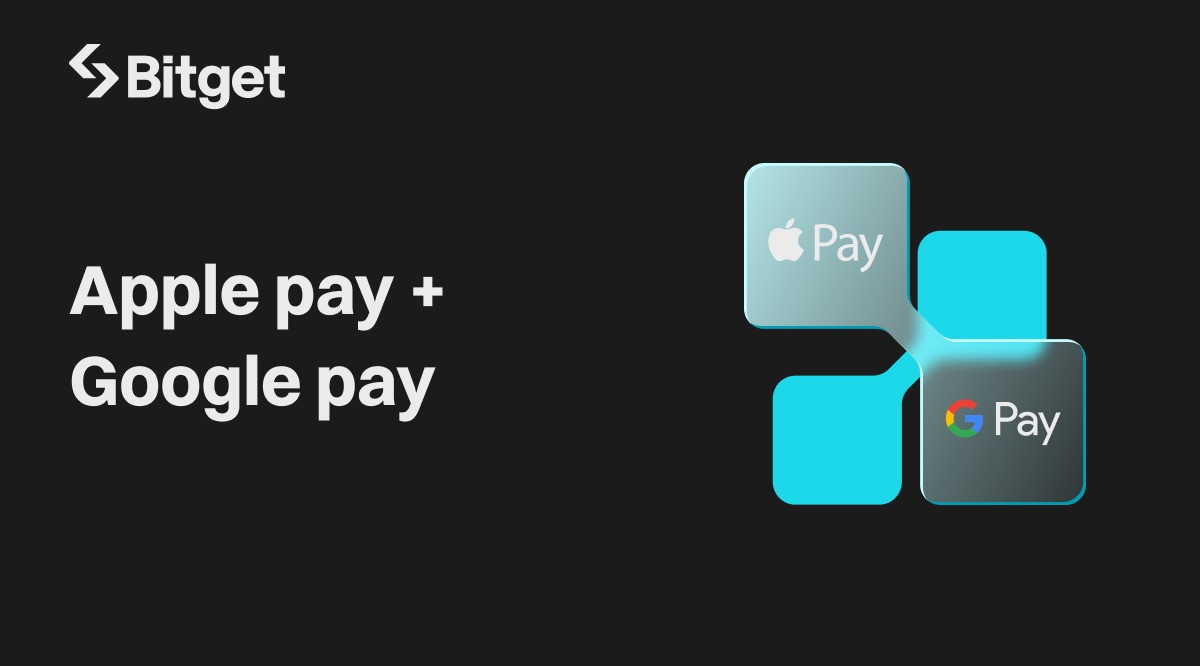
Bitget integrates Apple Pay and Google Pay, allowing instant fiat-to-crypto conversion.
This move opens up the potential to reach a vast new user base worldwide.
The crypto exchange
and Web3 company Bitget has announced the integration of Apple Pay and Google
Pay into its platform, enabling users to convert fiat currency to
cryptocurrency within 30 seconds. This move is part of Bitget's strategy to
enhance accessibility and streamline the crypto purchasing process for more than
650 million users.
Bitget Expands Payment
Options with Apple Pay and Google Pay Integration
The
integration allows Bitget users to buy cryptocurrencies using over 140 fiat
currencies across 100+ digital assets. By incorporating these widely-used
payment methods, Bitget aims to tap into a combined user base of Apple and
Google payments services, potentially accelerating crypto adoption among new
audiences.
Gracy Chen, Bitget's CEO, Source: LinkedIn
“We're
enabling broader masses and newer audiences to interact with crypto,” Gracy
Chen, CEO of Bitget, stated. “By offering popular payment options, we are
making crypto purchases instant and easy. This integration is another step
towards our vision of an equitable future world driven by crypto's
evolution.”
The new
payment options complement Bitget's existing payment gateway, which includes
services like Advcash, Banxa, and Mercuryo. This expansion follows the
company's recent efforts to broaden fiat gateway support in the Middle East,
Africa, and Southeast Asia.
Apple Pay
and Google Pay offer enhanced security features and allow for quick purchases
via smartphones. Over 500 million people worldwide use Apple Pay, while 150
million use Google Pay.
Bitget Gains Momentum in
Crypto Market
Following
the appointment of Hon Ng as Chief Legal Officer, Bitget has continued to make
strides in the cryptocurrency industry. The exchange has seen significant
growth and expansion in key markets.
In Japan,
Bitget Wallet experienced a notable surge in adoption during the second quarter
of 2024. New user signups increased by 34%, propelling the wallet to become the
second most downloaded Web3 wallet in the country, trailing only behind
industry leader MetaMask.
Bitget's
performance metrics have also been impressive. Despite not being the largest
exchange by total volume, the platform showed strong results from April to
June. It ranked third in net capital inflow among competitors, with investors
transferring $700 million to Bitget during this period. Additionally, overall
activity on the exchange rose by nearly 50%, indicating growing user engagement
and trust in the platform.
Established
in 2018, Bitget serves over 25 million users in more than 100 countries and
regions. The company has gained recognition for its copy-trading feature and
has partnerships with notable figures such as footballer Lionel Messi and
several Turkish national athletes.
The crypto exchange
and Web3 company Bitget has announced the integration of Apple Pay and Google
Pay into its platform, enabling users to convert fiat currency to
cryptocurrency within 30 seconds. This move is part of Bitget's strategy to
enhance accessibility and streamline the crypto purchasing process for more than
650 million users.
Bitget Expands Payment
Options with Apple Pay and Google Pay Integration
The
integration allows Bitget users to buy cryptocurrencies using over 140 fiat
currencies across 100+ digital assets. By incorporating these widely-used
payment methods, Bitget aims to tap into a combined user base of Apple and
Google payments services, potentially accelerating crypto adoption among new
audiences.
Gracy Chen, Bitget's CEO, Source: LinkedIn
“We're
enabling broader masses and newer audiences to interact with crypto,” Gracy
Chen, CEO of Bitget, stated. “By offering popular payment options, we are
making crypto purchases instant and easy. This integration is another step
towards our vision of an equitable future world driven by crypto's
evolution.”
The new
payment options complement Bitget's existing payment gateway, which includes
services like Advcash, Banxa, and Mercuryo. This expansion follows the
company's recent efforts to broaden fiat gateway support in the Middle East,
Africa, and Southeast Asia.
Apple Pay
and Google Pay offer enhanced security features and allow for quick purchases
via smartphones. Over 500 million people worldwide use Apple Pay, while 150
million use Google Pay.
Bitget Gains Momentum in
Crypto Market
Following
the appointment of Hon Ng as Chief Legal Officer, Bitget has continued to make
strides in the cryptocurrency industry. The exchange has seen significant
growth and expansion in key markets.
In Japan,
Bitget Wallet experienced a notable surge in adoption during the second quarter
of 2024. New user signups increased by 34%, propelling the wallet to become the
second most downloaded Web3 wallet in the country, trailing only behind
industry leader MetaMask.
Bitget's
performance metrics have also been impressive. Despite not being the largest
exchange by total volume, the platform showed strong results from April to
June. It ranked third in net capital inflow among competitors, with investors
transferring $700 million to Bitget during this period. Additionally, overall
activity on the exchange rose by nearly 50%, indicating growing user engagement
and trust in the platform.
Established
in 2018, Bitget serves over 25 million users in more than 100 countries and
regions. The company has gained recognition for its copy-trading feature and
has partnerships with notable figures such as footballer Lionel Messi and
several Turkish national athletes.
Damian Chmiel is a Senior Analyst & Editor at Finance Magnates with more than 15 years of experience in the CFD and online trading industry. Active as both a trader and journalist since 2010, he focuses on broker coverage, fintech innovation, and regulatory developments across Europe, the Middle East, and Asia.
His work includes interviews with C-level leaders at major brokerages and fintech platforms, as well as co-authoring Finance Magnates’ quarterly industry benchmarking reports. Damian’s reporting is data-driven, market-aware, and grounded in direct industry engagement. His analysis and commentary have also been cited by external media outlets, including Investing.com, Binance, The Asset, Stockhead, and Dispatch.
Education:
MA in Finance and Accounting, Cracow University of Economics
In this video, we review @HolaPrimeMarketsOfficial, a multi-asset forex and CFDs broker offering different account types, trading platforms, and flexible trading conditions.
We cover the broker’s overall offering, including account options, trading environment, platforms like MT4 and MT5, and additional services such as managed accounts and fast withdrawals.
Watch the full video to see if Hola Prime Markets fits your trading needs.
📣 Stay up to date with the latest in finance and trading. Follow Finance Magnates for industry news, insights, and global event coverage.
Connect with us:
🔗 LinkedIn: /financemagnates
👍 Facebook: /financemagnates
📸 Instagram: https://www.instagram.com/financemagnates
🐦 X: https://x.com/financemagnates
🎥 TikTok: https://www.tiktok.com/tag/financemagnates
▶️ YouTube: /@financemagnates_official
#HolaPrime #ForexBroker #CFDTrading #FinanceMagnates #Trading #Forex #BrokerReview
In this video, we review @HolaPrimeMarketsOfficial, a multi-asset forex and CFDs broker offering different account types, trading platforms, and flexible trading conditions.
We cover the broker’s overall offering, including account options, trading environment, platforms like MT4 and MT5, and additional services such as managed accounts and fast withdrawals.
Watch the full video to see if Hola Prime Markets fits your trading needs.
📣 Stay up to date with the latest in finance and trading. Follow Finance Magnates for industry news, insights, and global event coverage.
Connect with us:
🔗 LinkedIn: /financemagnates
👍 Facebook: /financemagnates
📸 Instagram: https://www.instagram.com/financemagnates
🐦 X: https://x.com/financemagnates
🎥 TikTok: https://www.tiktok.com/tag/financemagnates
▶️ YouTube: /@financemagnates_official
#HolaPrime #ForexBroker #CFDTrading #FinanceMagnates #Trading #Forex #BrokerReview
Hola Prime Review: What You Need to Know | Full Breakdown by Finance Magnates
Hola Prime Review: What You Need to Know | Full Breakdown by Finance Magnates
In this video, we review @HolaPrime_Global, a proprietary trading firm offering evaluation programs and performance-based payouts in simulated market environments.
We cover how the challenge model works, including account types, profit splits (up to 95%), trading rules, and what it takes to reach a funded account. You’ll also learn about available platforms like MT4, MT5, cTrader, and more, along with insights into payouts, support, and trading conditions.
Watch the full video to see if Hola Prime fits your trading style.
📣 Stay up to date with the latest in finance and trading. Follow Finance Magnates for industry news, insights, and global event coverage.
Connect with us:
🔗 LinkedIn: /financemagnates
👍 Facebook: /financemagnates
📸 Instagram: https://www.instagram.com/financemagnates
🐦 X: https://x.com/financemagnates
🎥 TikTok: https://www.tiktok.com/tag/financemagnates
▶️ YouTube: /@financemagnates_official
#HolaPrime #PropFirm #Trading #FinanceMagnates #Forex #FuturesTrading #TradingReview #PropFirmReview
In this video, we review @HolaPrime_Global, a proprietary trading firm offering evaluation programs and performance-based payouts in simulated market environments.
We cover how the challenge model works, including account types, profit splits (up to 95%), trading rules, and what it takes to reach a funded account. You’ll also learn about available platforms like MT4, MT5, cTrader, and more, along with insights into payouts, support, and trading conditions.
Watch the full video to see if Hola Prime fits your trading style.
📣 Stay up to date with the latest in finance and trading. Follow Finance Magnates for industry news, insights, and global event coverage.
Connect with us:
🔗 LinkedIn: /financemagnates
👍 Facebook: /financemagnates
📸 Instagram: https://www.instagram.com/financemagnates
🐦 X: https://x.com/financemagnates
🎥 TikTok: https://www.tiktok.com/tag/financemagnates
▶️ YouTube: /@financemagnates_official
#HolaPrime #PropFirm #Trading #FinanceMagnates #Forex #FuturesTrading #TradingReview #PropFirmReview
Axi Winner Spotlight 🏆 | Global Most Innovative Broker 2025 #Innovation #Trading #Fintech #Broker
Axi Winner Spotlight 🏆 | Global Most Innovative Broker 2025 #Innovation #Trading #Fintech #Broker
Axi takes the spotlight at the Finance Magnates Awards, winning Global Most Innovative Broker 2025.
Olivia Xenofontos and Ivanna Openko share how the team will feel: proud, motivated, and ready to keep delivering.
They also describe the night as well-organized, focused, and enjoyable for all.
👉 Be part of FM Awards 2026.
Axi takes the spotlight at the Finance Magnates Awards, winning Global Most Innovative Broker 2025.
Olivia Xenofontos and Ivanna Openko share how the team will feel: proud, motivated, and ready to keep delivering.
They also describe the night as well-organized, focused, and enjoyable for all.
👉 Be part of FM Awards 2026.
Recognition that matters.
Built on transparency.
Driven by the industry.
The Finance Magnates Awards 2026.
Nominations are now open.
🔗 https://awards.financemagnates.com/?utm_source=SM&utm_medium=social&utm_campaign=recognition-matters
Recognition that matters.
Built on transparency.
Driven by the industry.
The Finance Magnates Awards 2026.
Nominations are now open.
🔗 https://awards.financemagnates.com/?utm_source=SM&utm_medium=social&utm_campaign=recognition-matters
Tickmill Winner Spotlight | Broker of the Year 2025 (LATAM) 🏆 | Finance Magnates Awards #Trading
Tickmill Winner Spotlight | Broker of the Year 2025 (LATAM) 🏆 | Finance Magnates Awards #Trading
What helped Tickmill stand out this year?
In this Winner Spotlight, Johnny Khalil, Executive Director at Tickmill Europe, shares how listening closely to clients and delivering strong trading conditions made the difference.
A big thank you to the community whose support continues to drive progress every day.
👉 Think your brand has what it takes? Nominate for the 2026 Finance Magnates Awards: https://awards.financemagnates.com/#nominate
What helped Tickmill stand out this year?
In this Winner Spotlight, Johnny Khalil, Executive Director at Tickmill Europe, shares how listening closely to clients and delivering strong trading conditions made the difference.
A big thank you to the community whose support continues to drive progress every day.
👉 Think your brand has what it takes? Nominate for the 2026 Finance Magnates Awards: https://awards.financemagnates.com/#nominate