Cardano came about in 2014, as a mixture of groundbreaking ideas and concepts came about from collective research and collaboration, focusing on pinpointing the underlying limitations of blockchains currently in existence.
Cardano is made up of three collaborating organizations. The first, the Cardano Foundation, is based in Switzerland. This independent standards body is there to support Cardano users and work with the authorities of the countries when it comes to dealing with commercial and regulatory matters.
The second is Emurgo, an investment-focused organization whose purpose is to "develop, support, and incubate commercial ventures and help integrate these businesses into Cardano’s decentralized blockchain ecosystem."
The third organization is IOHK, an "engineering and technology company committed to using peer-to-peer innovations to provide financial services to three billion people that don’t have them." IOHK is a major player in cryptocurrency development and research, and it has the contract for platform development until 2020.
How Does it Work?
Cardano is a unique platform in numerous ways. Instead of just a standard whitepaper, Cardano has a selection of academic papers which investors can look to explore. The team behind Cardano’s development is a global group which has numerous expert researchers and engineers.
The platform is being made into two layers which divide the ledger of account values from the cause of why these values are moved from one account to another account. This separation allows the smart contracts that are created on the platform to be far more flexible.
Businesses can make the most of this distinction of the separation to tailor the design, privacy, and execution of every contract to more ideally suit their specific usage for every case.
Cardano uses a unique kind of Proof-of-Stake algorithm called 'Ouroboros,' which the Cardano website alleges "eliminates the need for an energy-hungry proof of work protocol, which stands as a barrier to blockchain scaling up for much wider use."
ADA is the name and ticker symbol of Cardano tokens. The developers feel that digital cash, like ADA, shows how money function be in the future. It allows for rapid direct transfers which guarantee security thanks to cryptography.
Whenever individual desires to transfer an amount of ADA, some minimal fees are calculated for a given transaction. For the transaction to work, these minimal fees need to be included, although can pay higher fees if he so desires. Cardano utilizes a formula to compute the fees for each transaction.
Cardano as an Investment
https://coinmarketcap.com/currencies/cardano/
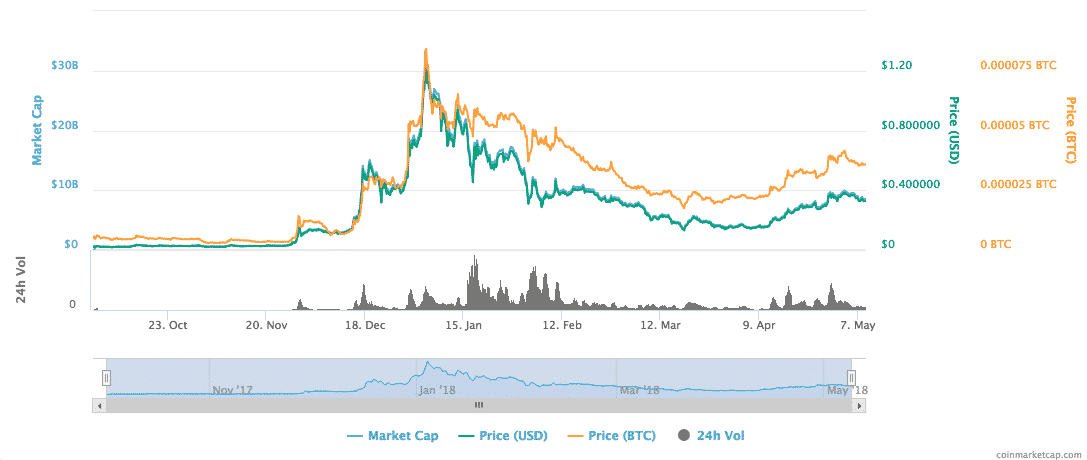
Cardano has a market cap of $8,552,718,321 at the time of writing, and a total supply of 31,112,483,745 ADA tokens. It has seen significant growth since November 2017, Reaching a peak market cap of over $33 billion in January. There has been a decline since then to a significant amount, though in recent months it has been picking up, though the heights of January have not been reached as of yet.
At the moment ADA tokens are carried by the Bittrex, Binance, Upbit, HitBTC, and Huobi exchanges though more are planned.
ADA’s valuation does not take into account its technical value, and it is worth considering that the blockchain technology behind Cardano is something that may be worth more in the long-run as it evolves and develops.
ADA would need to be stored in a wallet from an exchange in most scenarios.
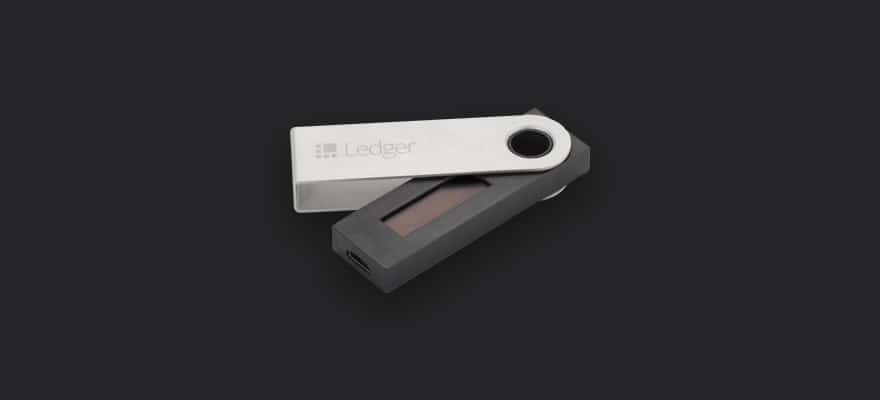
Currently, there’s a single wallet where you can store your ADA – the official Daedalus wallet. The wallet is currently only available on Mac and Windows, but a mobile wallet on Android and iOS is planned to be released in the coming future.
It is worth mentioning that there has been some controversy around Cardano and ADA tokens which can be worth looking at. One such controversy came from its decision to establish itself in Japan, and it is estimated that over 90% of Cardano’s ICO buyers are Japanese.
Another controversy is its association with Tadashi Izumi, closely tied to NoahCoin, a company referred to as ‘scamcoin.’ Once again, however, the distributor is one of 1,400, and as such, his association and influence are not likely to be vast, especially given Hoskinson’s distancing from the individual.
Finance Magnates interviewed Cardano founder Charles Hoskinson on the Finance Magnates Blockchain Podcast. To hear this interview, please click here.
— Cardano Foundation (@CardanoStiftung) May 3, 2018
The Future of Cardano
Cardano is certainly looking to aim high, and given its short period of existence, Cardano seems to have been doing well with reaching the goals laid out in the network's roadmap. The evolution of the Cardano network from a scientific point of research is interesting to see and can lead to interesting places.
A lot of plans have been made for the future as evidenced by their roadmap. However, the key remains for the company to maintain its early potential and keep their momentum going and fulfill the promising project's aims.
Cardano came about in 2014, as a mixture of groundbreaking ideas and concepts came about from collective research and collaboration, focusing on pinpointing the underlying limitations of blockchains currently in existence.
Cardano is made up of three collaborating organizations. The first, the Cardano Foundation, is based in Switzerland. This independent standards body is there to support Cardano users and work with the authorities of the countries when it comes to dealing with commercial and regulatory matters.
The second is Emurgo, an investment-focused organization whose purpose is to "develop, support, and incubate commercial ventures and help integrate these businesses into Cardano’s decentralized blockchain ecosystem."
The third organization is IOHK, an "engineering and technology company committed to using peer-to-peer innovations to provide financial services to three billion people that don’t have them." IOHK is a major player in cryptocurrency development and research, and it has the contract for platform development until 2020.
How Does it Work?
Cardano is a unique platform in numerous ways. Instead of just a standard whitepaper, Cardano has a selection of academic papers which investors can look to explore. The team behind Cardano’s development is a global group which has numerous expert researchers and engineers.
The platform is being made into two layers which divide the ledger of account values from the cause of why these values are moved from one account to another account. This separation allows the smart contracts that are created on the platform to be far more flexible.
Businesses can make the most of this distinction of the separation to tailor the design, privacy, and execution of every contract to more ideally suit their specific usage for every case.
Cardano uses a unique kind of Proof-of-Stake algorithm called 'Ouroboros,' which the Cardano website alleges "eliminates the need for an energy-hungry proof of work protocol, which stands as a barrier to blockchain scaling up for much wider use."
ADA is the name and ticker symbol of Cardano tokens. The developers feel that digital cash, like ADA, shows how money function be in the future. It allows for rapid direct transfers which guarantee security thanks to cryptography.
Whenever individual desires to transfer an amount of ADA, some minimal fees are calculated for a given transaction. For the transaction to work, these minimal fees need to be included, although can pay higher fees if he so desires. Cardano utilizes a formula to compute the fees for each transaction.
Cardano as an Investment
https://coinmarketcap.com/currencies/cardano/
Cardano has a market cap of $8,552,718,321 at the time of writing, and a total supply of 31,112,483,745 ADA tokens. It has seen significant growth since November 2017, Reaching a peak market cap of over $33 billion in January. There has been a decline since then to a significant amount, though in recent months it has been picking up, though the heights of January have not been reached as of yet.
At the moment ADA tokens are carried by the Bittrex, Binance, Upbit, HitBTC, and Huobi exchanges though more are planned.
ADA’s valuation does not take into account its technical value, and it is worth considering that the blockchain technology behind Cardano is something that may be worth more in the long-run as it evolves and develops.
ADA would need to be stored in a wallet from an exchange in most scenarios.
Currently, there’s a single wallet where you can store your ADA – the official Daedalus wallet. The wallet is currently only available on Mac and Windows, but a mobile wallet on Android and iOS is planned to be released in the coming future.
It is worth mentioning that there has been some controversy around Cardano and ADA tokens which can be worth looking at. One such controversy came from its decision to establish itself in Japan, and it is estimated that over 90% of Cardano’s ICO buyers are Japanese.
Another controversy is its association with Tadashi Izumi, closely tied to NoahCoin, a company referred to as ‘scamcoin.’ Once again, however, the distributor is one of 1,400, and as such, his association and influence are not likely to be vast, especially given Hoskinson’s distancing from the individual.
Finance Magnates interviewed Cardano founder Charles Hoskinson on the Finance Magnates Blockchain Podcast. To hear this interview, please click here.
— Cardano Foundation (@CardanoStiftung) May 3, 2018
The Future of Cardano
Cardano is certainly looking to aim high, and given its short period of existence, Cardano seems to have been doing well with reaching the goals laid out in the network's roadmap. The evolution of the Cardano network from a scientific point of research is interesting to see and can lead to interesting places.
A lot of plans have been made for the future as evidenced by their roadmap. However, the key remains for the company to maintain its early potential and keep their momentum going and fulfill the promising project's aims.
Kraken Steps Up Speed Race with New Equinix Colocation Service for Crypto Traders
Featured Videos
FP Markets Winner Spotlight 🏆 | Global Broker of the Year 2025 #Trading #Broker #Innovation #Shorts
FP Markets Winner Spotlight 🏆 | Global Broker of the Year 2025 #Trading #Broker #Innovation #Shorts
FP Markets Winner Spotlight 🏆 | Global Broker of the Year 2025 #Trading #Broker #Innovation #Shorts
FP Markets Winner Spotlight 🏆 | Global Broker of the Year 2025 #Trading #Broker #Innovation #Shorts
FP Markets takes the spotlight as Global Broker of the Year 2025 at the Finance Magnates Awards.
Martin Stoilov, Head of Client Experience, shares that trust, innovation, and people played a key role in the company’s success, supported by a strong foundation of integrity and client-centricity.
Following this milestone, FP Markets continues to focus on growth, technology investment, and its core values of transparency and excellence.
👉 Be part of FM Awards 2026: https://awards.financemagnates.com/#nominate
FP Markets takes the spotlight as Global Broker of the Year 2025 at the Finance Magnates Awards.
Martin Stoilov, Head of Client Experience, shares that trust, innovation, and people played a key role in the company’s success, supported by a strong foundation of integrity and client-centricity.
Following this milestone, FP Markets continues to focus on growth, technology investment, and its core values of transparency and excellence.
👉 Be part of FM Awards 2026: https://awards.financemagnates.com/#nominate
FP Markets takes the spotlight as Global Broker of the Year 2025 at the Finance Magnates Awards.
Martin Stoilov, Head of Client Experience, shares that trust, innovation, and people played a key role in the company’s success, supported by a strong foundation of integrity and client-centricity.
Following this milestone, FP Markets continues to focus on growth, technology investment, and its core values of transparency and excellence.
👉 Be part of FM Awards 2026: https://awards.financemagnates.com/#nominate
FP Markets takes the spotlight as Global Broker of the Year 2025 at the Finance Magnates Awards.
Martin Stoilov, Head of Client Experience, shares that trust, innovation, and people played a key role in the company’s success, supported by a strong foundation of integrity and client-centricity.
Following this milestone, FP Markets continues to focus on growth, technology investment, and its core values of transparency and excellence.
👉 Be part of FM Awards 2026: https://awards.financemagnates.com/#nominate
In this video, we review @HolaPrimeMarketsOfficial, a multi-asset forex and CFDs broker offering different account types, trading platforms, and flexible trading conditions.
We cover the broker’s overall offering, including account options, trading environment, platforms like MT4 and MT5, and additional services such as managed accounts and fast withdrawals.
Watch the full video to see if Hola Prime Markets fits your trading needs.
📣 Stay up to date with the latest in finance and trading. Follow Finance Magnates for industry news, insights, and global event coverage.
Connect with us:
🔗 LinkedIn: /financemagnates
👍 Facebook: /financemagnates
📸 Instagram: https://www.instagram.com/financemagnates
🐦 X: https://x.com/financemagnates
🎥 TikTok: https://www.tiktok.com/tag/financemagnates
▶️ YouTube: /@financemagnates_official
#HolaPrime #ForexBroker #CFDTrading #FinanceMagnates #Trading #Forex #BrokerReview
In this video, we review @HolaPrimeMarketsOfficial, a multi-asset forex and CFDs broker offering different account types, trading platforms, and flexible trading conditions.
We cover the broker’s overall offering, including account options, trading environment, platforms like MT4 and MT5, and additional services such as managed accounts and fast withdrawals.
Watch the full video to see if Hola Prime Markets fits your trading needs.
📣 Stay up to date with the latest in finance and trading. Follow Finance Magnates for industry news, insights, and global event coverage.
Connect with us:
🔗 LinkedIn: /financemagnates
👍 Facebook: /financemagnates
📸 Instagram: https://www.instagram.com/financemagnates
🐦 X: https://x.com/financemagnates
🎥 TikTok: https://www.tiktok.com/tag/financemagnates
▶️ YouTube: /@financemagnates_official
#HolaPrime #ForexBroker #CFDTrading #FinanceMagnates #Trading #Forex #BrokerReview
In this video, we review @HolaPrimeMarketsOfficial, a multi-asset forex and CFDs broker offering different account types, trading platforms, and flexible trading conditions.
We cover the broker’s overall offering, including account options, trading environment, platforms like MT4 and MT5, and additional services such as managed accounts and fast withdrawals.
Watch the full video to see if Hola Prime Markets fits your trading needs.
📣 Stay up to date with the latest in finance and trading. Follow Finance Magnates for industry news, insights, and global event coverage.
Connect with us:
🔗 LinkedIn: /financemagnates
👍 Facebook: /financemagnates
📸 Instagram: https://www.instagram.com/financemagnates
🐦 X: https://x.com/financemagnates
🎥 TikTok: https://www.tiktok.com/tag/financemagnates
▶️ YouTube: /@financemagnates_official
#HolaPrime #ForexBroker #CFDTrading #FinanceMagnates #Trading #Forex #BrokerReview
In this video, we review @HolaPrimeMarketsOfficial, a multi-asset forex and CFDs broker offering different account types, trading platforms, and flexible trading conditions.
We cover the broker’s overall offering, including account options, trading environment, platforms like MT4 and MT5, and additional services such as managed accounts and fast withdrawals.
Watch the full video to see if Hola Prime Markets fits your trading needs.
📣 Stay up to date with the latest in finance and trading. Follow Finance Magnates for industry news, insights, and global event coverage.
Connect with us:
🔗 LinkedIn: /financemagnates
👍 Facebook: /financemagnates
📸 Instagram: https://www.instagram.com/financemagnates
🐦 X: https://x.com/financemagnates
🎥 TikTok: https://www.tiktok.com/tag/financemagnates
▶️ YouTube: /@financemagnates_official
#HolaPrime #ForexBroker #CFDTrading #FinanceMagnates #Trading #Forex #BrokerReview
In this video, we review @HolaPrimeMarketsOfficial, a multi-asset forex and CFDs broker offering different account types, trading platforms, and flexible trading conditions.
We cover the broker’s overall offering, including account options, trading environment, platforms like MT4 and MT5, and additional services such as managed accounts and fast withdrawals.
Watch the full video to see if Hola Prime Markets fits your trading needs.
📣 Stay up to date with the latest in finance and trading. Follow Finance Magnates for industry news, insights, and global event coverage.
Connect with us:
🔗 LinkedIn: /financemagnates
👍 Facebook: /financemagnates
📸 Instagram: https://www.instagram.com/financemagnates
🐦 X: https://x.com/financemagnates
🎥 TikTok: https://www.tiktok.com/tag/financemagnates
▶️ YouTube: /@financemagnates_official
#HolaPrime #ForexBroker #CFDTrading #FinanceMagnates #Trading #Forex #BrokerReview
In this video, we review @HolaPrimeMarketsOfficial, a multi-asset forex and CFDs broker offering different account types, trading platforms, and flexible trading conditions.
We cover the broker’s overall offering, including account options, trading environment, platforms like MT4 and MT5, and additional services such as managed accounts and fast withdrawals.
Watch the full video to see if Hola Prime Markets fits your trading needs.
📣 Stay up to date with the latest in finance and trading. Follow Finance Magnates for industry news, insights, and global event coverage.
Connect with us:
🔗 LinkedIn: /financemagnates
👍 Facebook: /financemagnates
📸 Instagram: https://www.instagram.com/financemagnates
🐦 X: https://x.com/financemagnates
🎥 TikTok: https://www.tiktok.com/tag/financemagnates
▶️ YouTube: /@financemagnates_official
#HolaPrime #ForexBroker #CFDTrading #FinanceMagnates #Trading #Forex #BrokerReview
Hola Prime Review: What You Need to Know | Full Breakdown by Finance Magnates
Hola Prime Review: What You Need to Know | Full Breakdown by Finance Magnates
Hola Prime Review: What You Need to Know | Full Breakdown by Finance Magnates
Hola Prime Review: What You Need to Know | Full Breakdown by Finance Magnates
Hola Prime Review: What You Need to Know | Full Breakdown by Finance Magnates
Hola Prime Review: What You Need to Know | Full Breakdown by Finance Magnates
In this video, we review @HolaPrime_Global, a proprietary trading firm offering evaluation programs and performance-based payouts in simulated market environments.
We cover how the challenge model works, including account types, profit splits (up to 95%), trading rules, and what it takes to reach a funded account. You’ll also learn about available platforms like MT4, MT5, cTrader, and more, along with insights into payouts, support, and trading conditions.
Watch the full video to see if Hola Prime fits your trading style.
📣 Stay up to date with the latest in finance and trading. Follow Finance Magnates for industry news, insights, and global event coverage.
Connect with us:
🔗 LinkedIn: /financemagnates
👍 Facebook: /financemagnates
📸 Instagram: https://www.instagram.com/financemagnates
🐦 X: https://x.com/financemagnates
🎥 TikTok: https://www.tiktok.com/tag/financemagnates
▶️ YouTube: /@financemagnates_official
#HolaPrime #PropFirm #Trading #FinanceMagnates #Forex #FuturesTrading #TradingReview #PropFirmReview
In this video, we review @HolaPrime_Global, a proprietary trading firm offering evaluation programs and performance-based payouts in simulated market environments.
We cover how the challenge model works, including account types, profit splits (up to 95%), trading rules, and what it takes to reach a funded account. You’ll also learn about available platforms like MT4, MT5, cTrader, and more, along with insights into payouts, support, and trading conditions.
Watch the full video to see if Hola Prime fits your trading style.
📣 Stay up to date with the latest in finance and trading. Follow Finance Magnates for industry news, insights, and global event coverage.
Connect with us:
🔗 LinkedIn: /financemagnates
👍 Facebook: /financemagnates
📸 Instagram: https://www.instagram.com/financemagnates
🐦 X: https://x.com/financemagnates
🎥 TikTok: https://www.tiktok.com/tag/financemagnates
▶️ YouTube: /@financemagnates_official
#HolaPrime #PropFirm #Trading #FinanceMagnates #Forex #FuturesTrading #TradingReview #PropFirmReview
In this video, we review @HolaPrime_Global, a proprietary trading firm offering evaluation programs and performance-based payouts in simulated market environments.
We cover how the challenge model works, including account types, profit splits (up to 95%), trading rules, and what it takes to reach a funded account. You’ll also learn about available platforms like MT4, MT5, cTrader, and more, along with insights into payouts, support, and trading conditions.
Watch the full video to see if Hola Prime fits your trading style.
📣 Stay up to date with the latest in finance and trading. Follow Finance Magnates for industry news, insights, and global event coverage.
Connect with us:
🔗 LinkedIn: /financemagnates
👍 Facebook: /financemagnates
📸 Instagram: https://www.instagram.com/financemagnates
🐦 X: https://x.com/financemagnates
🎥 TikTok: https://www.tiktok.com/tag/financemagnates
▶️ YouTube: /@financemagnates_official
#HolaPrime #PropFirm #Trading #FinanceMagnates #Forex #FuturesTrading #TradingReview #PropFirmReview
In this video, we review @HolaPrime_Global, a proprietary trading firm offering evaluation programs and performance-based payouts in simulated market environments.
We cover how the challenge model works, including account types, profit splits (up to 95%), trading rules, and what it takes to reach a funded account. You’ll also learn about available platforms like MT4, MT5, cTrader, and more, along with insights into payouts, support, and trading conditions.
Watch the full video to see if Hola Prime fits your trading style.
📣 Stay up to date with the latest in finance and trading. Follow Finance Magnates for industry news, insights, and global event coverage.
Connect with us:
🔗 LinkedIn: /financemagnates
👍 Facebook: /financemagnates
📸 Instagram: https://www.instagram.com/financemagnates
🐦 X: https://x.com/financemagnates
🎥 TikTok: https://www.tiktok.com/tag/financemagnates
▶️ YouTube: /@financemagnates_official
#HolaPrime #PropFirm #Trading #FinanceMagnates #Forex #FuturesTrading #TradingReview #PropFirmReview
In this video, we review @HolaPrime_Global, a proprietary trading firm offering evaluation programs and performance-based payouts in simulated market environments.
We cover how the challenge model works, including account types, profit splits (up to 95%), trading rules, and what it takes to reach a funded account. You’ll also learn about available platforms like MT4, MT5, cTrader, and more, along with insights into payouts, support, and trading conditions.
Watch the full video to see if Hola Prime fits your trading style.
📣 Stay up to date with the latest in finance and trading. Follow Finance Magnates for industry news, insights, and global event coverage.
Connect with us:
🔗 LinkedIn: /financemagnates
👍 Facebook: /financemagnates
📸 Instagram: https://www.instagram.com/financemagnates
🐦 X: https://x.com/financemagnates
🎥 TikTok: https://www.tiktok.com/tag/financemagnates
▶️ YouTube: /@financemagnates_official
#HolaPrime #PropFirm #Trading #FinanceMagnates #Forex #FuturesTrading #TradingReview #PropFirmReview
In this video, we review @HolaPrime_Global, a proprietary trading firm offering evaluation programs and performance-based payouts in simulated market environments.
We cover how the challenge model works, including account types, profit splits (up to 95%), trading rules, and what it takes to reach a funded account. You’ll also learn about available platforms like MT4, MT5, cTrader, and more, along with insights into payouts, support, and trading conditions.
Watch the full video to see if Hola Prime fits your trading style.
📣 Stay up to date with the latest in finance and trading. Follow Finance Magnates for industry news, insights, and global event coverage.
Connect with us:
🔗 LinkedIn: /financemagnates
👍 Facebook: /financemagnates
📸 Instagram: https://www.instagram.com/financemagnates
🐦 X: https://x.com/financemagnates
🎥 TikTok: https://www.tiktok.com/tag/financemagnates
▶️ YouTube: /@financemagnates_official
#HolaPrime #PropFirm #Trading #FinanceMagnates #Forex #FuturesTrading #TradingReview #PropFirmReview
Axi Winner Spotlight 🏆 | Global Most Innovative Broker 2025 #Innovation #Trading #Fintech #Broker
Axi Winner Spotlight 🏆 | Global Most Innovative Broker 2025 #Innovation #Trading #Fintech #Broker
Axi Winner Spotlight 🏆 | Global Most Innovative Broker 2025 #Innovation #Trading #Fintech #Broker
Axi Winner Spotlight 🏆 | Global Most Innovative Broker 2025 #Innovation #Trading #Fintech #Broker
Axi Winner Spotlight 🏆 | Global Most Innovative Broker 2025 #Innovation #Trading #Fintech #Broker
Axi Winner Spotlight 🏆 | Global Most Innovative Broker 2025 #Innovation #Trading #Fintech #Broker
Axi takes the spotlight at the Finance Magnates Awards, winning Global Most Innovative Broker 2025.
Olivia Xenofontos and Ivanna Openko share how the team will feel: proud, motivated, and ready to keep delivering.
They also describe the night as well-organized, focused, and enjoyable for all.
👉 Be part of FM Awards 2026.
Axi takes the spotlight at the Finance Magnates Awards, winning Global Most Innovative Broker 2025.
Olivia Xenofontos and Ivanna Openko share how the team will feel: proud, motivated, and ready to keep delivering.
They also describe the night as well-organized, focused, and enjoyable for all.
👉 Be part of FM Awards 2026.
Axi takes the spotlight at the Finance Magnates Awards, winning Global Most Innovative Broker 2025.
Olivia Xenofontos and Ivanna Openko share how the team will feel: proud, motivated, and ready to keep delivering.
They also describe the night as well-organized, focused, and enjoyable for all.
👉 Be part of FM Awards 2026.
Axi takes the spotlight at the Finance Magnates Awards, winning Global Most Innovative Broker 2025.
Olivia Xenofontos and Ivanna Openko share how the team will feel: proud, motivated, and ready to keep delivering.
They also describe the night as well-organized, focused, and enjoyable for all.
👉 Be part of FM Awards 2026.
Axi takes the spotlight at the Finance Magnates Awards, winning Global Most Innovative Broker 2025.
Olivia Xenofontos and Ivanna Openko share how the team will feel: proud, motivated, and ready to keep delivering.
They also describe the night as well-organized, focused, and enjoyable for all.
👉 Be part of FM Awards 2026.
Axi takes the spotlight at the Finance Magnates Awards, winning Global Most Innovative Broker 2025.
Olivia Xenofontos and Ivanna Openko share how the team will feel: proud, motivated, and ready to keep delivering.
They also describe the night as well-organized, focused, and enjoyable for all.
👉 Be part of FM Awards 2026.
Recognition that matters.
Built on transparency.
Driven by the industry.
The Finance Magnates Awards 2026.
Nominations are now open.
🔗 https://awards.financemagnates.com/?utm_source=SM&utm_medium=social&utm_campaign=recognition-matters
Recognition that matters.
Built on transparency.
Driven by the industry.
The Finance Magnates Awards 2026.
Nominations are now open.
🔗 https://awards.financemagnates.com/?utm_source=SM&utm_medium=social&utm_campaign=recognition-matters
Recognition that matters.
Built on transparency.
Driven by the industry.
The Finance Magnates Awards 2026.
Nominations are now open.
🔗 https://awards.financemagnates.com/?utm_source=SM&utm_medium=social&utm_campaign=recognition-matters
Recognition that matters.
Built on transparency.
Driven by the industry.
The Finance Magnates Awards 2026.
Nominations are now open.
🔗 https://awards.financemagnates.com/?utm_source=SM&utm_medium=social&utm_campaign=recognition-matters
Recognition that matters.
Built on transparency.
Driven by the industry.
The Finance Magnates Awards 2026.
Nominations are now open.
🔗 https://awards.financemagnates.com/?utm_source=SM&utm_medium=social&utm_campaign=recognition-matters
Recognition that matters.
Built on transparency.
Driven by the industry.
The Finance Magnates Awards 2026.
Nominations are now open.
🔗 https://awards.financemagnates.com/?utm_source=SM&utm_medium=social&utm_campaign=recognition-matters