Stablecoins have been a talking point at Davos 2024, while Jamie Dimon voiced BTC skepticism.
AI has been prominent, while crypto appears increasingly integrated with traditional finance.
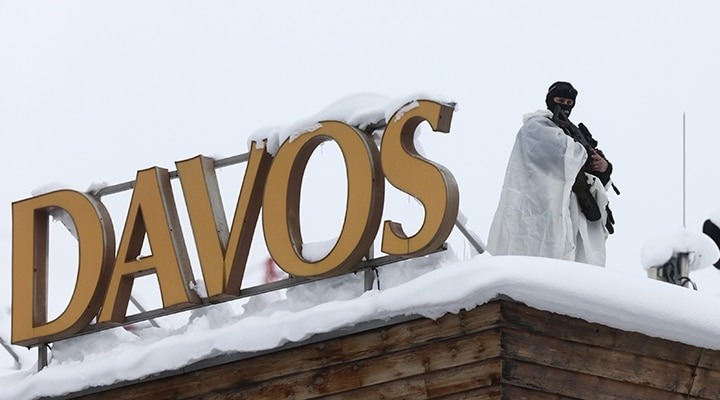
Davos, World Economic Forum (Bloomberg)
While generalizations are often best avoided, it’s fair to say that a significant number of long-time Bitcoin believers are not fans of Davos get-togethers, or indeed of event organizers the World Economic Forum. This can be put down, in part, to Bitcoin’s origin story as a bootstrapped potential replacement for present banking and finance mechanisms, and even for fiat money itself, coupled with the fact that Davos is regarded as emblematic of precisely those institutions to which Bitcoin has been touted as an alternative.
Bitcoin at Davos
All of which makes it notable that in recent years, the Davos conference has featured an increasing presence of representatives from the cryptocurrency industry, whose attendance this year may seem more fitting than ever due to the recent approval of spot BTC ETFs in the United States, a move seen by some as legitimizing bitcoin for mainstream investors.
In fact, the approval and launch of spot ETFs marks a significant shift in tone since bitcoin and crypto's 2022 lows when the collapse of FTX gave the temporary impression that perhaps crypto skeptics had had a point, and the industry as a whole might be better off resolving its own internal problems, rather than attending political/corporate talking shops.
Fast forward to 2024 and crypto is in a far more optimistic position, while at Davos there have been some memorable statements, not least from JP Morgan's CEO, Jamie Dimon, who remains, despite JP Morgan acting as an Authorized Participant for BlackRock's new Bitcoin ETF, as skeptical of BTC as ever.
Entertainingly for viewers, Dimon declared in a CNBC interview at Davos that he definitely did not want to talk about bitcoin, while also taking the opportunity to wonder whether pseudonymous Bitcoin creator Satoshi Nakamoto might one day reappear to increase the digital currency's fixed supply beyond its hardcoded 21 million cap.
Such a supply increase isn’t technically possible, and perhaps Dimon knows that, either way, it made for a compelling onscreen exchange. Notably, Dimon displayed interest in other blockchain projects (as he has previously), specifically those used for “tokenizing things that you do something with”, which ties in with the growing crypto industry narrative around RWAs (meaning real world assets traded on-chain.)
The Case for Stablecoins
Another significant moment at Davos occurred when Howard Lutnick, the CEO of Cantor Fitzgerald, openly stated in an interview that the major stablecoin Tether is fully backed by reserves. This is significant as there has been ongoing speculation and concern about Tether’s reserves, which Lutnick's assertion directly contradicts.
What’s more, Lutnick steered the interview unprompted towards crypto in order to explain that in the likes of, “Argentina, Venezuela, and Turkey, these crypto assets matter, stablecoins matter. Holding your dollar in a token is amazing. That’s why Tether is doing really well.”
Meanwhile, the CEO of Ripple, Brad Garlinghouse, mentioned in an interview that he expects crypto ETFs to be approved by the SEC in the wake of spot BTC ETFs, and touched on stablecoins and regulation: “The stablecoin market has surprised people in some ways in terms of solving a real need. I think it only makes sense for there to be regulatory clarity around that.”
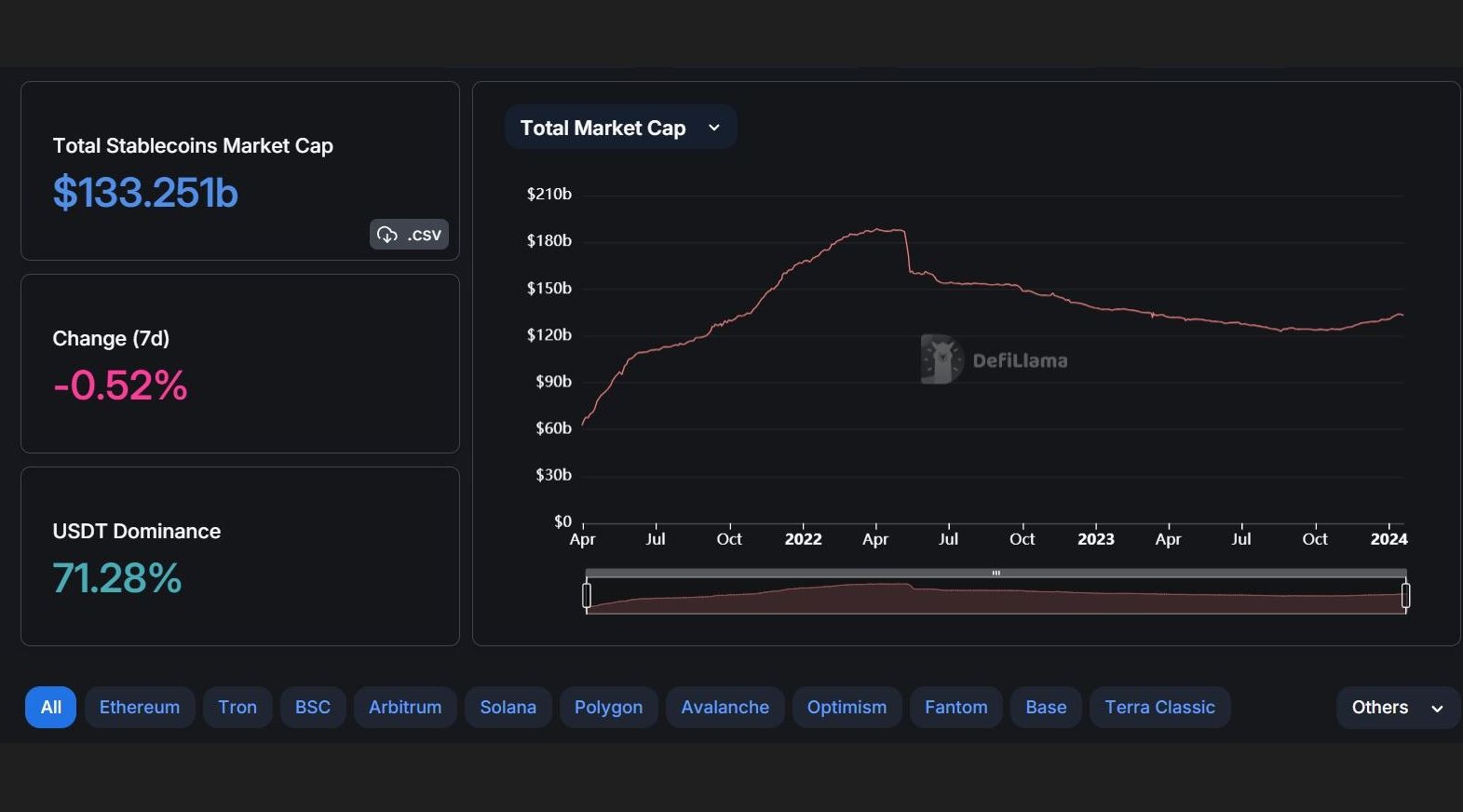
Total stablecoins market cap, chart from DeFiLlama
Political Opportunity
Elsewhere, it was made clear that Davos presents opportunities for crypto representatives to meet with political leaders, with Faryar Shirzad, the Chief Policy Officer at Coinbase: “The governments that we’re interested in talking to, the level of interest on their side is typically quite high.”
And he also drew attention to a contrast with the hostility that the crypto industry faces from some politicians in the US: “It’s not as though the Elizabeth Warren attack on us defines how we engage with most governments.” Davos, then, appears to be a more welcoming environment for crypto than the combatively partisan political and regulatory arena in the US.
A Spotlight on AI
It's also apparent that another tech contender, the AI sector, is making its presence felt this year. Could it be the case that with BlackRock and others taking Bitcoin mainstream, it’s AI that is now the creatively disruptive attendee at Davos, an event which leans, on the whole, towards bureaucracy and top-down management?
In that case, then crypto may truly be becoming, courtesy to some extent of those ETF offerings, respectably integrated with the corporate world. At the same time though, let’s not forget that those original bitcoiners had very long-term plans, and perhaps view integration as a stepping stone towards disruption.
Whatever the outcome that plays out, a shift is currently apparent, with Dante Disparte, the Chief Strategy Officer at stablecoin issuer Circle, describing in an interview how, “there’s an AI house every block [at Davos this year], whereas historically there was a blockchain foundation or a web3 house or a crypto house. I take that to mean the [blockchain] technology stack has arrived, when the technology can sort of recede to the background.”
By that reckoning, the less the crypto contingent stands out, the more we can infer that crypto has moved to the center ground and is sticking around.
While generalizations are often best avoided, it’s fair to say that a significant number of long-time Bitcoin believers are not fans of Davos get-togethers, or indeed of event organizers the World Economic Forum. This can be put down, in part, to Bitcoin’s origin story as a bootstrapped potential replacement for present banking and finance mechanisms, and even for fiat money itself, coupled with the fact that Davos is regarded as emblematic of precisely those institutions to which Bitcoin has been touted as an alternative.
Bitcoin at Davos
All of which makes it notable that in recent years, the Davos conference has featured an increasing presence of representatives from the cryptocurrency industry, whose attendance this year may seem more fitting than ever due to the recent approval of spot BTC ETFs in the United States, a move seen by some as legitimizing bitcoin for mainstream investors.
In fact, the approval and launch of spot ETFs marks a significant shift in tone since bitcoin and crypto's 2022 lows when the collapse of FTX gave the temporary impression that perhaps crypto skeptics had had a point, and the industry as a whole might be better off resolving its own internal problems, rather than attending political/corporate talking shops.
Fast forward to 2024 and crypto is in a far more optimistic position, while at Davos there have been some memorable statements, not least from JP Morgan's CEO, Jamie Dimon, who remains, despite JP Morgan acting as an Authorized Participant for BlackRock's new Bitcoin ETF, as skeptical of BTC as ever.
Entertainingly for viewers, Dimon declared in a CNBC interview at Davos that he definitely did not want to talk about bitcoin, while also taking the opportunity to wonder whether pseudonymous Bitcoin creator Satoshi Nakamoto might one day reappear to increase the digital currency's fixed supply beyond its hardcoded 21 million cap.
Such a supply increase isn’t technically possible, and perhaps Dimon knows that, either way, it made for a compelling onscreen exchange. Notably, Dimon displayed interest in other blockchain projects (as he has previously), specifically those used for “tokenizing things that you do something with”, which ties in with the growing crypto industry narrative around RWAs (meaning real world assets traded on-chain.)
The Case for Stablecoins
Another significant moment at Davos occurred when Howard Lutnick, the CEO of Cantor Fitzgerald, openly stated in an interview that the major stablecoin Tether is fully backed by reserves. This is significant as there has been ongoing speculation and concern about Tether’s reserves, which Lutnick's assertion directly contradicts.
What’s more, Lutnick steered the interview unprompted towards crypto in order to explain that in the likes of, “Argentina, Venezuela, and Turkey, these crypto assets matter, stablecoins matter. Holding your dollar in a token is amazing. That’s why Tether is doing really well.”
Meanwhile, the CEO of Ripple, Brad Garlinghouse, mentioned in an interview that he expects crypto ETFs to be approved by the SEC in the wake of spot BTC ETFs, and touched on stablecoins and regulation: “The stablecoin market has surprised people in some ways in terms of solving a real need. I think it only makes sense for there to be regulatory clarity around that.”
Total stablecoins market cap, chart from DeFiLlama
Political Opportunity
Elsewhere, it was made clear that Davos presents opportunities for crypto representatives to meet with political leaders, with Faryar Shirzad, the Chief Policy Officer at Coinbase: “The governments that we’re interested in talking to, the level of interest on their side is typically quite high.”
And he also drew attention to a contrast with the hostility that the crypto industry faces from some politicians in the US: “It’s not as though the Elizabeth Warren attack on us defines how we engage with most governments.” Davos, then, appears to be a more welcoming environment for crypto than the combatively partisan political and regulatory arena in the US.
A Spotlight on AI
It's also apparent that another tech contender, the AI sector, is making its presence felt this year. Could it be the case that with BlackRock and others taking Bitcoin mainstream, it’s AI that is now the creatively disruptive attendee at Davos, an event which leans, on the whole, towards bureaucracy and top-down management?
In that case, then crypto may truly be becoming, courtesy to some extent of those ETF offerings, respectably integrated with the corporate world. At the same time though, let’s not forget that those original bitcoiners had very long-term plans, and perhaps view integration as a stepping stone towards disruption.
Whatever the outcome that plays out, a shift is currently apparent, with Dante Disparte, the Chief Strategy Officer at stablecoin issuer Circle, describing in an interview how, “there’s an AI house every block [at Davos this year], whereas historically there was a blockchain foundation or a web3 house or a crypto house. I take that to mean the [blockchain] technology stack has arrived, when the technology can sort of recede to the background.”
By that reckoning, the less the crypto contingent stands out, the more we can infer that crypto has moved to the center ground and is sticking around.
Sam White is a writer and journalist from the UK who covers cryptocurrencies and web3, with a particular interest in NFTs and the crossover between art and finance. His work, on a wide variety of topics, has appeared on platforms including The Spectator, Vice and Hacker Noon.
In this video, we review @HolaPrimeMarketsOfficial, a multi-asset forex and CFDs broker offering different account types, trading platforms, and flexible trading conditions.
We cover the broker’s overall offering, including account options, trading environment, platforms like MT4 and MT5, and additional services such as managed accounts and fast withdrawals.
Watch the full video to see if Hola Prime Markets fits your trading needs.
📣 Stay up to date with the latest in finance and trading. Follow Finance Magnates for industry news, insights, and global event coverage.
Connect with us:
🔗 LinkedIn: /financemagnates
👍 Facebook: /financemagnates
📸 Instagram: https://www.instagram.com/financemagnates
🐦 X: https://x.com/financemagnates
🎥 TikTok: https://www.tiktok.com/tag/financemagnates
▶️ YouTube: /@financemagnates_official
#HolaPrime #ForexBroker #CFDTrading #FinanceMagnates #Trading #Forex #BrokerReview
In this video, we review @HolaPrimeMarketsOfficial, a multi-asset forex and CFDs broker offering different account types, trading platforms, and flexible trading conditions.
We cover the broker’s overall offering, including account options, trading environment, platforms like MT4 and MT5, and additional services such as managed accounts and fast withdrawals.
Watch the full video to see if Hola Prime Markets fits your trading needs.
📣 Stay up to date with the latest in finance and trading. Follow Finance Magnates for industry news, insights, and global event coverage.
Connect with us:
🔗 LinkedIn: /financemagnates
👍 Facebook: /financemagnates
📸 Instagram: https://www.instagram.com/financemagnates
🐦 X: https://x.com/financemagnates
🎥 TikTok: https://www.tiktok.com/tag/financemagnates
▶️ YouTube: /@financemagnates_official
#HolaPrime #ForexBroker #CFDTrading #FinanceMagnates #Trading #Forex #BrokerReview
Hola Prime Review: What You Need to Know | Full Breakdown by Finance Magnates
Hola Prime Review: What You Need to Know | Full Breakdown by Finance Magnates
In this video, we review @HolaPrime_Global, a proprietary trading firm offering evaluation programs and performance-based payouts in simulated market environments.
We cover how the challenge model works, including account types, profit splits (up to 95%), trading rules, and what it takes to reach a funded account. You’ll also learn about available platforms like MT4, MT5, cTrader, and more, along with insights into payouts, support, and trading conditions.
Watch the full video to see if Hola Prime fits your trading style.
📣 Stay up to date with the latest in finance and trading. Follow Finance Magnates for industry news, insights, and global event coverage.
Connect with us:
🔗 LinkedIn: /financemagnates
👍 Facebook: /financemagnates
📸 Instagram: https://www.instagram.com/financemagnates
🐦 X: https://x.com/financemagnates
🎥 TikTok: https://www.tiktok.com/tag/financemagnates
▶️ YouTube: /@financemagnates_official
#HolaPrime #PropFirm #Trading #FinanceMagnates #Forex #FuturesTrading #TradingReview #PropFirmReview
In this video, we review @HolaPrime_Global, a proprietary trading firm offering evaluation programs and performance-based payouts in simulated market environments.
We cover how the challenge model works, including account types, profit splits (up to 95%), trading rules, and what it takes to reach a funded account. You’ll also learn about available platforms like MT4, MT5, cTrader, and more, along with insights into payouts, support, and trading conditions.
Watch the full video to see if Hola Prime fits your trading style.
📣 Stay up to date with the latest in finance and trading. Follow Finance Magnates for industry news, insights, and global event coverage.
Connect with us:
🔗 LinkedIn: /financemagnates
👍 Facebook: /financemagnates
📸 Instagram: https://www.instagram.com/financemagnates
🐦 X: https://x.com/financemagnates
🎥 TikTok: https://www.tiktok.com/tag/financemagnates
▶️ YouTube: /@financemagnates_official
#HolaPrime #PropFirm #Trading #FinanceMagnates #Forex #FuturesTrading #TradingReview #PropFirmReview
Axi Winner Spotlight 🏆 | Global Most Innovative Broker 2025 #Innovation #Trading #Fintech #Broker
Axi Winner Spotlight 🏆 | Global Most Innovative Broker 2025 #Innovation #Trading #Fintech #Broker
Axi takes the spotlight at the Finance Magnates Awards, winning Global Most Innovative Broker 2025.
Olivia Xenofontos and Ivanna Openko share how the team will feel: proud, motivated, and ready to keep delivering.
They also describe the night as well-organized, focused, and enjoyable for all.
👉 Be part of FM Awards 2026.
Axi takes the spotlight at the Finance Magnates Awards, winning Global Most Innovative Broker 2025.
Olivia Xenofontos and Ivanna Openko share how the team will feel: proud, motivated, and ready to keep delivering.
They also describe the night as well-organized, focused, and enjoyable for all.
👉 Be part of FM Awards 2026.
Recognition that matters.
Built on transparency.
Driven by the industry.
The Finance Magnates Awards 2026.
Nominations are now open.
🔗 https://awards.financemagnates.com/?utm_source=SM&utm_medium=social&utm_campaign=recognition-matters
Recognition that matters.
Built on transparency.
Driven by the industry.
The Finance Magnates Awards 2026.
Nominations are now open.
🔗 https://awards.financemagnates.com/?utm_source=SM&utm_medium=social&utm_campaign=recognition-matters
Tickmill Winner Spotlight | Broker of the Year 2025 (LATAM) 🏆 | Finance Magnates Awards #Trading
Tickmill Winner Spotlight | Broker of the Year 2025 (LATAM) 🏆 | Finance Magnates Awards #Trading
What helped Tickmill stand out this year?
In this Winner Spotlight, Johnny Khalil, Executive Director at Tickmill Europe, shares how listening closely to clients and delivering strong trading conditions made the difference.
A big thank you to the community whose support continues to drive progress every day.
👉 Think your brand has what it takes? Nominate for the 2026 Finance Magnates Awards: https://awards.financemagnates.com/#nominate
What helped Tickmill stand out this year?
In this Winner Spotlight, Johnny Khalil, Executive Director at Tickmill Europe, shares how listening closely to clients and delivering strong trading conditions made the difference.
A big thank you to the community whose support continues to drive progress every day.
👉 Think your brand has what it takes? Nominate for the 2026 Finance Magnates Awards: https://awards.financemagnates.com/#nominate