>
Exclusive Interview: New Zealand Watchdog Bucking Global Trends
Friday,17/07/2015|18:38GMTby
Andy Traveller
As the FMA expands both in size and scope, CEO Rob Everett explains how a robust regulator can stir up the local financial market.
FM
As New Zealand’s Financial Markets Authority (FMA) winds up its phased implementation of the new Financial Markets Conduct (FMC) Act, Finance Magnates catches up with Chief Executive, Rob Everett, to discuss the watchdog’s new mandate, modus operandi and regulatory landscape.
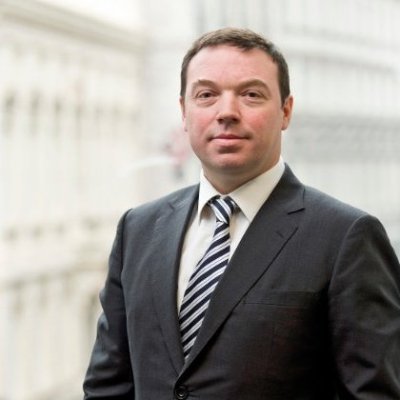
With a wealth of experience across the UK, Europe and North America and having sat on both sides of the regulatory fence, Everett moved to New Zealand in February 2014 to head up the country’s financial regulator.
Everett’s first task: to navigate the organisation as it embarked on its new mandate.
The challenges presented in New Zealand waters were of a different nature than in larger markets such as the UK, Europe and North America. While those jurisdictions faced the tidal waves of collapsed banks and overly complex derivatives markets, New Zealand was grappling with an unchartered retail environment, in which issues of transparency and market conduct were paramount.
The reforms encompass general fair dealing obligations, a new licensing regime for financial market participants, and new disclosure requirements.
As such, even prior to the financial crisis, New Zealand had initiated sweeping reforms of the regulation of financial markets. Following an extensive consultation process, a new and improved financial watchdog, the FMA, was established in 2011, with a broader mandate and greater powers vis-à-vis its predecessor, followed by new legislation, the FMC Act, in 2013.
In essence, the reforms have sought to increase the regulator’s coverage in a bid to better govern how financial products are created, promoted and sold. This includes a greater onus on regulated firms to play responsibly.
The reforms encompass general fair dealing obligations, a new licensing regime for financial market participants, and new disclosure requirements.
During his tenure, Everett has focused the strategic direction of the organisation in accordance with the dual-phased implementation of the legislation, which is evidenced in the publication of the Strategic Risk Outlook.
Everett described the reforms: “If you look at how financial services were regulated before, [regulators] didn’t know who was operating in their space…So they couldn’t gauge what was happening in any particular sector and take preventative measures to nudge firms away from bad conduct.”
A Stronger Ship
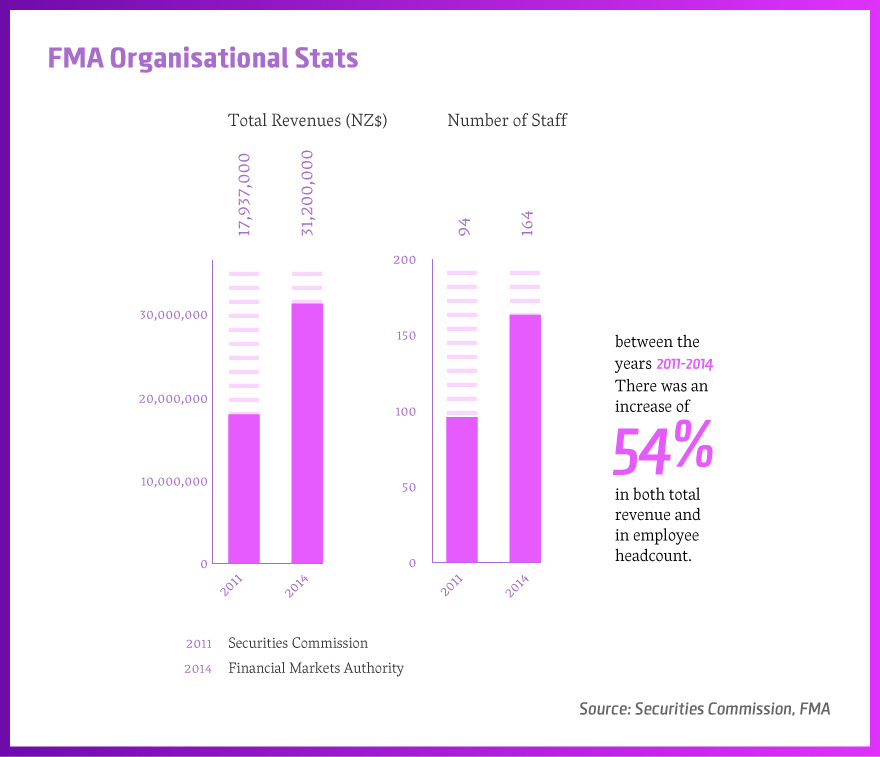
At a time when many other regulators around the world have been reducing operational expenditure, the FMA has had to boost resources to meet their enhanced mandate.
Everett explains: “As we have been rolling out new requirements, we have required a major pick up in resource…Some of that may come off once we have everything in place.”
In a market with more players, we probably will have to look at our resources.
The regulatory reforms only partially account for the beefed up watchdog. Indeed, strong economic growth has meant that the waters the FMA patrols are also expanding. Indeed, ensuring the health of the New Zealand market is an expansive task.
In another sign that New Zealand is steering away from international trends, which have seen overseas regulators levelling fewer and harsher fines, the FMA’s modus operandi has rather focused on a programme of proactive engagement with regulated firms.
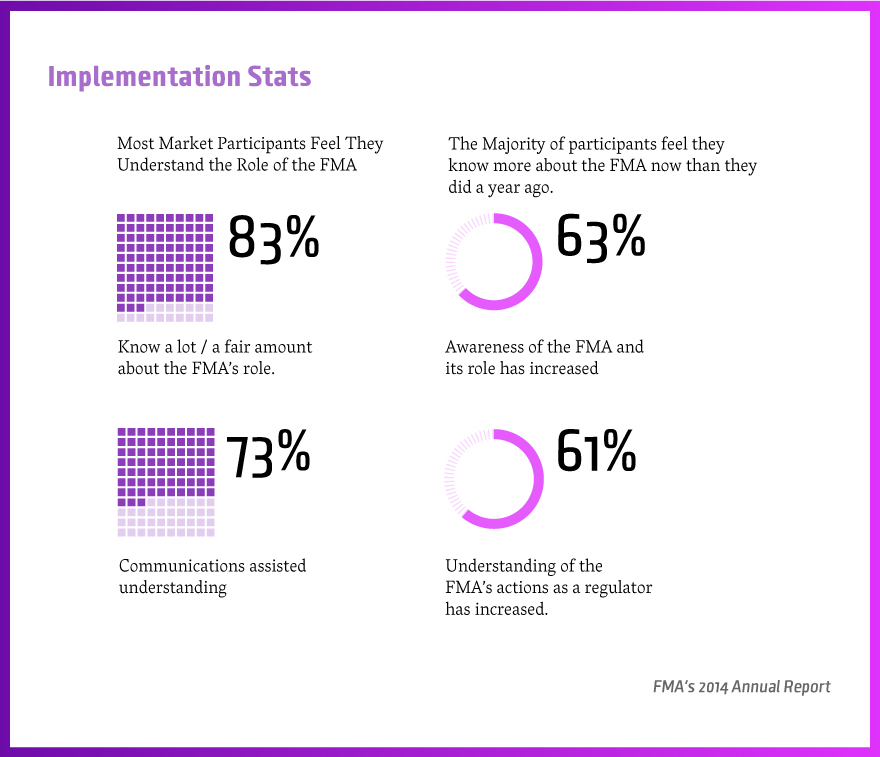
Indeed, Everett clearly emphasised the need to articulate the new regulatory approach; to educate and inform market participants.
“Because [the new framework] is so new, there is a lot of pressure on us as the regulator to go out and articulate what it is we are trying to do and how we are going about it … We have spent a lot of time going out to the regulated firms talking about what good governance looks like.”
The new approach has also meant that firms have had to become more actively involved in the regulation of the industry. Indeed, the new licensing regime and disclosure obligations place a greater onus on firms. Despite industry generally being on board with the new framework, “this does not mean they haven’t felt the pain of getting licensed and staying licensed."
New demands on firms have been a wake-up call in New Zealand.
Everett: “The new legislation has quite a lot of focus on fair dealing … [regulated firms] need to be able to demonstrate management and governance oversight: the extent to which the firm has controls in place that allow them to look at trading, both as its happening and afterwards. There are issues around actually storing the data so that when a regulator comes asking, the trade and email data are there.
This has been a wake-up call in New Zealand. It means creating a structure where trading patterns which may be problematic get looked at by the firm before they get looked at by anyone else; being able to monitor what’s going on in their building and the impact it’s having on the market. That would be very familiar territory for a lot of people in Europe.”
The novelty of the regulatory approach also means that New Zealand regulated firms are struggling to find adequate regulatory advisory services at home.
Little Kiwis
In a small economy comprised predominantly of small-scale enterprises, there has been a thoughtful and deliberate attempt to increase the array of capital raising platforms. Consequently, in addition to the New Zealand Exchange (NZX), investors and companies enjoy a diversity of other capital raising options, such as a new market for small, high growth businesses (NXT), crowdfunding platforms, and P2P lending.
“The idea is to provide a greater opportunity to invest at different levels of sophistication and for companies to raise money in different ways.”
People worry about a domestic crash, but the reality is what will happen to New Zealand will be something that is going on somewhere else.
This diversity also creates a spectrum of risk. Everett pointed out that an emergent concern is ensuring that these new platforms do not become dominated by the big fish. For example, banks have started to take big stakes in P2P lending platforms.
“It is quite interesting how the big players, who are supposed to be being disintermediated by P2P lending, have started to move in. We therefore have to be careful that we don’t disadvantage the smaller players … We need to make sure that we don’t accidentally force a concentration into the big international players.”
On the issue of Greece, Everett simply stated that a small island nation like New Zealand, adrift in a global economy, is very much at the whims of world events.
“People worry about a domestic crash, but the reality is what will happen to New Zealand will be something that is going on somewhere else ...[Rather than domestic issues], look at the dollar, at inward investment, at China, which obviously has a big impact on New Zealand as a trading partner. There is a lot of focus on Greece because all big things do have an impact.”
Policing the Periphery
Finally, one issue that has manifested itself in New Zealand is that of rogue FX trading firms, which prey on domestic investors.
While the new legislation regulates a bunch of FX instruments at the high-risk end of the speculative spectrum, some jurisdictions do not. This leaves unsuspecting and uninformed FX traders in New Zealand exposed.
While the new legislation regulates a bunch of FX instruments at the high-risk end of the speculative spectrum, some jurisdictions do not.
Everett explains: “New Zealanders have been called up to get involved in quite speculative trading. People have handed their money over to outfits not liable to any agent in New Zealand or probably any agent anywhere. When things go wrong, they don’t know who to turn to.”
As such, the FMA has been engaged in what Everett calls “policing the periphery." This involves both preventing overseas firms from becoming licensed in New Zealand and warning local investors of predatory overseas outfits.
“We are trying to make sure that in FX, we do the best we can to make sure people understand when they’re dealing with a regulated organisation and when they’re dealing with an outfit overseas where they have very little chance of getting back their money.”
All in all, the FMA has been one of the most active regulators of late, completely redefining the space in which regulated firms and investors operate.
As New Zealand’s Financial Markets Authority (FMA) winds up its phased implementation of the new Financial Markets Conduct (FMC) Act, Finance Magnates catches up with Chief Executive, Rob Everett, to discuss the watchdog’s new mandate, modus operandi and regulatory landscape.
With a wealth of experience across the UK, Europe and North America and having sat on both sides of the regulatory fence, Everett moved to New Zealand in February 2014 to head up the country’s financial regulator.
Everett’s first task: to navigate the organisation as it embarked on its new mandate.
The challenges presented in New Zealand waters were of a different nature than in larger markets such as the UK, Europe and North America. While those jurisdictions faced the tidal waves of collapsed banks and overly complex derivatives markets, New Zealand was grappling with an unchartered retail environment, in which issues of transparency and market conduct were paramount.
The reforms encompass general fair dealing obligations, a new licensing regime for financial market participants, and new disclosure requirements.
As such, even prior to the financial crisis, New Zealand had initiated sweeping reforms of the regulation of financial markets. Following an extensive consultation process, a new and improved financial watchdog, the FMA, was established in 2011, with a broader mandate and greater powers vis-à-vis its predecessor, followed by new legislation, the FMC Act, in 2013.
In essence, the reforms have sought to increase the regulator’s coverage in a bid to better govern how financial products are created, promoted and sold. This includes a greater onus on regulated firms to play responsibly.
The reforms encompass general fair dealing obligations, a new licensing regime for financial market participants, and new disclosure requirements.
During his tenure, Everett has focused the strategic direction of the organisation in accordance with the dual-phased implementation of the legislation, which is evidenced in the publication of the Strategic Risk Outlook.
Everett described the reforms: “If you look at how financial services were regulated before, [regulators] didn’t know who was operating in their space…So they couldn’t gauge what was happening in any particular sector and take preventative measures to nudge firms away from bad conduct.”
A Stronger Ship
At a time when many other regulators around the world have been reducing operational expenditure, the FMA has had to boost resources to meet their enhanced mandate.
Everett explains: “As we have been rolling out new requirements, we have required a major pick up in resource…Some of that may come off once we have everything in place.”
In a market with more players, we probably will have to look at our resources.
The regulatory reforms only partially account for the beefed up watchdog. Indeed, strong economic growth has meant that the waters the FMA patrols are also expanding. Indeed, ensuring the health of the New Zealand market is an expansive task.
In another sign that New Zealand is steering away from international trends, which have seen overseas regulators levelling fewer and harsher fines, the FMA’s modus operandi has rather focused on a programme of proactive engagement with regulated firms.
Indeed, Everett clearly emphasised the need to articulate the new regulatory approach; to educate and inform market participants.
“Because [the new framework] is so new, there is a lot of pressure on us as the regulator to go out and articulate what it is we are trying to do and how we are going about it … We have spent a lot of time going out to the regulated firms talking about what good governance looks like.”
The new approach has also meant that firms have had to become more actively involved in the regulation of the industry. Indeed, the new licensing regime and disclosure obligations place a greater onus on firms. Despite industry generally being on board with the new framework, “this does not mean they haven’t felt the pain of getting licensed and staying licensed."
New demands on firms have been a wake-up call in New Zealand.
Everett: “The new legislation has quite a lot of focus on fair dealing … [regulated firms] need to be able to demonstrate management and governance oversight: the extent to which the firm has controls in place that allow them to look at trading, both as its happening and afterwards. There are issues around actually storing the data so that when a regulator comes asking, the trade and email data are there.
This has been a wake-up call in New Zealand. It means creating a structure where trading patterns which may be problematic get looked at by the firm before they get looked at by anyone else; being able to monitor what’s going on in their building and the impact it’s having on the market. That would be very familiar territory for a lot of people in Europe.”
The novelty of the regulatory approach also means that New Zealand regulated firms are struggling to find adequate regulatory advisory services at home.
Little Kiwis
In a small economy comprised predominantly of small-scale enterprises, there has been a thoughtful and deliberate attempt to increase the array of capital raising platforms. Consequently, in addition to the New Zealand Exchange (NZX), investors and companies enjoy a diversity of other capital raising options, such as a new market for small, high growth businesses (NXT), crowdfunding platforms, and P2P lending.
“The idea is to provide a greater opportunity to invest at different levels of sophistication and for companies to raise money in different ways.”
People worry about a domestic crash, but the reality is what will happen to New Zealand will be something that is going on somewhere else.
This diversity also creates a spectrum of risk. Everett pointed out that an emergent concern is ensuring that these new platforms do not become dominated by the big fish. For example, banks have started to take big stakes in P2P lending platforms.
“It is quite interesting how the big players, who are supposed to be being disintermediated by P2P lending, have started to move in. We therefore have to be careful that we don’t disadvantage the smaller players … We need to make sure that we don’t accidentally force a concentration into the big international players.”
On the issue of Greece, Everett simply stated that a small island nation like New Zealand, adrift in a global economy, is very much at the whims of world events.
“People worry about a domestic crash, but the reality is what will happen to New Zealand will be something that is going on somewhere else ...[Rather than domestic issues], look at the dollar, at inward investment, at China, which obviously has a big impact on New Zealand as a trading partner. There is a lot of focus on Greece because all big things do have an impact.”
Policing the Periphery
Finally, one issue that has manifested itself in New Zealand is that of rogue FX trading firms, which prey on domestic investors.
While the new legislation regulates a bunch of FX instruments at the high-risk end of the speculative spectrum, some jurisdictions do not. This leaves unsuspecting and uninformed FX traders in New Zealand exposed.
While the new legislation regulates a bunch of FX instruments at the high-risk end of the speculative spectrum, some jurisdictions do not.
Everett explains: “New Zealanders have been called up to get involved in quite speculative trading. People have handed their money over to outfits not liable to any agent in New Zealand or probably any agent anywhere. When things go wrong, they don’t know who to turn to.”
As such, the FMA has been engaged in what Everett calls “policing the periphery." This involves both preventing overseas firms from becoming licensed in New Zealand and warning local investors of predatory overseas outfits.
“We are trying to make sure that in FX, we do the best we can to make sure people understand when they’re dealing with a regulated organisation and when they’re dealing with an outfit overseas where they have very little chance of getting back their money.”
All in all, the FMA has been one of the most active regulators of late, completely redefining the space in which regulated firms and investors operate.
Retail and Institutional Demand Drives Britannia’s LME Membership Following Leadership Hires
Featured Videos
Exness expands its presence in Africa: Inside our interview with Paul Margarites in Cape Town
Finance Magnates met with Paul Margarites, Exness regional commercial director for Sub-Saharan Africa, during a visit to the firm’s office opening in Cape Town. In this talk, led by Andrea Badiola Mateos, Co-CEO at Finance Magnates, Paul shares views on the South African trading space, local user behavior, mobile trends, regulation, team growth, and how Exness plans to grow in more markets across the region. @Exness
Read the article at: https://www.financemagnates.com/thought-leadership/exness-expands-its-presence-in-africa-inside-our-interview-with-paul-margarites/
#exness #financemagnates #exnesstrading #CFDtrading #tradeonline #africanews #capetown
Finance Magnates met with Paul Margarites, Exness regional commercial director for Sub-Saharan Africa, during a visit to the firm’s office opening in Cape Town. In this talk, led by Andrea Badiola Mateos, Co-CEO at Finance Magnates, Paul shares views on the South African trading space, local user behavior, mobile trends, regulation, team growth, and how Exness plans to grow in more markets across the region. @Exness
Read the article at: https://www.financemagnates.com/thought-leadership/exness-expands-its-presence-in-africa-inside-our-interview-with-paul-margarites/
#exness #financemagnates #exnesstrading #CFDtrading #tradeonline #africanews #capetown
Finance Magnates met with Paul Margarites, Exness regional commercial director for Sub-Saharan Africa, during a visit to the firm’s office opening in Cape Town. In this talk, led by Andrea Badiola Mateos, Co-CEO at Finance Magnates, Paul shares views on the South African trading space, local user behavior, mobile trends, regulation, team growth, and how Exness plans to grow in more markets across the region. @Exness
Read the article at: https://www.financemagnates.com/thought-leadership/exness-expands-its-presence-in-africa-inside-our-interview-with-paul-margarites/
#exness #financemagnates #exnesstrading #CFDtrading #tradeonline #africanews #capetown
Finance Magnates met with Paul Margarites, Exness regional commercial director for Sub-Saharan Africa, during a visit to the firm’s office opening in Cape Town. In this talk, led by Andrea Badiola Mateos, Co-CEO at Finance Magnates, Paul shares views on the South African trading space, local user behavior, mobile trends, regulation, team growth, and how Exness plans to grow in more markets across the region. @Exness
Read the article at: https://www.financemagnates.com/thought-leadership/exness-expands-its-presence-in-africa-inside-our-interview-with-paul-margarites/
#exness #financemagnates #exnesstrading #CFDtrading #tradeonline #africanews #capetown
Interview with Jas Shah
Builder | Adviser | Fintech Writer | Product Strategist
In this episode, Jonathan Fine sat down with Jas Shah, one of the most thoughtful voices in global fintech. Known for his work across advisory, product, stablecoins, and his widely read writing, Jas brings a rare combination of industry insight and plain-spoken clarity.
We talk about his first impression of the Summit, the projects that keep him busy today, and how they connect to the stablecoin panel he joined. Jas shares his view on the link between fintech, wealthtech and retail brokers, especially as firms like Revolut, eToro and Trading212 blur long-standing lines in the market.
We also explore what stablecoin adoption might look like for retail investment platforms, including a few product and UX angles that are not obvious at first glance.
To close, Jas explains how he thinks about writing, and how he approaches “shipping” pieces that spark debate across the industry.
Interview with Jas Shah
Builder | Adviser | Fintech Writer | Product Strategist
In this episode, Jonathan Fine sat down with Jas Shah, one of the most thoughtful voices in global fintech. Known for his work across advisory, product, stablecoins, and his widely read writing, Jas brings a rare combination of industry insight and plain-spoken clarity.
We talk about his first impression of the Summit, the projects that keep him busy today, and how they connect to the stablecoin panel he joined. Jas shares his view on the link between fintech, wealthtech and retail brokers, especially as firms like Revolut, eToro and Trading212 blur long-standing lines in the market.
We also explore what stablecoin adoption might look like for retail investment platforms, including a few product and UX angles that are not obvious at first glance.
To close, Jas explains how he thinks about writing, and how he approaches “shipping” pieces that spark debate across the industry.
Interview with Jas Shah
Builder | Adviser | Fintech Writer | Product Strategist
In this episode, Jonathan Fine sat down with Jas Shah, one of the most thoughtful voices in global fintech. Known for his work across advisory, product, stablecoins, and his widely read writing, Jas brings a rare combination of industry insight and plain-spoken clarity.
We talk about his first impression of the Summit, the projects that keep him busy today, and how they connect to the stablecoin panel he joined. Jas shares his view on the link between fintech, wealthtech and retail brokers, especially as firms like Revolut, eToro and Trading212 blur long-standing lines in the market.
We also explore what stablecoin adoption might look like for retail investment platforms, including a few product and UX angles that are not obvious at first glance.
To close, Jas explains how he thinks about writing, and how he approaches “shipping” pieces that spark debate across the industry.
Interview with Jas Shah
Builder | Adviser | Fintech Writer | Product Strategist
In this episode, Jonathan Fine sat down with Jas Shah, one of the most thoughtful voices in global fintech. Known for his work across advisory, product, stablecoins, and his widely read writing, Jas brings a rare combination of industry insight and plain-spoken clarity.
We talk about his first impression of the Summit, the projects that keep him busy today, and how they connect to the stablecoin panel he joined. Jas shares his view on the link between fintech, wealthtech and retail brokers, especially as firms like Revolut, eToro and Trading212 blur long-standing lines in the market.
We also explore what stablecoin adoption might look like for retail investment platforms, including a few product and UX angles that are not obvious at first glance.
To close, Jas explains how he thinks about writing, and how he approaches “shipping” pieces that spark debate across the industry.
Interview with Jas Shah
Builder | Adviser | Fintech Writer | Product Strategist
In this episode, Jonathan Fine sat down with Jas Shah, one of the most thoughtful voices in global fintech. Known for his work across advisory, product, stablecoins, and his widely read writing, Jas brings a rare combination of industry insight and plain-spoken clarity.
We talk about his first impression of the Summit, the projects that keep him busy today, and how they connect to the stablecoin panel he joined. Jas shares his view on the link between fintech, wealthtech and retail brokers, especially as firms like Revolut, eToro and Trading212 blur long-standing lines in the market.
We also explore what stablecoin adoption might look like for retail investment platforms, including a few product and UX angles that are not obvious at first glance.
To close, Jas explains how he thinks about writing, and how he approaches “shipping” pieces that spark debate across the industry.
Interview with Jas Shah
Builder | Adviser | Fintech Writer | Product Strategist
In this episode, Jonathan Fine sat down with Jas Shah, one of the most thoughtful voices in global fintech. Known for his work across advisory, product, stablecoins, and his widely read writing, Jas brings a rare combination of industry insight and plain-spoken clarity.
We talk about his first impression of the Summit, the projects that keep him busy today, and how they connect to the stablecoin panel he joined. Jas shares his view on the link between fintech, wealthtech and retail brokers, especially as firms like Revolut, eToro and Trading212 blur long-standing lines in the market.
We also explore what stablecoin adoption might look like for retail investment platforms, including a few product and UX angles that are not obvious at first glance.
To close, Jas explains how he thinks about writing, and how he approaches “shipping” pieces that spark debate across the industry.
Vitalii Bulynin Talks About Versus Trade, New Pairs, and Big Plans
In this interview, Versus Trade Co-Founder Vitalii Bulynin explains how the company got its license fast, why its trading pairs are fresh and fun, and what the team will build next.
He also discusses the most active pairs, the IB and MIB plans, and hiring needs for new markets.
Watch the whole talk to learn more about how Versus Trade works and where it is heading.
#financemagnates #VersusTrade #TradingPairs #BTCvsGold #goldtrading #innovation
In this interview, Versus Trade Co-Founder Vitalii Bulynin explains how the company got its license fast, why its trading pairs are fresh and fun, and what the team will build next.
He also discusses the most active pairs, the IB and MIB plans, and hiring needs for new markets.
Watch the whole talk to learn more about how Versus Trade works and where it is heading.
#financemagnates #VersusTrade #TradingPairs #BTCvsGold #goldtrading #innovation
In this interview, Versus Trade Co-Founder Vitalii Bulynin explains how the company got its license fast, why its trading pairs are fresh and fun, and what the team will build next.
He also discusses the most active pairs, the IB and MIB plans, and hiring needs for new markets.
Watch the whole talk to learn more about how Versus Trade works and where it is heading.
#financemagnates #VersusTrade #TradingPairs #BTCvsGold #goldtrading #innovation
In this interview, Versus Trade Co-Founder Vitalii Bulynin explains how the company got its license fast, why its trading pairs are fresh and fun, and what the team will build next.
He also discusses the most active pairs, the IB and MIB plans, and hiring needs for new markets.
Watch the whole talk to learn more about how Versus Trade works and where it is heading.
#financemagnates #VersusTrade #TradingPairs #BTCvsGold #goldtrading #innovation
In this interview, Versus Trade Co-Founder Vitalii Bulynin explains how the company got its license fast, why its trading pairs are fresh and fun, and what the team will build next.
He also discusses the most active pairs, the IB and MIB plans, and hiring needs for new markets.
Watch the whole talk to learn more about how Versus Trade works and where it is heading.
#financemagnates #VersusTrade #TradingPairs #BTCvsGold #goldtrading #innovation
In this interview, Versus Trade Co-Founder Vitalii Bulynin explains how the company got its license fast, why its trading pairs are fresh and fun, and what the team will build next.
He also discusses the most active pairs, the IB and MIB plans, and hiring needs for new markets.
Watch the whole talk to learn more about how Versus Trade works and where it is heading.
#financemagnates #VersusTrade #TradingPairs #BTCvsGold #goldtrading #innovation
Marketing in 2026 Audiences, Costs, and Smarter AI
As brokers eye B2B business and compete with fintechs and crypto exchanges alike, marketers need to act wisely with often limited budgets. AI can offer scalable solutions, but only if used properly.
Join seasoned marketing executives and specialists as they discuss the main challenges they identify in financial services in 2026 and how they address them.
Attendees of this session will walk away with:
- A nuts-and-bolts account of acquisition costs across platforms and geos
- Analysis of today’s multi-layered audience segments and differences in behaviour
- First-hand account of how global brokers balance consistency and local flavour
- Notes from the field about intelligently using AI and automation in marketing
Speakers:
-Yam Yehoshua, Editor-In-Chief at Finance Magnates
-Federico Paderni, Managing Director for Growth Markets in Europe at X
-Jo Benton, Chief Marketing Officer, Consulting | Fractional CMO
-Itai Levitan, Head of Strategy at investingLive
-Roberto Napolitano, CMO at Innovate Finance
-Tony Cross, Director at Monk Communications
#fmls #fmls25 #fmevents #FintechMarketing #AI #DigitalStrategy #Fintech #Innovation
Connect with us at:
🔗 LinkedIn: / financemagnates-events
👍 Facebook: / financemagnatesevents
📸 Instagram: / fmevents_official
🐦 Twitter: / f_m_events
🎥 TikTok: / fmevents_official
As brokers eye B2B business and compete with fintechs and crypto exchanges alike, marketers need to act wisely with often limited budgets. AI can offer scalable solutions, but only if used properly.
Join seasoned marketing executives and specialists as they discuss the main challenges they identify in financial services in 2026 and how they address them.
Attendees of this session will walk away with:
- A nuts-and-bolts account of acquisition costs across platforms and geos
- Analysis of today’s multi-layered audience segments and differences in behaviour
- First-hand account of how global brokers balance consistency and local flavour
- Notes from the field about intelligently using AI and automation in marketing
Speakers:
-Yam Yehoshua, Editor-In-Chief at Finance Magnates
-Federico Paderni, Managing Director for Growth Markets in Europe at X
-Jo Benton, Chief Marketing Officer, Consulting | Fractional CMO
-Itai Levitan, Head of Strategy at investingLive
-Roberto Napolitano, CMO at Innovate Finance
-Tony Cross, Director at Monk Communications
#fmls #fmls25 #fmevents #FintechMarketing #AI #DigitalStrategy #Fintech #Innovation
Connect with us at:
🔗 LinkedIn: / financemagnates-events
👍 Facebook: / financemagnatesevents
📸 Instagram: / fmevents_official
🐦 Twitter: / f_m_events
🎥 TikTok: / fmevents_official
As brokers eye B2B business and compete with fintechs and crypto exchanges alike, marketers need to act wisely with often limited budgets. AI can offer scalable solutions, but only if used properly.
Join seasoned marketing executives and specialists as they discuss the main challenges they identify in financial services in 2026 and how they address them.
Attendees of this session will walk away with:
- A nuts-and-bolts account of acquisition costs across platforms and geos
- Analysis of today’s multi-layered audience segments and differences in behaviour
- First-hand account of how global brokers balance consistency and local flavour
- Notes from the field about intelligently using AI and automation in marketing
Speakers:
-Yam Yehoshua, Editor-In-Chief at Finance Magnates
-Federico Paderni, Managing Director for Growth Markets in Europe at X
-Jo Benton, Chief Marketing Officer, Consulting | Fractional CMO
-Itai Levitan, Head of Strategy at investingLive
-Roberto Napolitano, CMO at Innovate Finance
-Tony Cross, Director at Monk Communications
#fmls #fmls25 #fmevents #FintechMarketing #AI #DigitalStrategy #Fintech #Innovation
Connect with us at:
🔗 LinkedIn: / financemagnates-events
👍 Facebook: / financemagnatesevents
📸 Instagram: / fmevents_official
🐦 Twitter: / f_m_events
🎥 TikTok: / fmevents_official
As brokers eye B2B business and compete with fintechs and crypto exchanges alike, marketers need to act wisely with often limited budgets. AI can offer scalable solutions, but only if used properly.
Join seasoned marketing executives and specialists as they discuss the main challenges they identify in financial services in 2026 and how they address them.
Attendees of this session will walk away with:
- A nuts-and-bolts account of acquisition costs across platforms and geos
- Analysis of today’s multi-layered audience segments and differences in behaviour
- First-hand account of how global brokers balance consistency and local flavour
- Notes from the field about intelligently using AI and automation in marketing
Speakers:
-Yam Yehoshua, Editor-In-Chief at Finance Magnates
-Federico Paderni, Managing Director for Growth Markets in Europe at X
-Jo Benton, Chief Marketing Officer, Consulting | Fractional CMO
-Itai Levitan, Head of Strategy at investingLive
-Roberto Napolitano, CMO at Innovate Finance
-Tony Cross, Director at Monk Communications
#fmls #fmls25 #fmevents #FintechMarketing #AI #DigitalStrategy #Fintech #Innovation
Connect with us at:
🔗 LinkedIn: / financemagnates-events
👍 Facebook: / financemagnatesevents
📸 Instagram: / fmevents_official
🐦 Twitter: / f_m_events
🎥 TikTok: / fmevents_official
As brokers eye B2B business and compete with fintechs and crypto exchanges alike, marketers need to act wisely with often limited budgets. AI can offer scalable solutions, but only if used properly.
Join seasoned marketing executives and specialists as they discuss the main challenges they identify in financial services in 2026 and how they address them.
Attendees of this session will walk away with:
- A nuts-and-bolts account of acquisition costs across platforms and geos
- Analysis of today’s multi-layered audience segments and differences in behaviour
- First-hand account of how global brokers balance consistency and local flavour
- Notes from the field about intelligently using AI and automation in marketing
Speakers:
-Yam Yehoshua, Editor-In-Chief at Finance Magnates
-Federico Paderni, Managing Director for Growth Markets in Europe at X
-Jo Benton, Chief Marketing Officer, Consulting | Fractional CMO
-Itai Levitan, Head of Strategy at investingLive
-Roberto Napolitano, CMO at Innovate Finance
-Tony Cross, Director at Monk Communications
#fmls #fmls25 #fmevents #FintechMarketing #AI #DigitalStrategy #Fintech #Innovation
Connect with us at:
🔗 LinkedIn: / financemagnates-events
👍 Facebook: / financemagnatesevents
📸 Instagram: / fmevents_official
🐦 Twitter: / f_m_events
🎥 TikTok: / fmevents_official
As brokers eye B2B business and compete with fintechs and crypto exchanges alike, marketers need to act wisely with often limited budgets. AI can offer scalable solutions, but only if used properly.
Join seasoned marketing executives and specialists as they discuss the main challenges they identify in financial services in 2026 and how they address them.
Attendees of this session will walk away with:
- A nuts-and-bolts account of acquisition costs across platforms and geos
- Analysis of today’s multi-layered audience segments and differences in behaviour
- First-hand account of how global brokers balance consistency and local flavour
- Notes from the field about intelligently using AI and automation in marketing
Speakers:
-Yam Yehoshua, Editor-In-Chief at Finance Magnates
-Federico Paderni, Managing Director for Growth Markets in Europe at X
-Jo Benton, Chief Marketing Officer, Consulting | Fractional CMO
-Itai Levitan, Head of Strategy at investingLive
-Roberto Napolitano, CMO at Innovate Finance
-Tony Cross, Director at Monk Communications
#fmls #fmls25 #fmevents #FintechMarketing #AI #DigitalStrategy #Fintech #Innovation
Connect with us at:
🔗 LinkedIn: / financemagnates-events
👍 Facebook: / financemagnatesevents
📸 Instagram: / fmevents_official
🐦 Twitter: / f_m_events
🎥 TikTok: / fmevents_official
Fail Better Trading Tech to Tackle Industry Risks
Much like their traders in the market, brokers must diversify to manage risk and stay resilient. But that can get costly, clunky, and lengthy.
This candid panel brings together builders across the trading infrastructure space to uncover the shifting dynamics behind tools, interfaces, and full-stack ambitions.
Attendees will hear:
-Why platform dependency has become one of the most overlooked risks in the trading business?
-Buy vs. build: What do hybrid models look like, and why are industry graveyards filled with failed ‘killer apps’?
-How AI is already changing execution, risk, and reporting—and what’s next?
-Which features, assets, and tools gain the most traction, and where brokers should look for tech-driven retention?
Speakers:
-Stephen Miles, Chief Revenue Officer at FYNXT
-John Morris, Co-Founder at FXBlue
-Matthew Smith, Group Chair & CEO at EC Markets
-Tom Higgins, Founder & CEO at Gold-i
-Gil Ben Hur, Founder at 5% Group
#fmls #fmls25 #fmevents #Brokers #Trading #Fintech #FintechInnovation #TradingTechnology #Innovation
Connect with us at:
🔗 LinkedIn: / financemagnates-events
👍 Facebook: / financemagnatesevents
📸 Instagram: / fmevents_official
🐦 Twitter: / f_m_events
🎥 TikTok: / fmevents_official
Much like their traders in the market, brokers must diversify to manage risk and stay resilient. But that can get costly, clunky, and lengthy.
This candid panel brings together builders across the trading infrastructure space to uncover the shifting dynamics behind tools, interfaces, and full-stack ambitions.
Attendees will hear:
-Why platform dependency has become one of the most overlooked risks in the trading business?
-Buy vs. build: What do hybrid models look like, and why are industry graveyards filled with failed ‘killer apps’?
-How AI is already changing execution, risk, and reporting—and what’s next?
-Which features, assets, and tools gain the most traction, and where brokers should look for tech-driven retention?
Speakers:
-Stephen Miles, Chief Revenue Officer at FYNXT
-John Morris, Co-Founder at FXBlue
-Matthew Smith, Group Chair & CEO at EC Markets
-Tom Higgins, Founder & CEO at Gold-i
-Gil Ben Hur, Founder at 5% Group
#fmls #fmls25 #fmevents #Brokers #Trading #Fintech #FintechInnovation #TradingTechnology #Innovation
Connect with us at:
🔗 LinkedIn: / financemagnates-events
👍 Facebook: / financemagnatesevents
📸 Instagram: / fmevents_official
🐦 Twitter: / f_m_events
🎥 TikTok: / fmevents_official
Much like their traders in the market, brokers must diversify to manage risk and stay resilient. But that can get costly, clunky, and lengthy.
This candid panel brings together builders across the trading infrastructure space to uncover the shifting dynamics behind tools, interfaces, and full-stack ambitions.
Attendees will hear:
-Why platform dependency has become one of the most overlooked risks in the trading business?
-Buy vs. build: What do hybrid models look like, and why are industry graveyards filled with failed ‘killer apps’?
-How AI is already changing execution, risk, and reporting—and what’s next?
-Which features, assets, and tools gain the most traction, and where brokers should look for tech-driven retention?
Speakers:
-Stephen Miles, Chief Revenue Officer at FYNXT
-John Morris, Co-Founder at FXBlue
-Matthew Smith, Group Chair & CEO at EC Markets
-Tom Higgins, Founder & CEO at Gold-i
-Gil Ben Hur, Founder at 5% Group
#fmls #fmls25 #fmevents #Brokers #Trading #Fintech #FintechInnovation #TradingTechnology #Innovation
Connect with us at:
🔗 LinkedIn: / financemagnates-events
👍 Facebook: / financemagnatesevents
📸 Instagram: / fmevents_official
🐦 Twitter: / f_m_events
🎥 TikTok: / fmevents_official
Much like their traders in the market, brokers must diversify to manage risk and stay resilient. But that can get costly, clunky, and lengthy.
This candid panel brings together builders across the trading infrastructure space to uncover the shifting dynamics behind tools, interfaces, and full-stack ambitions.
Attendees will hear:
-Why platform dependency has become one of the most overlooked risks in the trading business?
-Buy vs. build: What do hybrid models look like, and why are industry graveyards filled with failed ‘killer apps’?
-How AI is already changing execution, risk, and reporting—and what’s next?
-Which features, assets, and tools gain the most traction, and where brokers should look for tech-driven retention?
Speakers:
-Stephen Miles, Chief Revenue Officer at FYNXT
-John Morris, Co-Founder at FXBlue
-Matthew Smith, Group Chair & CEO at EC Markets
-Tom Higgins, Founder & CEO at Gold-i
-Gil Ben Hur, Founder at 5% Group
#fmls #fmls25 #fmevents #Brokers #Trading #Fintech #FintechInnovation #TradingTechnology #Innovation
Connect with us at:
🔗 LinkedIn: / financemagnates-events
👍 Facebook: / financemagnatesevents
📸 Instagram: / fmevents_official
🐦 Twitter: / f_m_events
🎥 TikTok: / fmevents_official
Much like their traders in the market, brokers must diversify to manage risk and stay resilient. But that can get costly, clunky, and lengthy.
This candid panel brings together builders across the trading infrastructure space to uncover the shifting dynamics behind tools, interfaces, and full-stack ambitions.
Attendees will hear:
-Why platform dependency has become one of the most overlooked risks in the trading business?
-Buy vs. build: What do hybrid models look like, and why are industry graveyards filled with failed ‘killer apps’?
-How AI is already changing execution, risk, and reporting—and what’s next?
-Which features, assets, and tools gain the most traction, and where brokers should look for tech-driven retention?
Speakers:
-Stephen Miles, Chief Revenue Officer at FYNXT
-John Morris, Co-Founder at FXBlue
-Matthew Smith, Group Chair & CEO at EC Markets
-Tom Higgins, Founder & CEO at Gold-i
-Gil Ben Hur, Founder at 5% Group
#fmls #fmls25 #fmevents #Brokers #Trading #Fintech #FintechInnovation #TradingTechnology #Innovation
Connect with us at:
🔗 LinkedIn: / financemagnates-events
👍 Facebook: / financemagnatesevents
📸 Instagram: / fmevents_official
🐦 Twitter: / f_m_events
🎥 TikTok: / fmevents_official
Much like their traders in the market, brokers must diversify to manage risk and stay resilient. But that can get costly, clunky, and lengthy.
This candid panel brings together builders across the trading infrastructure space to uncover the shifting dynamics behind tools, interfaces, and full-stack ambitions.
Attendees will hear:
-Why platform dependency has become one of the most overlooked risks in the trading business?
-Buy vs. build: What do hybrid models look like, and why are industry graveyards filled with failed ‘killer apps’?
-How AI is already changing execution, risk, and reporting—and what’s next?
-Which features, assets, and tools gain the most traction, and where brokers should look for tech-driven retention?
Speakers:
-Stephen Miles, Chief Revenue Officer at FYNXT
-John Morris, Co-Founder at FXBlue
-Matthew Smith, Group Chair & CEO at EC Markets
-Tom Higgins, Founder & CEO at Gold-i
-Gil Ben Hur, Founder at 5% Group
#fmls #fmls25 #fmevents #Brokers #Trading #Fintech #FintechInnovation #TradingTechnology #Innovation
Connect with us at:
🔗 LinkedIn: / financemagnates-events
👍 Facebook: / financemagnatesevents
📸 Instagram: / fmevents_official
🐦 Twitter: / f_m_events
🎥 TikTok: / fmevents_official