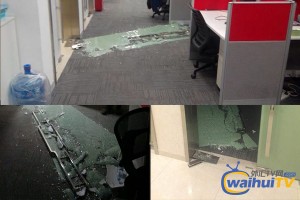
As the allegations against IronFX by Chinese IBs reached the court in Cyprus, the firm's CEO Markos Kashiouris presented the brokerage's view on the case and recent developments in the industry.
February has been a very tumultuous month for the foreign exchange industry. With the shock of the Swiss National Bank's decision still rippling through, many brokers have suffered losses. According to the CEO of one of the major brokerages in Cyprus, IronFX, the firm remained unscathed by the event.
Forex Magnates' reporters contacted IronFX and asked the company’s CEO Markos A. Kashiouris questions about the recent market turmoil, the allegations brought forward by the Chinese IBs, the rumors about an ongoing restructuring in the Chinese and Cypriot offices of the company and the reports about an IronFX IPO.
How is the recent Swiss Franc debacle likely to affect the FX industry, and how do you see the market changing? Was IronFX affected?
Indeed, the SNB announcement on the 15th of January was an event-turning moment in the retail FX space. A lot of brokers, especially those running a full Agency/STP model, were seriously and negatively affected while at the same time clients sustained some loss of confidence, which however, we believe that it will be short-lived. Regarding the CHF move and SNB intervention, IronFX was not affected by the event.
Certainly a number of our clients did run into negative balances, but the portion of clients and balances was relatively small. The company has fully covered all negative balances arising from the SNB intervention, and we remain committed in continuing offering negative balance protection going forward.
The company’s Chinese operation is drawing a great deal of criticism in the local media. What is the reason for that? What is the current status of the offices of IronFX in China, are they operating?
In China, IronFX works via an extensive network of large Introducing Brokers, one of them being IGHG. We are not doing anything different from other companies in the industry in China and globally. All our affiliated Chinese IBs operations, including IGHG, are operational and refer clients to us normally.
Our fast growth and our dominance in recent years have naturally attracted criticism from competitions. It is not surprising that our success story and market growth challenges can trigger the interest of the industry and attract attention from various channels and third parties including media.
The important thing for us is that we remain focused and committed to our customers and the integrity of our business, while adjusting our business according to industry events and client needs.
A claim by Chinese clients and IBs has been filed against the company in a Limassol court, demanding from IronFX more than a million dollars in claims. Is the claim related to the “abusive traders” who you have identified?
Indeed this claim is related to the recently identified group of abusive traders that employ an abusive trading strategy to manipulate our promotions. This group has been placed under investigation for breach of our trading terms and pending this investigation we have put a limitation on all promotions-related withdrawals from this abusive trading strategy as we are entitled to do. We will continue taking the measures to which we are entitled to protect the legitimate interests of the company and the over 500,000 clients who maintain active accounts in our company.
In our over five-year history, we never received a formal notification or fine from any of the eight regulatory authorities across the globe to which we report (CySEC, FCA, ASIC, DFSA, FSB, FSP, CRFIN, UCRFIN).
We have learned that as many as 200 employees were recently laid off from the company’s Chinese and Cypriot offices. Is this restructuring related to the SNB event or the recent Chinese media reports?
IronFX has one of the biggest operations in terms of number of direct offices (26) and number of direct aemployees (c. 800) worldwide, the majority of whom are account managers. This is a normal cycle of talent refreshment and structural reorganization. Any company of such size and high growth naturally needs to adjust every so often to optimize operations. It has been some time since we reviewed a reorganization to optimize our operations and align them with our overall strategic growth plans.
Post the SNB event, we decided that it was a good time to do so. Some positions and roles were deemed obsolete whilst others were deemed more necessary. Our strength has always been on the local approach and personalized service of our account management force globally, which we are dedicated to keep investing in. As a result, we continue actively looking to hire higher performance and more experienced account managers to enhance the worldwide fabric of our operations.
What is the added value of having multiple offices worldwide? What is your next strategic target of expansion?
“Global reach with local presence” is part of the company’s overall strategy. Physical offices appeal to our clients (introducing brokers and end clients) and they represent added value customer service for them. Our established unique customer-focused model based on local offices and complemented by our account manager model, under which every client is provided a dedicated native AM, has been the key driver of our success.
The combination of both allows the company to meet with clients on the ground, build long-term and trusted relationships as well as gain expertise in the local market.
We will continue this strategy to further penetrate our current local markets and expand into new geographical locations where we expect FX business is likely to grow. Irrespective of the events of January 15, we are optimistic for the future of the sector and IronFX’s place in it as one the leading global and trusted retail FX brokers.
In December a report by the Wall Street Journal suggested that IronFX has filed for an IPO in the US. Was this report accurate, and if so why did you choose an arena in which you have no offices or clients?
Whilst we cannot confirm the WSJ report that IronFX has filed for an IPO in the US, we can confirm that post-SNB the competitive landscape has changed decidedly in our favor. The company is actively evaluating a number of capital markets opportunities with a number of interested parties that recognize the strength of the global financial distribution platform we alone offer and are willing to partner with us to potentially capitalize on these opportunities and consolidate our no.1 position in retail FX.
February has been a very tumultuous month for the foreign exchange industry. With the shock of the Swiss National Bank's decision still rippling through, many brokers have suffered losses. According to the CEO of one of the major brokerages in Cyprus, IronFX, the firm remained unscathed by the event.
Forex Magnates' reporters contacted IronFX and asked the company’s CEO Markos A. Kashiouris questions about the recent market turmoil, the allegations brought forward by the Chinese IBs, the rumors about an ongoing restructuring in the Chinese and Cypriot offices of the company and the reports about an IronFX IPO.
How is the recent Swiss Franc debacle likely to affect the FX industry, and how do you see the market changing? Was IronFX affected?
Indeed, the SNB announcement on the 15th of January was an event-turning moment in the retail FX space. A lot of brokers, especially those running a full Agency/STP model, were seriously and negatively affected while at the same time clients sustained some loss of confidence, which however, we believe that it will be short-lived. Regarding the CHF move and SNB intervention, IronFX was not affected by the event.
Certainly a number of our clients did run into negative balances, but the portion of clients and balances was relatively small. The company has fully covered all negative balances arising from the SNB intervention, and we remain committed in continuing offering negative balance protection going forward.
The company’s Chinese operation is drawing a great deal of criticism in the local media. What is the reason for that? What is the current status of the offices of IronFX in China, are they operating?
In China, IronFX works via an extensive network of large Introducing Brokers, one of them being IGHG. We are not doing anything different from other companies in the industry in China and globally. All our affiliated Chinese IBs operations, including IGHG, are operational and refer clients to us normally.
Our fast growth and our dominance in recent years have naturally attracted criticism from competitions. It is not surprising that our success story and market growth challenges can trigger the interest of the industry and attract attention from various channels and third parties including media.
The important thing for us is that we remain focused and committed to our customers and the integrity of our business, while adjusting our business according to industry events and client needs.
A claim by Chinese clients and IBs has been filed against the company in a Limassol court, demanding from IronFX more than a million dollars in claims. Is the claim related to the “abusive traders” who you have identified?
Indeed this claim is related to the recently identified group of abusive traders that employ an abusive trading strategy to manipulate our promotions. This group has been placed under investigation for breach of our trading terms and pending this investigation we have put a limitation on all promotions-related withdrawals from this abusive trading strategy as we are entitled to do. We will continue taking the measures to which we are entitled to protect the legitimate interests of the company and the over 500,000 clients who maintain active accounts in our company.
In our over five-year history, we never received a formal notification or fine from any of the eight regulatory authorities across the globe to which we report (CySEC, FCA, ASIC, DFSA, FSB, FSP, CRFIN, UCRFIN).
We have learned that as many as 200 employees were recently laid off from the company’s Chinese and Cypriot offices. Is this restructuring related to the SNB event or the recent Chinese media reports?
IronFX has one of the biggest operations in terms of number of direct offices (26) and number of direct aemployees (c. 800) worldwide, the majority of whom are account managers. This is a normal cycle of talent refreshment and structural reorganization. Any company of such size and high growth naturally needs to adjust every so often to optimize operations. It has been some time since we reviewed a reorganization to optimize our operations and align them with our overall strategic growth plans.
Post the SNB event, we decided that it was a good time to do so. Some positions and roles were deemed obsolete whilst others were deemed more necessary. Our strength has always been on the local approach and personalized service of our account management force globally, which we are dedicated to keep investing in. As a result, we continue actively looking to hire higher performance and more experienced account managers to enhance the worldwide fabric of our operations.
What is the added value of having multiple offices worldwide? What is your next strategic target of expansion?
“Global reach with local presence” is part of the company’s overall strategy. Physical offices appeal to our clients (introducing brokers and end clients) and they represent added value customer service for them. Our established unique customer-focused model based on local offices and complemented by our account manager model, under which every client is provided a dedicated native AM, has been the key driver of our success.
The combination of both allows the company to meet with clients on the ground, build long-term and trusted relationships as well as gain expertise in the local market.
We will continue this strategy to further penetrate our current local markets and expand into new geographical locations where we expect FX business is likely to grow. Irrespective of the events of January 15, we are optimistic for the future of the sector and IronFX’s place in it as one the leading global and trusted retail FX brokers.
In December a report by the Wall Street Journal suggested that IronFX has filed for an IPO in the US. Was this report accurate, and if so why did you choose an arena in which you have no offices or clients?
Whilst we cannot confirm the WSJ report that IronFX has filed for an IPO in the US, we can confirm that post-SNB the competitive landscape has changed decidedly in our favor. The company is actively evaluating a number of capital markets opportunities with a number of interested parties that recognize the strength of the global financial distribution platform we alone offer and are willing to partner with us to potentially capitalize on these opportunities and consolidate our no.1 position in retail FX.
Italy’s Consob Tightens Net on AI-Fueled Scams With Fresh Website Bans
Featured Videos
FP Markets Winner Spotlight 🏆 | Global Broker of the Year 2025 #Trading #Broker #Innovation #Shorts
FP Markets Winner Spotlight 🏆 | Global Broker of the Year 2025 #Trading #Broker #Innovation #Shorts
FP Markets Winner Spotlight 🏆 | Global Broker of the Year 2025 #Trading #Broker #Innovation #Shorts
FP Markets Winner Spotlight 🏆 | Global Broker of the Year 2025 #Trading #Broker #Innovation #Shorts
FP Markets takes the spotlight as Global Broker of the Year 2025 at the Finance Magnates Awards.
Martin Stoilov, Head of Client Experience, shares that trust, innovation, and people played a key role in the company’s success, supported by a strong foundation of integrity and client-centricity.
Following this milestone, FP Markets continues to focus on growth, technology investment, and its core values of transparency and excellence.
👉 Be part of FM Awards 2026: https://awards.financemagnates.com/#nominate
FP Markets takes the spotlight as Global Broker of the Year 2025 at the Finance Magnates Awards.
Martin Stoilov, Head of Client Experience, shares that trust, innovation, and people played a key role in the company’s success, supported by a strong foundation of integrity and client-centricity.
Following this milestone, FP Markets continues to focus on growth, technology investment, and its core values of transparency and excellence.
👉 Be part of FM Awards 2026: https://awards.financemagnates.com/#nominate
FP Markets takes the spotlight as Global Broker of the Year 2025 at the Finance Magnates Awards.
Martin Stoilov, Head of Client Experience, shares that trust, innovation, and people played a key role in the company’s success, supported by a strong foundation of integrity and client-centricity.
Following this milestone, FP Markets continues to focus on growth, technology investment, and its core values of transparency and excellence.
👉 Be part of FM Awards 2026: https://awards.financemagnates.com/#nominate
FP Markets takes the spotlight as Global Broker of the Year 2025 at the Finance Magnates Awards.
Martin Stoilov, Head of Client Experience, shares that trust, innovation, and people played a key role in the company’s success, supported by a strong foundation of integrity and client-centricity.
Following this milestone, FP Markets continues to focus on growth, technology investment, and its core values of transparency and excellence.
👉 Be part of FM Awards 2026: https://awards.financemagnates.com/#nominate
In this video, we review @HolaPrimeMarketsOfficial, a multi-asset forex and CFDs broker offering different account types, trading platforms, and flexible trading conditions.
We cover the broker’s overall offering, including account options, trading environment, platforms like MT4 and MT5, and additional services such as managed accounts and fast withdrawals.
Watch the full video to see if Hola Prime Markets fits your trading needs.
📣 Stay up to date with the latest in finance and trading. Follow Finance Magnates for industry news, insights, and global event coverage.
Connect with us:
🔗 LinkedIn: /financemagnates
👍 Facebook: /financemagnates
📸 Instagram: https://www.instagram.com/financemagnates
🐦 X: https://x.com/financemagnates
🎥 TikTok: https://www.tiktok.com/tag/financemagnates
▶️ YouTube: /@financemagnates_official
#HolaPrime #ForexBroker #CFDTrading #FinanceMagnates #Trading #Forex #BrokerReview
In this video, we review @HolaPrimeMarketsOfficial, a multi-asset forex and CFDs broker offering different account types, trading platforms, and flexible trading conditions.
We cover the broker’s overall offering, including account options, trading environment, platforms like MT4 and MT5, and additional services such as managed accounts and fast withdrawals.
Watch the full video to see if Hola Prime Markets fits your trading needs.
📣 Stay up to date with the latest in finance and trading. Follow Finance Magnates for industry news, insights, and global event coverage.
Connect with us:
🔗 LinkedIn: /financemagnates
👍 Facebook: /financemagnates
📸 Instagram: https://www.instagram.com/financemagnates
🐦 X: https://x.com/financemagnates
🎥 TikTok: https://www.tiktok.com/tag/financemagnates
▶️ YouTube: /@financemagnates_official
#HolaPrime #ForexBroker #CFDTrading #FinanceMagnates #Trading #Forex #BrokerReview
In this video, we review @HolaPrimeMarketsOfficial, a multi-asset forex and CFDs broker offering different account types, trading platforms, and flexible trading conditions.
We cover the broker’s overall offering, including account options, trading environment, platforms like MT4 and MT5, and additional services such as managed accounts and fast withdrawals.
Watch the full video to see if Hola Prime Markets fits your trading needs.
📣 Stay up to date with the latest in finance and trading. Follow Finance Magnates for industry news, insights, and global event coverage.
Connect with us:
🔗 LinkedIn: /financemagnates
👍 Facebook: /financemagnates
📸 Instagram: https://www.instagram.com/financemagnates
🐦 X: https://x.com/financemagnates
🎥 TikTok: https://www.tiktok.com/tag/financemagnates
▶️ YouTube: /@financemagnates_official
#HolaPrime #ForexBroker #CFDTrading #FinanceMagnates #Trading #Forex #BrokerReview
In this video, we review @HolaPrimeMarketsOfficial, a multi-asset forex and CFDs broker offering different account types, trading platforms, and flexible trading conditions.
We cover the broker’s overall offering, including account options, trading environment, platforms like MT4 and MT5, and additional services such as managed accounts and fast withdrawals.
Watch the full video to see if Hola Prime Markets fits your trading needs.
📣 Stay up to date with the latest in finance and trading. Follow Finance Magnates for industry news, insights, and global event coverage.
Connect with us:
🔗 LinkedIn: /financemagnates
👍 Facebook: /financemagnates
📸 Instagram: https://www.instagram.com/financemagnates
🐦 X: https://x.com/financemagnates
🎥 TikTok: https://www.tiktok.com/tag/financemagnates
▶️ YouTube: /@financemagnates_official
#HolaPrime #ForexBroker #CFDTrading #FinanceMagnates #Trading #Forex #BrokerReview
In this video, we review @HolaPrimeMarketsOfficial, a multi-asset forex and CFDs broker offering different account types, trading platforms, and flexible trading conditions.
We cover the broker’s overall offering, including account options, trading environment, platforms like MT4 and MT5, and additional services such as managed accounts and fast withdrawals.
Watch the full video to see if Hola Prime Markets fits your trading needs.
📣 Stay up to date with the latest in finance and trading. Follow Finance Magnates for industry news, insights, and global event coverage.
Connect with us:
🔗 LinkedIn: /financemagnates
👍 Facebook: /financemagnates
📸 Instagram: https://www.instagram.com/financemagnates
🐦 X: https://x.com/financemagnates
🎥 TikTok: https://www.tiktok.com/tag/financemagnates
▶️ YouTube: /@financemagnates_official
#HolaPrime #ForexBroker #CFDTrading #FinanceMagnates #Trading #Forex #BrokerReview
In this video, we review @HolaPrimeMarketsOfficial, a multi-asset forex and CFDs broker offering different account types, trading platforms, and flexible trading conditions.
We cover the broker’s overall offering, including account options, trading environment, platforms like MT4 and MT5, and additional services such as managed accounts and fast withdrawals.
Watch the full video to see if Hola Prime Markets fits your trading needs.
📣 Stay up to date with the latest in finance and trading. Follow Finance Magnates for industry news, insights, and global event coverage.
Connect with us:
🔗 LinkedIn: /financemagnates
👍 Facebook: /financemagnates
📸 Instagram: https://www.instagram.com/financemagnates
🐦 X: https://x.com/financemagnates
🎥 TikTok: https://www.tiktok.com/tag/financemagnates
▶️ YouTube: /@financemagnates_official
#HolaPrime #ForexBroker #CFDTrading #FinanceMagnates #Trading #Forex #BrokerReview
Hola Prime Review: What You Need to Know | Full Breakdown by Finance Magnates
Hola Prime Review: What You Need to Know | Full Breakdown by Finance Magnates
Hola Prime Review: What You Need to Know | Full Breakdown by Finance Magnates
Hola Prime Review: What You Need to Know | Full Breakdown by Finance Magnates
Hola Prime Review: What You Need to Know | Full Breakdown by Finance Magnates
Hola Prime Review: What You Need to Know | Full Breakdown by Finance Magnates
In this video, we review @HolaPrime_Global, a proprietary trading firm offering evaluation programs and performance-based payouts in simulated market environments.
We cover how the challenge model works, including account types, profit splits (up to 95%), trading rules, and what it takes to reach a funded account. You’ll also learn about available platforms like MT4, MT5, cTrader, and more, along with insights into payouts, support, and trading conditions.
Watch the full video to see if Hola Prime fits your trading style.
📣 Stay up to date with the latest in finance and trading. Follow Finance Magnates for industry news, insights, and global event coverage.
Connect with us:
🔗 LinkedIn: /financemagnates
👍 Facebook: /financemagnates
📸 Instagram: https://www.instagram.com/financemagnates
🐦 X: https://x.com/financemagnates
🎥 TikTok: https://www.tiktok.com/tag/financemagnates
▶️ YouTube: /@financemagnates_official
#HolaPrime #PropFirm #Trading #FinanceMagnates #Forex #FuturesTrading #TradingReview #PropFirmReview
In this video, we review @HolaPrime_Global, a proprietary trading firm offering evaluation programs and performance-based payouts in simulated market environments.
We cover how the challenge model works, including account types, profit splits (up to 95%), trading rules, and what it takes to reach a funded account. You’ll also learn about available platforms like MT4, MT5, cTrader, and more, along with insights into payouts, support, and trading conditions.
Watch the full video to see if Hola Prime fits your trading style.
📣 Stay up to date with the latest in finance and trading. Follow Finance Magnates for industry news, insights, and global event coverage.
Connect with us:
🔗 LinkedIn: /financemagnates
👍 Facebook: /financemagnates
📸 Instagram: https://www.instagram.com/financemagnates
🐦 X: https://x.com/financemagnates
🎥 TikTok: https://www.tiktok.com/tag/financemagnates
▶️ YouTube: /@financemagnates_official
#HolaPrime #PropFirm #Trading #FinanceMagnates #Forex #FuturesTrading #TradingReview #PropFirmReview
In this video, we review @HolaPrime_Global, a proprietary trading firm offering evaluation programs and performance-based payouts in simulated market environments.
We cover how the challenge model works, including account types, profit splits (up to 95%), trading rules, and what it takes to reach a funded account. You’ll also learn about available platforms like MT4, MT5, cTrader, and more, along with insights into payouts, support, and trading conditions.
Watch the full video to see if Hola Prime fits your trading style.
📣 Stay up to date with the latest in finance and trading. Follow Finance Magnates for industry news, insights, and global event coverage.
Connect with us:
🔗 LinkedIn: /financemagnates
👍 Facebook: /financemagnates
📸 Instagram: https://www.instagram.com/financemagnates
🐦 X: https://x.com/financemagnates
🎥 TikTok: https://www.tiktok.com/tag/financemagnates
▶️ YouTube: /@financemagnates_official
#HolaPrime #PropFirm #Trading #FinanceMagnates #Forex #FuturesTrading #TradingReview #PropFirmReview
In this video, we review @HolaPrime_Global, a proprietary trading firm offering evaluation programs and performance-based payouts in simulated market environments.
We cover how the challenge model works, including account types, profit splits (up to 95%), trading rules, and what it takes to reach a funded account. You’ll also learn about available platforms like MT4, MT5, cTrader, and more, along with insights into payouts, support, and trading conditions.
Watch the full video to see if Hola Prime fits your trading style.
📣 Stay up to date with the latest in finance and trading. Follow Finance Magnates for industry news, insights, and global event coverage.
Connect with us:
🔗 LinkedIn: /financemagnates
👍 Facebook: /financemagnates
📸 Instagram: https://www.instagram.com/financemagnates
🐦 X: https://x.com/financemagnates
🎥 TikTok: https://www.tiktok.com/tag/financemagnates
▶️ YouTube: /@financemagnates_official
#HolaPrime #PropFirm #Trading #FinanceMagnates #Forex #FuturesTrading #TradingReview #PropFirmReview
In this video, we review @HolaPrime_Global, a proprietary trading firm offering evaluation programs and performance-based payouts in simulated market environments.
We cover how the challenge model works, including account types, profit splits (up to 95%), trading rules, and what it takes to reach a funded account. You’ll also learn about available platforms like MT4, MT5, cTrader, and more, along with insights into payouts, support, and trading conditions.
Watch the full video to see if Hola Prime fits your trading style.
📣 Stay up to date with the latest in finance and trading. Follow Finance Magnates for industry news, insights, and global event coverage.
Connect with us:
🔗 LinkedIn: /financemagnates
👍 Facebook: /financemagnates
📸 Instagram: https://www.instagram.com/financemagnates
🐦 X: https://x.com/financemagnates
🎥 TikTok: https://www.tiktok.com/tag/financemagnates
▶️ YouTube: /@financemagnates_official
#HolaPrime #PropFirm #Trading #FinanceMagnates #Forex #FuturesTrading #TradingReview #PropFirmReview
In this video, we review @HolaPrime_Global, a proprietary trading firm offering evaluation programs and performance-based payouts in simulated market environments.
We cover how the challenge model works, including account types, profit splits (up to 95%), trading rules, and what it takes to reach a funded account. You’ll also learn about available platforms like MT4, MT5, cTrader, and more, along with insights into payouts, support, and trading conditions.
Watch the full video to see if Hola Prime fits your trading style.
📣 Stay up to date with the latest in finance and trading. Follow Finance Magnates for industry news, insights, and global event coverage.
Connect with us:
🔗 LinkedIn: /financemagnates
👍 Facebook: /financemagnates
📸 Instagram: https://www.instagram.com/financemagnates
🐦 X: https://x.com/financemagnates
🎥 TikTok: https://www.tiktok.com/tag/financemagnates
▶️ YouTube: /@financemagnates_official
#HolaPrime #PropFirm #Trading #FinanceMagnates #Forex #FuturesTrading #TradingReview #PropFirmReview
Axi Winner Spotlight 🏆 | Global Most Innovative Broker 2025 #Innovation #Trading #Fintech #Broker
Axi Winner Spotlight 🏆 | Global Most Innovative Broker 2025 #Innovation #Trading #Fintech #Broker
Axi Winner Spotlight 🏆 | Global Most Innovative Broker 2025 #Innovation #Trading #Fintech #Broker
Axi Winner Spotlight 🏆 | Global Most Innovative Broker 2025 #Innovation #Trading #Fintech #Broker
Axi Winner Spotlight 🏆 | Global Most Innovative Broker 2025 #Innovation #Trading #Fintech #Broker
Axi Winner Spotlight 🏆 | Global Most Innovative Broker 2025 #Innovation #Trading #Fintech #Broker
Axi takes the spotlight at the Finance Magnates Awards, winning Global Most Innovative Broker 2025.
Olivia Xenofontos and Ivanna Openko share how the team will feel: proud, motivated, and ready to keep delivering.
They also describe the night as well-organized, focused, and enjoyable for all.
👉 Be part of FM Awards 2026.
Axi takes the spotlight at the Finance Magnates Awards, winning Global Most Innovative Broker 2025.
Olivia Xenofontos and Ivanna Openko share how the team will feel: proud, motivated, and ready to keep delivering.
They also describe the night as well-organized, focused, and enjoyable for all.
👉 Be part of FM Awards 2026.
Axi takes the spotlight at the Finance Magnates Awards, winning Global Most Innovative Broker 2025.
Olivia Xenofontos and Ivanna Openko share how the team will feel: proud, motivated, and ready to keep delivering.
They also describe the night as well-organized, focused, and enjoyable for all.
👉 Be part of FM Awards 2026.
Axi takes the spotlight at the Finance Magnates Awards, winning Global Most Innovative Broker 2025.
Olivia Xenofontos and Ivanna Openko share how the team will feel: proud, motivated, and ready to keep delivering.
They also describe the night as well-organized, focused, and enjoyable for all.
👉 Be part of FM Awards 2026.
Axi takes the spotlight at the Finance Magnates Awards, winning Global Most Innovative Broker 2025.
Olivia Xenofontos and Ivanna Openko share how the team will feel: proud, motivated, and ready to keep delivering.
They also describe the night as well-organized, focused, and enjoyable for all.
👉 Be part of FM Awards 2026.
Axi takes the spotlight at the Finance Magnates Awards, winning Global Most Innovative Broker 2025.
Olivia Xenofontos and Ivanna Openko share how the team will feel: proud, motivated, and ready to keep delivering.
They also describe the night as well-organized, focused, and enjoyable for all.
👉 Be part of FM Awards 2026.
Recognition that matters.
Built on transparency.
Driven by the industry.
The Finance Magnates Awards 2026.
Nominations are now open.
🔗 https://awards.financemagnates.com/?utm_source=SM&utm_medium=social&utm_campaign=recognition-matters
Recognition that matters.
Built on transparency.
Driven by the industry.
The Finance Magnates Awards 2026.
Nominations are now open.
🔗 https://awards.financemagnates.com/?utm_source=SM&utm_medium=social&utm_campaign=recognition-matters
Recognition that matters.
Built on transparency.
Driven by the industry.
The Finance Magnates Awards 2026.
Nominations are now open.
🔗 https://awards.financemagnates.com/?utm_source=SM&utm_medium=social&utm_campaign=recognition-matters
Recognition that matters.
Built on transparency.
Driven by the industry.
The Finance Magnates Awards 2026.
Nominations are now open.
🔗 https://awards.financemagnates.com/?utm_source=SM&utm_medium=social&utm_campaign=recognition-matters
Recognition that matters.
Built on transparency.
Driven by the industry.
The Finance Magnates Awards 2026.
Nominations are now open.
🔗 https://awards.financemagnates.com/?utm_source=SM&utm_medium=social&utm_campaign=recognition-matters
Recognition that matters.
Built on transparency.
Driven by the industry.
The Finance Magnates Awards 2026.
Nominations are now open.
🔗 https://awards.financemagnates.com/?utm_source=SM&utm_medium=social&utm_campaign=recognition-matters