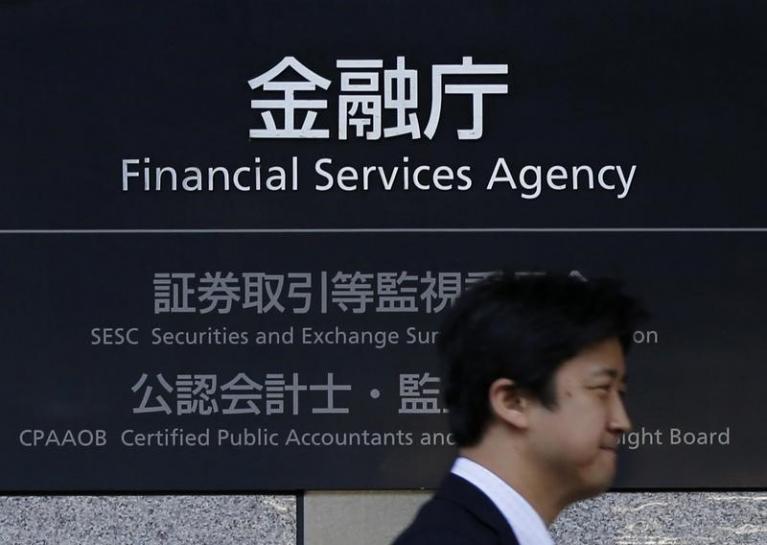
After a lengthy bankruptcy proceeding, special administrator Rollings Oliver confirms only $900,000 in segregated client accounts
Bloomberg
About 10 months after the bankruptcy procedure of Boston Prime began, the appointed special administrator Rollings Oliver is finally getting close to concluding the proceedings. Numerous obstacles have delayed the final payouts to clients - from the missing client funds, which Finance Magnates reported about in February, to lack of claims on the part of customers of the company.
A court ruling which is setting a final deadline for client claims submissions and clears the way for the repayment of some compensation to clients is showing some interesting details about Boston Prime’s bankruptcy.
Boston Prime, regulated by the U.K. Financial Conduct Authority (FCA), had been providing foreign exchange brokerage services mainly to professional clients. This automatically makes the attempts to recover funds from the Financial Services Compensation Scheme (FSCS) irrelevant, since the insurance of client funds is valid only for retail investors.
For the professional clients of the company who had been relying on the brokerage to carry on their dealings on the foreign exchange market, the fact that Boston Prime was an FCA regulated entity was enough. Unfortunately as we shall see in the coming paragraphs, there might be some serious reasons to doubt the reassurances which should come with this fact.
Special administration procedure and massive delays
An issue surfaced after 31 of these clients did not provide any information to Rollings Oliver.
As a result the court issued an order on November 30th this year outlining that there will be a final deadline for the submission of client money claims, so the bankruptcy procedure can continue in an “orderly” fashion. The hard deadline has been set for 5pm GMT on the 5th of January, 2016. After this date, Rollings Oliver intends to complete the distribution of client money to clients within 4 months.
Distribution of what? Client funds gone rogue
Speaking of the client money pool, the special administrator has identified that there isn’t much to go after. One of the lawyers appointed by Rollings Oliver on the Boston Prime case explained in his witness statement that the company has identified that only $900,344.49 in client funds were present.
Coincidentally, only two claims from the client money pool have fallen under the definition of funds protected as client money under the FCA's Client Assets Sourcebook (CASS) rules. You can already guess what the total amount which these two clients were owed was - $900,344.49.
Of the 119 clients of Boston Prime, 52 have managed to provide all of the information that was requested by the special administrators and confirmed their claims in full. As for the rest, 36 have been partially missing some information to confirm their claims, while the aforementioned 31 clients never submitted any claims.
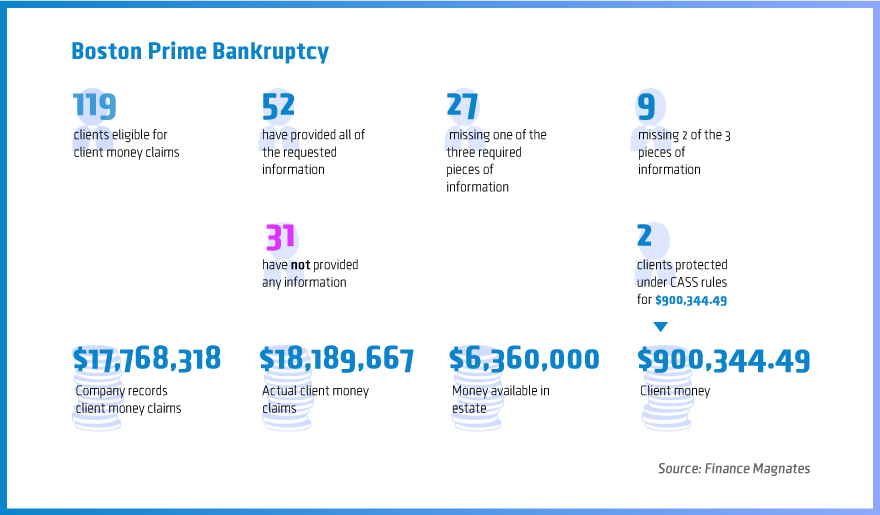
The raw numbers taken from the court case that special administrators from Rollings Oliver filed
After Rollings Oliver exhausted all possibilities of getting in touch with the clients, whose contact information was received from Popescu and Forexware LLC- which according to court documents was effectively operating the day to day business operations of the company- the special administrators failed to obtain any additional claims.
Currently, the company’s estate which is held by the special administrators totals about £4.2 million ($6.37 million). This amount includes the $900,344.49 which is already owed to the duo of mysterious clients that have been classified as protected.
In the meantime, the discrepancies don’t end here - the claims of those who have submitted their documents to Rollings Oliver total $18,189,667.21, while the company’s records state that the amount is $17,768,318.94.
The clients of Boston Prime, excluding the privileged duo, have not managed to submit the exact same amounts that the broker’s record show. The count is right only for the $900,344.49 once more. Could these be the only clients which have had adequate access to the company’s real records? Unfortunately, we are not likely to know this any time soon.
As for the rest of the clients of the company, the company’s records do not show them as having claims. They will be entitled to the total claims of the remaining funds, which are approximately $5.5 million, since the total figure of $6.37 million includes the magic $900,000, which gives them the prospect of receiving about 30 cents on every dollar they claim.
Credibility issues and food for thought
Some of the clients of Boston Prime might have incurred substantial losses to their operations, others are not willing to show that they have any claims, while having the legal right to do so. We may never know what the real reasons are behind the latter, but one thing is clear:
About 10 months after the bankruptcy procedure of Boston Prime began, the appointed special administrator Rollings Oliver is finally getting close to concluding the proceedings. Numerous obstacles have delayed the final payouts to clients - from the missing client funds, which Finance Magnates reported about in February, to lack of claims on the part of customers of the company.
A court ruling which is setting a final deadline for client claims submissions and clears the way for the repayment of some compensation to clients is showing some interesting details about Boston Prime’s bankruptcy.
Boston Prime, regulated by the U.K. Financial Conduct Authority (FCA), had been providing foreign exchange brokerage services mainly to professional clients. This automatically makes the attempts to recover funds from the Financial Services Compensation Scheme (FSCS) irrelevant, since the insurance of client funds is valid only for retail investors.
For the professional clients of the company who had been relying on the brokerage to carry on their dealings on the foreign exchange market, the fact that Boston Prime was an FCA regulated entity was enough. Unfortunately as we shall see in the coming paragraphs, there might be some serious reasons to doubt the reassurances which should come with this fact.
Special administration procedure and massive delays
An issue surfaced after 31 of these clients did not provide any information to Rollings Oliver.
As a result the court issued an order on November 30th this year outlining that there will be a final deadline for the submission of client money claims, so the bankruptcy procedure can continue in an “orderly” fashion. The hard deadline has been set for 5pm GMT on the 5th of January, 2016. After this date, Rollings Oliver intends to complete the distribution of client money to clients within 4 months.
Distribution of what? Client funds gone rogue
Speaking of the client money pool, the special administrator has identified that there isn’t much to go after. One of the lawyers appointed by Rollings Oliver on the Boston Prime case explained in his witness statement that the company has identified that only $900,344.49 in client funds were present.
Coincidentally, only two claims from the client money pool have fallen under the definition of funds protected as client money under the FCA's Client Assets Sourcebook (CASS) rules. You can already guess what the total amount which these two clients were owed was - $900,344.49.
Of the 119 clients of Boston Prime, 52 have managed to provide all of the information that was requested by the special administrators and confirmed their claims in full. As for the rest, 36 have been partially missing some information to confirm their claims, while the aforementioned 31 clients never submitted any claims.
The raw numbers taken from the court case that special administrators from Rollings Oliver filed
After Rollings Oliver exhausted all possibilities of getting in touch with the clients, whose contact information was received from Popescu and Forexware LLC- which according to court documents was effectively operating the day to day business operations of the company- the special administrators failed to obtain any additional claims.
Currently, the company’s estate which is held by the special administrators totals about £4.2 million ($6.37 million). This amount includes the $900,344.49 which is already owed to the duo of mysterious clients that have been classified as protected.
In the meantime, the discrepancies don’t end here - the claims of those who have submitted their documents to Rollings Oliver total $18,189,667.21, while the company’s records state that the amount is $17,768,318.94.
The clients of Boston Prime, excluding the privileged duo, have not managed to submit the exact same amounts that the broker’s record show. The count is right only for the $900,344.49 once more. Could these be the only clients which have had adequate access to the company’s real records? Unfortunately, we are not likely to know this any time soon.
As for the rest of the clients of the company, the company’s records do not show them as having claims. They will be entitled to the total claims of the remaining funds, which are approximately $5.5 million, since the total figure of $6.37 million includes the magic $900,000, which gives them the prospect of receiving about 30 cents on every dollar they claim.
Credibility issues and food for thought
Some of the clients of Boston Prime might have incurred substantial losses to their operations, others are not willing to show that they have any claims, while having the legal right to do so. We may never know what the real reasons are behind the latter, but one thing is clear:
iFOREX Adds Saudi and South Korean Equity CFDs as IPO Is Delayed
Featured Videos
Executive Interview | Charlotte Bullock | Chief Product Officer, Bank of London | FMLS:25
In this interview, we sat down with Charlotte Bullock, Head of Product at The Bank of London, previously at SAP and now shaping product at one of the sector’s most ambitious new banking players.
Charlotte reflects on the Summit so far and talks about the culture inside fintech banks today. We look at the pressures that come with scaling, and how firms can hold onto the nimble approach that made them stand out early on.
We also cover the state of payments ahead of her appearance on the payments roundtable: the blockages financial firms face, the areas that still need fixing, and what a realistic solution looks like in 2026.
In this interview, we sat down with Charlotte Bullock, Head of Product at The Bank of London, previously at SAP and now shaping product at one of the sector’s most ambitious new banking players.
Charlotte reflects on the Summit so far and talks about the culture inside fintech banks today. We look at the pressures that come with scaling, and how firms can hold onto the nimble approach that made them stand out early on.
We also cover the state of payments ahead of her appearance on the payments roundtable: the blockages financial firms face, the areas that still need fixing, and what a realistic solution looks like in 2026.
In this interview, we sat down with Charlotte Bullock, Head of Product at The Bank of London, previously at SAP and now shaping product at one of the sector’s most ambitious new banking players.
Charlotte reflects on the Summit so far and talks about the culture inside fintech banks today. We look at the pressures that come with scaling, and how firms can hold onto the nimble approach that made them stand out early on.
We also cover the state of payments ahead of her appearance on the payments roundtable: the blockages financial firms face, the areas that still need fixing, and what a realistic solution looks like in 2026.
In this interview, we sat down with Charlotte Bullock, Head of Product at The Bank of London, previously at SAP and now shaping product at one of the sector’s most ambitious new banking players.
Charlotte reflects on the Summit so far and talks about the culture inside fintech banks today. We look at the pressures that come with scaling, and how firms can hold onto the nimble approach that made them stand out early on.
We also cover the state of payments ahead of her appearance on the payments roundtable: the blockages financial firms face, the areas that still need fixing, and what a realistic solution looks like in 2026.
In this conversation, we sit down with Drew Niv, CSO at ATFX Connect and one of the most influential figures in modern FX.
We speak about market structure, the institutional view on liquidity, and the sharp rise of prop trading, a sector Drew has been commenting on in recent months. Drew explains why he once dismissed prop trading, why his view changed, and what he now thinks the model means for brokers, clients and risk managers.
We explore subscription-fee dependency, the high reneging rate, and the long-term challenge: how brokers can build a more stable and honest version of the model. Drew also talks about the traffic advantage standalone prop firms have built and why brokers may still win in the long run if they take the right approach.
In this conversation, we sit down with Drew Niv, CSO at ATFX Connect and one of the most influential figures in modern FX.
We speak about market structure, the institutional view on liquidity, and the sharp rise of prop trading, a sector Drew has been commenting on in recent months. Drew explains why he once dismissed prop trading, why his view changed, and what he now thinks the model means for brokers, clients and risk managers.
We explore subscription-fee dependency, the high reneging rate, and the long-term challenge: how brokers can build a more stable and honest version of the model. Drew also talks about the traffic advantage standalone prop firms have built and why brokers may still win in the long run if they take the right approach.
In this conversation, we sit down with Drew Niv, CSO at ATFX Connect and one of the most influential figures in modern FX.
We speak about market structure, the institutional view on liquidity, and the sharp rise of prop trading, a sector Drew has been commenting on in recent months. Drew explains why he once dismissed prop trading, why his view changed, and what he now thinks the model means for brokers, clients and risk managers.
We explore subscription-fee dependency, the high reneging rate, and the long-term challenge: how brokers can build a more stable and honest version of the model. Drew also talks about the traffic advantage standalone prop firms have built and why brokers may still win in the long run if they take the right approach.
In this conversation, we sit down with Drew Niv, CSO at ATFX Connect and one of the most influential figures in modern FX.
We speak about market structure, the institutional view on liquidity, and the sharp rise of prop trading, a sector Drew has been commenting on in recent months. Drew explains why he once dismissed prop trading, why his view changed, and what he now thinks the model means for brokers, clients and risk managers.
We explore subscription-fee dependency, the high reneging rate, and the long-term challenge: how brokers can build a more stable and honest version of the model. Drew also talks about the traffic advantage standalone prop firms have built and why brokers may still win in the long run if they take the right approach.
In this conversation, we sit down with Drew Niv, CSO at ATFX Connect and one of the most influential figures in modern FX.
We speak about market structure, the institutional view on liquidity, and the sharp rise of prop trading, a sector Drew has been commenting on in recent months. Drew explains why he once dismissed prop trading, why his view changed, and what he now thinks the model means for brokers, clients and risk managers.
We explore subscription-fee dependency, the high reneging rate, and the long-term challenge: how brokers can build a more stable and honest version of the model. Drew also talks about the traffic advantage standalone prop firms have built and why brokers may still win in the long run if they take the right approach.
In this conversation, we sit down with Drew Niv, CSO at ATFX Connect and one of the most influential figures in modern FX.
We speak about market structure, the institutional view on liquidity, and the sharp rise of prop trading, a sector Drew has been commenting on in recent months. Drew explains why he once dismissed prop trading, why his view changed, and what he now thinks the model means for brokers, clients and risk managers.
We explore subscription-fee dependency, the high reneging rate, and the long-term challenge: how brokers can build a more stable and honest version of the model. Drew also talks about the traffic advantage standalone prop firms have built and why brokers may still win in the long run if they take the right approach.
Executive Interview | Remonda Z. Kirketerp Møller| CEO & Founder Muinmos | FMLS:25
In this interview, Remonda Z. Kirketerp Møller, founder of Muinmos, breaks down the state of AI in regtech and what responsible adoption really looks like for brokers. We talk about rising fragmentation, the pressures around compliance accuracy, and why most firms are still in the early stages of AI maturity.
Ramanda also shares insights on regulator sandboxes, shifting expectations around accountability, and the current reality of MiCA licensing and passporting in Europe.
A concise look at where compliance, onboarding, and AI-driven processes are heading next.
In this interview, Remonda Z. Kirketerp Møller, founder of Muinmos, breaks down the state of AI in regtech and what responsible adoption really looks like for brokers. We talk about rising fragmentation, the pressures around compliance accuracy, and why most firms are still in the early stages of AI maturity.
Ramanda also shares insights on regulator sandboxes, shifting expectations around accountability, and the current reality of MiCA licensing and passporting in Europe.
A concise look at where compliance, onboarding, and AI-driven processes are heading next.
In this interview, Remonda Z. Kirketerp Møller, founder of Muinmos, breaks down the state of AI in regtech and what responsible adoption really looks like for brokers. We talk about rising fragmentation, the pressures around compliance accuracy, and why most firms are still in the early stages of AI maturity.
Ramanda also shares insights on regulator sandboxes, shifting expectations around accountability, and the current reality of MiCA licensing and passporting in Europe.
A concise look at where compliance, onboarding, and AI-driven processes are heading next.
In this interview, Remonda Z. Kirketerp Møller, founder of Muinmos, breaks down the state of AI in regtech and what responsible adoption really looks like for brokers. We talk about rising fragmentation, the pressures around compliance accuracy, and why most firms are still in the early stages of AI maturity.
Ramanda also shares insights on regulator sandboxes, shifting expectations around accountability, and the current reality of MiCA licensing and passporting in Europe.
A concise look at where compliance, onboarding, and AI-driven processes are heading next.
In this interview, Remonda Z. Kirketerp Møller, founder of Muinmos, breaks down the state of AI in regtech and what responsible adoption really looks like for brokers. We talk about rising fragmentation, the pressures around compliance accuracy, and why most firms are still in the early stages of AI maturity.
Ramanda also shares insights on regulator sandboxes, shifting expectations around accountability, and the current reality of MiCA licensing and passporting in Europe.
A concise look at where compliance, onboarding, and AI-driven processes are heading next.
In this interview, Remonda Z. Kirketerp Møller, founder of Muinmos, breaks down the state of AI in regtech and what responsible adoption really looks like for brokers. We talk about rising fragmentation, the pressures around compliance accuracy, and why most firms are still in the early stages of AI maturity.
Ramanda also shares insights on regulator sandboxes, shifting expectations around accountability, and the current reality of MiCA licensing and passporting in Europe.
A concise look at where compliance, onboarding, and AI-driven processes are heading next.
In this conversation, we speak with Aydin Bonabi, CEO and co-founder of Surveill, a firm focused on fraud detection and AI-driven compliance tools for financial institutions.
We start with Aydin’s view of the Summit and the challenges brokers face as fraud tactics grow more complex. He explains how firms can stay ahead through real-time signals, data patterns, and early-stage detection.
We also talk about AI training and why compliance teams often struggle to keep models accurate, fair, and aligned with regulatory expectations. Aydin breaks down what “good” AI training looks like inside a financial environment, including the importance of clean data, domain expertise, and human oversight.
He closes with a clear message: fraud is scaling, and so must the tools that stop it.
In this conversation, we speak with Aydin Bonabi, CEO and co-founder of Surveill, a firm focused on fraud detection and AI-driven compliance tools for financial institutions.
We start with Aydin’s view of the Summit and the challenges brokers face as fraud tactics grow more complex. He explains how firms can stay ahead through real-time signals, data patterns, and early-stage detection.
We also talk about AI training and why compliance teams often struggle to keep models accurate, fair, and aligned with regulatory expectations. Aydin breaks down what “good” AI training looks like inside a financial environment, including the importance of clean data, domain expertise, and human oversight.
He closes with a clear message: fraud is scaling, and so must the tools that stop it.
In this conversation, we speak with Aydin Bonabi, CEO and co-founder of Surveill, a firm focused on fraud detection and AI-driven compliance tools for financial institutions.
We start with Aydin’s view of the Summit and the challenges brokers face as fraud tactics grow more complex. He explains how firms can stay ahead through real-time signals, data patterns, and early-stage detection.
We also talk about AI training and why compliance teams often struggle to keep models accurate, fair, and aligned with regulatory expectations. Aydin breaks down what “good” AI training looks like inside a financial environment, including the importance of clean data, domain expertise, and human oversight.
He closes with a clear message: fraud is scaling, and so must the tools that stop it.
In this conversation, we speak with Aydin Bonabi, CEO and co-founder of Surveill, a firm focused on fraud detection and AI-driven compliance tools for financial institutions.
We start with Aydin’s view of the Summit and the challenges brokers face as fraud tactics grow more complex. He explains how firms can stay ahead through real-time signals, data patterns, and early-stage detection.
We also talk about AI training and why compliance teams often struggle to keep models accurate, fair, and aligned with regulatory expectations. Aydin breaks down what “good” AI training looks like inside a financial environment, including the importance of clean data, domain expertise, and human oversight.
He closes with a clear message: fraud is scaling, and so must the tools that stop it.
In this conversation, we speak with Aydin Bonabi, CEO and co-founder of Surveill, a firm focused on fraud detection and AI-driven compliance tools for financial institutions.
We start with Aydin’s view of the Summit and the challenges brokers face as fraud tactics grow more complex. He explains how firms can stay ahead through real-time signals, data patterns, and early-stage detection.
We also talk about AI training and why compliance teams often struggle to keep models accurate, fair, and aligned with regulatory expectations. Aydin breaks down what “good” AI training looks like inside a financial environment, including the importance of clean data, domain expertise, and human oversight.
He closes with a clear message: fraud is scaling, and so must the tools that stop it.
In this conversation, we speak with Aydin Bonabi, CEO and co-founder of Surveill, a firm focused on fraud detection and AI-driven compliance tools for financial institutions.
We start with Aydin’s view of the Summit and the challenges brokers face as fraud tactics grow more complex. He explains how firms can stay ahead through real-time signals, data patterns, and early-stage detection.
We also talk about AI training and why compliance teams often struggle to keep models accurate, fair, and aligned with regulatory expectations. Aydin breaks down what “good” AI training looks like inside a financial environment, including the importance of clean data, domain expertise, and human oversight.
He closes with a clear message: fraud is scaling, and so must the tools that stop it.
Exness expands its presence in Africa: Inside our interview with Paul Margarites in Cape Town
Finance Magnates met with Paul Margarites, Exness regional commercial director for Sub-Saharan Africa, during a visit to the firm’s office opening in Cape Town. In this talk, led by Andrea Badiola Mateos, Co-CEO at Finance Magnates, Paul shares views on the South African trading space, local user behavior, mobile trends, regulation, team growth, and how Exness plans to grow in more markets across the region. @Exness
Read the article at: https://www.financemagnates.com/thought-leadership/exness-expands-its-presence-in-africa-inside-our-interview-with-paul-margarites/
#exness #financemagnates #exnesstrading #CFDtrading #tradeonline #africanews #capetown
Finance Magnates met with Paul Margarites, Exness regional commercial director for Sub-Saharan Africa, during a visit to the firm’s office opening in Cape Town. In this talk, led by Andrea Badiola Mateos, Co-CEO at Finance Magnates, Paul shares views on the South African trading space, local user behavior, mobile trends, regulation, team growth, and how Exness plans to grow in more markets across the region. @Exness
Read the article at: https://www.financemagnates.com/thought-leadership/exness-expands-its-presence-in-africa-inside-our-interview-with-paul-margarites/
#exness #financemagnates #exnesstrading #CFDtrading #tradeonline #africanews #capetown
Finance Magnates met with Paul Margarites, Exness regional commercial director for Sub-Saharan Africa, during a visit to the firm’s office opening in Cape Town. In this talk, led by Andrea Badiola Mateos, Co-CEO at Finance Magnates, Paul shares views on the South African trading space, local user behavior, mobile trends, regulation, team growth, and how Exness plans to grow in more markets across the region. @Exness
Read the article at: https://www.financemagnates.com/thought-leadership/exness-expands-its-presence-in-africa-inside-our-interview-with-paul-margarites/
#exness #financemagnates #exnesstrading #CFDtrading #tradeonline #africanews #capetown
Finance Magnates met with Paul Margarites, Exness regional commercial director for Sub-Saharan Africa, during a visit to the firm’s office opening in Cape Town. In this talk, led by Andrea Badiola Mateos, Co-CEO at Finance Magnates, Paul shares views on the South African trading space, local user behavior, mobile trends, regulation, team growth, and how Exness plans to grow in more markets across the region. @Exness
Read the article at: https://www.financemagnates.com/thought-leadership/exness-expands-its-presence-in-africa-inside-our-interview-with-paul-margarites/
#exness #financemagnates #exnesstrading #CFDtrading #tradeonline #africanews #capetown
Finance Magnates met with Paul Margarites, Exness regional commercial director for Sub-Saharan Africa, during a visit to the firm’s office opening in Cape Town. In this talk, led by Andrea Badiola Mateos, Co-CEO at Finance Magnates, Paul shares views on the South African trading space, local user behavior, mobile trends, regulation, team growth, and how Exness plans to grow in more markets across the region. @Exness
Read the article at: https://www.financemagnates.com/thought-leadership/exness-expands-its-presence-in-africa-inside-our-interview-with-paul-margarites/
#exness #financemagnates #exnesstrading #CFDtrading #tradeonline #africanews #capetown
Finance Magnates met with Paul Margarites, Exness regional commercial director for Sub-Saharan Africa, during a visit to the firm’s office opening in Cape Town. In this talk, led by Andrea Badiola Mateos, Co-CEO at Finance Magnates, Paul shares views on the South African trading space, local user behavior, mobile trends, regulation, team growth, and how Exness plans to grow in more markets across the region. @Exness
Read the article at: https://www.financemagnates.com/thought-leadership/exness-expands-its-presence-in-africa-inside-our-interview-with-paul-margarites/
#exness #financemagnates #exnesstrading #CFDtrading #tradeonline #africanews #capetown