These three countries outdid all others in the search for monetary stability in 2015.
Bloomberg
With all of the huffing and puffing over the Greek debt which shocked the European economies, together with already existing world economic problems such as widening income inequality, persistent unemployment growth and rising pollution in the developing world, currencies worldwide have had their stability affected throughout the year. Here are my picks for the most stable currencies in 2015.
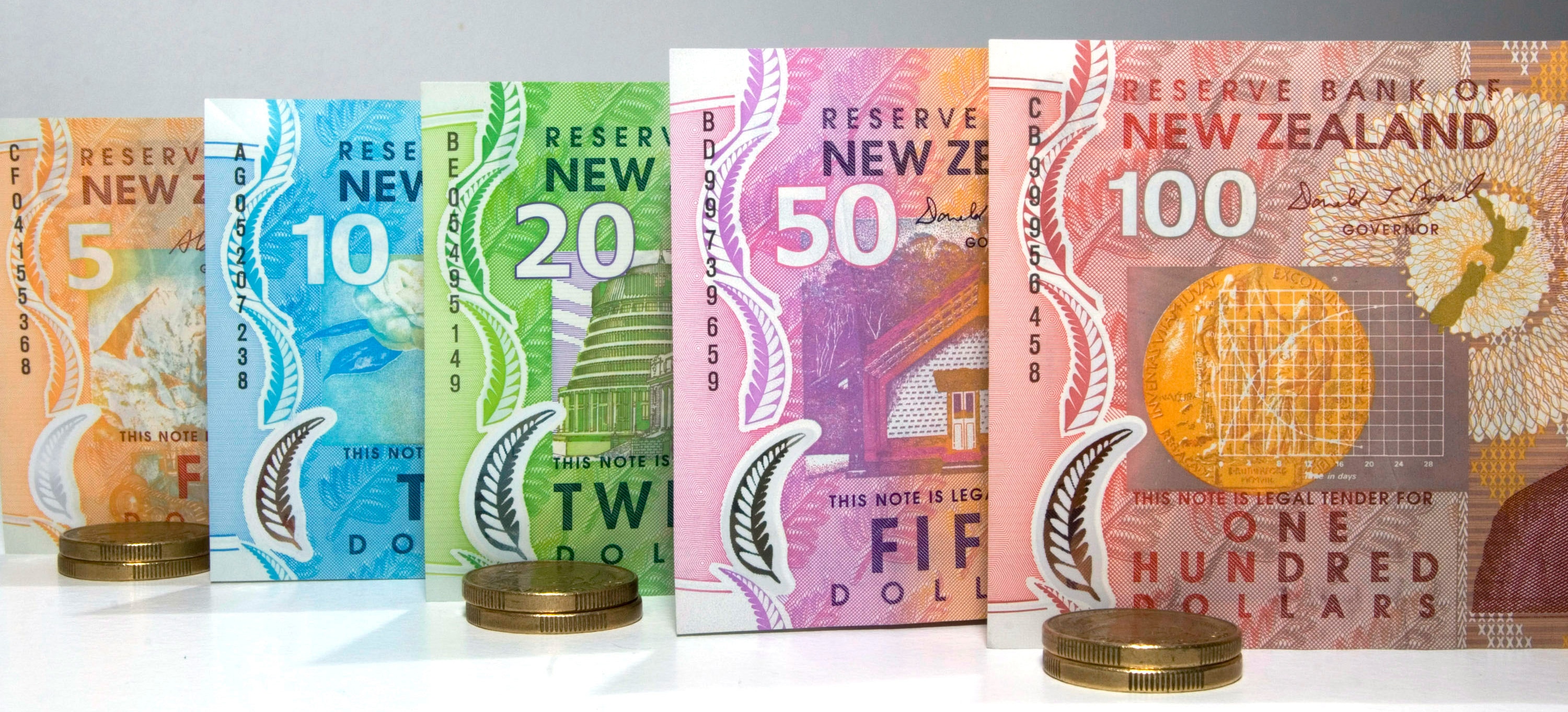
New Zealand dollar
The only time that I remember the New Zealand economy running into some trouble was during the recession in 2008-09, caused mainly by the intensification of
the GFC in 2008. Since then the New Zealand economy has made a remarkable and solid comeback, which in fact was considered to be shallow compared to the other advanced economies.
Since then, annual growth averaged 2.2% in the first quarter of 2010, and 0.9%, 0.7% and 1.0% in the first 3 quarters of 2014, which brought the annual average growth to 2.9% in the year end, which was the fastest rate of expansion in six years.
"The current PTA requires the RBNZ to maintain inflation in the range of 1% to 3% on average over the medium term, but with an additional requirement to focus on keeping future average inflation near the 2% target midpoint.” - The treasury Kaitohutohu Kaupapa Rawa
Singapore dollar
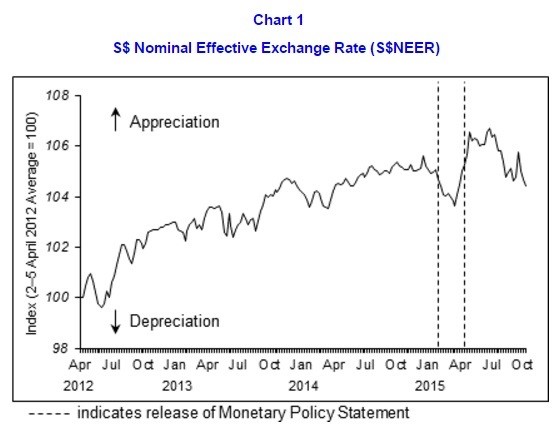
In second place I would definitely place the Singapore dollar. It was robustly maintained by MAS according to 2015 reports, and also thanks to its moderate and steady appreciation of the Singapore dollar nominal effective exchange rate (S$NEER) policy band, with no change to its slope, width and the level at which it was centered. This strategy was employed in Jan 2015 and it seems to have done the job.
Because of this strategy the Singapore economy is projected to expand modestly until the end of 2016, with growth slightly weaker than earlier envisaged. MAS Core Inflation is expected to pick up gradually over the course of 2016 towards its historical average.
Image provided by: Monetary Authority of Singapore
Hong Kong dollar
Third place goes to the Hong Kong dollar thanks to:
"Stable external exchange value of Hong Kong's currency, in terms of its exchange rate in the foreign exchange market against the US dollar, within a bank of HK$7.75 - 7.85 to US$1" - Hong Kong Monetary Authority
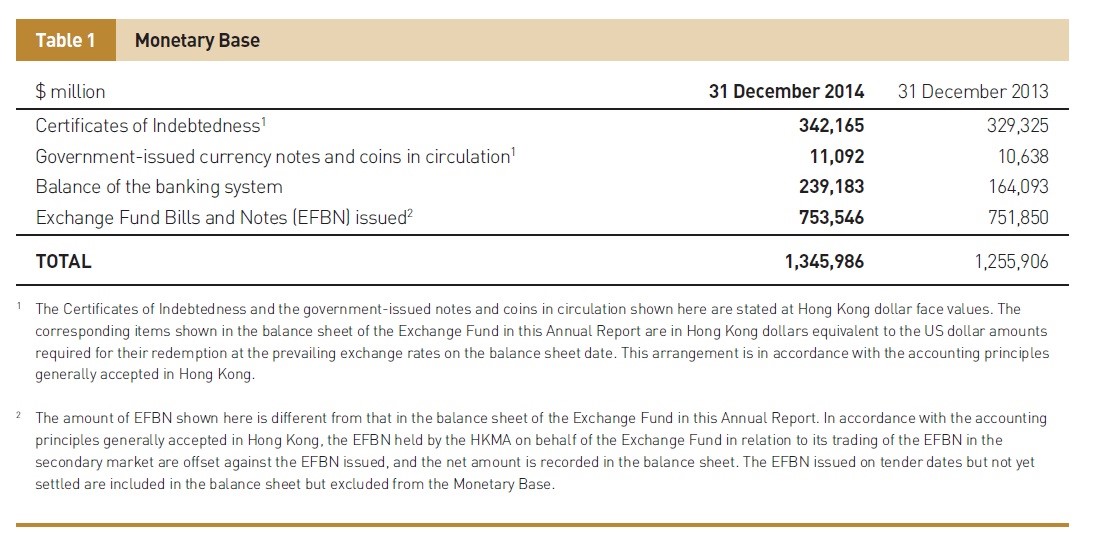
This structure is characterized by Currency Board arrangements that require the Monetary Base to be at least 100% backed by the US Dollar reserves held in the Exchange Fund , and changes in the Monetary Base to be 100% matched by corresponding changes in US dollar reserves.
Image provided by: HONG KONG MONETARY AUTHORITY
Thanks to the firm undertaking of the HKMA the steadiness of the Hong Kong dollar exchange rate is maintained through an automatic interest rate adjustment mechanism, and also the firm commitment of the HKMA to honour the Convertibility Undertakings (CUs).
" When the demand for Hong Kong dollars is greater than the supply and the market exchange rate strengthens to the strong-side CU of HK$7.75 to the US dollar, the HKMA stands ready to sell Hong Kong dollars to banks for US dollars."- Hong Kong Monetary Authority
And thus we conclude the most stable currencies in 2015. Many countries focus on currency stability in their monetary policy because it offers security, allowing the government to plan for the future, and also benefits businesses that are stimulated to invest more thanks to the decrease in uncertainty. These three countries outdid all others in the search for stability in 2015.
With all of the huffing and puffing over the Greek debt which shocked the European economies, together with already existing world economic problems such as widening income inequality, persistent unemployment growth and rising pollution in the developing world, currencies worldwide have had their stability affected throughout the year. Here are my picks for the most stable currencies in 2015.
New Zealand dollar
The only time that I remember the New Zealand economy running into some trouble was during the recession in 2008-09, caused mainly by the intensification of
the GFC in 2008. Since then the New Zealand economy has made a remarkable and solid comeback, which in fact was considered to be shallow compared to the other advanced economies.
Since then, annual growth averaged 2.2% in the first quarter of 2010, and 0.9%, 0.7% and 1.0% in the first 3 quarters of 2014, which brought the annual average growth to 2.9% in the year end, which was the fastest rate of expansion in six years.
"The current PTA requires the RBNZ to maintain inflation in the range of 1% to 3% on average over the medium term, but with an additional requirement to focus on keeping future average inflation near the 2% target midpoint.” - The treasury Kaitohutohu Kaupapa Rawa
Singapore dollar
In second place I would definitely place the Singapore dollar. It was robustly maintained by MAS according to 2015 reports, and also thanks to its moderate and steady appreciation of the Singapore dollar nominal effective exchange rate (S$NEER) policy band, with no change to its slope, width and the level at which it was centered. This strategy was employed in Jan 2015 and it seems to have done the job.
Because of this strategy the Singapore economy is projected to expand modestly until the end of 2016, with growth slightly weaker than earlier envisaged. MAS Core Inflation is expected to pick up gradually over the course of 2016 towards its historical average.
Image provided by: Monetary Authority of Singapore
Hong Kong dollar
Third place goes to the Hong Kong dollar thanks to:
"Stable external exchange value of Hong Kong's currency, in terms of its exchange rate in the foreign exchange market against the US dollar, within a bank of HK$7.75 - 7.85 to US$1" - Hong Kong Monetary Authority
This structure is characterized by Currency Board arrangements that require the Monetary Base to be at least 100% backed by the US Dollar reserves held in the Exchange Fund , and changes in the Monetary Base to be 100% matched by corresponding changes in US dollar reserves.
Image provided by: HONG KONG MONETARY AUTHORITY
Thanks to the firm undertaking of the HKMA the steadiness of the Hong Kong dollar exchange rate is maintained through an automatic interest rate adjustment mechanism, and also the firm commitment of the HKMA to honour the Convertibility Undertakings (CUs).
" When the demand for Hong Kong dollars is greater than the supply and the market exchange rate strengthens to the strong-side CU of HK$7.75 to the US dollar, the HKMA stands ready to sell Hong Kong dollars to banks for US dollars."- Hong Kong Monetary Authority
And thus we conclude the most stable currencies in 2015. Many countries focus on currency stability in their monetary policy because it offers security, allowing the government to plan for the future, and also benefits businesses that are stimulated to invest more thanks to the decrease in uncertainty. These three countries outdid all others in the search for stability in 2015.
FCA Points to Account Closures and Affiliate Cuts as Consumer Duty Good Practice
Featured Videos
FM Daily Brief – 27 July 2026
FM Daily Brief – 27 July 2026
FM Daily Brief – 27 July 2026
FM Daily Brief – 27 July 2026
Today's Monday, the 27th of July 2026, and these are our main stories: iFOREX reports stronger client growth despite currency headwinds, BlackBull's New Zealand business expands, and the FCA highlights Consumer Duty good practice.
Today's Monday, the 27th of July 2026, and these are our main stories: iFOREX reports stronger client growth despite currency headwinds, BlackBull's New Zealand business expands, and the FCA highlights Consumer Duty good practice.
Today's Monday, the 27th of July 2026, and these are our main stories: iFOREX reports stronger client growth despite currency headwinds, BlackBull's New Zealand business expands, and the FCA highlights Consumer Duty good practice.
Today's Monday, the 27th of July 2026, and these are our main stories: iFOREX reports stronger client growth despite currency headwinds, BlackBull's New Zealand business expands, and the FCA highlights Consumer Duty good practice.
Today's Friday, the 24th of July 2026, and these are our main stories: the FCA finds major gaps in anti-money laundering controls at alternative asset managers, Wise shares tumble after a US banking licence setback, and Google's EU fines could benefit fintech apps.
Today's Friday, the 24th of July 2026, and these are our main stories: the FCA finds major gaps in anti-money laundering controls at alternative asset managers, Wise shares tumble after a US banking licence setback, and Google's EU fines could benefit fintech apps.
Today's Friday, the 24th of July 2026, and these are our main stories: the FCA finds major gaps in anti-money laundering controls at alternative asset managers, Wise shares tumble after a US banking licence setback, and Google's EU fines could benefit fintech apps.
Today's Friday, the 24th of July 2026, and these are our main stories: the FCA finds major gaps in anti-money laundering controls at alternative asset managers, Wise shares tumble after a US banking licence setback, and Google's EU fines could benefit fintech apps.
Today's Friday, the 24th of July 2026, and these are our main stories: the FCA finds major gaps in anti-money laundering controls at alternative asset managers, Wise shares tumble after a US banking licence setback, and Google's EU fines could benefit fintech apps.
Today's Friday, the 24th of July 2026, and these are our main stories: the FCA finds major gaps in anti-money laundering controls at alternative asset managers, Wise shares tumble after a US banking licence setback, and Google's EU fines could benefit fintech apps.
FM Daily Brief – 23 July 2026
FM Daily Brief – 23 July 2026
FM Daily Brief – 23 July 2026
FM Daily Brief – 23 July 2026
FM Daily Brief – 23 July 2026
FM Daily Brief – 23 July 2026
Today's Thursday, the 23rd of July 2026, and these are our main stories: BitMEX announces it will shut down its crypto trading platform, the Financial Commission launches a certification programme for prop firms, and the SEC settles a records lawsuit with Coinbase.
Today's Thursday, the 23rd of July 2026, and these are our main stories: BitMEX announces it will shut down its crypto trading platform, the Financial Commission launches a certification programme for prop firms, and the SEC settles a records lawsuit with Coinbase.
Today's Thursday, the 23rd of July 2026, and these are our main stories: BitMEX announces it will shut down its crypto trading platform, the Financial Commission launches a certification programme for prop firms, and the SEC settles a records lawsuit with Coinbase.
Today's Thursday, the 23rd of July 2026, and these are our main stories: BitMEX announces it will shut down its crypto trading platform, the Financial Commission launches a certification programme for prop firms, and the SEC settles a records lawsuit with Coinbase.
Today's Thursday, the 23rd of July 2026, and these are our main stories: BitMEX announces it will shut down its crypto trading platform, the Financial Commission launches a certification programme for prop firms, and the SEC settles a records lawsuit with Coinbase.
Today's Thursday, the 23rd of July 2026, and these are our main stories: BitMEX announces it will shut down its crypto trading platform, the Financial Commission launches a certification programme for prop firms, and the SEC settles a records lawsuit with Coinbase.
FM Daily Brief – 22 July 2026
FM Daily Brief – 22 July 2026
FM Daily Brief – 22 July 2026
FM Daily Brief – 22 July 2026
FM Daily Brief – 22 July 2026
FM Daily Brief – 22 July 2026
Today's Wednesday, the 22nd of July 2026, and these are our main stories: retail CFD broker trading volumes ease in the second quarter, Interactive Brokers posts strong quarterly results, and tastytrade faces a Finra fine.
Today's Wednesday, the 22nd of July 2026, and these are our main stories: retail CFD broker trading volumes ease in the second quarter, Interactive Brokers posts strong quarterly results, and tastytrade faces a Finra fine.
Today's Wednesday, the 22nd of July 2026, and these are our main stories: retail CFD broker trading volumes ease in the second quarter, Interactive Brokers posts strong quarterly results, and tastytrade faces a Finra fine.
Today's Wednesday, the 22nd of July 2026, and these are our main stories: retail CFD broker trading volumes ease in the second quarter, Interactive Brokers posts strong quarterly results, and tastytrade faces a Finra fine.
Today's Wednesday, the 22nd of July 2026, and these are our main stories: retail CFD broker trading volumes ease in the second quarter, Interactive Brokers posts strong quarterly results, and tastytrade faces a Finra fine.
Today's Wednesday, the 22nd of July 2026, and these are our main stories: retail CFD broker trading volumes ease in the second quarter, Interactive Brokers posts strong quarterly results, and tastytrade faces a Finra fine.
FM Daily Brief – 21 July 2026
FM Daily Brief – 21 July 2026
FM Daily Brief – 21 July 2026
FM Daily Brief – 21 July 2026
FM Daily Brief – 21 July 2026
FM Daily Brief – 21 July 2026
Today's Tuesday, the 21st of July 2026, and these are our main stories: has BDSwiss’s offshore been shuttered? Esma reports strong growth in cross border retail investing across Europe, and the London Stock Exchange plans overnight trading.
Today's Tuesday, the 21st of July 2026, and these are our main stories: has BDSwiss’s offshore been shuttered? Esma reports strong growth in cross border retail investing across Europe, and the London Stock Exchange plans overnight trading.
Today's Tuesday, the 21st of July 2026, and these are our main stories: has BDSwiss’s offshore been shuttered? Esma reports strong growth in cross border retail investing across Europe, and the London Stock Exchange plans overnight trading.
Today's Tuesday, the 21st of July 2026, and these are our main stories: has BDSwiss’s offshore been shuttered? Esma reports strong growth in cross border retail investing across Europe, and the London Stock Exchange plans overnight trading.
Today's Tuesday, the 21st of July 2026, and these are our main stories: has BDSwiss’s offshore been shuttered? Esma reports strong growth in cross border retail investing across Europe, and the London Stock Exchange plans overnight trading.
Today's Tuesday, the 21st of July 2026, and these are our main stories: has BDSwiss’s offshore been shuttered? Esma reports strong growth in cross border retail investing across Europe, and the London Stock Exchange plans overnight trading.