James Hughes, eToro's Chief Market Analyst, provides a glance into the company's 2015 ambitions and utilities offered to clients.
Finance Magnates spoke with James Hughes, Chief Market Analyst at eToro, for his perspective on the number of personnel developments at the broker, along with the firm’s social capabilities. His in depth interview can be read in full below.
1. Can you describe some of the personnel moves at eToro lately? Is this part of a broader trend?
It’s been a pretty crazy start of the year. There is a real impetus for eToro to grow and as a company it has been growing pretty massively for the past few years or so. What we want to do is grow organically in London as well, namely push the operation in terms of what we can do in UK.
Overall, the UK is still our largest area – that's where our clients are and that's where our presence will be largest. The idea is to build up the office there and bolster our presence here in UK. Alternatively, there has also been a lot of growth in Tel Aviv, though despite obvious leaps in technology we still are aiming to have a larger operation in the UK as it's the financial capital of the world.
When I came to eToro there were a lot of clients and users, now we have around four million users on the OpenBook, which is an absolutely massive number. Taken together, that access and many people wanting to use what we are creating, necessitates more personnel. Our operations are dynamic and we have to move and grow with the times and this is ultimately the next step to be taken. At the end of the day, I think eToro can revolutionize the stagnant industry.
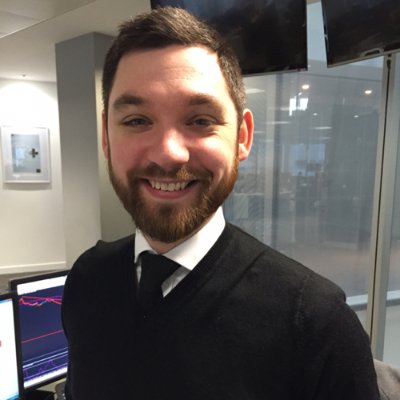
James Hughes, Chief Market Analyst, eToro
2. In what ways can eToro revolutionize the industry?
One area is definitely in the social and copy side of things. This is what the industry has been crying out for, for some time. I have been in the retail trading industry for thirteen years, and in that time I’ve seen things changed and crises come and go in terms of the markets.
In addition, platforms change, etc. however, what we have at the moment with eToro is that one thing has never changed from our client’s view. They want their hand held, i.e. they want insight in what to trade and how to trade it.
Of course, the majority of brokers won't tell you this, after all they can't. eToro does not have the advisory licenses to give that advice as specific as buy this or sell that, but we do have a four million strong community. As such, you have one aggregate unit to help clients or traders out, think the same way as others and in turn want to make same decisions as what others have.
The ability to have the answers already in the community from likeminded people thinking in unison is something that clients have wanted for a long time. A lot of brokers will tell you that their business is trader against the broker, almost like playing against the house with a casino, or that it's a case of a broker making money versus the trader. However, this is generalizing and a lot of this view is not true, as most brokers want you to have money in your account.
Moreover, what this does in terms of copy aspects and what goes on in this space ultimately doesn’t matter in eToro’s point of view. We want successful traders and everything at eToro is geared to clients doing well and getting enjoyment out of this experience. We believe this is revolutionary in this industry having tried so hard to implement such views.
3. How active do you expect to be on eToro’s network since it is a social broker and in what ways does it operate differently than Alpari?
I think as a sheer number standpoint, given users and clients in the network, we have the ability to be incredibly powerful in this area. The key thing about what we do is not the platform itself, which is our selling point to what eToro does, but rather our clients. The people run it and are at the center at what the company does and what the company needs. Without clients constantly incoming and growing there won’t be the impact.
I think there will be a big move and big impact, namely in the UK. We already have clients and users in terms of the UK and Europe; of course these are the biggest places for us. However, we want to aggressively implement some PR and marketing behind our plans and for people to know what we do. This will serve to educate and build our brand, i.e. sustain and continue to keep growing and make a mark with our prospective client base.
At Alpari UK, I would look at other brokers and say to myself why would I open an account at Alpari UK when I could open an account elsewhere? Is there a reason? After all, everyone uses Mt4. The platform was the only difference and the platforms do the same thing. At eToro, our platform draws on a community four million strong.
Still, there has to be a balance of social trading and copying – there has to be a trading broker and trading company not just a social broker. What is requisite is that we have a symbiotic social component and trading platform.
The good thing with Alpari UK is that we realized there were problems and that through introspection we realized what we could to do improve user experiences. We also realized, unfortunately too late, that we needed to implement changes to maintain ourselves in that respect. The tragedy of the timing was that Alpari UK was at the peak of its business prior to the insolvency for we were definitely moving in the right direction.
4. Will you be engaging with users directly, answering their questions?
Yes, a big part of what we do is boosting the profile of eToro in the media, etc., but also to be helpful to the community itself. This is at the heart of what eToro stands for, the community.
Everything at eToro is about transparency and my OpenBook profile is my trading account for example. I will be putting my own opinions, market opinions, etc., though not trading tips from a compliance point of view. Ultimately, we want to help out people who have questions and what to trade.
Sometimes it's not even questions, but rather people wanting confirmation that what they are doing is the right or wrong thing and that's what we are out the to do, and sharing ideas. My account on OpenBook is just another user on this social network and I want more help as we all want to grow. If what I do is not good or people don't like it then they won't follow me – it’s organic and if I do what people want then people will follow me the community.
5. Can you give any details about eToro’s prospective launch of a new version of its OpenBook platform?
The key thing and major goal is the launch of our new platform. The OpenBook and social platforms are two separate entities. The new eToro launch will bring everything together, i.e. copytrading, trading platform, everything in under one roof. We have developed things like charting, watch lists, other analytical tools, reliability, and what is within the platform.
We have put these two platforms together ultimately, and you have at your disposal utilities form both sides. This is the key driver, to get this launched and pushed. Additionally, our goal in 2015 is to let UK prospective clients know we are here.
We want the presence in the UK to be a big one, as it’s our biggest region. Financial companies or trading brokers, whomever they may be, the UK is the global nexus. We have to maintain and culture a big presence here, so this is another one of the goals.
Everyone knows eToro has the ability and software to shake this industry, and people thought this would happen before and for whatever reason it hasn't materialized yet. Now there is, from top to bottom, at the company, a full backing to push this and never a better time to do this in the industry. Everyone is so worried about regulation and what is around the corner that there has never been a better opportunity to push something different.
Finance Magnates spoke with James Hughes, Chief Market Analyst at eToro, for his perspective on the number of personnel developments at the broker, along with the firm’s social capabilities. His in depth interview can be read in full below.
1. Can you describe some of the personnel moves at eToro lately? Is this part of a broader trend?
It’s been a pretty crazy start of the year. There is a real impetus for eToro to grow and as a company it has been growing pretty massively for the past few years or so. What we want to do is grow organically in London as well, namely push the operation in terms of what we can do in UK.
Overall, the UK is still our largest area – that's where our clients are and that's where our presence will be largest. The idea is to build up the office there and bolster our presence here in UK. Alternatively, there has also been a lot of growth in Tel Aviv, though despite obvious leaps in technology we still are aiming to have a larger operation in the UK as it's the financial capital of the world.
When I came to eToro there were a lot of clients and users, now we have around four million users on the OpenBook, which is an absolutely massive number. Taken together, that access and many people wanting to use what we are creating, necessitates more personnel. Our operations are dynamic and we have to move and grow with the times and this is ultimately the next step to be taken. At the end of the day, I think eToro can revolutionize the stagnant industry.
James Hughes, Chief Market Analyst, eToro
2. In what ways can eToro revolutionize the industry?
One area is definitely in the social and copy side of things. This is what the industry has been crying out for, for some time. I have been in the retail trading industry for thirteen years, and in that time I’ve seen things changed and crises come and go in terms of the markets.
In addition, platforms change, etc. however, what we have at the moment with eToro is that one thing has never changed from our client’s view. They want their hand held, i.e. they want insight in what to trade and how to trade it.
Of course, the majority of brokers won't tell you this, after all they can't. eToro does not have the advisory licenses to give that advice as specific as buy this or sell that, but we do have a four million strong community. As such, you have one aggregate unit to help clients or traders out, think the same way as others and in turn want to make same decisions as what others have.
The ability to have the answers already in the community from likeminded people thinking in unison is something that clients have wanted for a long time. A lot of brokers will tell you that their business is trader against the broker, almost like playing against the house with a casino, or that it's a case of a broker making money versus the trader. However, this is generalizing and a lot of this view is not true, as most brokers want you to have money in your account.
Moreover, what this does in terms of copy aspects and what goes on in this space ultimately doesn’t matter in eToro’s point of view. We want successful traders and everything at eToro is geared to clients doing well and getting enjoyment out of this experience. We believe this is revolutionary in this industry having tried so hard to implement such views.
3. How active do you expect to be on eToro’s network since it is a social broker and in what ways does it operate differently than Alpari?
I think as a sheer number standpoint, given users and clients in the network, we have the ability to be incredibly powerful in this area. The key thing about what we do is not the platform itself, which is our selling point to what eToro does, but rather our clients. The people run it and are at the center at what the company does and what the company needs. Without clients constantly incoming and growing there won’t be the impact.
I think there will be a big move and big impact, namely in the UK. We already have clients and users in terms of the UK and Europe; of course these are the biggest places for us. However, we want to aggressively implement some PR and marketing behind our plans and for people to know what we do. This will serve to educate and build our brand, i.e. sustain and continue to keep growing and make a mark with our prospective client base.
At Alpari UK, I would look at other brokers and say to myself why would I open an account at Alpari UK when I could open an account elsewhere? Is there a reason? After all, everyone uses Mt4. The platform was the only difference and the platforms do the same thing. At eToro, our platform draws on a community four million strong.
Still, there has to be a balance of social trading and copying – there has to be a trading broker and trading company not just a social broker. What is requisite is that we have a symbiotic social component and trading platform.
The good thing with Alpari UK is that we realized there were problems and that through introspection we realized what we could to do improve user experiences. We also realized, unfortunately too late, that we needed to implement changes to maintain ourselves in that respect. The tragedy of the timing was that Alpari UK was at the peak of its business prior to the insolvency for we were definitely moving in the right direction.
4. Will you be engaging with users directly, answering their questions?
Yes, a big part of what we do is boosting the profile of eToro in the media, etc., but also to be helpful to the community itself. This is at the heart of what eToro stands for, the community.
Everything at eToro is about transparency and my OpenBook profile is my trading account for example. I will be putting my own opinions, market opinions, etc., though not trading tips from a compliance point of view. Ultimately, we want to help out people who have questions and what to trade.
Sometimes it's not even questions, but rather people wanting confirmation that what they are doing is the right or wrong thing and that's what we are out the to do, and sharing ideas. My account on OpenBook is just another user on this social network and I want more help as we all want to grow. If what I do is not good or people don't like it then they won't follow me – it’s organic and if I do what people want then people will follow me the community.
5. Can you give any details about eToro’s prospective launch of a new version of its OpenBook platform?
The key thing and major goal is the launch of our new platform. The OpenBook and social platforms are two separate entities. The new eToro launch will bring everything together, i.e. copytrading, trading platform, everything in under one roof. We have developed things like charting, watch lists, other analytical tools, reliability, and what is within the platform.
We have put these two platforms together ultimately, and you have at your disposal utilities form both sides. This is the key driver, to get this launched and pushed. Additionally, our goal in 2015 is to let UK prospective clients know we are here.
We want the presence in the UK to be a big one, as it’s our biggest region. Financial companies or trading brokers, whomever they may be, the UK is the global nexus. We have to maintain and culture a big presence here, so this is another one of the goals.
Everyone knows eToro has the ability and software to shake this industry, and people thought this would happen before and for whatever reason it hasn't materialized yet. Now there is, from top to bottom, at the company, a full backing to push this and never a better time to do this in the industry. Everyone is so worried about regulation and what is around the corner that there has never been a better opportunity to push something different.
Bank of London Product Head: “Clients Don’t Want to Wait for Cutoff Times” On-Chain
Featured Videos
Executive Interview | Charlotte Bullock | Chief Product Officer, Bank of London | FMLS:25
In this interview, we sat down with Charlotte Bullock, Head of Product at The Bank of London, previously at SAP and now shaping product at one of the sector’s most ambitious new banking players.
Charlotte reflects on the Summit so far and talks about the culture inside fintech banks today. We look at the pressures that come with scaling, and how firms can hold onto the nimble approach that made them stand out early on.
We also cover the state of payments ahead of her appearance on the payments roundtable: the blockages financial firms face, the areas that still need fixing, and what a realistic solution looks like in 2026.
In this interview, we sat down with Charlotte Bullock, Head of Product at The Bank of London, previously at SAP and now shaping product at one of the sector’s most ambitious new banking players.
Charlotte reflects on the Summit so far and talks about the culture inside fintech banks today. We look at the pressures that come with scaling, and how firms can hold onto the nimble approach that made them stand out early on.
We also cover the state of payments ahead of her appearance on the payments roundtable: the blockages financial firms face, the areas that still need fixing, and what a realistic solution looks like in 2026.
In this interview, we sat down with Charlotte Bullock, Head of Product at The Bank of London, previously at SAP and now shaping product at one of the sector’s most ambitious new banking players.
Charlotte reflects on the Summit so far and talks about the culture inside fintech banks today. We look at the pressures that come with scaling, and how firms can hold onto the nimble approach that made them stand out early on.
We also cover the state of payments ahead of her appearance on the payments roundtable: the blockages financial firms face, the areas that still need fixing, and what a realistic solution looks like in 2026.
In this interview, we sat down with Charlotte Bullock, Head of Product at The Bank of London, previously at SAP and now shaping product at one of the sector’s most ambitious new banking players.
Charlotte reflects on the Summit so far and talks about the culture inside fintech banks today. We look at the pressures that come with scaling, and how firms can hold onto the nimble approach that made them stand out early on.
We also cover the state of payments ahead of her appearance on the payments roundtable: the blockages financial firms face, the areas that still need fixing, and what a realistic solution looks like in 2026.
In this conversation, we sit down with Drew Niv, CSO at ATFX Connect and one of the most influential figures in modern FX.
We speak about market structure, the institutional view on liquidity, and the sharp rise of prop trading, a sector Drew has been commenting on in recent months. Drew explains why he once dismissed prop trading, why his view changed, and what he now thinks the model means for brokers, clients and risk managers.
We explore subscription-fee dependency, the high reneging rate, and the long-term challenge: how brokers can build a more stable and honest version of the model. Drew also talks about the traffic advantage standalone prop firms have built and why brokers may still win in the long run if they take the right approach.
In this conversation, we sit down with Drew Niv, CSO at ATFX Connect and one of the most influential figures in modern FX.
We speak about market structure, the institutional view on liquidity, and the sharp rise of prop trading, a sector Drew has been commenting on in recent months. Drew explains why he once dismissed prop trading, why his view changed, and what he now thinks the model means for brokers, clients and risk managers.
We explore subscription-fee dependency, the high reneging rate, and the long-term challenge: how brokers can build a more stable and honest version of the model. Drew also talks about the traffic advantage standalone prop firms have built and why brokers may still win in the long run if they take the right approach.
In this conversation, we sit down with Drew Niv, CSO at ATFX Connect and one of the most influential figures in modern FX.
We speak about market structure, the institutional view on liquidity, and the sharp rise of prop trading, a sector Drew has been commenting on in recent months. Drew explains why he once dismissed prop trading, why his view changed, and what he now thinks the model means for brokers, clients and risk managers.
We explore subscription-fee dependency, the high reneging rate, and the long-term challenge: how brokers can build a more stable and honest version of the model. Drew also talks about the traffic advantage standalone prop firms have built and why brokers may still win in the long run if they take the right approach.
In this conversation, we sit down with Drew Niv, CSO at ATFX Connect and one of the most influential figures in modern FX.
We speak about market structure, the institutional view on liquidity, and the sharp rise of prop trading, a sector Drew has been commenting on in recent months. Drew explains why he once dismissed prop trading, why his view changed, and what he now thinks the model means for brokers, clients and risk managers.
We explore subscription-fee dependency, the high reneging rate, and the long-term challenge: how brokers can build a more stable and honest version of the model. Drew also talks about the traffic advantage standalone prop firms have built and why brokers may still win in the long run if they take the right approach.
In this conversation, we sit down with Drew Niv, CSO at ATFX Connect and one of the most influential figures in modern FX.
We speak about market structure, the institutional view on liquidity, and the sharp rise of prop trading, a sector Drew has been commenting on in recent months. Drew explains why he once dismissed prop trading, why his view changed, and what he now thinks the model means for brokers, clients and risk managers.
We explore subscription-fee dependency, the high reneging rate, and the long-term challenge: how brokers can build a more stable and honest version of the model. Drew also talks about the traffic advantage standalone prop firms have built and why brokers may still win in the long run if they take the right approach.
In this conversation, we sit down with Drew Niv, CSO at ATFX Connect and one of the most influential figures in modern FX.
We speak about market structure, the institutional view on liquidity, and the sharp rise of prop trading, a sector Drew has been commenting on in recent months. Drew explains why he once dismissed prop trading, why his view changed, and what he now thinks the model means for brokers, clients and risk managers.
We explore subscription-fee dependency, the high reneging rate, and the long-term challenge: how brokers can build a more stable and honest version of the model. Drew also talks about the traffic advantage standalone prop firms have built and why brokers may still win in the long run if they take the right approach.
Executive Interview | Remonda Z. Kirketerp Møller| CEO & Founder Muinmos | FMLS:25
In this interview, Remonda Z. Kirketerp Møller, founder of Muinmos, breaks down the state of AI in regtech and what responsible adoption really looks like for brokers. We talk about rising fragmentation, the pressures around compliance accuracy, and why most firms are still in the early stages of AI maturity.
Ramanda also shares insights on regulator sandboxes, shifting expectations around accountability, and the current reality of MiCA licensing and passporting in Europe.
A concise look at where compliance, onboarding, and AI-driven processes are heading next.
In this interview, Remonda Z. Kirketerp Møller, founder of Muinmos, breaks down the state of AI in regtech and what responsible adoption really looks like for brokers. We talk about rising fragmentation, the pressures around compliance accuracy, and why most firms are still in the early stages of AI maturity.
Ramanda also shares insights on regulator sandboxes, shifting expectations around accountability, and the current reality of MiCA licensing and passporting in Europe.
A concise look at where compliance, onboarding, and AI-driven processes are heading next.
In this interview, Remonda Z. Kirketerp Møller, founder of Muinmos, breaks down the state of AI in regtech and what responsible adoption really looks like for brokers. We talk about rising fragmentation, the pressures around compliance accuracy, and why most firms are still in the early stages of AI maturity.
Ramanda also shares insights on regulator sandboxes, shifting expectations around accountability, and the current reality of MiCA licensing and passporting in Europe.
A concise look at where compliance, onboarding, and AI-driven processes are heading next.
In this interview, Remonda Z. Kirketerp Møller, founder of Muinmos, breaks down the state of AI in regtech and what responsible adoption really looks like for brokers. We talk about rising fragmentation, the pressures around compliance accuracy, and why most firms are still in the early stages of AI maturity.
Ramanda also shares insights on regulator sandboxes, shifting expectations around accountability, and the current reality of MiCA licensing and passporting in Europe.
A concise look at where compliance, onboarding, and AI-driven processes are heading next.
In this interview, Remonda Z. Kirketerp Møller, founder of Muinmos, breaks down the state of AI in regtech and what responsible adoption really looks like for brokers. We talk about rising fragmentation, the pressures around compliance accuracy, and why most firms are still in the early stages of AI maturity.
Ramanda also shares insights on regulator sandboxes, shifting expectations around accountability, and the current reality of MiCA licensing and passporting in Europe.
A concise look at where compliance, onboarding, and AI-driven processes are heading next.
In this interview, Remonda Z. Kirketerp Møller, founder of Muinmos, breaks down the state of AI in regtech and what responsible adoption really looks like for brokers. We talk about rising fragmentation, the pressures around compliance accuracy, and why most firms are still in the early stages of AI maturity.
Ramanda also shares insights on regulator sandboxes, shifting expectations around accountability, and the current reality of MiCA licensing and passporting in Europe.
A concise look at where compliance, onboarding, and AI-driven processes are heading next.
In this conversation, we speak with Aydin Bonabi, CEO and co-founder of Surveill, a firm focused on fraud detection and AI-driven compliance tools for financial institutions.
We start with Aydin’s view of the Summit and the challenges brokers face as fraud tactics grow more complex. He explains how firms can stay ahead through real-time signals, data patterns, and early-stage detection.
We also talk about AI training and why compliance teams often struggle to keep models accurate, fair, and aligned with regulatory expectations. Aydin breaks down what “good” AI training looks like inside a financial environment, including the importance of clean data, domain expertise, and human oversight.
He closes with a clear message: fraud is scaling, and so must the tools that stop it.
In this conversation, we speak with Aydin Bonabi, CEO and co-founder of Surveill, a firm focused on fraud detection and AI-driven compliance tools for financial institutions.
We start with Aydin’s view of the Summit and the challenges brokers face as fraud tactics grow more complex. He explains how firms can stay ahead through real-time signals, data patterns, and early-stage detection.
We also talk about AI training and why compliance teams often struggle to keep models accurate, fair, and aligned with regulatory expectations. Aydin breaks down what “good” AI training looks like inside a financial environment, including the importance of clean data, domain expertise, and human oversight.
He closes with a clear message: fraud is scaling, and so must the tools that stop it.
In this conversation, we speak with Aydin Bonabi, CEO and co-founder of Surveill, a firm focused on fraud detection and AI-driven compliance tools for financial institutions.
We start with Aydin’s view of the Summit and the challenges brokers face as fraud tactics grow more complex. He explains how firms can stay ahead through real-time signals, data patterns, and early-stage detection.
We also talk about AI training and why compliance teams often struggle to keep models accurate, fair, and aligned with regulatory expectations. Aydin breaks down what “good” AI training looks like inside a financial environment, including the importance of clean data, domain expertise, and human oversight.
He closes with a clear message: fraud is scaling, and so must the tools that stop it.
In this conversation, we speak with Aydin Bonabi, CEO and co-founder of Surveill, a firm focused on fraud detection and AI-driven compliance tools for financial institutions.
We start with Aydin’s view of the Summit and the challenges brokers face as fraud tactics grow more complex. He explains how firms can stay ahead through real-time signals, data patterns, and early-stage detection.
We also talk about AI training and why compliance teams often struggle to keep models accurate, fair, and aligned with regulatory expectations. Aydin breaks down what “good” AI training looks like inside a financial environment, including the importance of clean data, domain expertise, and human oversight.
He closes with a clear message: fraud is scaling, and so must the tools that stop it.
In this conversation, we speak with Aydin Bonabi, CEO and co-founder of Surveill, a firm focused on fraud detection and AI-driven compliance tools for financial institutions.
We start with Aydin’s view of the Summit and the challenges brokers face as fraud tactics grow more complex. He explains how firms can stay ahead through real-time signals, data patterns, and early-stage detection.
We also talk about AI training and why compliance teams often struggle to keep models accurate, fair, and aligned with regulatory expectations. Aydin breaks down what “good” AI training looks like inside a financial environment, including the importance of clean data, domain expertise, and human oversight.
He closes with a clear message: fraud is scaling, and so must the tools that stop it.
In this conversation, we speak with Aydin Bonabi, CEO and co-founder of Surveill, a firm focused on fraud detection and AI-driven compliance tools for financial institutions.
We start with Aydin’s view of the Summit and the challenges brokers face as fraud tactics grow more complex. He explains how firms can stay ahead through real-time signals, data patterns, and early-stage detection.
We also talk about AI training and why compliance teams often struggle to keep models accurate, fair, and aligned with regulatory expectations. Aydin breaks down what “good” AI training looks like inside a financial environment, including the importance of clean data, domain expertise, and human oversight.
He closes with a clear message: fraud is scaling, and so must the tools that stop it.
Exness expands its presence in Africa: Inside our interview with Paul Margarites in Cape Town
Finance Magnates met with Paul Margarites, Exness regional commercial director for Sub-Saharan Africa, during a visit to the firm’s office opening in Cape Town. In this talk, led by Andrea Badiola Mateos, Co-CEO at Finance Magnates, Paul shares views on the South African trading space, local user behavior, mobile trends, regulation, team growth, and how Exness plans to grow in more markets across the region. @Exness
Read the article at: https://www.financemagnates.com/thought-leadership/exness-expands-its-presence-in-africa-inside-our-interview-with-paul-margarites/
#exness #financemagnates #exnesstrading #CFDtrading #tradeonline #africanews #capetown
Finance Magnates met with Paul Margarites, Exness regional commercial director for Sub-Saharan Africa, during a visit to the firm’s office opening in Cape Town. In this talk, led by Andrea Badiola Mateos, Co-CEO at Finance Magnates, Paul shares views on the South African trading space, local user behavior, mobile trends, regulation, team growth, and how Exness plans to grow in more markets across the region. @Exness
Read the article at: https://www.financemagnates.com/thought-leadership/exness-expands-its-presence-in-africa-inside-our-interview-with-paul-margarites/
#exness #financemagnates #exnesstrading #CFDtrading #tradeonline #africanews #capetown
Finance Magnates met with Paul Margarites, Exness regional commercial director for Sub-Saharan Africa, during a visit to the firm’s office opening in Cape Town. In this talk, led by Andrea Badiola Mateos, Co-CEO at Finance Magnates, Paul shares views on the South African trading space, local user behavior, mobile trends, regulation, team growth, and how Exness plans to grow in more markets across the region. @Exness
Read the article at: https://www.financemagnates.com/thought-leadership/exness-expands-its-presence-in-africa-inside-our-interview-with-paul-margarites/
#exness #financemagnates #exnesstrading #CFDtrading #tradeonline #africanews #capetown
Finance Magnates met with Paul Margarites, Exness regional commercial director for Sub-Saharan Africa, during a visit to the firm’s office opening in Cape Town. In this talk, led by Andrea Badiola Mateos, Co-CEO at Finance Magnates, Paul shares views on the South African trading space, local user behavior, mobile trends, regulation, team growth, and how Exness plans to grow in more markets across the region. @Exness
Read the article at: https://www.financemagnates.com/thought-leadership/exness-expands-its-presence-in-africa-inside-our-interview-with-paul-margarites/
#exness #financemagnates #exnesstrading #CFDtrading #tradeonline #africanews #capetown
Finance Magnates met with Paul Margarites, Exness regional commercial director for Sub-Saharan Africa, during a visit to the firm’s office opening in Cape Town. In this talk, led by Andrea Badiola Mateos, Co-CEO at Finance Magnates, Paul shares views on the South African trading space, local user behavior, mobile trends, regulation, team growth, and how Exness plans to grow in more markets across the region. @Exness
Read the article at: https://www.financemagnates.com/thought-leadership/exness-expands-its-presence-in-africa-inside-our-interview-with-paul-margarites/
#exness #financemagnates #exnesstrading #CFDtrading #tradeonline #africanews #capetown
Finance Magnates met with Paul Margarites, Exness regional commercial director for Sub-Saharan Africa, during a visit to the firm’s office opening in Cape Town. In this talk, led by Andrea Badiola Mateos, Co-CEO at Finance Magnates, Paul shares views on the South African trading space, local user behavior, mobile trends, regulation, team growth, and how Exness plans to grow in more markets across the region. @Exness
Read the article at: https://www.financemagnates.com/thought-leadership/exness-expands-its-presence-in-africa-inside-our-interview-with-paul-margarites/
#exness #financemagnates #exnesstrading #CFDtrading #tradeonline #africanews #capetown