Ripple CTO explained that the issue likely stemmed from validators refusing to validate.
A manual reset was by one validator operator, but the issue was largely resolved by the network.
Is now XRP's turn to shine?
The XRP Ledger (XRPL) experienced a brief disruption in its
operations due to a consensus mechanism issue today (Wednesday). The network's
consensus process appeared to work, but validations were not being published,
causing the ledgers to "drift apart, Coindesk reported."
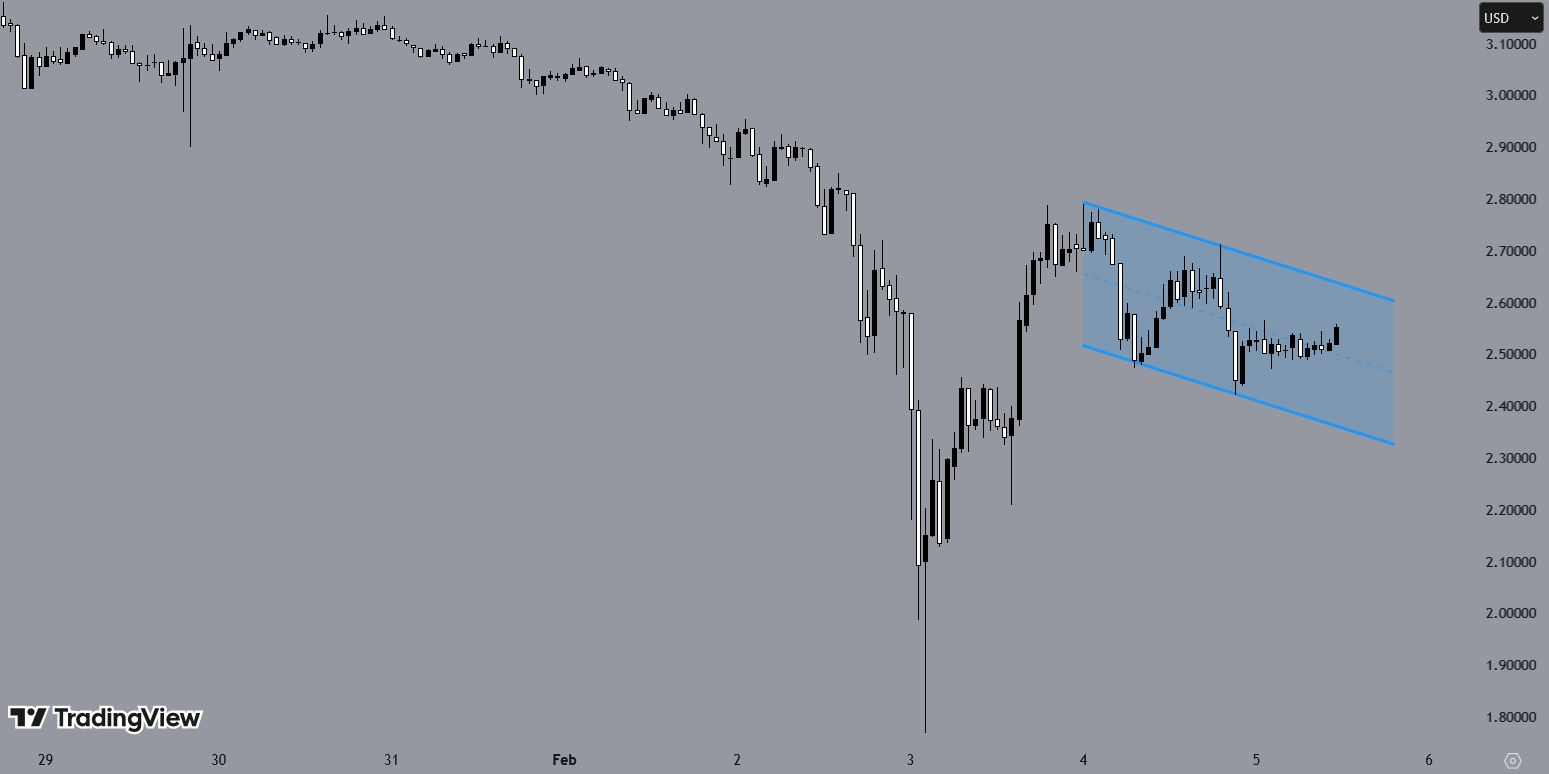
Meanwhile, the XRPUSD H1 chart has been trading within a
bearish equidistant channel. As of now, after its second bounce off the
channel's support, the price is heading towards the resistance.
Validators' Drift Disrupts XRP Ledger Operations
In the XRP Ledger, consensus is essential for updating the
ledger with new transactions. If validators cannot agree on which transactions
to include, the network halts.
A "drift" means that while the consensus protocol
ran, validations weren’t published. At least one validator operator reset the
consensus to a validated ledger state. However, Ripple's CTO David Schwarz
noted the network seemed to resolve the issue on its own.
Schwarz Highlights Risk of Silent Network
Schwarz explained that validators may have refused to send
validations due to potential issues with the network, preventing further
confusion. He highlighted the risk of a "silent network" failure,
where all validators could refuse to validate, blocking the network from
reconverging.
“One possible failure mode for XRPL is if all the validators
think something's wrong with the network, all refuse to send any validations,
and then there's no chatter to let the network reconverge. This is the 'silent
network' failure,” Schwarz added.
No assets were at risk during the downtime, and XRP prices
stayed in line with broader bitcoin and altcoin movements.
XRPUSD, H1 Chart, Source:TradingView
XRPUSD Moves Up After Bullish Reversal
The XRPUSD H1 chart indicates that the price has been
range-bound within a bearish equidistant channel. Following the last bounce and
the formation of a bullish reversal candle, the price has been moving upward.
However, the resistance of the channel provides limited space for buyers, which
may cause the price action to be somewhat sluggish.
DeepSeek AI has analyzed Ripple’s legal situation, the
adoption of its On-Demand Liquidity (ODL) platform, and market trends to
develop predictions. The
model estimates XRP could trade between $3.50 and $5.00 by the end of 2025,
with a 70% probability of a favorable legal outcome.
Ripple has recently been involved in several developments. The
company donated $100,000 in XRP to support communities affected by the
California wildfires, contributing to organizations like World Central Kitchen
and GiveDirectly through The Giving Block platform.
The company is also advancing in Japan, where expectations
suggest that banks
will adopt the XRP Ledger by 2025, according to SBI CEO Yoshitaka Kitao.
This initiative aims to improve cross-border payments and currency conversions
for remittances.
The debate surrounding XRP’s inclusion in a US crypto
reserve continues, with allegations of centralization complicating the issue.
In response, Ripple’s Schwartz, has
defended the decentralization of the XRP Ledger, highlighting its
resilience against manipulation.
The XRP Ledger (XRPL) experienced a brief disruption in its
operations due to a consensus mechanism issue today (Wednesday). The network's
consensus process appeared to work, but validations were not being published,
causing the ledgers to "drift apart, Coindesk reported."
Meanwhile, the XRPUSD H1 chart has been trading within a
bearish equidistant channel. As of now, after its second bounce off the
channel's support, the price is heading towards the resistance.
Validators' Drift Disrupts XRP Ledger Operations
In the XRP Ledger, consensus is essential for updating the
ledger with new transactions. If validators cannot agree on which transactions
to include, the network halts.
A "drift" means that while the consensus protocol
ran, validations weren’t published. At least one validator operator reset the
consensus to a validated ledger state. However, Ripple's CTO David Schwarz
noted the network seemed to resolve the issue on its own.
Schwarz Highlights Risk of Silent Network
Schwarz explained that validators may have refused to send
validations due to potential issues with the network, preventing further
confusion. He highlighted the risk of a "silent network" failure,
where all validators could refuse to validate, blocking the network from
reconverging.
“One possible failure mode for XRPL is if all the validators
think something's wrong with the network, all refuse to send any validations,
and then there's no chatter to let the network reconverge. This is the 'silent
network' failure,” Schwarz added.
No assets were at risk during the downtime, and XRP prices
stayed in line with broader bitcoin and altcoin movements.
XRPUSD, H1 Chart, Source:TradingView
XRPUSD Moves Up After Bullish Reversal
The XRPUSD H1 chart indicates that the price has been
range-bound within a bearish equidistant channel. Following the last bounce and
the formation of a bullish reversal candle, the price has been moving upward.
However, the resistance of the channel provides limited space for buyers, which
may cause the price action to be somewhat sluggish.
DeepSeek AI has analyzed Ripple’s legal situation, the
adoption of its On-Demand Liquidity (ODL) platform, and market trends to
develop predictions. The
model estimates XRP could trade between $3.50 and $5.00 by the end of 2025,
with a 70% probability of a favorable legal outcome.
Ripple has recently been involved in several developments. The
company donated $100,000 in XRP to support communities affected by the
California wildfires, contributing to organizations like World Central Kitchen
and GiveDirectly through The Giving Block platform.
The company is also advancing in Japan, where expectations
suggest that banks
will adopt the XRP Ledger by 2025, according to SBI CEO Yoshitaka Kitao.
This initiative aims to improve cross-border payments and currency conversions
for remittances.
The debate surrounding XRP’s inclusion in a US crypto
reserve continues, with allegations of centralization complicating the issue.
In response, Ripple’s Schwartz, has
defended the decentralization of the XRP Ledger, highlighting its
resilience against manipulation.
Tareq is a financial writer with 15 years of experience covering global markets. His work spans technical analysis, forex broker reviews, and market sentiment, with a focus on topics relevant to retail traders. He joined Finance Magnates in 2023.
At Finance Magnates, he serves as News Editor, covering retail forex and CFD brokers, cryptocurrency exchanges, fintech firms, and regulatory developments shaping the trading industry. He holds an Honours degree in Information Technology from Anfell College, London.
Education:
Honours degree Information Technology, Anfell College, London
Inside the Prediction Markets: $1.6B Institutional Inflow Meets a Federal Crackdown
FP Markets Winner Spotlight 🏆 | Global Broker of the Year 2025 #Trading #Broker #Innovation #Shorts
FP Markets Winner Spotlight 🏆 | Global Broker of the Year 2025 #Trading #Broker #Innovation #Shorts
FP Markets takes the spotlight as Global Broker of the Year 2025 at the Finance Magnates Awards.
Martin Stoilov, Head of Client Experience, shares that trust, innovation, and people played a key role in the company’s success, supported by a strong foundation of integrity and client-centricity.
Following this milestone, FP Markets continues to focus on growth, technology investment, and its core values of transparency and excellence.
👉 Be part of FM Awards 2026: https://awards.financemagnates.com/#nominate
FP Markets takes the spotlight as Global Broker of the Year 2025 at the Finance Magnates Awards.
Martin Stoilov, Head of Client Experience, shares that trust, innovation, and people played a key role in the company’s success, supported by a strong foundation of integrity and client-centricity.
Following this milestone, FP Markets continues to focus on growth, technology investment, and its core values of transparency and excellence.
👉 Be part of FM Awards 2026: https://awards.financemagnates.com/#nominate
In this video, we review @HolaPrimeMarketsOfficial, a multi-asset forex and CFDs broker offering different account types, trading platforms, and flexible trading conditions.
We cover the broker’s overall offering, including account options, trading environment, platforms like MT4 and MT5, and additional services such as managed accounts and fast withdrawals.
Watch the full video to see if Hola Prime Markets fits your trading needs.
📣 Stay up to date with the latest in finance and trading. Follow Finance Magnates for industry news, insights, and global event coverage.
Connect with us:
🔗 LinkedIn: /financemagnates
👍 Facebook: /financemagnates
📸 Instagram: https://www.instagram.com/financemagnates
🐦 X: https://x.com/financemagnates
🎥 TikTok: https://www.tiktok.com/tag/financemagnates
▶️ YouTube: /@financemagnates_official
#HolaPrime #ForexBroker #CFDTrading #FinanceMagnates #Trading #Forex #BrokerReview
In this video, we review @HolaPrimeMarketsOfficial, a multi-asset forex and CFDs broker offering different account types, trading platforms, and flexible trading conditions.
We cover the broker’s overall offering, including account options, trading environment, platforms like MT4 and MT5, and additional services such as managed accounts and fast withdrawals.
Watch the full video to see if Hola Prime Markets fits your trading needs.
📣 Stay up to date with the latest in finance and trading. Follow Finance Magnates for industry news, insights, and global event coverage.
Connect with us:
🔗 LinkedIn: /financemagnates
👍 Facebook: /financemagnates
📸 Instagram: https://www.instagram.com/financemagnates
🐦 X: https://x.com/financemagnates
🎥 TikTok: https://www.tiktok.com/tag/financemagnates
▶️ YouTube: /@financemagnates_official
#HolaPrime #ForexBroker #CFDTrading #FinanceMagnates #Trading #Forex #BrokerReview
Hola Prime Review: What You Need to Know | Full Breakdown by Finance Magnates
Hola Prime Review: What You Need to Know | Full Breakdown by Finance Magnates
In this video, we review @HolaPrime_Global, a proprietary trading firm offering evaluation programs and performance-based payouts in simulated market environments.
We cover how the challenge model works, including account types, profit splits (up to 95%), trading rules, and what it takes to reach a funded account. You’ll also learn about available platforms like MT4, MT5, cTrader, and more, along with insights into payouts, support, and trading conditions.
Watch the full video to see if Hola Prime fits your trading style.
📣 Stay up to date with the latest in finance and trading. Follow Finance Magnates for industry news, insights, and global event coverage.
Connect with us:
🔗 LinkedIn: /financemagnates
👍 Facebook: /financemagnates
📸 Instagram: https://www.instagram.com/financemagnates
🐦 X: https://x.com/financemagnates
🎥 TikTok: https://www.tiktok.com/tag/financemagnates
▶️ YouTube: /@financemagnates_official
#HolaPrime #PropFirm #Trading #FinanceMagnates #Forex #FuturesTrading #TradingReview #PropFirmReview
In this video, we review @HolaPrime_Global, a proprietary trading firm offering evaluation programs and performance-based payouts in simulated market environments.
We cover how the challenge model works, including account types, profit splits (up to 95%), trading rules, and what it takes to reach a funded account. You’ll also learn about available platforms like MT4, MT5, cTrader, and more, along with insights into payouts, support, and trading conditions.
Watch the full video to see if Hola Prime fits your trading style.
📣 Stay up to date with the latest in finance and trading. Follow Finance Magnates for industry news, insights, and global event coverage.
Connect with us:
🔗 LinkedIn: /financemagnates
👍 Facebook: /financemagnates
📸 Instagram: https://www.instagram.com/financemagnates
🐦 X: https://x.com/financemagnates
🎥 TikTok: https://www.tiktok.com/tag/financemagnates
▶️ YouTube: /@financemagnates_official
#HolaPrime #PropFirm #Trading #FinanceMagnates #Forex #FuturesTrading #TradingReview #PropFirmReview
Axi Winner Spotlight 🏆 | Global Most Innovative Broker 2025 #Innovation #Trading #Fintech #Broker
Axi Winner Spotlight 🏆 | Global Most Innovative Broker 2025 #Innovation #Trading #Fintech #Broker
Axi takes the spotlight at the Finance Magnates Awards, winning Global Most Innovative Broker 2025.
Olivia Xenofontos and Ivanna Openko share how the team will feel: proud, motivated, and ready to keep delivering.
They also describe the night as well-organized, focused, and enjoyable for all.
👉 Be part of FM Awards 2026.
Axi takes the spotlight at the Finance Magnates Awards, winning Global Most Innovative Broker 2025.
Olivia Xenofontos and Ivanna Openko share how the team will feel: proud, motivated, and ready to keep delivering.
They also describe the night as well-organized, focused, and enjoyable for all.
👉 Be part of FM Awards 2026.
Recognition that matters.
Built on transparency.
Driven by the industry.
The Finance Magnates Awards 2026.
Nominations are now open.
🔗 https://awards.financemagnates.com/?utm_source=SM&utm_medium=social&utm_campaign=recognition-matters
Recognition that matters.
Built on transparency.
Driven by the industry.
The Finance Magnates Awards 2026.
Nominations are now open.
🔗 https://awards.financemagnates.com/?utm_source=SM&utm_medium=social&utm_campaign=recognition-matters