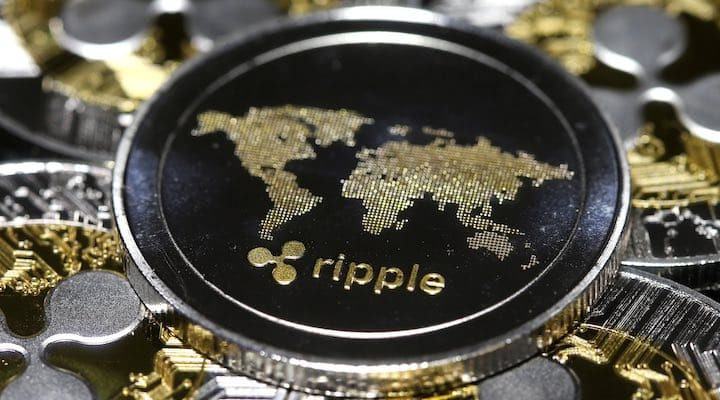
The payments platform operates on XRP Ledger, allowing transactions in fiat and crypto.
XRPUSD H1 chart is testing support near an uptrend trendline, with potential for further downside.
Ripple has partnered with Portuguese currency exchange
provider Unicâmbio to offer instant international payments between Portugal and
Brazil. The service uses Ripple’s payments platform, which incorporates digital
assets to facilitate cross-border settlements.
Meanwhile, the XRPUSD H1 chart shows a bearish correction in
progress. The uptrending trendline support could play a crucial role in
determining the next movement on the intraday charts.
Ripple Links Portugal-Brazil for Faster Transfers
Cassie Craddock, Managing Director for the UK and Europe at Ripple, Source: LinkedIn
Unicâmbio’s corporate customers can transfer funds and
settle payments within minutes. Ripple said this is its first entry into the
Portuguese market.
"Portugal has developed a thriving crypto ecosystem so
we are delighted to open up our payments solution to partners there," said
Cassie Craddock, Managing Director for the UK and Europe at Ripple.
Ripple’s payments system operates on the XRP Ledger. Users
can send and receive various currencies, including fiat and crypto assets,
through a financial institution network using the XRP token.
"By connecting our payment networks in Portugal and
Brazil we are facilitating faster, more cost-effective cross-border payments,
while strengthening the economic bridge between these two major markets," Craddock
added.
XRPUSD Nears Support, Awaiting Price Direction
The XRPUSD H1 chart indicates that the price has been
undergoing a bearish correction after facing rejection at the 2.53000 level.
Currently, the cryptocurrency is trading near the support of an uptrend
trendline.
XRPUSD, H1 Chart, Source: TradingView
A bearish candle appears to have broken through the support
level, followed by a bullish inside bar. If a bearish engulfing candle forms at
the broken support area, it may push the price further down. Conversely, a
bullish candle could attract buyers, potentially driving the price upwards.
Ripple Whales, SEC Shifts, and XRP Ledger Updates
Ripple whales have attracted attention due to their
continued buying activity. Recent data shows that large investors, referred to
as whales, acquired
520 million XRP tokens during a recent price dip. This suggests that some
market participants maintain confidence in the cryptocurrency despite the
downturn.
The SEC's
reassignment of key staff members, including Jorge Tenreiro, has raised
questions about the agency’s approach to cryptocurrency cases like Ripple.
Tenreiro, who previously oversaw the SEC's litigation in cases such as Ripple
and Coinbase, has been moved to the IT department.
In decentralized finance (DeFi), Ripple
has partnered with Chainlink to integrate its RLUSD stablecoin with DeFi
applications on the Ethereum blockchain, enabling trading and lending features.
The discussion around XRP’s
potential inclusion in a US crypto reserve continues, with concerns over
centralization. Ripple’s Schwartz defended the decentralization of the XRP
Ledger, emphasizing its resilience to manipulation.
Ripple
is progressing in Japan, with expectations that banks will adopt the XRP
Ledger by 2025. This initiative, according to SBI CEO Yoshitaka Kitao, is aimed
at improving cross-border payments and currency conversions for remittances.
The XRP
Ledger (XRPL) briefly experienced a disruption due to an issue with its
consensus mechanism, which caused validations to fail and ledgers to “drift
apart.” Ripple's CTO, David Schwartz, noted that the issue appeared to resolve
itself after at least one validator operator reset the consensus to a validated
ledger state.
Ripple has partnered with Portuguese currency exchange
provider Unicâmbio to offer instant international payments between Portugal and
Brazil. The service uses Ripple’s payments platform, which incorporates digital
assets to facilitate cross-border settlements.
Meanwhile, the XRPUSD H1 chart shows a bearish correction in
progress. The uptrending trendline support could play a crucial role in
determining the next movement on the intraday charts.
Ripple Links Portugal-Brazil for Faster Transfers
Cassie Craddock, Managing Director for the UK and Europe at Ripple, Source: LinkedIn
Unicâmbio’s corporate customers can transfer funds and
settle payments within minutes. Ripple said this is its first entry into the
Portuguese market.
"Portugal has developed a thriving crypto ecosystem so
we are delighted to open up our payments solution to partners there," said
Cassie Craddock, Managing Director for the UK and Europe at Ripple.
Ripple’s payments system operates on the XRP Ledger. Users
can send and receive various currencies, including fiat and crypto assets,
through a financial institution network using the XRP token.
"By connecting our payment networks in Portugal and
Brazil we are facilitating faster, more cost-effective cross-border payments,
while strengthening the economic bridge between these two major markets," Craddock
added.
XRPUSD Nears Support, Awaiting Price Direction
The XRPUSD H1 chart indicates that the price has been
undergoing a bearish correction after facing rejection at the 2.53000 level.
Currently, the cryptocurrency is trading near the support of an uptrend
trendline.
XRPUSD, H1 Chart, Source: TradingView
A bearish candle appears to have broken through the support
level, followed by a bullish inside bar. If a bearish engulfing candle forms at
the broken support area, it may push the price further down. Conversely, a
bullish candle could attract buyers, potentially driving the price upwards.
Ripple Whales, SEC Shifts, and XRP Ledger Updates
Ripple whales have attracted attention due to their
continued buying activity. Recent data shows that large investors, referred to
as whales, acquired
520 million XRP tokens during a recent price dip. This suggests that some
market participants maintain confidence in the cryptocurrency despite the
downturn.
The SEC's
reassignment of key staff members, including Jorge Tenreiro, has raised
questions about the agency’s approach to cryptocurrency cases like Ripple.
Tenreiro, who previously oversaw the SEC's litigation in cases such as Ripple
and Coinbase, has been moved to the IT department.
In decentralized finance (DeFi), Ripple
has partnered with Chainlink to integrate its RLUSD stablecoin with DeFi
applications on the Ethereum blockchain, enabling trading and lending features.
The discussion around XRP’s
potential inclusion in a US crypto reserve continues, with concerns over
centralization. Ripple’s Schwartz defended the decentralization of the XRP
Ledger, emphasizing its resilience to manipulation.
Ripple
is progressing in Japan, with expectations that banks will adopt the XRP
Ledger by 2025. This initiative, according to SBI CEO Yoshitaka Kitao, is aimed
at improving cross-border payments and currency conversions for remittances.
The XRP
Ledger (XRPL) briefly experienced a disruption due to an issue with its
consensus mechanism, which caused validations to fail and ledgers to “drift
apart.” Ripple's CTO, David Schwartz, noted that the issue appeared to resolve
itself after at least one validator operator reset the consensus to a validated
ledger state.
Tareq is a financial writer with 15 years of experience covering global markets. His work spans technical analysis, forex broker reviews, and market sentiment, with a focus on topics relevant to retail traders. He joined Finance Magnates in 2023.
At Finance Magnates, he serves as News Editor, covering retail forex and CFD brokers, cryptocurrency exchanges, fintech firms, and regulatory developments shaping the trading industry. He holds an Honours degree in Information Technology from Anfell College, London.
Education:
Honours degree Information Technology, Anfell College, London
Inside the Prediction Markets: $1.6B Institutional Inflow Meets a Federal Crackdown
FP Markets Winner Spotlight 🏆 | Global Broker of the Year 2025 #Trading #Broker #Innovation #Shorts
FP Markets Winner Spotlight 🏆 | Global Broker of the Year 2025 #Trading #Broker #Innovation #Shorts
FP Markets takes the spotlight as Global Broker of the Year 2025 at the Finance Magnates Awards.
Martin Stoilov, Head of Client Experience, shares that trust, innovation, and people played a key role in the company’s success, supported by a strong foundation of integrity and client-centricity.
Following this milestone, FP Markets continues to focus on growth, technology investment, and its core values of transparency and excellence.
👉 Be part of FM Awards 2026: https://awards.financemagnates.com/#nominate
FP Markets takes the spotlight as Global Broker of the Year 2025 at the Finance Magnates Awards.
Martin Stoilov, Head of Client Experience, shares that trust, innovation, and people played a key role in the company’s success, supported by a strong foundation of integrity and client-centricity.
Following this milestone, FP Markets continues to focus on growth, technology investment, and its core values of transparency and excellence.
👉 Be part of FM Awards 2026: https://awards.financemagnates.com/#nominate
In this video, we review @HolaPrimeMarketsOfficial, a multi-asset forex and CFDs broker offering different account types, trading platforms, and flexible trading conditions.
We cover the broker’s overall offering, including account options, trading environment, platforms like MT4 and MT5, and additional services such as managed accounts and fast withdrawals.
Watch the full video to see if Hola Prime Markets fits your trading needs.
📣 Stay up to date with the latest in finance and trading. Follow Finance Magnates for industry news, insights, and global event coverage.
Connect with us:
🔗 LinkedIn: /financemagnates
👍 Facebook: /financemagnates
📸 Instagram: https://www.instagram.com/financemagnates
🐦 X: https://x.com/financemagnates
🎥 TikTok: https://www.tiktok.com/tag/financemagnates
▶️ YouTube: /@financemagnates_official
#HolaPrime #ForexBroker #CFDTrading #FinanceMagnates #Trading #Forex #BrokerReview
In this video, we review @HolaPrimeMarketsOfficial, a multi-asset forex and CFDs broker offering different account types, trading platforms, and flexible trading conditions.
We cover the broker’s overall offering, including account options, trading environment, platforms like MT4 and MT5, and additional services such as managed accounts and fast withdrawals.
Watch the full video to see if Hola Prime Markets fits your trading needs.
📣 Stay up to date with the latest in finance and trading. Follow Finance Magnates for industry news, insights, and global event coverage.
Connect with us:
🔗 LinkedIn: /financemagnates
👍 Facebook: /financemagnates
📸 Instagram: https://www.instagram.com/financemagnates
🐦 X: https://x.com/financemagnates
🎥 TikTok: https://www.tiktok.com/tag/financemagnates
▶️ YouTube: /@financemagnates_official
#HolaPrime #ForexBroker #CFDTrading #FinanceMagnates #Trading #Forex #BrokerReview
Hola Prime Review: What You Need to Know | Full Breakdown by Finance Magnates
Hola Prime Review: What You Need to Know | Full Breakdown by Finance Magnates
In this video, we review @HolaPrime_Global, a proprietary trading firm offering evaluation programs and performance-based payouts in simulated market environments.
We cover how the challenge model works, including account types, profit splits (up to 95%), trading rules, and what it takes to reach a funded account. You’ll also learn about available platforms like MT4, MT5, cTrader, and more, along with insights into payouts, support, and trading conditions.
Watch the full video to see if Hola Prime fits your trading style.
📣 Stay up to date with the latest in finance and trading. Follow Finance Magnates for industry news, insights, and global event coverage.
Connect with us:
🔗 LinkedIn: /financemagnates
👍 Facebook: /financemagnates
📸 Instagram: https://www.instagram.com/financemagnates
🐦 X: https://x.com/financemagnates
🎥 TikTok: https://www.tiktok.com/tag/financemagnates
▶️ YouTube: /@financemagnates_official
#HolaPrime #PropFirm #Trading #FinanceMagnates #Forex #FuturesTrading #TradingReview #PropFirmReview
In this video, we review @HolaPrime_Global, a proprietary trading firm offering evaluation programs and performance-based payouts in simulated market environments.
We cover how the challenge model works, including account types, profit splits (up to 95%), trading rules, and what it takes to reach a funded account. You’ll also learn about available platforms like MT4, MT5, cTrader, and more, along with insights into payouts, support, and trading conditions.
Watch the full video to see if Hola Prime fits your trading style.
📣 Stay up to date with the latest in finance and trading. Follow Finance Magnates for industry news, insights, and global event coverage.
Connect with us:
🔗 LinkedIn: /financemagnates
👍 Facebook: /financemagnates
📸 Instagram: https://www.instagram.com/financemagnates
🐦 X: https://x.com/financemagnates
🎥 TikTok: https://www.tiktok.com/tag/financemagnates
▶️ YouTube: /@financemagnates_official
#HolaPrime #PropFirm #Trading #FinanceMagnates #Forex #FuturesTrading #TradingReview #PropFirmReview
Axi Winner Spotlight 🏆 | Global Most Innovative Broker 2025 #Innovation #Trading #Fintech #Broker
Axi Winner Spotlight 🏆 | Global Most Innovative Broker 2025 #Innovation #Trading #Fintech #Broker
Axi takes the spotlight at the Finance Magnates Awards, winning Global Most Innovative Broker 2025.
Olivia Xenofontos and Ivanna Openko share how the team will feel: proud, motivated, and ready to keep delivering.
They also describe the night as well-organized, focused, and enjoyable for all.
👉 Be part of FM Awards 2026.
Axi takes the spotlight at the Finance Magnates Awards, winning Global Most Innovative Broker 2025.
Olivia Xenofontos and Ivanna Openko share how the team will feel: proud, motivated, and ready to keep delivering.
They also describe the night as well-organized, focused, and enjoyable for all.
👉 Be part of FM Awards 2026.
Recognition that matters.
Built on transparency.
Driven by the industry.
The Finance Magnates Awards 2026.
Nominations are now open.
🔗 https://awards.financemagnates.com/?utm_source=SM&utm_medium=social&utm_campaign=recognition-matters
Recognition that matters.
Built on transparency.
Driven by the industry.
The Finance Magnates Awards 2026.
Nominations are now open.
🔗 https://awards.financemagnates.com/?utm_source=SM&utm_medium=social&utm_campaign=recognition-matters