The Leeds Reform aims to revitalize UK markets but its real-world impact is still unclear.
The UK is trying to foster an investment mentality, results remain limited amid pressures.
Fintechs, brokers can support with accessible, low-cost platforms and financial education.
From the Leeds Reform to fintech innovation, the UK is
betting on retail investors to restore its market competitiveness but
challenges remain.
As London’s listings slump and investment outflows turn from
a market concern into a national challenge, a panel “Mind The Gap: Can Retail
Investors Save the UK Stock Market?” at FMLS:25, November 25-27, takes a hard look at what it
will take to reignite confidence.
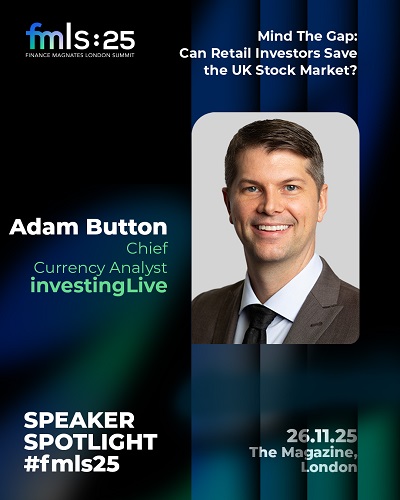
Moderated by Adam Button, Chief Currency
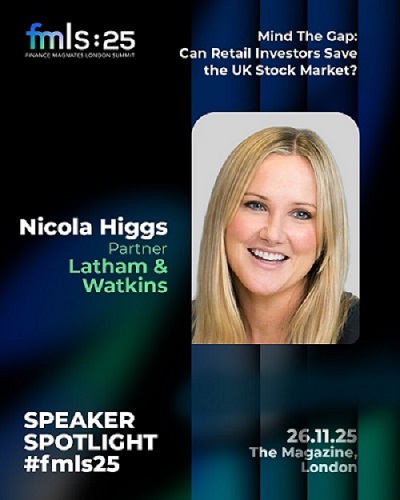
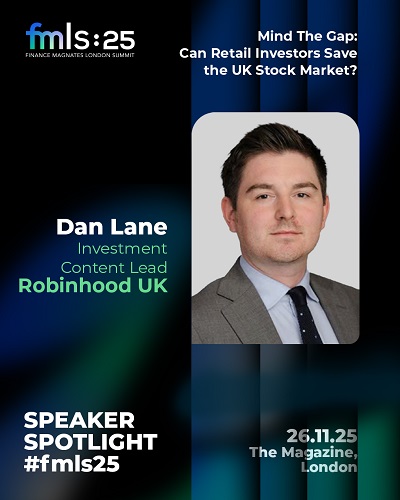
Analyst at investingLive, the panel brings together Nicola Higgs, Partner at
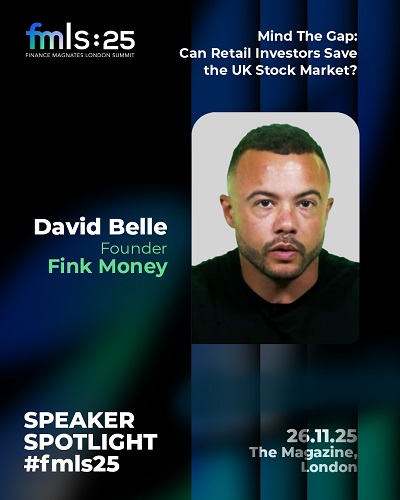
Latham & Watkins; Dan Lane, Investment Content Lead at Robinhood; David Belle,
Founder of Fink Money; and Sheryl Cuisia, Founder & CEO of The Engagement
Appeal (TEA); Jack Crone, PR and Public Affairs Lead, IG.
Together, they’ll unpack the Leeds Reform, the government’s role
in shifting the UK’s saver mentality, and the delicate balance the FCA must
strike between flexibility and protection — all while debating what brokers and
fintechs can do to get the British public investing again
Retail to the Rescue?
The UK’s listing and investment malaise has grown from a
financial services problem into a national challenge.
London, once the
unquestioned hub of global capital raising, has watched its competitiveness
erode, with high-profile firms choosing New
York, Amsterdam
and Hong
Kong over the London Stock Exchange.
The July 2025 Leeds Reform sought to
arrest this decline, but the question now facing policymakers, regulators,
brokers, and fintech innovators is whether it has gone far enough.
As the country searches for a new equilibrium, retail
investors are increasingly seen as part of the solution rather than bystanders.
However, opportunities remain in London and the wider UK,
“[… ] it’s worth recognizing that the FTSE 100 has performed well this year.
However, it’s also fair to acknowledge the UK market’s consistent
underperformance versus peers over the long term.
Retail investors should
approach the UK like any other market - by assessing risk and reward
objectively, identifying opportunities, and allocating capital accordingly,”
says Elise Ash, SVP Marketing and Growth at IG Group.
The Leeds Reform: Principles vs Practice
The Leeds Reform, announced
in July 2025, is a sweeping package aimed at revitalizing the UK’s
financial services sector. Its key provisions include:
Unlocking Retail Investment: The UK has the lowest retail
investment levels in the G7, with millions of savers stuck in low-yield cash
accounts.
New measures, including FCA “Targeted Support,” ISA reforms, and the
inclusion of Long-Term Asset Funds, aim to shift money into higher-return
investments. The goal is to build a stronger saver-to-investor culture while
funding UK businesses.
Cutting Red Tape to Attract Growth: A new concierge service
will attract global firms to UK financial hubs, while looser mortgage rules and
a permanent Mortgage Guarantee Scheme will help first-time buyers.
Business
regulation is being streamlined, with the Ombudsman and Senior Managers Regime
refocused, and the FCA reviewing its Consumer Duty for wholesale firms. The aim
is to boost confidence and cut barriers to growth.
Freeing Capital for Investment: The Bank of England is
raising its MREL threshold and tailoring Basel 3.1 rules to free funds for
lending and investment.
Reviews of ring-fencing and bank capital requirements
aim to balance competitiveness with stability. These changes should unlock more
capital for the economy while maintaining regulatory safeguards.
Promoting Innovation & Fintech Leadership: The UK wants
to cement its fintech leadership with start-up support, easier regulatory
navigation, and expanded British Business Bank funding.
Talent is central: new
schemes include a Global Talent Taskforce, the £187m TechFirst programme, and a
skills compact for the financial sector. Together, these measures aim to make
the UK the world’s fintech capital.
On paper, the Leeds Reform signals ambition: a recognition
that bold moves are required to restore the UK’s global standing. However, the
long-term impact remains to be seen.
The Leeds Reform’s success will ultimately
depend not on the grandeur of its announcements but on its ability to translate
into tangible market confidence, both for corporates seeking capital and
individuals seeking to invest.
As Ash says, “It’s encouraging to see the government
prioritizing retail investing, but the challenge now is turning words into
meaningful action. So far, we’ve heard about an industry-led ad campaign -
which while well-intentioned is unlikely to move the dial significantly - and a
review of how investment risk is communicated, which is certainly welcome.”
A central pillar of the Leeds Reform is the government’s
attempt to influence cultural attitudes toward saving and investing. For
decades, the UK has grappled with low
household savings rates, with many citizens either mistrustful of financial
markets or unwilling to engage beyond traditional bank deposits.
Ministers argue that getting Britons to think of themselves
not just as consumers but as long-term investors is essential to unlocking
domestic capital.
But is it working? The results so far are mixed. Uptake of
investment products has grown modestly, but a general sense of mistrust remains
entrenched. A recent study showed that only
23% of Britons had invested in the stock market.
In an era of
cost-of-living pressures, households often focus on short-term liquidity over
long-term wealth building. Critics argue that without more significant tax
incentives or structural reforms, the government risks preaching to the
converted rather
than creating a genuine cultural shift.
“[…] if we truly want to create an investing culture in the
UK, we need bolder policy: better incentives to back UK stocks, the complete
removal of stamp duty on share sales, and ISA rules the need to encourage more
investing - with cash ISAs offering less generous allowances than stocks and
shares ISAs,” says Ash.
According to Ash, “Fintechs and digital investment platforms
are already playing a huge role. The rise of low-cost, easy-access investment
options has made the UK one of the most competitive markets for retail
investors. Lower barriers to entry are crucial for access, but these platforms
- and I include IG in this - also have a responsibility to engage, educate, and
communicate investing in a way that resonates with people.”
In the UK, fintechs and brokers have a clear opportunity to
step in where traditional institutions have struggled. By offering:
User-friendly platforms that simplify investing for
newcomers.
Fractional shares and low-fee products that allow small
investors to participate in high-value stocks.
Financial education and community tools that build
confidence among first-time investors.
Some firms are already experimenting with gamification, news
or summaries powered by AI, and integration with banking
apps. However, these innovations must walk a fine line: too much hype risks
encouraging reckless speculation, while overly cautious products fail to
capture the imagination of retail investors. Indeed, gamification in apps or
tools is something
the FCA is looking at.
The challenge for brokers and fintechs lies in building
trust. To truly spur UK investment, they must bridge the gap between
accessibility and responsibility, making markets appealing without fueling
bubbles.
FCA: Walking the Tightrope
Looming over all of this is the role of the FCA. The
regulator is charged with protecting consumers, but it also faces mounting
pressure to promote innovation and competitiveness. The Leeds Reform implicitly
recognizes this tension, urging the FCA to embrace flexibility without
abandoning its duty of care.
The FCA’s dilemma is stark: loosen regulation too far, and
risk scandals that undermine trust; clamp down too hard, and risk stifling the
very innovation the UK needs to revive its markets. Finding the right balance
will require nuanced policymaking, constant dialogue with industry, and a
willingness to adapt as new products and risks emerge.
Recent moves toward ‘regulating
for growth’ focusing on results rather than prescriptive rules, suggest the
FCA is aware of the need for change. Yet questions remain over whether it has
the resources and agility to keep pace with fintech innovation while
maintaining rigorous oversight.
“The consensus seems to be that the UK needs to go further
than what’s been proposed so far if it wants to compete globally for listings
and capital. The perception of the UK as a ‘value’ market, in contrast to the
US’s stronger growth bias, also plays into that."
"Unless the reforms help shift
that narrative - by making the UK a more attractive home for growth-focused companies
- it’s unlikely to change how global investors see the market,” says Ash.
Fears over falling stock prices are prompting UK savers to avoid investing and instead park their earnings in cash.
According to online trading platform IG, three in five savers believe retail investing is to risky, despite government and leading industry figures encouraging… pic.twitter.com/b7v71iP9sT
The UK’s investment crisis is no longer a matter for the
City alone. It strikes at the heart of national competitiveness, economic
growth, and the country’s ability to finance innovation.
The Leeds Reform is a
start, but its success hinges on coordinated action: a government willing to
shape culture and incentives, brokers and fintechs ready to capture new
audiences, and a regulator nimble enough to balance innovation with protection.
In terms of retail investors, Ash is cautiously optimistic,
“If we look at the US, a strong retail investing culture has undoubtedly
supported the success of its stock market. The same could happen here if we
create the right conditions."
"In June, we called for an enterprise
investment-style scheme that would allow investors to claim income tax relief
on UK shares held for more than three years - a practical incentive to back
British businesses.”
Though, she does place any developments in context,
saying, “That said, institutional capital, particularly from pension funds,
will continue to play the dominant role.”
For the UK, retail investors are not a silver bullet, but
they may be the missing piece in a puzzle that has eluded policymakers for far
too long.
From the Leeds Reform to fintech innovation, the UK is
betting on retail investors to restore its market competitiveness but
challenges remain.
As London’s listings slump and investment outflows turn from
a market concern into a national challenge, a panel “Mind The Gap: Can Retail
Investors Save the UK Stock Market?” at FMLS:25, November 25-27, takes a hard look at what it
will take to reignite confidence.
Moderated by Adam Button, Chief Currency
Analyst at investingLive, the panel brings together Nicola Higgs, Partner at
Latham & Watkins; Dan Lane, Investment Content Lead at Robinhood; David Belle,
Founder of Fink Money; and Sheryl Cuisia, Founder & CEO of The Engagement
Appeal (TEA); Jack Crone, PR and Public Affairs Lead, IG.
Together, they’ll unpack the Leeds Reform, the government’s role
in shifting the UK’s saver mentality, and the delicate balance the FCA must
strike between flexibility and protection — all while debating what brokers and
fintechs can do to get the British public investing again
Retail to the Rescue?
The UK’s listing and investment malaise has grown from a
financial services problem into a national challenge.
London, once the
unquestioned hub of global capital raising, has watched its competitiveness
erode, with high-profile firms choosing New
York, Amsterdam
and Hong
Kong over the London Stock Exchange.
The July 2025 Leeds Reform sought to
arrest this decline, but the question now facing policymakers, regulators,
brokers, and fintech innovators is whether it has gone far enough.
As the country searches for a new equilibrium, retail
investors are increasingly seen as part of the solution rather than bystanders.
However, opportunities remain in London and the wider UK,
“[… ] it’s worth recognizing that the FTSE 100 has performed well this year.
However, it’s also fair to acknowledge the UK market’s consistent
underperformance versus peers over the long term.
Retail investors should
approach the UK like any other market - by assessing risk and reward
objectively, identifying opportunities, and allocating capital accordingly,”
says Elise Ash, SVP Marketing and Growth at IG Group.
The Leeds Reform: Principles vs Practice
The Leeds Reform, announced
in July 2025, is a sweeping package aimed at revitalizing the UK’s
financial services sector. Its key provisions include:
Unlocking Retail Investment: The UK has the lowest retail
investment levels in the G7, with millions of savers stuck in low-yield cash
accounts.
New measures, including FCA “Targeted Support,” ISA reforms, and the
inclusion of Long-Term Asset Funds, aim to shift money into higher-return
investments. The goal is to build a stronger saver-to-investor culture while
funding UK businesses.
Cutting Red Tape to Attract Growth: A new concierge service
will attract global firms to UK financial hubs, while looser mortgage rules and
a permanent Mortgage Guarantee Scheme will help first-time buyers.
Business
regulation is being streamlined, with the Ombudsman and Senior Managers Regime
refocused, and the FCA reviewing its Consumer Duty for wholesale firms. The aim
is to boost confidence and cut barriers to growth.
Freeing Capital for Investment: The Bank of England is
raising its MREL threshold and tailoring Basel 3.1 rules to free funds for
lending and investment.
Reviews of ring-fencing and bank capital requirements
aim to balance competitiveness with stability. These changes should unlock more
capital for the economy while maintaining regulatory safeguards.
Promoting Innovation & Fintech Leadership: The UK wants
to cement its fintech leadership with start-up support, easier regulatory
navigation, and expanded British Business Bank funding.
Talent is central: new
schemes include a Global Talent Taskforce, the £187m TechFirst programme, and a
skills compact for the financial sector. Together, these measures aim to make
the UK the world’s fintech capital.
On paper, the Leeds Reform signals ambition: a recognition
that bold moves are required to restore the UK’s global standing. However, the
long-term impact remains to be seen.
The Leeds Reform’s success will ultimately
depend not on the grandeur of its announcements but on its ability to translate
into tangible market confidence, both for corporates seeking capital and
individuals seeking to invest.
As Ash says, “It’s encouraging to see the government
prioritizing retail investing, but the challenge now is turning words into
meaningful action. So far, we’ve heard about an industry-led ad campaign -
which while well-intentioned is unlikely to move the dial significantly - and a
review of how investment risk is communicated, which is certainly welcome.”
A central pillar of the Leeds Reform is the government’s
attempt to influence cultural attitudes toward saving and investing. For
decades, the UK has grappled with low
household savings rates, with many citizens either mistrustful of financial
markets or unwilling to engage beyond traditional bank deposits.
Ministers argue that getting Britons to think of themselves
not just as consumers but as long-term investors is essential to unlocking
domestic capital.
But is it working? The results so far are mixed. Uptake of
investment products has grown modestly, but a general sense of mistrust remains
entrenched. A recent study showed that only
23% of Britons had invested in the stock market.
In an era of
cost-of-living pressures, households often focus on short-term liquidity over
long-term wealth building. Critics argue that without more significant tax
incentives or structural reforms, the government risks preaching to the
converted rather
than creating a genuine cultural shift.
“[…] if we truly want to create an investing culture in the
UK, we need bolder policy: better incentives to back UK stocks, the complete
removal of stamp duty on share sales, and ISA rules the need to encourage more
investing - with cash ISAs offering less generous allowances than stocks and
shares ISAs,” says Ash.
According to Ash, “Fintechs and digital investment platforms
are already playing a huge role. The rise of low-cost, easy-access investment
options has made the UK one of the most competitive markets for retail
investors. Lower barriers to entry are crucial for access, but these platforms
- and I include IG in this - also have a responsibility to engage, educate, and
communicate investing in a way that resonates with people.”
In the UK, fintechs and brokers have a clear opportunity to
step in where traditional institutions have struggled. By offering:
User-friendly platforms that simplify investing for
newcomers.
Fractional shares and low-fee products that allow small
investors to participate in high-value stocks.
Financial education and community tools that build
confidence among first-time investors.
Some firms are already experimenting with gamification, news
or summaries powered by AI, and integration with banking
apps. However, these innovations must walk a fine line: too much hype risks
encouraging reckless speculation, while overly cautious products fail to
capture the imagination of retail investors. Indeed, gamification in apps or
tools is something
the FCA is looking at.
The challenge for brokers and fintechs lies in building
trust. To truly spur UK investment, they must bridge the gap between
accessibility and responsibility, making markets appealing without fueling
bubbles.
FCA: Walking the Tightrope
Looming over all of this is the role of the FCA. The
regulator is charged with protecting consumers, but it also faces mounting
pressure to promote innovation and competitiveness. The Leeds Reform implicitly
recognizes this tension, urging the FCA to embrace flexibility without
abandoning its duty of care.
The FCA’s dilemma is stark: loosen regulation too far, and
risk scandals that undermine trust; clamp down too hard, and risk stifling the
very innovation the UK needs to revive its markets. Finding the right balance
will require nuanced policymaking, constant dialogue with industry, and a
willingness to adapt as new products and risks emerge.
Recent moves toward ‘regulating
for growth’ focusing on results rather than prescriptive rules, suggest the
FCA is aware of the need for change. Yet questions remain over whether it has
the resources and agility to keep pace with fintech innovation while
maintaining rigorous oversight.
“The consensus seems to be that the UK needs to go further
than what’s been proposed so far if it wants to compete globally for listings
and capital. The perception of the UK as a ‘value’ market, in contrast to the
US’s stronger growth bias, also plays into that."
"Unless the reforms help shift
that narrative - by making the UK a more attractive home for growth-focused companies
- it’s unlikely to change how global investors see the market,” says Ash.
Fears over falling stock prices are prompting UK savers to avoid investing and instead park their earnings in cash.
According to online trading platform IG, three in five savers believe retail investing is to risky, despite government and leading industry figures encouraging… pic.twitter.com/b7v71iP9sT
The UK’s investment crisis is no longer a matter for the
City alone. It strikes at the heart of national competitiveness, economic
growth, and the country’s ability to finance innovation.
The Leeds Reform is a
start, but its success hinges on coordinated action: a government willing to
shape culture and incentives, brokers and fintechs ready to capture new
audiences, and a regulator nimble enough to balance innovation with protection.
In terms of retail investors, Ash is cautiously optimistic,
“If we look at the US, a strong retail investing culture has undoubtedly
supported the success of its stock market. The same could happen here if we
create the right conditions."
"In June, we called for an enterprise
investment-style scheme that would allow investors to claim income tax relief
on UK shares held for more than three years - a practical incentive to back
British businesses.”
Though, she does place any developments in context,
saying, “That said, institutional capital, particularly from pension funds,
will continue to play the dominant role.”
For the UK, retail investors are not a silver bullet, but
they may be the missing piece in a puzzle that has eluded policymakers for far
too long.
Louis Parks has lived and worked in and around the Middle East for much of his professional career. He writes about the meeting of the tech and finance worlds.
Inside the Prediction Markets: $1.6B Institutional Inflow Meets a Federal Crackdown
Featured Videos
FP Markets Winner Spotlight 🏆 | Global Broker of the Year 2025 #Trading #Broker #Innovation #Shorts
FP Markets Winner Spotlight 🏆 | Global Broker of the Year 2025 #Trading #Broker #Innovation #Shorts
FP Markets Winner Spotlight 🏆 | Global Broker of the Year 2025 #Trading #Broker #Innovation #Shorts
FP Markets Winner Spotlight 🏆 | Global Broker of the Year 2025 #Trading #Broker #Innovation #Shorts
FP Markets takes the spotlight as Global Broker of the Year 2025 at the Finance Magnates Awards.
Martin Stoilov, Head of Client Experience, shares that trust, innovation, and people played a key role in the company’s success, supported by a strong foundation of integrity and client-centricity.
Following this milestone, FP Markets continues to focus on growth, technology investment, and its core values of transparency and excellence.
👉 Be part of FM Awards 2026: https://awards.financemagnates.com/#nominate
FP Markets takes the spotlight as Global Broker of the Year 2025 at the Finance Magnates Awards.
Martin Stoilov, Head of Client Experience, shares that trust, innovation, and people played a key role in the company’s success, supported by a strong foundation of integrity and client-centricity.
Following this milestone, FP Markets continues to focus on growth, technology investment, and its core values of transparency and excellence.
👉 Be part of FM Awards 2026: https://awards.financemagnates.com/#nominate
FP Markets takes the spotlight as Global Broker of the Year 2025 at the Finance Magnates Awards.
Martin Stoilov, Head of Client Experience, shares that trust, innovation, and people played a key role in the company’s success, supported by a strong foundation of integrity and client-centricity.
Following this milestone, FP Markets continues to focus on growth, technology investment, and its core values of transparency and excellence.
👉 Be part of FM Awards 2026: https://awards.financemagnates.com/#nominate
FP Markets takes the spotlight as Global Broker of the Year 2025 at the Finance Magnates Awards.
Martin Stoilov, Head of Client Experience, shares that trust, innovation, and people played a key role in the company’s success, supported by a strong foundation of integrity and client-centricity.
Following this milestone, FP Markets continues to focus on growth, technology investment, and its core values of transparency and excellence.
👉 Be part of FM Awards 2026: https://awards.financemagnates.com/#nominate
In this video, we review @HolaPrimeMarketsOfficial, a multi-asset forex and CFDs broker offering different account types, trading platforms, and flexible trading conditions.
We cover the broker’s overall offering, including account options, trading environment, platforms like MT4 and MT5, and additional services such as managed accounts and fast withdrawals.
Watch the full video to see if Hola Prime Markets fits your trading needs.
📣 Stay up to date with the latest in finance and trading. Follow Finance Magnates for industry news, insights, and global event coverage.
Connect with us:
🔗 LinkedIn: /financemagnates
👍 Facebook: /financemagnates
📸 Instagram: https://www.instagram.com/financemagnates
🐦 X: https://x.com/financemagnates
🎥 TikTok: https://www.tiktok.com/tag/financemagnates
▶️ YouTube: /@financemagnates_official
#HolaPrime #ForexBroker #CFDTrading #FinanceMagnates #Trading #Forex #BrokerReview
In this video, we review @HolaPrimeMarketsOfficial, a multi-asset forex and CFDs broker offering different account types, trading platforms, and flexible trading conditions.
We cover the broker’s overall offering, including account options, trading environment, platforms like MT4 and MT5, and additional services such as managed accounts and fast withdrawals.
Watch the full video to see if Hola Prime Markets fits your trading needs.
📣 Stay up to date with the latest in finance and trading. Follow Finance Magnates for industry news, insights, and global event coverage.
Connect with us:
🔗 LinkedIn: /financemagnates
👍 Facebook: /financemagnates
📸 Instagram: https://www.instagram.com/financemagnates
🐦 X: https://x.com/financemagnates
🎥 TikTok: https://www.tiktok.com/tag/financemagnates
▶️ YouTube: /@financemagnates_official
#HolaPrime #ForexBroker #CFDTrading #FinanceMagnates #Trading #Forex #BrokerReview
In this video, we review @HolaPrimeMarketsOfficial, a multi-asset forex and CFDs broker offering different account types, trading platforms, and flexible trading conditions.
We cover the broker’s overall offering, including account options, trading environment, platforms like MT4 and MT5, and additional services such as managed accounts and fast withdrawals.
Watch the full video to see if Hola Prime Markets fits your trading needs.
📣 Stay up to date with the latest in finance and trading. Follow Finance Magnates for industry news, insights, and global event coverage.
Connect with us:
🔗 LinkedIn: /financemagnates
👍 Facebook: /financemagnates
📸 Instagram: https://www.instagram.com/financemagnates
🐦 X: https://x.com/financemagnates
🎥 TikTok: https://www.tiktok.com/tag/financemagnates
▶️ YouTube: /@financemagnates_official
#HolaPrime #ForexBroker #CFDTrading #FinanceMagnates #Trading #Forex #BrokerReview
In this video, we review @HolaPrimeMarketsOfficial, a multi-asset forex and CFDs broker offering different account types, trading platforms, and flexible trading conditions.
We cover the broker’s overall offering, including account options, trading environment, platforms like MT4 and MT5, and additional services such as managed accounts and fast withdrawals.
Watch the full video to see if Hola Prime Markets fits your trading needs.
📣 Stay up to date with the latest in finance and trading. Follow Finance Magnates for industry news, insights, and global event coverage.
Connect with us:
🔗 LinkedIn: /financemagnates
👍 Facebook: /financemagnates
📸 Instagram: https://www.instagram.com/financemagnates
🐦 X: https://x.com/financemagnates
🎥 TikTok: https://www.tiktok.com/tag/financemagnates
▶️ YouTube: /@financemagnates_official
#HolaPrime #ForexBroker #CFDTrading #FinanceMagnates #Trading #Forex #BrokerReview
In this video, we review @HolaPrimeMarketsOfficial, a multi-asset forex and CFDs broker offering different account types, trading platforms, and flexible trading conditions.
We cover the broker’s overall offering, including account options, trading environment, platforms like MT4 and MT5, and additional services such as managed accounts and fast withdrawals.
Watch the full video to see if Hola Prime Markets fits your trading needs.
📣 Stay up to date with the latest in finance and trading. Follow Finance Magnates for industry news, insights, and global event coverage.
Connect with us:
🔗 LinkedIn: /financemagnates
👍 Facebook: /financemagnates
📸 Instagram: https://www.instagram.com/financemagnates
🐦 X: https://x.com/financemagnates
🎥 TikTok: https://www.tiktok.com/tag/financemagnates
▶️ YouTube: /@financemagnates_official
#HolaPrime #ForexBroker #CFDTrading #FinanceMagnates #Trading #Forex #BrokerReview
In this video, we review @HolaPrimeMarketsOfficial, a multi-asset forex and CFDs broker offering different account types, trading platforms, and flexible trading conditions.
We cover the broker’s overall offering, including account options, trading environment, platforms like MT4 and MT5, and additional services such as managed accounts and fast withdrawals.
Watch the full video to see if Hola Prime Markets fits your trading needs.
📣 Stay up to date with the latest in finance and trading. Follow Finance Magnates for industry news, insights, and global event coverage.
Connect with us:
🔗 LinkedIn: /financemagnates
👍 Facebook: /financemagnates
📸 Instagram: https://www.instagram.com/financemagnates
🐦 X: https://x.com/financemagnates
🎥 TikTok: https://www.tiktok.com/tag/financemagnates
▶️ YouTube: /@financemagnates_official
#HolaPrime #ForexBroker #CFDTrading #FinanceMagnates #Trading #Forex #BrokerReview
Hola Prime Review: What You Need to Know | Full Breakdown by Finance Magnates
Hola Prime Review: What You Need to Know | Full Breakdown by Finance Magnates
Hola Prime Review: What You Need to Know | Full Breakdown by Finance Magnates
Hola Prime Review: What You Need to Know | Full Breakdown by Finance Magnates
Hola Prime Review: What You Need to Know | Full Breakdown by Finance Magnates
Hola Prime Review: What You Need to Know | Full Breakdown by Finance Magnates
In this video, we review @HolaPrime_Global, a proprietary trading firm offering evaluation programs and performance-based payouts in simulated market environments.
We cover how the challenge model works, including account types, profit splits (up to 95%), trading rules, and what it takes to reach a funded account. You’ll also learn about available platforms like MT4, MT5, cTrader, and more, along with insights into payouts, support, and trading conditions.
Watch the full video to see if Hola Prime fits your trading style.
📣 Stay up to date with the latest in finance and trading. Follow Finance Magnates for industry news, insights, and global event coverage.
Connect with us:
🔗 LinkedIn: /financemagnates
👍 Facebook: /financemagnates
📸 Instagram: https://www.instagram.com/financemagnates
🐦 X: https://x.com/financemagnates
🎥 TikTok: https://www.tiktok.com/tag/financemagnates
▶️ YouTube: /@financemagnates_official
#HolaPrime #PropFirm #Trading #FinanceMagnates #Forex #FuturesTrading #TradingReview #PropFirmReview
In this video, we review @HolaPrime_Global, a proprietary trading firm offering evaluation programs and performance-based payouts in simulated market environments.
We cover how the challenge model works, including account types, profit splits (up to 95%), trading rules, and what it takes to reach a funded account. You’ll also learn about available platforms like MT4, MT5, cTrader, and more, along with insights into payouts, support, and trading conditions.
Watch the full video to see if Hola Prime fits your trading style.
📣 Stay up to date with the latest in finance and trading. Follow Finance Magnates for industry news, insights, and global event coverage.
Connect with us:
🔗 LinkedIn: /financemagnates
👍 Facebook: /financemagnates
📸 Instagram: https://www.instagram.com/financemagnates
🐦 X: https://x.com/financemagnates
🎥 TikTok: https://www.tiktok.com/tag/financemagnates
▶️ YouTube: /@financemagnates_official
#HolaPrime #PropFirm #Trading #FinanceMagnates #Forex #FuturesTrading #TradingReview #PropFirmReview
In this video, we review @HolaPrime_Global, a proprietary trading firm offering evaluation programs and performance-based payouts in simulated market environments.
We cover how the challenge model works, including account types, profit splits (up to 95%), trading rules, and what it takes to reach a funded account. You’ll also learn about available platforms like MT4, MT5, cTrader, and more, along with insights into payouts, support, and trading conditions.
Watch the full video to see if Hola Prime fits your trading style.
📣 Stay up to date with the latest in finance and trading. Follow Finance Magnates for industry news, insights, and global event coverage.
Connect with us:
🔗 LinkedIn: /financemagnates
👍 Facebook: /financemagnates
📸 Instagram: https://www.instagram.com/financemagnates
🐦 X: https://x.com/financemagnates
🎥 TikTok: https://www.tiktok.com/tag/financemagnates
▶️ YouTube: /@financemagnates_official
#HolaPrime #PropFirm #Trading #FinanceMagnates #Forex #FuturesTrading #TradingReview #PropFirmReview
In this video, we review @HolaPrime_Global, a proprietary trading firm offering evaluation programs and performance-based payouts in simulated market environments.
We cover how the challenge model works, including account types, profit splits (up to 95%), trading rules, and what it takes to reach a funded account. You’ll also learn about available platforms like MT4, MT5, cTrader, and more, along with insights into payouts, support, and trading conditions.
Watch the full video to see if Hola Prime fits your trading style.
📣 Stay up to date with the latest in finance and trading. Follow Finance Magnates for industry news, insights, and global event coverage.
Connect with us:
🔗 LinkedIn: /financemagnates
👍 Facebook: /financemagnates
📸 Instagram: https://www.instagram.com/financemagnates
🐦 X: https://x.com/financemagnates
🎥 TikTok: https://www.tiktok.com/tag/financemagnates
▶️ YouTube: /@financemagnates_official
#HolaPrime #PropFirm #Trading #FinanceMagnates #Forex #FuturesTrading #TradingReview #PropFirmReview
In this video, we review @HolaPrime_Global, a proprietary trading firm offering evaluation programs and performance-based payouts in simulated market environments.
We cover how the challenge model works, including account types, profit splits (up to 95%), trading rules, and what it takes to reach a funded account. You’ll also learn about available platforms like MT4, MT5, cTrader, and more, along with insights into payouts, support, and trading conditions.
Watch the full video to see if Hola Prime fits your trading style.
📣 Stay up to date with the latest in finance and trading. Follow Finance Magnates for industry news, insights, and global event coverage.
Connect with us:
🔗 LinkedIn: /financemagnates
👍 Facebook: /financemagnates
📸 Instagram: https://www.instagram.com/financemagnates
🐦 X: https://x.com/financemagnates
🎥 TikTok: https://www.tiktok.com/tag/financemagnates
▶️ YouTube: /@financemagnates_official
#HolaPrime #PropFirm #Trading #FinanceMagnates #Forex #FuturesTrading #TradingReview #PropFirmReview
In this video, we review @HolaPrime_Global, a proprietary trading firm offering evaluation programs and performance-based payouts in simulated market environments.
We cover how the challenge model works, including account types, profit splits (up to 95%), trading rules, and what it takes to reach a funded account. You’ll also learn about available platforms like MT4, MT5, cTrader, and more, along with insights into payouts, support, and trading conditions.
Watch the full video to see if Hola Prime fits your trading style.
📣 Stay up to date with the latest in finance and trading. Follow Finance Magnates for industry news, insights, and global event coverage.
Connect with us:
🔗 LinkedIn: /financemagnates
👍 Facebook: /financemagnates
📸 Instagram: https://www.instagram.com/financemagnates
🐦 X: https://x.com/financemagnates
🎥 TikTok: https://www.tiktok.com/tag/financemagnates
▶️ YouTube: /@financemagnates_official
#HolaPrime #PropFirm #Trading #FinanceMagnates #Forex #FuturesTrading #TradingReview #PropFirmReview
Axi Winner Spotlight 🏆 | Global Most Innovative Broker 2025 #Innovation #Trading #Fintech #Broker
Axi Winner Spotlight 🏆 | Global Most Innovative Broker 2025 #Innovation #Trading #Fintech #Broker
Axi Winner Spotlight 🏆 | Global Most Innovative Broker 2025 #Innovation #Trading #Fintech #Broker
Axi Winner Spotlight 🏆 | Global Most Innovative Broker 2025 #Innovation #Trading #Fintech #Broker
Axi Winner Spotlight 🏆 | Global Most Innovative Broker 2025 #Innovation #Trading #Fintech #Broker
Axi Winner Spotlight 🏆 | Global Most Innovative Broker 2025 #Innovation #Trading #Fintech #Broker
Axi takes the spotlight at the Finance Magnates Awards, winning Global Most Innovative Broker 2025.
Olivia Xenofontos and Ivanna Openko share how the team will feel: proud, motivated, and ready to keep delivering.
They also describe the night as well-organized, focused, and enjoyable for all.
👉 Be part of FM Awards 2026.
Axi takes the spotlight at the Finance Magnates Awards, winning Global Most Innovative Broker 2025.
Olivia Xenofontos and Ivanna Openko share how the team will feel: proud, motivated, and ready to keep delivering.
They also describe the night as well-organized, focused, and enjoyable for all.
👉 Be part of FM Awards 2026.
Axi takes the spotlight at the Finance Magnates Awards, winning Global Most Innovative Broker 2025.
Olivia Xenofontos and Ivanna Openko share how the team will feel: proud, motivated, and ready to keep delivering.
They also describe the night as well-organized, focused, and enjoyable for all.
👉 Be part of FM Awards 2026.
Axi takes the spotlight at the Finance Magnates Awards, winning Global Most Innovative Broker 2025.
Olivia Xenofontos and Ivanna Openko share how the team will feel: proud, motivated, and ready to keep delivering.
They also describe the night as well-organized, focused, and enjoyable for all.
👉 Be part of FM Awards 2026.
Axi takes the spotlight at the Finance Magnates Awards, winning Global Most Innovative Broker 2025.
Olivia Xenofontos and Ivanna Openko share how the team will feel: proud, motivated, and ready to keep delivering.
They also describe the night as well-organized, focused, and enjoyable for all.
👉 Be part of FM Awards 2026.
Axi takes the spotlight at the Finance Magnates Awards, winning Global Most Innovative Broker 2025.
Olivia Xenofontos and Ivanna Openko share how the team will feel: proud, motivated, and ready to keep delivering.
They also describe the night as well-organized, focused, and enjoyable for all.
👉 Be part of FM Awards 2026.
Recognition that matters.
Built on transparency.
Driven by the industry.
The Finance Magnates Awards 2026.
Nominations are now open.
🔗 https://awards.financemagnates.com/?utm_source=SM&utm_medium=social&utm_campaign=recognition-matters
Recognition that matters.
Built on transparency.
Driven by the industry.
The Finance Magnates Awards 2026.
Nominations are now open.
🔗 https://awards.financemagnates.com/?utm_source=SM&utm_medium=social&utm_campaign=recognition-matters
Recognition that matters.
Built on transparency.
Driven by the industry.
The Finance Magnates Awards 2026.
Nominations are now open.
🔗 https://awards.financemagnates.com/?utm_source=SM&utm_medium=social&utm_campaign=recognition-matters
Recognition that matters.
Built on transparency.
Driven by the industry.
The Finance Magnates Awards 2026.
Nominations are now open.
🔗 https://awards.financemagnates.com/?utm_source=SM&utm_medium=social&utm_campaign=recognition-matters
Recognition that matters.
Built on transparency.
Driven by the industry.
The Finance Magnates Awards 2026.
Nominations are now open.
🔗 https://awards.financemagnates.com/?utm_source=SM&utm_medium=social&utm_campaign=recognition-matters
Recognition that matters.
Built on transparency.
Driven by the industry.
The Finance Magnates Awards 2026.
Nominations are now open.
🔗 https://awards.financemagnates.com/?utm_source=SM&utm_medium=social&utm_campaign=recognition-matters