Innovators are now working on solutions to integrate CeFi with Defi to build a co-dependent ecosystem.
Image source: DepositPhotos.
Traditional finance and crypto are often viewed as competing ecosystems, which should not be the case. Crypto is an advanced version of today’s markets, with the main distinguishing factor being a decentralized architecture.
Legacy finance ecosystems are centralized in nature, which means that they are controlled from a central point. For instance, central banks and the federal reserve ensure that the money supply is kept in check.
This is not the case for crypto, where operations are pre-coded on decentralized smart contracts - no central parties involved.
Despite the differences between crypto and traditional finance, the two ecosystems are mutually beneficial and likely to succeed through integrated solutions.
As it stands, the crypto industry features both centralized and decentralized projects, which include exchanges, yield platforms and financial instruments, amongst others.
Innovators are now working on solutions to integrate Centralized Finance (CeFi) with Decentralized Finance (DeFi) to build a co-dependent ecosystem.
This upcoming line of innovation has been dubbed ‘CeDeFi’; several crypto projects have already debuted integration solutions, while others are considering supporting DeFi innovations while maintaining a CeFi architecture.
We will highlight five of the emerging CeDeFi projects that are worth keeping an eye on this year.
The project has debuted a smart exchange that integrates various crypto products and exchanges within one platform.
Unizen’s smart exchange is one of the emerging CeDeFi projects that seem to be gaining traction amongst investors and traders. The project has partnered with notable players, including AllianceBlock, for liquidity compliant solutions in the DeFi market.
Ideally, Unizen smart exchange users have the option to search for a wide range of crypto products at their preferred KYC tolerance.
Furthermore, Unizen is set to launch a multi-dynamic staking initiative where users can stake the platform’s governance token, ZCX, on Binance Smart Chain (BSC).
Stakers will receive rewards in form of the ZCX governance token and other digital assets that will be featured as liquidity provision pairs. This initiative will be funded through Unizen’s incubator ZenX labs, node hostings and listings on the hybrid smart exchange.
The Unizen hybrid exchange is built on three major components: Unizen modules, third-party modules, and Unizen custom logic.
Unizen modules will feature in-built products such as the platform’s centralized exchange (CEX), while the third-party modules will support DeFi integrations.
The Custom logic hosts additional trading features, including a cross-chain trade aggregation algorithm and social sentiment indicators.
2. CoinZoom
Image Source: CoinZoom
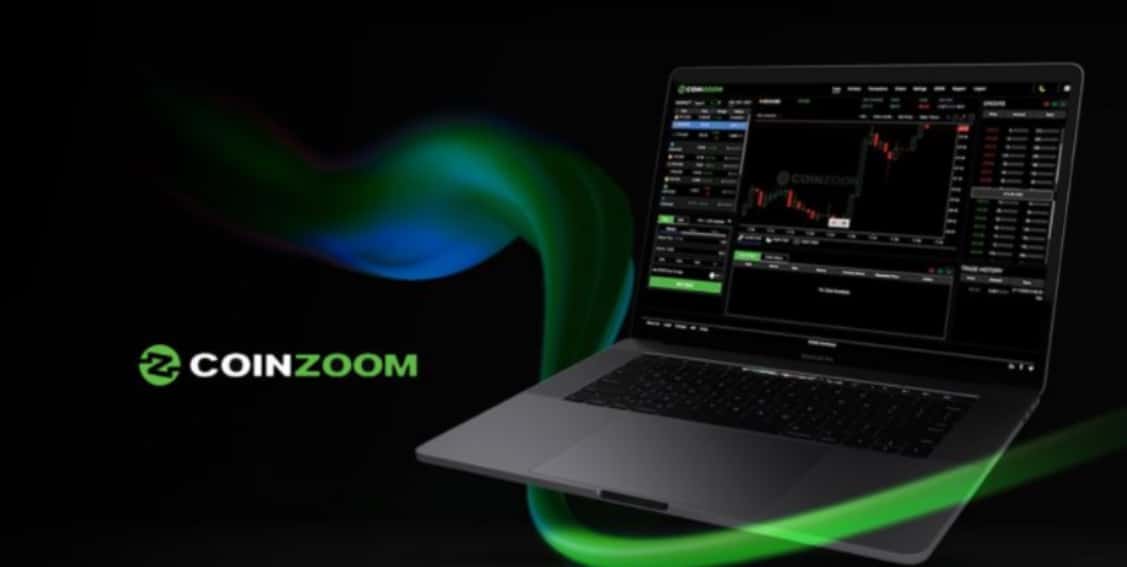
CoinZoom is a U.S based crypto exchange whose focus is to introduce a one-stop-shop that supports crypto trading and real-world use of digital assets. The regulated exchange allows users to invest in over 30 listed tokens and offers a Visa debit card for crypto spending.
CoinZoom users can send crypto to their family, friends or business associates across the globe within minutes.
The firm’s CEO, Todd Crosland, has previously noted that CoinZoom is a ‘complete experience’,
“We offer more than just an avenue for investing in crypto; we make it easy to spend your crypto through our Visa debit card and send your crypto to friends and family overseas instantly for free through our ZoomMe feature.”
CoinZoom is also bridging the gap between traditional finance and crypto through its Ethereum-based token, ZOOM. These tokens are the heart of CoinZoom’s decentralized ecosystem as they allow users to earn a wide range of DeFi benefits.
One way that CoinZoom users can generate passive DeFi income is by staking ZOOM with the support of Algorand (ALGO) and Dash (DASH). This decentralized infrastructure complements CoinZoom’s centralized exchange and offers more opportunities to integrate CeFi and DeFi.
3. Nexo
Image Source: Nexo
Nexo is a CeFi business that features a wide range of products, including an exchange, card, borrowing services and a utility crypto-token, NEXO.
The platform’s approach towards CeDeFi integration pivots on the regulatory scope. Today, regulation remains a big challenge for the crypto ecosystem, especially in the nascent DeFi niche.
While the argument on decentralization may be valid, it is quite noteworthy that some aspects of the DeFi market are not ‘completely’ decentralized.
This ecosystem is powered by Decentralized Autonomous Organizations (DAO), which allow token holders to vote on the future development of a particular DeFi project.
In some cases, developers can manipulate the governance token distribution to favour specific stakeholders. Should this happen, the decentralized nature of a DeFi project could be eroded.
Nexo seeks to bridge this gap by providing infrastructure that DeFi developers can leverage to build regulatory-compliant innovations.
The Nexo CeFi business provides DeFi innovations with a regulated building ecosystem through its expertise, industry connections and licenses across the world.
While the project is centralized, Nexo’s CeDeFi solutions can support regulated DeFi innovations - an initiative that protects both CeFi and DeFi users.
4. Bybit
Image Source: Bybit
Bybit is a crypto derivatives exchange that offers financial instruments such as Bitcoin and Ether futures. The exchange enjoys a wide user range, with most of its clients coming from Asia.
Notably, Bybit is also considering offering its centralized products in a more decentralized way. This means that users may soon be able to experience a CeDeFi ecosystem built around Bybit’s existing products.
A recent Bloomberg feature on Decentralized Finance (DeFi) quoted Bybit’s CEO, Ben Zhou, who expressed optimism in the future of DeFi,
“One of the primary advantages of decentralized finance is that you don’t need a central authority … While the legacy financial ecosystem will continue to play a sizable role, shifting towards decentralization will create new possibilities and growth opportunities.”
Zhou highlighted two paths existing derivative exchanges can take; the first is to conform within legacy finance regulations, while the second option is to build decentralized products.
He noted that Bybit intends to remain regulatory compliant, although the exchange is now considering launching decentralized products.
“Our goals are aligned with regulators - we just think a crypto-native approach is better for crypto. Eventually, Bybit will follow the decentralized path, delivering our centralized products in a more decentralized way.”
5. Binance Smart Chain (BSC)
Image Source: Binance Smart Chain (BSC)
Binance, one of the leading global crypto exchanges, is quite ahead with its CeDeFi solution. The exchange launched Binance Smart Chain (BSC) to allow DeFi developers to integrate their decentralized projects.
BSC now hosts many DeFi projects that enjoy the benefits of both centralized and decentralized ecosystems.
The centralized crypto exchange has become a hub for DeFi natives, competing with Ethereum in daily volumes. However, some stakeholders in the crypto community are still sceptical about the innovation of BSC CeDeFi architecture.
Conclusion
Crypto ecosystems have a long way to go before native products can be adopted by mainstream institutions and investors. A CeDeFi ecosystem is one of the ways to increase this adoption and introduce regulatory-compliant products.
This form of infrastructure is likely to be a defining crypto trend in 2021, with some of the highlighted projects taking centre stage.
Traditional finance and crypto are often viewed as competing ecosystems, which should not be the case. Crypto is an advanced version of today’s markets, with the main distinguishing factor being a decentralized architecture.
Legacy finance ecosystems are centralized in nature, which means that they are controlled from a central point. For instance, central banks and the federal reserve ensure that the money supply is kept in check.
This is not the case for crypto, where operations are pre-coded on decentralized smart contracts - no central parties involved.
Despite the differences between crypto and traditional finance, the two ecosystems are mutually beneficial and likely to succeed through integrated solutions.
As it stands, the crypto industry features both centralized and decentralized projects, which include exchanges, yield platforms and financial instruments, amongst others.
Innovators are now working on solutions to integrate Centralized Finance (CeFi) with Decentralized Finance (DeFi) to build a co-dependent ecosystem.
This upcoming line of innovation has been dubbed ‘CeDeFi’; several crypto projects have already debuted integration solutions, while others are considering supporting DeFi innovations while maintaining a CeFi architecture.
We will highlight five of the emerging CeDeFi projects that are worth keeping an eye on this year.
The project has debuted a smart exchange that integrates various crypto products and exchanges within one platform.
Unizen’s smart exchange is one of the emerging CeDeFi projects that seem to be gaining traction amongst investors and traders. The project has partnered with notable players, including AllianceBlock, for liquidity compliant solutions in the DeFi market.
Ideally, Unizen smart exchange users have the option to search for a wide range of crypto products at their preferred KYC tolerance.
Furthermore, Unizen is set to launch a multi-dynamic staking initiative where users can stake the platform’s governance token, ZCX, on Binance Smart Chain (BSC).
Stakers will receive rewards in form of the ZCX governance token and other digital assets that will be featured as liquidity provision pairs. This initiative will be funded through Unizen’s incubator ZenX labs, node hostings and listings on the hybrid smart exchange.
The Unizen hybrid exchange is built on three major components: Unizen modules, third-party modules, and Unizen custom logic.
Unizen modules will feature in-built products such as the platform’s centralized exchange (CEX), while the third-party modules will support DeFi integrations.
The Custom logic hosts additional trading features, including a cross-chain trade aggregation algorithm and social sentiment indicators.
2. CoinZoom
Image Source: CoinZoom
CoinZoom is a U.S based crypto exchange whose focus is to introduce a one-stop-shop that supports crypto trading and real-world use of digital assets. The regulated exchange allows users to invest in over 30 listed tokens and offers a Visa debit card for crypto spending.
CoinZoom users can send crypto to their family, friends or business associates across the globe within minutes.
The firm’s CEO, Todd Crosland, has previously noted that CoinZoom is a ‘complete experience’,
“We offer more than just an avenue for investing in crypto; we make it easy to spend your crypto through our Visa debit card and send your crypto to friends and family overseas instantly for free through our ZoomMe feature.”
CoinZoom is also bridging the gap between traditional finance and crypto through its Ethereum-based token, ZOOM. These tokens are the heart of CoinZoom’s decentralized ecosystem as they allow users to earn a wide range of DeFi benefits.
One way that CoinZoom users can generate passive DeFi income is by staking ZOOM with the support of Algorand (ALGO) and Dash (DASH). This decentralized infrastructure complements CoinZoom’s centralized exchange and offers more opportunities to integrate CeFi and DeFi.
3. Nexo
Image Source: Nexo
Nexo is a CeFi business that features a wide range of products, including an exchange, card, borrowing services and a utility crypto-token, NEXO.
The platform’s approach towards CeDeFi integration pivots on the regulatory scope. Today, regulation remains a big challenge for the crypto ecosystem, especially in the nascent DeFi niche.
While the argument on decentralization may be valid, it is quite noteworthy that some aspects of the DeFi market are not ‘completely’ decentralized.
This ecosystem is powered by Decentralized Autonomous Organizations (DAO), which allow token holders to vote on the future development of a particular DeFi project.
In some cases, developers can manipulate the governance token distribution to favour specific stakeholders. Should this happen, the decentralized nature of a DeFi project could be eroded.
Nexo seeks to bridge this gap by providing infrastructure that DeFi developers can leverage to build regulatory-compliant innovations.
The Nexo CeFi business provides DeFi innovations with a regulated building ecosystem through its expertise, industry connections and licenses across the world.
While the project is centralized, Nexo’s CeDeFi solutions can support regulated DeFi innovations - an initiative that protects both CeFi and DeFi users.
4. Bybit
Image Source: Bybit
Bybit is a crypto derivatives exchange that offers financial instruments such as Bitcoin and Ether futures. The exchange enjoys a wide user range, with most of its clients coming from Asia.
Notably, Bybit is also considering offering its centralized products in a more decentralized way. This means that users may soon be able to experience a CeDeFi ecosystem built around Bybit’s existing products.
A recent Bloomberg feature on Decentralized Finance (DeFi) quoted Bybit’s CEO, Ben Zhou, who expressed optimism in the future of DeFi,
“One of the primary advantages of decentralized finance is that you don’t need a central authority … While the legacy financial ecosystem will continue to play a sizable role, shifting towards decentralization will create new possibilities and growth opportunities.”
Zhou highlighted two paths existing derivative exchanges can take; the first is to conform within legacy finance regulations, while the second option is to build decentralized products.
He noted that Bybit intends to remain regulatory compliant, although the exchange is now considering launching decentralized products.
“Our goals are aligned with regulators - we just think a crypto-native approach is better for crypto. Eventually, Bybit will follow the decentralized path, delivering our centralized products in a more decentralized way.”
5. Binance Smart Chain (BSC)
Image Source: Binance Smart Chain (BSC)
Binance, one of the leading global crypto exchanges, is quite ahead with its CeDeFi solution. The exchange launched Binance Smart Chain (BSC) to allow DeFi developers to integrate their decentralized projects.
BSC now hosts many DeFi projects that enjoy the benefits of both centralized and decentralized ecosystems.
The centralized crypto exchange has become a hub for DeFi natives, competing with Ethereum in daily volumes. However, some stakeholders in the crypto community are still sceptical about the innovation of BSC CeDeFi architecture.
Conclusion
Crypto ecosystems have a long way to go before native products can be adopted by mainstream institutions and investors. A CeDeFi ecosystem is one of the ways to increase this adoption and introduce regulatory-compliant products.
This form of infrastructure is likely to be a defining crypto trend in 2021, with some of the highlighted projects taking centre stage.
Today’s financial news recap covers IG Group expects lower Q3 revenue, MetaQuotes adds Benzinga news, Match-Trader launches an MCP, and brokers weigh build versus buy.
Finance Magnates Daily Recap brings you the latest news from forex and CFD brokers, fintech, payments, cryptocurrency, digital assets, trading platforms, financial regulation and global markets.
Get the key company news, executive moves, deals, regulatory updates and market developments of the day, in just a few minutes. New episodes published every weekday.
Read more: https://www.financemagnates.com
#FinanceMagnates #ForexNews #FintechNews
Today’s financial news recap covers IG Group expects lower Q3 revenue, MetaQuotes adds Benzinga news, Match-Trader launches an MCP, and brokers weigh build versus buy.
Finance Magnates Daily Recap brings you the latest news from forex and CFD brokers, fintech, payments, cryptocurrency, digital assets, trading platforms, financial regulation and global markets.
Get the key company news, executive moves, deals, regulatory updates and market developments of the day, in just a few minutes. New episodes published every weekday.
Read more: https://www.financemagnates.com
#FinanceMagnates #ForexNews #FintechNews
Today’s financial news recap covers IG Group expects lower Q3 revenue, MetaQuotes adds Benzinga news, Match-Trader launches an MCP, and brokers weigh build versus buy.
Finance Magnates Daily Recap brings you the latest news from forex and CFD brokers, fintech, payments, cryptocurrency, digital assets, trading platforms, financial regulation and global markets.
Get the key company news, executive moves, deals, regulatory updates and market developments of the day, in just a few minutes. New episodes published every weekday.
Read more: https://www.financemagnates.com
#FinanceMagnates #ForexNews #FintechNews
Today’s financial news recap covers IG Group expects lower Q3 revenue, MetaQuotes adds Benzinga news, Match-Trader launches an MCP, and brokers weigh build versus buy.
Finance Magnates Daily Recap brings you the latest news from forex and CFD brokers, fintech, payments, cryptocurrency, digital assets, trading platforms, financial regulation and global markets.
Get the key company news, executive moves, deals, regulatory updates and market developments of the day, in just a few minutes. New episodes published every weekday.
Read more: https://www.financemagnates.com
#FinanceMagnates #ForexNews #FintechNews
Binance Faces EU Scrutiny; CFI Adds Seven-Day Gold Trading
Binance Faces EU Scrutiny; CFI Adds Seven-Day Gold Trading
Binance Faces EU Scrutiny; CFI Adds Seven-Day Gold Trading
Binance Faces EU Scrutiny; CFI Adds Seven-Day Gold Trading
Binance Faces EU Scrutiny; CFI Adds Seven-Day Gold Trading
Binance Faces EU Scrutiny; CFI Adds Seven-Day Gold Trading
Today’s financial news recap covers EU regulators question Binance's use of reverse solicitation, CFI launches seven-day gold trading, the FCA opens a crypto authorisation window, and Polymarket adds trading safeguards.
Finance Magnates Daily Recap brings you the latest news from forex and CFD brokers, fintech, payments, cryptocurrency, digital assets, trading platforms, financial regulation and global markets.
Get the key company news, executive moves, deals, regulatory updates and market developments of the day, in just a few minutes. New episodes published every weekday.
Read more: https://www.financemagnates.com
#FinanceMagnates #ForexNews #FintechNews
Today’s financial news recap covers EU regulators question Binance's use of reverse solicitation, CFI launches seven-day gold trading, the FCA opens a crypto authorisation window, and Polymarket adds trading safeguards.
Finance Magnates Daily Recap brings you the latest news from forex and CFD brokers, fintech, payments, cryptocurrency, digital assets, trading platforms, financial regulation and global markets.
Get the key company news, executive moves, deals, regulatory updates and market developments of the day, in just a few minutes. New episodes published every weekday.
Read more: https://www.financemagnates.com
#FinanceMagnates #ForexNews #FintechNews
Today’s financial news recap covers EU regulators question Binance's use of reverse solicitation, CFI launches seven-day gold trading, the FCA opens a crypto authorisation window, and Polymarket adds trading safeguards.
Finance Magnates Daily Recap brings you the latest news from forex and CFD brokers, fintech, payments, cryptocurrency, digital assets, trading platforms, financial regulation and global markets.
Get the key company news, executive moves, deals, regulatory updates and market developments of the day, in just a few minutes. New episodes published every weekday.
Read more: https://www.financemagnates.com
#FinanceMagnates #ForexNews #FintechNews
Today’s financial news recap covers EU regulators question Binance's use of reverse solicitation, CFI launches seven-day gold trading, the FCA opens a crypto authorisation window, and Polymarket adds trading safeguards.
Finance Magnates Daily Recap brings you the latest news from forex and CFD brokers, fintech, payments, cryptocurrency, digital assets, trading platforms, financial regulation and global markets.
Get the key company news, executive moves, deals, regulatory updates and market developments of the day, in just a few minutes. New episodes published every weekday.
Read more: https://www.financemagnates.com
#FinanceMagnates #ForexNews #FintechNews
Today’s financial news recap covers EU regulators question Binance's use of reverse solicitation, CFI launches seven-day gold trading, the FCA opens a crypto authorisation window, and Polymarket adds trading safeguards.
Finance Magnates Daily Recap brings you the latest news from forex and CFD brokers, fintech, payments, cryptocurrency, digital assets, trading platforms, financial regulation and global markets.
Get the key company news, executive moves, deals, regulatory updates and market developments of the day, in just a few minutes. New episodes published every weekday.
Read more: https://www.financemagnates.com
#FinanceMagnates #ForexNews #FintechNews
Today’s financial news recap covers EU regulators question Binance's use of reverse solicitation, CFI launches seven-day gold trading, the FCA opens a crypto authorisation window, and Polymarket adds trading safeguards.
Finance Magnates Daily Recap brings you the latest news from forex and CFD brokers, fintech, payments, cryptocurrency, digital assets, trading platforms, financial regulation and global markets.
Get the key company news, executive moves, deals, regulatory updates and market developments of the day, in just a few minutes. New episodes published every weekday.
Read more: https://www.financemagnates.com
#FinanceMagnates #ForexNews #FintechNews
The5ers Connects Trading Accounts to AI; EC Markets Doubles UK Revenue
The5ers Connects Trading Accounts to AI; EC Markets Doubles UK Revenue
The5ers Connects Trading Accounts to AI; EC Markets Doubles UK Revenue
The5ers Connects Trading Accounts to AI; EC Markets Doubles UK Revenue
The5ers Connects Trading Accounts to AI; EC Markets Doubles UK Revenue
The5ers Connects Trading Accounts to AI; EC Markets Doubles UK Revenue
Today’s financial news recap covers The5ers connects trading accounts to ChatGPT and Claude, EC Markets doubles UK revenue, ThinkMarkets returns to profit, and Alpaca advances its Southeast Asia expansion.
Finance Magnates Daily Recap brings you the latest news from forex and CFD brokers, fintech, payments, cryptocurrency, digital assets, trading platforms, financial regulation and global markets.
Get the key company news, executive moves, deals, regulatory updates and market developments of the day, in just a few minutes. New episodes published every weekday.
Read more: https://www.financemagnates.com
#FinanceMagnates #ForexNews #FintechNews
Today’s financial news recap covers The5ers connects trading accounts to ChatGPT and Claude, EC Markets doubles UK revenue, ThinkMarkets returns to profit, and Alpaca advances its Southeast Asia expansion.
Finance Magnates Daily Recap brings you the latest news from forex and CFD brokers, fintech, payments, cryptocurrency, digital assets, trading platforms, financial regulation and global markets.
Get the key company news, executive moves, deals, regulatory updates and market developments of the day, in just a few minutes. New episodes published every weekday.
Read more: https://www.financemagnates.com
#FinanceMagnates #ForexNews #FintechNews
Today’s financial news recap covers The5ers connects trading accounts to ChatGPT and Claude, EC Markets doubles UK revenue, ThinkMarkets returns to profit, and Alpaca advances its Southeast Asia expansion.
Finance Magnates Daily Recap brings you the latest news from forex and CFD brokers, fintech, payments, cryptocurrency, digital assets, trading platforms, financial regulation and global markets.
Get the key company news, executive moves, deals, regulatory updates and market developments of the day, in just a few minutes. New episodes published every weekday.
Read more: https://www.financemagnates.com
#FinanceMagnates #ForexNews #FintechNews
Today’s financial news recap covers The5ers connects trading accounts to ChatGPT and Claude, EC Markets doubles UK revenue, ThinkMarkets returns to profit, and Alpaca advances its Southeast Asia expansion.
Finance Magnates Daily Recap brings you the latest news from forex and CFD brokers, fintech, payments, cryptocurrency, digital assets, trading platforms, financial regulation and global markets.
Get the key company news, executive moves, deals, regulatory updates and market developments of the day, in just a few minutes. New episodes published every weekday.
Read more: https://www.financemagnates.com
#FinanceMagnates #ForexNews #FintechNews
Today’s financial news recap covers The5ers connects trading accounts to ChatGPT and Claude, EC Markets doubles UK revenue, ThinkMarkets returns to profit, and Alpaca advances its Southeast Asia expansion.
Finance Magnates Daily Recap brings you the latest news from forex and CFD brokers, fintech, payments, cryptocurrency, digital assets, trading platforms, financial regulation and global markets.
Get the key company news, executive moves, deals, regulatory updates and market developments of the day, in just a few minutes. New episodes published every weekday.
Read more: https://www.financemagnates.com
#FinanceMagnates #ForexNews #FintechNews
Today’s financial news recap covers The5ers connects trading accounts to ChatGPT and Claude, EC Markets doubles UK revenue, ThinkMarkets returns to profit, and Alpaca advances its Southeast Asia expansion.
Finance Magnates Daily Recap brings you the latest news from forex and CFD brokers, fintech, payments, cryptocurrency, digital assets, trading platforms, financial regulation and global markets.
Get the key company news, executive moves, deals, regulatory updates and market developments of the day, in just a few minutes. New episodes published every weekday.
Read more: https://www.financemagnates.com
#FinanceMagnates #ForexNews #FintechNews
MyForexFunds Brand Rights Sold; FundedSeat Closes
MyForexFunds Brand Rights Sold; FundedSeat Closes
MyForexFunds Brand Rights Sold; FundedSeat Closes
MyForexFunds Brand Rights Sold; FundedSeat Closes
MyForexFunds Brand Rights Sold; FundedSeat Closes
MyForexFunds Brand Rights Sold; FundedSeat Closes
Today’s financial news recap covers MyForexFunds' brand assets are sold to a Dubai-based firm, FundedSeat closes, Valbury adds DXtrade, and Germany expands its fight against trading fraud.
Finance Magnates Daily Recap brings you the latest news from forex and CFD brokers, fintech, payments, cryptocurrency, digital assets, trading platforms, financial regulation and global markets.
Get the key company news, executive moves, deals, regulatory updates and market developments of the day, in just a few minutes. New episodes published every weekday.
Read more: https://www.financemagnates.com
#FinanceMagnates #ForexNews #FintechNews
Today’s financial news recap covers MyForexFunds' brand assets are sold to a Dubai-based firm, FundedSeat closes, Valbury adds DXtrade, and Germany expands its fight against trading fraud.
Finance Magnates Daily Recap brings you the latest news from forex and CFD brokers, fintech, payments, cryptocurrency, digital assets, trading platforms, financial regulation and global markets.
Get the key company news, executive moves, deals, regulatory updates and market developments of the day, in just a few minutes. New episodes published every weekday.
Read more: https://www.financemagnates.com
#FinanceMagnates #ForexNews #FintechNews
Today’s financial news recap covers MyForexFunds' brand assets are sold to a Dubai-based firm, FundedSeat closes, Valbury adds DXtrade, and Germany expands its fight against trading fraud.
Finance Magnates Daily Recap brings you the latest news from forex and CFD brokers, fintech, payments, cryptocurrency, digital assets, trading platforms, financial regulation and global markets.
Get the key company news, executive moves, deals, regulatory updates and market developments of the day, in just a few minutes. New episodes published every weekday.
Read more: https://www.financemagnates.com
#FinanceMagnates #ForexNews #FintechNews
Today’s financial news recap covers MyForexFunds' brand assets are sold to a Dubai-based firm, FundedSeat closes, Valbury adds DXtrade, and Germany expands its fight against trading fraud.
Finance Magnates Daily Recap brings you the latest news from forex and CFD brokers, fintech, payments, cryptocurrency, digital assets, trading platforms, financial regulation and global markets.
Get the key company news, executive moves, deals, regulatory updates and market developments of the day, in just a few minutes. New episodes published every weekday.
Read more: https://www.financemagnates.com
#FinanceMagnates #ForexNews #FintechNews
Today’s financial news recap covers MyForexFunds' brand assets are sold to a Dubai-based firm, FundedSeat closes, Valbury adds DXtrade, and Germany expands its fight against trading fraud.
Finance Magnates Daily Recap brings you the latest news from forex and CFD brokers, fintech, payments, cryptocurrency, digital assets, trading platforms, financial regulation and global markets.
Get the key company news, executive moves, deals, regulatory updates and market developments of the day, in just a few minutes. New episodes published every weekday.
Read more: https://www.financemagnates.com
#FinanceMagnates #ForexNews #FintechNews
Today’s financial news recap covers MyForexFunds' brand assets are sold to a Dubai-based firm, FundedSeat closes, Valbury adds DXtrade, and Germany expands its fight against trading fraud.
Finance Magnates Daily Recap brings you the latest news from forex and CFD brokers, fintech, payments, cryptocurrency, digital assets, trading platforms, financial regulation and global markets.
Get the key company news, executive moves, deals, regulatory updates and market developments of the day, in just a few minutes. New episodes published every weekday.
Read more: https://www.financemagnates.com
#FinanceMagnates #ForexNews #FintechNews
Learn from people who actually work in the industry.
Learn from people who actually work in the industry.
Learn from people who actually work in the industry.
Learn from people who actually work in the industry.
Learn from people who actually work in the industry.
Learn from people who actually work in the industry.
The value of learning from active professionals is the perspective they bring from dealing with real challenges every day.
That first-hand experience can turn concepts into practical, actionable insights.
Discover the people behind FM Academy’s courses and the industry experience they bring to professional education.
#FMAcademy #FinanceMagnates #Fintech #FinanceCareers #ProfessionalDevelopment
The value of learning from active professionals is the perspective they bring from dealing with real challenges every day.
That first-hand experience can turn concepts into practical, actionable insights.
Discover the people behind FM Academy’s courses and the industry experience they bring to professional education.
#FMAcademy #FinanceMagnates #Fintech #FinanceCareers #ProfessionalDevelopment
The value of learning from active professionals is the perspective they bring from dealing with real challenges every day.
That first-hand experience can turn concepts into practical, actionable insights.
Discover the people behind FM Academy’s courses and the industry experience they bring to professional education.
#FMAcademy #FinanceMagnates #Fintech #FinanceCareers #ProfessionalDevelopment
The value of learning from active professionals is the perspective they bring from dealing with real challenges every day.
That first-hand experience can turn concepts into practical, actionable insights.
Discover the people behind FM Academy’s courses and the industry experience they bring to professional education.
#FMAcademy #FinanceMagnates #Fintech #FinanceCareers #ProfessionalDevelopment
The value of learning from active professionals is the perspective they bring from dealing with real challenges every day.
That first-hand experience can turn concepts into practical, actionable insights.
Discover the people behind FM Academy’s courses and the industry experience they bring to professional education.
#FMAcademy #FinanceMagnates #Fintech #FinanceCareers #ProfessionalDevelopment
The value of learning from active professionals is the perspective they bring from dealing with real challenges every day.
That first-hand experience can turn concepts into practical, actionable insights.
Discover the people behind FM Academy’s courses and the industry experience they bring to professional education.
#FMAcademy #FinanceMagnates #Fintech #FinanceCareers #ProfessionalDevelopment