
How does climbing four peaks across four continents, ending with Mount Kilimanjaro, create a stronger workplace culture? For Exness, the answer lies in bringing employees together, encouraging resilience and creating connections beyond everyday working relationships.
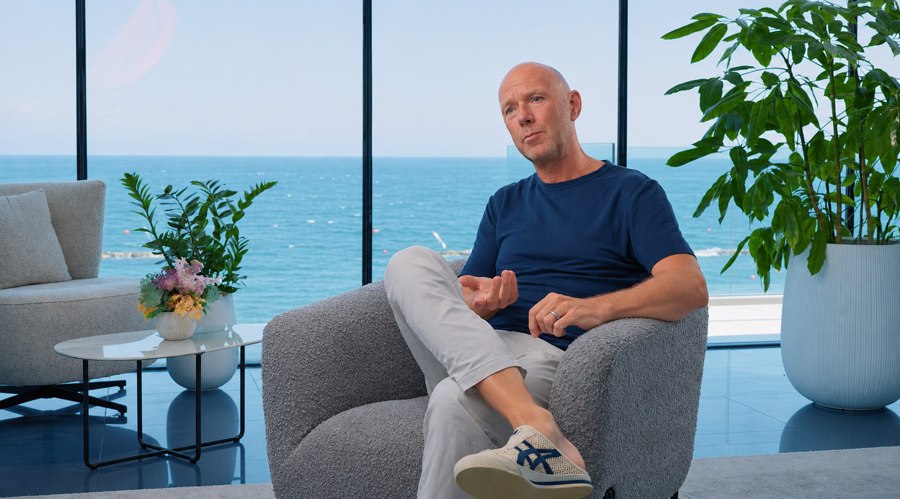
"You challenge yourself, you win over yourself, and you do it together. It's a powerful thing," Martin Johan Thorvaldsson, Head of Community at Exness, told Finance Magnates.
The initiative, known as Reaching New Heights, was part of Exness's wider approach to employee engagement and corporate culture. Through shared experiences, the broker aims to strengthen teamwork and create a sense of belonging across departments, nationalities and offices.
How Exness Uses Team-Building to Strengthen Workplace Culture
The year-long Reaching New Heights initiative brought together more than 200 contributors across its mountain-climbing challenges. According to Thorvaldsson, the final ascent of Mount Kilimanjaro saw 17 employees representing nine nationalities and ten departments reach the summit.
Beyond the physical achievement, the project was designed to encourage resilience, teamwork and connections between colleagues who might not ordinarily work together.
Thorvaldsson identified inspiration, employee health and team-building as three important outcomes. He explained that shared challenges can strengthen relationships across departments while reinforcing company values such as courage, honesty and collective achievement.
"Here you climb the mountain together with your good friends and colleagues and you win over yourself," he said.
For a company with employees from 97 nationalities and offices in different locations, these connections are particularly valuable. Shared experiences can help open communication channels and make colleagues more comfortable working with one another.
Why Employee Engagement Goes Beyond Workplace Benefits
Exness's community initiatives are not limited to demanding physical challenges. Thorvaldsson explained that creating an inclusive workplace culture requires activities that appeal to different interests.
While some employees enjoy competitions and outdoor adventures, others prefer cultural or creative experiences. The community department's role is to create opportunities for employees to participate in activities they find meaningful.
"You need to provide a little bit for everything and something that's meaningful for them," Thorvaldsson noted.
One example was a Halloween flash mob at Limassol Castle Square, where more than 40 Exness employees performed Michael Jackson's Thriller after more than 15 rehearsals.
The initiative was supported by the company but depended on employees voluntarily committing their time and effort.
According to Thorvaldsson, projects like these can create a stronger sense of belonging, including among colleagues who do not participate directly.
He also linked employee engagement to retention, explaining that the community department aims to create an additional layer of connection that encourages people to remain with the company for years rather than viewing it as a short-term workplace.
However, he acknowledged that cultural initiatives alone cannot compensate for weaknesses in essential employment conditions or management practices.
Balancing High Performance with a Supportive Corporate Culture
At Exness, high performance expectations are accompanied by efforts to support employees through benefits, community activities and employee wellbeing initiatives, according to Thorvaldsson.
"We ask a lot, but we also give a lot back," he said.
While acknowledging that a supportive culture does not automatically lead to stronger business results, Thorvaldsson pointed out that leadership, compensation, business success and other organisational factors also shape employees' workplace experiences.
In his view, the contribution of community initiatives becomes more meaningful when those fundamentals are already in place.
Shared experiences can improve communication between colleagues, help establish trust and encourage more direct conversations. These connections are particularly relevant to Exness because of its international workforce and organisational structure.
Thorvaldsson also stressed that workplace culture must be genuine rather than something created primarily for external recognition.
"Culture is what you do when nobody's looking," he highlighted.
His argument was that employees judge a company's values through everyday behaviour and consistent decisions, not simply through public statements or organised events.
Exness's Corporate Social Responsibility Projects in Cyprus and Beyond
Beyond employee engagement, Exness's community strategy also extends to corporate social responsibility and community investment.
Thorvaldsson described several initiatives focused on healthcare, education and environmental protection, with an emphasis on projects where the company can identify a clear purpose and measure their contribution.
These include the donation of 52 vehicles to organisations supporting cancer patients in Cyprus, the development of a day-care centre for children with complex medical conditions in Limassol, and a wildfire detection project using satellite imagery and a neural network in collaboration with other TechIsland companies. Exness has also supported more than 70 students through international scholarship programmes, including in Cyprus, South Africa and Kenya, with institutions such as MIT, Harvard, Cambridge and Oxford among those mentioned.
These initiatives reflect the company's stated preference for projects that address identifiable needs and can be assessed over time.
"We keep and scale what works and the rest we cancel out,” he said.
Can Corporate Social Responsibility Build Trust in a Broker?
Thorvaldsson also addressed whether employee engagement and social responsibility can contribute to a financial services company's reputation.
While community initiatives are unlikely to be the deciding factor when a customer chooses a broker, he believes sustained commitments to employees and wider society can strengthen a company's reputation, particularly when maintained over several years.
Long-term scholarship programmes and substantial community investments were among the examples he used to explain how corporate actions can communicate the company's priorities.
"Community events should not be done primarily for branding purposes," Thorvaldsson stressed.
The distinction, in his view, is between initiatives designed primarily to attract attention and projects supported because they have genuine value to employees or the wider community.
For Exness, the intended outcome is a workplace and community strategy that employees can identify with, rather than a collection of activities organised for publicity.
Why Building Workplace Culture Requires Long-Term Commitment
Building a supportive workplace culture requires ongoing attention, with activities shaped by what employees find meaningful rather than a fixed programme of events.
Thorvaldsson emphasised the importance of consistency and employee participation, arguing that a company cannot establish its culture through a handful of successful initiatives if the same principles are not reflected in everyday working relationships.
"Culture is a marathon," he said, emphasising that meaningful initiatives need to be repeated and refined over time.
For Exness, this means combining high performance expectations with employee support, opportunities for participation and community projects that extend beyond the workplace.
The underlying message from Thorvaldsson's interview is that workplace culture cannot be established through branding alone. It requires consistent actions, long-term commitment and genuine connections between employees.


