The Next Generation of Institutional Markets Will Be Built On-Chain

Wednesday, 01/07/2026 | 08:03 GMT by MarketAcross
Disclaimer
  • Crypto.com's Iskandar Vanblarcum on scaling institutional on-chain finance.
The Next Generation of Institutional Markets Will Be Built On-Chain

Crypto.com's new Exchange chief on institutional adoption, prediction markets, and why traditional finance is moving on-chain.

Institutional adoption of digital assets is entering a new phase. The conversation is no longer centered on whether traditional finance will embrace blockchain, but how quickly regulated infrastructure can evolve to meet institutional demand.

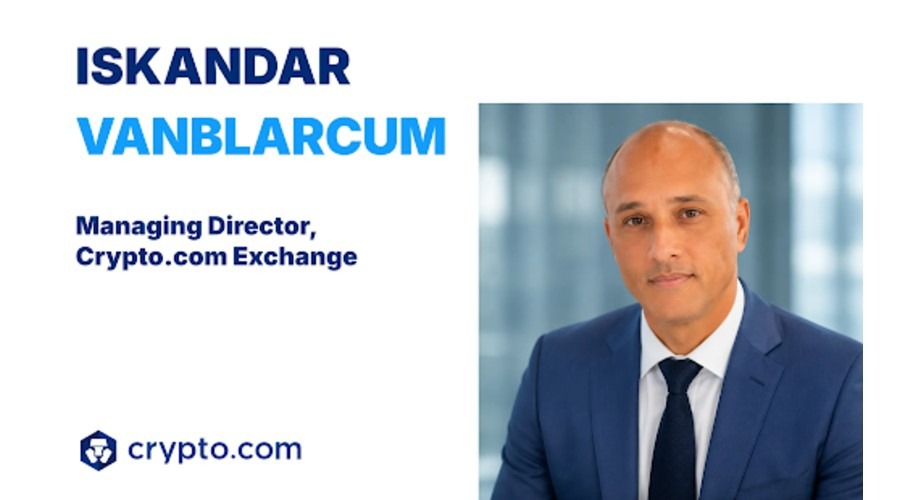
Leading that effort at Crypto.com Exchange is Iskandar Vanblarcum, who recently joined as Managing Director after more than two decades in investment banking and financial market infrastructure. Having held senior roles at the London Stock Exchange Group and Barclays before moving into digital assets, Vanblarcum now oversees Crypto.com's institutional strategy, including the expansion of regulated prediction markets and real-world asset offerings.

As tokenized assets gain traction and financial markets increasingly shift on-chain, Vanblarcum believes the exchanges that combine institutional-grade infrastructure with regulatory certainty will define the next generation of finance.

1. You spent more than 20 years in traditional finance before moving into crypto. What made you take that leap, and what was it about Crypto.com that made you want to join now?

I firmly believe the traditional financial ecosystem is being rebuilt on-chain, and the platforms that get regulation and product right will define this transition. The infrastructure is ready, institutional capital is flowing, and the next chapter will be about advancing on-chain venues that can support that capital.

The Crypto.com Exchange is already an impressive platform, and I'm looking forward to helping strengthen its reputation even further. It's exciting to be at the forefront of this new era of finance. Crypto.com is evolving beyond pure crypto trading and building one of the world's most comprehensive financial technology platforms.

2. You've worked with regulators across Europe, the Middle East and other markets. What do you think institutions are looking for in an exchange today, and where does the industry still have work to do?

This is a pivotal moment for institutional participation in digital assets. Firms want a seamless trading experience, but regulation, compliance, security, transparency, and asset safeguarding remain non-negotiable.

Beyond that, institutional traders expect reduced friction, faster settlement, 24/7 market access, deep liquidity, ultra-low latency infrastructure, and premium client support for complex execution needs. These are all areas the Crypto.com Exchange has prioritized and continues to invest in.

The industry itself is also maturing alongside more focused regulation. Our role is to keep innovating while ensuring we maintain one of the most regulated and compliant offerings in the market because building trust is ultimately what attracts institutional capital.

3. One of your first priorities is expanding Crypto.com's prediction markets offering. Why do you think this is the right time for prediction markets, and where do you see the biggest opportunity?

Prediction markets are rapidly becoming one of the most in-demand financial instruments available. They offer institutions another way to express or hedge risk, and we're at a similar stage to where derivatives were in the 1980s. Institutional investors recognize their value—they're simply looking for a regulated, secure venue to access them.

That's where Crypto.com Exchange has an opportunity. We were the first major crypto platform to secure a full suite of U.S. CFTC derivatives licenses, and prediction markets fall squarely within that regulatory framework. When you combine compliant products with custody, collateral management, deep liquidity, and institutional infrastructure, you create a compelling platform for professional investors.

4. Crypto.com Exchange has already built a strong institutional business. As you step into this role, what are your biggest priorities over the next year?

Alongside expanding prediction markets through our regulated entities, we're heavily focused on real-world assets.

Supporting BlackRock's BUIDL fund as trading collateral was an important milestone, but it's only the beginning. The next step is bringing perpetual markets for real-world exposures—including equities, commodities, metals, and pre-IPO assets—on-chain with 24/7 access and institutional-grade infrastructure.

The Crypto.com Exchange is already well positioned to deliver this, and I'm looking forward to accelerating the development of these products.

5. There's been a lot of momentum around tokenized real-world assets lately. Where do you see the market heading, and what role do you want Crypto.com to play?

The pace of innovation in tokenization has been remarkable. Industry estimates suggest tokenized digital securities could become a $16 trillion market by 2030, growing to $19 trillion by 2033.

That growth reflects a broader shift toward tokenizing virtually every asset class—from equities and bonds to commodities, funds, real estate, and even art. Bringing these assets on-chain addresses longstanding inefficiencies by enabling 24/7 trading, faster settlement, lower costs, and greater global liquidity.

Crypto.com intends to play a central role by providing the infrastructure that bridges traditional financial assets with digital markets.

6. Institutional interest in crypto has changed significantly over the past few years. What's been the biggest shift, and what still needs to happen before digital assets become a standard part of institutional portfolios?

The approval of Bitcoin ETFs in the U.S. marked the beginning of meaningful institutional participation, but we're still early.

Today, institutions increasingly view digital assets as part of a long-term balance sheet strategy rather than a short-term trade. We've seen sustained ETF inflows, rapid growth in digital asset treasury companies, and new ways to improve capital efficiency through tokenized collateral.

There are still challenges around cross-border compliance, but regulators continue to establish stronger frameworks. At the same time, traditional financial institutions need to continue investing in custody, risk management, and infrastructure that supports 24/7 trading, settlement, and liquidity if tokenization is going to reach its full potential.

7. Crypto.com was one of the first exchanges to support BlackRock's BUIDL fund as margin collateral. What does that say about where traditional finance and digital assets are heading?

It was a landmark moment that highlights the convergence of traditional finance and digital assets. It points toward a future where financial markets increasingly operate on-chain and capital becomes more programmable, efficient, and accessible around the clock.

The integration also demonstrates how traditional asset managers like BlackRock can work alongside regulated crypto platforms to build a more efficient financial system.

By allowing institutions to earn yield on tokenized assets while simultaneously using them as trading collateral, we're significantly improving capital efficiency and reducing the friction of idle collateral.

8. If we catch up a year or two from now, what would make you feel like you've been successful in this role?

My goal is to build the institutional venue that the next decade of on-chain finance deserves while continuing Crypto.com's mission of bridging traditional finance and the digital asset ecosystem.

In this industry, two years is a long time. But they're also likely to be defining years for institutional adoption. Success, for me, means helping the Crypto.com Exchange build on its already strong reputation and establishing it as the platform institutions trust as more financial markets move on-chain.

Building the institutional exchange for the on-chain era

As institutional investors become increasingly comfortable with digital assets, the competitive advantage is shifting away from simply offering crypto trading toward delivering the infrastructure, regulatory certainty, and financial products that traditional markets expect.

For Vanblarcum, prediction markets, tokenized real-world assets, and institutional-grade infrastructure are not separate initiatives, they are the building blocks of a financial system that operates continuously, settles instantly, and increasingly exists on-chain. The next phase of digital assets, he argues, won't be defined by speculation, but by the modernization of global capital markets.

Crypto.com's new Exchange chief on institutional adoption, prediction markets, and why traditional finance is moving on-chain.

Institutional adoption of digital assets is entering a new phase. The conversation is no longer centered on whether traditional finance will embrace blockchain, but how quickly regulated infrastructure can evolve to meet institutional demand.

Leading that effort at Crypto.com Exchange is Iskandar Vanblarcum, who recently joined as Managing Director after more than two decades in investment banking and financial market infrastructure. Having held senior roles at the London Stock Exchange Group and Barclays before moving into digital assets, Vanblarcum now oversees Crypto.com's institutional strategy, including the expansion of regulated prediction markets and real-world asset offerings.

As tokenized assets gain traction and financial markets increasingly shift on-chain, Vanblarcum believes the exchanges that combine institutional-grade infrastructure with regulatory certainty will define the next generation of finance.

1. You spent more than 20 years in traditional finance before moving into crypto. What made you take that leap, and what was it about Crypto.com that made you want to join now?

I firmly believe the traditional financial ecosystem is being rebuilt on-chain, and the platforms that get regulation and product right will define this transition. The infrastructure is ready, institutional capital is flowing, and the next chapter will be about advancing on-chain venues that can support that capital.

The Crypto.com Exchange is already an impressive platform, and I'm looking forward to helping strengthen its reputation even further. It's exciting to be at the forefront of this new era of finance. Crypto.com is evolving beyond pure crypto trading and building one of the world's most comprehensive financial technology platforms.

2. You've worked with regulators across Europe, the Middle East and other markets. What do you think institutions are looking for in an exchange today, and where does the industry still have work to do?

This is a pivotal moment for institutional participation in digital assets. Firms want a seamless trading experience, but regulation, compliance, security, transparency, and asset safeguarding remain non-negotiable.

Beyond that, institutional traders expect reduced friction, faster settlement, 24/7 market access, deep liquidity, ultra-low latency infrastructure, and premium client support for complex execution needs. These are all areas the Crypto.com Exchange has prioritized and continues to invest in.

The industry itself is also maturing alongside more focused regulation. Our role is to keep innovating while ensuring we maintain one of the most regulated and compliant offerings in the market because building trust is ultimately what attracts institutional capital.

3. One of your first priorities is expanding Crypto.com's prediction markets offering. Why do you think this is the right time for prediction markets, and where do you see the biggest opportunity?

Prediction markets are rapidly becoming one of the most in-demand financial instruments available. They offer institutions another way to express or hedge risk, and we're at a similar stage to where derivatives were in the 1980s. Institutional investors recognize their value—they're simply looking for a regulated, secure venue to access them.

That's where Crypto.com Exchange has an opportunity. We were the first major crypto platform to secure a full suite of U.S. CFTC derivatives licenses, and prediction markets fall squarely within that regulatory framework. When you combine compliant products with custody, collateral management, deep liquidity, and institutional infrastructure, you create a compelling platform for professional investors.

4. Crypto.com Exchange has already built a strong institutional business. As you step into this role, what are your biggest priorities over the next year?

Alongside expanding prediction markets through our regulated entities, we're heavily focused on real-world assets.

Supporting BlackRock's BUIDL fund as trading collateral was an important milestone, but it's only the beginning. The next step is bringing perpetual markets for real-world exposures—including equities, commodities, metals, and pre-IPO assets—on-chain with 24/7 access and institutional-grade infrastructure.

The Crypto.com Exchange is already well positioned to deliver this, and I'm looking forward to accelerating the development of these products.

5. There's been a lot of momentum around tokenized real-world assets lately. Where do you see the market heading, and what role do you want Crypto.com to play?

The pace of innovation in tokenization has been remarkable. Industry estimates suggest tokenized digital securities could become a $16 trillion market by 2030, growing to $19 trillion by 2033.

That growth reflects a broader shift toward tokenizing virtually every asset class—from equities and bonds to commodities, funds, real estate, and even art. Bringing these assets on-chain addresses longstanding inefficiencies by enabling 24/7 trading, faster settlement, lower costs, and greater global liquidity.

Crypto.com intends to play a central role by providing the infrastructure that bridges traditional financial assets with digital markets.

6. Institutional interest in crypto has changed significantly over the past few years. What's been the biggest shift, and what still needs to happen before digital assets become a standard part of institutional portfolios?

The approval of Bitcoin ETFs in the U.S. marked the beginning of meaningful institutional participation, but we're still early.

Today, institutions increasingly view digital assets as part of a long-term balance sheet strategy rather than a short-term trade. We've seen sustained ETF inflows, rapid growth in digital asset treasury companies, and new ways to improve capital efficiency through tokenized collateral.

There are still challenges around cross-border compliance, but regulators continue to establish stronger frameworks. At the same time, traditional financial institutions need to continue investing in custody, risk management, and infrastructure that supports 24/7 trading, settlement, and liquidity if tokenization is going to reach its full potential.

7. Crypto.com was one of the first exchanges to support BlackRock's BUIDL fund as margin collateral. What does that say about where traditional finance and digital assets are heading?

It was a landmark moment that highlights the convergence of traditional finance and digital assets. It points toward a future where financial markets increasingly operate on-chain and capital becomes more programmable, efficient, and accessible around the clock.

The integration also demonstrates how traditional asset managers like BlackRock can work alongside regulated crypto platforms to build a more efficient financial system.

By allowing institutions to earn yield on tokenized assets while simultaneously using them as trading collateral, we're significantly improving capital efficiency and reducing the friction of idle collateral.

8. If we catch up a year or two from now, what would make you feel like you've been successful in this role?

My goal is to build the institutional venue that the next decade of on-chain finance deserves while continuing Crypto.com's mission of bridging traditional finance and the digital asset ecosystem.

In this industry, two years is a long time. But they're also likely to be defining years for institutional adoption. Success, for me, means helping the Crypto.com Exchange build on its already strong reputation and establishing it as the platform institutions trust as more financial markets move on-chain.

Building the institutional exchange for the on-chain era

As institutional investors become increasingly comfortable with digital assets, the competitive advantage is shifting away from simply offering crypto trading toward delivering the infrastructure, regulatory certainty, and financial products that traditional markets expect.

For Vanblarcum, prediction markets, tokenized real-world assets, and institutional-grade infrastructure are not separate initiatives, they are the building blocks of a financial system that operates continuously, settles instantly, and increasingly exists on-chain. The next phase of digital assets, he argues, won't be defined by speculation, but by the modernization of global capital markets.

Disclaimer

Thought Leadership

!"#$%&'()*+,-./0123456789:;<=>?@ABCDEFGHIJKLMNOPQRSTUVWXYZ[\]^_`abcdefghijklmnopqrstuvwxyz{|} !"#$%&'()*+,-./0123456789:;<=>?@ABCDEFGHIJKLMNOPQRSTUVWXYZ[\]^_`abcdefghijklmnopqrstuvwxyz{|}