Trading Frequency Tells Us What Traders Do - Not Why They Do It

Wednesday, 12/08/2026 | 06:09 GMT by Oded Shefer
  • Oded Shefer, CEO of CPattern, says pessimism may drive Gen Z into trading, not just result from it. Frequency alone can't explain the 64% "failure" stat.
  • A trader who executes 30 trades may be developing confidence and experience. Another trader executing the same 30 trades may be reacting emotionally to losses. From the perspective of trading frequency alone, they look identical.
Trader Behaviour

Imagine two out of every three young men who trade stocks every day looking in the mirror and calling themselves a failure. That's not a hypothetical — it's what a recent Bloomberg study found: 64% of daily-trading men aged 18–29 describe themselves this way. Researchers and regulators have rushed to explain the number, pointing mainly to two culprits: gamified app mechanics that turn investing into a slot machine, and a deeper financial pessimism gripping young investors.

It's a tidy explanation. But tidy explanations rarely survive contact with messy human behavior, and this one leaves several important questions unanswered. Before accepting the headline at face value, I want to unpack a few points worth thinking through.

1. What Came First: Trading or the Sense of Failure?

One should ask whether a sense of failure existed before entering stock trading apps.

When we observe a correlation between frequent trading and a sense of failure, there are several possible explanations. Trading may contribute to the emotional state, the emotional state may contribute to the decision to trade, or both may influence each other over time.

Trading frequency tells us what people do. By itself, it does not necessarily tell us why they do it, and there could be a large variety of reasons behind it.

2. Financial Pessimism May Also Motivate Trading

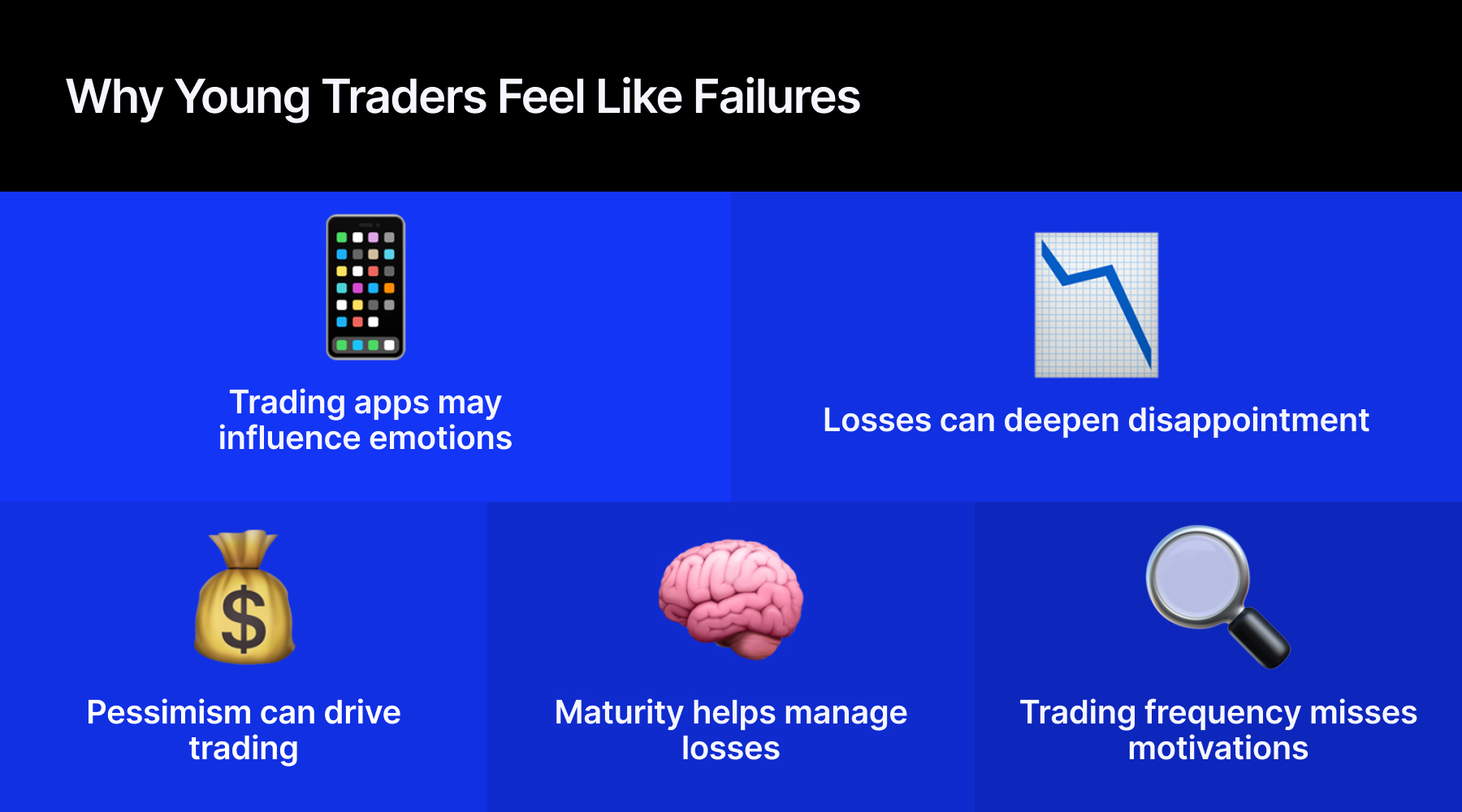
Financial pessimism among Gen Z investors may itself be an important motivation to enter financial markets.

Young people who believe that achieving financial security through traditional routes is becoming increasingly difficult may naturally look for other opportunities to improve their financial position.
Trader Behaviour

At the same time, younger traders may be more sensitive to losses and may experience a stronger sense of failure when trading does not produce the results they expected.

Experiencing losses and learning how to respond to them is also part of developing maturity as a trader. Trading requires the ability to manage uncertainty, disappointment and emotional reactions.

It could, therefore, be that some young traders leave trading before developing this maturity and consequently carry a stronger sense of failure from the experience.

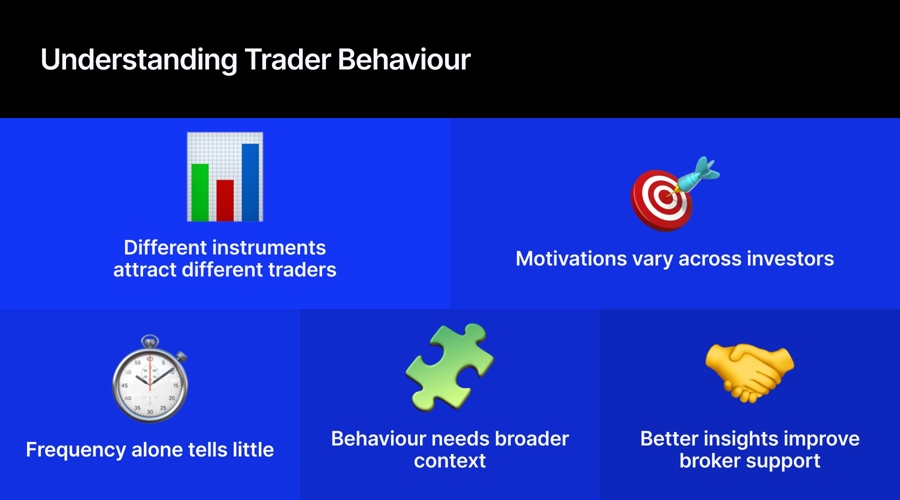
3. Different Financial Instruments Attract Different Traders

The study referred specifically to stock trading, and caution is required before generalizing its conclusions to other instruments such as CFDs, forex, options, crypto or prediction markets.

Each financial instrument may attract a different audience with different motivations, expectations, experience levels and attitudes toward risk.

A young person investing in stocks with a long-term financial objective may behave very differently from a CFD trader, an options trader or someone participating in a prediction market.

Looking only at trading frequency may hide these differences.

Understanding Behaviour Requires More Than One Metric

No single metric can put forth the psycology of a trader. And this leads to a broader point about behavioral analytics.

Understanding human behavior generally requires collecting a variety of variables over time and interpreting them within a clear context: A trader who executes 30 trades may be developing confidence and experience. Another trader executing the same 30 trades may be reacting emotionally to losses. From the perspective of trading frequency alone, they look identical.

To understand the difference, frequency needs to be examined together with other behavioral information: trading history, experience, trading style profile and other variables.

A Broader View of Trader Engagement

My own perspective is that trading stocks or CFDs, particularly during uncertain geopolitical and economic periods, requires emotional maturity, resilience, patience and self-discipline.

Young investors and traders may naturally be attracted to financial markets for quick returns, while at the same time being more vulnerable to losses and to the emotional states that accompany them.

Gamified applications, when designed and delivered responsibly, can simplify complex processes, make financial information more accessible, easier to understand and help new traders learn how to interact with financial markets.

Gen Z traders may represent a particularly interesting group. Many enter financial markets with high expectations for financial progress, while at the same time facing broader economic uncertainty and pessimism about their financial future. This combination may make losses feel more significant and more personal.

What appears as demoralization associated with frequent trading may therefore also reflect greater sensitivity to disappointing outcomes, particularly among less experienced traders who have not yet developed the emotional resilience required to deal with losses.

Further research is needed about behavioral and psychological aspects of various populations in the trading industry. These hidden factors have a deep influence on brokers’ economics. The more light shed on preferences, motivations, perceptions and approaches, the more brokers will be able to provide high-quality support and service to their clients.

Imagine two out of every three young men who trade stocks every day looking in the mirror and calling themselves a failure. That's not a hypothetical — it's what a recent Bloomberg study found: 64% of daily-trading men aged 18–29 describe themselves this way. Researchers and regulators have rushed to explain the number, pointing mainly to two culprits: gamified app mechanics that turn investing into a slot machine, and a deeper financial pessimism gripping young investors.

It's a tidy explanation. But tidy explanations rarely survive contact with messy human behavior, and this one leaves several important questions unanswered. Before accepting the headline at face value, I want to unpack a few points worth thinking through.

1. What Came First: Trading or the Sense of Failure?

One should ask whether a sense of failure existed before entering stock trading apps.

When we observe a correlation between frequent trading and a sense of failure, there are several possible explanations. Trading may contribute to the emotional state, the emotional state may contribute to the decision to trade, or both may influence each other over time.

Trading frequency tells us what people do. By itself, it does not necessarily tell us why they do it, and there could be a large variety of reasons behind it.

2. Financial Pessimism May Also Motivate Trading

Financial pessimism among Gen Z investors may itself be an important motivation to enter financial markets.

Young people who believe that achieving financial security through traditional routes is becoming increasingly difficult may naturally look for other opportunities to improve their financial position.

Trader Behaviour

At the same time, younger traders may be more sensitive to losses and may experience a stronger sense of failure when trading does not produce the results they expected.

Experiencing losses and learning how to respond to them is also part of developing maturity as a trader. Trading requires the ability to manage uncertainty, disappointment and emotional reactions.

It could, therefore, be that some young traders leave trading before developing this maturity and consequently carry a stronger sense of failure from the experience.

3. Different Financial Instruments Attract Different Traders

The study referred specifically to stock trading, and caution is required before generalizing its conclusions to other instruments such as CFDs, forex, options, crypto or prediction markets.

Each financial instrument may attract a different audience with different motivations, expectations, experience levels and attitudes toward risk.

A young person investing in stocks with a long-term financial objective may behave very differently from a CFD trader, an options trader or someone participating in a prediction market.

Looking only at trading frequency may hide these differences.

Understanding Behaviour Requires More Than One Metric

No single metric can put forth the psycology of a trader. And this leads to a broader point about behavioral analytics.

Understanding human behavior generally requires collecting a variety of variables over time and interpreting them within a clear context: A trader who executes 30 trades may be developing confidence and experience. Another trader executing the same 30 trades may be reacting emotionally to losses. From the perspective of trading frequency alone, they look identical.

To understand the difference, frequency needs to be examined together with other behavioral information: trading history, experience, trading style profile and other variables.

A Broader View of Trader Engagement

My own perspective is that trading stocks or CFDs, particularly during uncertain geopolitical and economic periods, requires emotional maturity, resilience, patience and self-discipline.

Young investors and traders may naturally be attracted to financial markets for quick returns, while at the same time being more vulnerable to losses and to the emotional states that accompany them.

Gamified applications, when designed and delivered responsibly, can simplify complex processes, make financial information more accessible, easier to understand and help new traders learn how to interact with financial markets.

Gen Z traders may represent a particularly interesting group. Many enter financial markets with high expectations for financial progress, while at the same time facing broader economic uncertainty and pessimism about their financial future. This combination may make losses feel more significant and more personal.

What appears as demoralization associated with frequent trading may therefore also reflect greater sensitivity to disappointing outcomes, particularly among less experienced traders who have not yet developed the emotional resilience required to deal with losses.

Further research is needed about behavioral and psychological aspects of various populations in the trading industry. These hidden factors have a deep influence on brokers’ economics. The more light shed on preferences, motivations, perceptions and approaches, the more brokers will be able to provide high-quality support and service to their clients.

About the Author: Oded Shefer
Oded Shefer
  • 15 Articles
  • 7 Followers
About the Author: Oded Shefer
Oded Shefer is the CEO of CPattern. Oded Shefer (MSc) Industrial Psychology is the CEO and founder of CPattern - provider of the Guardian Angel + AI solution that helps CFD brokers build traders' LTV over time. Mr. Shefer is an expert for over 15 years in psychology, technology and business.
  • 15 Articles
  • 7 Followers

More from the Author

Retail FX

!"#$%&'()*+,-./0123456789:;<=>?@ABCDEFGHIJKLMNOPQRSTUVWXYZ[\]^_`abcdefghijklmnopqrstuvwxyz{|} !"#$%&'()*+,-./0123456789:;<=>?@ABCDEFGHIJKLMNOPQRSTUVWXYZ[\]^_`abcdefghijklmnopqrstuvwxyz{|}